Swindon Women’s Aid is celebrating its 40th birthday and is holding a number of events to mark this momentous occasion.
Jenni Manners set Swindon Women’s Aid up in 1975, in response to her own experience of domestic violence. This in urn inspired her to help others by providing a safe house to which women and their families could flee.
Extract from Swindon Women’s aid newsletter
Sadly Jenni Manners died on the 25th August 2012 and, to pay tribute to her work and the continuing work of Swindon Women’s Aid a week of events are being held to celebrate and commemorate.
Events for the public
The events being held for members of the public to attend are:
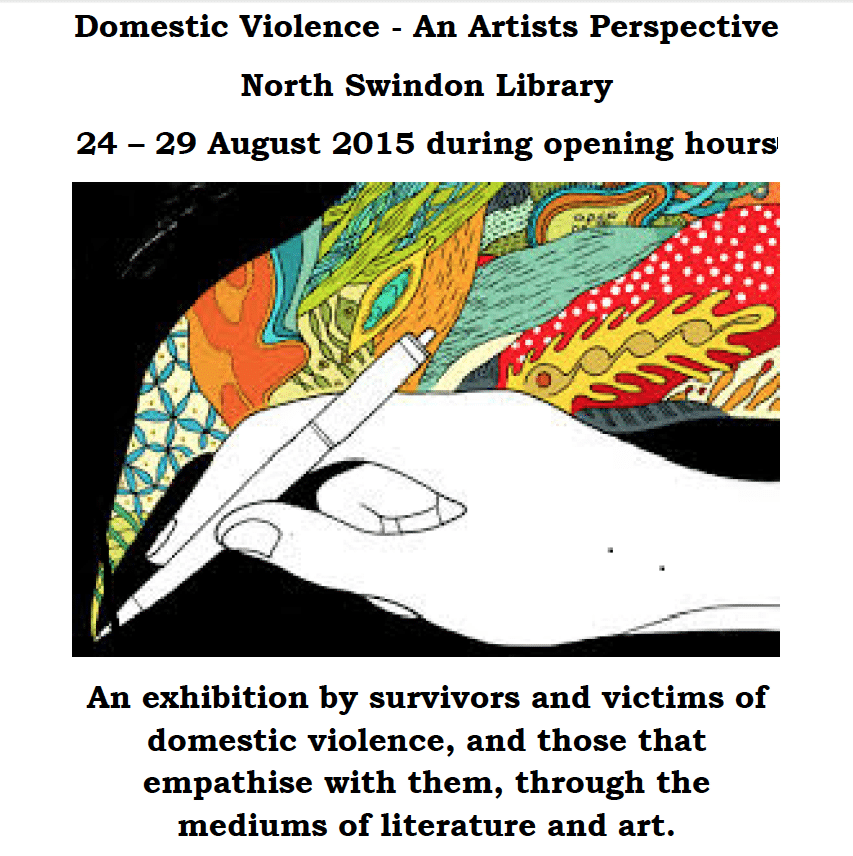
“Domestic Violence – An Artists Perspective” – this is an exhibition of art and poetry to celebrate the road to recovery experienced by those victims of domestic violence who manage to escape. It shows the pain and fear but also the strength of character and determination to escape abuse in all its forms. There is a formal opening of the exhibition on Monday 24th August at 12.00. The exhibition runs from the 24th – 29th August during opening hours at the North Swindon Library.”
“Survivors Day” on the anniversary of setting up Swindon Women’s Aid is on the 25th August and is a chance for ex residents & current residents to be introduced, catch up with the changes that have taken place over the last 40 years and hear about future plans for the charity. There will be a BBQ and a bouncy castle along with an unveiling of a plaque to commemorate the 40th anniversary donated by Highworth Lions. If you are an ex resident please contact Jo to be included on the guest list.”
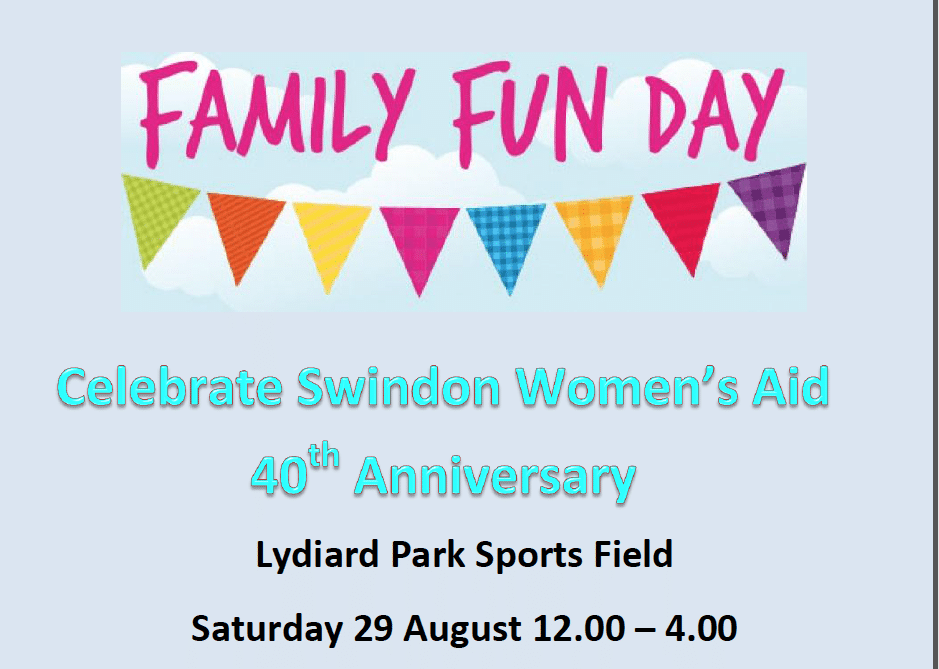
Saturday 29th August is a Family Fun Day at Lydiard Park from 12-4pm. Bring your kids, family & friends for a picnic, entertainment, stalls, climbing wall, bouncy castles and lots more – including a Dog show!
Hello listeners! As you no doubt know, I never need much of an excuse to shout-out about anything and anyone in Swindon. Nor to give older posts a refresh. So here’s not one but several reasons to mention David Bent again.
David lives and works from his studio in Swindon’s Old Town and plays an active part in the local community and supports the creative hotspotthat is Swindon and indeed its wider area.
Reach for the skies with The Reds
David is widely known and internationally renowned for his aviation paintings and his association with ‘The Reds’ – aka The Red Arrows. Having been invited to collaborate with the team David maintains a very positive relationship with these most magnificent men in their flying machines.
In the words of Andrew Morton, PR Manager for the Red Arrows:
‘Leading modern aviation artist David Bent was first invited to collaborate as Artist in Residence with the Red Arrows in 2007. This remains a positive and enduring goodwill relationship.
David is the artist most closely associated with the team. His work is exhibited at the team’s Lincolnshire home base, RAF Scampton….’
Some of David’s aviation art will be on display locally when Swindon Remembers The Few in the forthcoming Battle of Britain commemorations which will be centred around Harold Starr.
Here David talks about the beauty of the aircraft design:
There is though more to his work than aviation, notably his ‘Movement‘ works – more of which you can find in the round-up below of David’s recent and forthcoming activities – one of which is the forthcoming Open Studios. I intend to be there!
ABC: Art + Beach + Collaboration 2015
2014 : Bournemouth Air Festival invited David Bent to be their first official artist in residence, leading to the creation of his painting WOW
2015 : This week, he returns to the Air Festival and looks forward to creating a new artwork in collaboration with students from the Arts University
2016 : Artwork created during the 2014 + 2015 residencies will be included in a wider exhibition of his work at the Russell Cotes.
” The BA (Hons) Commercial Photography course, at the Arts University Bournemouth are excited to be collaborating with both the Bournemouth Air Festival and the Internationally respected aviation artist David Bent. The collaboration gives our students the opportunity to use their skills and creativity while working on a fascinating project, during a festival that is important to Bournemouth, both culturally and economically. We look forward to the outcomes, exhibition and publication, and hope this will the first of many joint projects.” Conrad Tracy. Course Leader & Principal Lecturer – BA Commercial Photography
Further on this subject, Councillor Lawrence Williams, Cabinet member for Tourism, Leisure and the Arts said:
” We are delighted to be able to host artist David Bent again this year as our official artist in residence during the Air Festival and are excited to also involve the talented students from the Arts University, Bournemouth.
We look forward to seeing how they work together and capture the festival’s colour , creativity, vibrancy and unique atmosphere.”
GREAT WESTERN HOSPITAL, SWINDON
Having been a patient at the GWH in the summer of 2014, David has returned in happier circumstances in 2015 with an exhibition of his work. As part of the event ( May – October ) he is giving a tour and a talk about the work to members of the hospital team and arts committee in September.
The Trust’s Chaplain, Steve Henderson, who is also a member of the Hospital Arts committee, explained:
“The Arts Committee oversees the art displayed in the Fine Art Gallery Area of the Ground Floor Street of the hospital. David has kindly allowed the hospital to display his work and the Committee is enthusiastic to display it because of its innovative and inspiring approach to viewing and conceiving machines of the air in lateral and surprising ways.”This is a unique opportunity for the people of Swindon to view a collection of works by one of its most reputable artists.”
OPEN STUDIOS – OVER A DECADE!
David has taken part in Swindon’s Open studios event for over a decade in support of the event, for artists in Swindon and the surrounding area. One year early in the 2000’s taking part with two other artists who live in the surrounding area ( Vanetta Joffe & Paul Ricketts ) just to keep the event alive.
Here’s a couple of lovely testimonials from visitors to David’s work:
” Inspiring and elevating ” Tim Prince , Stroud
” Never before has British aviation and art come together as such ! ” Tatiana K. Ojjeh Switzerland
” Wonderful exhibition and feel very privileged to be able to experience the studio thank you ” Alex Giles, Old Town
BATTLE OF BRITAIN – IN RESPECT
Six artworks from David’s Battle of Britain series will be displayed at Radnor Street Chapel 12 – 15th September in support of the Commemorations.
These were first exhibited at St Paul’s Cathedral in 2010 , marking the 70th Anniversary of the Battle of Britain.
David is giving six primary schools each a copy of his ” Celebration of the Red Arrows ” book .
His work will also be the inspiration for a school project ( building on the idea of 800 children who were inspired to create artworks based on his year long solo exhibition at the Raf Museum in 2012 – 2013.)
As a social expressionist whose work extends beyond aviation Art , David has created a wide collection of work – including Movement 2000.
This installation of eight paintings reference the movement of people around the world who through war, famine , poverty – seek a better life. This work was created leading up to 2000, influenced by the Balkan Wars – it is even more relevant today. David is keen to find a good home to exhibit this work effectively.
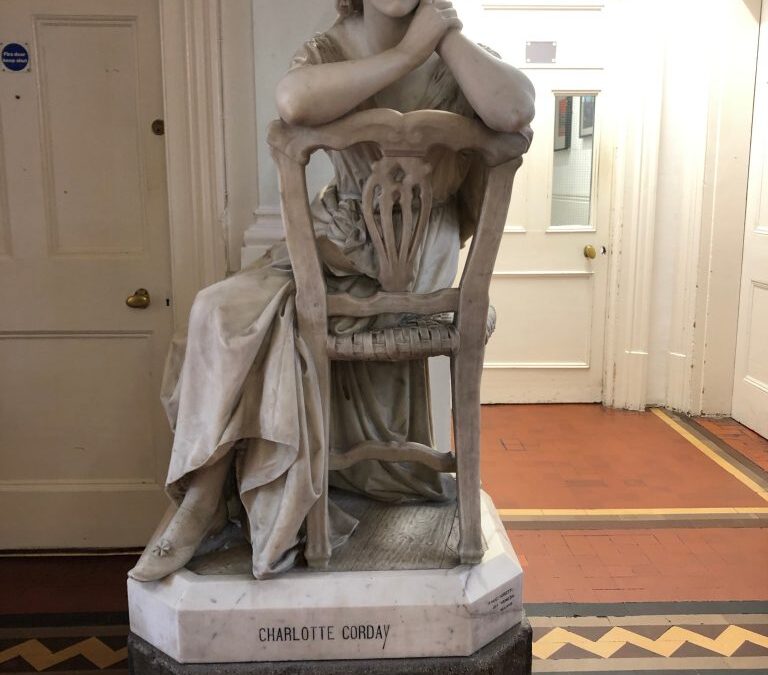
It’s a fabulous story that concerns the several-years-long and on-off search for ‘the magnificent sculpture of ‘The Angel of Assassination’ which was, as Barry explains ‘stumbled upon quite by accident’.
‘We can only imagine the joy, delight and sheer relief of Borough Arts Officer Terry Court when, after pulling back a crumpled canvas while clearing out an old costume store at the back of the Devizes Road Arts Centre, he was confronted with the elusive, milky white form of Charlotte Corday.’
Barry explains that, during the 1860s, one Pasquale Miglioretti (Italian sculptor 1822-1881) created at least three versions of Charlotte Corday. The lady described as a ‘counter revolutionary heroine’ who acquired infamy (infamy, infamy – they’ve all got it in for me! The BEST movie line ever!) when, in 1793 she stabbed to death Jean-Paul Marat in his bathtub. How very Psycho!
It’s a Marbleous Mystery
To cut a long story short cos you can read the rest of it in the article, it’s a marbleous mystery how one of these wonderful creations landed up in little old Swindon.
But anyway, about a century ago it did! And, since it was found twenty-five years ago the statue has graced the foyer of Swindon’s town hall. As the article says – ‘it’s pretty much unseen by anyone who doesn’t go to Swindon Dance. I’ve seen it though. Yay.
Finally – yes I’m stretching the Dr Whoweeping angels, ‘Don’t blink’ thing a bit but she is referred to as an angel – albeit of assassination. And anyway, tucked away as she is in the town hall – blink and you’ll miss her. Which seems rather a shame really given her infamy.
The ugliest town in England? Really? 2021: At the time of writing, this post Swindon was submitting a bid to the Heritage Lottery fund for a fancy-pants new building to house the Museum and Art gallery.
That bid failed – but that’s by the by. When the news emerged of Swindon’s designs on a new building, two broadsheet newspapers covered the story with quite the laziest, insulting and unnecessary journalism. What follows is my response to it at the time.
Swindon hits the headlines of the nationals – and yet again it’s an insult.
Beauty is only skin deep – and it lies in the eye of the beholder. You may have to dig but it’s there. Okay. There can’t be many of us by now that have missed the recent press coverage by The Telegraph and the Independent of Swindon’s bid to ‘become Britain’s new cultural magnet’ (The Telegraph.)
In covering this story they’ve managed to turn what should have been a positive story about the town’s impressive and unsung art collection into a damning portrait of an ugly and soulless town.
Yes – I KNOW that Swindon has destroyed some perfectly fine buildings. I don’t why – I wasn’t here then. I know too that there are areas that could be better in all sorts of ways. But – do we really think that this isn’t true throughout the country? Of course it is. But nevertheless, Swindon has a healthy heart of culture and creativity and it’s far, far from ugly.
Swindon has hit the headlines once again. And once again the media has dug deep into their hidden shallows to insult a town that many people love and choose to live in. Yes. CHOOSE.
I’m incandescent.
The Independent headlined what could and indeed should have been a positive story about Swindon’s art collection and proposed new art gallery and museum thus: ‘The “ugliest town in England” is getting a makeover’
A big claim – and an unfounded one
Ugliest town? That’s a big claim and a strong insult Independent. Just what yardstick have you used exactly? Why is it necessary to be so rude? I must be in the running to be Swindon’s number one fan but I’ll own that Swindon is dispiriting in places – the bottom end of the town is not exactly salubrious for a start.
However there’s a yawning great chasm between that and ‘ugly’. I hail from a part of the country left economically devastated by the 1980s pit closures. I know rough when I see it. And Swindon isn’t it.
A kickback
Some years ago I started this blog, in part, as a kick-back against this constant drip drip drip of attacks against the town. I’ve written hundreds of posts of positive stories about the cornucopia of art, culture, creativity and fantastic people that love to live and work and create in this ‘ugly’ town with no heart. Allegedly
What’s it got in the way of art?
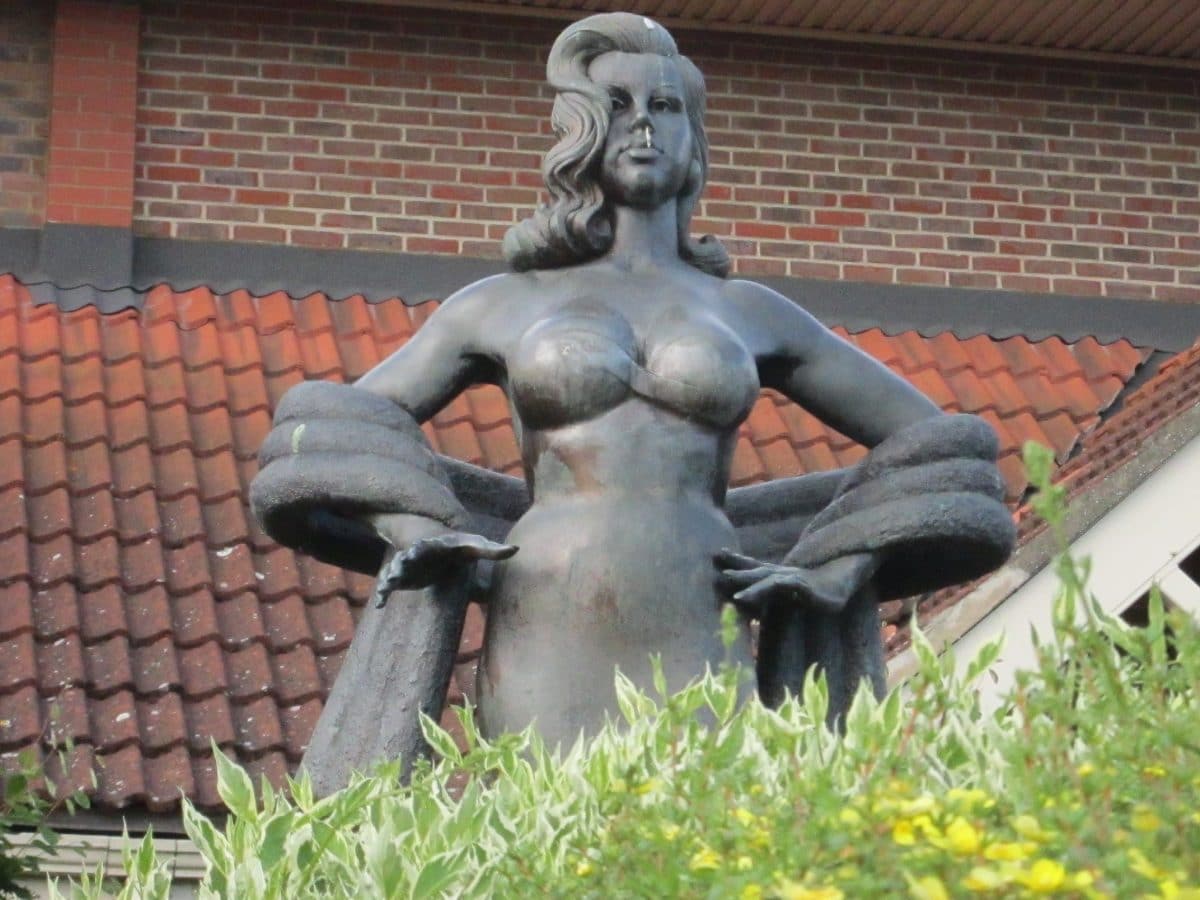
The Independent posed the question of Swindon, ‘‘What’s it got in the way of art?’ Well dear Independent article writer, you already know that Swindon has one of the most important collections of 20th century British art outside the Tate. You also know we have a statue of Diana Dors.
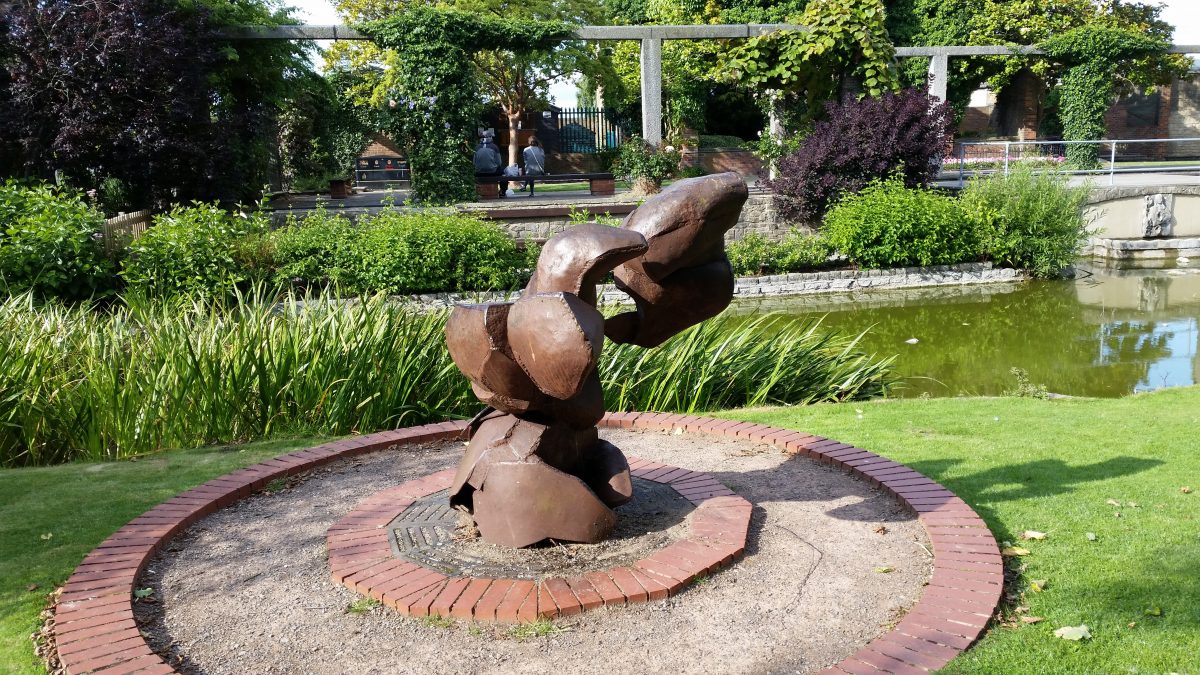
But had you done a bit more research you might have discovered that Swindon is home to many pieces of public art scattered all over the town. Notably the wonderful and unsung West Swindon sculpture trail but many more besides. Read the blog – I’ve posted about much of it here.
Diana Dors West Swindon
Art for art’s sake
You might also have discovered that Swindon is home to not one but two world-class artists. Ken White famed for his murals and the Virgin Red Lady emblem (alongside a fabulous and renowned body of work centred around his experiences working in the railway works) and David Bent, aviation artist and artist in residence to the Red Arrows:
Ken White is Swindon born and bred and David Bent came to live here. Yes CHOSE to live in Swindon and play a full part in the life and heart of the community.
But the creativity doesn’t end there. There’s Artsite and the Post Modern, the literature festival and the poetry festival. And so, so much more.
Swindon Festival of Poetry
I’m so, so tired of all this carrying on as if Swindon were the only town in the land to have demolished good buildings and put in concrete. It’s not. Move on please.
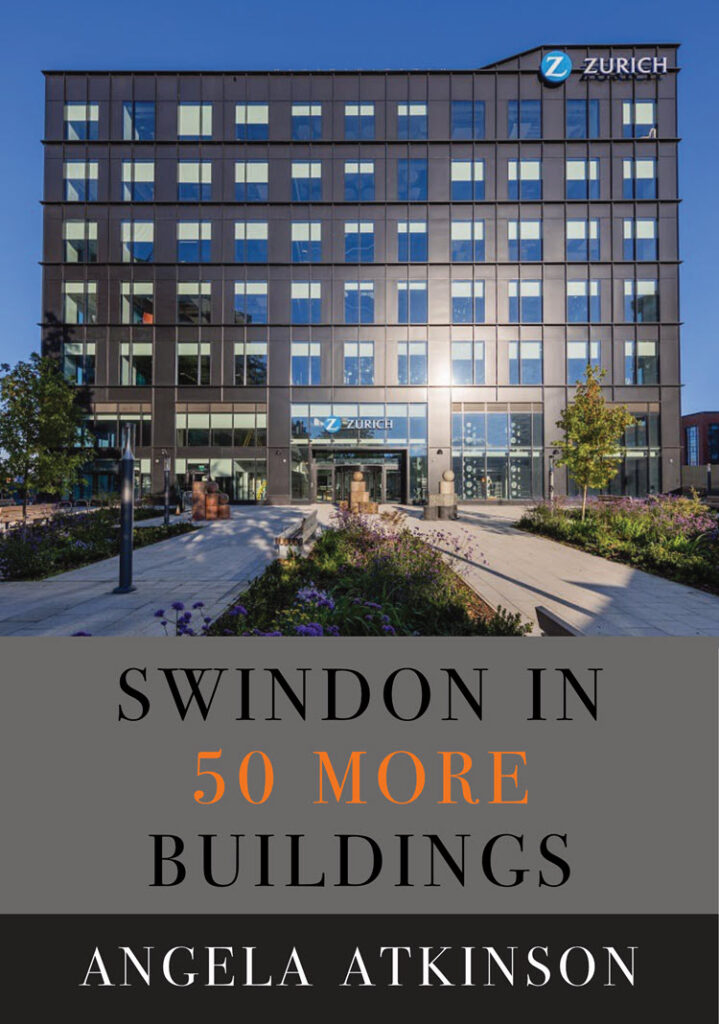
‘Designed by Douglas Stephen and built in the Seventies, this tower is a sleek, slick return to the smooth white grace of Twenties and Thirties Modernism. It’s a mixed-use building, incorporating social housing, offices and retail, which is rare in Britain. Stephen was a communist and believed in architecture as a power for social good.”
But that aside, Swindon is a mostly a working-class town founded on industry so it’s hardly likely to be stuffed to the gills with Palladian columns and Georgian windows now is it? What’s wrong with being proud of the town’s fantastically rich industrial heritage that is so much broader and deeper than the GWR – albeit that’s the one that put Swindon on the map.
But you know what? Those that know – know. We know that Palladian columns don’t make a community. What does make a community is all of the things I’ve mentioned here and all the elements of Swindon life and people that I haven’t mentioned here because frankly it would take all day. But it’s all here on this blog.’
This was a non-definitive list, in no particular order, of things that I felt worth shouting about. The list encompassed parks, public art, artists, museums and even the buses. Though, TBH, I’ve changed my mind about the buses. (2020)
It’s now 2020 – and I’ve adjusted the list a little since its original conception. But most of what you see below still stands. The big exception is No 3 and I’ve changed that to make space for the GWR Railway Village. A couple of others have changed too – only to make the blog tidier. Not because the subject matter wasn’t still interesting.
Here’s the list of 10 Things to Celebrate About Swindon
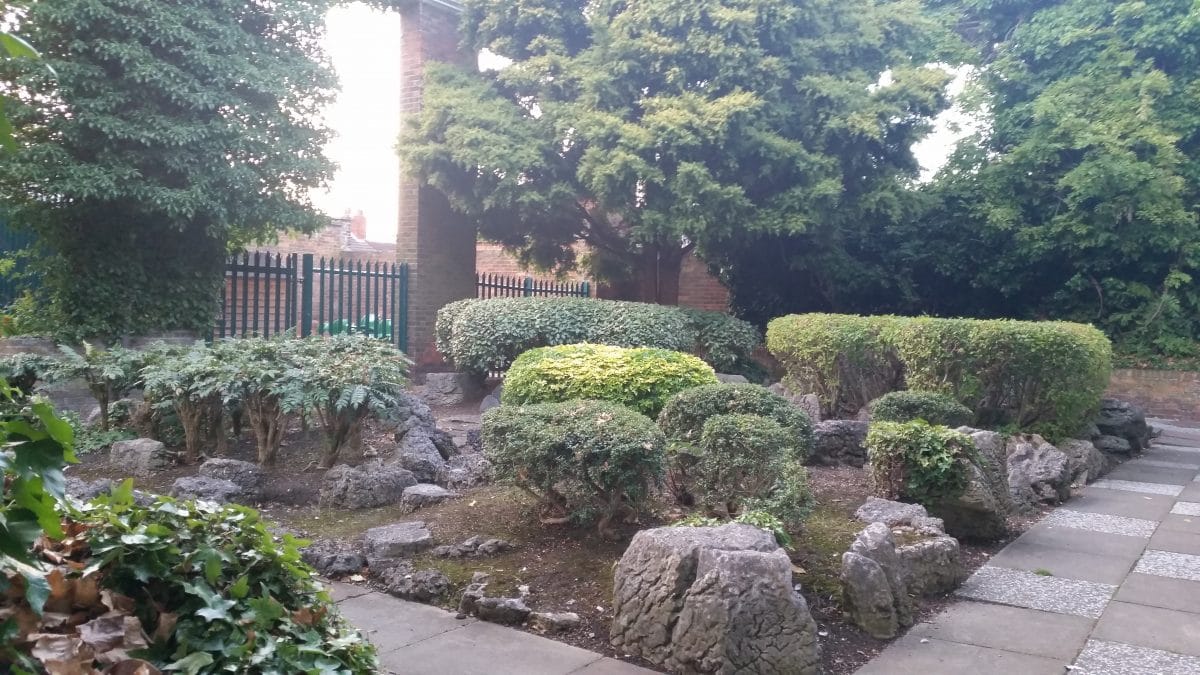
1)Parks, gardens and green spaces. Swindon is teeming with green spaces and is packed with park life. It’s wonderful. There’s Queen’s Park, and the Secret Garden, there’s Town Gardens and Lydiard Park to name some of the ‘biggies’ but there seems to a green area of some description practically at every turn – Hagbourne Copsebeing a recent-ish discovery.
We are very, very lucky to live in such a green town. In that aspect at least.
Queen’s Park
2) Number 2 on my list was the arts, culture and creativity that you can find in abundance in Swindon. In the initial list I focused on the poetry bus but now, several years on, I know of so much more – it’s pretty much endless. Off the top of my head there’s Artsite and the Post Modernand so much more.
On the buses
3) The buses – well okay – this isn’t entirely positive. (As of 2017 Thamesdown Transport is under new ownership. Already the loathsome fast fare system that wasn’t fast and wasn’t fair has been removed. But it’s not a great system now for the size of the town.
So I’ve now removed this original entry to make space for something more worthy.
4) The Public Art: I LOVE that Swindon has so much public art. Okay some of it could be better cared for but it’s none the less interesting for all that. Hats off to the then Thamesdown Council who were responsible for installing much of it – notably the West Swindon sculpture walk. Read more posts about Swindon’s public art here:https://swindonian.me/category/public-art-sculpture/
Artists
5) Number 5 on my list had to be Swindon treasure Ken White.
If you think you don’t know Ken’s work – his murals aside – you absolutely do because he created Virgin’s famed red lady emblem. Banksy? Who’s he? But now I know about Tim Carroll and more besides.
6) The Museum of Computing: small but perfectly formed this is a little gem tucked away on Theatre Square. Always riding high on Trip Advisor it’s well worth a peek – geek or not.
7) The leisure facilities: I left a small village in Derbyshire to come to Swindon. It was a bus ride to the nearest town – Worksop – and then a long trek across the town simply to access a swimming pool. Everything else was Sheffield. And that, without a car, was an EXPOTITION. So imagine my delight at pitching up somewhere with a swimming pool, an ICE RINK, and a multiplex cinema just up the road! Died and gone to heaven didn’t cover it.
9) Theatre and the Arts: encompassing the Wyvern Theatre and the Arts Centre, Am-Dram, Gilbert and Sullivan, literature and poetry. What’s NOT to like?
So – all of this in a town where there’s nothing to do, nothing to see, nothing goes on, nothing happens and so on. Odd then that I’ve managed to fill a blog with all that nothingness.