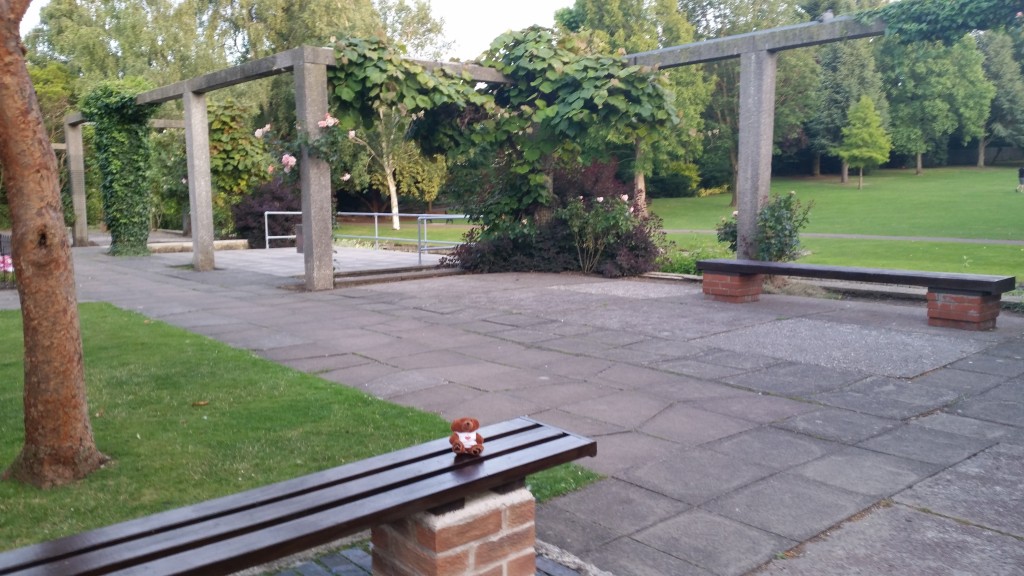
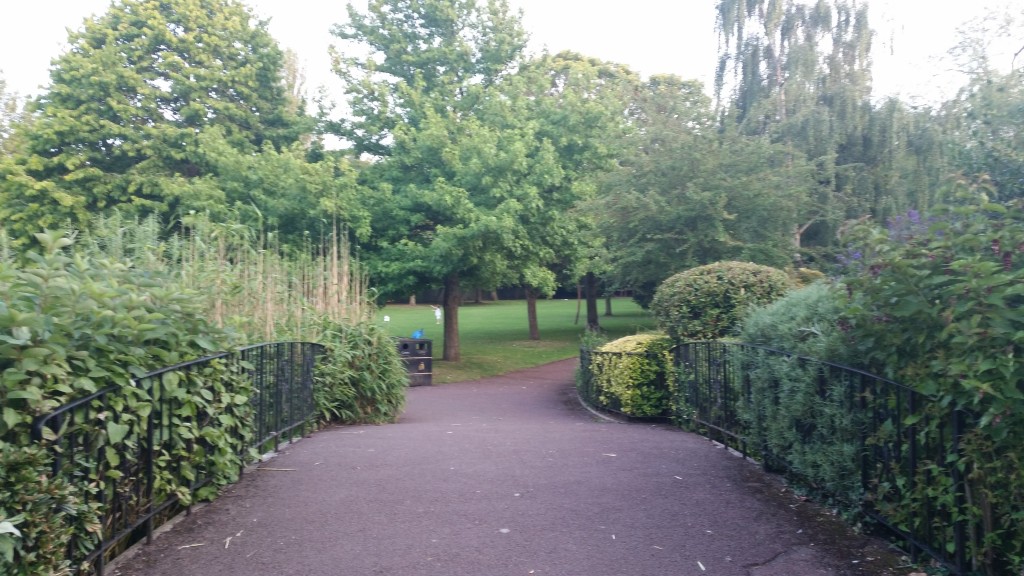
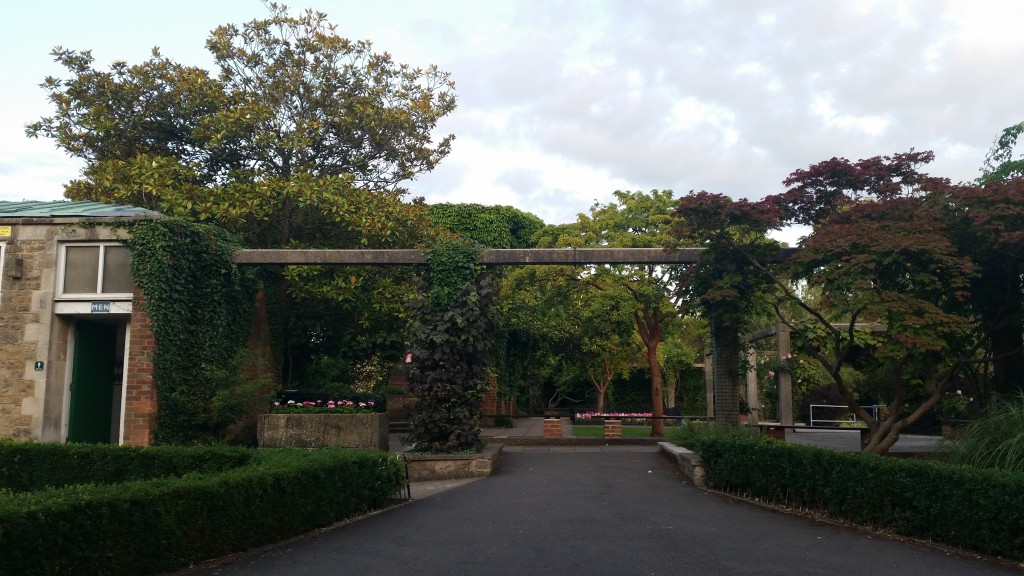
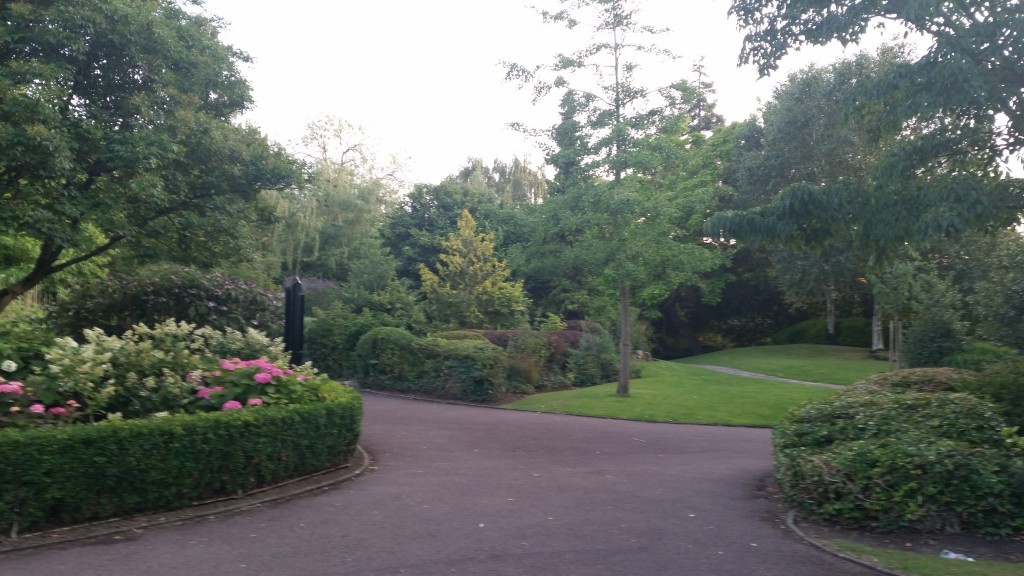
“If you look the right way, you can see that the whole world is a garden.” So said Frances Hodgson Burnett, author of children’s classic, The Secret Garden.
Well, be that as it may we can easily say that the whole of Swindon is a garden. Or a park or green space at any rate – given that here in Swindon we’re astonishingly well-blessed with leafy and open spaces. It’s quite astonishing when you stop to think about it. You can read about some more of them here:https://swindonian.me/category/parks-and-open-spaces/ But this post focuses on Queen’s Park in Swindon.
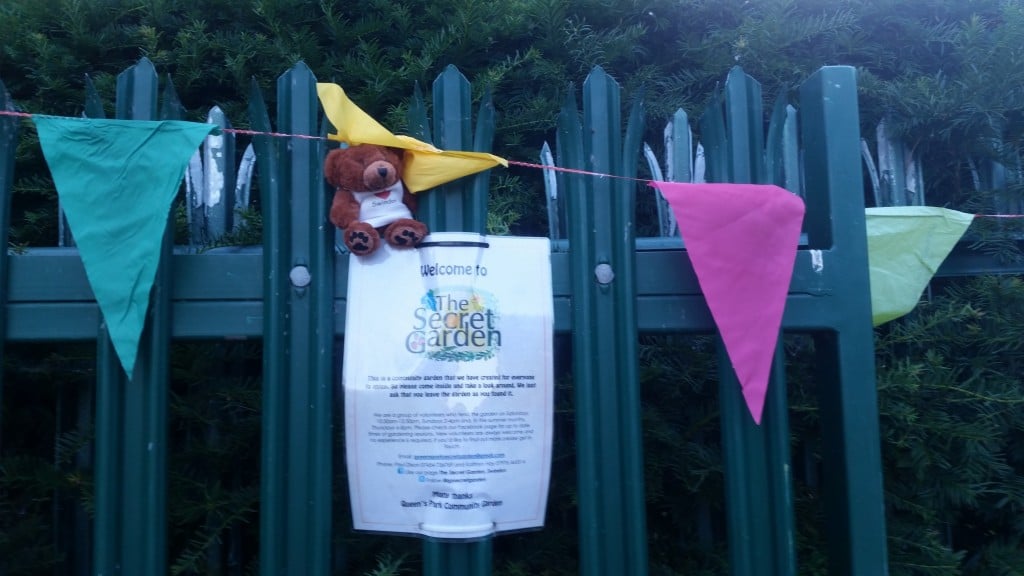
Queens Park sign
Queen’s Park Swindon
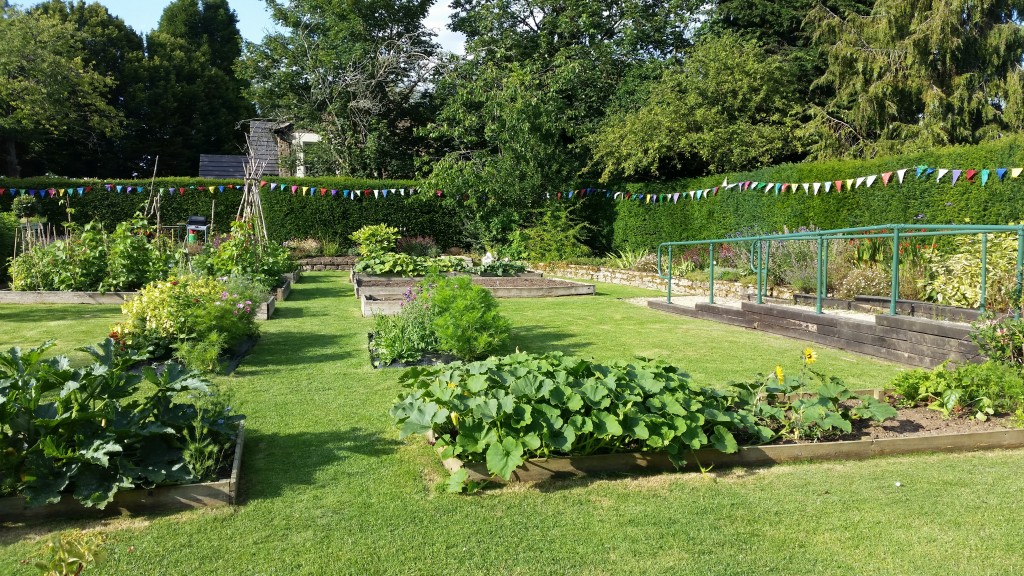
But this post is concerned with Queen’s Park Swindon and its secret garden. Swindon’s Queen’s Park is not a place I get to much. I live one the west side of town and have the magnificent Lydiard Park not much more than a spit from my house so I go there – obvs.
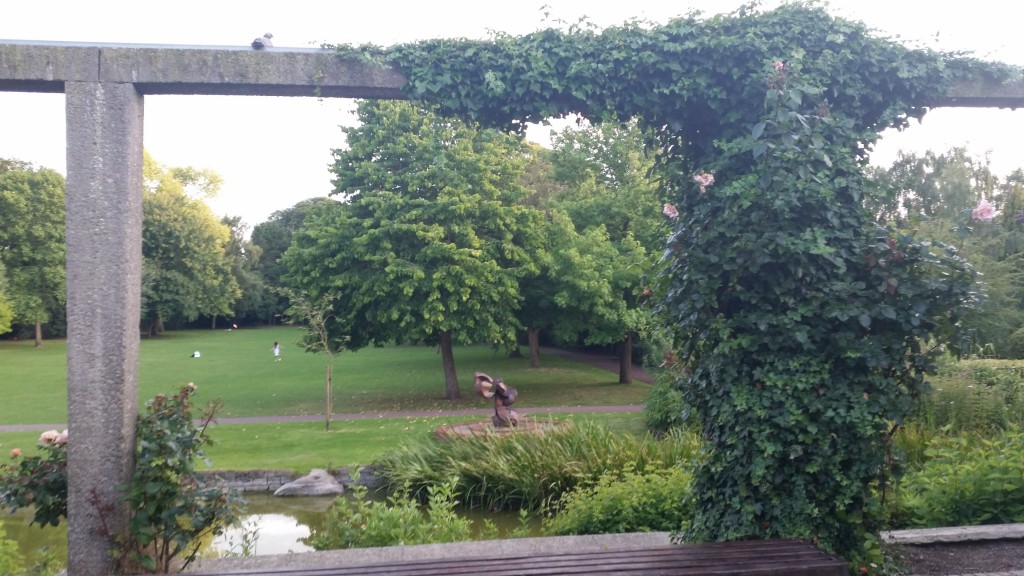
Which is not to say that Queen’s Park isn’t lovely because it is. It’a a fabulous oasis in the middle of an urban conurbation. And it has some public art in too. So what’s not to like?
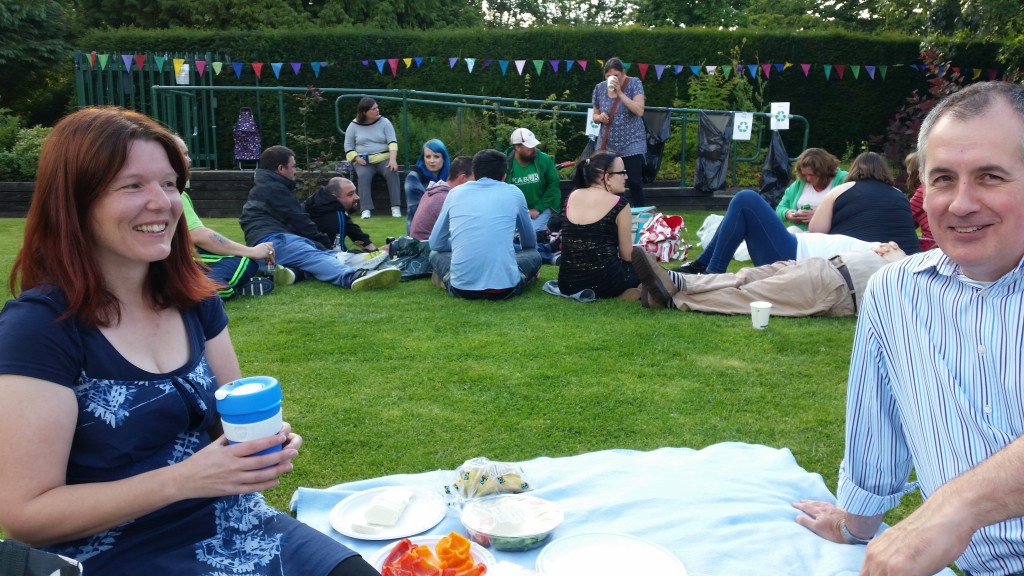
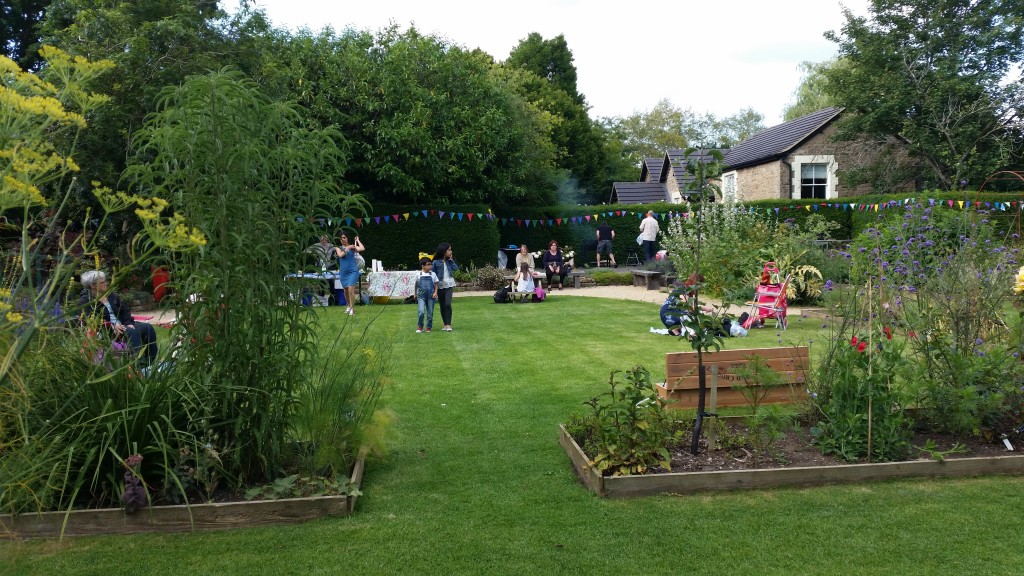
Plus the secret garden of course. And it was the secret garden summer BBQ that took me there last night.
The Secret Garden volunteers organized the BBQ ,among them the Incredible Edible Swindon people and councillor Paul Dixon, and was a very pleasant evening. After a few days of not great weather the sun switched itself back on and produced a fabulous evening.
NB: the Secret garden once was operated by the group of keen volunteers aforementioned but that no longer applies. They’ve handed it over to South Swindon Parish now.
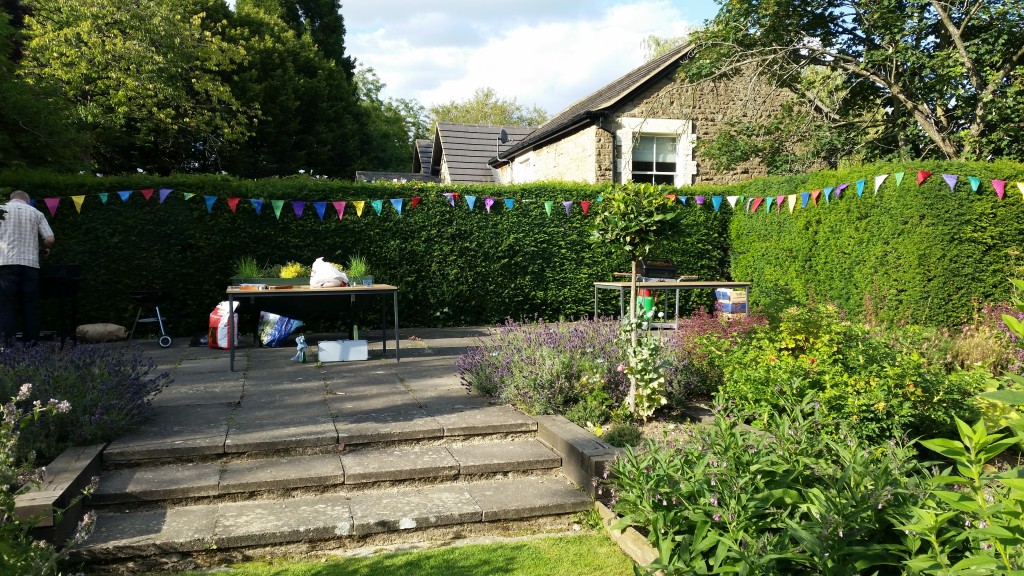
Below are a load of photos I took but before that some general information about the park.
Wikipededia says:
Dull but factual from Wikepedia:Queen’s Park is a public park, located near the Regent Circus area of Swindon town centre.
It is about 12 acres (49,000 m2) in size, with a lake of around 2 acres (8,100 m2), and contains a diverse range of ornamental trees and shrubs.
The park has a Garden of Remembrance, officially opened by Princess Elizabeth on 15 November 1950 and commemorates those who died in World War II.
‘It is difficult to believe that this town centre parkland oasis was once a brown field site. Queen’s Park is a twelve acre beauty spot with a Victorian industrial past, the site of builder Thomas Turner’s brick works – examples of his artistry stand close to the Drove Road entrance.
Today the former derelict claypit, once popular with zoologist Desmond Morris and his girlfriend Diana Dors, is an award winning park and garden.’ And: ‘In 2001 English Heritage awarded the garden a Grade II listing on the Register of Parks & Gardens. And it’s easy to see why.’
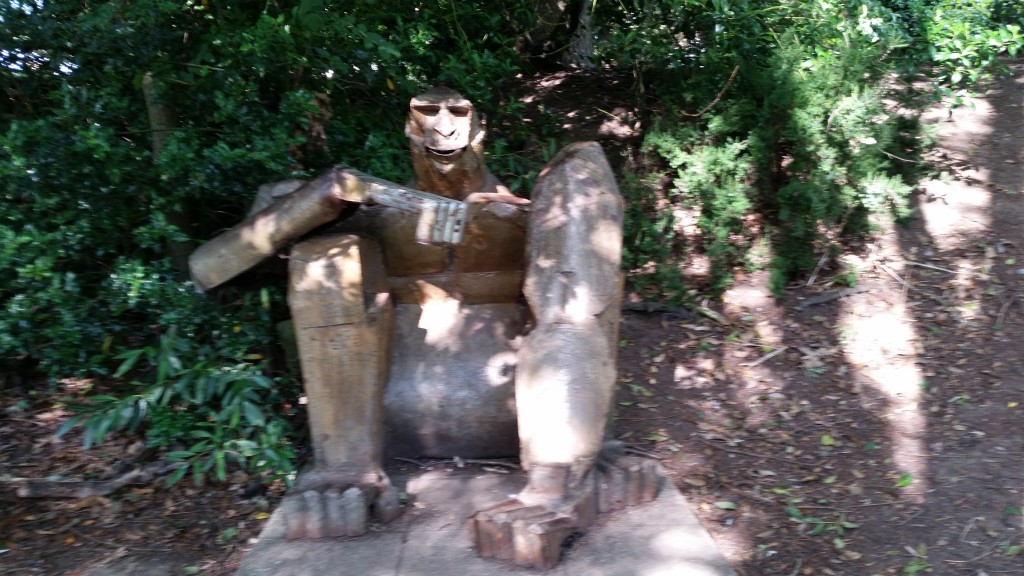
The photo of the gorilla is way better than mine for a start!
On the subject of the gorilla – also from Swindon History blogspot:
‘The long time resident gorilla took up his present position in 1994. The Borough bought the welded steel sculpture by Tom Gleeson following an exhibition in the Theatre Square in the mid-1980s. Today he looked particularly fetching with a flower tucked behind his ear by an admirer.’
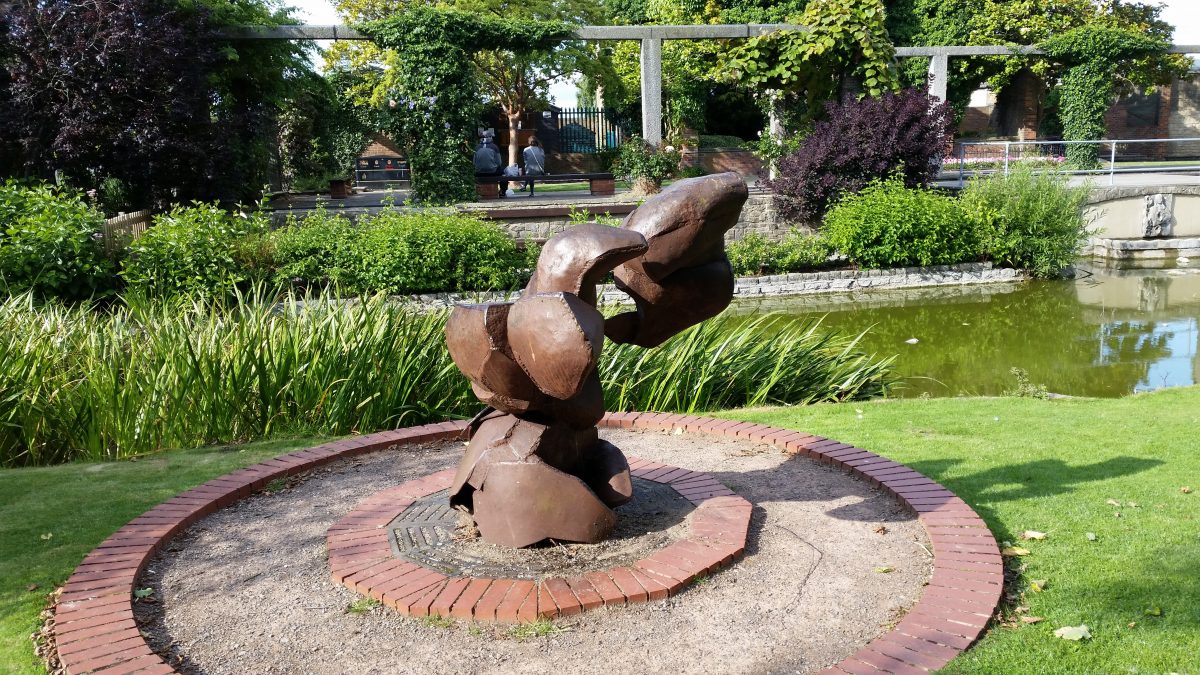
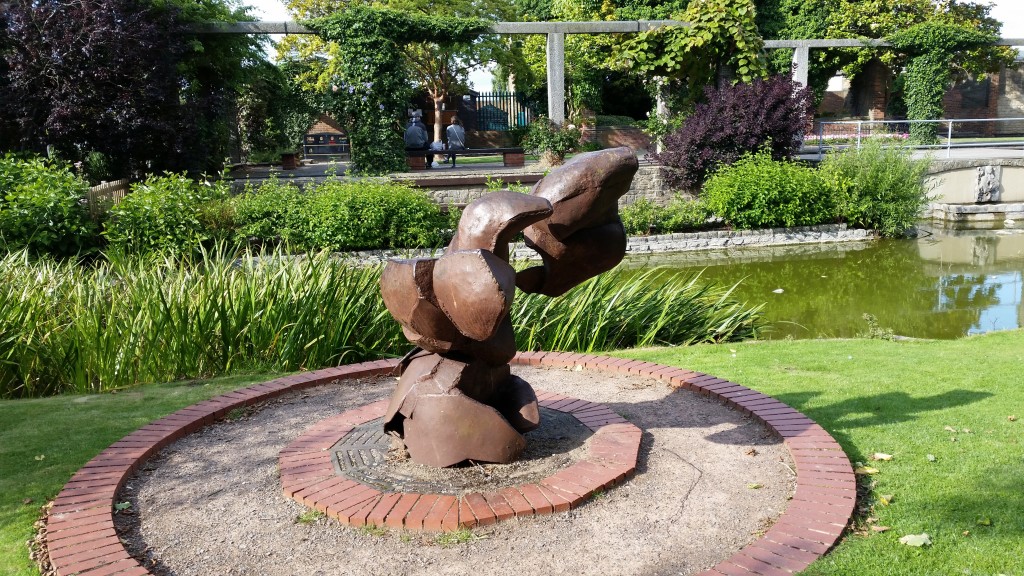
Sculpture – Queen’s Park in Swindon
The sculpture is ‘Turtle Storm’ (1986) by Joseph Ingleby and is made of forged steel. Donated to Thamesdown Council as a gift from the Dufty family in 1995 and sited in Queens Park, Swindon, Wiltshire.
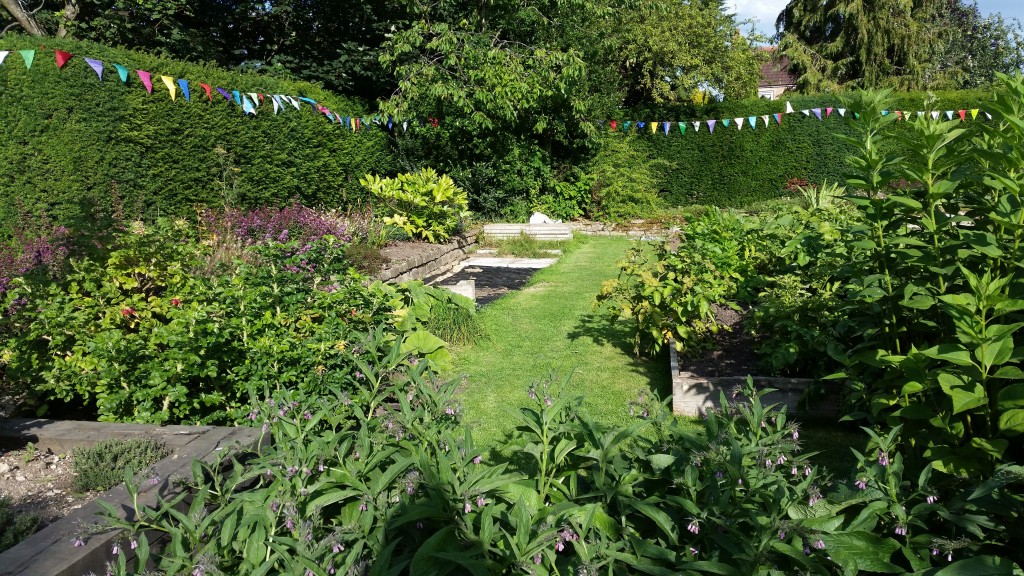
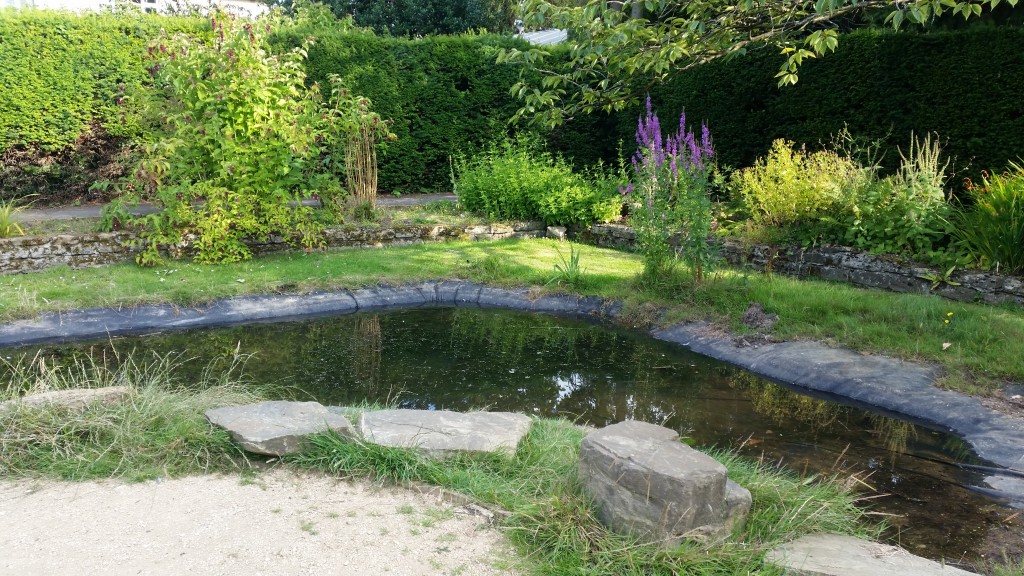
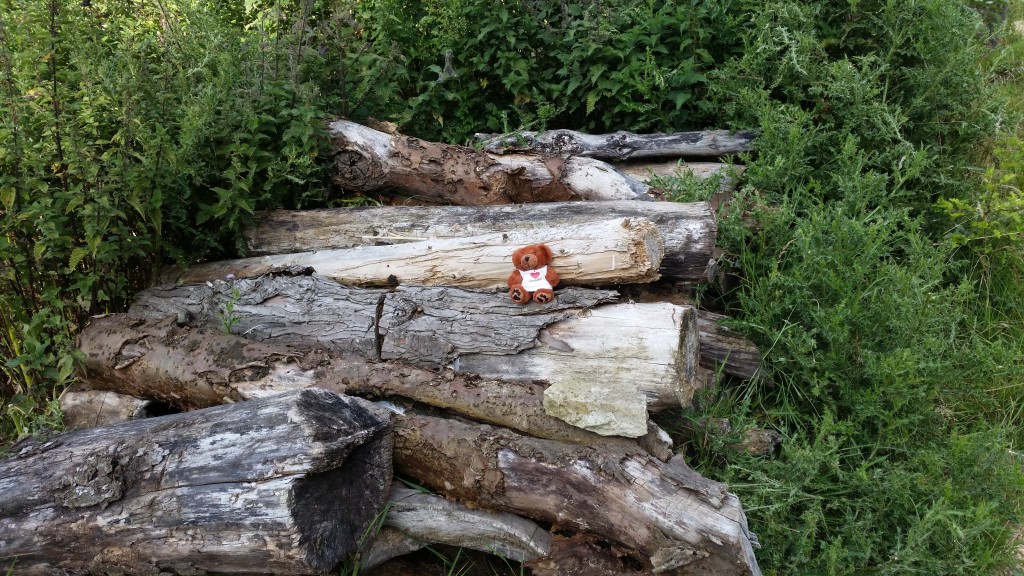
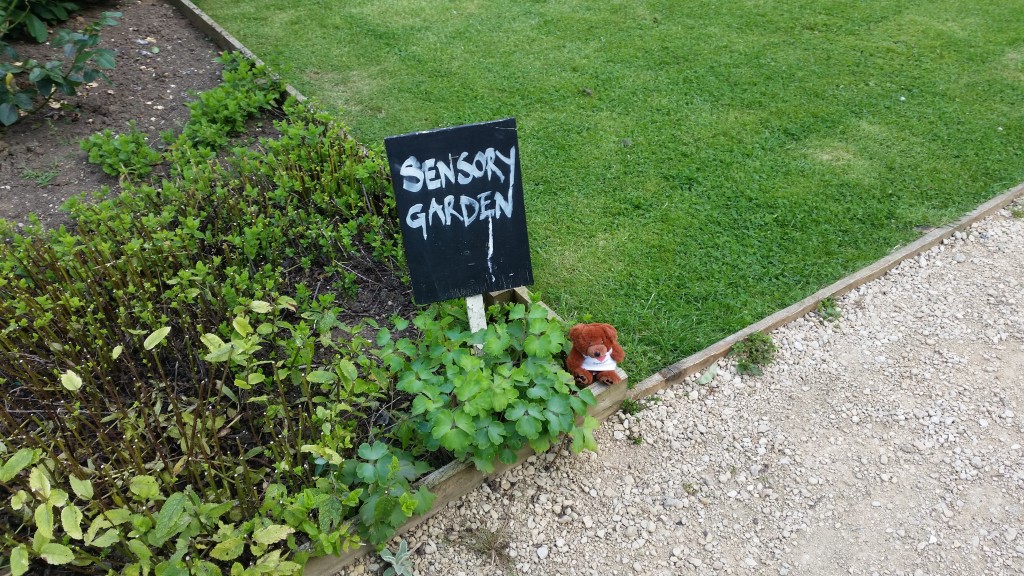
The work was originally purchased for Kelmscott Manor, Oxfordshire, the country home of William Morris, in 1989. In 1995 the decision was taken to limit artefacts at the house and grounds to those created in Morris’s lifetime (1834-96).Queens Park signBorn again swindonian – sculpture in Queen’s ParkThe gorillaQueen’s Park in SwindonSwindon bear in the parkPond in secret garden
“And the secret garden bloomed and bloomed and every morning revealed new miracles.” Frances Hodgson Burnett, The Secret garden.
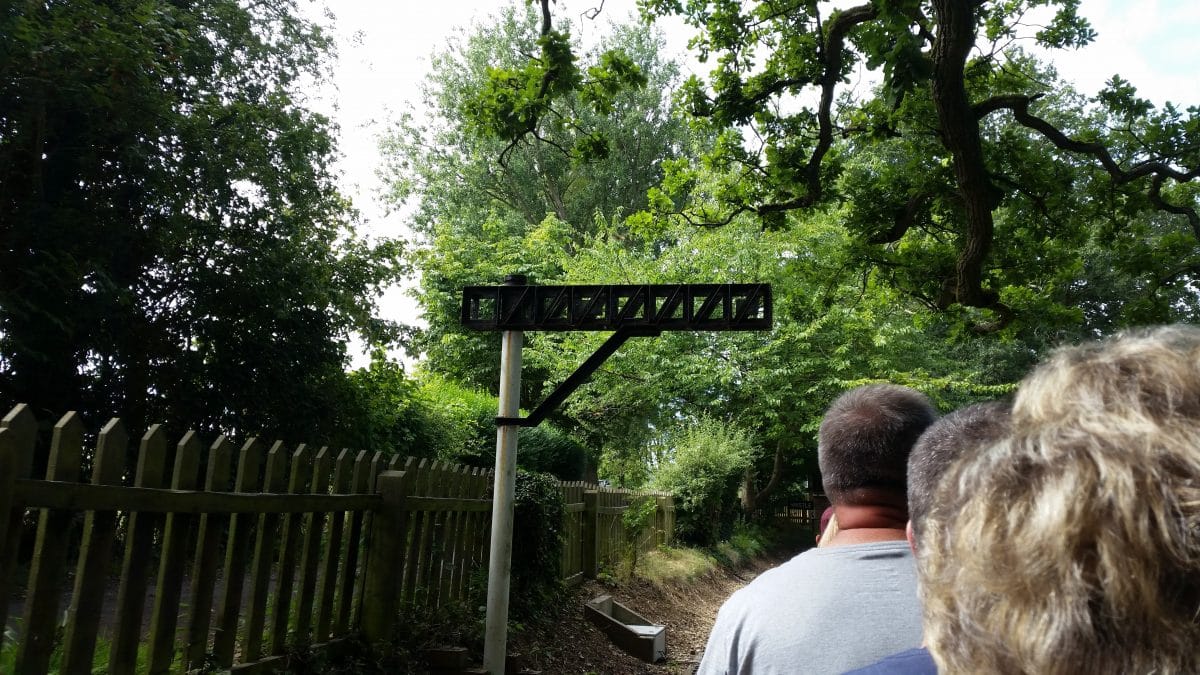
Coate Water Miniature Railway Hurrah!! After twenty-two years in Swindon I made it to the miniature railway at Coate Water. It was great. As the nearly-two-year-old I was with said “Choo choo’:
July 2015
Regular listeners will know, from my blog post about the Hooter Express, that I love a miniature railway. Which makes it all the more surprising that I’ve never managed to get my butt into gear and take a trip on the Coate Water miniature railway – something I really must address.
Just this evening I was reading the Link magazine (find them on Facebook here) and came across a small piece about the railway. Would you believe that 2015 marks the FIFTIETH birthday of the railway? Blimey!
‘The NWMES was founded in the early 1960s by a small band of enthusiasts interested in the building and running of miniature steam locomotives. They leased the land and constructed a small loop of track, with a steaming bay, on the present site at Coate Water Country Park, Swindon, Wiltshire.
In the early days there was nothing else on the site and they had to bring everything, including water to the track for each running session.’
There’s lots of great reasons to visit Coate Water – aside from the railway and seeing thelisted concrete diving platform. It has lovely walks, is a nature reserve and an area of scientific interest. Visit Swindon Webto find out more.
About the North Wilts Model Engineering Society
We open every Sunday (weather permitting) and most bank holidays. The railway is also open where advertised on Saturdays (but may be open if sufficient volunteers are available). During the summer school holidays we open on a Tuesday. Opening times are from around 11am through to 5pm, or dusk during the winter. Go here for more information.
This biography of Harold Star, and everything on this page, is reproduced with the kind permission ofSwindon Heritage magazine. (NB: The magazine exists no more.)
Harold Starr formed the pivot around which Swindon remembered The Few. This post tells something of his story.
Harold Starr was born on September 8,1914 – the fifth of six children born to Ellen and Morley Starr. He grew up in the Central Temperance Hotel in Regent Street (now the site of the Savoy – there are blue plaques there commemorating the Starr Brothers) where his mother was proprietor and his father worked as as shop fitter.
Harold attended Clarence Street School but completed his education at Cotham Grammar School when the family moved to Bristol.
While still at school, Harold became a member of the Officers’ Training Corps, and, at the age of just nineteen he won an RAF scholarship. He was awarded his ‘Wings’ in 1935.
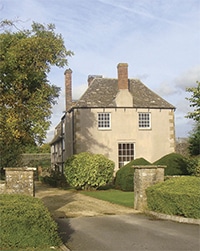
However, following an accident at South Marston in June 1936 ,it looked as if Harold’s flying career might be over. While practising a forced landing he crashed and the wing of his Hawker Audax damaged the gable end of Hunt’s Copse farmhouse.
Injured and out of action
Harold received life-threatening injuries sustaining a fracture at the base of his skull and leg and chest injuries. He was out of action for more than a year.
Within two months of the outbreak of war, Harold was back flying and,on August 8 1040 he was placed in command of 253 Squadron.
The Battle of Britain campaign diary records that August 31, 1040 dawned fair but hazy as formations of enemy aircraft appeared in the Deal, Dover and Thames Estuary areas.
At 7.55 am, around 250 aircraft attacked in five distinct waves. The onslaught continued until the evening. RAF Biggin Hill was bombed twice causing a serious fire and wrecking aerodrome buildings, runways, gas and water mains – as well as aircraft.
By the end of the day, Fighter Command reported its heaviest losses to date. And among those pilots was 25 year old Squadron leader Harold Starr.
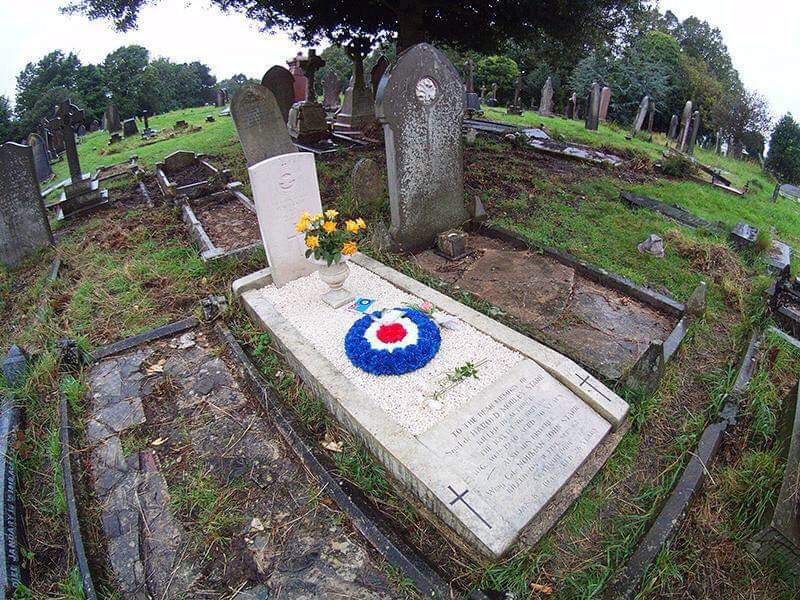
Harold’s Hurricane was short down over Estry near Sandwich during an interception patrol. After his plane was hit the young pilot managed to somehow bail out at 15,00 feet. But, as he floated down on his parachute, three Messerschmitts circled him and opened fire with machine guns. His body came back to Swindon for burial in a family grave in Radnor Street Cemetery. His funeral took place on September 6, two days before what would have been his 26th birthday.
So, come September this year, when the country will remember all of the The Few, Swindon will honour Harold Starr in its own special way.
Swindon remembers Harold Starr. Born: 8th September 1914. Died: 31st August 1940. Killed by enemy fire after bailing out of his stricken aircraft only a few days before his 26th birthday: one of The Few.
From the press notes: Squadron Leader Harold Starr was born in Swindon in 1914, on 8th September.
Before his death, at the height of the Battle of Britain, he was leader of 253 Squadron. His plane sustained a hit at 15,000 feet above Kent. Starr bailed out, but was machine gunned to death by three Bf109s as he descended.
The 75th Anniversary of the Battle of Britain
2015 marks the 75th anniversary of the Battle of Britain. And Swindon, as with cities, towns and villages up and down the country is marking the occasion. But the town is doing so in rather a lovely and moving manner. Rather than marking the anniversary as a general thing it is doing so by paying special attention to one man among many. Or more to the point, one man among so few: Squadron Leader Harold Starr.
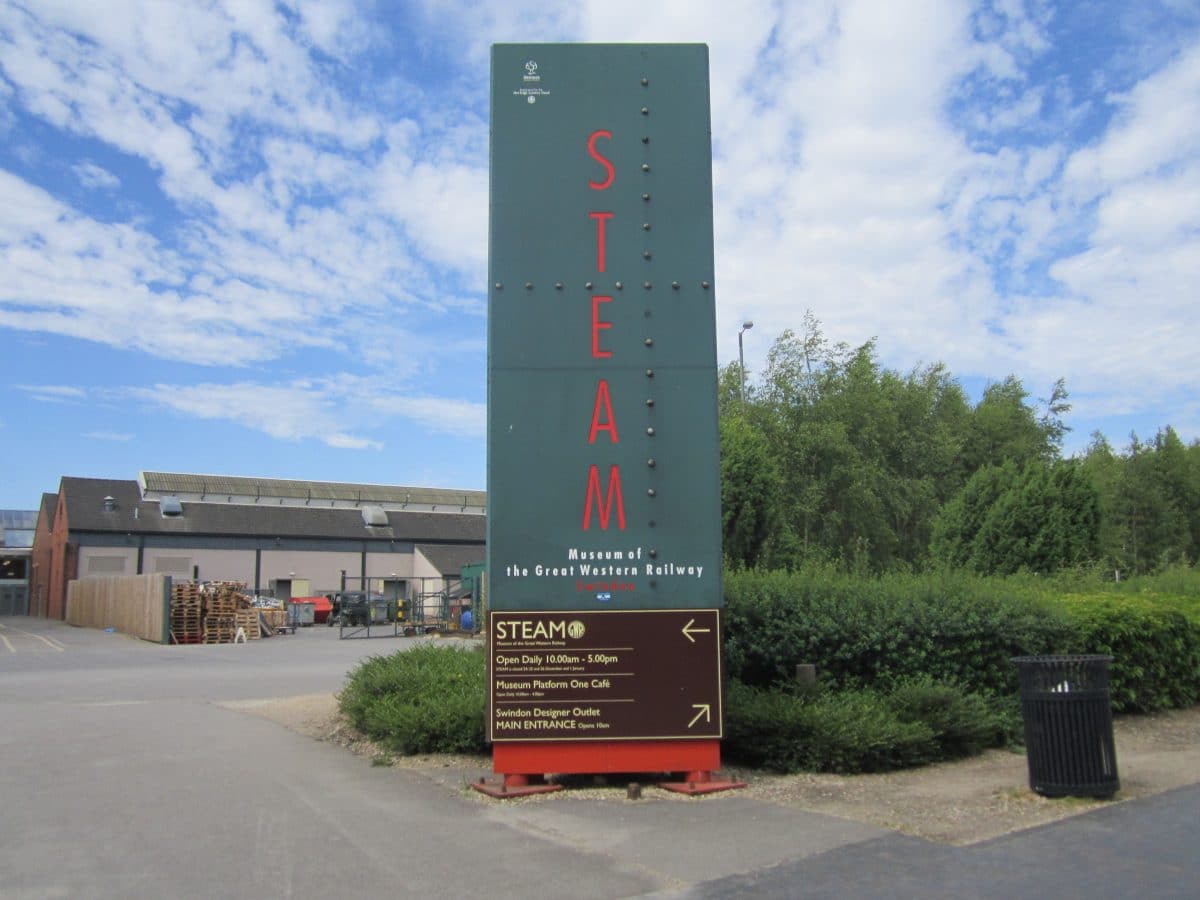
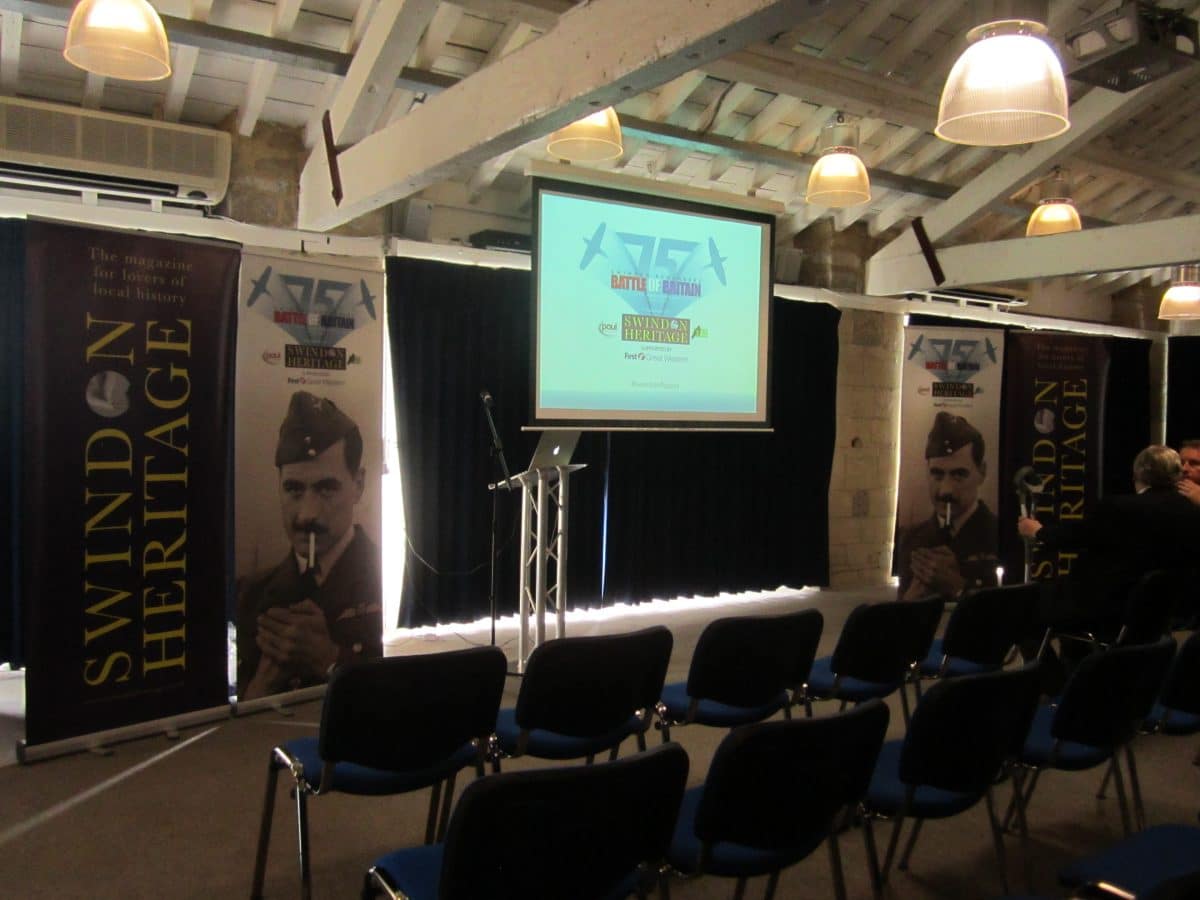
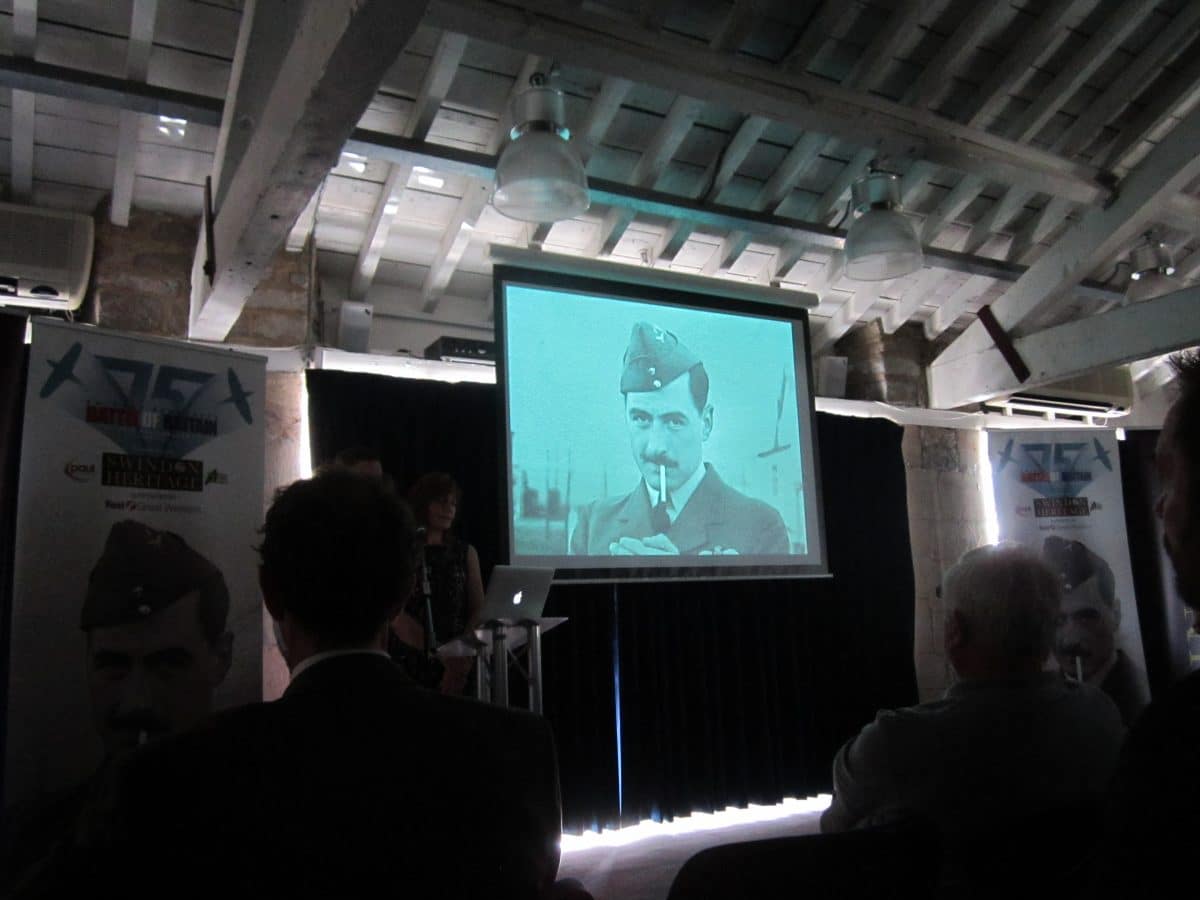
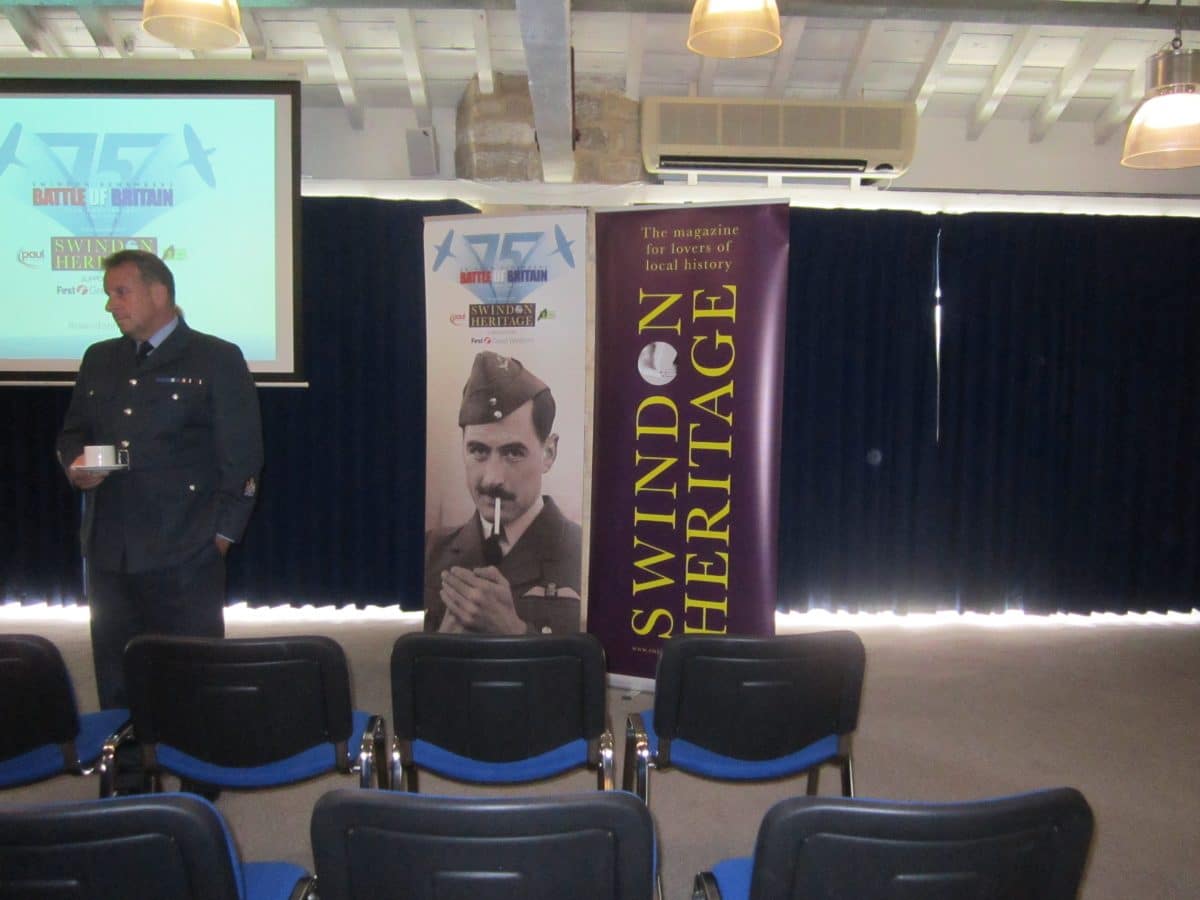
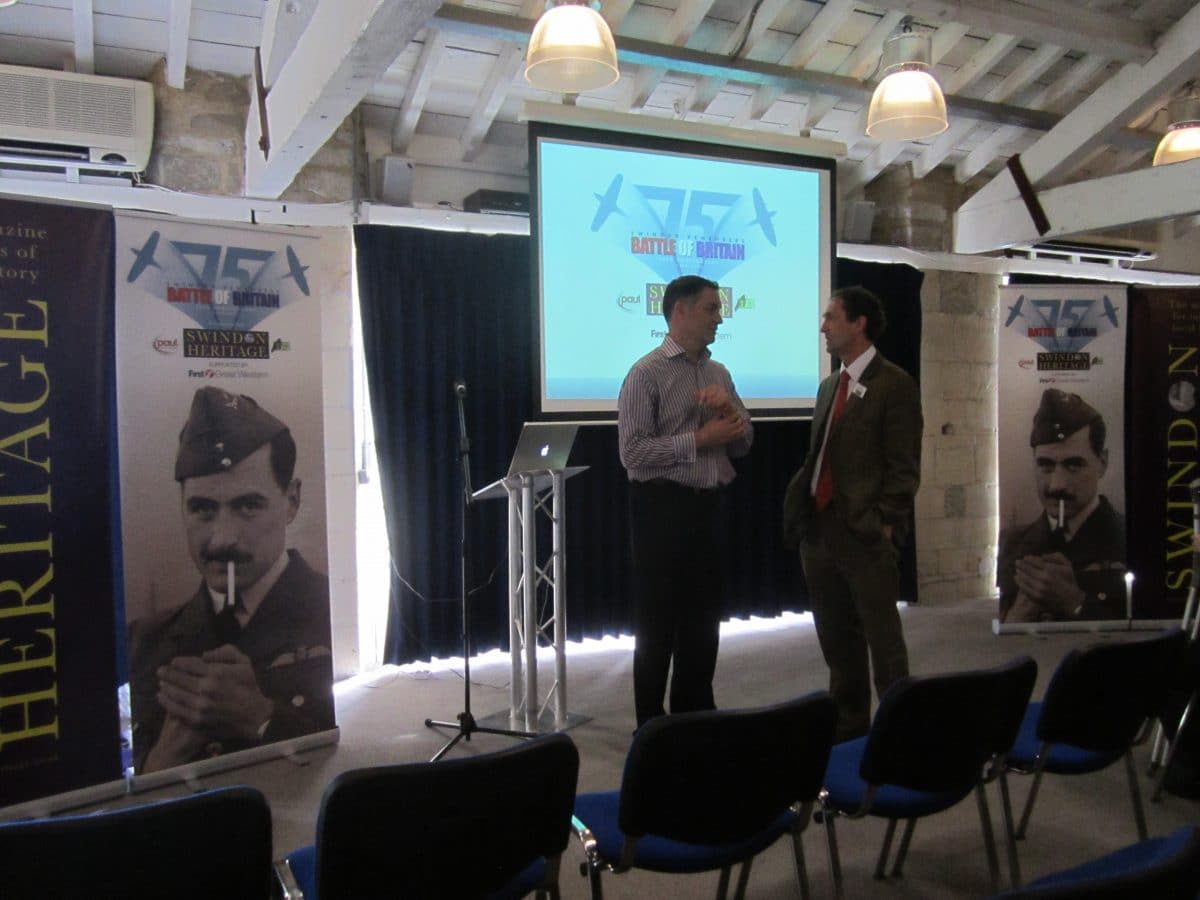
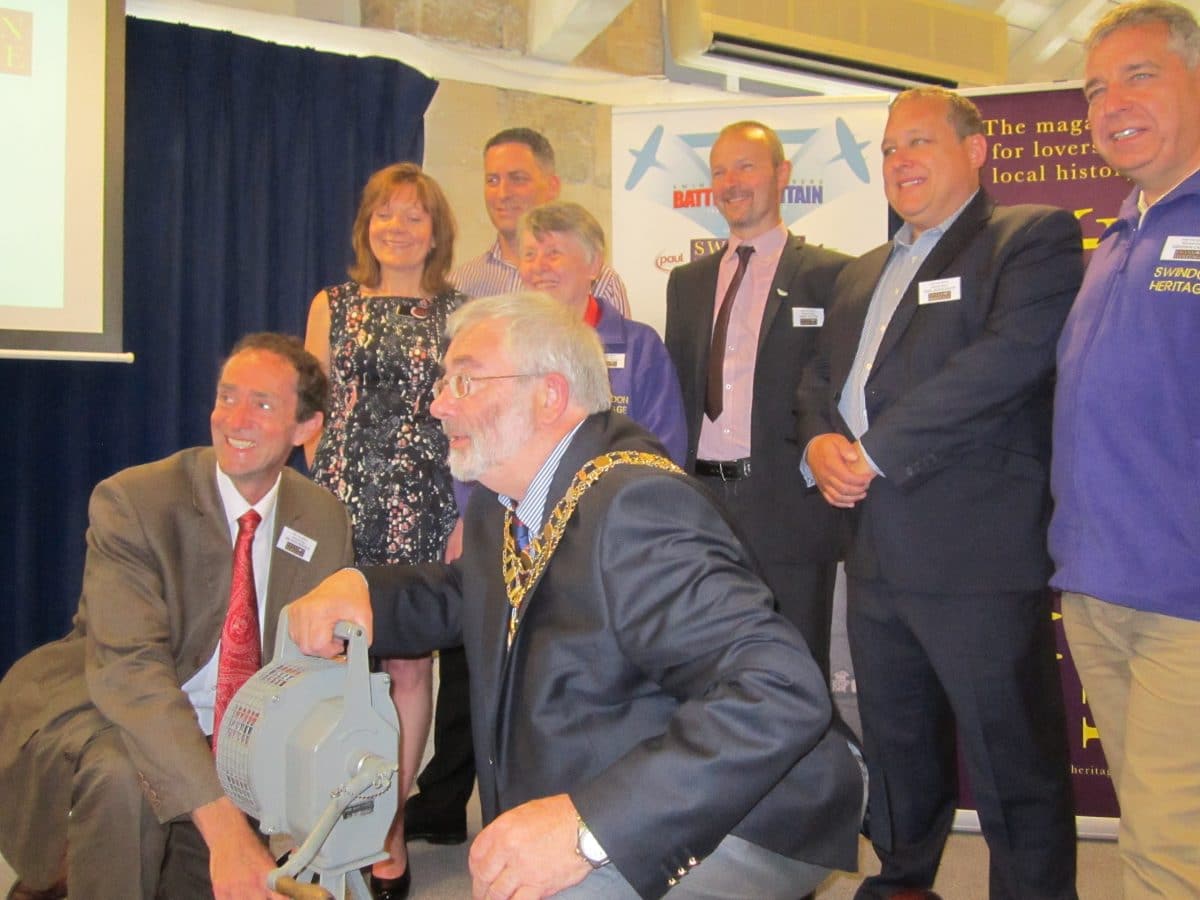
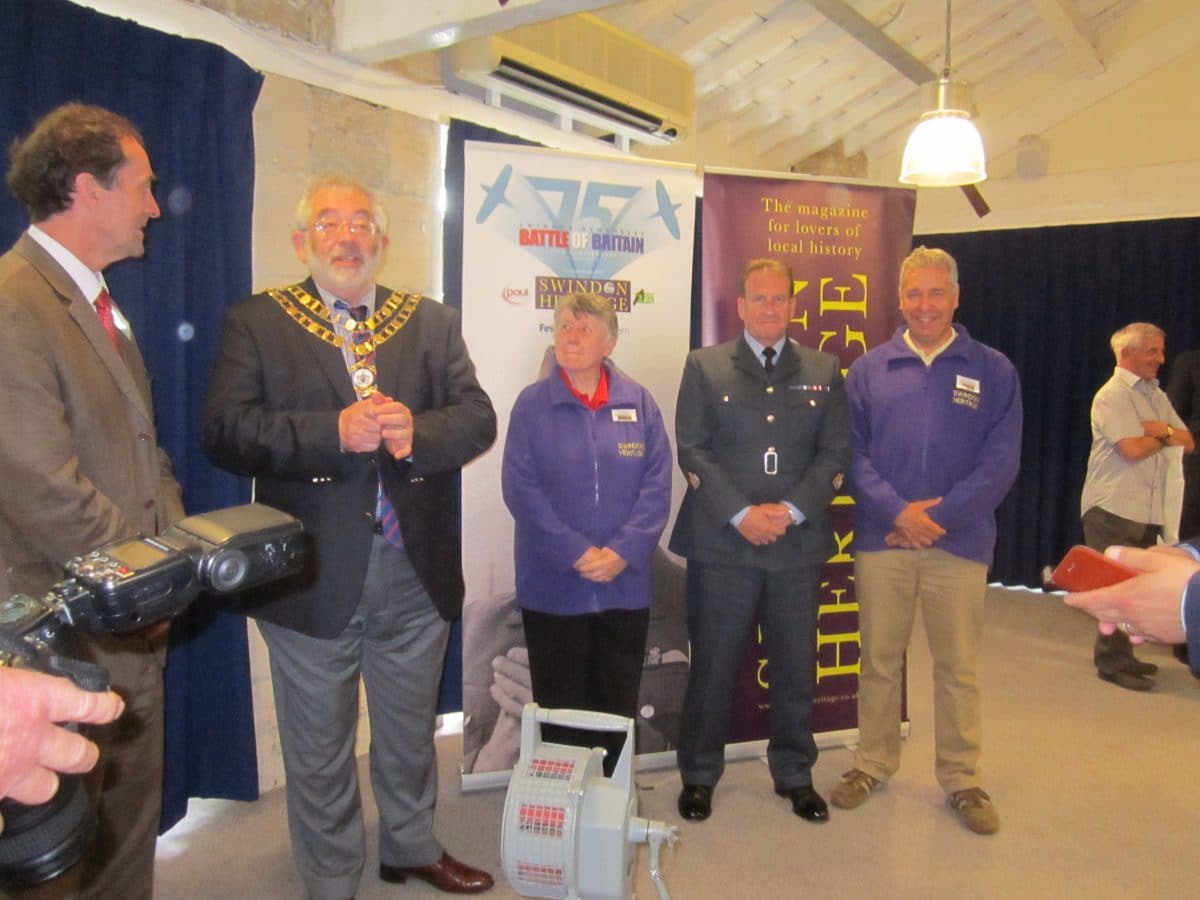
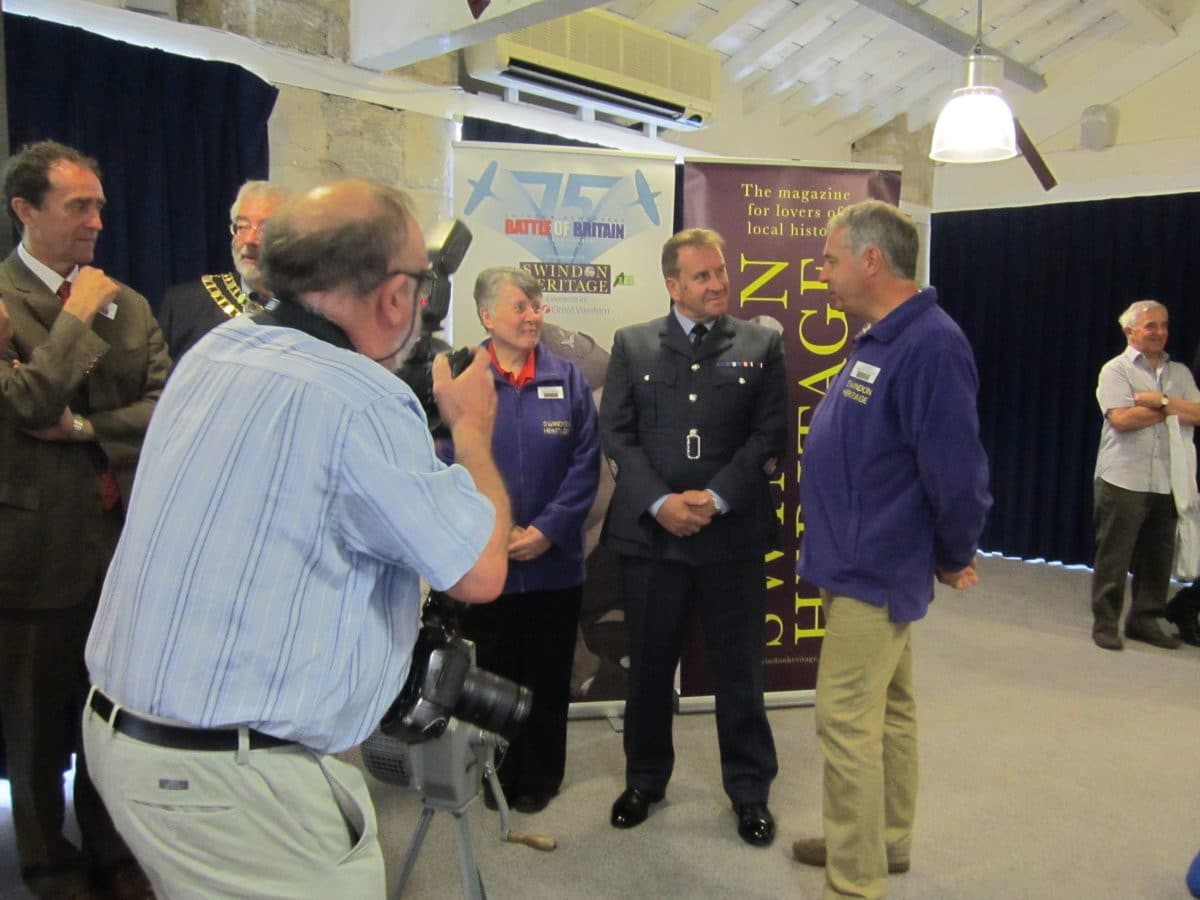
Today I went to the splendid STEAM museum to attend the press launch for Swindon’s activities in commemoration of the Battle of Britain. Commemoration of the loss all the Harold Starr’s of this world but I think, celebration too. Celebration that they were selfless enough to do what they had to do. And celebration that, because they did so, we in the west can have the lives that we have.
Winston Churchill
As Winston Churchill put it – even at the height of the BofB: ‘Never in the field of human conflict was so much owed by so many to so few’
A Flypast
The town is going to witness a spectacular flypast by the Spitfires and Hurricanes of the Battle of Britain Memorial Flight – the BBMF – on September 15th – the actual Battle of Britain day. It will form a unique formation to honour the 544 pilots of RAF Fighter Command who were killed in the battle. One of whom was Harold Starr. The BBMF will fly directly over Harold’s grave in Radnor Street cemetery. This will be a fabulously, fitting tribute that will mark the culmination of a week of events being called ‘Swindon Remembers’.
As Graham Carter, the editor of the splendid Swindon Heritage magazine commented: ‘The flypast would be a tremendous honour at any time. But on the very day that the country is marking the 75th anniversary of the Battle of Britain it becomes even more special.’
More than a flypast
But it’s not just about the flypast. There’s going to be whole week of events to mark this momentous event and occasion. They are too numerous to mention in detail here so keep an eye out on local media nearer the time for more details. But I will say that, amongst it all, there’s going to be an exhibition by Swindon artist David Bent – the official artist of the Red Arrows – and fabulously and fittingly for a town so steeped in the history of the railway:
First Great Western, the main sponsor of the week’s events will name a Class 43 locomotive in honour of Harold Starr. So nice to know their exorbitant fares are doing something worthwhile. One of their high speed trains will be named in honour of Harold. And, cynicism about FGW aside, that is a very wonderful thing.
A shared birthday
Finally – and on a personal note – the 8th of September happens to be pretty meaningful in my life – being as how it’s my birthday too. I feel somewhat honoured that this adopted daughter of Swindon shares her day with such a special son of Swindon. So when I raise a glass on my birthday, I’ll also raise a glass to Harold. And to the other 2,999 that were The Few. Bless ’em all.
Gosh. I can’t believe it’s been so long. But you all know how it is listeners. Life, business, etc – it all gets in the way sometimes. Gah! Anyway here we are the Richard Jefferies Old Town walk part 2.
Back in March – I published part one of two planned posts about the Richard Jefferies Old Town walk.
Here’s a random slide show of photographs from that section of the walk:
Part two at last
But last I’ve found an opportunity to move on to part 2 of this posting. Still – good things are worth waiting for eh? 🙂 Unfortunately it’s been so long I can’t now remember too much about the detail of it so. NO – I didn’t take notes. Sorry. So it’s now more a case of sharing the notes from the text version of the walk and lots of photographs.
I will say though that, yet again, a lot of urban discovery went on. For instance, despite many occasions of trooping up and down Victoria Hill I’d managed never to spot the plaque on the wall of a house commemorating the fact that Richard Jefferies had lived there for a time.
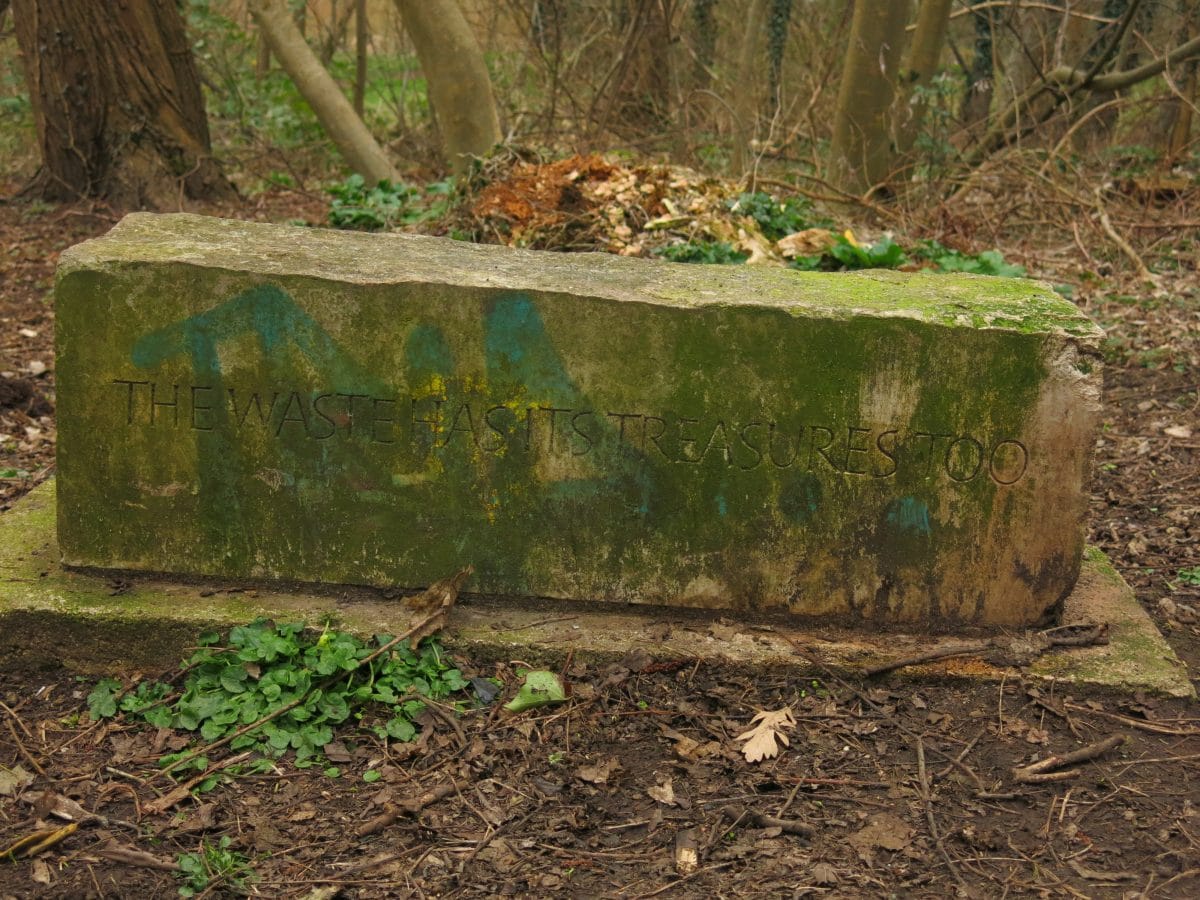
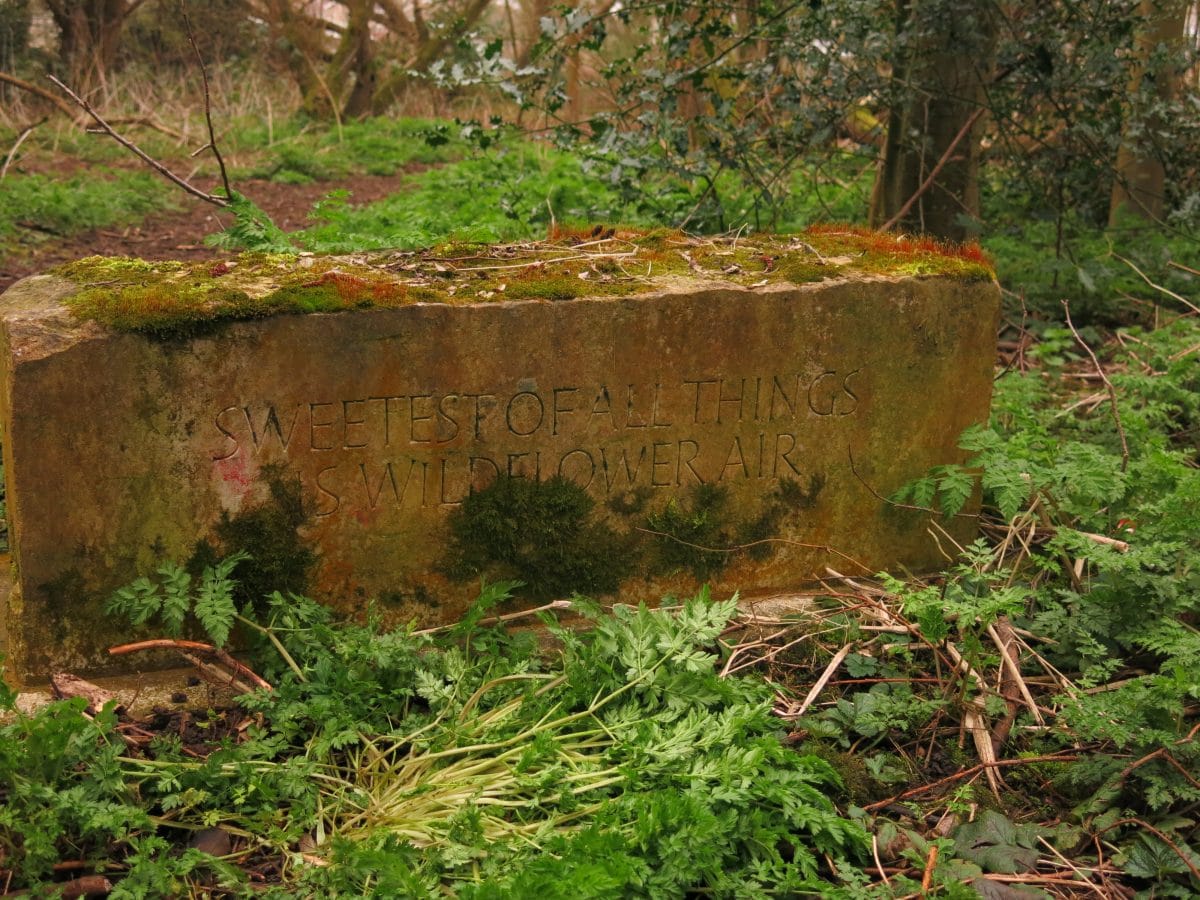
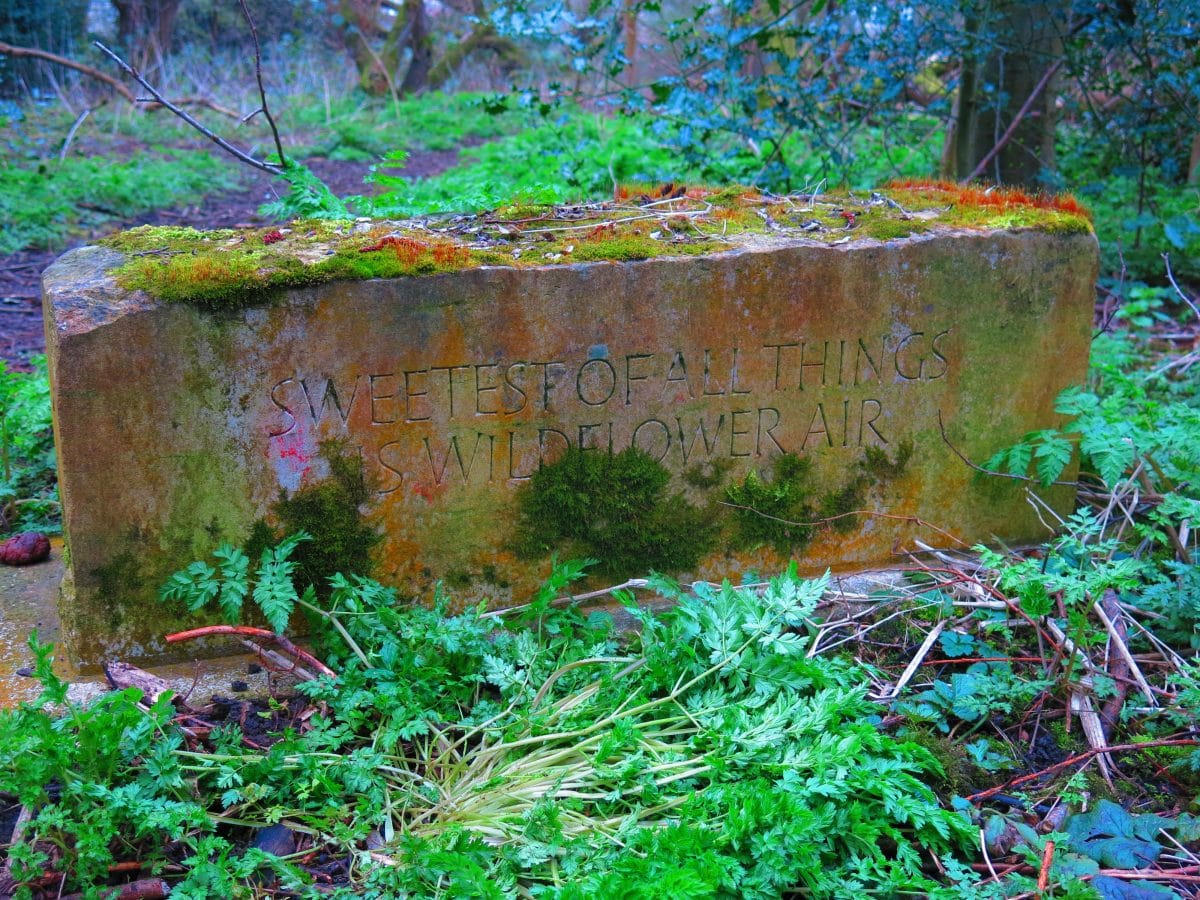
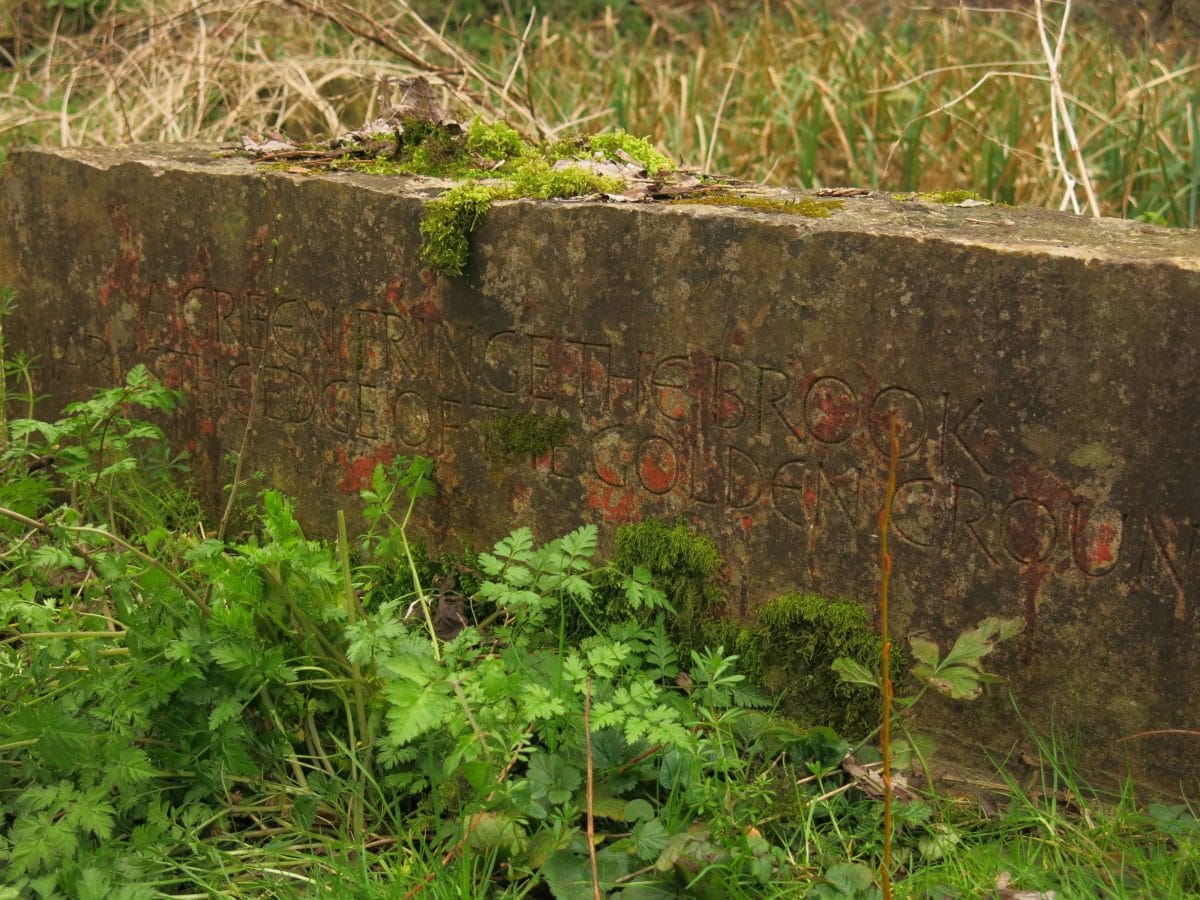
Nor was I aware of the blocks of stone bearing quotations from Jefferies’ work – as described in ‘OPTIONAL’ below. All of which left me quite excited. As did the fantastic ghost sign on the side of a building in Old Town – having never approached it from that angle I’d not seen it before.
It is an interesting walk, well worth doing that helps bring to life some of the life and times of the man.
Richard Jefferies Old Town walk Part 2
Follow the link to download a plain text PDF description of the entire richard jefferies walk.
At the conclusion of the last post the walk had taken us from the original Holy Rood church back to the ancient raised walkway known as The Planks and into the High Street. From here we move to number 5 in the walk described on the text version I found on the internet thus:
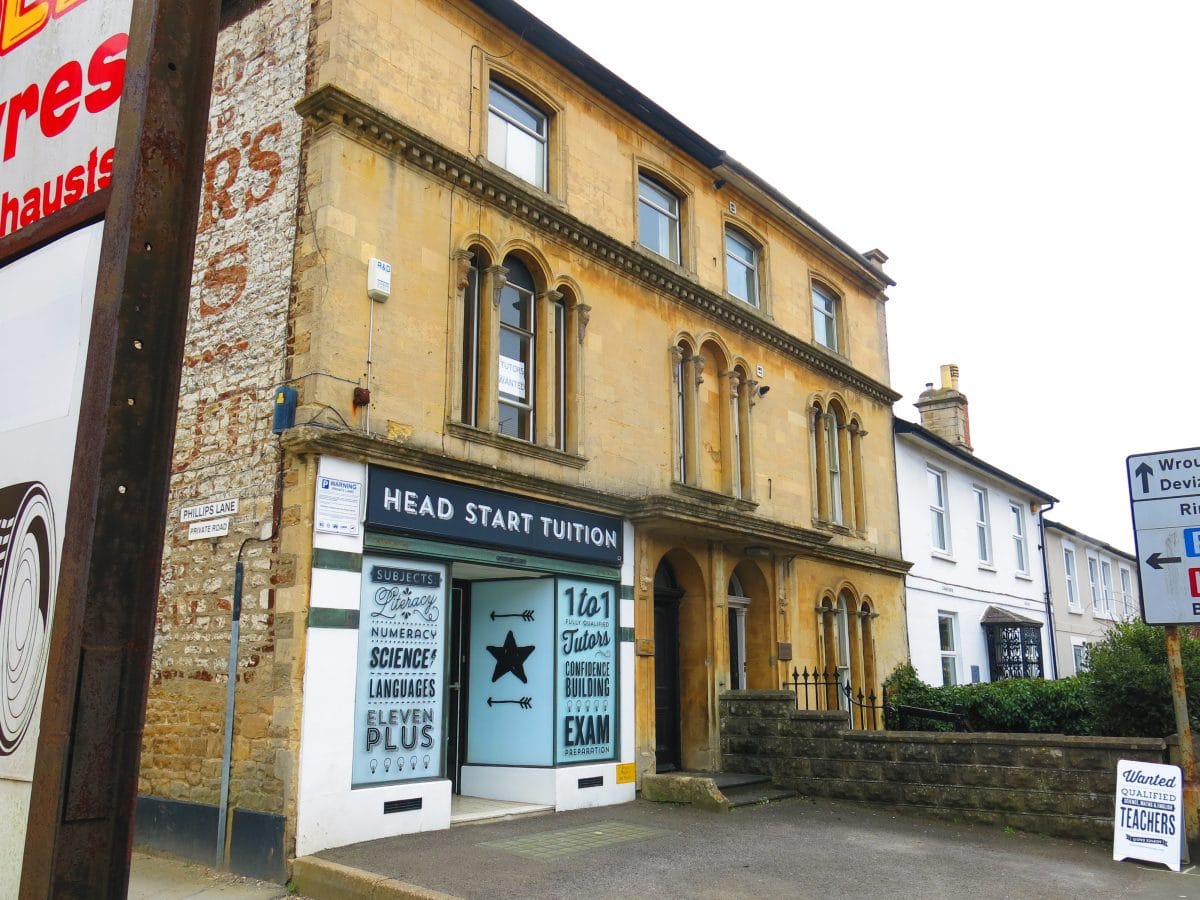
5) Turn right into Devizes Road. Richard went to two schools here: Fentimans at Springhill and the Misses Cowell at Clarendon House (corner of Phillips Lane). Continue along Devizes Road and tun left into Bath Road. Number 19 was, in 1866, the premises of the North Wilts Herald. Under its editor, Mr Piper, Richard began, at age 17, his career as a journalist.
6) Cross Bath Road and enter Prospect Place. Only a few houses remain dating from the 1850s. In Prospect Villas (now a car park) the Misses Cowell had a school which Richard attended in 1861.
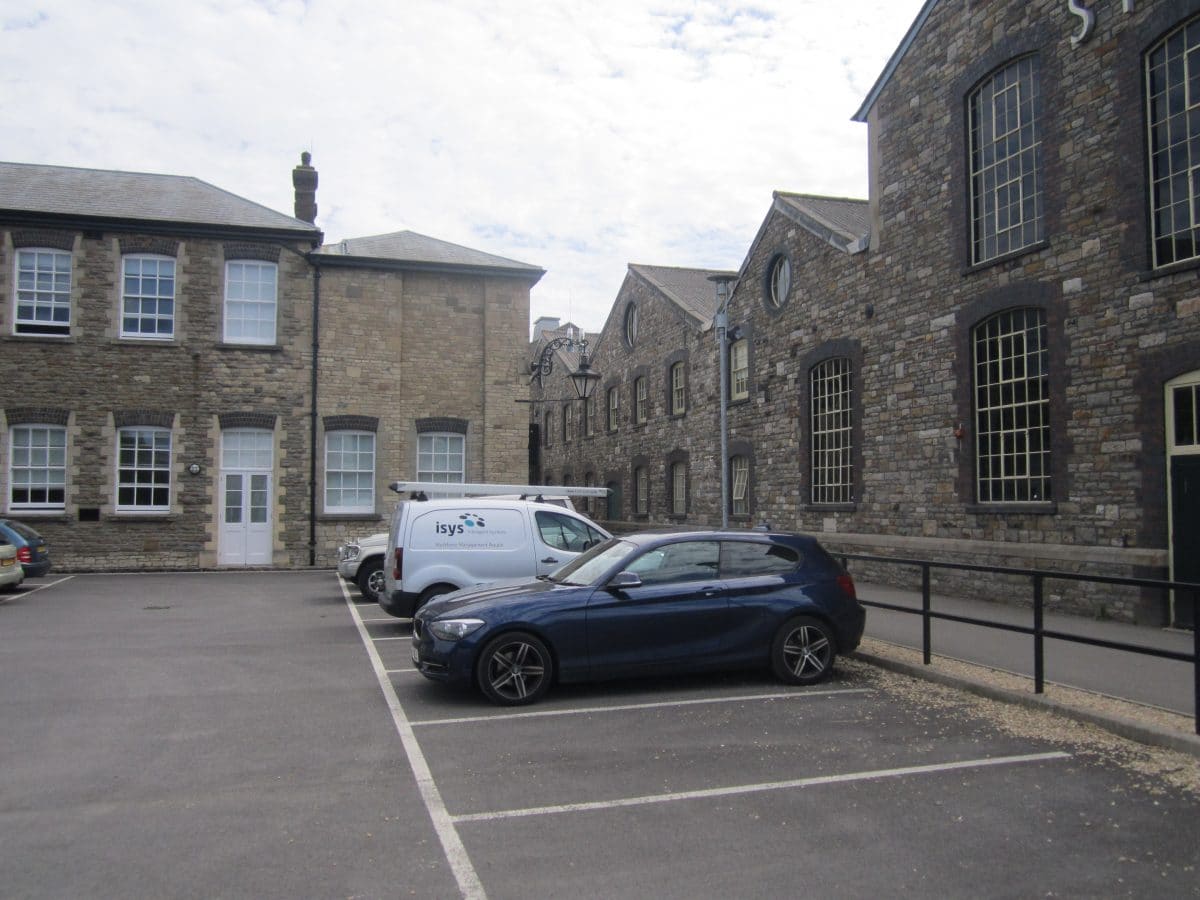
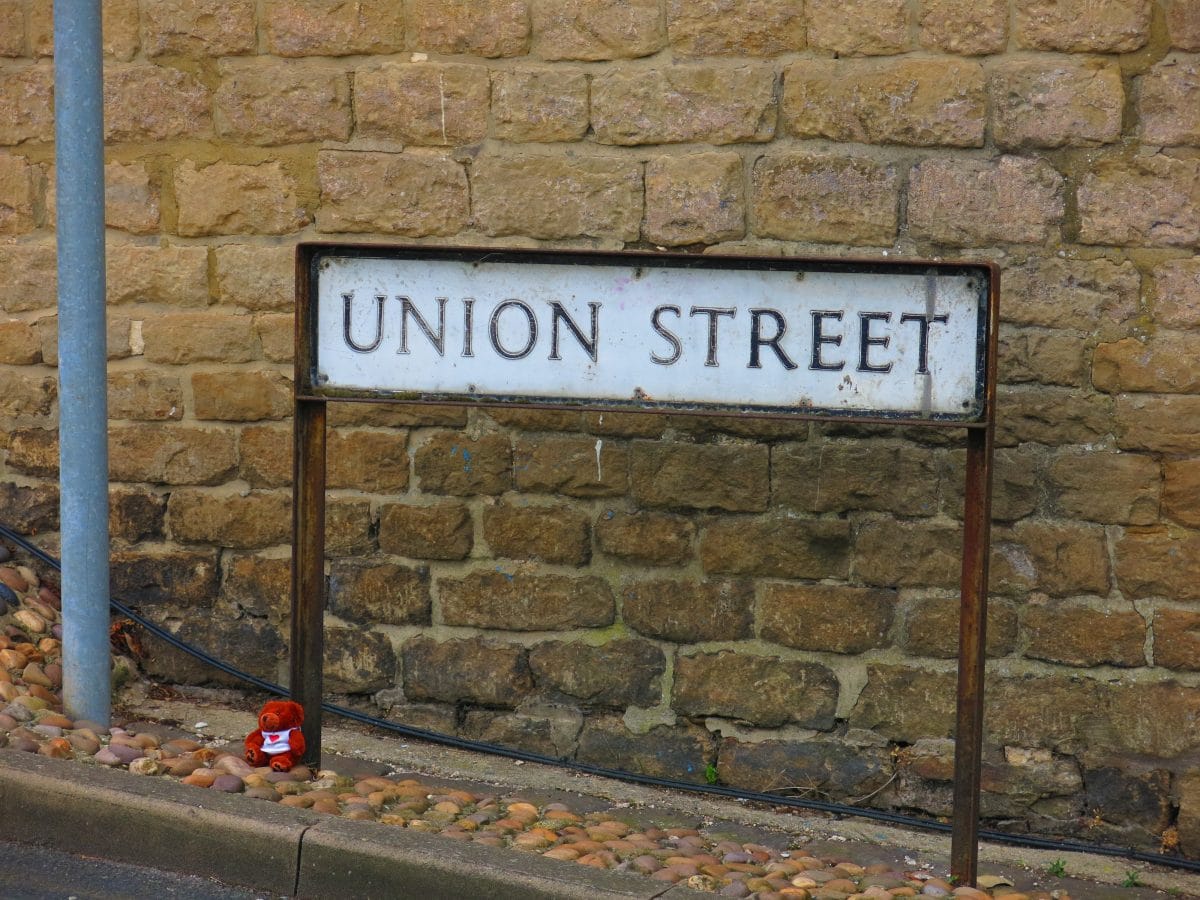
7) Enter Union Street and cut through to Victoria Road. There is now a plaque on number 93. Here Richard went to live with his bride, Jessie Baden, in 1875, and here their first child, Harold, was born. They left for London in 1877. At what is now the offices of The Star were the offices of The Swindon Advertiser owned by William Morris (not Morris of Kelmscott). He was a friend to Richard and published some of his works.
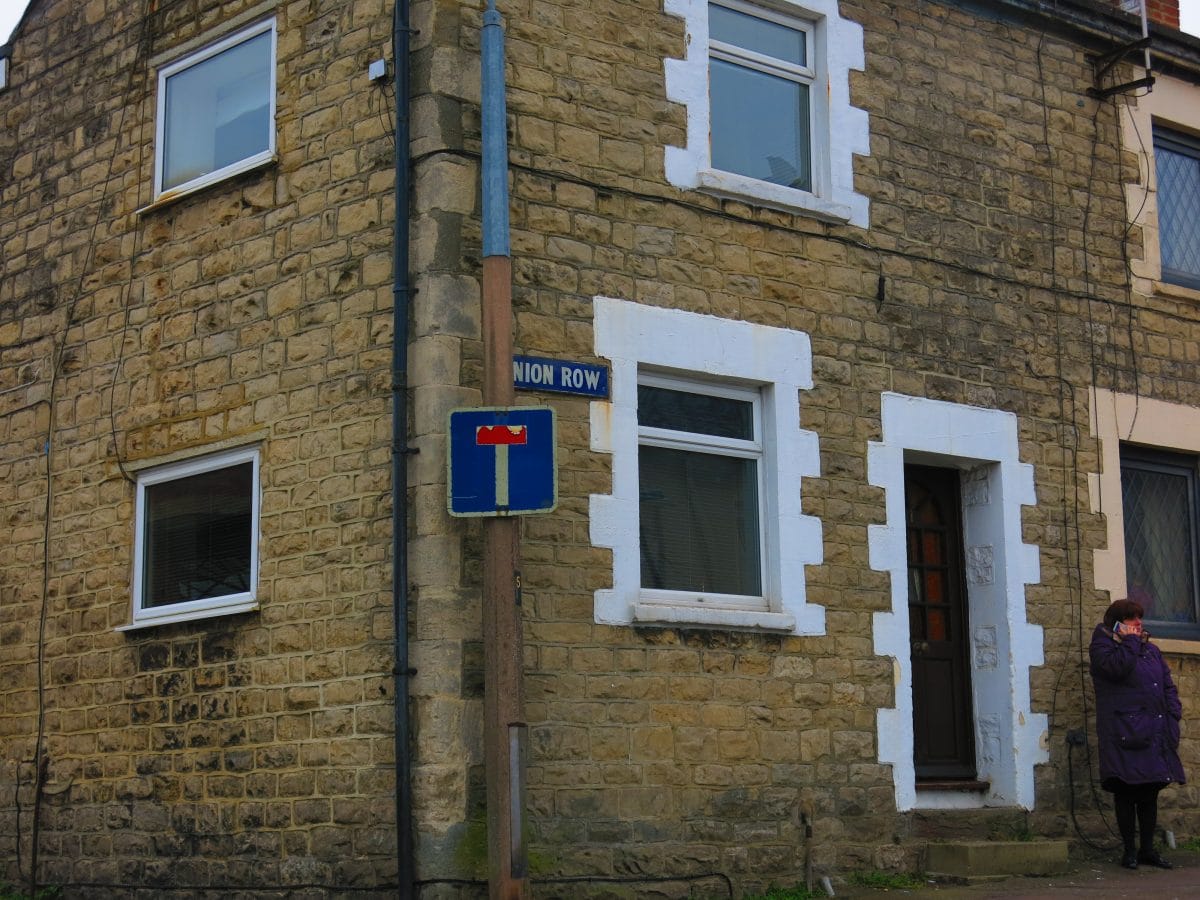
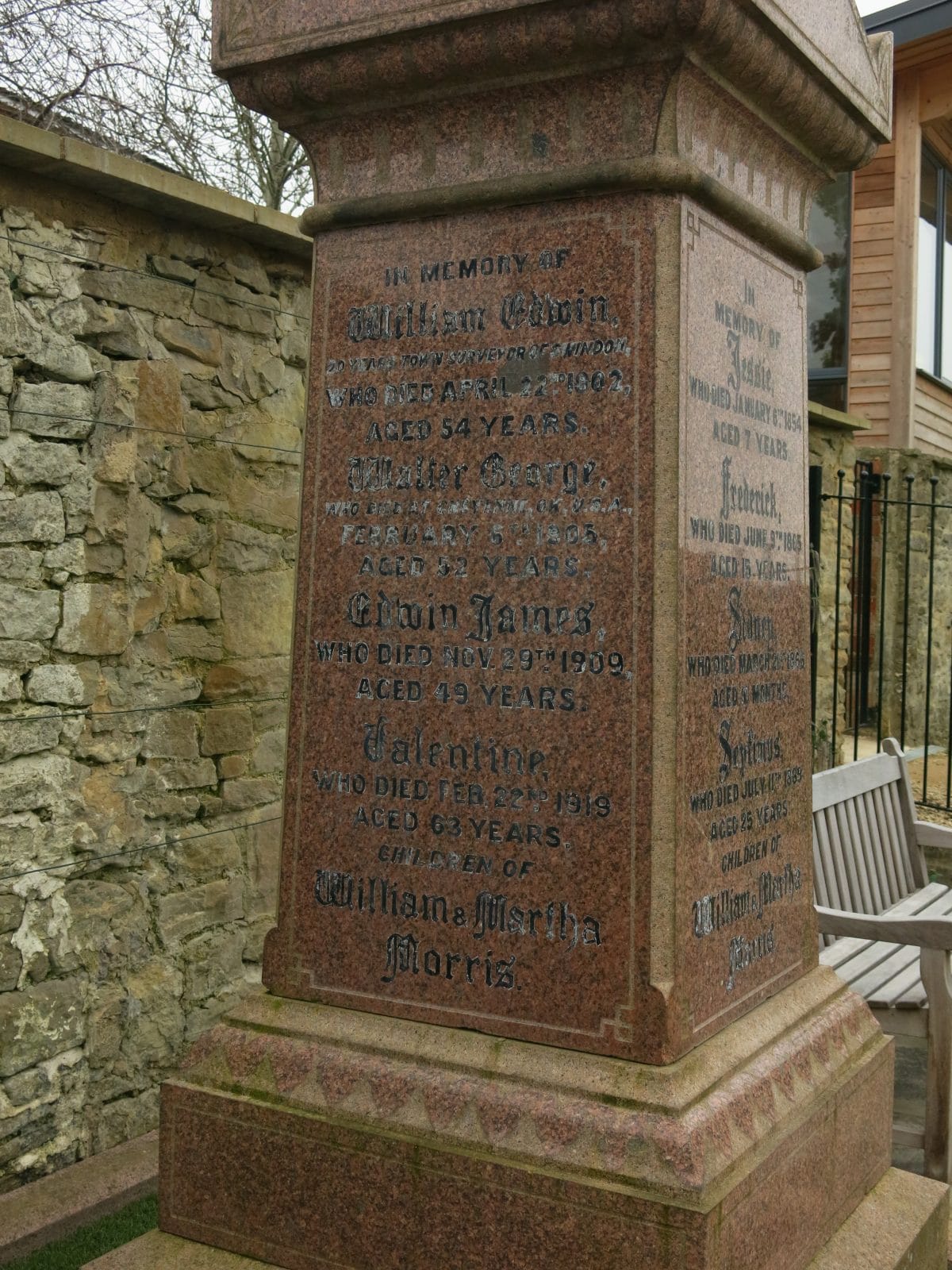
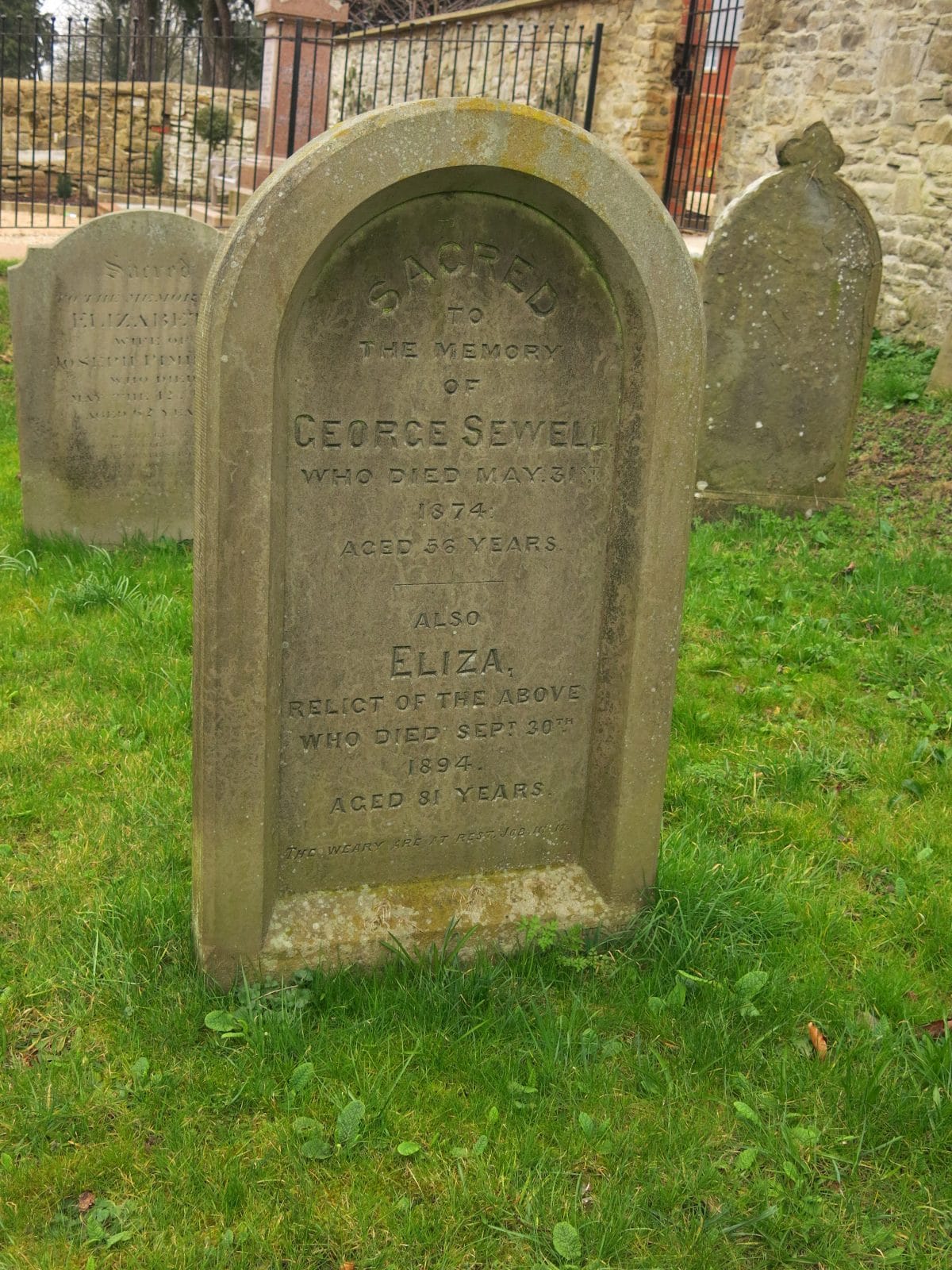
Cut through Union Row to Christ Church (1831) having crossed Cricklade Street. Richard’s grandfather, John, is buried here. Walk into the churchyard; having reached the far end of the church, look right. There is a row of Jefferies graves with round-topped headstones. NB: It has to be said that we weren’t able to find a row of Jefferies’ graves though we found one or two. Also of interest in that graveyard is the memorial of the Morris** family – founders of the Swindon Advertiser newspaper.
OPTIONAL
A few yards below Christ Church is Chandler Close and Holy Rood School. In the grounds are three blocks of stone engraved (1989) with quotations from Jefferies by sculptor Caroline Webb. There are also some seats.
Return along Cricklade Street to The Square but do not leave without a brief visit to Wood Street: Richard knew it well. Here, in rooms over ‘Lay’s Tearooms’ * (now the Cross Keys), he and Jessie stayed for a short while before moving into 22 Victoria Street (now 93 Victoria Road).
In Wood Street were shop properties owned by John Jefferies and bequeathed to Richard’s aunts Fanny and Martha. Martha Hall’s school was next to the King’s Arms.
*Lay’s tearooms, then the Cross Keys is now Baker Street – the pub on Wood Street.
A slide show of photographs – not necessarily in any particular order – from the Richard Jefferies Old Town walk and round and about:
‘The Swindon Advertiser was founded in 1854 by William Morris (Grandfather of Desmond Morris). Originally intended as a weekly paper, his aim was to produce a newspaper “that would act as a mouthpiece for the poor.”
Morris decided to print one issue a month due to the Stamp Tax laws at the time only applying to newspapers published every 28 days.
It was originally printed as a broadsheet on 6 February 1854 and titled the “Swindon Advertiser and Monthly Record” using a hand press in his father’s shop in Wood Street. Morris was sole writer, editor, printer and also delivered it personally, selling each copy for a penny. Using the inclusion of advertisements from local businesses, the second edition doubled in size.
Other newspaper companies were influenced by Morris’ example of a penny priced paper and quickly produced their own in the region and ultimately throughout the country, resulting in the Government amending the Stamp Tax laws to a more favourable version. The paper became published weekly due to this change. In 1855 Morris could afford to move the publication to new premises in Victoria Road where it has remained. Morris funded the building of Newspaper House and added a printing shop to the rear.
Morris became infamous in some circles for his scathing and often vitriolic editorials, with one editorial about an incident at Coate Water in 1861 leading to effigies of him and copies of his paper being burned in the town.’