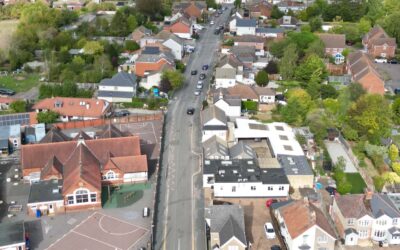
23. Wood Street Old Town

23. Wood Street Old Town

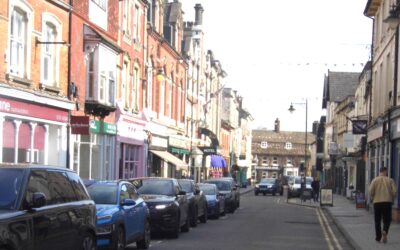
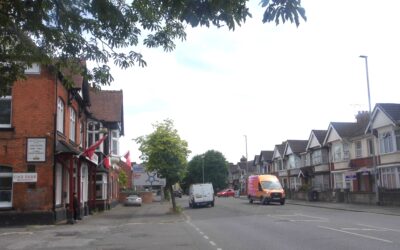
Wood Street Old Town.

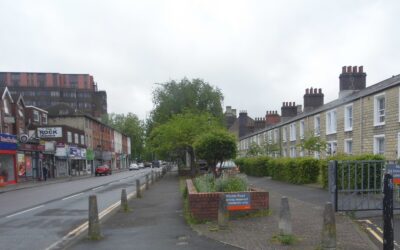
I’m out of synch now with the order that these streets will appear in the finished Swindon in 25 Streets.For some reason, unfathomable to me, I started writing about Wood Street then didn’t finish it and moved on to the rest – forgetting all about it. So here we are with this attractive Old Town street not at all in its proper place – I’ll sort that in the actual book.

But for now, suspend disbelief and imagine yourself having wandered down Newport Street and High Street, and turned around Limmex Corner* onto Wood Street. As weโ€™ve seen with Newport Street, street names were, for many years, somewhat โ€ฆ fluid. And this one is no exception.

read more
22. Rodbourne Road

22. Rodbourne Road

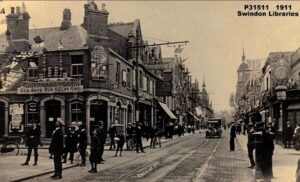
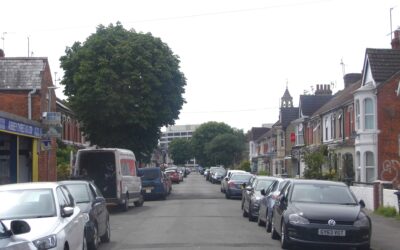
Dominated by the massive brick wall to the side of the Works, Rodbourne Road grew with said factory. Built in stages between 1872 and 1920 (approx.) it served as a main route through the Rodbourne area, built to house and support the ever-growing workforce at the GWR Works.

read more
20. Fleet Street and Fleet Square

20. Fleet Street and Fleet Square

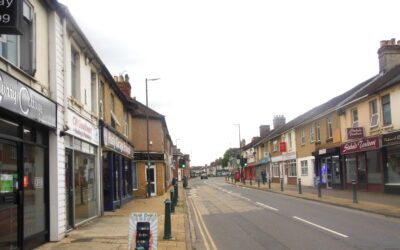
Way back in Swindonโ€™s pre-history, before the completion of Brunelโ€™s railway village, private builders began erecting houses outside it. At first, these houses for the GWR workers stood in close comfort to the railway village along and just off a track known as Fleetway or Fletway โ€“ a term derived from Old and Middle English. Fleet/Flet meaning, amongst other things, a slow-moving watercourse andย way,ย from Old English, is what youโ€™d suppose โ€“ a road, path or track.

ย Today we know this track as Westcott Place,ย Faringdon Roadย and Fleet Street. These small settlements became established as early as 1845.

read more
17. Emlyn Square

17. Emlyn Square

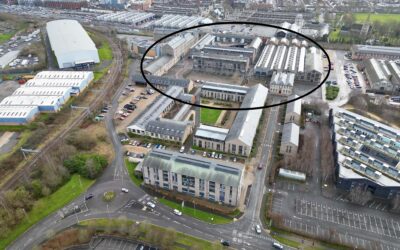
Emlyn Square in the GWR railway village is the next port of call in our Swindon in 25 Streets journey. Well in actual fact it’s not – but I’m out of synch due to not being able to get to Local Studies for a while. It’ll all sort itself out in the book.

read more
16. Fleming Way Swindon Centre

16. Fleming Way Swindon Centre

Fleming Way Swindon Centre 1962-1965.

Running through the centre of Swindon, Fleming Way takes its name from one of Swindonโ€™s greatest footballers: Harold John Fleming (1887-1955). Following the route of the then Wilts and Berks canal it begins at the junction with Milford Street and runs along to the Magic Roundabout and County Road. That marvelllous, Magimix of a traffic system sits in front of the County Ground football stadium where of course Haroldโ€™s feet performed footballing feats.

read more
15. Canal Walk Town Centre

15. Canal Walk Town Centre

Canal Walk Town Centre – 1972.

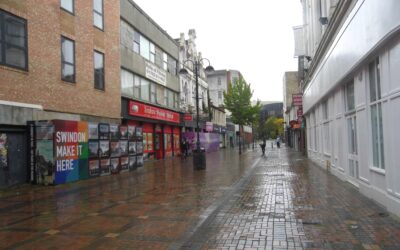
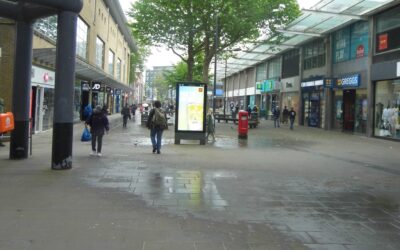
Bringing us into modern Swindon and doing exactly as that famous Ronseal advert proclaims, Canal Walk in the heart of Swindonโ€™s town centre, follows the route of where the Wilts & Berks canal once ran. Itโ€™s now a pedestrianised shopping area whose paving, if you stop and look, tells some of the history of this areaโ€™s backstory.

read more
14. Faringdon Road Swindon

14. Faringdon Road Swindon

Faringdon Road Swindon – 1880s.

The time was when this stretch of road comprised two separate streets: Faringdon Road and Faringdon Street. They, along with Westcott Place and Fleet Street, were developed along an ancient track known as the Fleetway or Fleteway. Thus, where Fleet Street meets Bridge Street, in a nod to that long-gone track, a currently unoccupied commercial building bears the name Fleetway House.

read more

Swindon in 50 more buildings

West Swindon – What the eye doesn’t see

Swindon – A Born Again Swindonian’s Guide

We Are Swindon