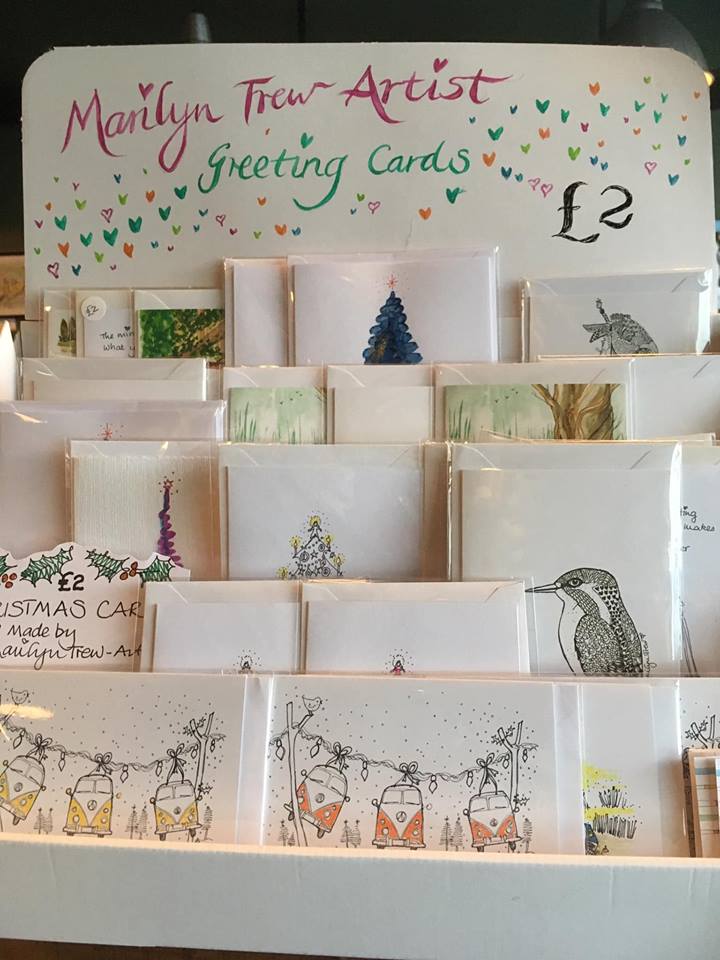
Where many creatives that I speak to have a shared tale of, if not parental antagonism to them pursuing art, then at least apathy and lack of support. But not so for Marilyn Trew artist. For her dad was a creative chap – so it’s in the blood as it were. A sign-writer, for a pastime, Marilyn’s dad cut shapes from linoleum to frame and Marilyn would help him with that.
Failing her 11+, aged 13 Marilyn got the chance of a grammar scholarship studying art. Twenty-eight places were available and Marilyn’s painting of Hull fish wives won her one of them. So off to study art she went. She had one English lesson and one maths lesson per week – the rest of her school hours she spent studying all the artistic disciplines. Through all this Marilyn had her parent’s support and encouragement. Marilyn says she had the great good fortune to have parents that only wanted for her to be happy so gave her their blessing.
Marilyn’s back story is so varied that I’ll have to leap forward to her Swindon activities or this post is going to be waaaaay too long as fascinating as it is. Suffice it to say, that Marilyn’s experiences encompass designing flooring for the Armstrong Cork Co and flying high as a stewardess for British Eagle Airlines. In that role, Marilyn flew Brian Epstein (the Beatles’ manager), the London Symphony Orchestra and once threw Acker Bilk off a plane for being drunk in charge of his cabin bag! There’s also been a graphic design business in Spain and HR and counselling training. Not much then eh?
Stepping into Swindon’s Art Scene
Since making a full-time return to art five years ago, Marilyn has been super active in Swindon’s super active art scene.
Asked to start an art group by by Stratton Parish council at Grange leisure centre, the group is now thirty people strong. Marilyn told me how she loves working with this group because it uses so much of her experience. Well – maybe not designing floors. With a grant to get it off the ground, this group is now self-funding.
Savernake Street Hall – Eastcott Community
Together with fellow artist Ruth Wintle, another super lady, Marilyn runs a further art group at Savernake Street Hall – a great community centre run by a bunch of gorgeous community minded people for whom Marilyn is full of praise. And quite right too. They’re great. Marilyn explains that many people come to the group purely for the companionship. They learn about art, go on trips and they make friends. And that’s what it’s all about.
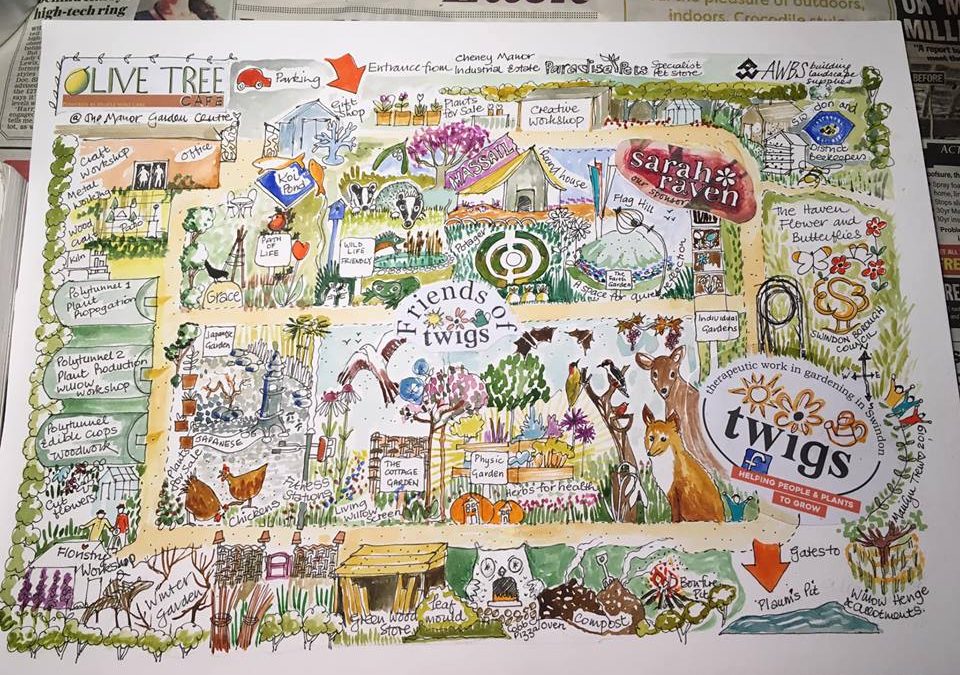
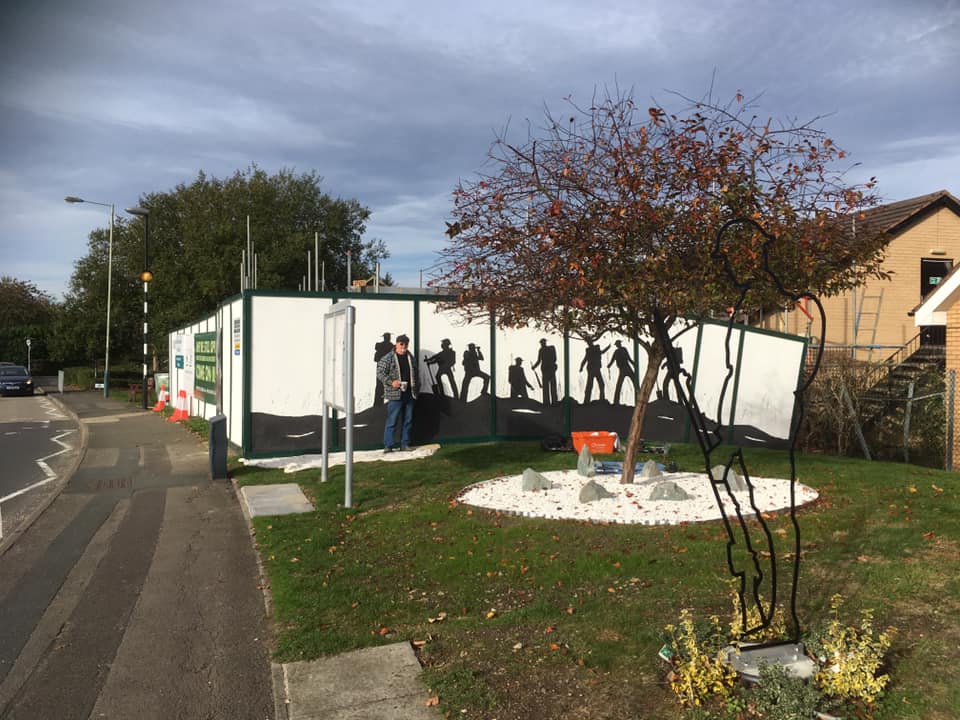
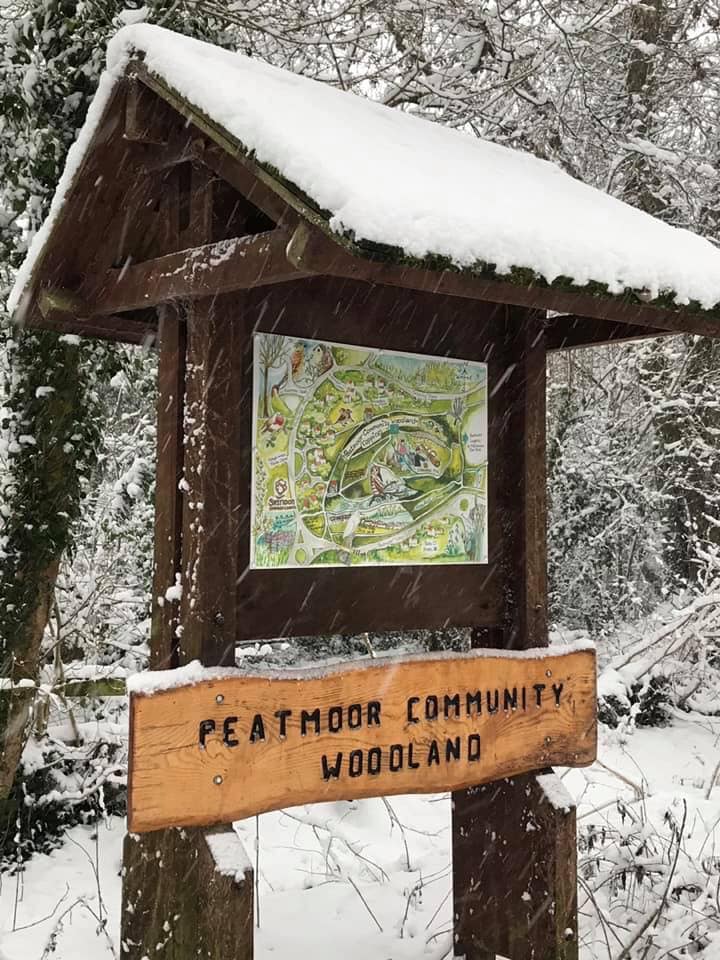
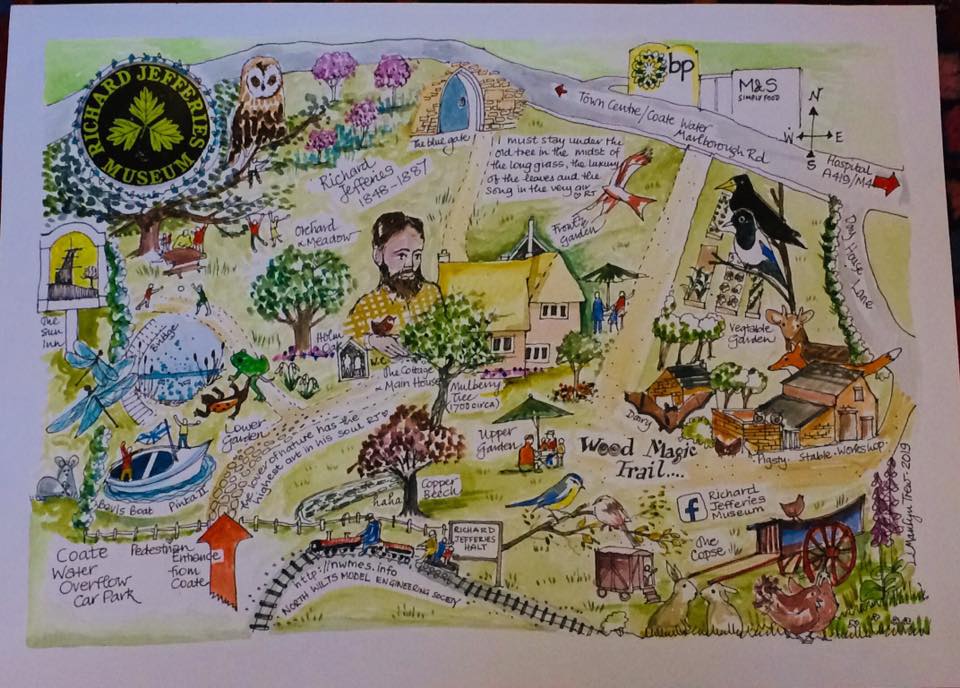
Being the wonderful community minded individual that she is, a year or so back Marilyn drew the most beautiful map for the Peatmoor Community woodland.
In the image below you see the gorgeous Marilyn, her husband Chris and the map.
Marilyn Trew with her husband Chris and her fabulous Peatmoor map.
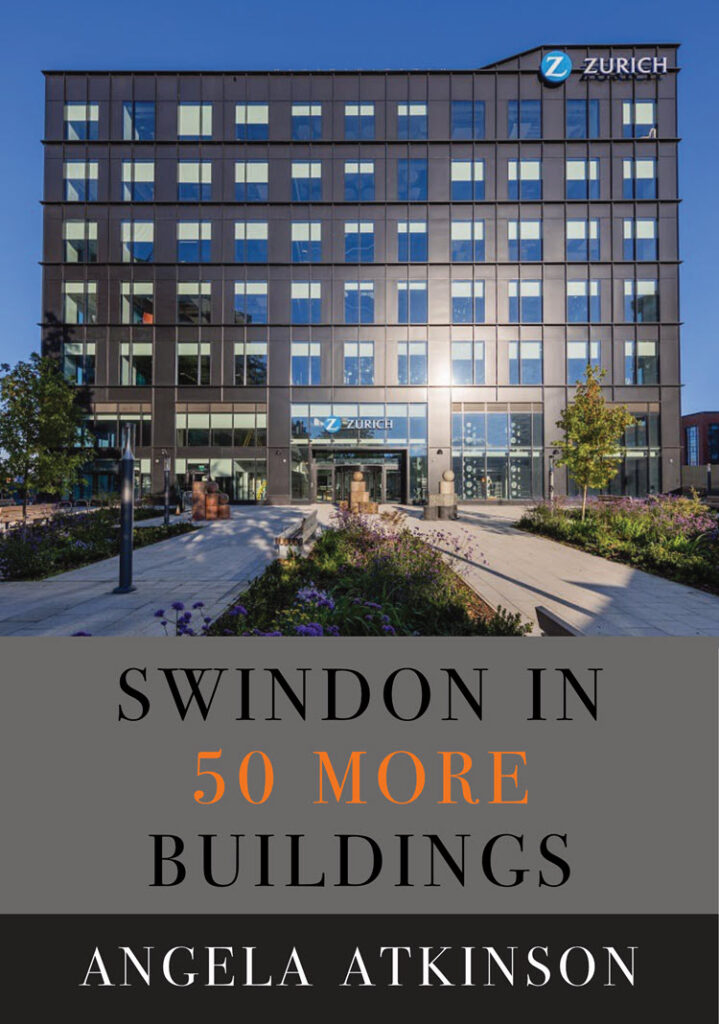
I happened to see that map on social media. #Obvs And a bell clanged in my head. ‘Ooh’ I thought, ‘I could ask Marilyn if she’d do a map of the Richard https://swindonian.me/2015/03/29/richard-jefferies-old-town-walk-part-1/Jefferies Old Town walk for a project I’m trying to get to!’ She did – and it’s amazing. And since then the whole map painting malarkey has grown like topsy, with maps of the garden at the Richard Jefferies museum, the Twigs garden that you see above and more. I’d really love for her to do one of the railway village conservation area. She has produced one for me to go in Swindon in 50 Buildings – hitting bookshelves near you in a few weeks’ time.
When not running art groups and mapping Swindon she’s busy with her own thing – mostly nature and wildlife.
Marilyn is a wonderful person. She’s warm and kind and community minded. And, she not only draws maps for me but she brings me sweeties. So y’know … 😉 Long may she continue mapping Swindon and painting in it.
Swindon’s Stylish Art Gallery – As some of you will know, I’m right now embroiled in writing my second publication for Amberley Books, Swindon in 50 Buildings. You can imagine I’m sure, how much material I’m amassing. All of it fascinating and entertaining but not necessarily suitable for the book. So it’s great to have this blog as a vehicle to share some of what I can’t put in the book.
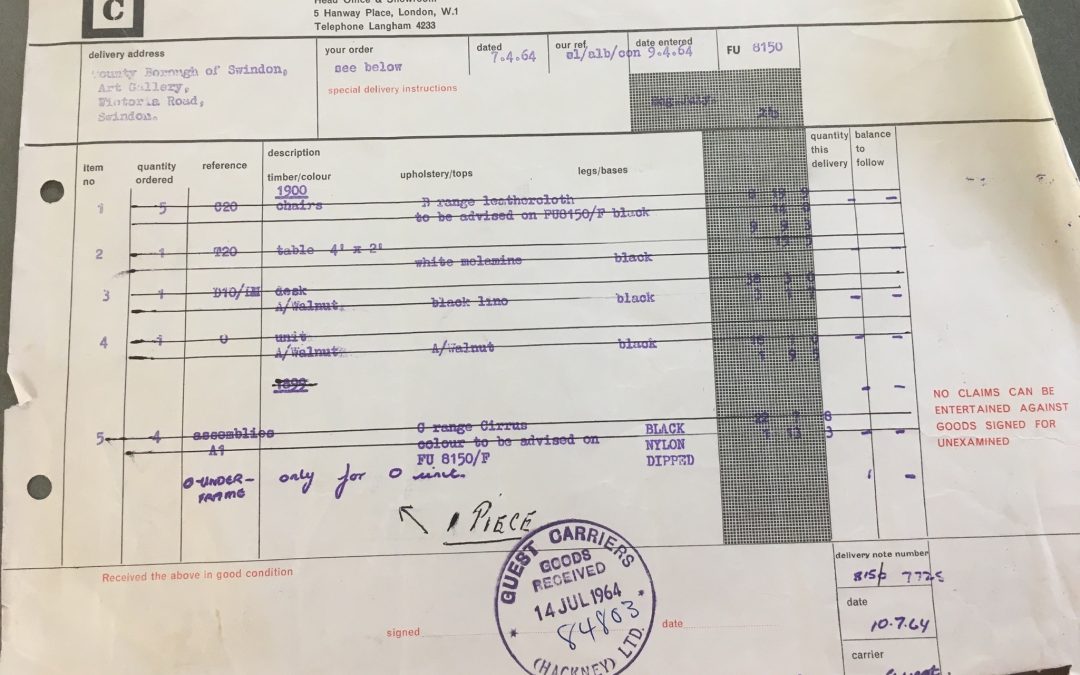
Obviously I’m not going to reveal too much here about the building. But I loved learning that, when the 1964 art gallery annexe, designed by the borough architect, J. Loring Morgan, opened it was furnished with tables and chairs from none other than Conran Associates. Yep – THE Conran of Habitat, the Conran Shop and more. Before ever Ikea invaded our shores we had Conran. Conran – and Heal’s – they were the bees knees. The last word in interior design.
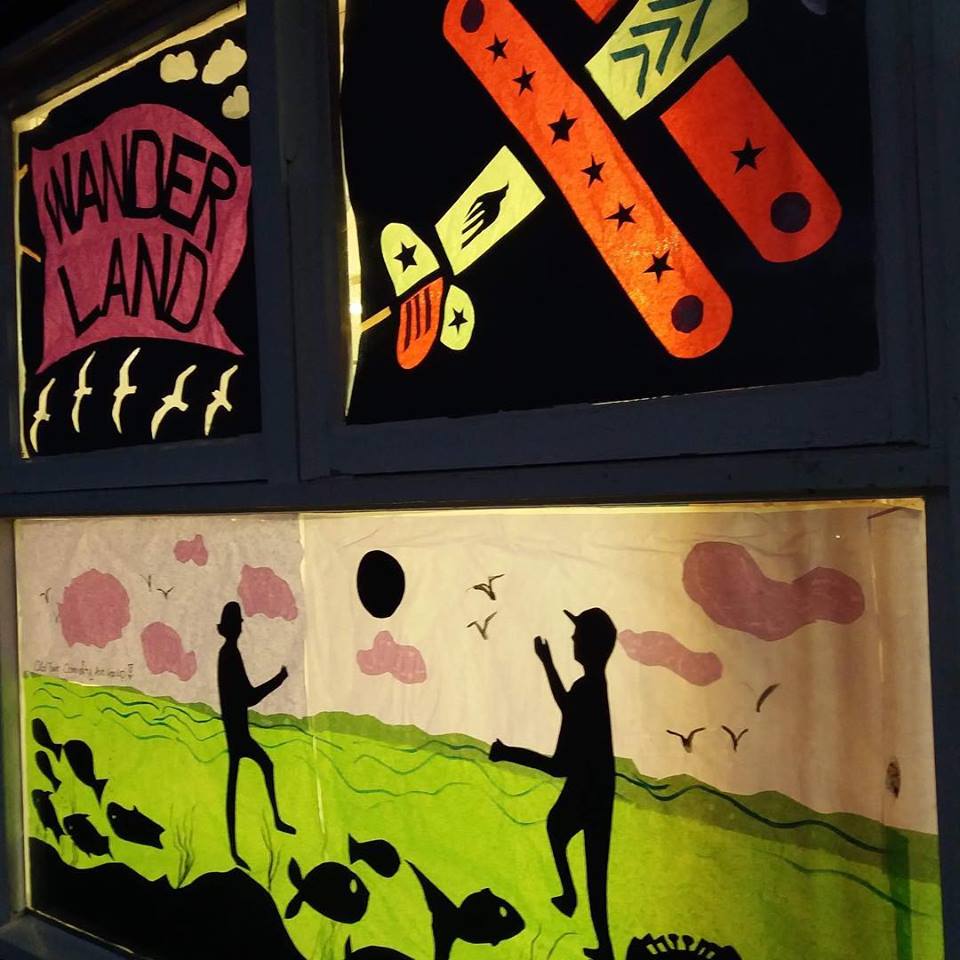
These days that gallery annexe might look of its time – on the outside at least. Indeed I’m never sure how I feel about its exterior. Some days I like it and some days I don’t so much. Though I do always like the decorated glass panels.
It’s worth noting that this annexe is reputed to be the first purpose built public gallery , built in Britain post WWII.
But of course what matters most of all is what goes in the building. Which, as it happens, is lots. Lunchtime talks, childrens’ activities and trails, evening talks etc.
But the point here being that, in its day, Swindon evidently created a chic and stylish venue for its art collection.
And on the subject of the gharial …
The Museum’s Inspiration: Charles Henry Gore F.G.S
The first honorary curator, for thirty-one years, and the man behind the setting up of the museum was one Charles Henry Gore.
Gore developed an interest in archaeology as a child. Over time he built up a collection of specimens, becoming a well-respected geologist and a fellow of the Geological Society.
Gore was awarded the Freedom of the Borough of Swindon in October 1933. That made him only the fourth person in the town’s history to receive such an honour. Moreover the first museum curator to receive such an honour.
Charles Henry Gore died in 1951 aged 84. He’d held an ambition to be curator at the museum until he was 90. He almost managed it.
This post is by way of sharing a blog on the Creative Wiltshire website.
The blog began life as a series of Facebook posts by Carole Bent, partner in the David Bent Studio. Carole set out, in the lull following Open Studios in September, to use Facebook to celebrate some of Swindon’s artists and to showcase ‘what an artist’s wife and partner bought’.
‘The possibility of exhibiting these with a friend in a similar position was discussed, but time flew by.
In 2018, Carole decided that a positive and accessible way to share the work would be virtually, on Facebook. Her personal and positive approach aimed to brighten up the dark month of November and to help to shine a light on some of the great talent close to home.’
So the lovely blog put together by Creative Wiltshire brings Carole’s posts together with some context about Carole herself.
Of course I’ve written about some of the artists Carole showcased on this blog – often several times over the years. So what follows is merely a list of quick links to those posts. But DO, DO, DO check out the full blog linked above to read about others that I’ve not covered.
I have long admired the work of Dona Bradley architectural illustrator. So when she expressed interest in having a feature in this ‘Made in Wiltshire’ section on the blog, thrilled didn’t cover it because I love her iconic Swindon images. #Obvs
It’s a b*gger that I’m out of wall space – fridge magnets it is then!
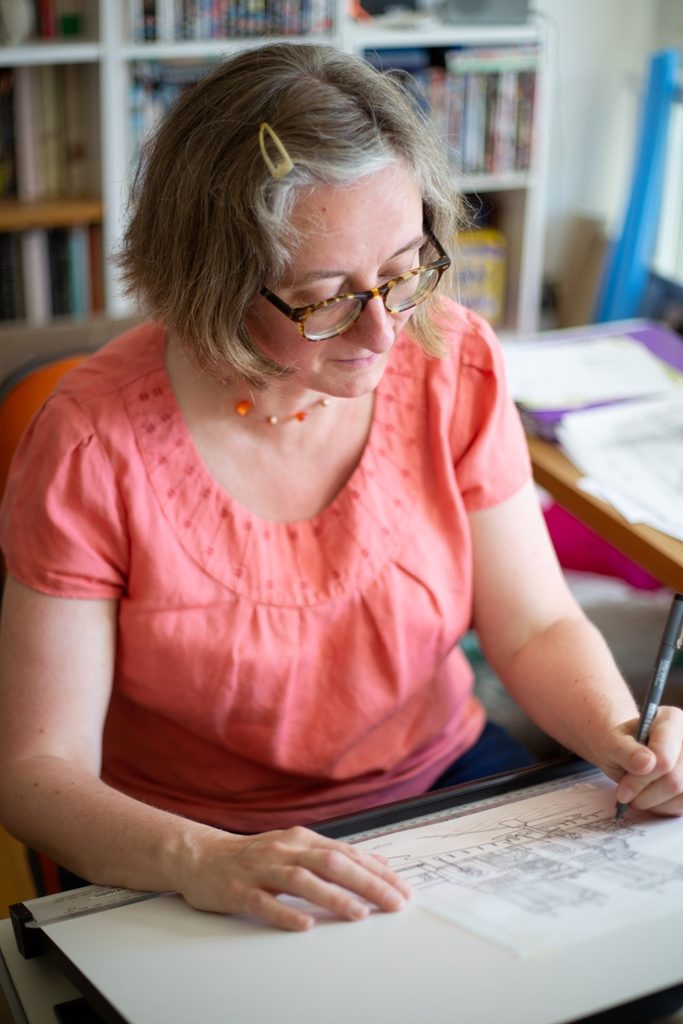
Dona at the drawing board. Photo credit: Stephen McGrath
Discouraged
Talk to many creatives of certain generations and you meet a recurring theme: that of parents discouraging their offspring from pursuing their artistic talents and aspirations. And Dona is no exception to this. She told me how, when she hit 40, she realised that the great keyboard of life had a lost chord. And that chord was her creativity, her art. So she set about rediscovering it.
From then until now, Dona’s pursued her art part-time. But January 2019 marks a new, exciting, yet scary era: that of pursuing her work full-time. She’ll be doing lots more live events, getting out and about with her art and meeting people. I think it’s safe to say the lost chord is well and truly found.
Art for Architecture’s Sake
Dona confesses to be being a closet architect. ‘If I had my time again, I’d train to be an architect’, she said. But instead, at the life point she was at when she realised how much she missed being creative, she opted to go to Bristol college and do a course in spatial design.The discipline takes into account the architectural aspects of a building and is much less about pretty colours, soft furnishings and the like.
All of Dona’s artwork now is a happy compromise for her. Specializing in buildings, her work fulfils both her interest in architecture and her desire to create. With Dona’s work, everything is about the building. What she loves is marrying a building’s beauty with the significance it holds for an individual.
The Feel Good Factor
Dona’s clients tell her stories about their experiences of a building or place – so her work helps people to feel good about where they live. Swindon is a great subject for Dona for this reason.
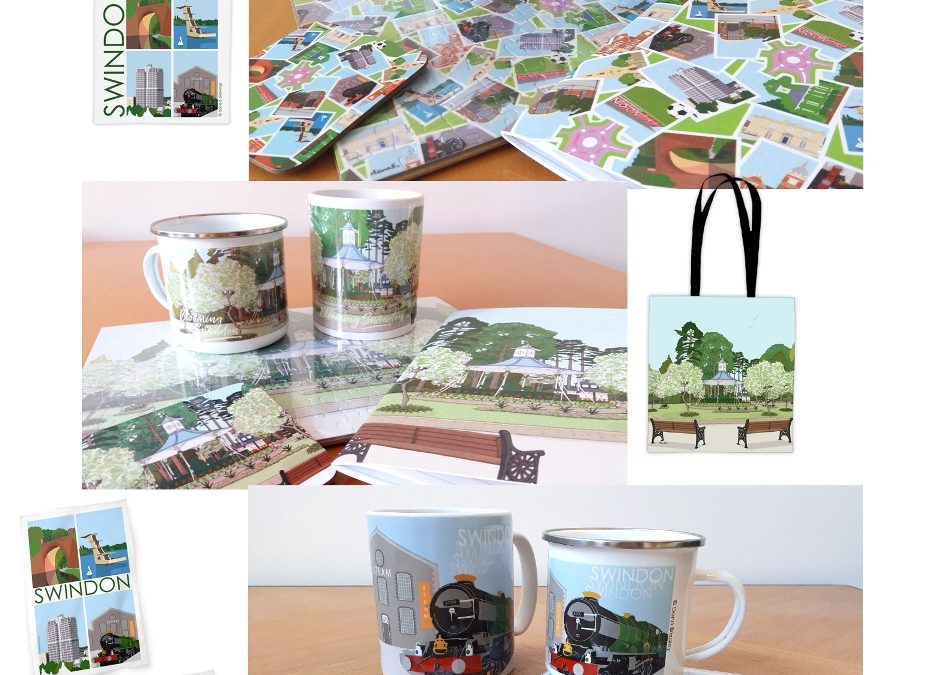
There’s no escaping that Swindon gets more than its share of put downs and knocks – goodness only knows why. Yet, Swindon has some wonderful, iconic buildings and structures that Dona has used in her work to great effect. For a start, my favourite David Murray John Tower has had theDona Bradley treatment, as has the iconic (albeit neglected) diving platform at Coate Water. Aren’t they both gorgeous?!
There’s a list of places that stock Dona’s work at the bottom of this post.
Dona’s extensive Swindon product range
Magic Roundabout Christmas Decs!
Swindon Artist’s Forum and Other Support Networks
Freelancers of all kinds need support networks and, in the case of artists in particular, somewhere to try out their work in a safe environment. Dona cites the Swindon Artist’s Forum as one such place. Says Dona: ‘It’s a non-judgemental gallery for all comers.’ She is also a keen participant in Swindon Open Studios, displaying her work in Swindon’s central library.
A Swindon urban sketchbook on its way to the art library in Brooklyn, New York. Should you visit you can go take it off the shelves there and view it. How FAB is that?
Down the Motorway to Bristol
It’s obvious enough that Dona finds suitable subjects for her illustrations beyond Swindon’s undoubted charms! These are many but notably – Bristol. When she has stalls, and participates in markets in Bristol, Dona accepts their local currency, the Bristol pound. Over the 2018 festive season, Dona had a blast trading in Brizzle’s own currency and collaborating with seventy other traders at the Bristol Bazaar – a fabulous pop-up shop.
In the Ether
By now you’re surely keen to see more of Dona’s work and follow her on social media. So:
Shop local. Shop Independent. It’s Just a card – or fridge magnet … !
There’s a growing appetite for shopping locally and supporting independents. Witness the diaspora of the coffee shop for a start. And the rise of artisan everything – now there’s an overused and wrongly used word – anyway! Anyone who’s paid any attention at all to this blog will know that I’ve written ad nauseam about the importance of shopping locally and supporting small businesses. I am one after all.
And so are artists! They have bills to pay just like the rest of us. Which is why there’s a thing, a campaign, called ‘Just a Card‘.
From the website: ‘The JUST A CARD campaign aims to encourage people to buy from Designer/Makers and Independent Galleries and Shops by reinforcing the message that all purchases, however small, even ‘just a card‘ are so vital to the prosperity and survival of small businesses.
The campaign came about when Artist & Designer Sarah Hamilton saw the quote “If everyone who’d complimented our beautiful gallery had bought ‘just a card‘ we’d still be open” by store keepers who’d recently closed their gallery.’ That makes you think doesn’t it? It’s an important message – one applicable to any small business and *ahem* blog owner. So Dona, of course, subscribes to the ‘Just a Card’ campaign.
Where you can get Dona’s work – aside from her website:
Let’s first establish the difference between a wedding planner and a wedding and event stylist.
A wedding planner is the person responsible for every organisational aspect of your occasion. Depending on the level of service you’re paying them for, a wedding planner will, for instance,as this article in The Knot points out, help you with:
Setting a realistic budget for your wedding or party
Come up with a master plan to map out all the small details – from your music choices to your favours
Source venues/locations that fit your brief and budget
Fitting your budget, find great florists, photographers, caterers, bands and DJs and … wedding/event stylists …
… and a great deal more besides.
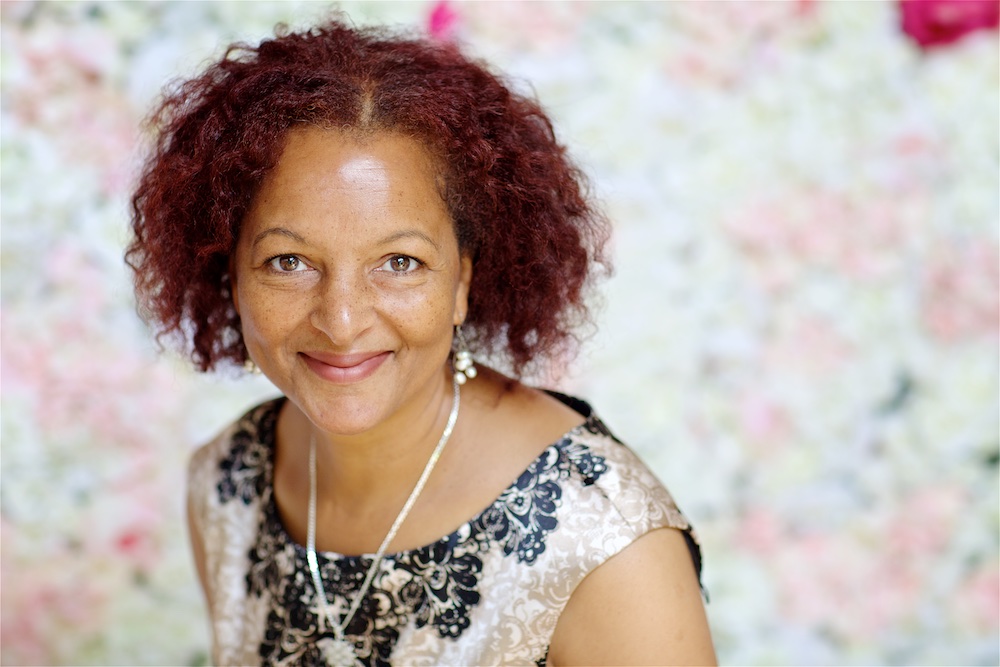
The Event Stylist – Sandra Trusty: Fabulous Functions UK
An event stylist is the person that gives your venue the WOW factor. You know – that thing that makes your guests take a sharp intake of delighted breath when they walk into the room. But how to choose such a person?
NB: I’ve made a point of mentioning the word event because of course venue stylists are not only for weddings. From hatch to match and despatch – life is full of occasions that call for celebration, for rolling out the metaphorical red carpet.
In this video Sandra talks about Fabulous Functions UK and how they work:
Choosing an event stylist
A wedding stylist can work absolute wonders for you. They’ll bring your vision to life in every detail of your ceremony and reception, liaising with your wedding planner should you have one, to create a cohesive story.
Close your eyes and picture your party or wedding reception. Whatever your dream might be, from vintage tea party to winter wonderland, your event stylist will bring your vision to life.
To get your search started, Google is your friend. Browse for event styling services in your area. Check out social media too. Pinterest, Instagram and Facebook are all great places to find event stylists and to get some visuals on what they can do. Not forgetting, if it’s a wedding you want styling, wedding fairs.
Once you’ve shortlisted some stylists that pique your interest check out their websites for their portfolio and costings. When you’re satisfied on those points all that’s left then is to make appointments to see them in person. As you start to discuss with them what you have in mind, you’ll quickly be able to gauge if they ‘feel’ right to you. It’s vital that you feel confident in them and comfortable with them.
Fabulous Functions UK
Fabulous Functions UK:
Where It’s All About You
Before returning to the UK, Fabulous Functions UK enhanced the events with their flair and imagination in the Caribbean, Middle East and the rest of Europe. Drawing on that experience, they now offer a tailor-made service to Swindon, to Wiltshire and much of the south-west that is gaining bouquets at every turn.
Watch and listen to Sandra talking about how she can help you decorate your wedding or other special occasion:
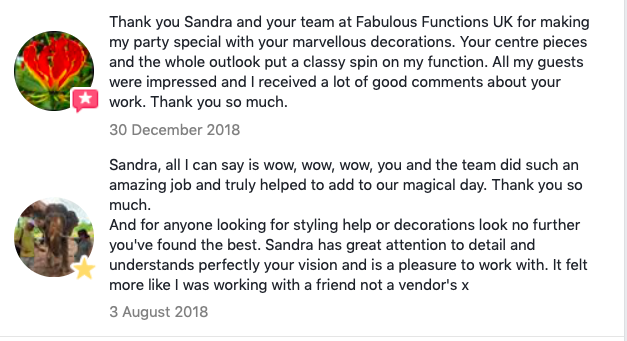
Proving that point, January 2019 saw Bride Book UK award Fabulous Functions UK a silver certificate of excellence.
With well-chosen accessories, complementing your chosen colour scheme, Fabulous Functions UK will transform your venue and make your vision manifest. They have an ever-growing range of venue accessories for you to hire, of which the crème de la crème are their two fabulous flower walls.
So delay no more. For a celebration to remember call them now for a no-obligation chat. Telephone: 00 44 7511 842 451 or email hello@fabulousfunctionsuk.com