Below is an extract from it. Do follow the link above and read the whole thing. It’s fascinating stuff all about the Nervi football stand that Swindon never got.
It turns out that:
‘In June 1963, at the height of his appeal, Nervi received an unexpected piece of correspondence. It came from the municipality of Swindon, England.
Swindon was a mid-sized railway town, located 80 miles west of London in the rural county of Wiltshire. The letter from Mr Laurence Robertson explained that he’d received authorisation from the local Council. It explained that they wishedto engage an “illustrious” architect to produce plans for a new grandstand at the County Ground. The home of Second Division Swindon Town FC.
The project was to be funded by the Council as landowners and repaid over time by the tenant football club.
SBC’s admiration
The letter from Swindon Council described their admiration for Nervi’s Olympic portfolio, making particular reference to the Stadio Flaminio. They wanted to bring a piece of nuovo-Roman chic to Wiltshire.
The precise identity of the visionary on the Swindon Development Committee remains a mystery.The employment of Nervi represented a shift in the town’s traditional architectural style. To that point it had been more Industrial Revolution than Italian Modernism.
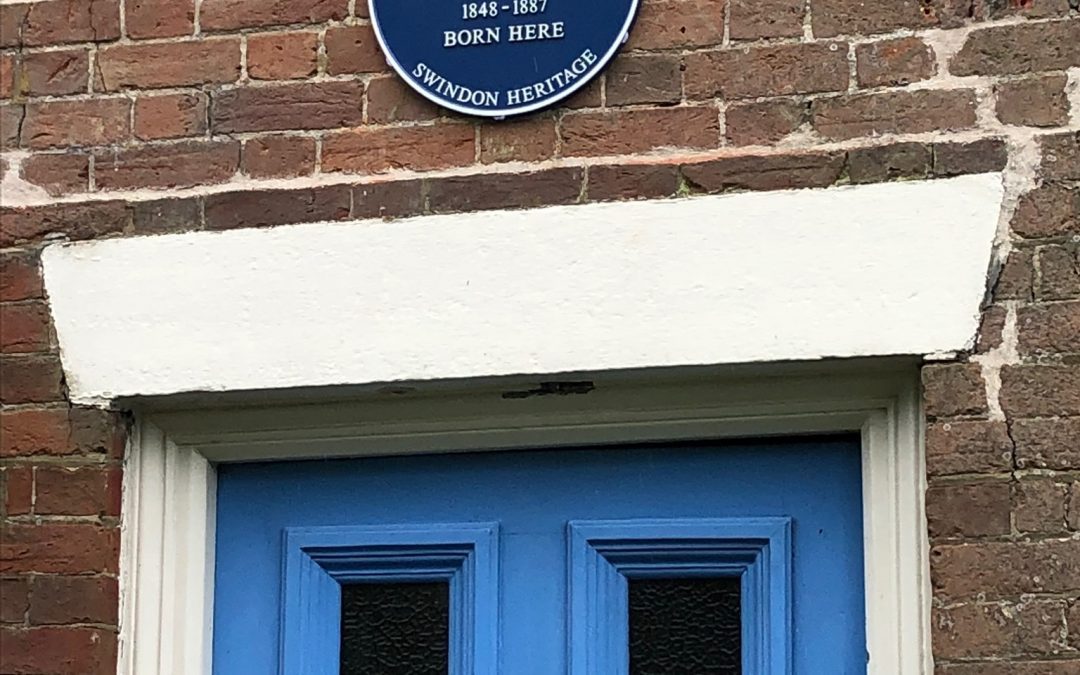
I’m so pleased to see this. There’s a blue plaque in Surbiton on the house where Jefferies and his wife lived. There’s even a non-blue plaque on Surbiton library. So it’s high-time his birthplace in Swindon got one.
This video on my under-used Born again Swindonian YouTube channel shows Mike Pringle unveiling the blue plaque for Richard Jefferies:
The other plaques that Mike refers to:
The Blue Plaque for Richard Jefferies over the blue front door of the museum.
The bust of Richard Jefferies looks down over his new plaque!
Also on the subject of blue plaques in Swindon is this almost comprehensive post: https://swindonian.me/2018/08/16/blue-plaques-in-swindon/ The post contains a Google map that takes you round most of them. I should get that updated really …
‘Richard Jefferies (christened John Richard Jefferies) was a Victorian nature writer with a passion for the English countryside and the richness that he saw all around him. He was born at the house which is now the museum, in Coate, Swindon, on the 6th November 1848, and died at the tragically early age of 38 on 14th August 1887. Noted for his depiction of English rural life in essays, books of natural history, and novels, his childhood at Coate had a great influence on him and provides the background to all his major works of fiction …’
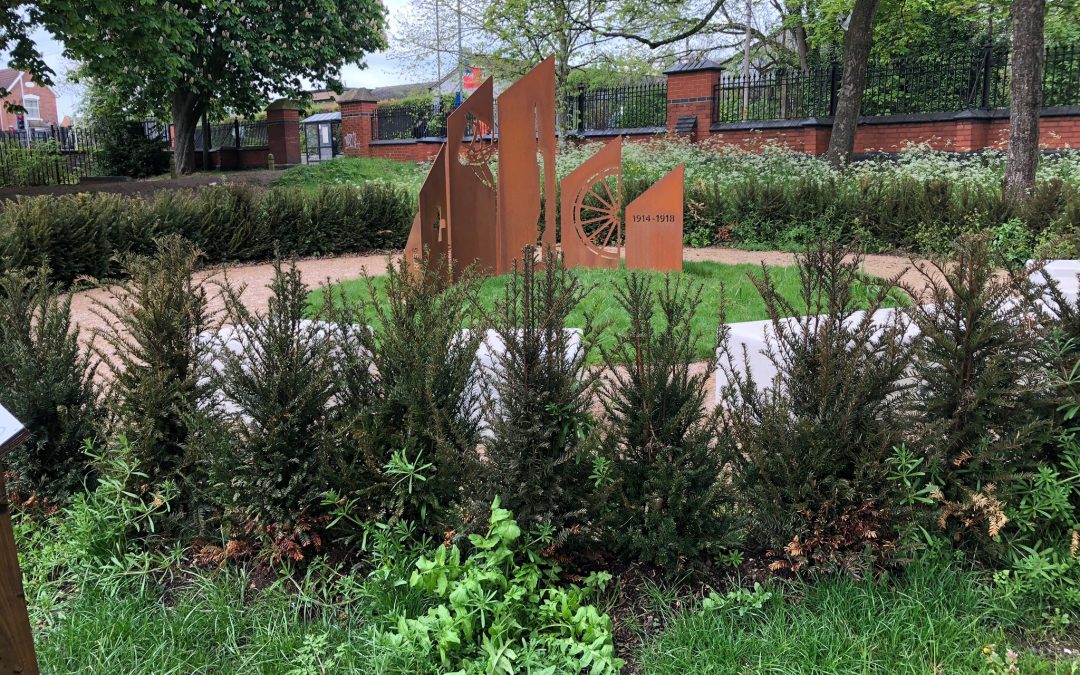
I’ve been meaning for long enough to get some photographs of the GWR Park First World War memorial on the blog. It had its unveiling back in November 2018.
The memorial commemorates the centenary of the cessation of WWI hostilities. Designed by Dr Mike Pringle (of the Richard Jefferies Museum), it depicts different aspects of the First World War.
The location in the northwest corner of the GWR Park was selected because that’s where the sun goes down.
Made from five steel panels, GWR Park first world war memorial sculpture features cut out designs of: a horse’s head, a Lee Enfield rifle, a gun carriage wheel and the red cross of the Swindon Royal Army Medical Corps.
Artist Mike Pringle said ‘the pointed steel panels would be redolent of the sharp rooftops of the GWR works, described by soldier and Swindon author Alfred Williams as looking like the teeth of a giant saw blade.’
Aside from this sculpture in an agreeable green space, there are other good reasons to visit the railway village. The Mechanics’ Institution trust, run regular volunteer-led tours around the village. They usually post the dates and times etc on their Facebook page: https://www.facebook.com/mechanicstrust/
They also manage the Baker’s Cafe, central community centre and the railway cottage museum. For opening times for that see their Facebook page above.
The Glue Pot pub in the village is always worth a visit for their real ales. And now there’s the Baker’s Community cafe too, formed from the old Baker’s Arms public house.
Swindon born and Swindon-based Simon Web is carving out a pen-shaped niche for himself. He creates beautiful, hand turned pens and cufflinks from timbers with historical and/or personal resonances.
Those of us of a certain age that remember scratchy nib pens and inkwells in desks and then the later cartridge pens, are forgiven for thinking that the Biro and indeed the text message and e-mail had rendered fountain pens obsolete. But not a bit of it. Back in 2012, the BBC published an article about why fountain pen sales are rising.
‘Sales of ballpoint pens are stable but the fountain pen is a classic story of how an object’s status is affected by waves of new technology.’
‘Somehow, the fountain pen became a luxury item and found a niche.
If a president signs a treaty, they don’t do it with a Bic Cristal. ‘
The hand-turned pens with historical resonances began with wood from an ancient walnut tree in Swindon’s Lydiard Park that blew down in the storms of 2013.
Continuing the theme of using historic timbers, Simon’s lathe has been well-exercised making pens and cufflinks out of an oak plinth from Bath Abbey. Those products are available both in the Bath Abbey Shop and from Simon himself.
There are cufflinks too from HMS Victory. Only small pieces of wood are available so Simon has only been able to make cufflinks.
And now we come to apples. Or to a vary famous apple tree to be precise.
the notion of gravitation… was occasion’d by the fall of an apple, as he sat in contemplative mood.” – William Stukeley
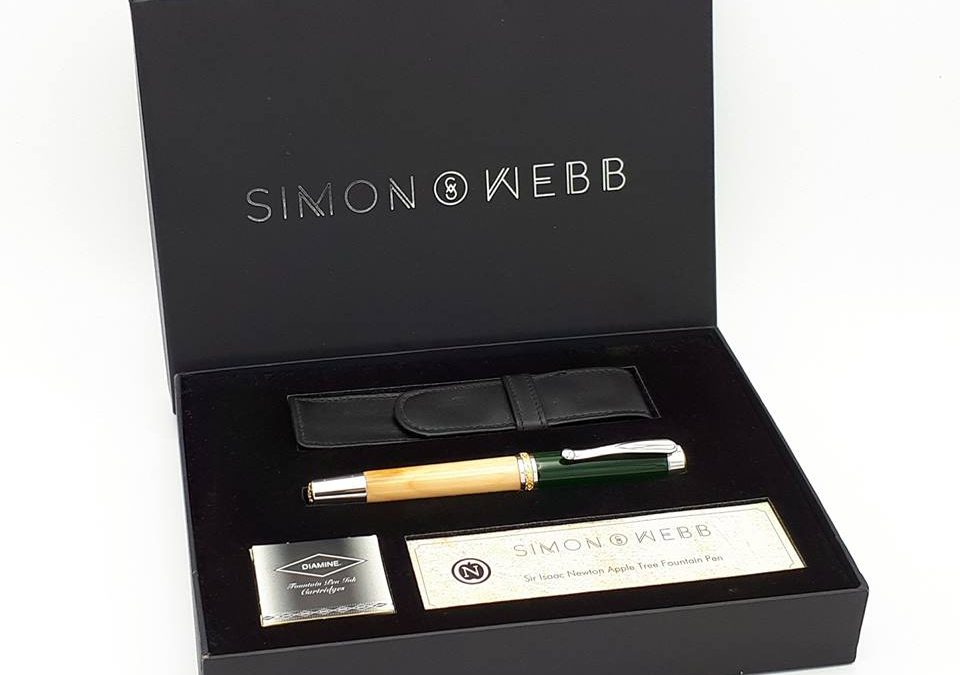
Simon is working with them to make: pens, cufflinks, sterling silver pendants and lapel pins with wood from this world famous apple tree. It’s now over 400 years old and still fruiting.
The rhodium plated fountain pen is finished with a gold plated, sterling silver finial with a unique Newton logo. The pen comes in a presentation case with leather carrying case, Diamine ink cartridges, piston adaptor and certificate of authenticity. This will also be available in a rollerball version.
The pen will only be available from Woolsthorpe Manor. They’ll announce price and availability shortly. Says Simon ‘I have been privileged to work with Woolsthorpe Manor on this project. This has to be my “holy grail” of wood.’
Gifts with a difference
Simon has crafted with care, pens from beams in houses, trees from people’s gardens, the staves of a whisky barrel (complete with certificate of authenticity from the distillery) and from old tools. A wonderful example of the latter being the pen you see in the images below.
The plane showing the owners name, possibly the previous owners initials and the maker’s name.The pen in presentation box with the piece of the plane showing the owner’s name.Rhodium plated rollerball, the wood is beech.
Simon made this pen made from an old woodworking plane that belonged to the customer’s grandfather. A nice feature is the stamping o the plane with the owner’s name. Simon incorporated that piece in with the presentation box, giving the new owner of the pen a useful and lasting reminder of his grandfather.
Yet, 3D Printing isn’t as new as you think – being first developed in 1983, when Charles Hullcreated the first printer capable of printing an actual part. Back then, they called it ‘Rapid Prototyping’ -catchy huh? Rapid prototyping was a machine used to create prototypes of tools for machines used in manufacturing. Rapid Prototyping sped up the prototype process, taking it from 6-8 weeks to mere hours. Inspired, Charles set about marketing and selling his Rapid Prototyping machines. And today? 3D printers are becoming more commonplace. If you can buy one in Argos, then it’s a sure sign that 3D printers will become an essential bit of domestic kit.
The Future with 3D Printing
At the moment, 3D printing is being used to create organic materials. Using cellular material, the first human organs are looking a real possibility. Already, the Wake Forest Institute for Regenerative Medicine, are in the middle of developing a process to 3D print replacement skin for burns patients.
We can already 3d Print metal, creating 3D printed seats in planes – and that makes a plane up to 50% lighter. And 3D printing a house for a mere £8000 is reality. Which leads one to wonder why it’s not happening?!
In the future customisation will become a key part of 3D printing. Shoes that actually fit you and only you! 3D printing food in your kitchen? The company Chocedgealready 3D print in chocolate, creating unique gifts and solutions to confectioners around the world.
So you’re excited by all this? You’re feeling you want to rush out and buy a 3D printer? Well before you do, space considerations aside, would you know what to do with one if you got it? Do you, for instance, have the CAD skills to create the designs to print? No? Fear not! There’s someone who does.
Meet SED Developments
Swindon based Jo and Richard Rigden,together are SED Developments –and they’re immersed in the adventurous world of 3D Printing, design and baking. Yes, you heard that right – baking!
They created their company in 2017, and since then have printed all manner of stuff. In the main, cookie cutters of all shapes and sizes are what come off their printer. But they’re not limited to that. They also design and print bespoke, individual 3D printed items. To that end they’ve worked with vintage car enthusiasts, ceramic artists, model airplane builders and artists, to name but a few. The range of items they’ve developed includes: miniature Lewis gun cartridge for model airplane, bone zippers for washbags, missing vintage car insignia badges, customised fondant and cookie cutters and jewellery.
While they don’t 3D print the cookies – yet – they do have six 3D printers. That gives them the capacity and the knowledge, to design and print, in collaboration with you.
Baked Goods
I mentioned baking earlier? SED Developments hold over 300 cookie cutter designs, and develop new ones every day, because there’s always a new shape to bake! Their range runs from the bog-standard rectangle or heart to the unusual, but top selling, cow face. Which is moos to me! They also have a great range of icing/coffee stencils with which to lift up your latte or decorate your cake.
They’re a clever pair for sure. Last year, when I released my book Secret Swindon, I set them the task of creating biscuit cutters in the shape of some of Swindon’s iconic buildings. This is what they came up with. Aren’t they great?
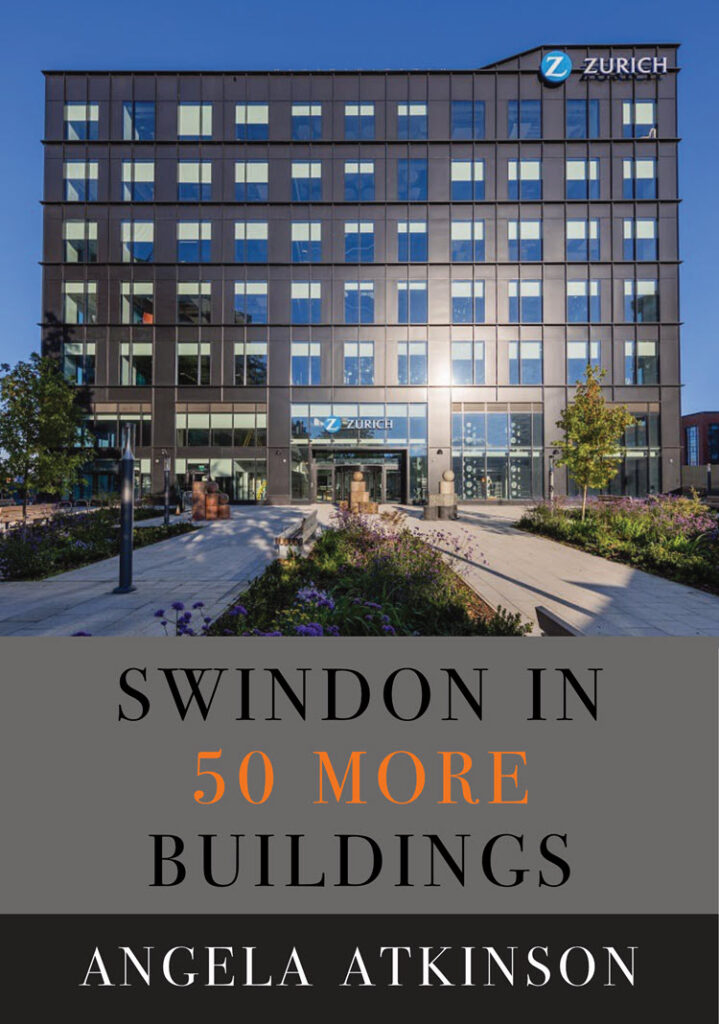
Now, I’ve got them at it again. But bookmarks this time to go with my second book, Swindon in 50 Buildings.
As you can see – if you can imagine it then they can print it. If you’d like a cookie cutter created, email them over a picture and discuss with them what you’re looking for. Or contact them for a chat about your design.
Check their Instagram and Facebook pages, to see what they’re up to. And why not have a root around their E-Bay shop? You don’t know what you might find.