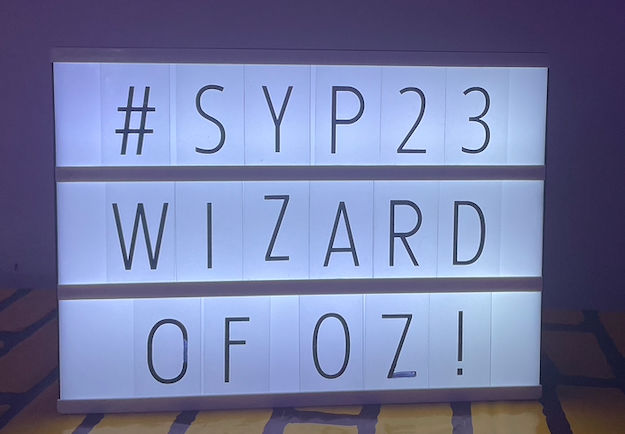
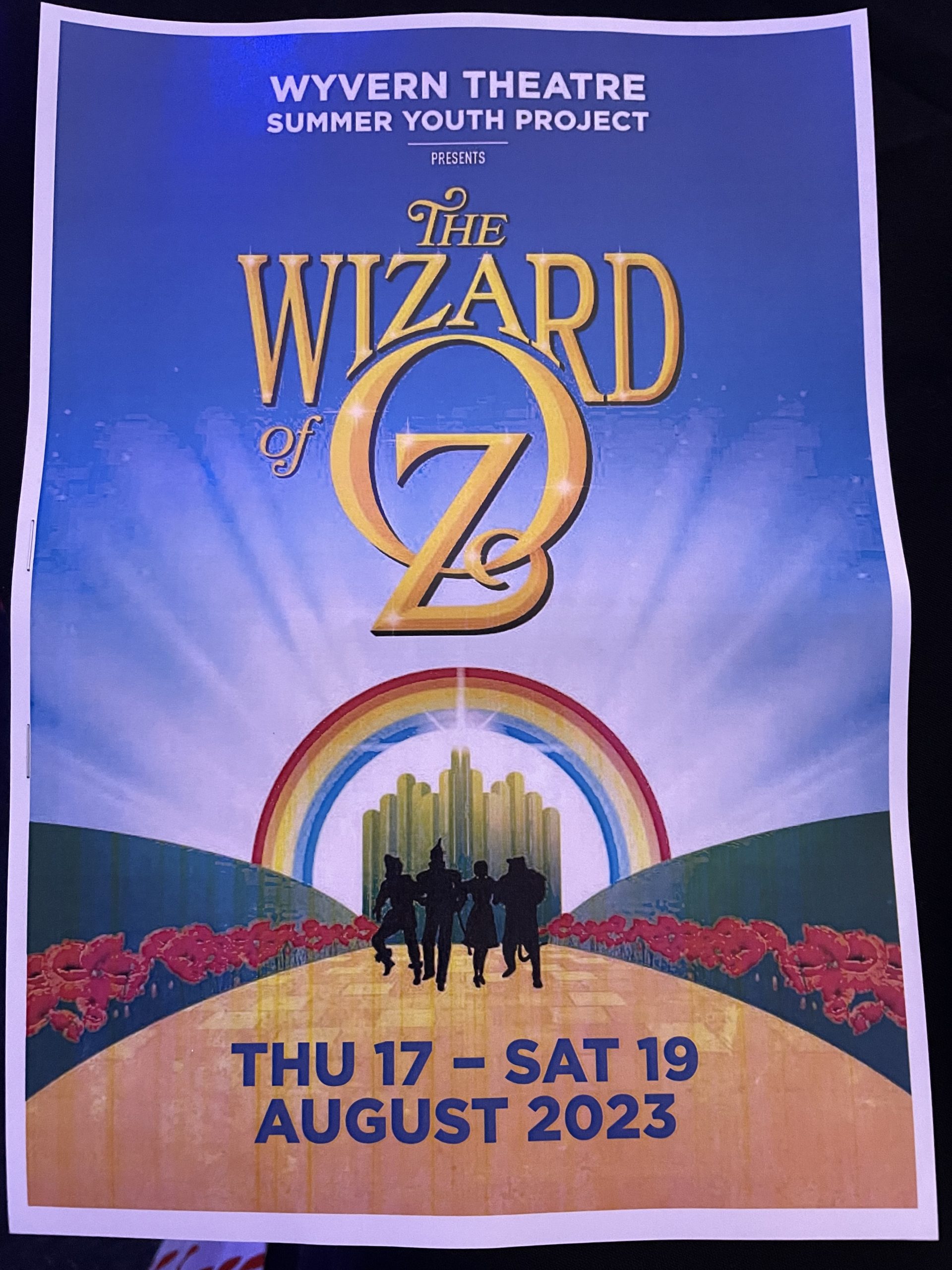
Welcome to the Wyvern Summer Youth Project 2023. And they’ve gone and done it again! This year’s SYP2023 is, as they always are, joyful and wonderful. There are still tickets for tonight and tomorrow – do yourself a favour and go!
I’ve seen a fair number of summer youth project performances over the years. They’re always a joy and have become one of the highlights of my year. And last night’s performance of The Wizard of Oz was no exception to this.
Somewhere in the region of 150 wonderful young people gave the audience of mums, dads, grandmas, aunts etc, a terrific theatrical treat. One that they’d so clearly put their all into.
I’m ever in awe that everyone involved in this project gets it staged, from start to finish, in about a week. It’s simply marvellous.
The Principals
Not always helped by less-than-great amplification at times, Dorothy, the tin man, the scarecrow and the lion, were all fabulous. They danced well, they sang well – it was all well!
Bethany Tunley sure looked the part as Dorothy and she danced, sang and acted her little socks off. But I did struggle to hear her at times – and I’d even remembered to wear my hearing aids! But I fear the fault may well not be hers. And if I could have the ruby slippers when she’s finished with them that would be wonderful. What size are they?
I loved the tin man’s moves – once he’d been oiled. He was great. But I must give special mention to the two young people playing the scarecrow and the cowardly lion. They both had brilliant voices. Such a lot of talent!
It has to be said, this is a show that really needs the excellent ensemble. What with munchkins, citizens of Oz, the poppies and more, the WoO has crowd scenes galore. So that’s a win. Well done to each and every one of them.
Backstage
And of course the talent isn’t restricted to the players. Those responsible for the set design, props, choreography, costumes etc, etc all deserve a mention in despatches. Though a wee complaint – I’m pretty sure the left hand of the auditorium got a bigger share of the bubbles when Glinda appeared. Harrumph. Rationed bubbles aside, I loved the witty wee touches of the tiny wicked witch and hot air balloon being winched across the auditorium over our heads.
Wyvern Summer Youth Project 2023
So what are you waiting for? If you’re at a loose end tonight or tomorrow eschew Netflix and get on the yellow brick road and go and see this lovely, life-affirming show instead.
The Wizard of Oz, is an American musical film, released in 1939, based on the book of the same name by L. Frank Baum. Though not an immediate financial or critical success, it became one of the most enduring family films of all time.
Cue tornadoes, witches, munchkins, ruby slippers and a wizard that’s not at all what he/she/it is cracked up to be! An excellent metaphor for our government. #JustSaying
This entry in the blog’s Swindon in 50 More Buildings series features Radnor Street Chapel – and a little about the cemetery. Well – the two intertwine don’t they? #Obvs
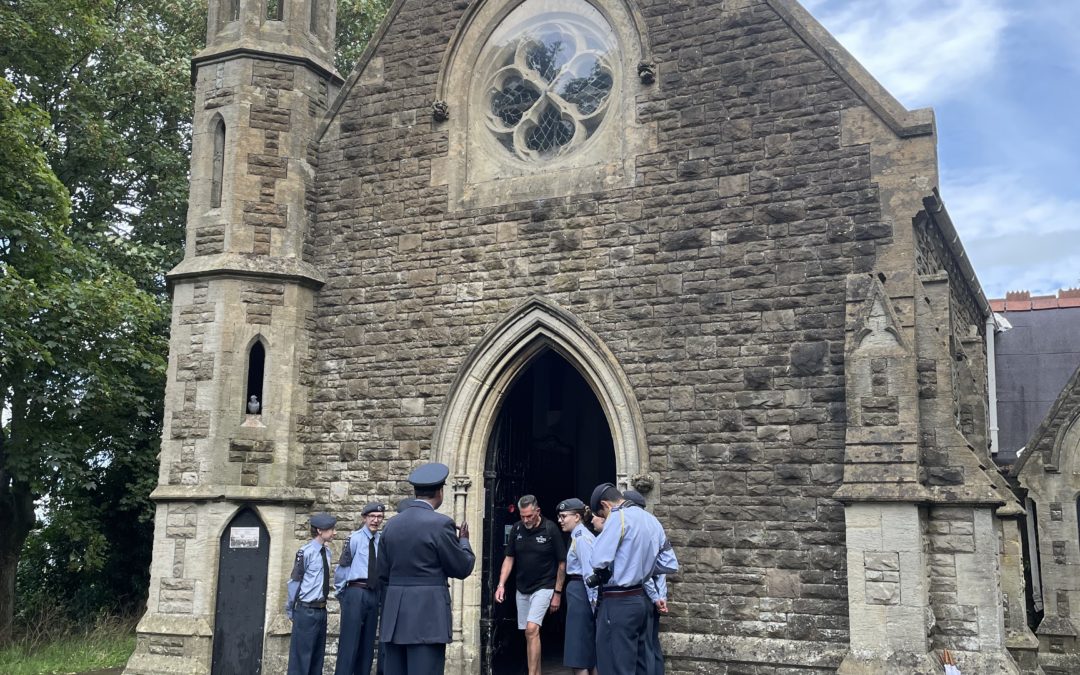
Radnor Street Chapel – August 13 2023 – the occasion of installing the RAFA club propeller in the chapel
Built in 1881, the non-denominational, used for funerals only, Radnor Street Chapel was the design work of popular local architect, W.H. Read. He also designed the long-gone Baptist Tabernacle, the Victoria hospital and the alms houses at Christchurch. Those amongst others. Meanwhile, Messrs Phillips and Powell and George Wiltshire provided the building work in the Gothic revivalist style.
The site does in fact have three buildings. There’s the chapel itself, the caretaker’s lodge at the Radnor Street entrance and a mortuary building.
Gargoyles on Radnor Street ChapelHarold Morley Starr window Grotesques on Radnor Street cemetery
Rescue centre
In recent years, with much thanks to the efforts of the late historian Mark Sutton, the chapel has become a sort of treasure trove of artefacts. Memorials and plaques that no longer have a home elsewhere. Prime examples being the RAFA propellor (see below) and the war memorial from Sanford Street School.
The Sanford Street school war memorial now at Radnor Street cemetery
It’s fitting then that Mark, who established a Remembrance Day service at the chapel before he died, is to get a plaque in his memory. It’ll be installed during this year’s service.
The cemetery
Laid out in 1881, the cemetery was a response to a lack of burial space and a proposed closure of the graveyard at St Mark’s church in the railway village – the first of the so-called railway churches. Within 100 yrs this too was full and closed to new burials.
Swindon is fortunate that a small group of nameless volunteers – as in they’ve not formed themselves into an organisation – are active in the eleven and half-acre cemetery site. Included in their number are Frances Bevan, Graham Carter and Andy Binks of the Swindon Society.
Between them they:
Conduct guided cemetery walks
Find graves for people engaged in family research …
… and care for the 104 Commonwealth war graves plus family memorials with military inscriptions.
There are 33,000 burials in the cemetery, including 104 Commonwealth war graves. Though it’s closed to new burials there are still burials in family graves where there’s room. It’s also an LNR – local nature reserve.
Local nature reserve signage at Radnor street cemetery
Frances Bevan has put together a splendid blog entitled The Airspeed Oxford propeller unveiled. Never one to reinvent the wheel, I’ll share an extract below and suggested you read the rest by following the link you see here.
‘Following the closure of the RAFA Club in Belle Vue Road the propeller mounted on the front of the building faced an uncertain future. Then a group of concerned Swindonians, among them Carole and David Bent, Neil Robinson, Toby Robson and Graham Carter, stepped in to rescue it.’
At Sunday’s event Air Commodore Keeling cut the ribbon. He then led the assembled visitors into the chapel to view the propeller, now mounted above the door. Cemetery volunteer Kevin, a member of the Eyes On Hands On team, gave an informative talk about the history of the Airspeed Oxford to a packed chapel.’
The Airspeed Oxford propeller installed in Radnor Street Chapel
Malmesbury high street art trail kicked off yesterday (12th August) and runs until the Saturday September 16th. The town’s high street is transformed into an art gallery showcasing the talents of local artists.
The Mayor of Malmesbury, Cllr Gavin Grant declared the high street ‘gallery’ open at the Market Cross at 10.30am on Saturday August 12.
Bringing art to the high street
Malmesbury town council, led by Cllr Kim Power, have organised the event. It’s a fun and interesting way of promoting the town, by bringing together shops and local artists.
Former mayor Kim Power, said: ‘Shop windows in the high street become an art gallery for displaying local artists’ work. A map of window locations and artists is available on our website. Or you can pick up a paper copy from the tourist information centre. So, please come to the town and take part in this free art trail, as there’s something for everyone. Please also tell your family and friends to visit and support all those taking part. It’s a fantastic collaboration.’
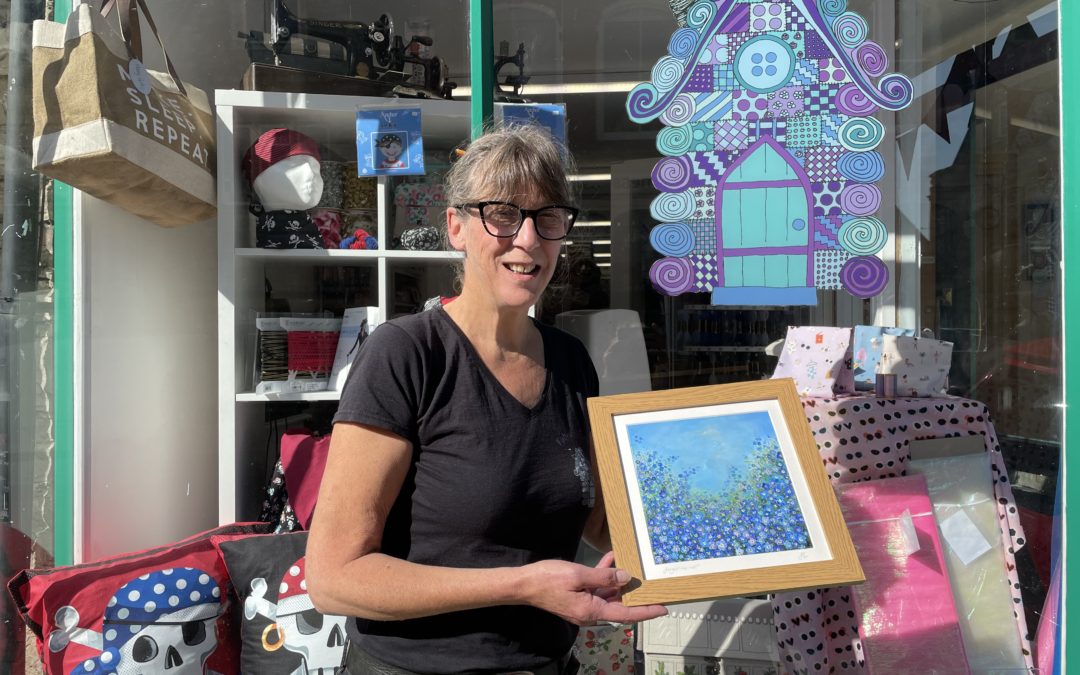
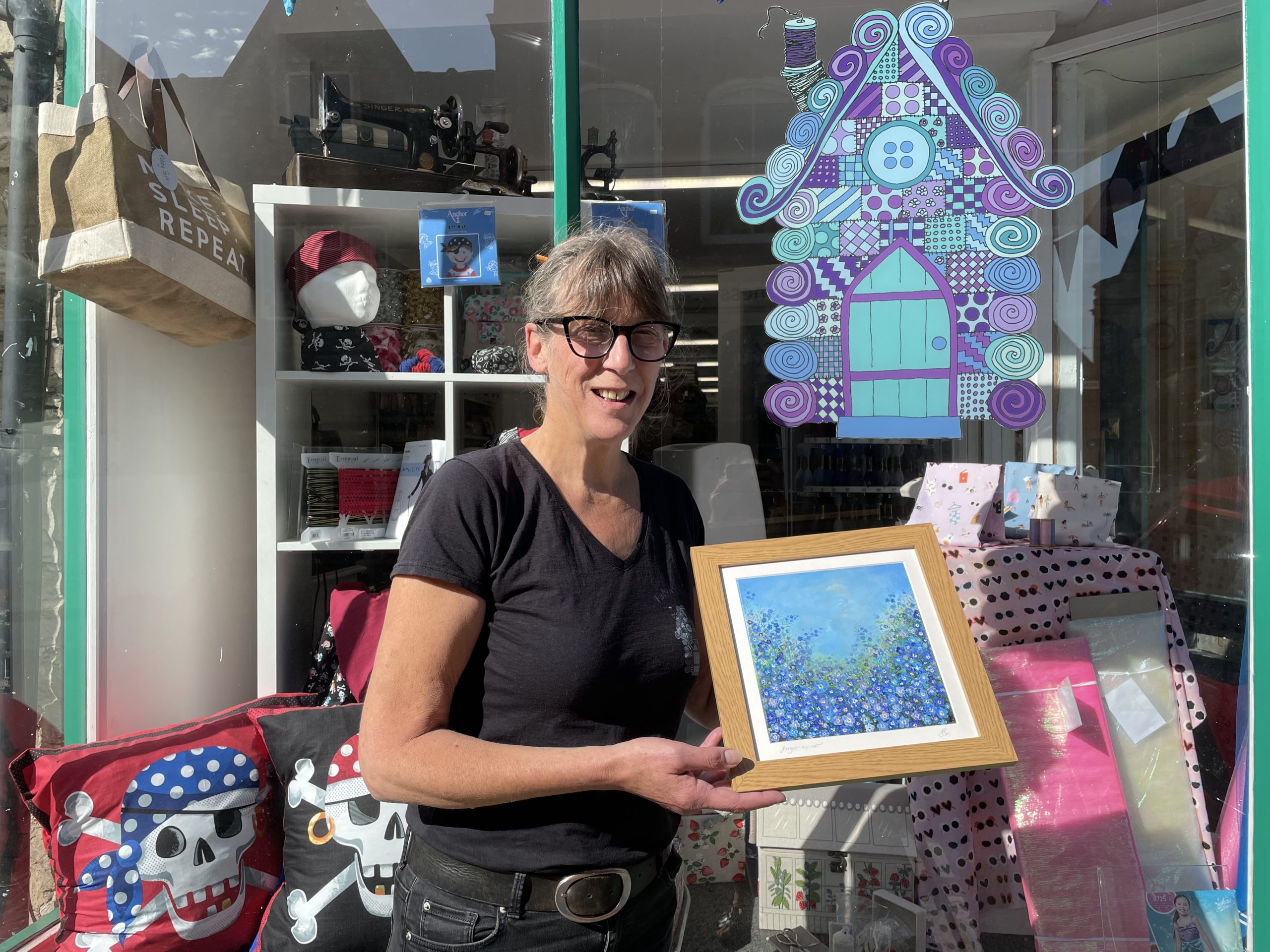
Helen Chapman runs the Fabric Shack in the high street and has taken part in the arts trail with great enthusiasm:
We’re thrilled to be taking part for the 3rd year running. We love this unusual and interesting way to discover Malmesbury’s talented creators. It’s great to be able to play host as it adds interest to our window displays and helps promote what we offer. It’s our hope it will inspire others to get creative too!’
‘We’ve noticed groups of people doing the tour and often they’ll pop in to see what we’re all about.
‘I’m a huge fan of our artist Jennifer Storer’s work and the picture we’re getting is in our colour scheme. So I’m tempted to get it myself!’
Malmesbury High Street Art Trail – Helen Chapman of the Fabric Shack
Doing the trail
Visitors can choose to browse the shops at their leisure or follow the art trail map. It starts at the town hall and finishes at the market cross, taking in all participating locations.
‘Malmesbury is already a great and historic place, but this is an added attraction. It’ll encourage even more people to visit during the summer. The thirty-two artists taking part are providing a variety of different artwork. The gamut runs from modern and traditional to glasswork, textiles and more. Thus there’s something for all to enjoy. Also, the work is available to buy over a wide price range. For the complete experience, visitors can browse our unique shops and even stay to enjoy a coffee or meal in town.’ Kim said.
Tom Bowerman runs The Wild Food Co. We’re taking part as we love to support local makers and creators. That’s something we already do every day with locally made foods and Malmesbury themed gifts. It’s great to be able to help a local artist get some more exposure using our window space.’
And if you like a piece of work and want to buy it?
‘People who wish to buy an artwork pay for it at the town hall TIC,’ Kim explains. ‘The shop will then release it to them and replace it in the shop window with another piece of artwork from the same artist.’
For each piece of art sold, the shop receives a 20% commission and the artist receives the remaining 80%.
Last year’s gallery proved successful with many participating shops seeing an increase in footfall while the event was running. All of which provided a boost to both businesses and artists in the town.
Cllr Power adds: ‘Malmesbury and nearby villages have a wealth of talented artists. By organising the High St art gallery, we’re giving visitors a free opportunity to appreciate and even buy this fantastic local artwork. Also, it’s another fun reason to visit our historic town centre with its unique shops. Children especially enjoy following the art gallery map and spotting the artwork.’
Swindon Ukrainians Announce Festival. Swindon Welcomes Ukraine – is a group created to support the Ukrainians arriving under the Home for Ukraine scheme.
They’ve decided to host a Ukrainian inspired festival of music, food and culture on 24th August – Ukrainian Independence Day -called ‘Ukraine Fest’. The group, made up of hosts and Ukrainians, are holding the festival around the bandstand area in Old Town’s town gardens. They’re planning an afternoon of immersive experiences linked to Ukraine.
The group’s chairperson, Sofiia Volovyk, says she’s excited to be bringing some Ukrainian culture to Swindon.
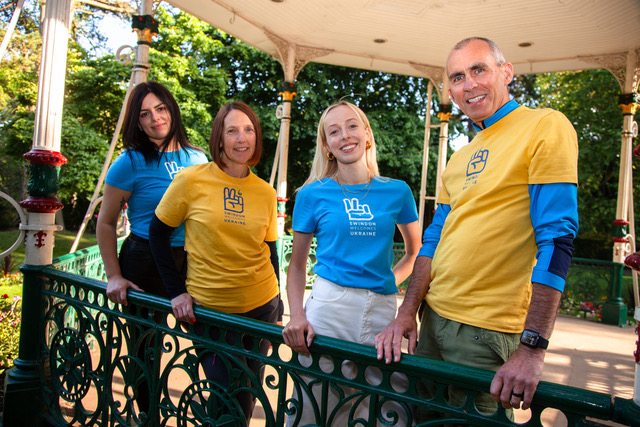
Swindon Ukrainians Announce Festival – some of the committee: Viktoriia Zavalnyk, Michelle Lamude, Sofiia Volovyk and David Thrower.
An expression of thanks
‘We’re so grateful to the people of Swindon for welcoming us. So we want to do something exciting for them and showcase our culture, music, and food. On the day, we’re planning live music. That will be a fusion of Ukrainian and English performers and songs. Further, we’ll have Old Town food vendors doing Ukrainian inspired menus. There’ll be a huge bubble show from a Ukrainian childrens’ entertainer along with:
Flower wreath making and…
… pop up projects like a Ukrainian inspired photography wall and some other surprises.
We wanted to hold it in Old Town as Town Gardens is a favourite of our Ukrainian community. And South Swindon Parish Council were so supportive of what we are trying to achieve.’
The festival will run from 2pm till 10pm with the afternoon’s activities designed for families and children. The early evening will switch to more upbeat music and activities designed for adults. Kris Talikowski Vice-chair of the committee added: ‘We want to attract the whole community from Swindon and, we hope, across the county. The team are working on making the afternoon as family friendly as possible. And then we’ll have some Ukrainian dance music in the early evening via a silent disco. And Ukrainian inspired drinks from Old Town favourites the Hop Kettle.’
Efforts and achievements
The committee have achieved significant recognition for their work since they launched in March last year. Sofiia has raised thousands for charity by walking from Swindon to Ben Nevis. She’s also received a nomination for a BBC award. Their bike project has also seen over 200 bikes fixed up and donated to Ukrainians. They also organise social activities to bring the community together, but this will be their biggest event yet. Neil Hopkins, chair of South Swindon Parish Council added:
‘We fully support the work of Swindon Welcomes Ukraine and it’s great that Swindon has opened its arms to refugees fleeing the war in Ukraine. The Parish are very excited to see this idea brought to life, and we encourage all Swindon to come and visit.’
Louise Hunt Skelley PLY, former British wheelchair tennis player, will be commentating on the wheelchair tennis event at the first European Para Championships. The competition is taking place in Rotterdam from next week (August 8 to 13) while her husband Chris Hunt Skelley MBE competes.
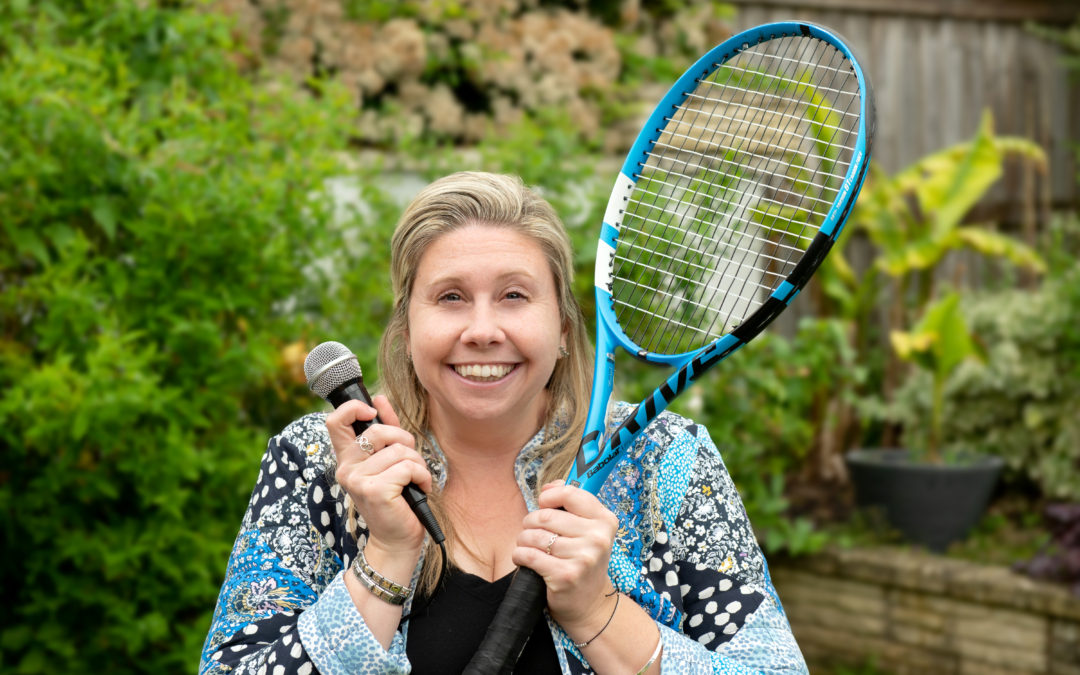
Louise Hunt Paralympian – Swindon’s former Paralympian to commentate at inaugural para games in Rotterdam
A new event
The inaugural European Para Championships is a multisport event that includes both judo and tennis. The aim is to stage it every four years. Further, it will always have a major European city as host, in the year preceding the Paralympic games.
The 2023 inaugural event will feature ten different parasports. There’ll be 1,500 athletes competing to become European Para Champions. And, for some, it will mean qualification for Paris 2024.
‘I’m so excited to be commentating on the wheelchair tennis at this fist European Para Championships,’ Louise said. ‘Multisport events always create such a different and unique atmosphere. So I’m looking forward to playing my part in this awesome showcase of para sport.’While at the same cheering on my husband Chris who’ll be competing and hoping to win a medal too.’
Opportunity knocks
As well as the chance to become European champions, the winners in the tennis divisions get automatic qualification for next year’s Paralympic Games in Paris.
‘The stakes are high, and there is all to play for,’ Louise added. ‘I can’t wait to see some more high-quality wheelchair tennis players promoted on an international stage.’
Experienced commentator
Louise has plenty of experience to bring to the commentary box. She made her debut covering the Wimbledon wheelchair tennis event in 2013. She took a break while competing before returning to commentating after retiring from competitive playing in 2021. During her playing career, Louise represented Great Britain at both the London and Rio Paralympics. She won thirteen singles and forty-one doubles titles, with a career-high international ranking of ten.
Since retiring from playing, Louise has also gained experience as a tournament director. Having had a taste at an event in Abingdon, Oxfordshire, Louise went on to direct The Bolton Indoor ITF3 Wheelchair Tennis Tournament earlier this year. That gave her another view of the workings of a major international tennis tournament.
The mission of the European Para Championships is to create a new standard for paralympic sports events worldwide. It wants to inspire people. Whether with or without disabilities. Or rich or poor, young or old and regardless of background – to take up sports and exercise. The wheelchair tennis event runs until the 13th August and the Championships end on August 20.