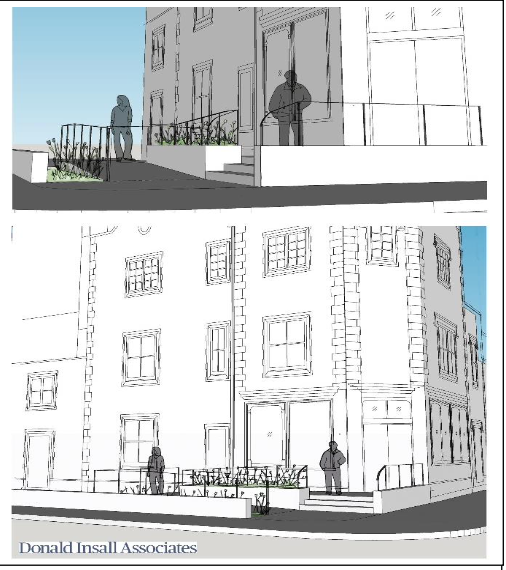
Mechanics’ Matters Newsletter No 3 The Mechanics’ Institution Trust has submitted a planning application regarding the Cricketers’ Arms. Our plan is to convert the ex pub into 3 self-contained apartments a retail unit and community room. The application also includes an access ramp. The first phase will be to fix the roof and the exterior so that its watertight.
The trust, whilst established to restore the Mechanics’ Institute is also a building preservation trust. That means we’re able to restore other heritage buildings. Emlyn Square holds a significant place in our railway history. Whilst it would have been wonderful to return the building to its former use the economics don’t add up. The development will cost around £1.5 million. We’ll raise the money through grants and other funding sources.
Artist impression of the Cricketers’ Arms in the railway village
You can find details on the trust’s planning application on the council’s website under planning. Refer to the “Cricketers” in the search box.
We’re putting on a car boot and table top sale on the last Saturday of each month. We’ll kick off on March 26th 10am to 2pm We will also be celebrating the Queens Jubilee on June 3rd.
Heritage Action Zone and other activity
The Bakers Café is going to host weekly engagement sessions for Railway Village residents. This will be a drop-in space for residents to provide feedback on local issues. They can also meet council officers, discuss housing, health and well- being and get involved in local clubs. We’ll run the sessions from 10am to 1.00pm. Starting the 19th January running through to April 3rd.
New hoardings are going up around the Mechanics’ Institute. The building remains in private ownership and therefore there’s a limit to what we can do to improve the site. It’s likely the hoardings will become the focus of relating GWR history and the Emlyn Square area. We’re progressing a project that could involve schools.
The trust has been providing guided tours for some time – often associated with the opening of the Railway Village Museum. We have recently received some additional training with other interested residents. Hopefully this will lead to more tours and raise awareness of the local built history. This will also cover north and south of the railway line, broadening the offer.
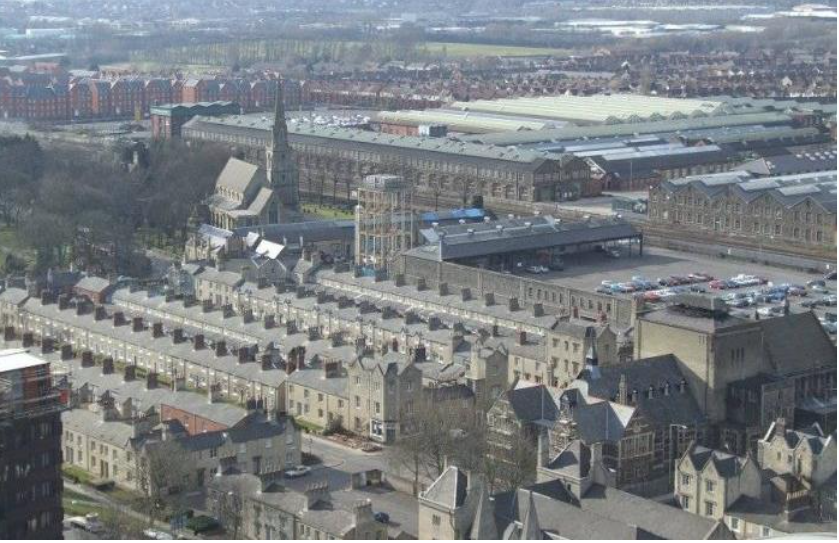
Aerial view of the railway village
Getting involved
Enjoy continued membership of the MIT until 31st December 2022 – currently £1.00 plus donation.
The Mechanics’ Institution Trust is a charity so we rely on volunteers and charitable funding. Although we do generate income from the buildings we currently have responsibility for. We have a range of opportunities and are looking for volunteers and trustees. If you’re interested please use our website’s contact us form– we’ll be really pleased to hear from you!
ATHELSTAN MUSEUM LAUNCHES TEATIME TALKS WITH THE HISTORY OF MALMESBURY PUBS
Teatime Talks from Athelstan Museum Local amateur historian Susan Mockler will be the Athelstan Museum’s first guest speaker at a new series of monthly teatime talks to tell fascinating stories. The programme of talks is starting with a history of Malmesbury pubs.
The talks, taking place in the Rausing Building, will begin with Susan sharing her pub tales and the social history of Wiltshire they represent. She has lived in Hankerton for over 40 years and been the chair of Hankerton History Group for 14 years.
About the talk
Said Susan: ‘During my talk I’ll explain how, over the centuries, Malmesbury has had many different pubs, inns, breweries, barm shops (which sold the froth from the beer) and beer retailers. Yet, currently, the town has only nine restaurants, hotels and public houses. Many of the former eating/drinking establishments that Susan talks about have seen conversion to private homes, though it’s still easy to identify their former use.
At one time, there were over fifty hostelries in Malmesbury. They had such wonderful names like The Griffin, The Green Dragon, The Prince and Princess, The White Lion and The Slappy!,’ Susan said.
More research, which Susan will share with her audience, has revealed frightening stories of:
Fires
Ghosts
Attempted murders
Political intrigue
Elegant balls
Political dinners and a mysterious society hosting well-attended meetings
Susan will also talk about the Explore Malmesbury website, which features a walk around the town discovering the old inns and pubs.
Although especially knowledgeable on the history of Hankerton, Susan is, and has also been, very involved with Malmesbury history. In 2019, she worked with members of the Malmesbury & District U3A history group in producing an exhibition on the pubs and inns of Malmesbury. She is also the current vice-chair of the Athelstan Museum.
Susan also gives talks on the following topics:
Malmesbury Union Workhouse
Malmesbury Stories in the Press in the 1830s and …
… a World War I talk on three flying heroes.
She’s enjoyed support in her research from the Malmesbury Civic Society and the History Society.
The new teatime talk series starts with Malmesbury Pubs by Susan Mockler on Wednesday February 16 in the Rausing Building.
Tea is served at 2.30pm with the talk starting at 3pm.
Swindon’s Festival of Tomorrow Returns for 2022, it’s now confirmed. The festival invites people from across Swindon and the UK to share in the research and innovation that will shape our futures.
Building on the success of 2020’s sold-out-in-person festival, the organisers have worked with partners to create an innovative blended festival experience. It comprises:
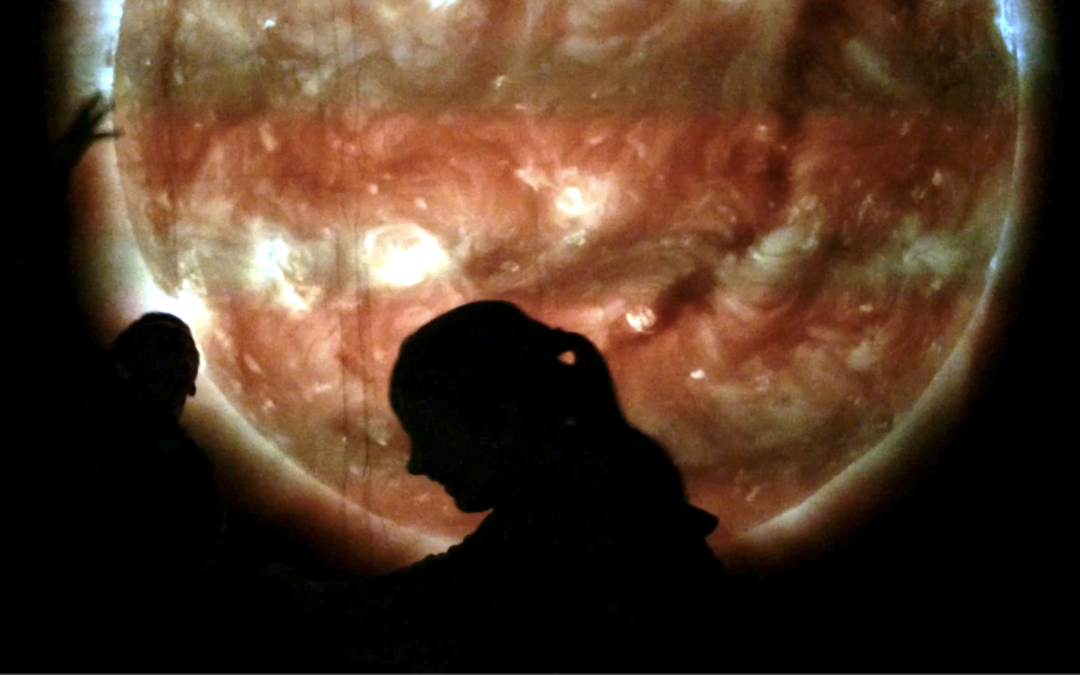
Child in front of an exhibit showing the surface of the sun, from the University of Central Lancashire.
The festival invites
The festival invites participants and visitors to imagine what kind of future we want to create. All whilst getting a glimpse of the latest in science and research, with family shows, in-depth debates and opportunities to get hands-on with the latest tech.
More shows and events are being confirmed daily. So Swindonians can expect the latest discoveries and advances of real scientists, engineers and researchers . They’ll cover the gamut from the future of space and robotics to smart cities and the latest innovations in the fight to tackle climate change.
There’ll be a special session to give people a chance to find out more from some of the team behind the recent discovery of a mammoth graveyard. And it’s located a little north of Swindon!
Participating organisations
Organisations including Swindon-based UK Research and Innovation (UKRI), Intel, the UK Space Agency, The James Dyson Foundation, and the Science Museum Group will be supporting the festival. They’ll offer:
Hands on science
Talks
Shows and …
… workshops to give people of all ages and backgrounds the chance of exploring the surprising, the entertaining and the inspiring.
Alexis Mannion, Public Engagement Lead at UKRI said:
‘The UK is at the forefront of responding to the devastating effects of the pandemic. The past two years highlighted the vital importance of research and innovation in empowering us to tackle the many challenges we face as individuals and as communities.
‘UKRI is proud to partner with the Festival of Tomorrow, to create opportunities for everyone to grow our understanding of how research and innovation work. And how they can help us all to create tomorrow, together.’
Rod Hebden, Festival of Tomorrow Director said:
Last year blew us away when over 7,000 people joined the festival activities from home. And those people asked us to keep the elements that made the online experience so incredible and engaging.
This year, we’ve planned to be ready for whatever gets thrown at us and we’ll balance the virtual and physical. We’re so looking forward to welcoming people to an even bigger and better event in February. We’ll have an exciting mix of in-person, online and blended activities to reach even more people across the town.’
The last time we held the festival in-person, advance tickets sold out fast so be quick!
SWINDON’S PERFORMING ARTS COMPANY LAUNCHES FUN EMPOWERMENT DANCE CLASSES FOR ADULTS
RPA Launches Adult Dance Classes One of the South West’s leading performing arts companies for children and young people is now offering regular dance classes for adults.
The Empowerment for Adults Heels Class, one of several adult classes launching this month, is all about being non-elitist and welcoming. And having fun and a good laugh.
The joy of laughing and feeling welcomed in a non-judgemental environment does so much for people’s wellbeing and self-esteem, says RPA founder Fi Da Silva Adams.
She said: ‘I love that our classes have an absolutely non-specific gender bias. No matter how you identify, you can come and feel fabulous dancing in heels – or not, darling!’
Image taken by Barbara Leatham Photography
Benefits of dancing
‘One of the best things about dancing is that, while you’re having fun moving to music and meeting new people, you’re getting all the health benefits of a good workout.’
According to NHS UK, regular dancing is great for:
Losing weight
Maintaining strong bones
Improving posture and muscle strength
increasing balance and co-ordination and beating stress!
There’s also evidence that regular dancing can improve heart health in older people.
‘One of the participants at our Monday street dance class described the classes as ‘MC Hammer meets French & Saunders’!’ laughed Fi. ‘It’s a great way to feel empowered, feel embraced for your unique qualities and feel great.’
Classes
The Empowerment for Adults Heels Class (Intermediate Level) for 18 years and over is on Fridays from 8pm-9pm at Moredon Community Centre, 1 The Street, Swindon SN25 3ER.
All adult classes began last week with the RPA Street Generation X (Beginner Level) for 18+ years, class That’s at Even Swindon Community Centre, Jennings Street, Swindon.
The RPA Sing Generation X (Beginner Level) for over 18s is on Wednesdays at Holy Trinity Church, Ramleaze Drive, Shaw.
As well as the Empowerment Class, RPA also run their Advanced Commercial & Street Classes for ages 16+. Those classes are for more advanced dancers with a background of previous dance training/experience, though of course adults are also welcome to attend. These are on Fridays from 7pm-8pm at Moredon Community Centre.
Revolution Performing Arts is one of the South West’s leading performing arts companies for children and young people.
Fi Da Silva Adams founded the Swindon-based company in 2007. RPA specialises in empowering young people and now adults to celebrate their individuality through the power of performing arts.
RPA runs classes across Swindon as well as in Shrivenham, North Wiltshire, Oxfordshire and Gloucestershire.
The Friends of Swindon Health Hydro (est. 1892 as The Medical Fund Baths & Dispensary) Newsletter No.4
THE RESTORATION AND RELAUNCH PROJECT IS IN SIGHT
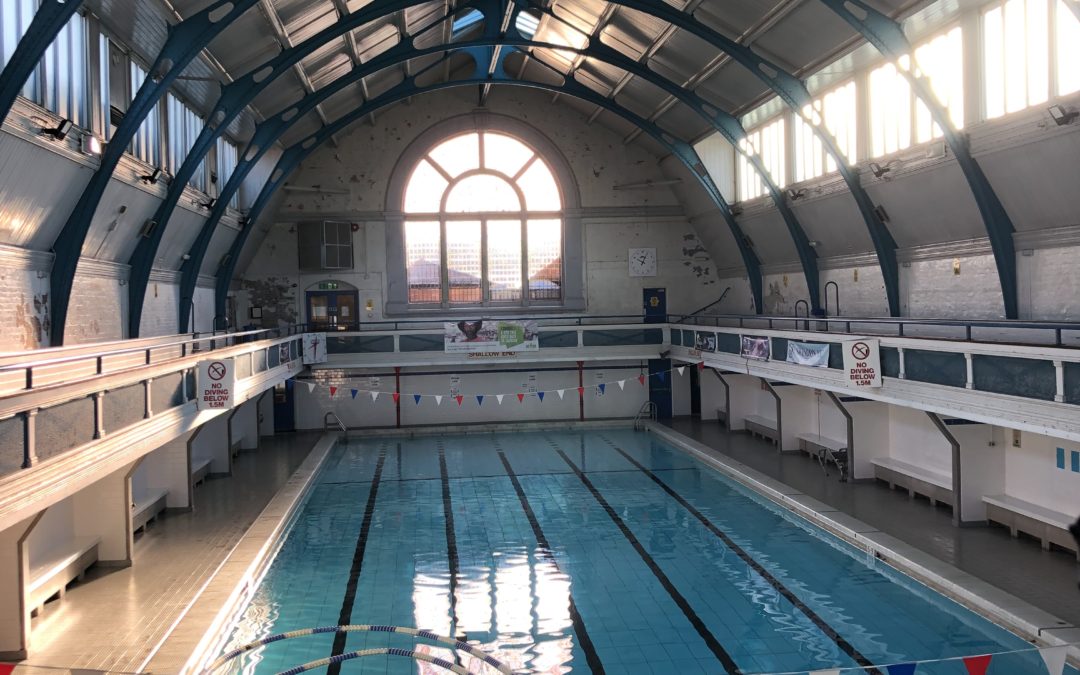
Milton Road Baths Newsletter No 4 After what seems like an eternity, the project to restore and relaunch the Health Hydro is so very close.
The project has now appointed consultants. It’s their job to build up a programme of works to deal with the long overdue maintenance issues. And also to update the facilities and restore the key important historical features. They’ll also provide the outline of a business plan to sustain the building, enabling it to serve the town for another 130 years!
Make no mistake, we’re counting ourselves extremely fortunate to be within touching distance of such a sum of money – £6.5m – to spend on the building. The final stage of the business case for £5m of the funding must be submitted and approved in February. We’re indebted to SBC for pursuing this funding.
The time frame for the project is very tight. March 2022 for agreeing the programme of work and then a mere two years to complete the bulk of the project – in order to comply with the rules for the grant funding.
We encourage you all to get involved in the community engagement events. It’s so important that we get this right. The next event will be in January. If you are unable to attend but would like to offer your comments, ideas, questions then please email them to: Email: friendsofhealthhydro@gmail.comand we’ll forward them to the team working on the project.
It is our hope and expectation that a restored and relaunched Health Hydro will act as a catalyst for further investment and regeneration in the Railway Village Quarter, with a pedestrianised Emlyn Square at the heart of vibrant area containing successful cafes and pubs, and of course a fully restored Mechanics’ Institution.
Heritage Open Days 2021
We felt hugely encouraged by the number of visitors (almost 300) that visited the Health Hydro during the Heritage Open Days weekend in September. Those new to the building were taken aback by its size and by the quantity of original features still remaining. They also felt awe at its place in this town’s, and indeed this country’s, social history as pivotal in the gestation of the NHS. Those who knew the Hydro were keen to share their affection for it. Also their hope to see it restored to its former glory. Particularly high on everyone’s list is the reopening of the small learner pool. It’s currently bereft of water and has looked very sorry for itself for the past 6 years.
Stained glass in health hydro
Turkish baths
Detail on Victorian urinal in the health hydro
Victorian urinal in health hydro
Seeking information
We are always keen to find out more information about the Health Hydro.
Are you a descendant of any of the MFS Committee below? – Over the years the uses for the upstairs rooms have changed several times, can you help us fill in some of the blanks?
– Do you have any photographs that might unlock some secrets? Particularly the interior of the Faringdon Road entrance.
– We would love to relocate some of the original fixtures & fittings and furniture, do you know where any ended up? Eg the large table from the committee room or the beautiful glazed screens.
Special feature article by Maggie Brunger – the granddaughter of George Brunger. George saved the Medical Fund Society from collapse beginning with a chance encounter in 1916.
In September 1916 the GWR Medical Fund Society in Swindon was on the verge of collapse. It was deeply in debt to the GWR, and to it’s bank. Doctors hadn’t been paid for months and the loss of weekly dues, caused by the wartime conscription of hundreds of workers, left it with much reduced income.
Many MFS Management Committee members were pressing to sell the assets, pay off debts and close it down. Thousands of workers and their dependents would lose the medical care that was vital to their security and well-being.
Stormy meetings between the Committee and the Members were held during a week in mid- September 1916.
George Brunger
At this time George Brunger was a 36 year-old Chargehand in the Works. Born and raised in Maidstone, he had left school aged 12, and worked with his father in the small family shop. Influenced by an army engineer uncle, he joined up and months later, aged 18, went off to fight in the Boer War. He loved South Africa and stayed on after the horrific war. There he honed his engineering skills. First in diamond and gold mines and later building bridges on the new South African Railway line.
A return to England
In 1905 he returned to England and found a job in the GWR Works. He married his sweetheart, Lilian and moved with her to Swindon on the evening of their Boxing Day wedding. By 1916 they lived with their four children and Lilian’s teenaged brother and sister and two conscripts billeted with them, in their house at 40 Kingshill.
George was a Shop Steward and a Union Rep. He’d been at a Union Conference in London during the week of the MFS crisis meetings. Walking home from Swindon Station on the evening of the third meeting he heard an uproar coming from inside the building housing the Baths. Turning in to see what was going on, an angry crowd confronted him, arguing about the potential ending of the MFS.
He spoke up, saying it couldn’t be right to dissolve the 70 year-old Society during war-time. Not while so many men were away fighting. It would leave their families unprotected. Further, that at the end of the war, the survivors would need health care more than ever.
A proposal
George proposed the election of a special committee charged with researching solutions, and reporting back to the Membership in two months. The proposal was adopted and a nine member committee, with the on-the-spot election of George as Chairman.
Management revision
During those two months, the Special Committee saw drastic revision of the outdated management of the Society. They renegotiated the loans with minimal increase in members’ dues for a finite period. Also they changed the pay structure for the doctors. They decreased the top salaries and responsibilities and doubled the pay of the Junior doctors – thereby attracting older more stable practitioners. They proposed raising money by auctioning assets that were no longer needed. Above all they consulted the British Medical Association and gained their support for the proposed changes.
In November 1916 the membership accepted the proposals. Dr. G. R. Swinhoe, the Chief Medical Officer, demanded arbitration from the BMA but rejected their approval of the new terms. He resigned but his two Assistant Medical Officers agreed to the new terms and pay scale.
A new fifteen-member MFS Management Committee was elected, with George as its Chair. This was a position he held until 1948 in the GWR MFS until the NHS subsumed it.
The GWR Medical Fund Society Committee
The GWR MFS Committee was an extraordinary group of men. For the next thirty years they successfully managed, and grew, the most comprehensive and progressive health service in the country. They all had days jobs ‘Inside’. Many also served on the Boards of community organisations, or as Swindon Town Councillors. George Brunger, together with Reuben George, formed the first Labour Party affiliate in Swindon.
A Councillor from 1919 to 1934, he gained an appointment as the first Swindon Council Housing Officer. In that role he was responsible for developing the first public housing estates in Swindon.
These men of the GWR MFS Committee accomplished exceptional voluntary service. They attended many meetings, fined themselves if they were late or missed any. And they published their progress and attendance in an Annual Report issued to every Member of the Society. Their service for the health and well-being of the people of Swindon is incalculable.