ROMAN COIN HOARD DISPLAY OPENS TO THE PUBLIC TEN YEARS AFTER BEING DISCOVERED
Athelstan Museum Coining It
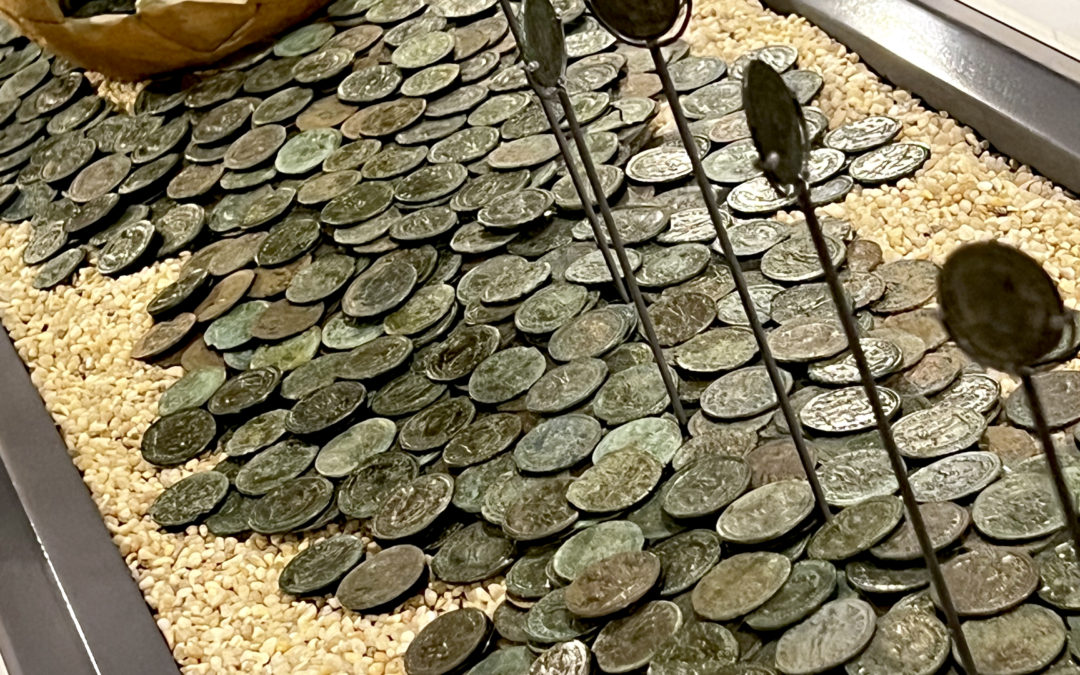
Over 1,200 Roman coins found ten years ago in a field near Malmesbury are on public display at the town’s Athelstan Museum.
Athelstan Museum Coining It
The Malmesbury coin hoard has spent the last seven years undergoing professional conservation. A group of committed volunteers led by trained archaeologist and museum trustee Maria Marsh have been cataloguing them. The museum will unveil the hoard to the public on Friday 8th April. But first specialists need to build an environment-controlled display cabinet to showcase the hoard.
Maria said: It’s amazing to see the coins together with the pot, on display in the museum at last. The volunteers I’ve worked with have been amazing in their commitment to prepare the hoard for display a few miles away from where they turned up.
‘It’s my belief this is one of the few times that something as big as this has returned to a local museum so close to where it went into the ground in the first place.
Mimzy
One of the volunteers who’s worked on the hoard is the man who found the hoard while metal detecting ten years ago.
Anthony Mims, known to all as Mimzy, got the bug for metal detecting in childhood but his army career left little time for his hobby. He left the army at the age of 41 and became a truck driver. That career change gave him more time. Then a chance conversation with a farmer which led to the piquing of his interest.
He told me that four metal detecting guys from Swindon had been visiting one of his fields in Milbourne, on a regular basis, over a four year period. I thought that was curious, you wouldn’t keep going back if you weren’t finding anything. He offered me the opportunity to do the same and I took it.
‘I’d never before found a hammered coin yet within three paces I found my first one – a medieval silver coin. In 2006 I found several Roman coins, then I found more over the next few years.
‘It was in 2012, in a higher level of the field, that I came across the hoard, though I didn’t realise what I’d found. I moved the earth around it as best I could, took the whole hoard and put it on my waterproof coat and wrapped it all up. As soon as I could I took it to Chippenham Museum.’
Treasure Trove
Examination saw the hoard declared as treasure trove. That means a thing has historical value, museums can express interest in it and the treasury puts a value on it.
The value, following purchase of the item, is then split between those who find the treasure and the landowner. In this case, Mimzy and the farmer, who has since passed away, did receive an amount of money.
‘It wasn’t as much as people think,’ Mimzy said. ‘It wasn’t a fortune.’ But I don’t do it for that. I’m a genuine lover of history and the hoard, its location and the other items found on the site give us clues to the past which I find fascinating.’
No one knows why the coins became buried in the Wiltshire field – the exact location of which is a secret. Though both Maria and Mimzy wonder if it was some kind of religious offering.
Owning the hoard
The Athelstan Museum bought the hoard in 2015, in a bid led by Maria Marsh. Then followed cataloguing of the hoard and fundraising for a safe display for it.
In total the project has cost in the region of £50,000. Members of the community contributed towards the overall cost. The museum trustees were also supported by grants from the National Lottery Heritage Fund and the V&A (Victoria & Albert) Purchase Grant.
Sharon Nolan, Chair of the Museum Council and Trustees, said: ‘This is the culmination of a great deal of hard work by a group of committed and interested volunteers. It results in a display that shows the coin hoard to its best advantage. I’d like to thank all my colleagues who invested so much of their time to create this display. And also to Maria for leading this most interesting project.’
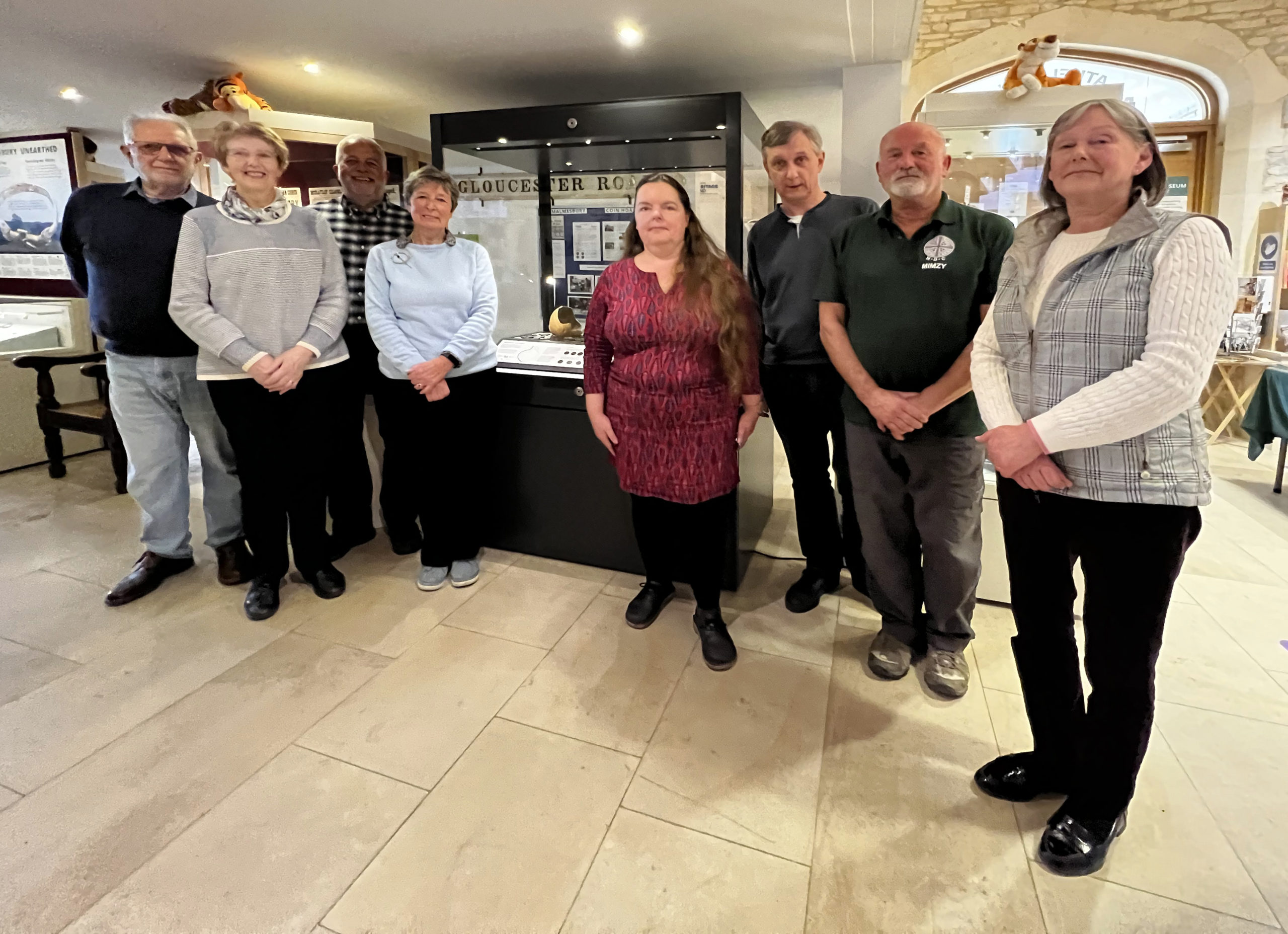
Some of the volunteers who have worked to bring the Malmesbury Coin Hoard to the Athelstan Museum. From left to right Graham McDougal, Mike Goodyer, Susan Mockler, Maria Marsh, Alan Taylor, Ruth Sandiford, Mimzy and Anne Goodyer.
Displaying the hoard experienced delays due to the pandemic. But the volunteers kept on with their painstaking work until the recent installation of the cabinet in the museum.
PERFORMING ARTS DIRECTORS BECOME LITERACY CHAMPIONS FOR SWINDON
RPA Swindon Literacy Champions Swindon-based Revolution Performing Arts (RPA) now has two accredited literacy champions to further the work of theNational Literacy Trustin the Wiltshire town.
The National Literacy Trust is an independent charity. The charity works with schools and communities to give disadvantaged children the literacy skills to succeed in life. It’s dedicated to helping raise literacy levels across the UK.
The Swindon Stories hub is part of a ten-year project to promote literacy in Swindon. It’s doing this by involving volunteer literacy champions. These champions will promote reading for pleasure within the community.
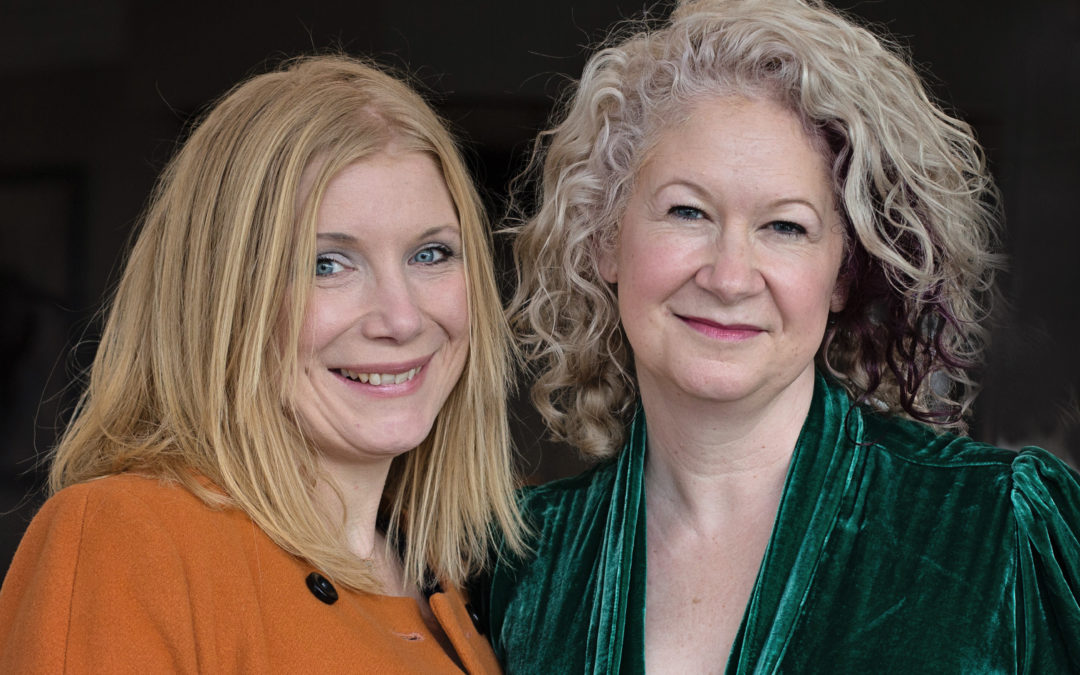
Fiona Da Silva Adams, founder of RPA and Laura Barnes, artistic director of the related organisation RPA Rapport CIC, are literacy champions . This training equips them to help children and young people with their literacy skills.
Laura Barnes & Fi Da Silva Adams – RPA Swindon Literacy Champions
Laura explained: ‘Becoming literacy champions allows us to support the literacy of 400 young people that we’re currently working with. It encourages in them a love of reading. and we’re already seeing a direct effect. We’re able to promote good literacy by giving all our young people a book of their choice free!’
In the future
Moving forward, Swindon Stories will set literacy related challenges and tasks with which RPA can engage their young people. The next challenge will be to ask the young people what their favourite book is and who is their favourite character in that book.
Fiona and I are delighted we can use our roles as literacy champions to add to what we can already offer those that we’re working with at RPA and RPA Rapport,’ said Laura. ‘We’re fortunate to so often see the creative and vast imaginations of the children at RPA. We know that encouraging their love of stories will only enhance this further.’
In November 2010, HRH The Duchess of Cornwall became the Patron of The National Literacy Trust. With that she’s offered her valuable support to ensure children and adults across the UK have the literacy skills they need.
Eight wards in Swindon are in the most deprived 10% in the nation. Last year, 41% of the most disadvantaged students in Swindon left primary school with poor literacy skills.
Poor literacy and communication skills holds children and adults back at every stage of their life from school to the jobs market.
If it’s not `God’s Wonderful Railway`, then, what is it? (The red livery might give you a clue). Swindon’s other Railway – By Rebecca Davies BSc (Hons).
Introduction
Well, I must make a very big confession; I have never been much interested in the railway. It’s not for lack of suitable breeding either. My father, uncle and grandfathers on both sides worked for the Works – a typical Swindonian family history, I imagine. Anyway, in this article I’m talking about Swindon’s Other Railway. The Midland and South Western Junction Railway. (M&S.W.J.R.) to be precise.
Getting online
In the heady days of the mid Victorian age, everyone wanted a railway. Apart from the obvious economic benefits there was also status to consider. The Victorians were firm believers in adopting modern technology. Thus it was that, in 1872 James Townsend, a Swindon solicitor arranged a meeting in the Savernake Forest Hotel to discuss this route.
Savernake Forest Hotel
As early as the 1840s, there appeared the suggestion that a connection between the industrial midlands and the southern ports would be desirable. But the GWR routes crossed that region from north-south. The terrain, in part, took the blame for this oversight. Early trains were not so powerful as they later became. Nor did they have good traction on their rails. Indeed, the first railways, such as the London Paddington to Bristol route were routed with much care to avoid this. But to travel north to south it was necessary to traverse the Cotswolds and chalk Downland. In particular, getting from Marlborough to Swindon was difficult. The image below shows the Marlborough Downs in the winter of 2010. Getting across in this weather was difficult; imagine doing it in the old days?
Marlborough Downs in the snow
A new railway line proposed
So it was that the formation of a new railway line was proposed to cut across GWR territory. This would make the desired industrial-port connection. The GWR, needless to say were not enthused. The intricacies of the Marlborough routes are a side effect of this antipathy with both Marlborough and Savernake having TWO stations.
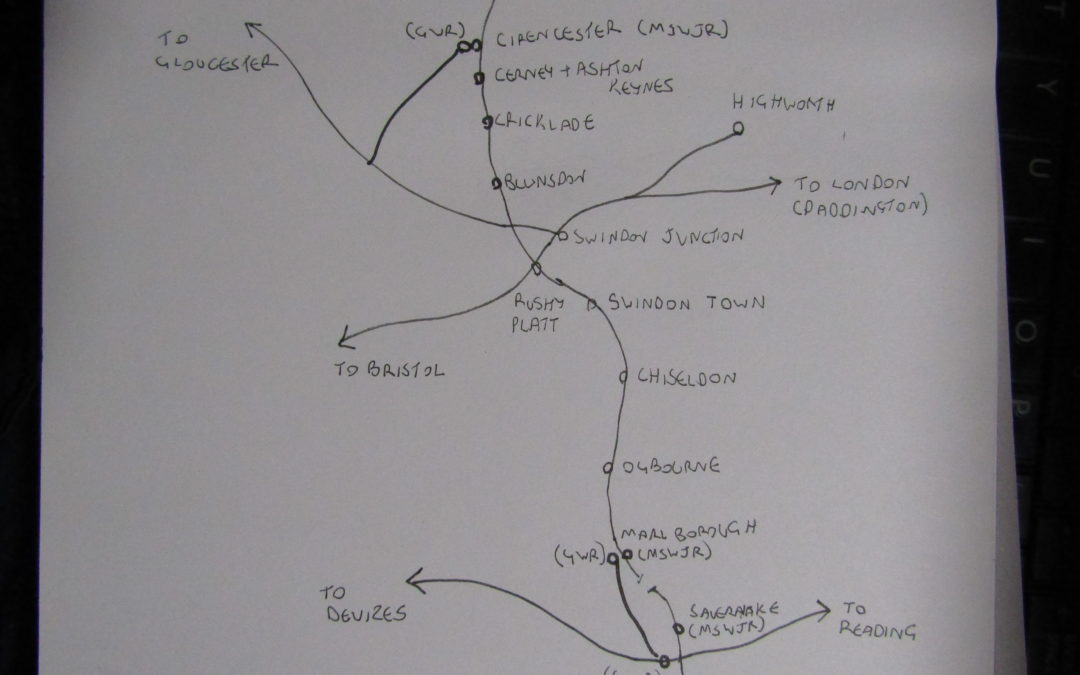
Savernake Route Map
The complete M&SWJR ran from Andoverford Junction outside Cheltenham, to Red Post Junction near Andover. The first big problem it had was getting up Swindon hill.
The geology of Swindon hill is a varied sandwich of clay, limestone and sandstone. Needless to say work petered out, leaving a large mucky hole in the middle of Swindon. This route was clearly not feasible and the line rerouted via a long ambitious cutting south of the hill to Rushy Platt, where it joined the GWR line. This cutting is now a footpath and because it shows Swindon hill strata very well, a SSSI. The nasty hole was partially filled in and lies under Hunt Street. ** Meanwhile, Swindon Town station opened in 1881.
Frances Bevan writes that the proposed route for a tunnel that never was, would take the railway line beneath what is now Queen’s Park. Prospect Place, Devizes Road and Newport Street … ‘
The M&SWJR was never over encumbered with rolling stock, most seems to have been borrowed from other lines. Nevertheless it did run some interesting trains. Tank engines, the small trains designed for goods work, but on the M&SWJR used for everything. The ever-money-strapped railway was not proud.
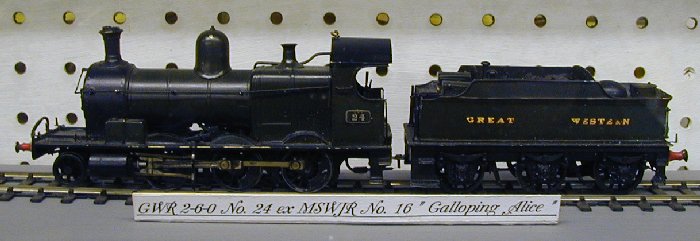
Dubs & Co., and Bayer Peacock built most of the company’s locomotives. Locomotive No 16, named Galloping Alice, we might rank as the most interesting. This girl was built for a South American line but never delivered.
Galloping Alice
The cash dried up
At length company ran out of cash and the Directors approached their ally, the L&SWR for advice. But they did better than that. They very generously gave the M&SWJR Sam Fay, their best man. He became the General Manager in 1892.
Sam Fay is one of those industrial heroes you never hear about. Single-handedly he transformed the M&SWJR from a joke to something resembling economic function. This guy got stuff done.
The Work of the M&SWJR
A major user of the M&SWJR was invariably the military, with it running alongside Salisbury Plain. Horse manure comprised another freight. The predictable by product of a still very equestrianised military, this went to the Hampshire strawberry fields.
There was a horrible incident in at the depot in Savernake on the 2nd January 1946. A locomotive had arrived with wagons of ammunition. The engine was uncoupled and ran round the train. Then came an explosion in one of the wagons, the train reattached and pulled some of the wagons clear. The incident killed eight men seriously injured many more.
This being mostly a rural line farm produce was an important freight, there being several milk trains. Not only milk, but racehorses (in luxury padded carriages) and racing pigeons freighted also. The students of Marlborough College were regular passengers.
Power Stations
One of the last users of the railway was the coal fired power station at Mordon, Swindon, that closed in 1973. Your scholar can recall going with her grandfather to see the demolition of the chimney in 1979.
Moredon power station chimney being demolished
1932 saw the amalgamation of the M&SWJR into the GWR.
The End of the line for the M&SWJR
This railway petered out rather than closing all at once. The last scheduled passenger service was in 1961. And some of the last freight carried on the railway ironically being for the building of its replacement, the M4 motorway.
Visible remains of the M&SWJR today
Today almost nothing remains of this interesting little railway line, apart from a few bridges. Using Ordance Survey maps and satellite imaging, it’s easy to follow the route, including the notorious intricacies of the Savernake stations.
Swindon’s other railway – Cotswold bridge – This is one of the red brick viaducts, just outside South Cerney. It now is part of the Cotswold Water Park
Evelyn Street Bridge
The trackline from Chiseldon to Marlborough has a new life as a cycle path. The cutting round Swindon hill is also a pathway, and interesting for those wishing to explore the geology of Swindon in the field.
Conclusion
In spite of its potentially important link-up route, the M&SWJR had financial difficulties for most of its existence. As a result it never reached its full potential.
It is popular with the model railway enthusiasts for its cute little rural stations and appealing red livery, giving much opportunities for authentic scale models in limited areas.
Thank you very much to Neil Lover of the Swindon’s Other Railway website for letting me use the Galloping Alice and Chimney pictures; The rest are mine.
2022 SEASON OF THEATRE AND MUSIC EVENTS LAUNCHED AT TOWN GARDENS BOWL
Town Garden’s Bowl 2022 Season Following the success of their inaugural 2021 season, South Swindon Parish Council take great delight in announcing the return of Theatre At The Bowl in 2022. And, this year, the season looks like being even bigger, expanding to include a diverse range of music events.
The 1936 art-deco Bowl, situated in Town Gardens, Swindon, is one of only a handful of its kind in the country. It provides a unique backdrop to a spectacular range of events throughout the year. And, in 2022, audiences will again be able to experience first-class theatre and music events in this iconic venue.
Town Garden’s Bowl 2022 Season
Kick off
The programme kicks off on Sunday 19 June with the sparkling Shakespearen comedy As You Like It. That’s presented by the acclaimed Lord Chamberlain’s Men. Then the Duke’s Theatre Company return with the celebrated fairy tale, A Midsummer Night’s Dream. In August there are opportunities aplenty for Shakespeare-loving Swindonians to experience the Bard’s plays in the open air.
For audiences looking for something a touch more modern, the season continues with the return of BlackBox Theatre. Following their sell-out tour of Noel Coward’s Blithe Spirit in 2021, they bring John Godber’s tour de force, Bouncers, to the Swindon stage.
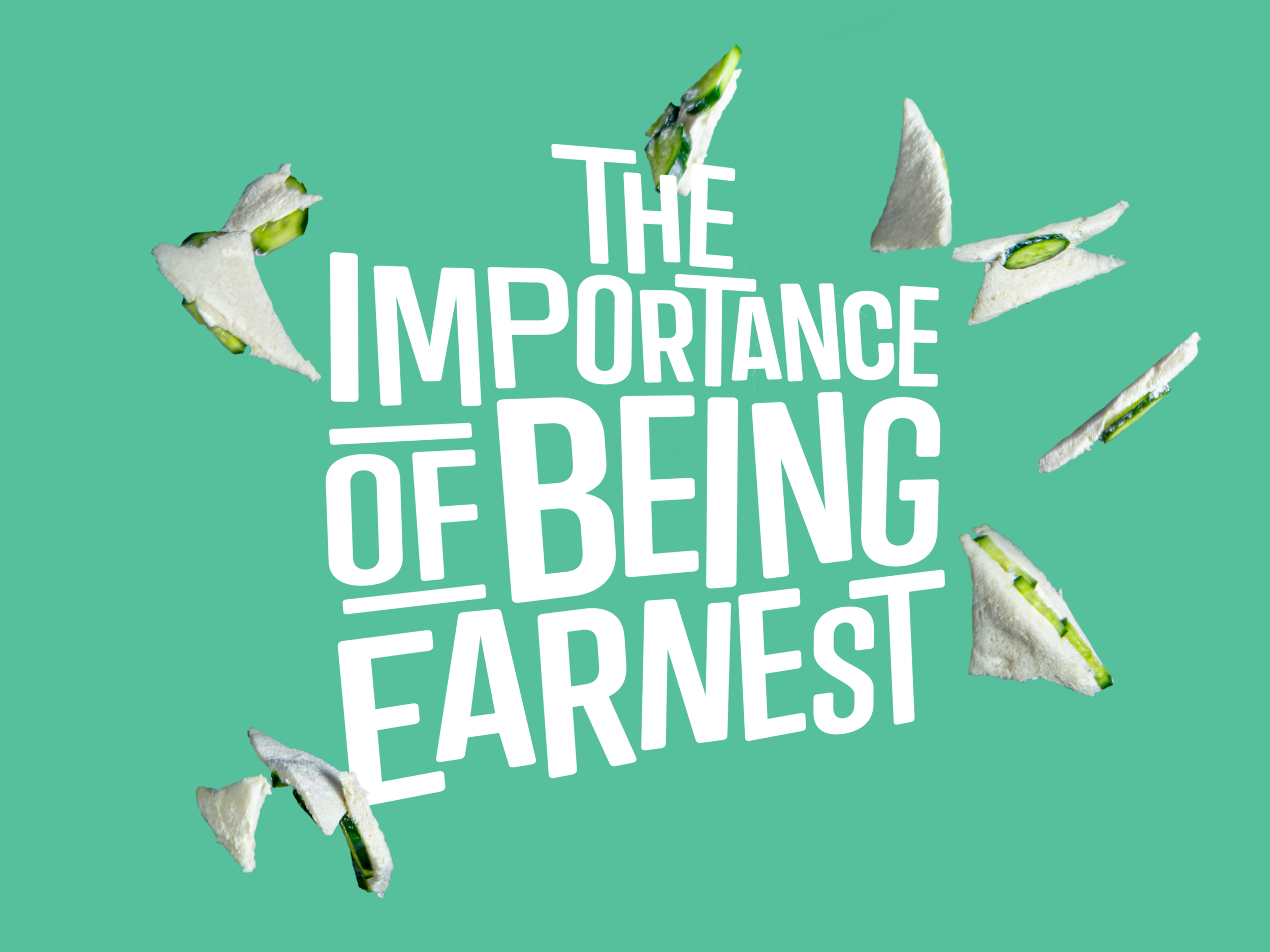
Complementing all that is a wild(e) new production of The Importance of Being Earnest. Further, from the creators of the outstanding HandleBards, comes Heartbreak Productions’ original adaptation of Charlotte Bronte’s, Jane Eyre.
There’s something for everyone to enjoy this summer!
Opera Sulis
And for the children too
The youngsters aren’t forgotten in all this. It’s a thrill for South Swindon Parish Council to be welcoming the award-winning Calf2Cow. They’re bringing their ‘mesmerising’ new adaptation of Kenneth Grahame’s timeless The Wind In The Willows to the outdoor stage. That will conclude the season on Friday 9 September.
On a musical note
For audiences looking for something a little more musical, for the first time ever, South Swindon Parish Council will host a varied programme of music events at the Town Gardens Bowl.
There’s the brand-new Music At The Bowl season in addition to their collaboration with My Dad’s Bigger Than Your Dad Festival for the second year running.
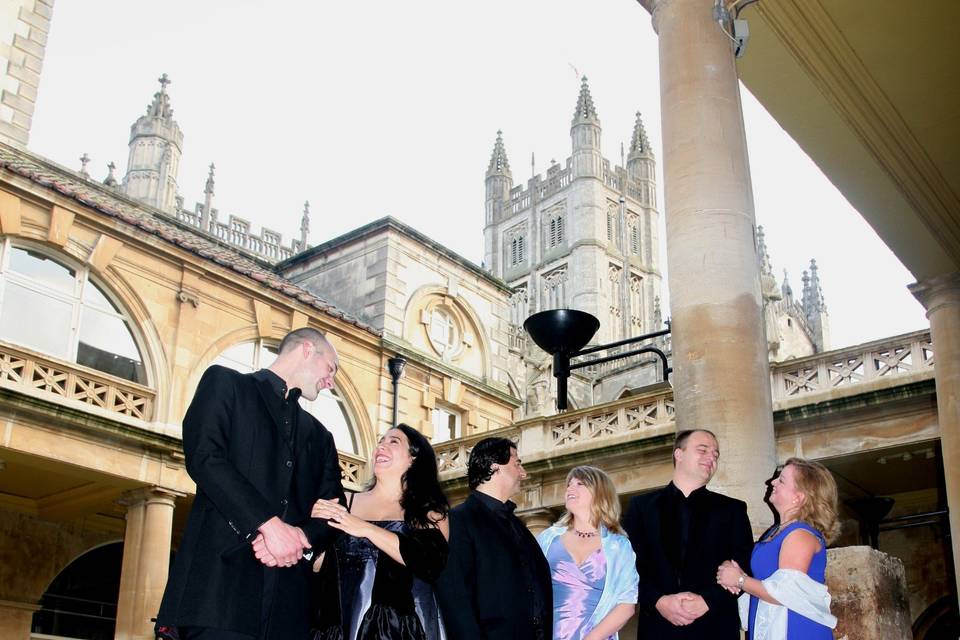
Featuring performances from artists as varied as Opera Sulis, Voodoo Room, and 21st Century ABBA, throughout the summer there’s never been a better time to get friends and family together for a memorable summer evening.
Cllr Neil Hopkins,Chair of South Swindon Parish Council’s Leisure, Environment and Amenities Committee, said: “I’m delighted that we’re bringing a second year of Theatre at the Bowl, and a new series of Music at the Bowl events. All in the iconic Art Deco Town Gardens Bowl.
With a broad range of plays and music, I look forward to seeing our friends from last year together with many new ones this summer. South Swindon Parish Council has committed itself to using this beautiful Bowl for a range of events that will fund and lead to its’ repair and improvement.”
This year, South Swindon Parish Council are offering audiences the chance to see all six Theatre At The Bowl shows for only £85.00. All you have to do is buy one Season Ticket per person and present at the gate for each theatre performance of:
As You Like It
Bouncers
The Importance Of Being Earnest
A Midsummer Night’s Dream
Jane Eyre and The Wind In The Willows
Performances will take place as follows:
As You Like It – Sun 19 June – 6.30pm
Opera Sulis – Sat 25 June – 7pm
Fri 1 July – Bouncers – 7.30pm
Saturday 16 July – My Dad’s Bigger Than Your Dad Festival
Sat 23 July – Voodoo Room – 7.30pm
Sat 30 July – The Importance Of Being Earnest – 7.30pm
Fri 5 – Sat 6 August – A Midsummer Night’s Dream – 7.30pm
Fri 19 August – Jane Eyre – 7.30pm
Mon 29 August – 21st Century ABBA – 7.30pm
Fri 9 September – The Wind In The Willows – 7pm
For more information and interview requests, contact Abigail Scutts (Events Manager), events@southswindon-pc.gov.uk or call 07712256663
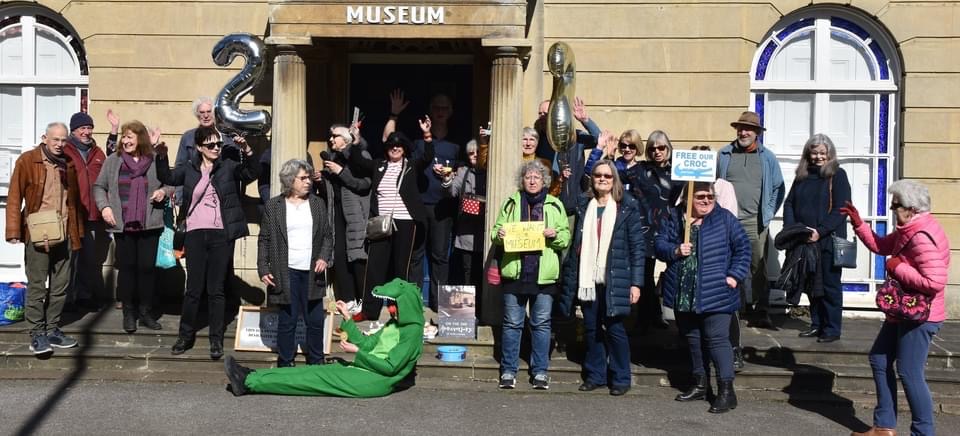
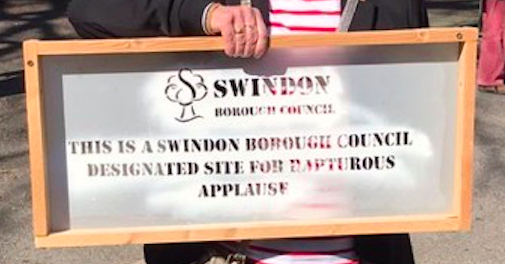
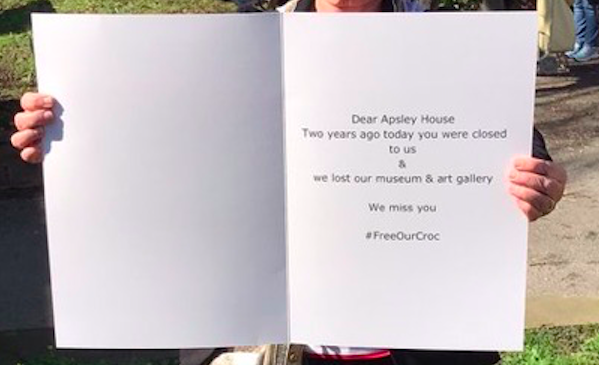
SMAG’s closure second anniversary marked Residents campaigning for a realistic new home for Swindon’s Museum and Art Gallery gathered together today. The occasion? To mark the two-year anniversary of the closure of the previous facility at Apsley House in Bath Road. Thus supporters gathered outside Apsley House with cake, candles, a card and a croc!
Apsley House, home to Swindon’s Museum and Art Gallery since the 1930s, closed on 18 March 2020 as the country went into Covid-induced lockdown. But, unlike other leisure and educational sites around the country, this much-loved facility, remains closed.
Photo by Pear Lucia Barcoe – I imagine the symbolism of the No 2 in shadow is evident. Says it all TBH
Swindon Borough Council have resolved to sell Apsley House. They instead plan to incorporate a new museum/gallery in the proposed cultural quarter in the town centre. Meanwhile, SBC plans to alter some rooms on the first floor of the Civic Offices in Euclid Street to house some of the art and museum collections.
The Friends of the Museum and Art Gallery
The Friends of Swindon Museum and Art Gallery (FSMAG) launched in 1993. The charity’s aim being to help develop, maintain and enhance the best possible museum and art gallery for Swindon. All for the benefit of Swindon residents and visitors to the town.
Since then, FSMAG has acted as local champions. They’ve provided input to management. And they’ve ensured formal community involvement in council decision-making about the museum and art gallery.
We’ve been without SMAG for two full years now,’ said the Friends’ spokesperson. ‘So’ve had little opportunity to view the art and ceramics collections. And no opportunity to view the museum and archaeology collections during this time.
‘We completely accept that Apsley House’s internal layout made it less than ideal for accessibility. But it’s very clear that any next home for the museum and art gallery collections will not be a ‘temporary solution’.
Experienced professionals in the property and development industries tell us the cultural quarter will take decades to finance and construct. So that means the Civic Offices will in fact be a permanent site for the collections.
‘Creating new exhibition spaces for important historical artefacts, local archaeological finds and our nationally renowned British art collection is expensive if done well. And it does need doing well to protect the collections and make the experience a positive one for visitors and researchers.
‘We need to understand how the Council proposes to deliver accessible new exhibition space within their budget. A budget that started off at £1.8million in 2019 but has since shrunk to £400,000. We’re mystified and don’t understand how that can be the case.
We’re very keen to fulfil our role of local champions for SMAG. Thus we trust that our gentle marking of the second anniversary of its closure will encourage SBC to share that thinking with us and the people of Swindon.’
SMAG’s closure second anniversary markedLinda Kasmaty speaking to reporter