Wiltshire Poet Launches First Novel WILTSHIRE-BASED poet and writing mentor Lis McDermott is showcasing her first novel ‘He Is Not Worthy’ at a launch event later this month (May 27).
The 70-year-old, who has eight published books of poetry, short stories and an autobiography under her belt, has now penned her first novel. It tells the story of an art teacher, Rhi Dobbs, who has an affair with a sixth-form student.
Lis said: ‘This is not a story of lust. It’s a story of love, and mutual attraction with a plot twist where the main character also finds herself the object of someone else’s desire. A man we’d identify these days as a stalker.’
Wiltshire Poet Launches First Novel – Lis McDermot
Teaching experience
Lis is herself a former teacher. She worked in education for 34 years before becoming a professional photographer and writer. She was also the music adviser in Wiltshire supporting schools around music education.
‘This story is not based on personal experience! The idea came to me when I was watching a thriller about a stalker. It made me think about how a person could become obsessed with someone else, and have a firm belief there is a connection which simply doesn’t exist,’ Lis said.
And while you’re here why not have a root around an eclectic range of posts on this blog on the topic of arts and culture and heritage? Here’s a handy portal to them all: https://swindonian.me/category/artscultureheritage/
TV PRESENTER MARC MORRIS SHARES SECRETS OF THE DARK AGES
Channel 4 television presenter, Marc Morris will be a special guest speaker at the Athelstan Museum on Saturday May 7. He’ll be there to share his insights into the Anglo Saxons and the so-called ‘Dark Ages’.
The talk, at 3pm in The Rausing Building, has the title Marc Morris: The Anglo-Saxons. In it, Marc will explain how, in the early fifth century, Britain left the Roman Empire and soon fell into ruin.
Into this violent and unstable world came the Anglo-Saxons. They were foreign invaders who established themselves as the new masters of a newly-forged kingdom called ‘England’. England, a country of shires, sheriffs, bishops and boroughs with boundaries much the same as they are today.
Marc Morris – Marc Morris and the Dark Ages
Great excitement!
Sharon Nolan, chair of the trustees of the Athelstan Museum, exclaimed their delight at Marc’s visit. We’re grateful for his time and we hope everyone who attends will enjoy the insights he shares.’
Marc’s talk aims to separate truth from the legend and to tell the extraordinary story of how the foundations of England became laid.
As well as being a British historian and television presenter of the Channel 4 series,Castle, Marc Morris is the celebrated author of several books about the Kings and people of the Middle Ages. His publications include the recently published The Anglo-Saxons.
Acclaimed as ‘a genius of medieval narrative’, Marc has further received plaudits for his in-depth research and TV historian and journalist Dan Snow, described his book as ‘an absolute masterpiece’.
There’ll be another opportunity to see Marc in October. Then he returns to speak during Wessex Week.Wessex Week is a celebration of Anglo-Saxon history held each year in Malmesbury. It features talks, walks, music and other events.
Marc Morris’ talk in May about The Anglo-Saxons is on Saturday May 7 at 3pm in the Rausing Building. Tickets cost £10 and you can book via the website here www.athelstanmuseum.org.uk.
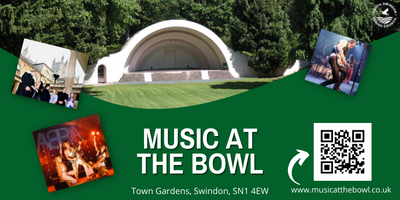
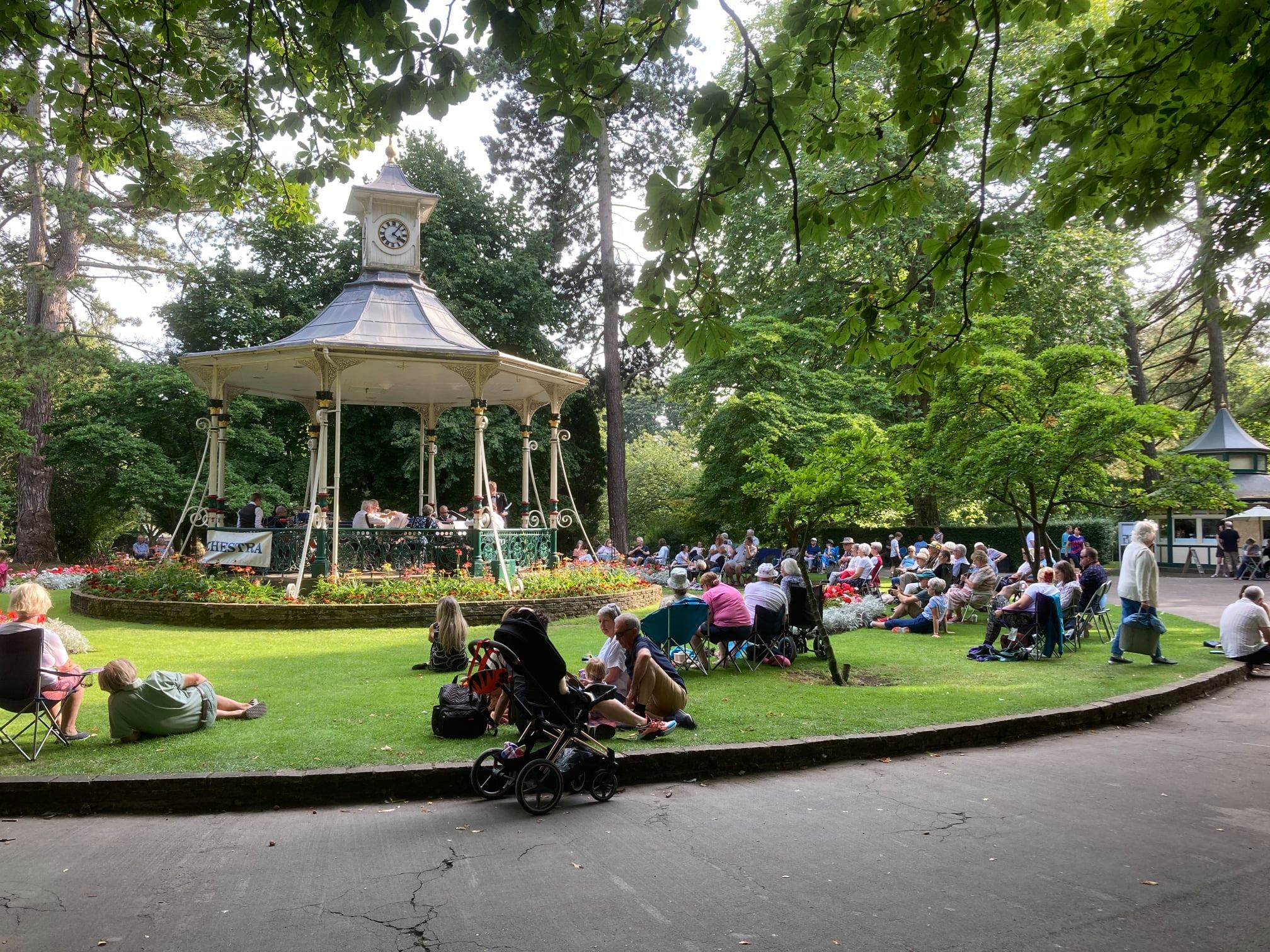
FREE BANDSTAND CONCERTS ARE BACK Concerts at the Town Garden’s bandstand and in Queen’s Park are back by popular demand. And they’re kicking off this Sunday, 1st May, with an extra special launch concert from the North Swindon Big Band in the Town Garden’s Bowl.
Following the success of the line-up in 2021, South Swindon Parish Council, with great delight, announce the return of this much-loved fixture of the summer events season in two of their beautiful public parks, Town Gardens and Queen’s Park. They invite the whole community to experience outstanding live music in the open air. These concerts are completely free, so members of the public can just turn up on the day. Performances start at 3pm and finish at 4.30pm.
Follow South Swindon Parish Council on Facebook and Instagram for the latest information about upcoming concerts at the Town Gardens Bandstand and Queen’s Park.For more information, visit www.southswindon-pc.gov.uk
Free music concerts will take place as below:
1st May – North Swindon Big Band – Town Gardens Bowl 8th May – Zamba Lando – Town Gardens 15th May – Sweet Nightingale – Queen’s Park 22nd May – Swindon Brass – Town Gardens 29th May – Cirencester Band – Town Gardens 12th June – Big Brunch Band – Queen’s Park 19th June – Kennet Accordion Orchestra – Town Gardens 26th June – Central Southern Area Fellowship Band – Town Gardens 3rd July – Wroughton Silver Band – Town Gardens 10th July – Cricklade Band 17th July – Malmesbury Concert Band – Queen’s Park 24th July – Saxophonics – Town Gardens 31st July – Highworth Silver Band – Town Gardens 7th August – Ramsbury Silver Band – Town Gardens 14th August – North Swindon Big Band – Queen’s Park 21st August – Highworth Silver Band – Queen’s Park 28th August – What The Pluck – Town Gardens 4th September – Sweet Nightingale – Queen’s Park 11th September – Royal Wootton Bassett Brass – Town Gardens
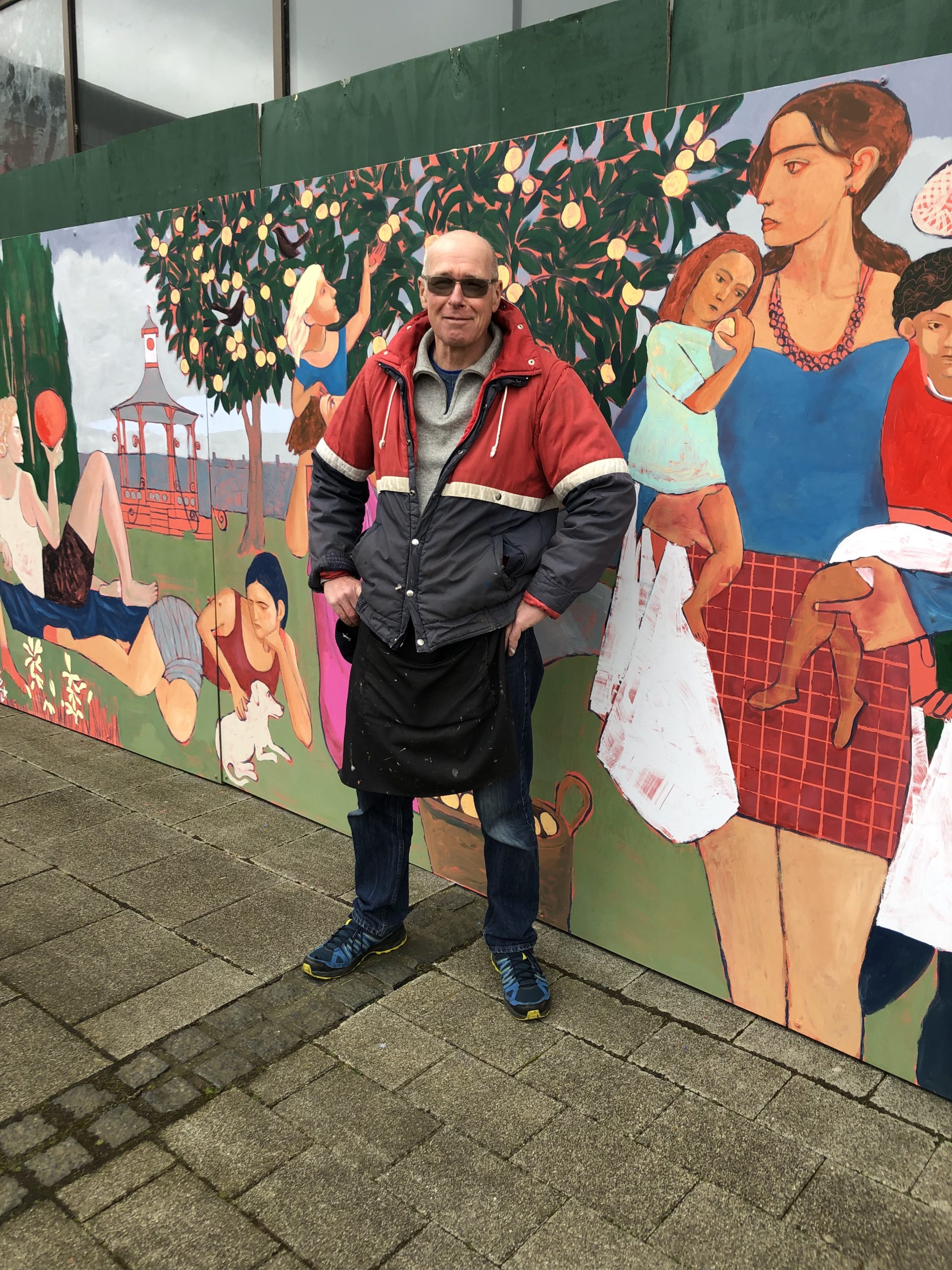
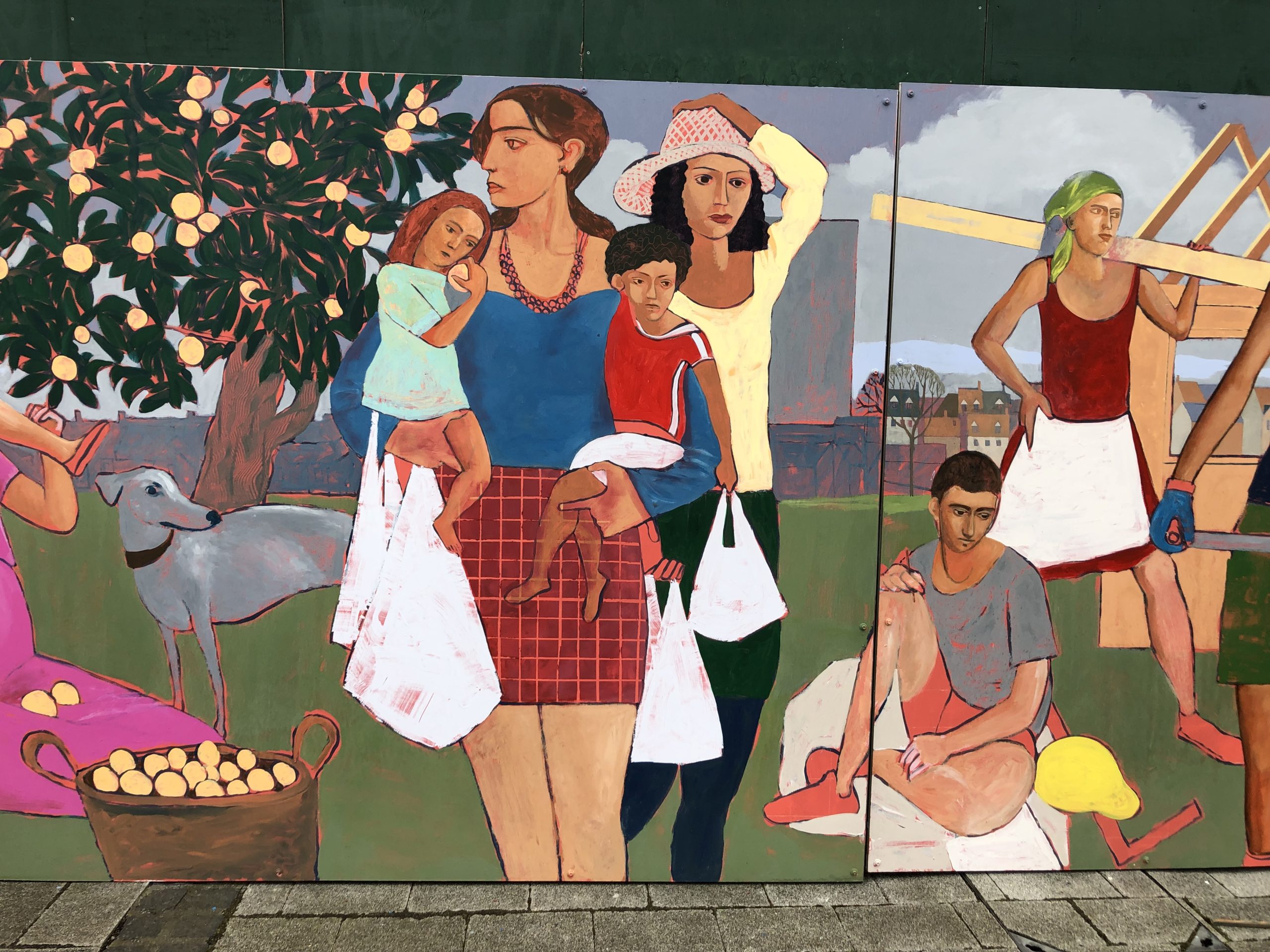
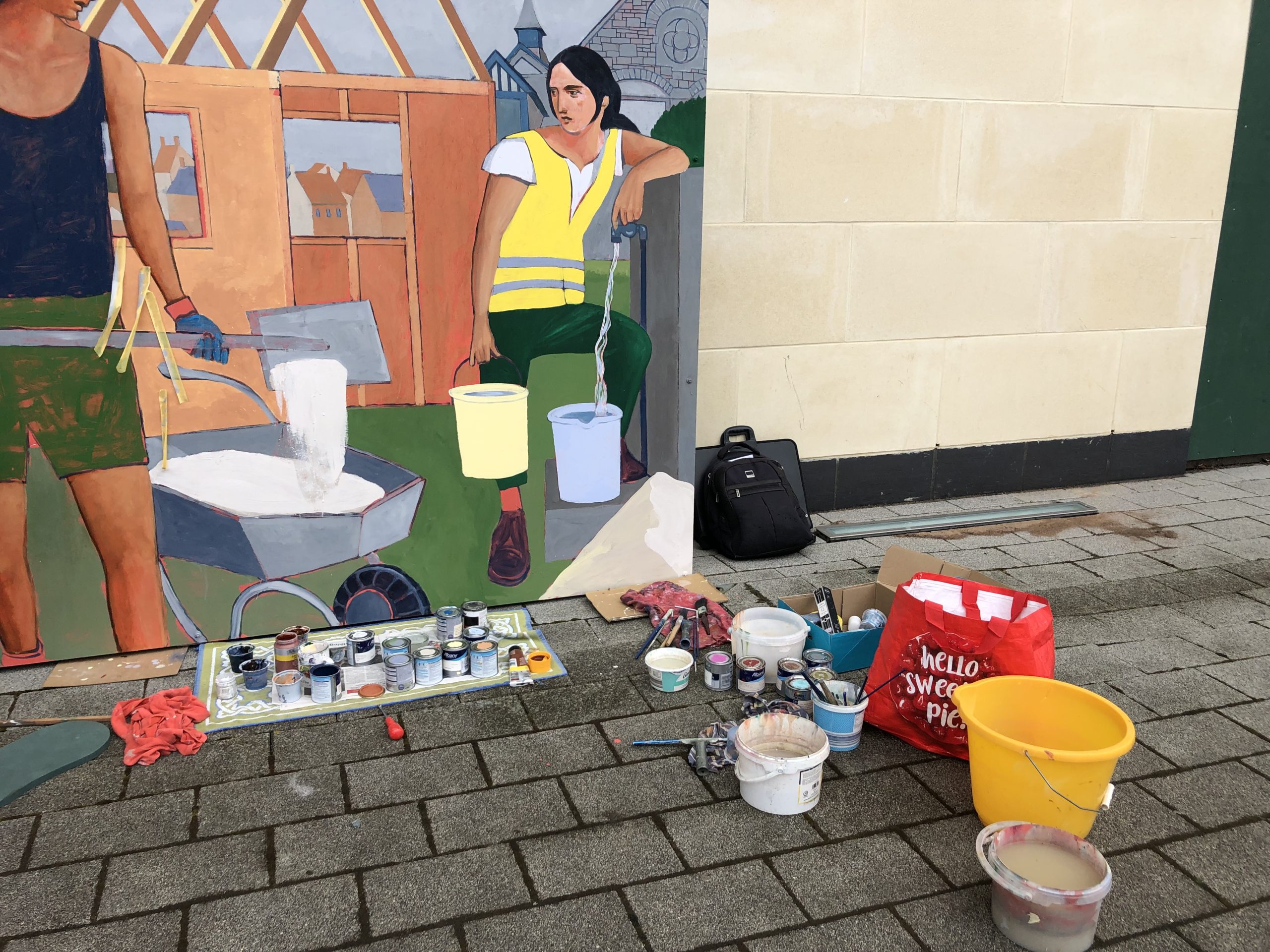
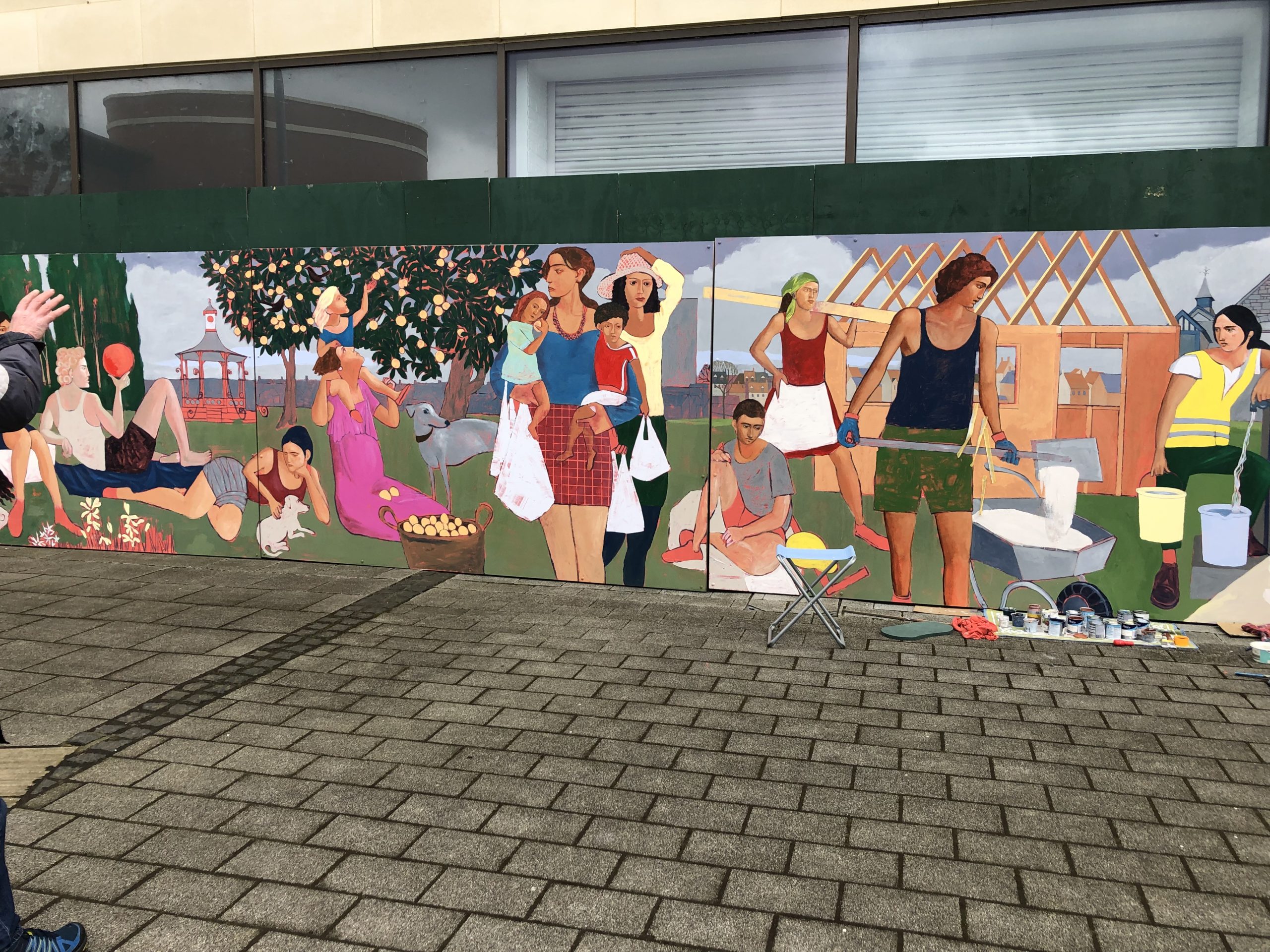
Using funds from the Government’s Welcome Back Fund, the mural has re-imagined a recently discovered lost piece of art by acclaimed artist Harold Dearden.*
The theme of the mural is Salubritas et Industria – Swindon’s motto. I like to translate this as Health and Industriousness – as in hard work/being busy, or health in hard work – being as how Swindon had only ONE industry at the time. That of the GWR.
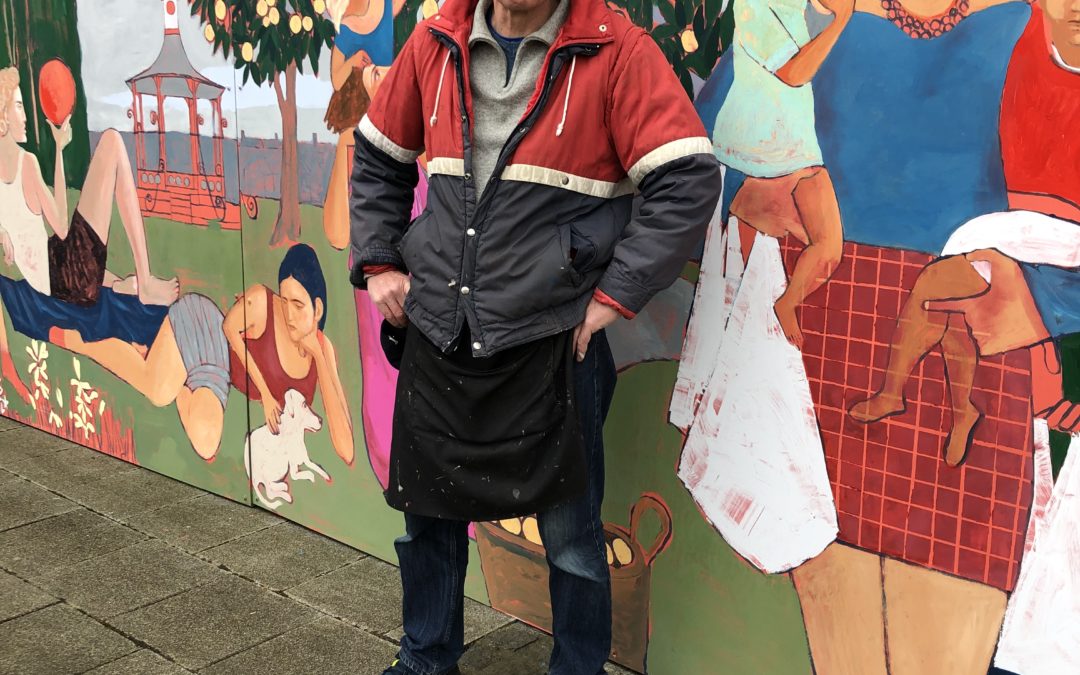
New Mural at Regent Circus – artist Tim Carroll standing with his mural
Artist Tim Carroll said, ‘I’ve very much enjoyed the whole project and am pleased with the result. Everyone has been marvellous to work with and a great help. I’ve appreciated the opportunity to work on such a large scale.’
Commenting on the mural, inSwindon BID Co Director, Anita Bellinger said: ‘Congratulations to Tim on creating such a stunning piece of artwork. It’s been our pleasure to manage this new initiative as one of the many projects inSwindon BID have lined up to encourage visitors back to the town centre.
The mural is special and unique to Swindon. We’re now excited to share this fabulous piece with all our visitors. Wonderful art, accessible to all.’
A painter in oil and watercolour and a draughtsman in in and wash, Dearden studied at Rochdale School of Art. He learned his artistic trade first under the tutelage of H Barrett Carpenter, 1905-1910. He continued his studies, for a further five years, a the Royal College of Art, under Gerald Moira.
Dearden went on to become head of Swindon Art School for thirty years, from 1920 onwards. He exhibited in London and provincial galleries and Swindon Museum and Art Gallery holds his work. Or rather it did until SBC decided not reopen it after Covid. See:https://swindonian.me/category/museum-and-art-gallery/ – for more on all that!
Salubritas by Harold DeardenIndustria by Harold Dearden
For why these images are as they are … from Linda’s blog: ‘These two paintings of the Swindon motto hung in the council chamber of the Civic Offices for many years, were later reputedly found rolled up in a skip, and then donated to Swindon Museum and Art Gallery.’
Other murals around the town
In recent years and months there’s been a spate of new murals appearing about the town and that’s absolutely fab. See also – in not particular order:
South Swindon Green Trail So a few days ago the super-duper South Swindon launched a new green trail.Recovering from a Covid-induced chest infection I decided not to go to the launch event at Shaftesbury Lake. Thus this post is comprised of some photos from Royston Cartwright and words from other sources.
South Swindon Green Trail map at Shaftesbury Lake
Explore the website
On the SSPC website – see link above – you’ll find this map and clickable buttons:
Map on SSPC website
So for instance, should you click on the Post World War Two button you’ll find this:
POST WAR EXPANSION
‘Swindon’s history has been one of growth and expansion, even the historic Railway Village was once built on green fields to house the workforce for Brunel’s railway works. In 1952, Swindon became designated as a London overspill town, and this triggered a massive expansion of new housing developments to the east of the town.
Over 1,000 acres were acquired for housing development, almost entirely made up of the farmlands of the Goddard Estate. They were:
Upper and Lower Walcot farms then the farms of
… Park
Church
Manor
Coate and
Prince’s
First came the estates of Walcot East and Walcot West separated by Queen’s Drive, a new dual carriageway built in 1953, followed by Park North and Park South … ‘
‘Winding its way through some of the most beautiful and historic scenery Swindon has to offer, the loop takes users on a route of about eight miles or 14km.
Parish council chair Cllr Chris Watts said: “The Parish council is delighted to open this fantastic new walking trail for Swindon.
“This trail will show people what is green and on our doorstep. We’ve put together a webpage that details all the wildlife and history walkers can see on the route.
Over the last year the parish has invested heavily to make this route as accessible as possible for all year round rather than just the dry months. We hope residents enjoy it.’
The design of the trail roughly follows the parish boundary. It’s suitable for anyone and you can walk it in one big session or in smaller chunks.
South Swindon Green Trail – Linda Kasmaty saying a few wordsChris Watts