Paralympian Louise Hunt to commentate at this year’s Wimbledon championships
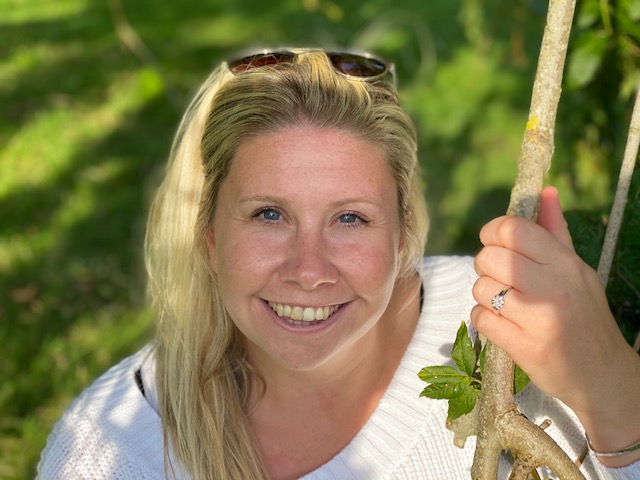
Former British wheelchair tennis player, and local lady, Louise Hunt is set to share her expertise while commentating at this year’s Wimbledon championships in the final week. (from July 7 to July 10).
No stranger to the commentary box, Louise made her debut covering the 2013 event. Yet, this will be Louise’s first involvement in her home grand slam since retiring from elite competitive sport in 2021.
Louise, who lives in Wroughton near Swindon, has enjoyed a successful global playing career. As such she is one of Wiltshire’s most successful athletes.
Paralympian to commentate at Wimbledon – Louise in action
Two Olympics
She represented Great Britain at both the London and Rio Paralympics. She’s won 13 senior singles and 41 senior doubles titles, with a career-high world ranking of 10. Her first senior title came in 2009. She made two Wimbledon appearances as a player, in 2015 in the doubles. And then the following year in both the singles and doubles event – this being the first year of singles at the event.
As with playing, a great deal of preparation goes into commentating at a grand slam event. She believes in doing her homework.
I look at the past meetings and the stats for each player. Some of these go to the BBC for us to use but I’ll also do my own research.’
When it comes to analysing players’ abilities, and their mindsets, Louise is well-placed to offer unique insights. That makes her a valued member of the commentary team.
Recent retirer
‘I’ve only just retired so I’ve played against most of the players who are still competing. We’ve been on tour together for years, so I know quite a lot about their games. I find that people like to hear about a player’s journey, so I can offer a mix of both performance and personal insight when I commentate on a game.
In fact, recently, I was commentating on a match in Tokyo, when my colleague asked me who I wanted to win. But I couldn’t say because both the players were my best friends and are going to be bridesmaids at my wedding this year! That’s how close we can become throughout our sporting careers,’ Louise said.
Wheelchair tennis features at all four grand slam tournaments running alongside the able-bodied draw. There are 180 different tournaments on the tour, including the Masters and the Super Series.
Currently, only players ranked in the top 7 (plus one wildcard) of the ITF rankings qualify for the grand slams. Louise though is confident that the draws at these tournaments will expand to help the sport grow both apropos participation and viewing audience.
Top tip
Who does Louise tip for the women’s title this year?
‘I like watching KG Montjane from South Africa, she’s one to watch as she’s got a unique and interesting game. But I can’t see anyone beating Diede de Groot from the Netherlands, she rarely loses!’
And does the thought of commentating on her home grand slam make her want to come out of retirement?
‘No, I still play, but I am happy my competitive career is over. I can combine commentating with my other interests. I’ve always liked to have several things on the go, for example, I deliver talks to local different businesses and organisations as well as my work with the Youth Sport Trust and its ‘Beyond the Baseline’ programme.
‘In this programme I use tennis as a tool to help build other skills in school age children such as confidence, communication and leadership. So, although I’ve come out of the sport, in one respect, I still love it and I’m enjoying my continued involvement in it.
This year’s Wimbledon championship runs from June 27th to July 10th.
Paralympian to commentate at Wimbledon – Louise Hunt
Celebrate the Queen’s platinum jubilee on Friday 3rd June – from 11.00am to 3.00pm at central community centre, the Baker’s and the the railway village museum.
Mechanics’ Matters Number 4 – Mechanics’ Institution platinum jubilee celebrations
Other Mechanics’ Matters
The Cricketer’s Arms
We’re delighted to report that we’ve got approval to convert the Cricketer’s Arms into three self-contained apartments, a retail unit and a community room. We expect the cost of the development to fall the region of £1.5 million with the first phase due to start this summer.
New artwork for the hoardings around the Mechanics’ Institute building
Railway village residents have seen the appearance of new, grey-painted hoardings around the Mechanics’ Institute. But that’s to provide a backdrop to painted scenes representing the history of the railway village and its key buildings. Funded by Historic England and the Towns’ funding, the project will involve local schools and local artists such as Marilyn Trew.
The trust hopes to see it completed by September 2022.
The Baker’s
Saturday the 21st of May saw some discussion about future use of the Baker’s. The trust present options with input from residents.
DON’T FORGET WEDNESDAYS @ the BAKER’S – 10am to 1pm – On Wednesday’s we invite village residents to enjoy free coffee and cake and to chat with us about heritage action zone projects. Those happening now and those forthcoming.
Residents can also speak to SBC housing and public health officers. Further – on Weds 27th April and 4th May we’ll have plant seeds to take away.
Railway village museum openings
Free entry – but donations appreciated. The museum opens 11am to 3pm as follows:
July 2nd
August 6th
September 10th and 11th
December 10th and 11th
Outlet centre walking tours are on Saturdays 10am to 2pm. To book tours ring 07766138229 or email secretary@rodbournehistory.org
Getting involved
Enjoy FREE membership until 31st December 2022 – Currently £1.00 plus donation
The Mechanics’ Institution Trust is a charity and relies on volunteers and charitable funding although we do generate income from the buildings we currently have responsibility for. We have a range of opportunities and are looking for volunteers and trustees.
SOMAG: Save our Museum and Art Gallery SBC: Swindon borough council
SOMAG hopes for positive engagementfrom new Cabinet member
The SOMAG campaign group welcomes the appointment of councillor Matty Courtliff to the Cabinet. Matty is SBC’s new Cabinet member for culture, heritage, leisure and town centre experience.
A spokesperson for SOMAG said: ‘the group hopes this appointment will mark the start of proactive and positive engagement over the future of the town’s museum and art collections.
The campaign, which began in 2021, has succeeded in forcing SBC to abandon its initial plan. That comprised leaving the collections in storage until the delivery of a promised new cultural quarter in the town centre.
Apsley House on Bath Road housed the museum and art gallery for around ninety-years. But, following the end of the pandemic restrictions, SBC announced that Apsley House wouldn’t reopen. And further, their intention to place the collections in storage.
At length, SBC proposed to use two small rooms at Lydiard House to display a small selection of the collections. Then they decided to convert part of the Civic Offices into gallery spaces.
In support – in principle but with caveats
SOMAG supports the ambition to create a temporary home for the collections at the Civic Offices. In particular as we’re not likely to see completion of the cultural quarter for many years, if not decades.
The group has asked the council repeated questions on how the current proposal can deliver professional-quality museum and art gallery displays on conversion of the building shell.
In March 2019, the council estimated it would cost £1,864,000 to convert the first floor of the Civic Offices to provide appropriate gallery space for displaying the collections. Yet, its most recent estimate is that the conversion will cost £400,000.
Despite repeated requests to SBC for an explanation of how the cost of conversion can have fallen by £1,464,000 in three years, SOMAG has had no answer.
We’re very pleased that, following our lobbying, SBC agreed to find an alternative venue for Swindon’s own Museum and Art Gallery. It’s so much better than waiting many, many years for the cultural quarter,’ said the spokesperson.
Vague plans
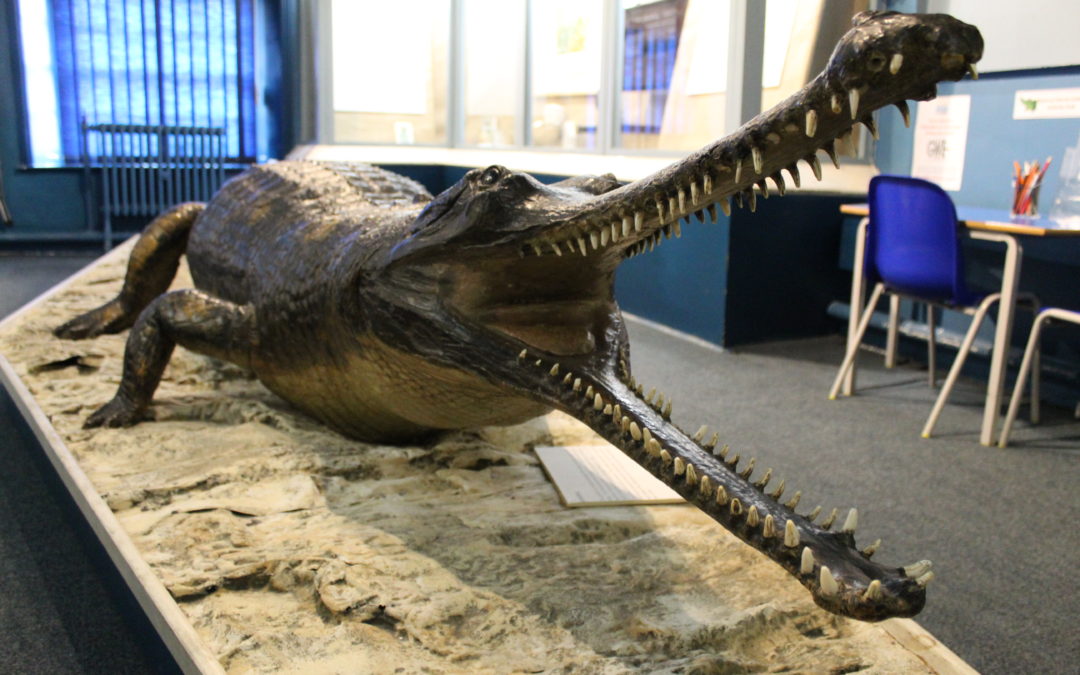
The plans for the Civic Offices are somewhat vague. And that’s a source of great frustration for everyone that loved the displays at Apsley House. And that includes the famous croc or gharial.
The gharial in swindon museum – SOMAG Supports Civic Offices Conversion
‘We urge SBC to allocate realistic timetables and budgets to the interpretation of the art and museum collections. Because these things are STILL absent.’
‘We’re also concerned that papers relating to the SBC planning application to convert the building reveal the new facility will only be open during office hours. The weekend closure seems most odd, as those are the days when families would plan to visit.
‘We’re hoping that the appointment of Cllr Courtliff will mark a change in approach. And further, SBC will now be proactive in involving and engaging the community in the development of the plans for the museum and art gallery collections.’
For more about Swindon’ favourite crocodile go here:
You’re all invited to bring along a picnic and join together on the glade opposite the hot house. There’ll be an afternoon of entertainment from ZambaLando, who recently performed to an enthusiastic crowd at the Town Garden’s bandstand. There’ll also be a chance to take part in arts and crafts, games and competitions.
South Swindon parish council have been busy implementing consistent improvements to Queen’s Park over the last few years – thus it’s now better than ever.
Queen’s Park has a special connection to Queen Elizabeth II. As Princess Elizabeth, she performed the official opening of the park’s garden of remembrance located off Groundwell Road. Ergo, the Platinum Jubilee is the perfect chance to bring along the whole family to experience this beautiful park this summer.
The devil is in the detail
The Big Jubilee Lunch will take place from 11am until 2pm on Sunday 5 June.
Cllr Stan Pajak, councillor for Eastcott, said, ‘There can be no better place to celebrate the Queen’s Platinum Jubilee than at the park named to celebrate the Queen’s coronation in 1953. Queen’s Park is a wonderful green oasis in Swindon’s town centre. Amid flowers, a lake come and enjoy a royal picnic on its grass glade for entertainment by life music. It’s definitely the place to celebrate the Queen’s Platinum Jubilee!’
Find out more about the sculpture in Queen’s Park called Turtle Storm:
And did you know that Queen’s Park used to be the manufacturing site for Swindon’s famous brick maker, Thomas Turner? It’s hard to imagine it isn’t it as you wander around this lush town-centre oasis.
Founder Fi Da Silva Adams found the scheme so successful that her team are offering support to families in hardship this summer too.
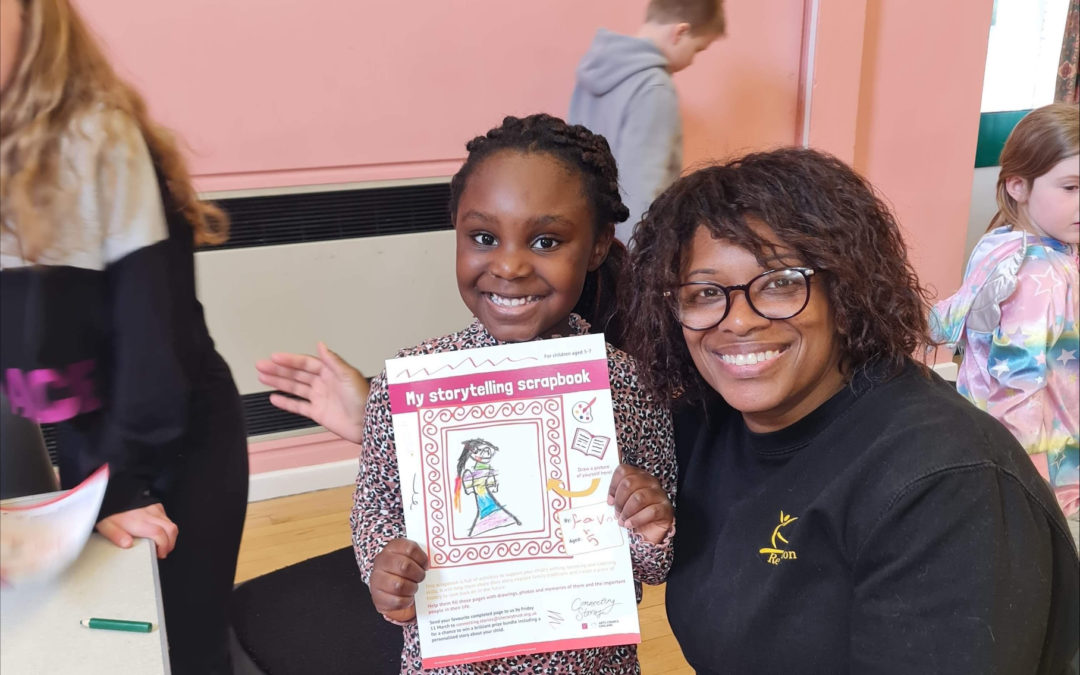
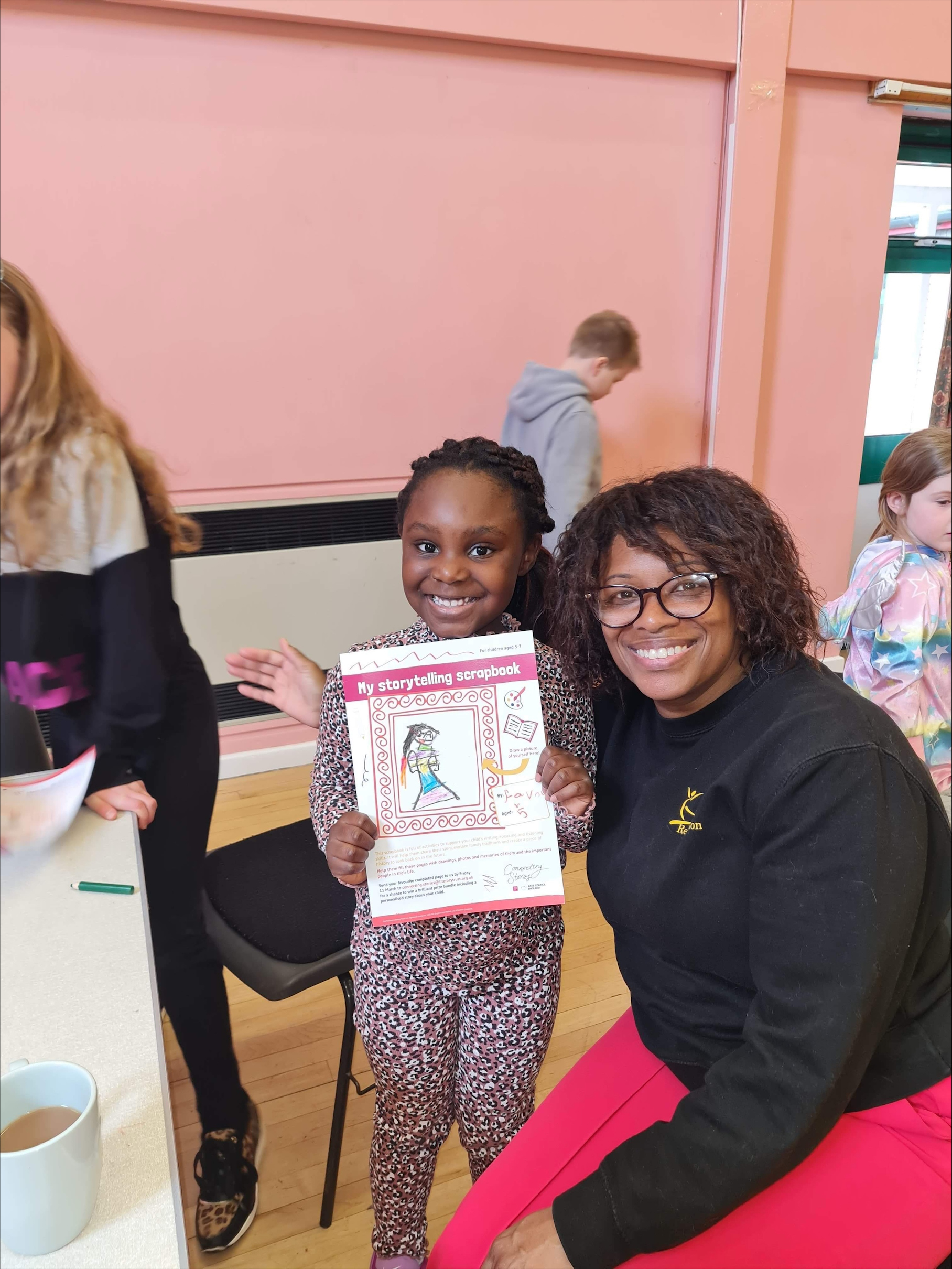
Patricia & Favour
The HAF programme – with which RPA supports low income families
The Government’s £220 million HAF programme has been available to councils across the country to run the programmes through various holiday clubs. Thousands of young people have already benefited. These clubs must commit to provide nutritious food as well as activities like arts and crafts, sport and music tochildren who get free school meals during term time. RPA is the only performing arts company in Swindon offering the programme.
Fi Da Silva Adams, said: ‘We piloted this programme for one week over the Christmas holidays last year. It was so successful that we ran it again for a week over Easter. The take-up was incredible. We welcomed over seventy young girls and boys who came to enjoy fun performing arts activities and a free hot meal. Without this support they may not have had this opportunity.’
The activities offered in the HAF programme at RPA were:
Singing
Dancing
Acting
Circus and physical theatre workshops
Arts and crafts, loom bands, den building, Nerf guns and outdoor activities
‘School holidays can be a particularly difficult time for some families due to increased food and childcare costs and reduced incomes,’ explained Fi. ‘It can mean that families struggle to provide food and activities for children. It’s my belief that Revolution Performing Arts is the only performing arts group taking part in this programme in Swindon/Wiltshire. We’re thrilled to be a part of this important Government initiative.’
RPA plans to offer the HAF programme again for four weeks in August. The same fun activities will be available plus some extra outdoor activities to enjoy being with nature. HAF is available for children who receive benefits-related free school meals.
With Covid19 having affected so many young people’s mental health, our young boys and girls need to feel great now, so I am doing all I can,’ said Fi.
Where it will be
The HAF Programme takes place atThe Croft primary school in Swindon and at Even Swindon Community Centre. All the RPA leaders have enhanced DBS police checks and have received full safe-guarding and first aid training.