THE LORD CHAMBERLAIN’S MEN HEAD TO SWINDON WITH THEIR ACCLAIMED PRODUCTION OF AS YOU LIKE IT
On Sunday 19 June, The Lord Chamberlain’s Men, with a history stretching back to William Shakespeare himself, present the sparkling comedy, As You Like It.
It thrills South Swindon Parish Councilto launch their exciting season of theatre and music events in the Town Garden’s bowl, with this spectacular production. With less than two weeks to go, there has never been a better time to book your tickets.
The Lord Chamberlain’s Men, leading proponents of open-air theatre for over fifteen years, last year toured with Macbeth. Now they and South Swindon parish council, invite you to experience this accessible theatre company.
Talking about the thrill of seeing open-air theatre, Peter Stickney, artistic director and producer says, ‘experiencing Shakespeare’s productions outside is a special thing. As the light fades and the moon shines bright, it’s thrilling to think that we’re looking at the same moon Shakespeare did whilst we listen to words he wrote more than 400 years ago. As we’ve all discovered from last year, seeing theatre outdoors is not only magical but safer too. We’ve been lucky enough to make and enjoy theatre in special outdoor settings for many years. Thus I hope those looking for top-quality theatre will join us to enjoy this unique theatrical experience.’
What to expect
Speaking about what audiences can expect this summer he said, ‘As You Like It is a warm, funny and rich play. We follow our main characters as they flee or become exiled from the court. Then to set up new lives in the Forest of Arden. There they find love, freedom and, in the end, happiness. It’s clear we can say a lot for running away to the countryside and starting again! There’ll be plenty of songs and laughs, some classic Shakespearean cross-dressing confusion and a spot of wrestling.
This play has one of Shakespeare’s strongest and most recognised heroines, Rosalind. Determined, passionate and with a razor-sharp wit she refuses to let her circimstances bring her down. Exiled from the court, she disguises herself by dressing up as the shepherd Ganymede. She then sets about the challenge of solving everyone’s problems and, at length even her own. In our production, there’ll be an extra layer of fun and intrigue as a man plays a woman dressed as a man whilst, at times, pretending to be a woman!’
Get tickets
Tickets for As You Like It at the Town Gardens Bowl on Sunday 19 June at 6.30pm are available to book online at www.theatreatthebowl.co.uk
The company have set out their stall as being people that produce new and exciting work in the town, working with inclusive businesses to promote access to the arts. Working in unusual spaces like coffee shops, restaurants, galleries, and empty shop units; Darkroom are the first company to perform in the Wyvern Studio, a dedicated black-box space at Swindon’s biggest theatre.
Cougar, by Rose Lewenstein, is a dark comedy-drama from Darkroom about consumption. Two lovers travel the world to raise awareness of climate change and the destruction of environments.
Dark Comedy-Drama from Darkroom
Oli Webb, Director, says ‘The play is very much based on the relationship of Leila and John. We follow them throughout their turbulent relationship. They travel the world staying in endless, identical hotel rooms. They consume with no end whilst Leila writes speeches about the green agenda for climate conferences. The irony isn’t missed.
It also looks at the hypocrisy of big business paying lip service. It’s all well and good a huge multinational going to a climate conference, but how do they get there? Jets? Cars? What are they doing to combat the climate crisis?
During the pandemic I worked for one of the top Young People’s charities in Munich championing young leaders in areas like climate change. We had these exact discussions. Yet, is it possible to change anything, without big business? There is no easy answer and that’s why I love this play.’
WILTSHIRE POET & WRITING MENTOR LIS MCDERMOTT LAUNCHES HER FIRST NOVEL HE IS NOT WORTHY
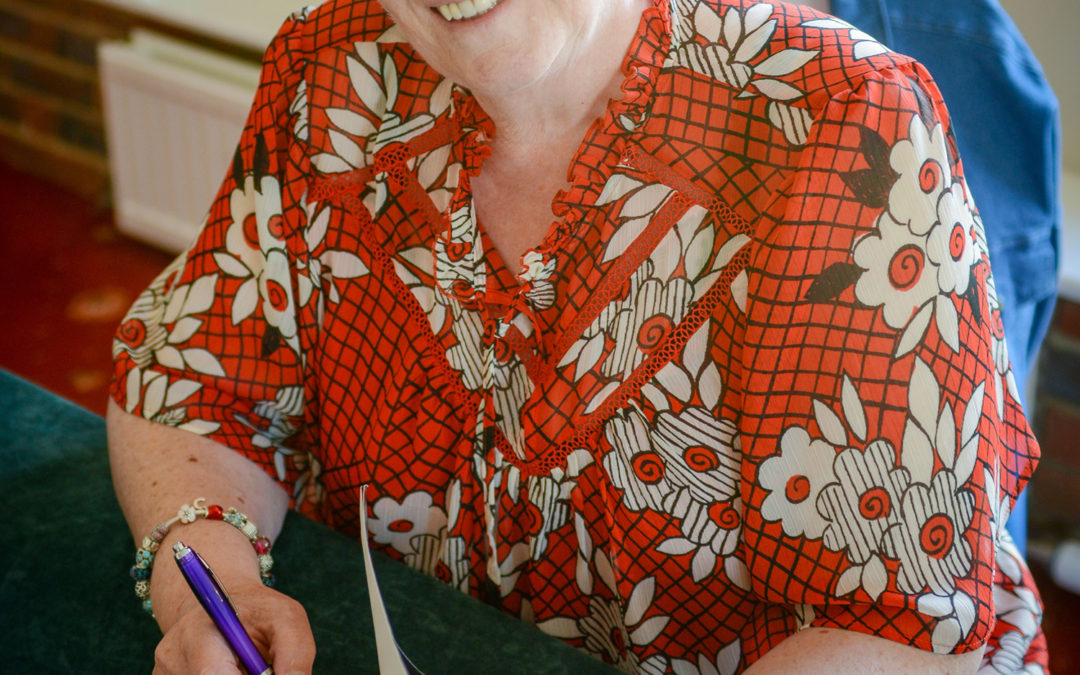
Lis McDermot Launches First Novel WILTSHIRE-BASED poet and writing mentor Lis McDermott has published her first novel, ‘He Is Not Worthy’. The novel is tale of love, unrequited love and stalking.
The 70-year-old, who has already published eight books including poetry, short stories and an autobiography, launched her book at a sold-out event held at Marsh Farm Hotel, Royal Wootton Bassett recently (May 27).
Lis said: ‘I’m so grateful to everyone who came along to my launch event and who showed an interest in my first novel. Not only was the event sold out, I sold out of novels on the night. Some of the authors I’ve mentored also came along to support me. It was a lovely evening.’
He Is Not Worthy unfolds from the point of view of a teacher, Rhi. Rhi has an affair with a sixth-form student and then finds herself becoming an object of obsession for a stalker.
Lis McDermot Launches First Novel
About Lis
Lis is herself a former teacher. She worked in education for thirty-four years before becoming a professional photographer and writer. Lis was also the music adviser in Wiltshire supporting schools around music education.
‘This story is not based on personal experience! The idea came to me when I was watching a thriller about a stalker. That programme made me think about how a person could become obsessed with someone else, believing there’s a connection which simply doesn’t exist and that person may not always be ‘evil’. I also wanted to explore how having a stalker impacts on a person’s daily life.’
Lis revealed on the launch night that she’s already researching her second novel which has a supernatural theme.
I’ve based my next story loosely around a compelling love story from my own family history. I’m already researching various characters and will be starting to write within the coming months.’
‘He Is Not Worthy’ published by SilverWood Books and is available here https://amzn.to/3M83X0P
National Lottery funding backs performing arts group’s Platinum Jubilee film project
RPA secures lottery funding One of the south west’s leading performing arts organisations has secured £10,000 of National Lottery funding. This is for its forthcoming platinum jubilee project– a series of events to mark the historic royal event. The project includes the creation of a special feature-length film celebrating the longevity and tenacity of live theatre.
One of the south west’s leading performing arts organisations has secured £10,000 of National Lottery funding. This is for its forthcoming platinum jubilee project – a series of events to mark the historic royal event. The project includes the creation of a special feature-length film celebrating the longevity and tenacity of live theatre.
The film will premiere on Saturday June 18 at the Wyvern Theatre, Swindon. As well as marking the Jubilee, the film serves as a celebration and reflection of the performing arts group surviving the devastating impact of the Covid-19 lockdown periods
All thirty-two of the group classes chose a well known theatre show from the seventy-five years of the Queen’s reign as inspiration for a piece of theatre, circus or dance. They filmed the pieces over two weekends in May/June at:
The Pattern Church in Swindon
The Deanery school in Wichelstowe
Wichelstowe canalside
Laura Barnes, artistic director, said of the funding: ‘We’re super thrilled because these projects are expensive apropos resources and spaces, and the extra manpower, time and work that goes into them. The funding is what makes them happen, so without it, we couldn’t do the project.’
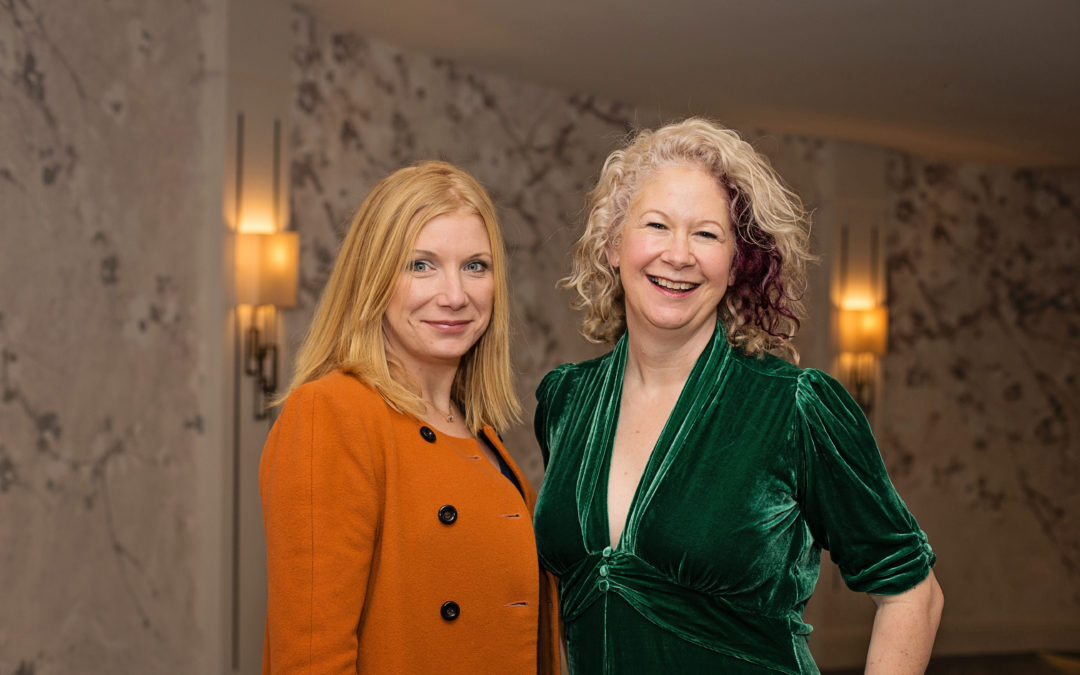
RPA secures lottery funding – Laura Barnes and Fiona Da Silva Adams
About Revolution Performing Arts
Revolution Performing Arts was set up in 2007 by Fiona Da Silva-Adams as a drama group for toddlers and preschool children. Before long, exceptional demand led to its expansion to cover school-aged children.
Today RPA works across many age groups and also works with vulnerable children and families. The whole team places an emphasis on fun, child-centred lessons that aim to build confidence and self-esteem.
Laura added: ‘Some of the young people who work with us are quite vulnerable. If we asked them to pay there’s no way they would have been able to. The funding allows children who wouldn’t get to be part of something like this. That’s how significant it is.’
Not only did the group’s young people choose the pieces, they also star in them and choreograph them. A group also worked with the film production company, Swindon-based OT House, to help edit the film and work on media make-up.
The children chose a wide variety of shows as inspiration for their pieces. This resulted in a diverse mix with everything from classic theatre to modern productions like The Lion King and We Will Rock You.
Additional events
The National Lottery funding has also allowed the group to get involved in other local Jubilee events. On Saturday (June 4), performers will take part in street theatre at a community event in Wroughton.
At the same event, one of the group’s members will be acting out picture books. The group is also working alongside Swindon Domestic Abuse Support Service. Their three-day project will see members putting on workshops for families staying at the refuge. The whole thing culminates in a garden tea party with a range of performances for those attending.
The film’s premiere will take place at a gala event that will involve a three-course meal for families, with every child involved receiving a free copy of the final product.
The county of Wiltshire celebrates Wiltshire Day on the 5th June. Never heard of it? Read on!
The British county flags website tells us that the reason for the day is to commemorate the date, in 2007, when the Great Bustard flag first flew on County Hall in Trowbridge.
The flag features the Great Bustard – a bird that yours truly at first thought was mythological. Y’know – like the Phoenix. Doh! I mean – it sounds it doesn’t it?! But no – it’s real. And it’s a bit of a big b8gger too!
Wiltshire flag designed by Mike Prior and his daughter Helen Pocock
There exists a Great Bustard group, based on Salisbury Plain, that’s enjoyed success in supporting a breeding population of 100 birds – that has steady growth. The WWT site explains that the group has found ways to import eggs, raise chicks, protect the young and introduce adult birds back into the wild. And all done in safe and ecological ways. Since 2019, all new bustard releases are solely home-grown.
No drawbacks
It seems that reintroducing great bustards comes with none of the drawbacks of other species that are candidates for reintroduction to Britain. As the WWT points out, unlike wolves, lynxes, eagle owls or many of the other big raptors, Bustards are not predators, neither are they landscape changers such as the beaver or wild boar.
Iconic
The Great Bustard is Wiltshire’s iconic bird. It appears on the county coat of arms, on its crest and of course on its flag. You’ll find the image of the bird throughout the county in such diverse settings as the symbol of the High Sheriff and the badge of the Girl Guides.
There isn’t actually a Swindon Day but this year, on the 22nd January, the Federation of Small Business, launched a Swindon Dayas an excuse to celebrate small businesses based in Swindon. And the hook on which to hang Swindon day?:
Before the railway came, Swindon existed only as a small market town up on a hill. It’s now known as Old Town. Then, in 1841, construction began on a greenfield site some two miles from the hilltop settlement, of the GWR railway village. And New Swindon was born.
The two Swindons co-existed, not altogether at peace each with the other, for almost a decade. They remained apart, both physically and administratively, until 22nd January 1900. On that date Queen Victoria signed a charter, the last such of her reign, to bring the old and new Swindon’s together as one. Thus, the hill that links the two, and up which the women of the railway village would daily trudge to buy provisions, bears her name.