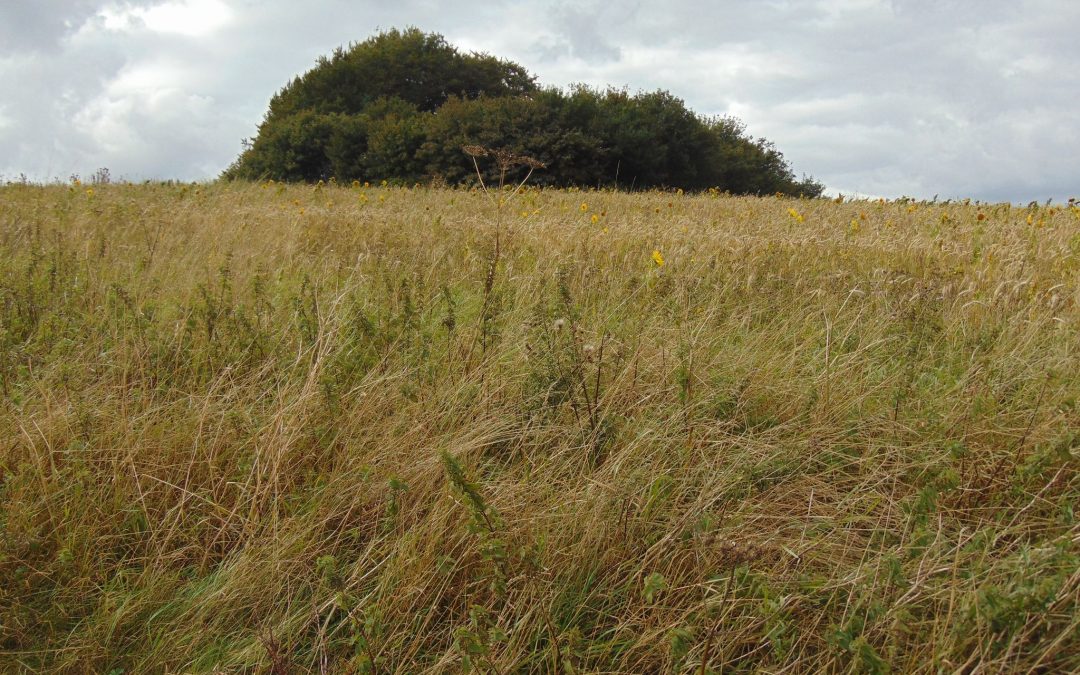
About Liddington Hill Swindon One of many splendid things about Swindon is the great number of parks and open spaceswe enjoy. Both in and around the town. And Liddington Hill is a mere one of those areas of great natural beauty that envelope and caress the town near and below it.
A literary circular walk
Liddington Hill circular walk 4.5 miles – allow at least 2.5hours Terrain: No stiles, can get muddy, one steep descent
On this walk you can discover Shipley Bottom – ooh er missus. That, it seems, is a fine example of an enclosed coombe or short valley described by writer and poet Edward Thomas (1878-1917) as ‘walled on every side by down and sky,’
The walk follows a route used by a somewhat forgotten poet, Charles Hamilton Sorley (1895-1915). Sorley studied at Marlborough College from 1908 to 1913. His experience on the downs inspired such poems as Barbary Castle.
On Liddington Hill you’ll find a memorial to two famous sons of Swindon: Richard Jefferies (1848-1887) and Alfred Williams (1877-1930). They both wrote about the hill. Well I say that – but as far as I know, all that remains is the triangulation pillar used to replace a dedication plaque to Alfred Williams. American soldiers during WWII used that plaque for target practice and damaged it. It’s now on display in the Richard Jefferies’ museum at Coate.1940 saw a replacement plaque installed but that got removed by persons unknown, never to be seen again.
The plaque now at the Richard Jefferies Museum
See the bullet holes!
The self-taught Williams described Swindon railway life and Wiltshire villages. See my book Secret Swindon for more about him and Richard Jefferies. Scholars of Jefferies believe his wanderings across the downs of Wiltshire inspired his rapport with the natural world. That was something he expressed in The Story of My Heart – his autobiography.
The two views that we see here, looking down on Swindon from Liddington Hill, are a wee bit changed from when Williams and Jefferies’ day.
Photographs above courtesy of Robert Slade
Marker on Liddington Hill – about Liddington Hill
Plaque on Liddington Hill
Signpost
Photographs courtesy of Royston Cartwright
Alfred Williams’ poem: Liddington Hill
On this Poetry Atlas websitethere’s a poem written by Williams’ about this beloved Liddington Hill. Here’s the first stanza:
The friendship of a hill I know Above the rising down, Where the balmy souther breezes blow But a mile or two from town; The budded broom and heather Are wedded on its breast, And I love to wander thither When the sun is in the west.
Alfred Williams
Liddington Hill as a Starfish Site
There’s a relatively intact control bunker for a co-located Starfish and Quick Light (QL) site at Liddington Hill overlooking Swindon.
The bunker lies at the edge of the small copse on the eastern summit of the hill, Liddington Clump. You can see those trees from the M4 motorway.
Control bunker for a co-located Starfish and Quick Light (QL) site at Liddington Hill
Starfish sites were large-scale night-time decoys created during the Blitz to simulate burning British cities. The intention of them was diverting German bombers from their intended targets so they’d drop their cargo over the countryside. You can read more about Starfish sites here.
The Wilts & Berks Canal Trust has a grand ambition. And that’s the restoration of the Wilts & Berks canal to link the English northern and southern waterway systems. But a cloud of uncertainty has, for many years, cast a shadow over this dream. The cause of this uncertainty? The obtaining of a crossing across the M4. But rejoice! The cloud is on the verge of lifting. For the canal trust is awarded feasibility funding.
Highways England,the company responsible for England’s motorways and major A roads, has awarded over £42,000 towards the Trust’s feasibility studies. The money comes via its Environment and wellbeing fund. This fund is one of four standalone – or designated – funds which the organisation uses to support certain initiatives. That’s the sort of initiatives that deliver lasting benefits for:
1. Road users 2. The environment and … 3. … communities across England.
Gordon Olson, Chief Executive of the Wilts & Berks Canal Trust, said: “We’re grateful to Highways England for their generous award. We look forward to working in partnership to deliver this important feasibility study.
“The M4 is the biggest barrier to a full restoration of the canal and linking England’s northern and southern waterways networks. So the results could be the key to unlocking the potential of the entire project.
Hoped for canal crossing over the M4 motorway
Short term result
“In the short term it would allow us to connect the existing stretch in the Wichelstowe housing development to the north of the motorway. That stretch is currently under restoration as far as the M4. With the line towards Royal Wootton Bassett to the south, such restoration would more than double the length of canal in water in Swindon and provide a valuable new amenity for the local community.
Longer term
“In the longer term we hope it would also help to show the benefits of restoration to other towns along the historic route. Such towns as Melksham, Chippenham, Calne, Cricklade and Wantage thus attracting new funding to finally start connecting up all the stretches.
“The Wilts & Berks Canal, with its towpath and blue-green corridor, could at length provide an important new source of local employment, tourism and recreation. What’s more it would establish vital new habitats for local wildlife.”
Highways England Project Manager Ian Cole said: “We’re delighted to support the Wilts & Berks Canal Trust with funding to scope out this exciting waterways project.
“The long-term initiative to restore the canal could further realise a great walking and cycling route and environmental improvements. All of which will attract more visitors to the area, and so help the local economy.
“We’re investing in the environment and communities surrounding our road network, as well as the people travelling and working on it, to make a positive difference to people’s lives. Our aim is to address social and environmental issues and add real value to society.”
Championing the canal
It’s so great to hear some positive news like this about the canal. It’s a Swindon feature that I’ve highlighted both inSecret Swindon and in my new publication – Swindon: A Born Again Swindonian’s Guide. And, of course, on this blog:
It’s ever curious is it not – how stuff pops up on social media relevant to somewhere you’ve not long since been to? In this instance the co-incidences relate to Shaw House, on Old Shaw Lane.
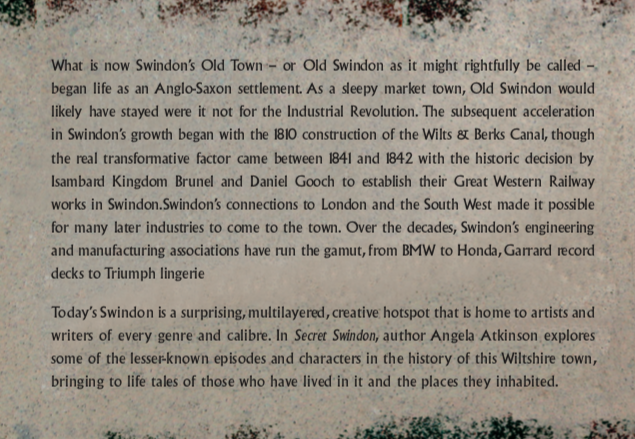
I tend to think of Old Shaw Lane as being a bit of bygone Swindon. But of course it’s not – not really. Because this side of town – the western expansion – wasn’t Swindon. Back then Swindon was the settlement on the hill. Old Swindon – Old Town as we call it now.
I wrote about the western expansion where I live, inSecret Swindon. And Frances Bevan has also written about it: ‘Development on the western expansion of Swindon began in the mid 1970s. First came Toothill, then Freshbrook, Grange Park (where I live) and Westlea. Shaw and Middleleaze followed in the 1980s.’
Covid Constitutionals
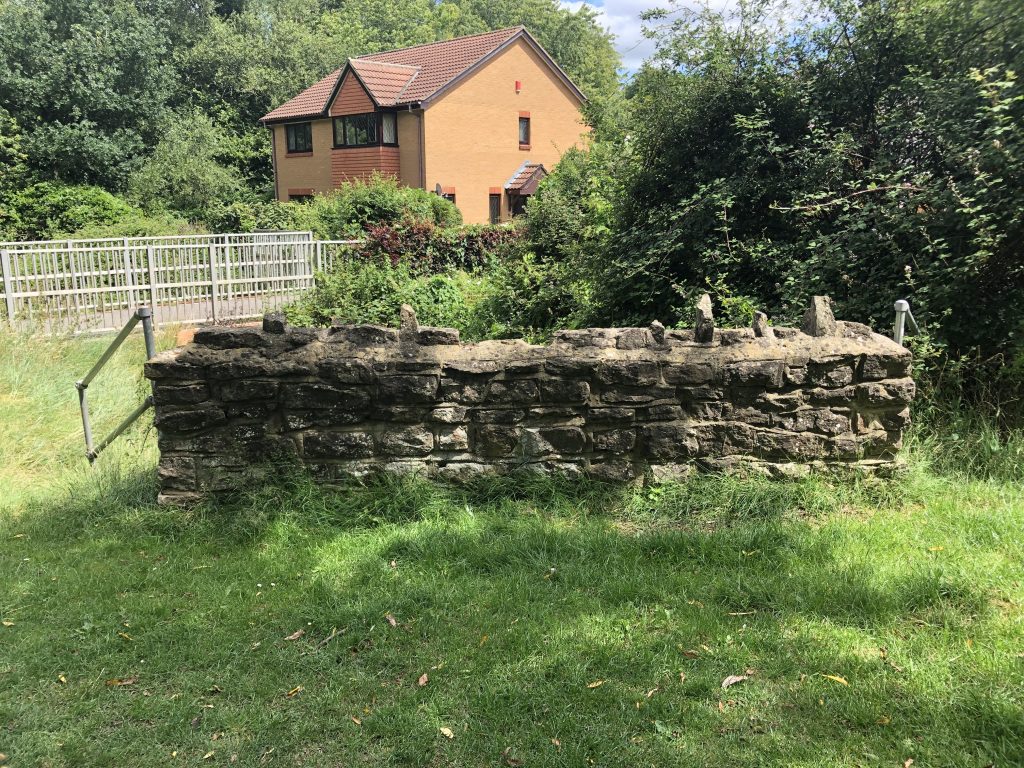
During this whole lockdown and Covid carry on I’ve taken to meandering around on what I call Covid constitutionals. During lockdown in particular I couldn’t get any further than my bladder would take – so that meant roaming West Swindon. I did feel a bit like I was in the Truman Show…
And one of my recent meanderings took me down Old Shaw Lane past the house that you see below – Shaw House.
Frances Bevan again:
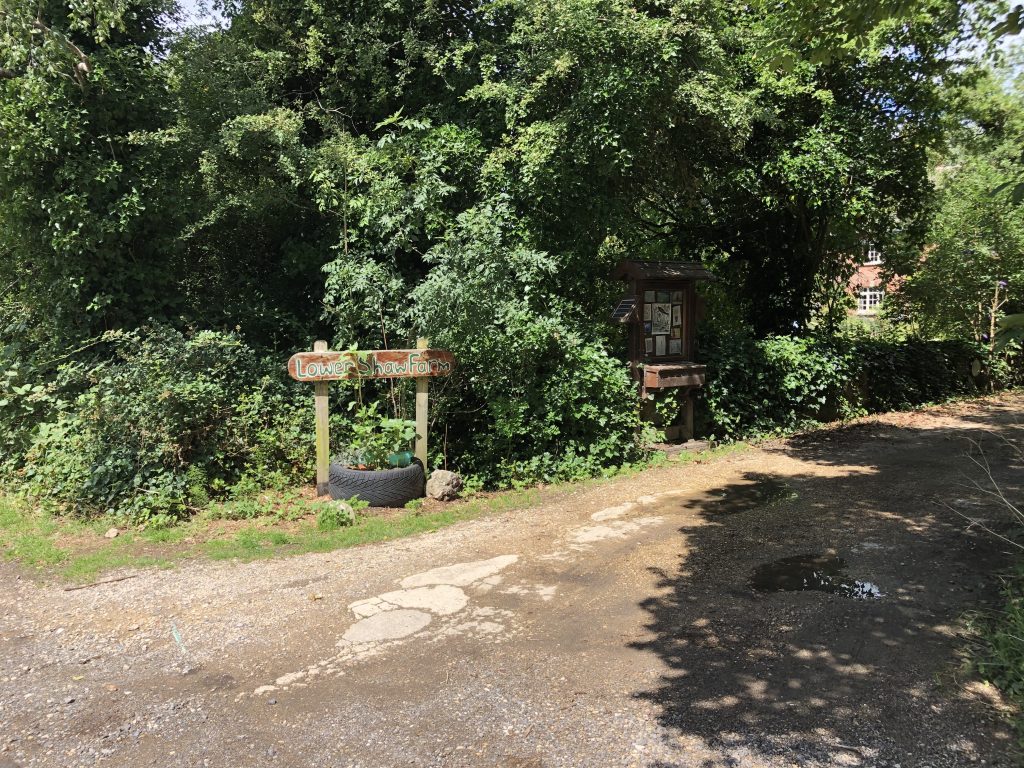
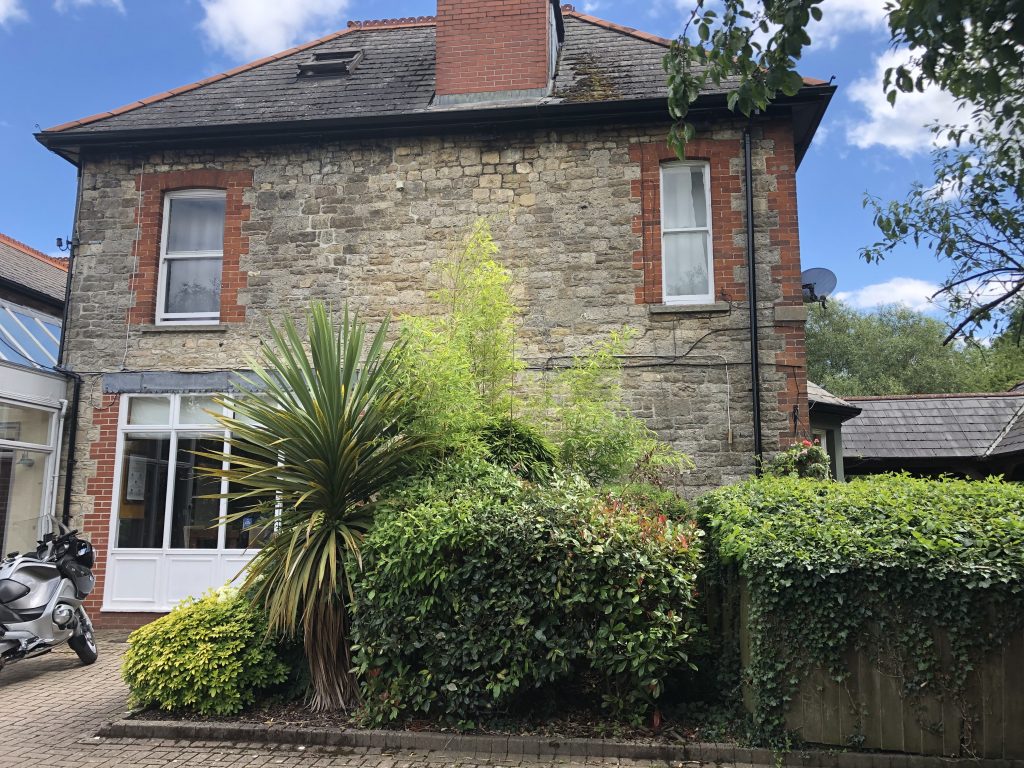
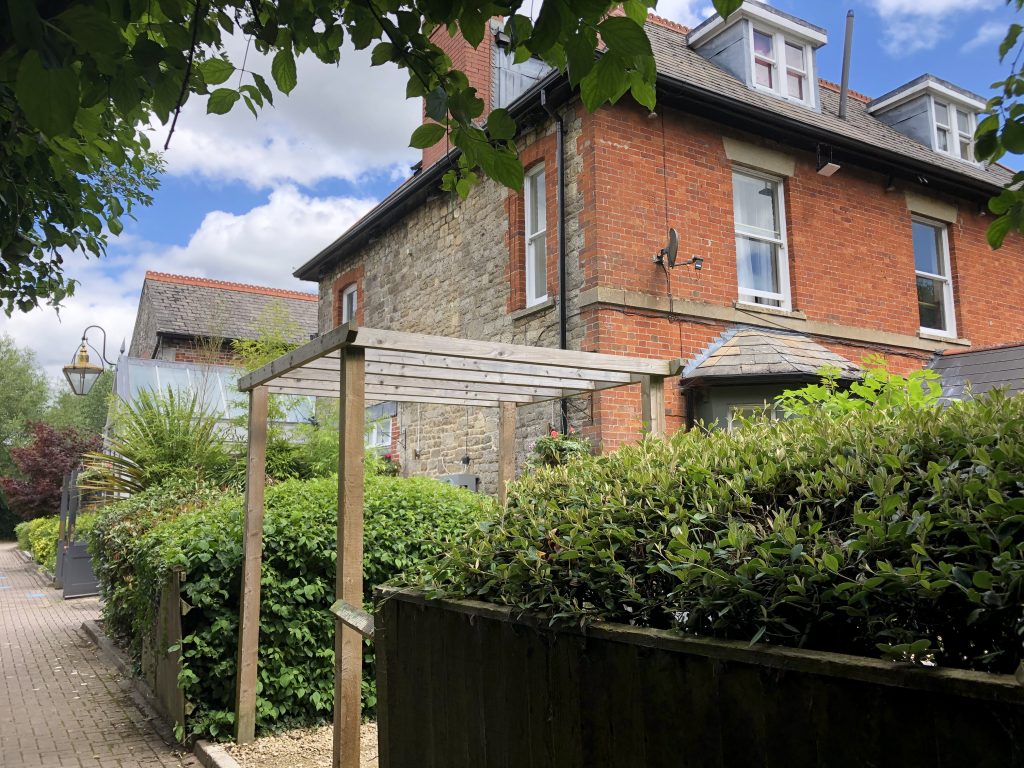
‘The lane that runs between the former Lydiard Millicent parish boundary and the tributary of the River Ray dates back to the Middle Ages. Building was slow along the thoroughfare known as Shaw Street in 1668 and two hundred years later there were just two farmhouses beside the lane. Shaw Farm, once owned by Viscount Bolingbroke, stood at the south east end and Lower Shaw Farm near the west end. A further 13 houses and cottages straddled the verges.’
Frances wrote about Mary’s great niece, Jane Helena Tuckey, in her splendid book Struggle and Suffrage in Swindon. It’s a great book – I heartily recommend it to you – and you can find a bit more info on it in this poston Born again Swindonian.
Across the lane from this house is Lower Shaw Farm – another old farmhouse that Frances writes about on her blog.
On and around and about Old Shaw Lane
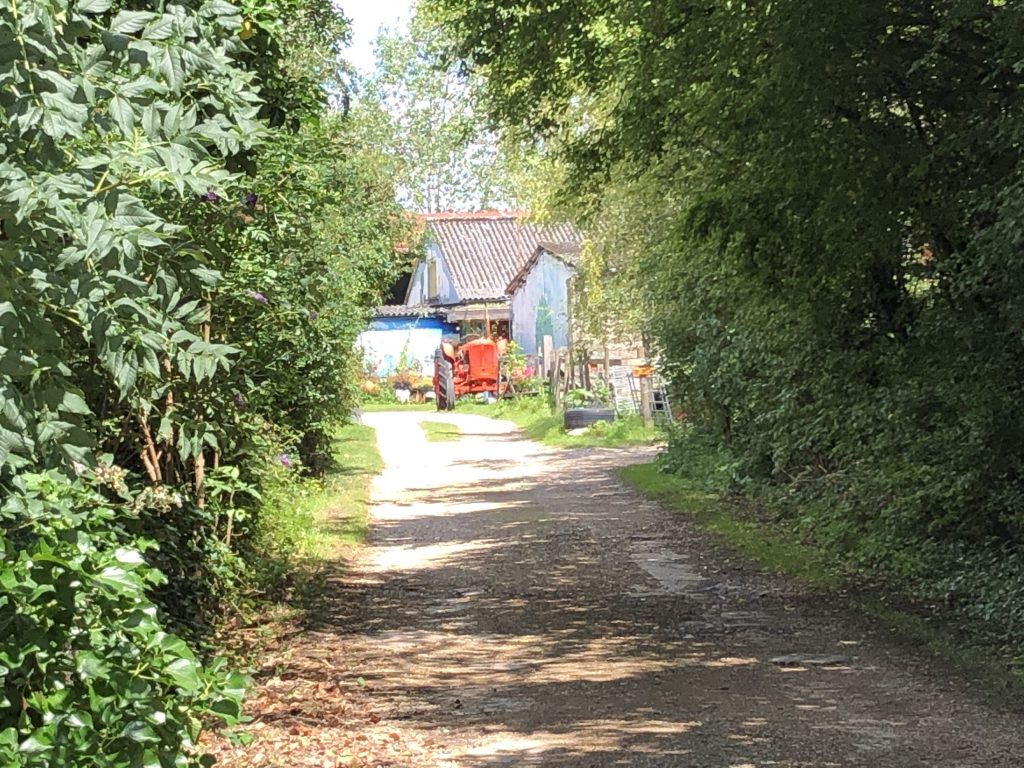
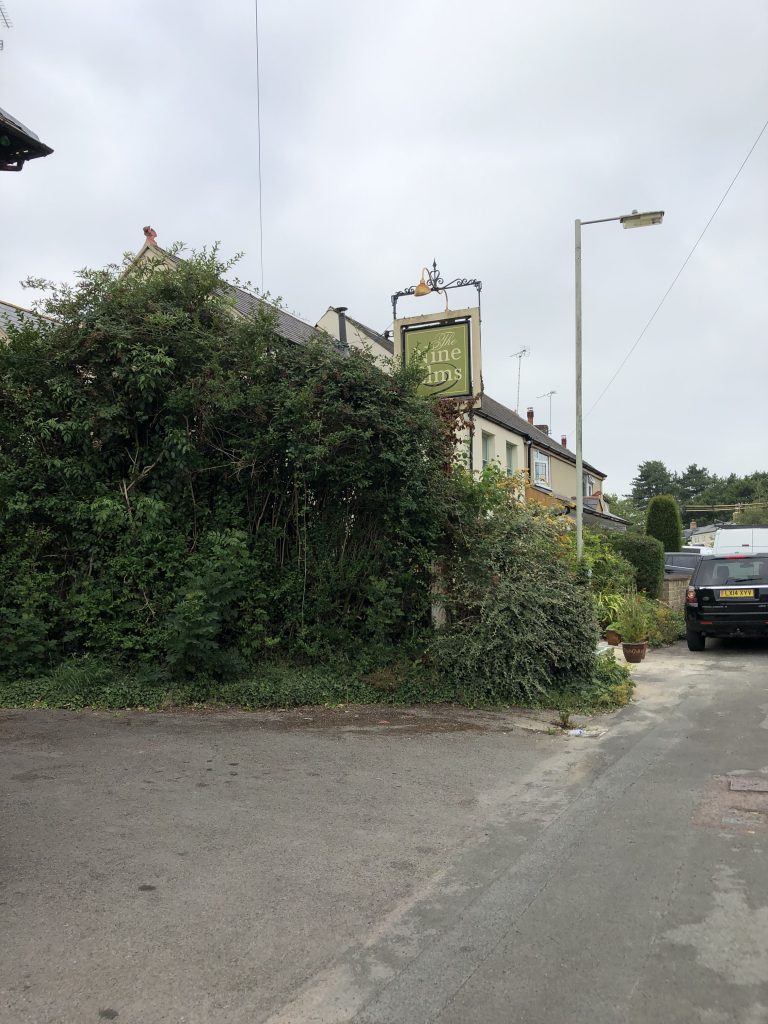
Remnants of rural life are all around us if we take the time to look. As the photographs above testify.
And my last word, and staying on this particular snatch of days gone by and linking to Frances one last more (as my granddaughter says) she has a blog post with the most appropriate name – Rural Remnants
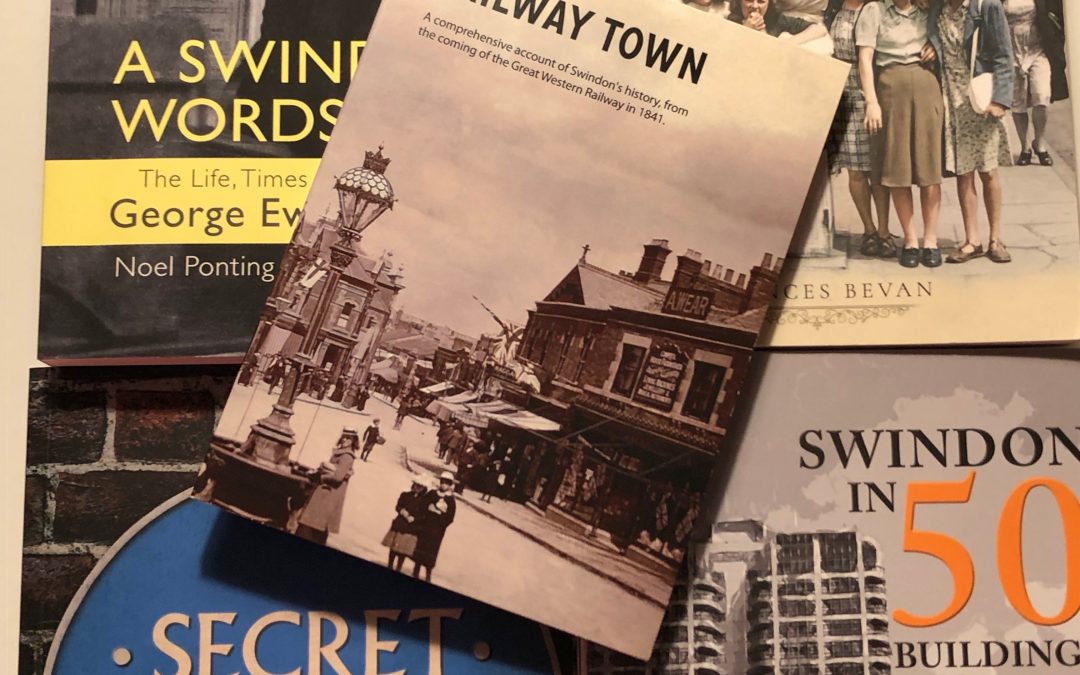
5 Swindon Books to Read Now – and yes two of them are mine … to pass pandemic purdah time
So, we’re in the grip of the Coronavirus pandemic and at best are faced with a prolonged period of social distancing. Or at worst, lockdown, as we have at the time of reading.
So here’s five of the MANY Swindon books out there, fiction and non-fiction, written by Swindonians, with which to pass some fruitful time. Well, in fact, the title’s a bit of a cheat. Cos it’s four books and a DVD!
If you haven’t got them on your bookshelves now (and you might but not have read them) then head to the shop in Swindon central library as soon as you can. That said, some of the books included are available on mail order.
So – in no particular order:
1. A Swindon Wordsmith – George Ewart Hobbs
By Noel Ponting & Graham Carter
‘George Ewart Hobbs’ vivid writing provides us with a unique and brilliantly observed insight into everyday and so-called “ordinary” life in Swindon a century ago.
When we’re not on lockdown you can find Secret Swindon in our central library and Waterstones in Swindon. I have some copies, so if interested contact me on my Born Again Swindonian Facebook page – link below – or via this blog.
There’s a map in the front of this one. The buildings are divided into areas. So, maintaining social distance of course, you could always go exploring with book in hand.
‘As the industrial revolution and the coming of the railways transformed the Wiltshire countryside Swindon women were on the front line of change, shaping the new industrial town and transforming the old market one.’
It’s a great read is this one.
5. Railway Town: Martin Parry
Okay – so this isn’t a book it’s a DVD. I bet some of you have got DVD players gathering dust. Dig them out!
Now, before I go much further I have to confess that folk music is not particularly my ‘thing’. I’m more than happy to confess that my tastes are middlebrow in all things: music, art, literature, theatre. There’ll be odds and sods that I like from other genres – but for the most part I remain middlebrow.
But ages back now, Bryony Gramont messaged me on my Born again Swindonian Facebook page asking me to come along. And because Born again Swindonian aims to be all things to all people I was delighted to agree. But then life got in the way as life does. And then I got ill – for ages ….but at length I managed to get it together.
Thus, thanks to the kindness of club member Alan Rothwell who gave me a lift, I made a visit to the club.
Swindon Folk Club: Traditional, modern and accoustic folk music in Swindon.
About Swindon Folk Club
I was somewhat surprised to discover from the club’s website, that it came into being in 1960! Who knew?! Not me. As the website says, ‘Founded by Ted & Ivy Poole and friends in 1960, the club (formerly Swindon Folksingers’ Club) has a long history of keeping traditional music alive in this busy town in north-west Wiltshire.’
Anyhow, off I went with eyes peeled for beards and fingers and ears!
So what did I find?
Well listeners, there was a noticeable and, slightly disappointing, lack of fingers in ears. But, you’ll be pleased to hear, good news on the beards front. Phew!
Aside from beards though, the other thing I found was a warm and welcoming atmosphere. The night I attended was an open mic affair with a guest band. It being an open-mic-everyone-that-wants-to-having-a-go evening some of the voices were not – how shall I put this – recording contract quality. Not that I can talk mind you – my three year old granddaughter tells me to stop when I sing!
Anyway! That didn’t matter at all. Because what shone through was what a wonderful, welcoming, inclusive and safe environment Swindon Folk Club offers. This group is a wonderful place for anyone with an interest in folk music to have a go. And that’s a wonderful thing wouldn’t you say?
So if having an interest in folk music – whether listening or participating – I’d urge you to pay a visit to this lovely bunch of people.
Taken from the group’s Facebook page is their own write-up of the eveningwhich will give you a good flavour of one of their events:
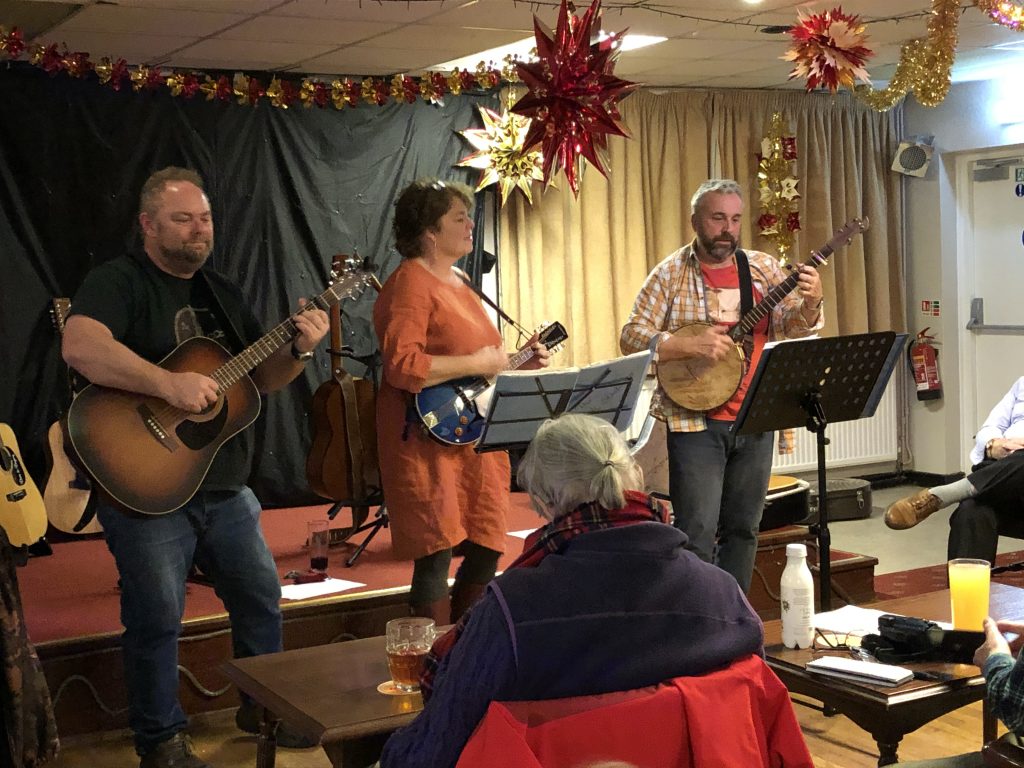
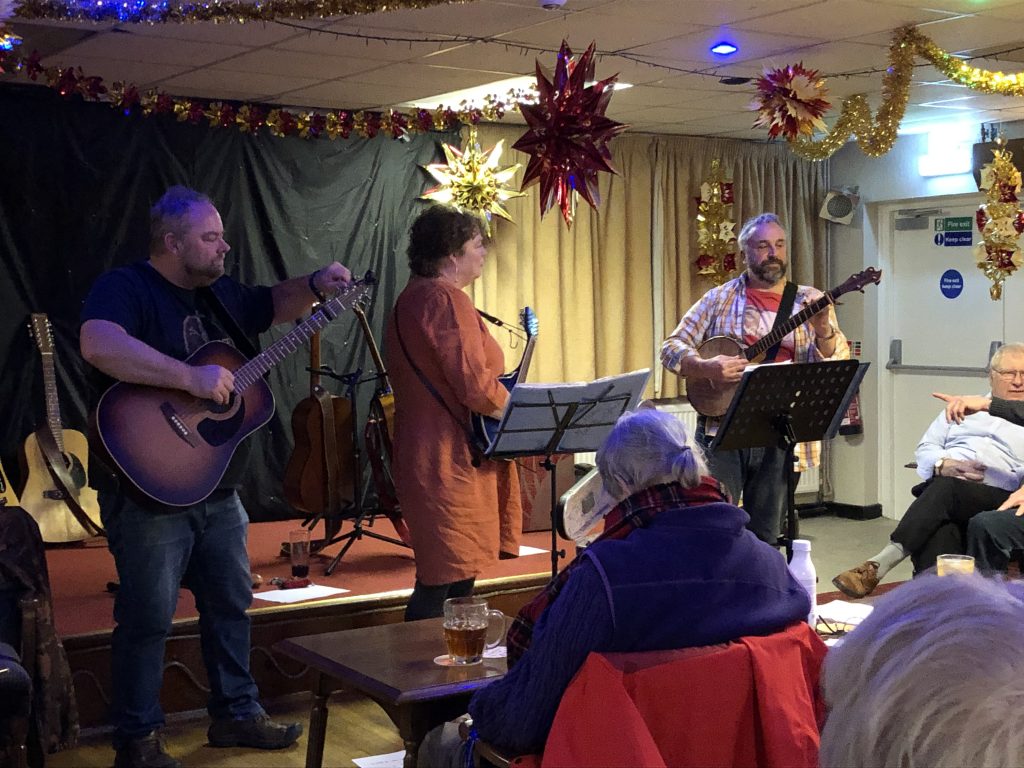
‘On Friday 6th December at Swindon Folk Club, we welcomed The Marsh Starlings, a folk/bluegrass trio performing a range of songs as well as their own material. A great mix of laid back and up-beat folk tunes. Singer & guitarist Lynn Marie Bateman, Banjo player Kevin Starling and Guitarist & singer Ian Marsh. Thank you, we really enjoyed your two sets, and are still chuckling at Kev’s solo singing spot, ‘In the Morning!’
The evening started with the usual singaround from club members, starting with Dave our MC for the evening. It was nice to have one of our youngest members Lucien (12) singing for us whilst his older brother was at home ill. Great to see Trevor back again to play and sing for us now that his hand is healing well. Che gave us a couple of numbers and was joined by Lynn and Kevin for an impromptu session for his second one.
The dreaded lurgy was still playing havoc with some of our singers but Steve Anderson managed a couple of beautiful instrumentals on his guitar and a vocalzone for Chris Turpin helped him give us a rousing song in the second half.
Bryony, who usually prepares this write-up, is also still under the weather so this one is much shorter than usual. Despite the inclement weather the turnout was quite high and an enjoyable evening was had by all, even those that just came into the RAFA club for a drink, paid, stayed and enjoyed, made favourable noises about returning.’
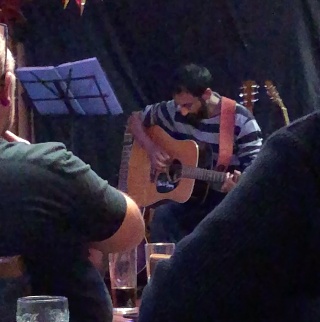
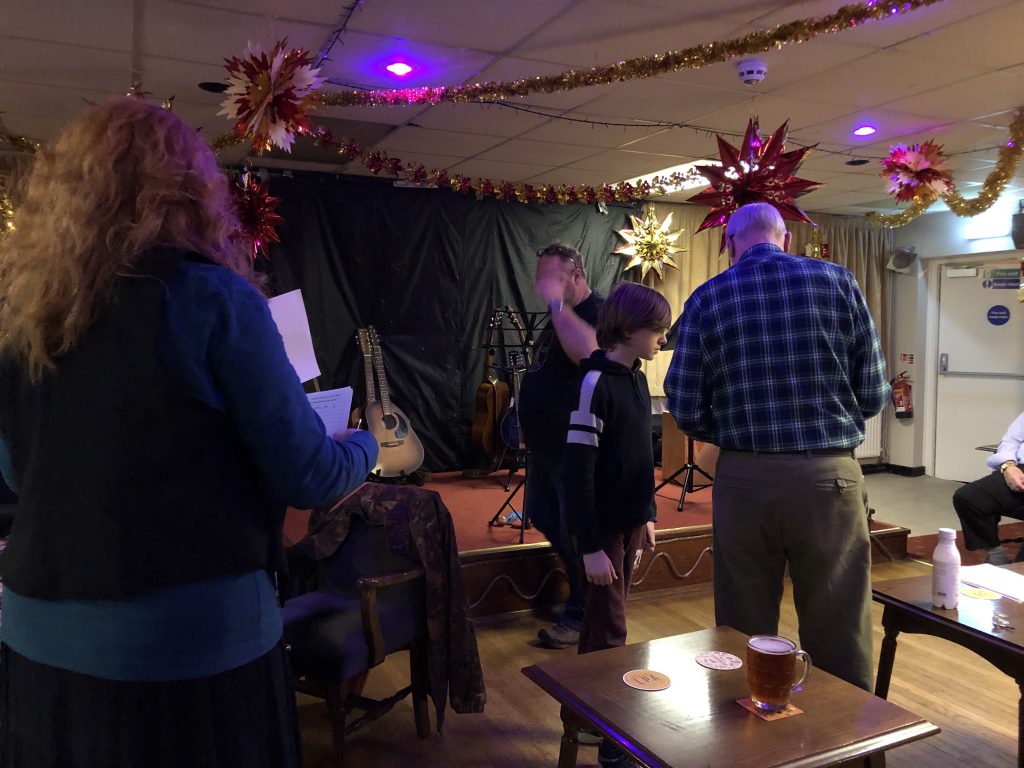
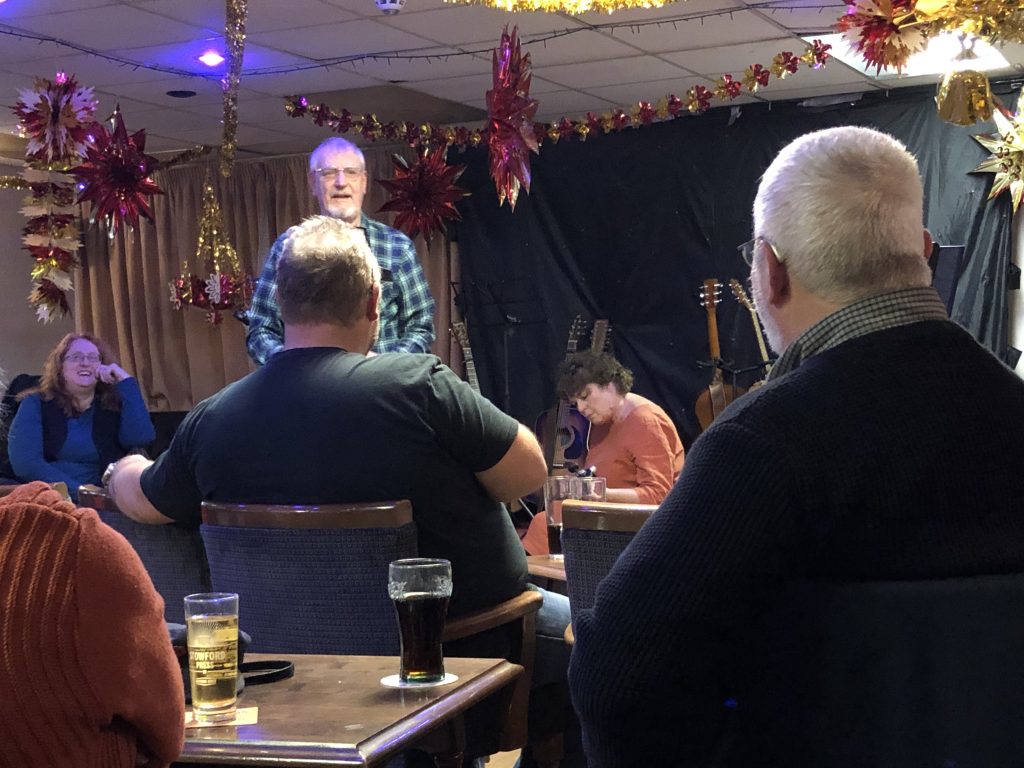
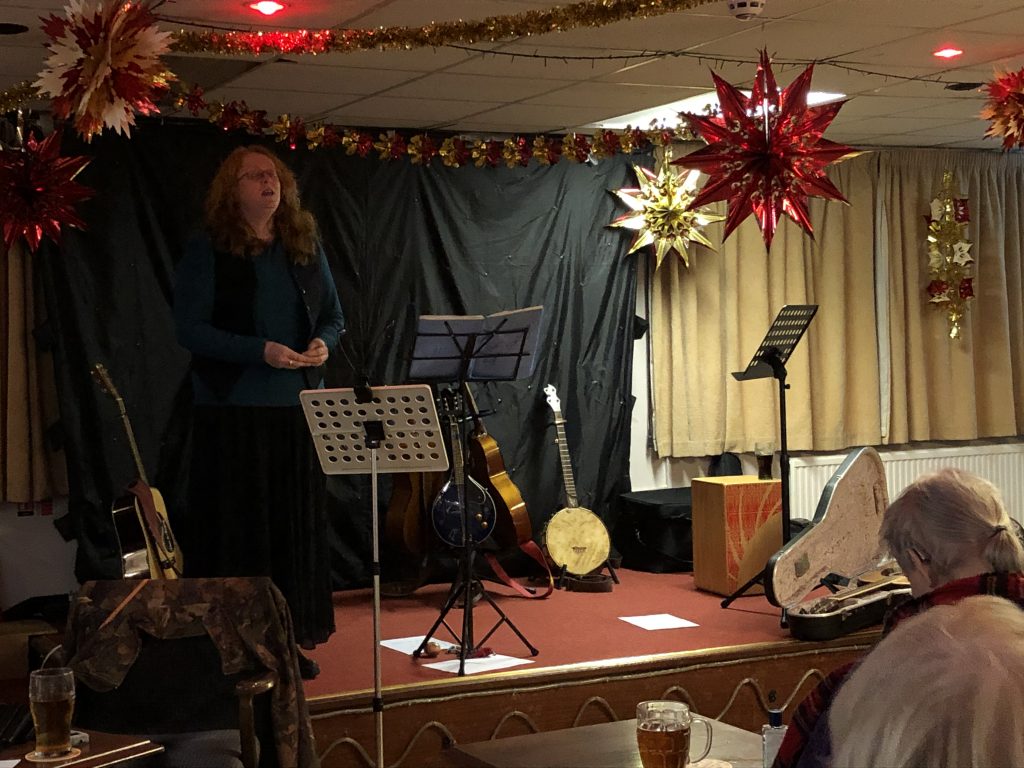
A few photographs of the night
Bryony Gramont
The Marsh Starlings
The Marsh Starlings
When and where and all that stuff
Swindon Folk club meets on the FIRST and THIRD FRIDAY of every month from 8:00 pm to 11:00 pm.
The venue is the RAFA Club, 41-43 Belle Vue Rd, Swindon SN1 3HN. The club has a licensed bar, car parking (at the rear) and level access.
If you’re not aware, Swindon polymath Alfred Williams took it upon himself to cycle around Wiltshire transcribing Wiltshire folk songs before they were lost. They’re all on stored on this database.