Zozo Thomas of Swindon, author of children’s’ series ‘Tales from Mulberry Garden.’
Amelia Watchman of Swindon author of a children’s book and four romantic comedy novels.
When and where and why
The fair takes place on Saturday 20th May 2023, from 11am – 3pm at The Central Community Centre, Emlyn Square, Swindon SN1 5BP.
Lis said: ‘I’ve organised this event because I feel there are very few opportunities for people to:
Meet
Talk with and …
… find inspiration from authors living on their own doorsteps.
Books are for everyone and every community will have several authors inspired by stories, or by their hobby or some other passion. I wanted to give a platform to some of those writers and creatives within my own community.’
Dan said: ‘When Lis approached the Mechanics’ Institution Trustwith the idea for the book fair, we wanted to do everything we could to help support and promote local authors within our community. Our aims aren’t limited to building preservation. It’s also to deliver and promote community benefit through the use of our heritage buildings. Emlyn Square is a central location with strong transport links and plenty of parking. Thus it’s an ideal place for an event of this kind.’
Entry to the book fair itself is free. But after the fair there’ll be a low cost ‘Meet the Authors’ event, with live interviews. Local journalist and PR expert, Fiona Scott, of Scott Media, will be leading this event alongside Lis McDermott.
This event costs a mere £3 for non-members of the Mechanics’ Institution Trust. Members can access this event at a fifty per cent discount.
You can become a member of the Mechanics’ Institution Trust for as little as £1 per year +donation by filling out this form. This session is suitable for older primary children, upwards.
During the day The Bakers Café, also managed by the Mechanics’ Institution Trust, will be open for refreshments. That’s including between the Book Fair and Meet the Authors event.
Parking is available at Bristol Street Car Park. Due to its central location, this event is accessible at a walking distance from the town centre and with frequent local bus routes.
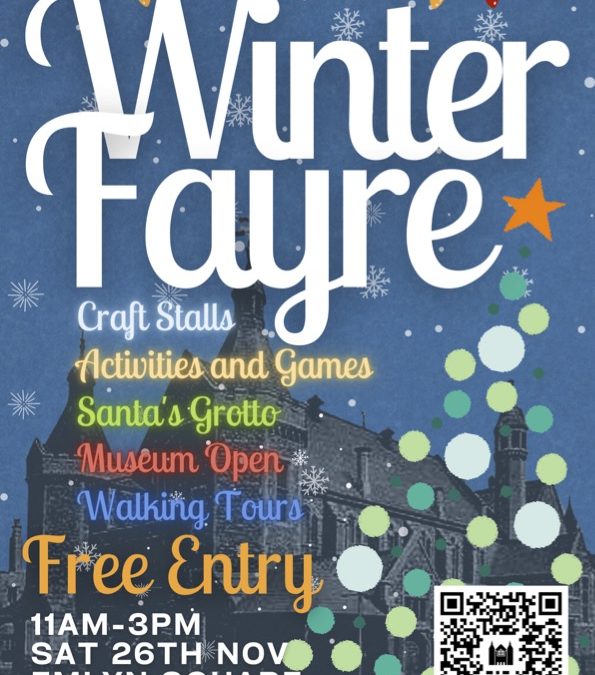
Swindon Railway Village Winter Fayre 2022 – The Mechanics’ Institution Trust
Myself and SED Developmentsare going to be at the Swindon Railway Village Winter Fayre flogging our relevant wares. Mrs SED, aka Jo, will have lots of fabulous 3D printed stuff: cookie cutters, fondant stamps, cake toppers and more. And of course I’ll have my publications. Incidentally, the baked good topper/sign in the image below is a product of SED Developments.
Location
Emlyn Square, Railway Village Swindon, SN1 5BP Central Community Centre, Bakers Arms, Cricketers Arms, Railway Village Museum
Date and Time Saturday 26th November 2022 – 11am-3pm FREE Entry
What’s occurring
Santa has confirmed his attendance, and will be waiting by the fire in the Baker’s Cafe snug for anyone who may wish to meet him. Exact timings still to be confirmed!
In central community centre the MIT is hosting a hand-picked selection of crafts and charity stalls that will offer a variety of items – perfect for extra special Christmas presents.
Why not make the most of the day and step back in time for a Victorian Christmas?
Have you:
* Ever wondered when crackers were invented? ** Or pondered on when we first began sending Christmas cards? *** Wondered when Christmas trees first became popular?
Well, you can find out more about the origins of these Christmas traditions and more besides at the railway village museum this Christmas.
Learn about the families who lived in this former railway worker’s cottage and how they might have celebrated Christmas in the late Victorian period.
Experience the sights, sounds and smells of a Victorian Christmas as you explore the museum, then head to the Baker’s café across the road for refreshments and a special meeting with Santa. Christmas craft sessions will be running and you can try making Victorian decorations, crackers and Christmas cards to share with friends and family.
Graham Seaman Media Imagine if you will, that you want to launch a book but you’re in the middle of pandemic. So you can’t have an event in the usual way, at a venue with hordes (you hope) of people rocking up to buy copies of the book in question. Well, in 2020, in the midst of the Covid-19 pandemic when I had my Born Again Swindonian’s guide book to launch on an unsuspecting world, I decided a video would be a good thing..
I wanted this video to showcase the new book and my existing publications. And also me – my brand as Born Again Swindonian – to tell my story. And to achieve this I turned to Graham Seaman Media. I’ll put a link to the fab video he put together at the bottom of this page.
Graham Seaman
Tell me a story
Many a business owner will tell you that what lies at the heart of marketing is story-telling. And, with years of broadcasting experience behind him, Graham is better placed than most to help you tell your particular story with video. Besides audio and video production, Graham can put his 25 years of BBC production and presentation experience to podcasting/short-form media and voiceover work. He also can offer jolly useful presentation skills training and mentoring – and more.
But there’s more!
You’d think wouldn’t you that all those years of broadcasting experience would be enough to equip Graham for his new (ish) career in videography etc? Yet Graham’s somewhat starry family history indicates that all such activity is built into Graham’s DNA.
Elsie Randolph
Graham’s paternal grandfather’s cousin, was a well-known-in her-day actor by the name of Elsie Randolph. The actor, comedian, stage performer and singer enjoyed some fame back in the 1920s and 1930s, partnering with singer and dancer Jack Buchanan.
A friend of Alfred Hitchcock, she appeared in a couple of his films and corresponded with him until his 1980 death. Graham’s dad recalls being tucked up in bed by Elsie when she babysat him. See –
Anyone of a certain age will remember Sunday Night at the London Palladium and the Tiller Girls. So I’m a wee bit starstruck to learn that Graham’s grandmother worked as a professional dancer. She took part in several West End productions and also served … drum roll … as a Tiller Girl! Though it’s by no means certain that she ever performed at the Palladium.
But the hoofing connections don’t end there. Graham’s mum, Joan, also had twinkle toes and she worked with ballroom dancer Peggy Spencer for a time.
Backstage
And there’s behind-the-scenes showbiz connections too. One relative, Jack Seaman worked as an electrician in London theatres while another (Percy Seaman), worked at Pinewood studios – occupation unknown.
Then last, but not least, Graham’s dad worked as a projectionist at a few cinemas across London before becoming an industrial photographer for the MOD in the early 50s. A job he did until he retired.
So Graham’s career choice was evidently written in the stars. Both the celestial kind and the showbiz kind!
I’ve surely said enough to convince you that Graham is more than a master of the microphone? And canny with a camera?
But just in case, via the link below from his website, you’ll find the video he made for me. It received hundreds of views across Facebook and YouTube and got lots of super, fab and positive feedback.
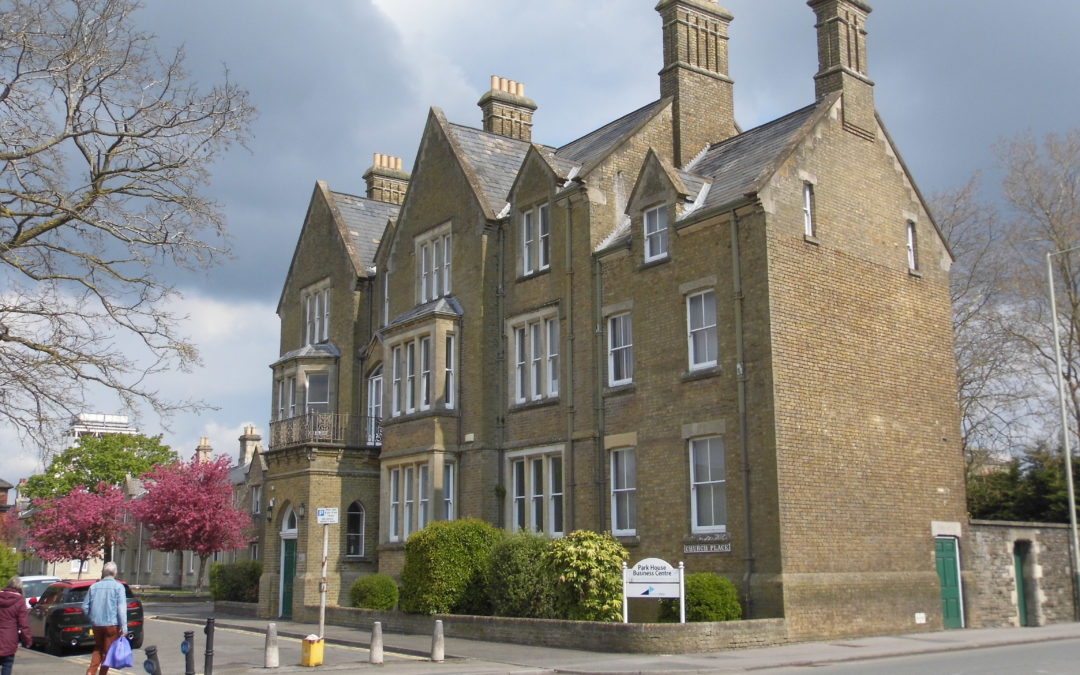
1876 saw the GWR directors agree to build a house and surgery combined. The house, Park House, was for the company’s chief medical officer and his family. Thus, that year saw a substantial yellow brick house erected on the south side of Taunton Street.
Park House then became home and consulting room and treatment rooms for the company’s then chief medical officer, GM Swinhoe. Later, it became familiar to generations of GWR men. They had to go to Park House for their medical examinations before they could secure employment. Either in the Works themselves or as footplate staff.
A precarious position
Before this building’s arrival though, Swindon’s medical officer endured a more precarious position.
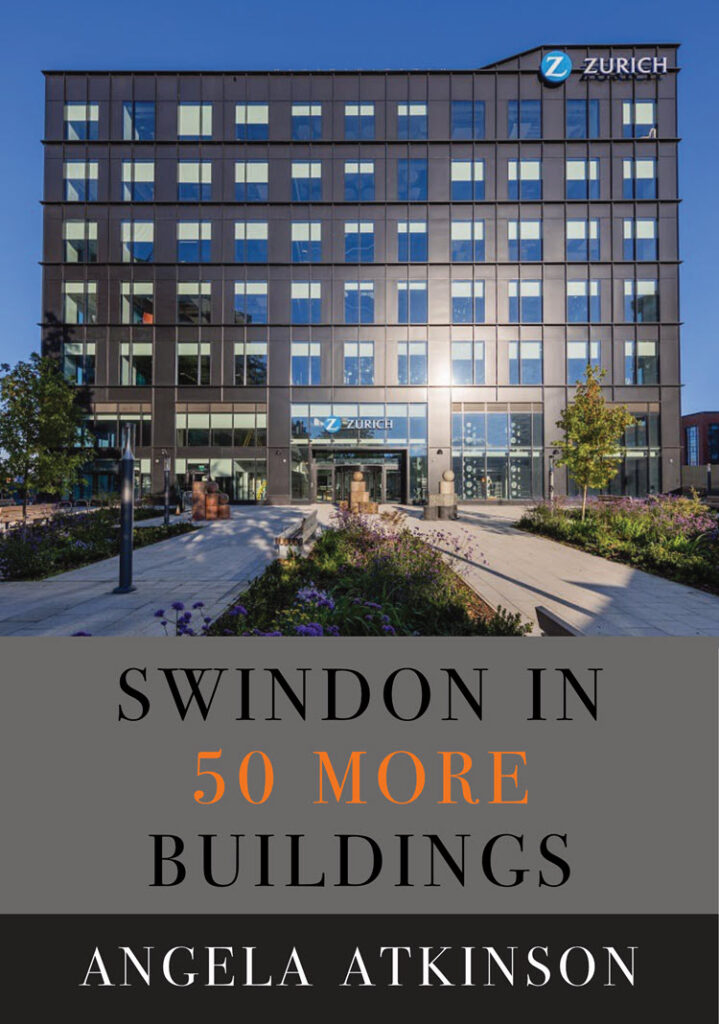
*For more on the Medical Fund Society and the MFS hospital – now central community centre – I refer you to Secret Swindon and Swindon in 50 Buildings respectively.
It began when civil engineer Isambard Kingdom Brunel and mechanical engineer Daniel Gooch put their railway works at the foot of Swindon Hill. Without that, Swindon as we know it wouldn’t exist.
The GWR Railway Village Conservation Area – Photo credit Martin Parry
Brunel’s design
On 19 March 1842, Brunel presented to the directors of the GWR, plans and drawings for the first 300 cottages. These were to sit parallel to the main line. Separated by open ground from the main line and the new workshops, these first dwellings were visible to passing trains. Thus, Brunel dressed them to impress passengers, with Elizabethan and Jacobean motifs on the stone-built façades. Think now of the aphorism ‘all fur coat and no knickers’. For the cottage’s dashing exteriors belied humble dwellings with rudimentary accommodation, no water and cesspits in the yards.
Basically, Brunel blew the budget on the Jacobethan dressings, thus forcing him to economise elsewhere.
Model by name but not by nature
A model village in name, the settlement was far from model in other aspects.
Thanks to overcrowding and suspect sanitation, a workers’ utopia it was not. Yet, squalid living conditions aside, the GWR built houses of notable architectural dignity and planning sophistication. Superior to most contemporary artisans’ dwellings, they set a standard for later Swindon estates. They never offered the back-to-backs familiar in other British industrial settlements.
By November 1845 the need for more housing became acute. Gooch stated in correspondence that ‘ten or twelve people were living in two rooms. And, when the night men got up the day men went to bed…’ You’ve heard of hot-desking? Well, it was ‘hot-bedding’ here!
Today it remains the last, and best, example of nineteenth-century railway workers’ housing. The railway village stands as one Britain’s best-preserved and architecturally most ambitious railway settlements.
In 2018, the GWR Railway Village Conservation Area achieved the accolade of being voted England’s favourite. That arose from a competition organised by the national civic voice movement.
The Glue Pot pub in the Railway VillageThe backsies in the GWR railway village
‘ … Betjeman was a lover of, and passionate advocate for, Victorian architecture. Thank goodness for that. Otherwise the nation and the world would have lost the glory that is Gilbert Scott Thomas’ St Pancras station in London and other edifices saved by Betjemen. We also have him to thank for the continued existence of our Railway Village. As a 2017 article from the Swindon Advertiser points out, the 1960s saw plans to raze the area. Only a campaign by Betjeman saved it. ..’
Brunel’s 1840 layout drawings show a grid layout similar to the final plan of twelve terraces, in six blocks, on either side of the High Street. From 1893 the High Street became Emlyn Square.
Construction began in 1842 with most of the buildings finished by 1855. Brunel himself designed only the first block.
The contractors, JD & C Rigby, assigned the job of building the 300 cottages fell into financial difficulties. Thus they only completed 130. That problem put back the village’s completion to the 1850s.
First to hit the finish line, 1842-1843, were the cottages to the west of Emlyn Square. Those in the east came between 1845 and 1847. 1845-1847 saw the end blocks towards Emlyn Square built, while the remainder, mostly end blocks on the outer ends of the streets were built in 1853-1855.
In 1966, the local authority acquired the cottages from British Rail and restored them.
From the Mechanics’ Institution Trust – The origins of the Railway Village
In 1841 the Great Western Railway Company began construction work on a major new engineering works which would become, in their heyday, one of the largest industrial complexes in the world. The chosen location was open farmland some two miles from the small hilltop market town of Swindon. The lack of existing housing in the vicinity of the works meant that it quickly became necessary to provide accommodation for the influx of workers. More on that here.
The railway village now?
The Mechanics’ Institution Trust has a keen interest in the Railway Village community today. They’ve undertaken a range of activities and projects in the area. They’r a key stakeholder for both those living there and the physical environment of the Conservation Area.