PR podcast reaches download milestone. A podcast whose mission is to shed light on the world of PR, to help businesses build their brand, has reached more than 4,000 downloads.
Fiona Scott launched ‘PR not BS with Fiona Scott’ in December 2021. The podcast has aired over seventy episodes.
PR podcast reaches download milestone – Fiona Scott
Fiona, whose background is in journalism, wanted to give SMEs advice and tips on PR and how to get traction in the media. Her guests have included fellow journalists, PR professionals and small business owners.
Now the twice-monthly podcast has reached more than 4,100 downloads. It’s got listeners in almost every continent, with a big contingent in the United States and South Africa.
I’m so pleased with the reception the podcast has had,’ said Fiona. ‘I wanted to create a space where I could talk about PR and the benefits to businesses and brand owners. In terms of raising their profile and building trust and credibility with their audiences.
‘I also wanted to bust a few myths. PR is often delivered in a smoke and mirrors way, but it needn’t be mysterious or complicated. PR is something you have to keep working on. It’s not a magic wand. But by using some tips and advice from me – and my guests – it can help cut through to consumers in this busy online and offline world.’
As well as the podcast, Fiona now has a YouTube channel, called ‘Reel PR with Fiona Scott’. Both the show and the podcast feature interviews with PR and marketing specialists. And also business owners who have found PR works for them, and have advice of their own, related to their sector.
Fiona’s top five podcasts were:
Do you feel safe in Wiltshire? Guest, former police officer Mike Rees
No BS PR predictions – solo podcast with Fiona
PR Brilliance from national journalist Jill Foster
Understanding the story of a trans woman, with guest Katie Neeves
How do you get your products in front of journalists? Guest, Nicola Snell.
The carriage works. The first thing to say about them is that, despite what you read on the Internet, they are NOT Brunel’s. They are in fact the work/initiative of chief mechanical engineer, Joseph Armstrong.* Brunel died in 1859. And the carriage works didn’t appear for another decade!
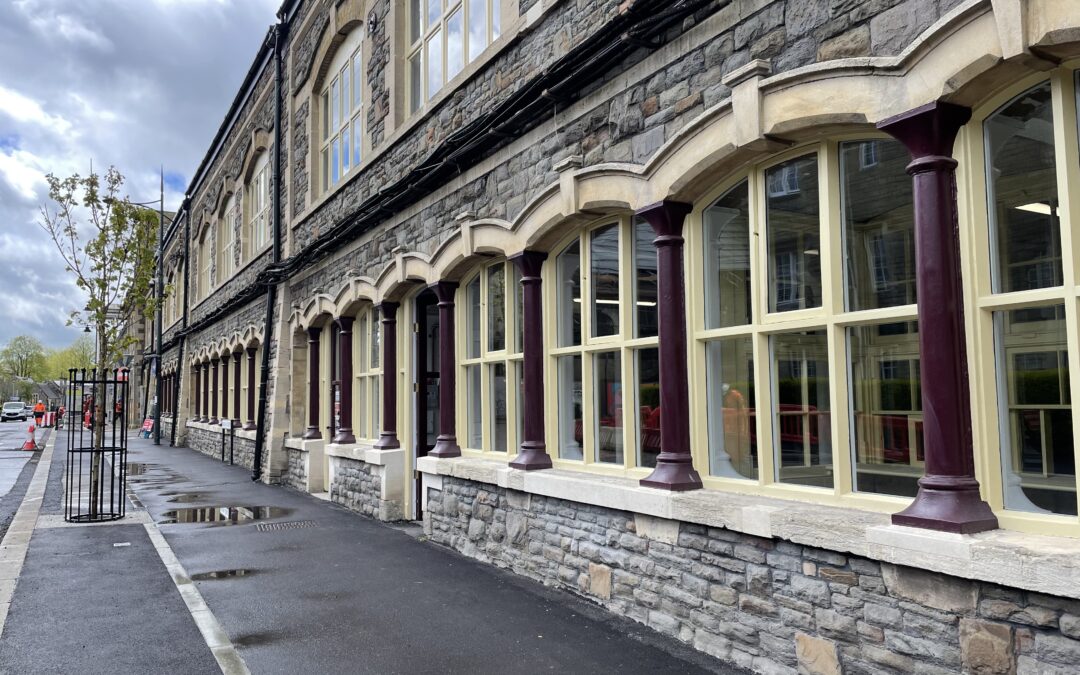
The Carriage Works – a section of the repainted carriage works on Bristol Street looking towards Emyln Square
Swindonian and railway village resident, Jack Hayward, talks of the great wall of Swindon – of which the length of our building is a part. That’s an apt description separating as it does, the railway cottages from the main London to Bristol line and the factory itself – thus lending itself to the term ‘inside’.
Its western section is waist high and fronts the Vicarage and St Mark Church. It then reaches its full hight as the boundary wall of the Carriage Works and Sawmill built by Joseph Armstrong beginning in 1868.
But the complete wall, including the remaining listed workshops forming the eastern section, runs from the drill hall through the whole length of Church Place, Bristol Street and Emlyn Square. It includes the Workers’ tunnel entrance, then on to London Street, Sheppard Street before continuing to the station where it was completed in 1876.
In 1869, the board of the New Swindon Company approved an initial sum of £26,000 for the carriage works. On Armstrong’s recommendation they appointed Thomas Clayton as carriage and wagon works’ superintendent.
Work progressed at speed on the building of the westernmost buildings which were to house the sawmills. By March 1869 they were in partial use. This is recorded by the report of a frightful incident involving a 16-year-old boy. Wandering round the shop while his sawing machine was stopped he went into the cellar where the drive shafts were being erected, got caught up on one of the shafts and was killed at once.
The carriage works comprised a significant development for New Swindon.
In February 1871, the Swindon Advertiser reported that despite being ‘as yet very incomplete … and only partially erected, they already employed some 1,100 men. 800 in coach building and 300 in manufacturing the ironwork for the carriages.
So the CW then is a series of warehouse unit structures built in phases from west to east but known collectively as the west shed.
The carriage works had extensive workshops at the upper level to allow for an easy transfer of completed carriages onto the track. The workshops to the east also featured a lower level. Over the years they housed a mess hall, bike sheds and a rehabilitation centre – in the 1950s. Not forgetting the nightclub during the 1990s.
Women at work
The carriage works gave work to a wide range of tradespeople – cabinet makers, French polishers, upholsterers and sign-writers. But it’s worth noting this building brought women into the GWR’s employ for the first time. In the main they worked in areas in need of dexterity and skill – the sewing shop for instance. They worked such things as upholstery, window blinds and netting for luggage racks. It was often the case that women did the same work as men. They did though have separate entrances and different start and finish times.
During WWI women came into the workshops in ever greater numbers to replace the men away at the war.
Occupying unit 11 is the Royal Agricultural University’s new Cultural Heritage Institute. They’re delivering postgraduate courses to train the next generation of heritage managers and professionals.
Inside Workshed – the business unitsOpen plan kitchen and social area in WorkshedInside Workshed in the carriage works
NB: Most of the information in this post I’ve sourced and distilled from the excellent publication: ‘Swindon: The Legacy of a Railway Town’ from the Royal Commission of Historical Monuments. As was. The bit about the great wall of Swindon is from Jack Hayward.
A little anecdote
From a Facebook reader: Italian POW’s worked here during WW2. We children used to climb on to the window sills to talk to them. They were working on electrical wiring and would make bracelets for us. I lived in Bristol St.
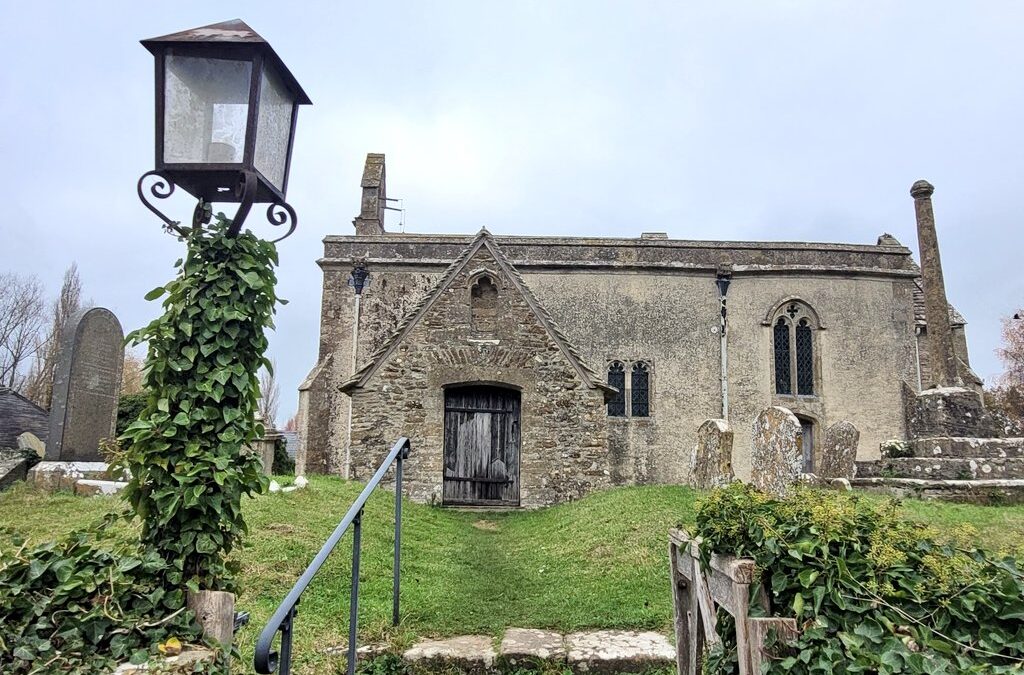
… is how the church’s website describes it. I must confess here that I’ve not seen it myself but I trust that the photos below, sent to me by a chum, will give you a sense of that. The website describes it as an exquisite, beautiful and fascinating church. It stands on a gentle rise of land above waterside meadows near the Thames – a spit from the Thames Path. Thus it’s a frequent stopping point for walkers.
William Morris
One point of note about this church is that the well-known designer William Morris (he of Kelmscott Manor) oversaw the restoration in the 19th century. He ensured the church kept its original mediaeval identity.
Paintings
Also making this church stand out is an incredible series of paintings. Created from the thirteenth to the nineteenth century, they cover the walls. They’re often painted one over another and they’re several layers thick in places. The website tells us that it’s not always easy to puzzle out the subjects. But it seems that you can see the fifteenth-century angels above the chancel arch. Also, an early fourteenth-century doom on the east wall of the north aisle, and several nineteenth-century texts, as well as a thirteenth-century masonry pattern throughout the chancel.
Further, the church boasts an unusual and powerful Saxon stone carving of the Madonna and Child set in the south wall.
Carved madonna and child in the south wall of Inglesham church
The woodwork of the roofs, the fifteenth-century screens and the seventeenth and eighteenth-century pulpit and box pews are all original to the church, and their arrangement is still much as it would have been in Oliver Cromwell’s time.
Malmesbury gardening and art competitions returns. The search is on for green-fingered residents and business owners to enter the annual Malmesbury in Bloom Garden Competition.
And once again, running alongside it, will be the Malmesbury in Bloom Multimedia Art Competition. That’s open to those living or at pre-school or school in the town, who are 18 or younger.
Malmesbury town councilrun both of these annual competitions. They celebrate the gardening and artistic endeavours of townsfolk, businesses and young people.
Categories
There are plenty of categories to enter. And there’s no need to have a large open space or garden, because there are even awards for window boxes and containers.
The categories include:
Best street/road/area
Best large garden
Also best small/courtyard/patio garden
The best veg patch
and best commercial premises.
There’s also an award for sustainable g.ardening. Now this isn’t a separate category to enter but is one awarded by the judges, looking for an approach to gardening that puts sustainability at its heart.
Malmesbury Mayor Phil Exton said he hoped for a glut of entries in all categories.
We’re always so impressed with the efforts residents and businesses make to brighten up our beautiful town with fantastic floral displays. And this competition helps celebrate their hard work,’ he said.
I’m also so looking forward to seeing the entries for the multimedia art competition – we’ve got some talented young people in the town.’
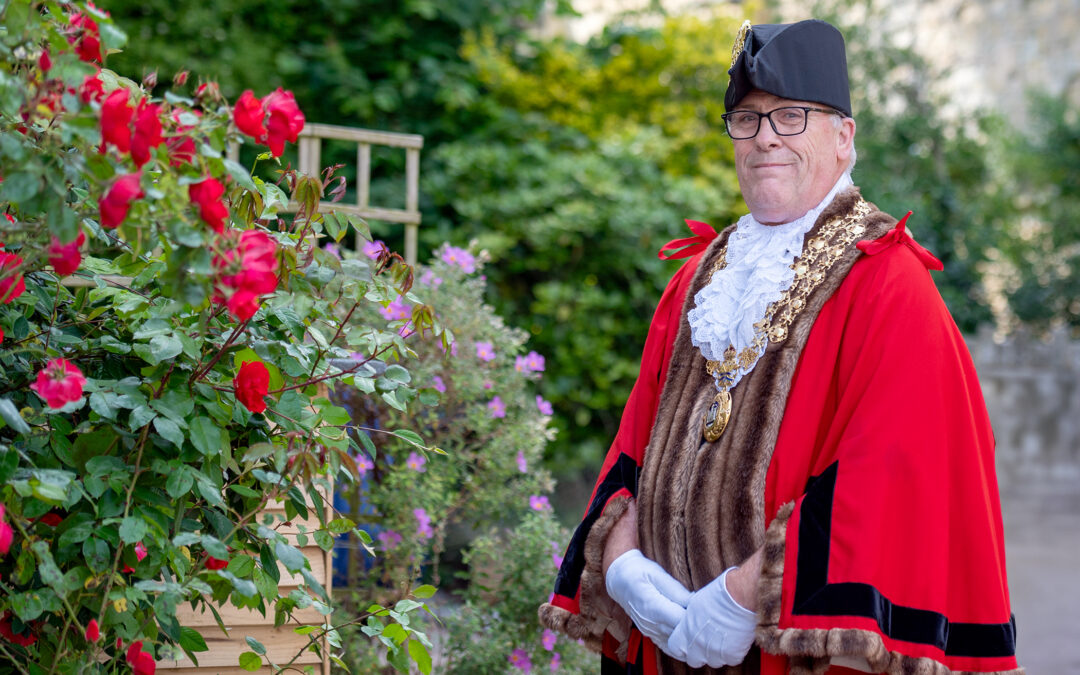
Malmesbury Mayor Phil Exton – photo by Barbara Leatham
Information
The closing date for the garden competition is Friday 19th July. And judging intended to take place the following week. Entries for the art competition must be in by Friday 26th July.
You can collect entry forms for both competitions from the Tourist Information Centre (TIC) in the Town Hall. Or download them from the Town Council’s website at https://www.malmesbury.gov.uk/.
For more information email tic@malmesbury.gov.uk. The winners will be invited to an awards presentation evening at the Town Hall on Friday September 27.
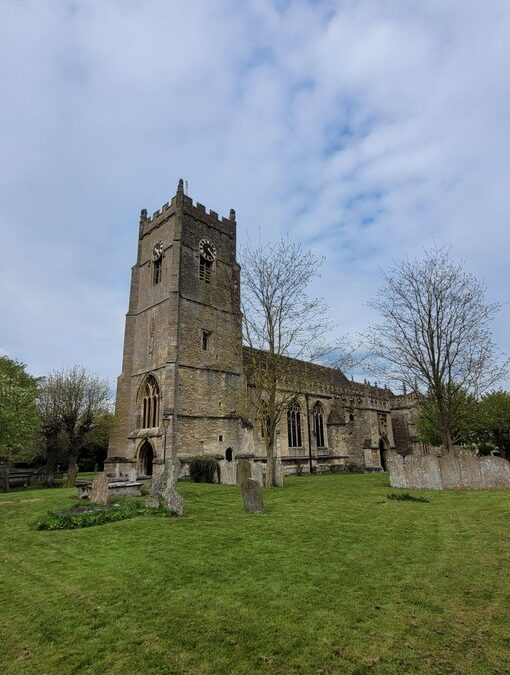
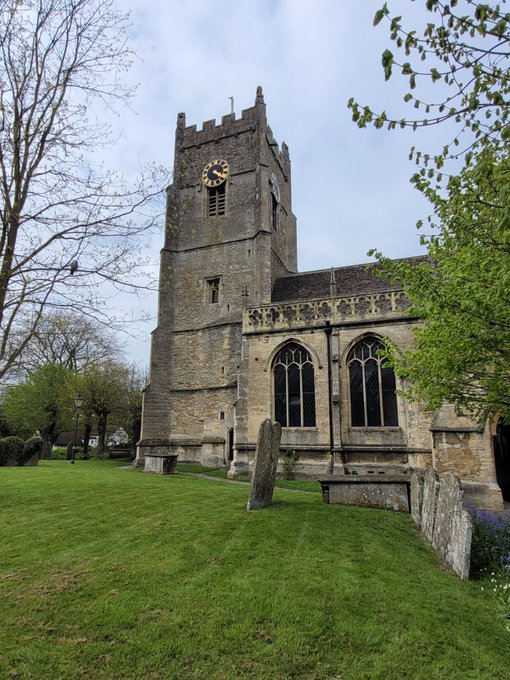
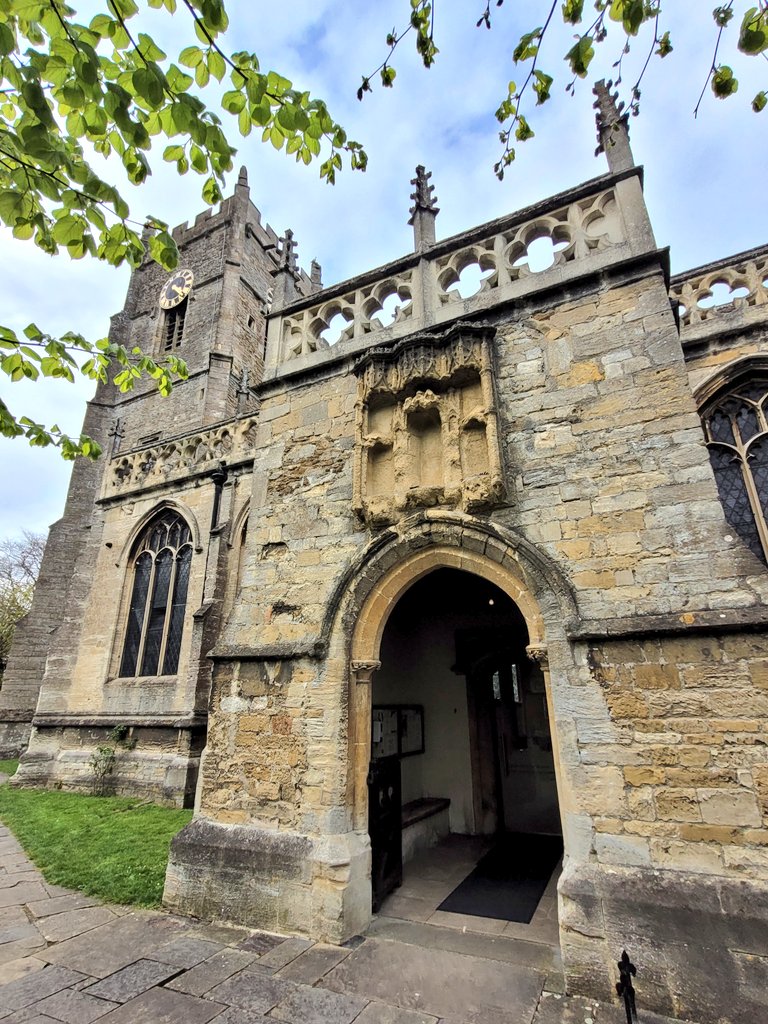
St Michael’s church Highworth, or to give it its full title, St Michael’s & All Angel’s Church lays claim, on its website, to being the only 13th century church in the borough of Swindon. It’s not clear why their website says that because:
Anyway, putting that conundrum to one side, the St Michael’s website goes on to inform us that, high on the hill where the church now stands, men made their homes for over 2,000 years. Eons ago, in the ancient times, the settlement on this hill bore the nameVordaor Worth or Wrde.
The famous Domesday book had record of the church in Highworth. In it we can find the statement: ‘RADALPHUS, THE PRIEST, HOLDS THE CHURCH AT WRDE’.
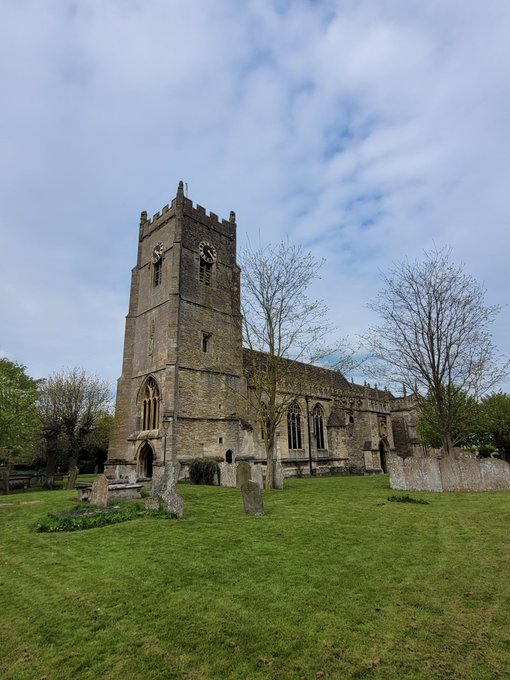
St Michael’s Church Highworth
The church website carries a great deal of historical and architectural detail about the church through the centuries. For instance, the section on the 14th-15th centurytells that: ‘The earliest St Michael’s register records baptisms, marriages and burials beginning in 1539 during the reign of Henry VIII.’
In the first instance it seems that, in the south crossing, there’s a small glass case set on the wall. And contained in this case is displayed a Civil War era tabard, or short-sleeved coat. One Captain T. Batford wore the garment during the period 1642-1651.
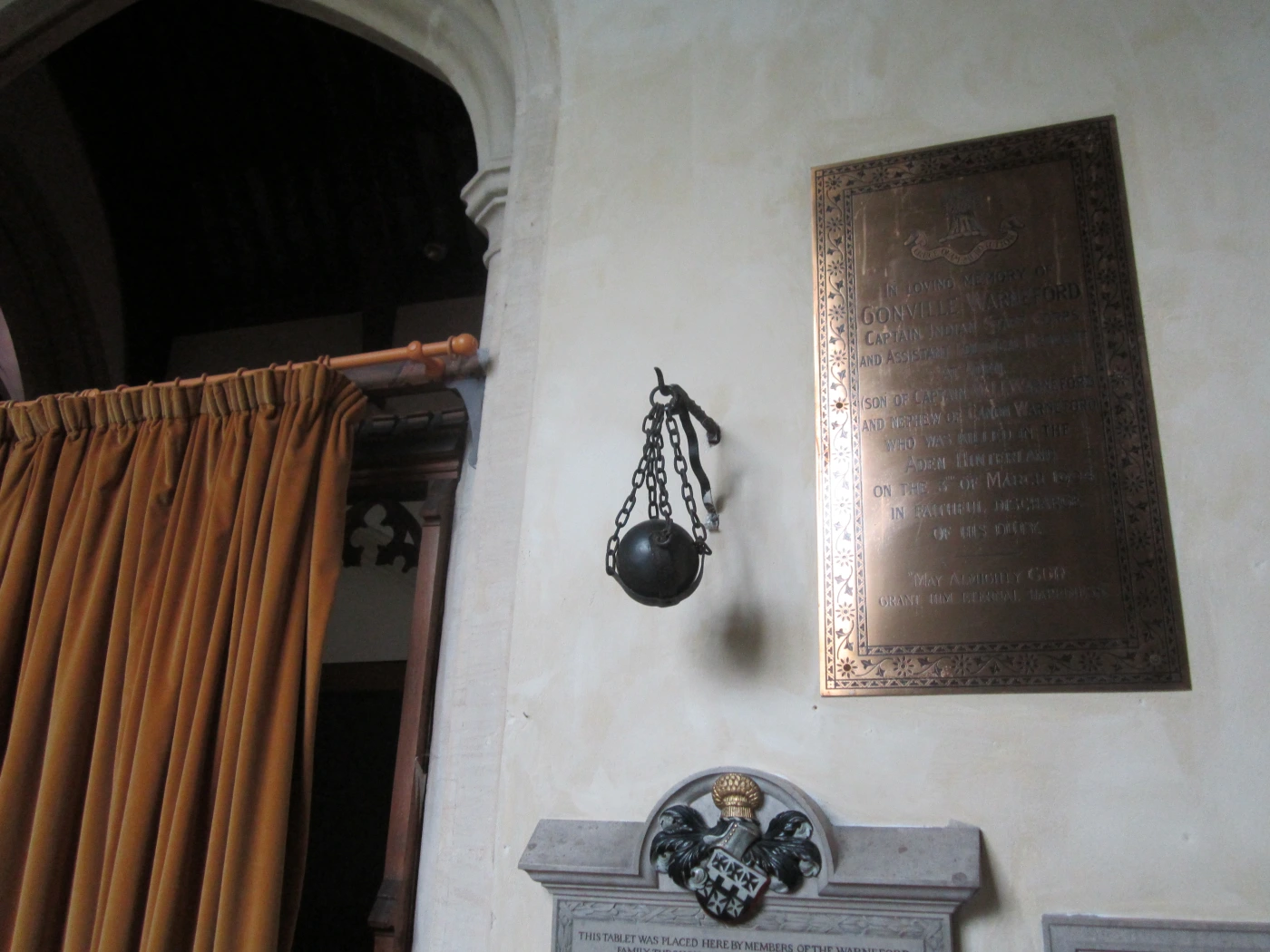
Then the exterior of St Michael’s features another Civil War reminder. Beside the west door the masonry bears a large hole. The belief is that a cannonball fired during the Parliamentarian’s assault on the town on 27 June 1645. Now the church has in its possession an actual cannonball that may or may not be the guilty one.
English civil war cannonball in St Michael’s church Highworth – taken in 2014
If you like a ghost story you’re in luck. For, According to published reports in the London Illustrated News, Highworth church is haunted by a spectral figure. Though, being as no-one has reported a sighting since 1938 it seems to be a rather shy spook. That sighting described it as having a featureless countenance, with dark shadows where the eyes should have been.
On the topic of Highworth see also …
… the old post office in Highworth and Mabel Stranks: