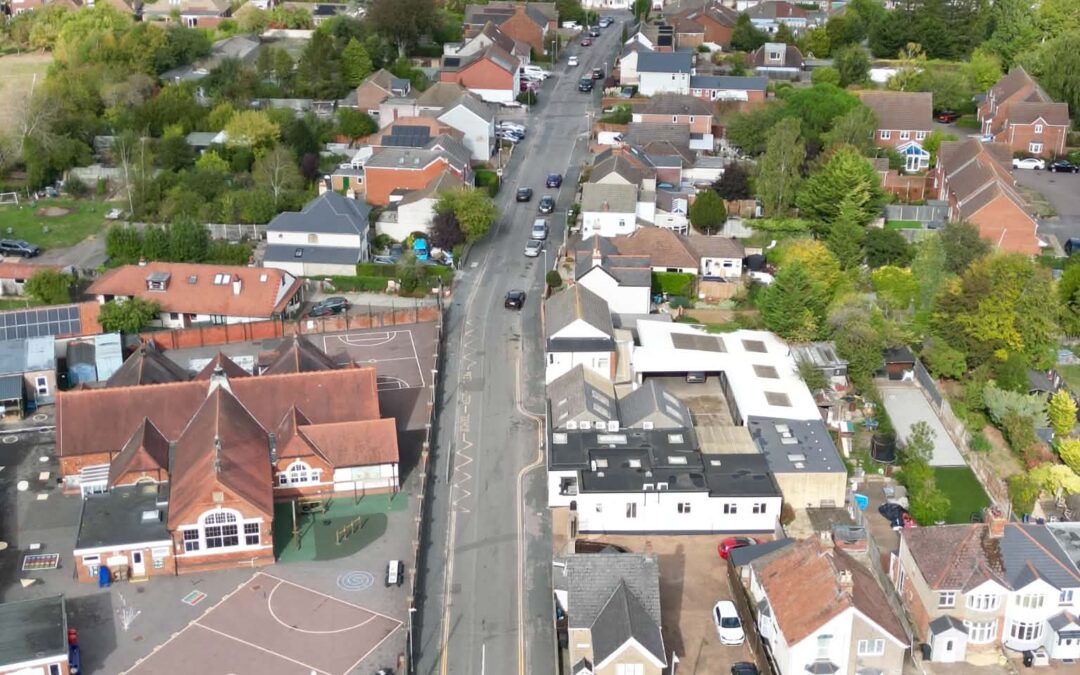
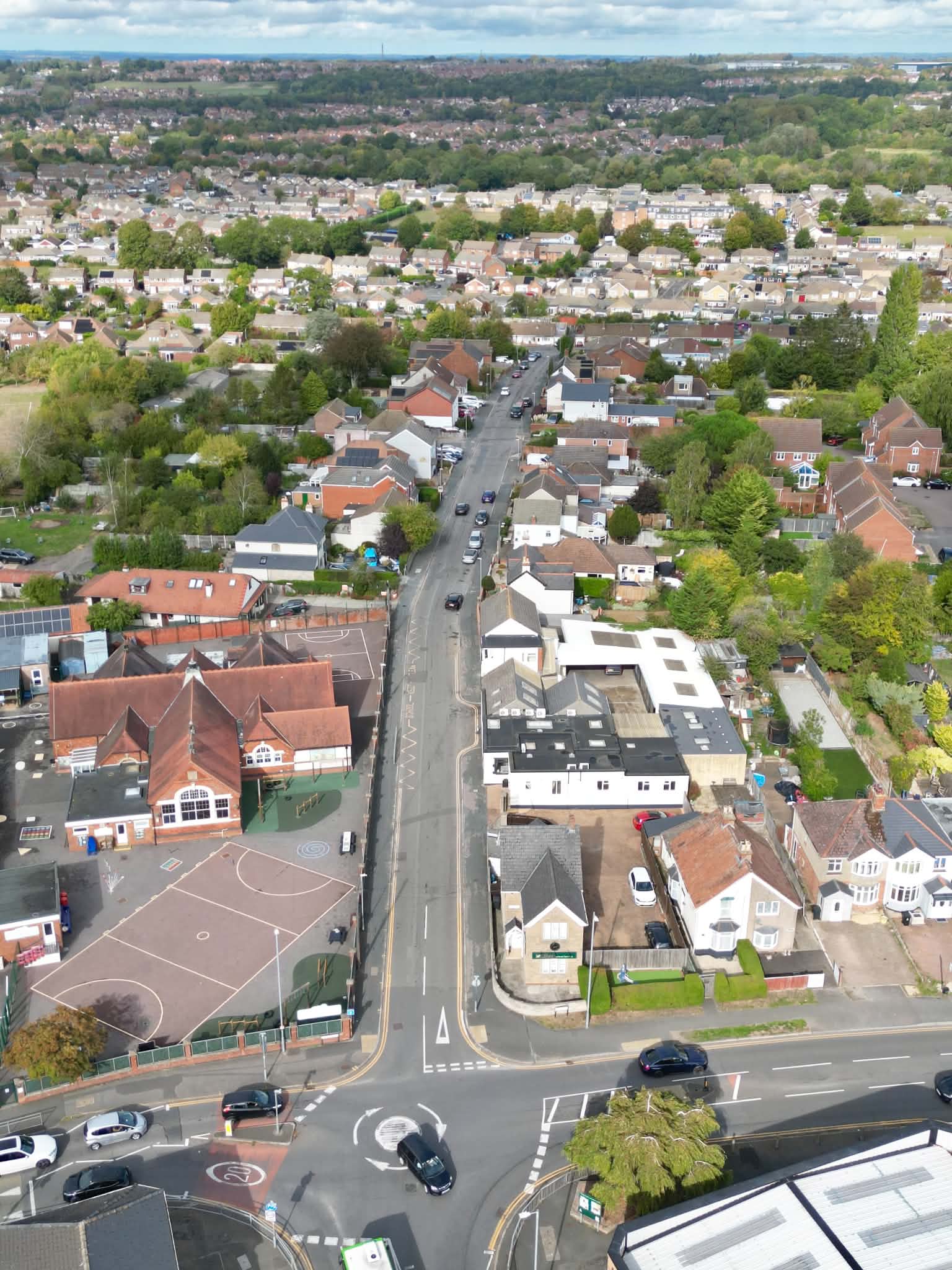
The Broadway Rodbourne Cheney – a wee bit of on odd one in its form this one. It starts at the crossroads with Cheney Manor Road and Moredon Road and goes up to Avonmead. But it also, just past Rodbourne Cheney Primary school, does a left and right thing – with the left-hand branch ending in a Cul-de-Sac and the right-hand branch connecting with Thames Avenue.
So here we have, on the face of it, an unremarkable street. It doesn’t have a blue plaque and, to my knowledge, no famous person entered the world in a bungalow on The Broadway. Yet its inclusion here allows me to mention an interesting aspect of Swindon’s ancient history.
IMAGE OF STREET view from ground level needed
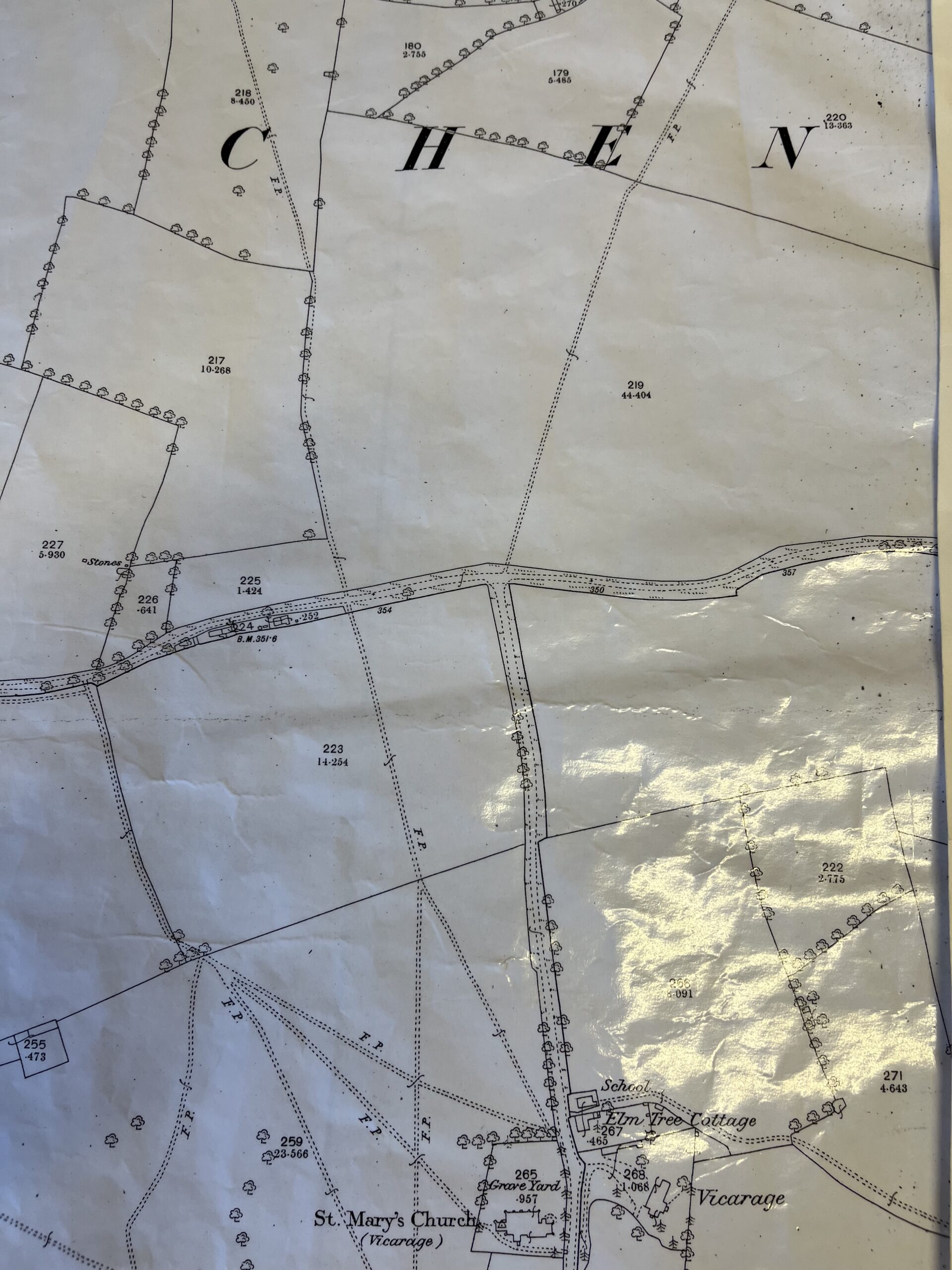
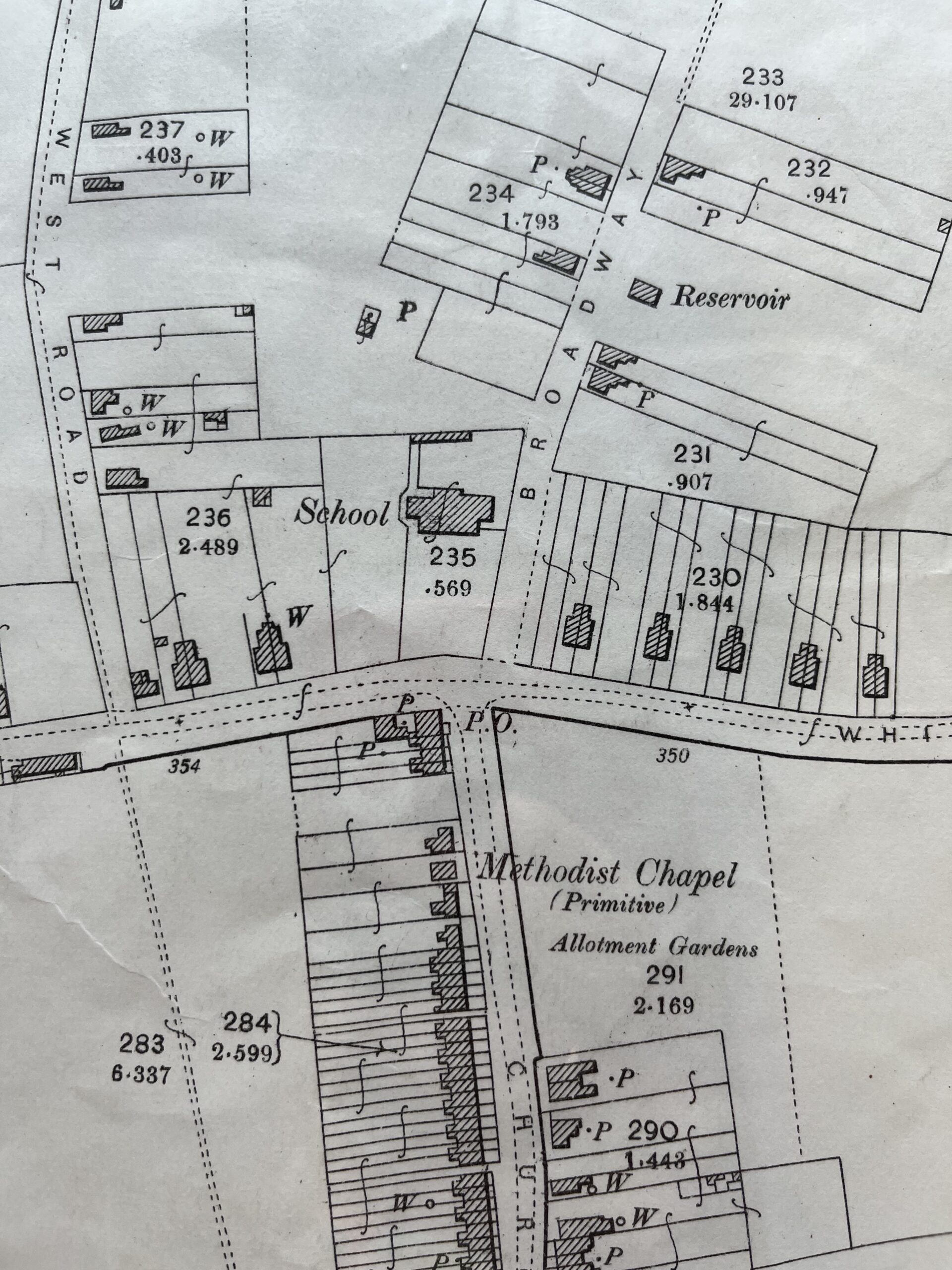
As with other streets in this volume, The Broadway developed on the site of an old trackway forming a continuation of the Rodbourne Road from Swindon. According to Sheldon/Tomkins the first houses appeared on it around 1907. Though as 1894 saw the opening of the still-standing-still-used primary school I’m none too sure on that point.
There had been an earlier school, opened in 1892. The site and extent of those premises are unknown but records show that, in 1894, when the register listed eighty children, a new school opened on what was the junction of Broadway and Moredon Road.
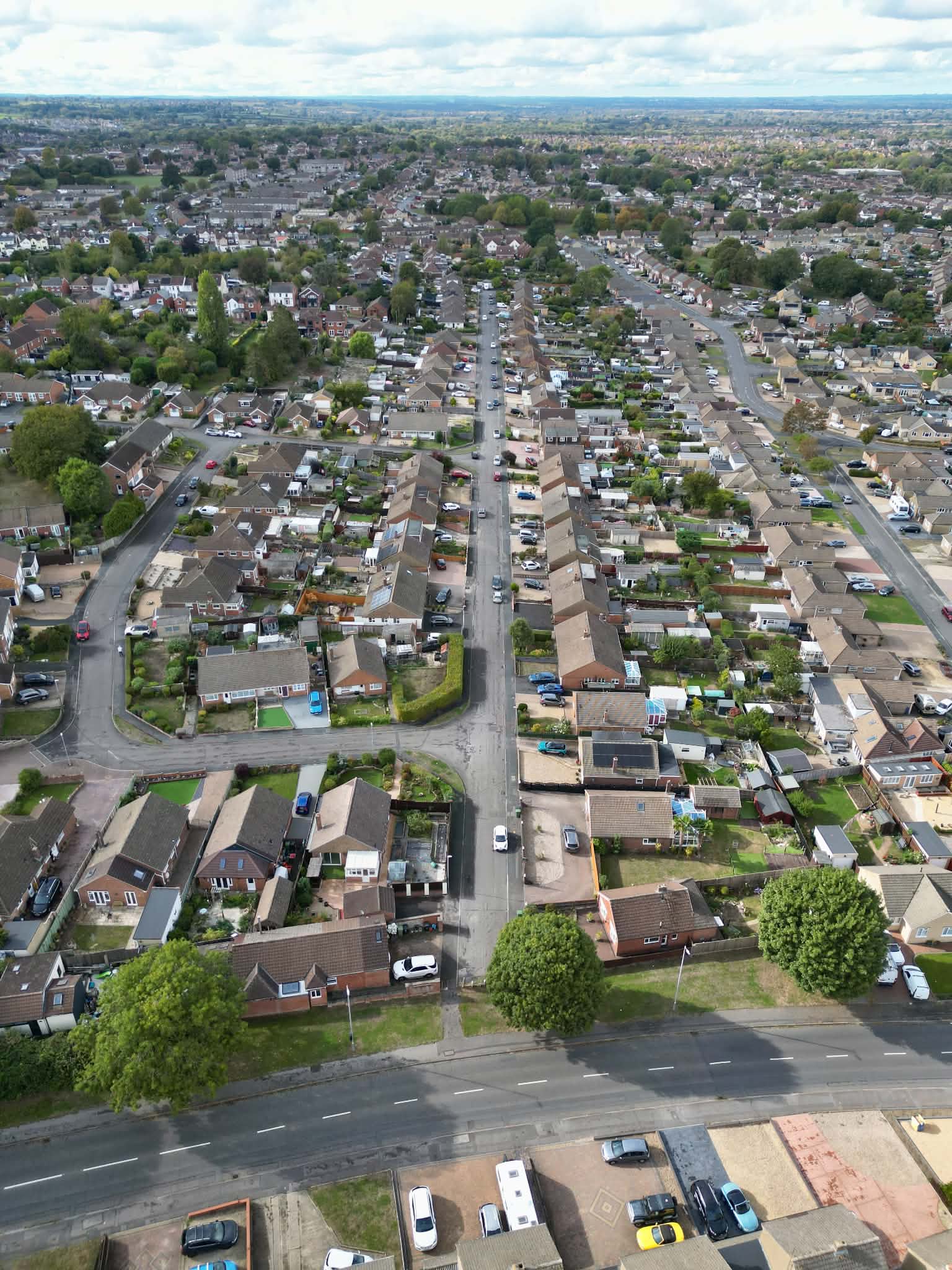
1873-1893 map section showing the un-named trackway1900 map section showing the track now marked as The Broadway. Note too the spread of development in later years.The Broadway running up the picture from the roundabout off Whitworth Road. Note Rodbourne Cheney Primary School bottom left. Image from Swindon from the Air
MAGE OF SCHOOLTO COME
From Saxon pathway to Swindon residential street
The Broadway then, traces its roots back to ancient Saxon pathways. Indeed, Sheldon and Tompkins state it bore the name braden weg as far back as 943. The street evolved from being a rural agricultural settlement alongside the historic core of Rodbourne Cheney, and more of that later, first recorded in the Domesday Book, as Redbourne.
From the erection of the first houses, the road morphed into a suburban extension during the municipal housing booms of the 1920s and 1930s. Rodbourne Road lies south, a mere spit from Swindon’s railway area and the outlet centre. But The Broadway runs further north in Rodbourne Cheney. The two streets are approx. 1.5 to 2 miles apart, separated by the rail line corridor and the Cheney Manor industrial estate.
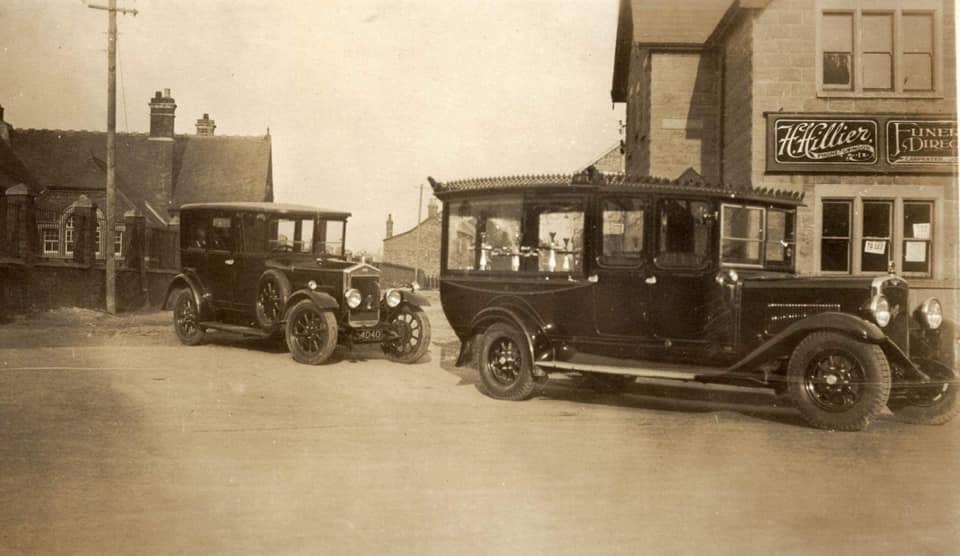
A view of Hillier’s funeral services premises on the Broadway in times past.
IMAGE – GOING TO GET THE SAME VIEW AS ABOVE HOW IT LOOKS TODAY
The Broadway and urbanization
For centuries this area comprised open fields, farms and a scattering of cottages. In the mid-19th century, the growing GWR Works drove dense terrace building in the vicinity of Rodbourne and the railway village. Meanwhile, Rodbourne Cheney, developed in a later phase of Swindon’s growth, held fast as a distinct place. So, Rodbourne and Rodbourne Cheney, are separate entities both historically and in terms of the way they’re laid out.
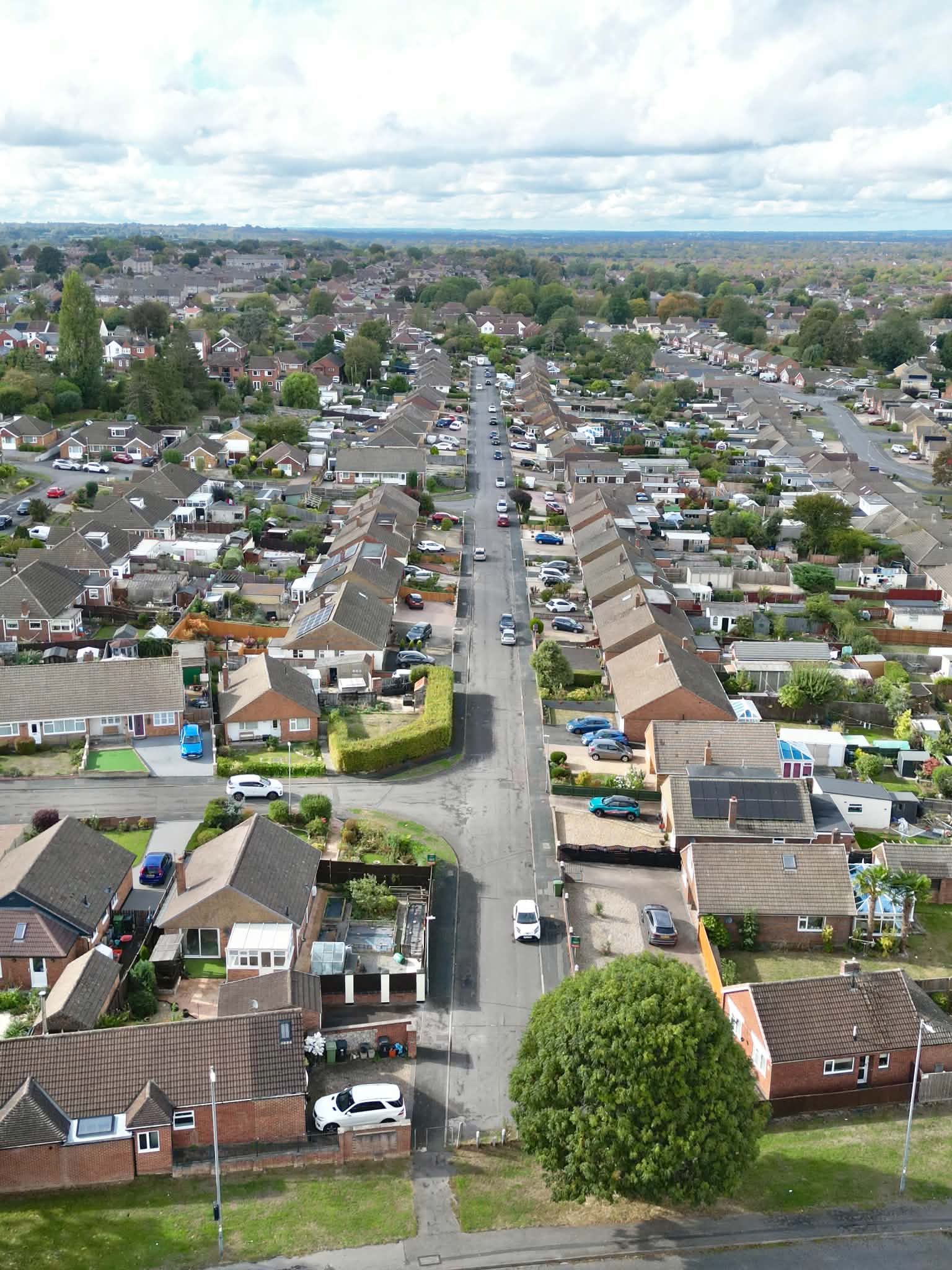
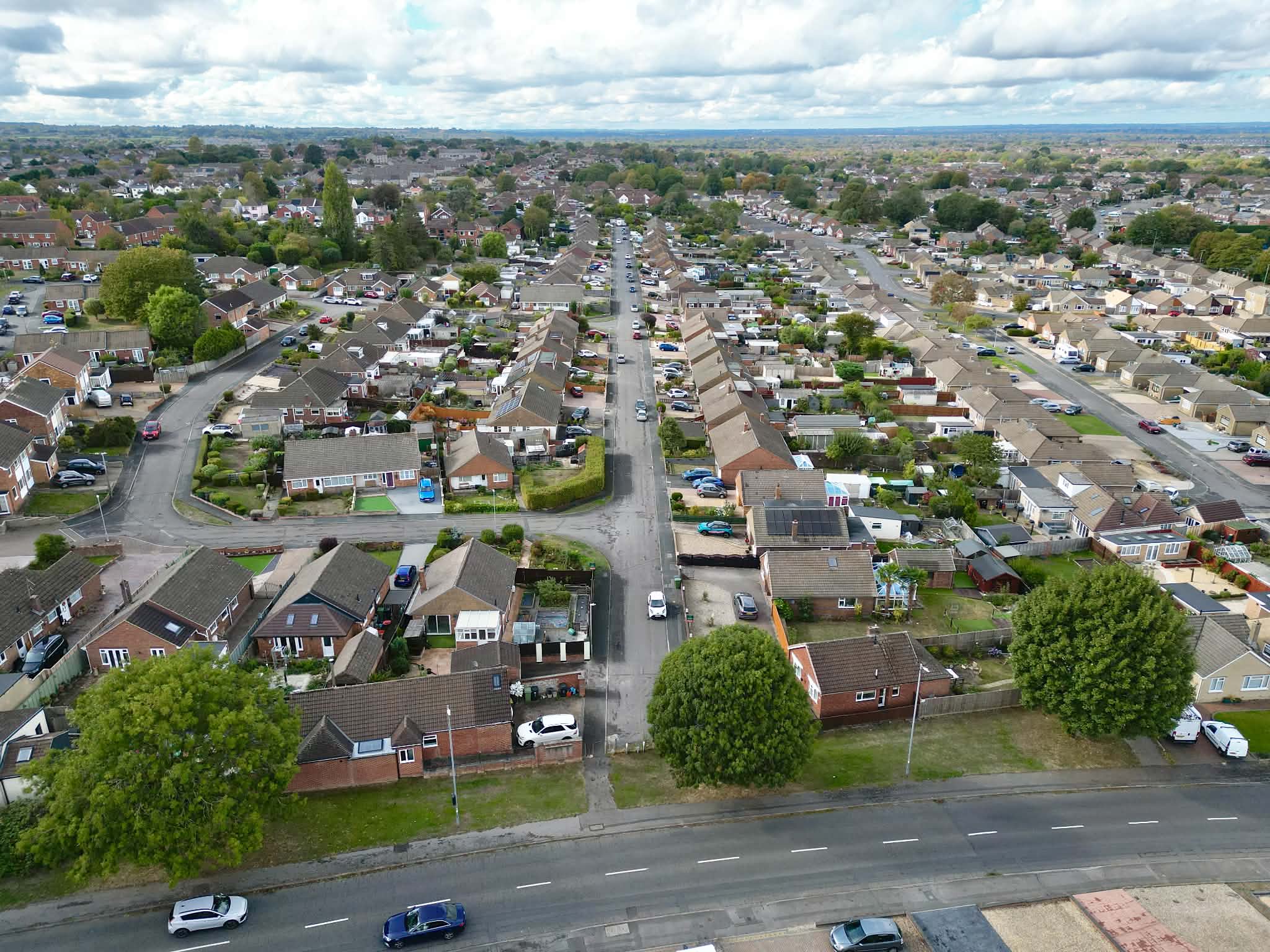
Views of The Broadway from Swindon in the Air
The other length of the Broadway running up the centre of the pictureThe other length of the Broadway running up the centre of the picture
Rodbourne Cheney’s early history
It would, I feel, be rude to leave The Broadway without giving mention of Rodbourne Cheney’s earliest beginnings.
The name Rodbourne Cheney comes from the Old English Hreod Burna – meaning ‘reedy bourn/stream’. It references a stream that runs north of the manor house. The suffix Cheney got added on in 1242 when one Ralph Chany (or Ralf le Chanu) held the local manor. (See Swindon in 50 Buildings)
The Domesday book recorded the first evidence of occupancy in the area, when it bore the name Redbourne. The entry listed the inhabitants as three villlains, five borders and one serf. The latter being a peasant of low hereditary class who lived and worked on the manor.
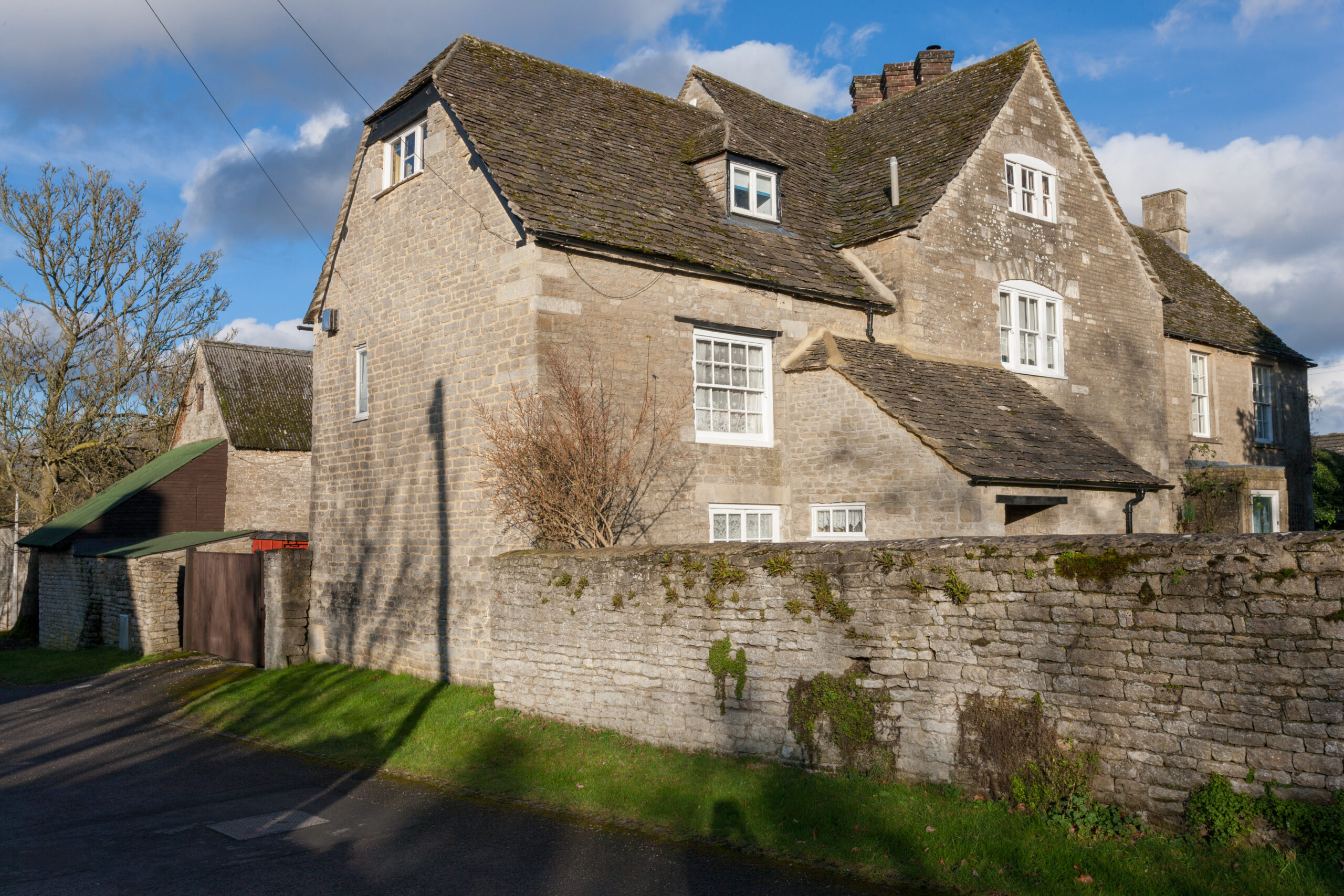
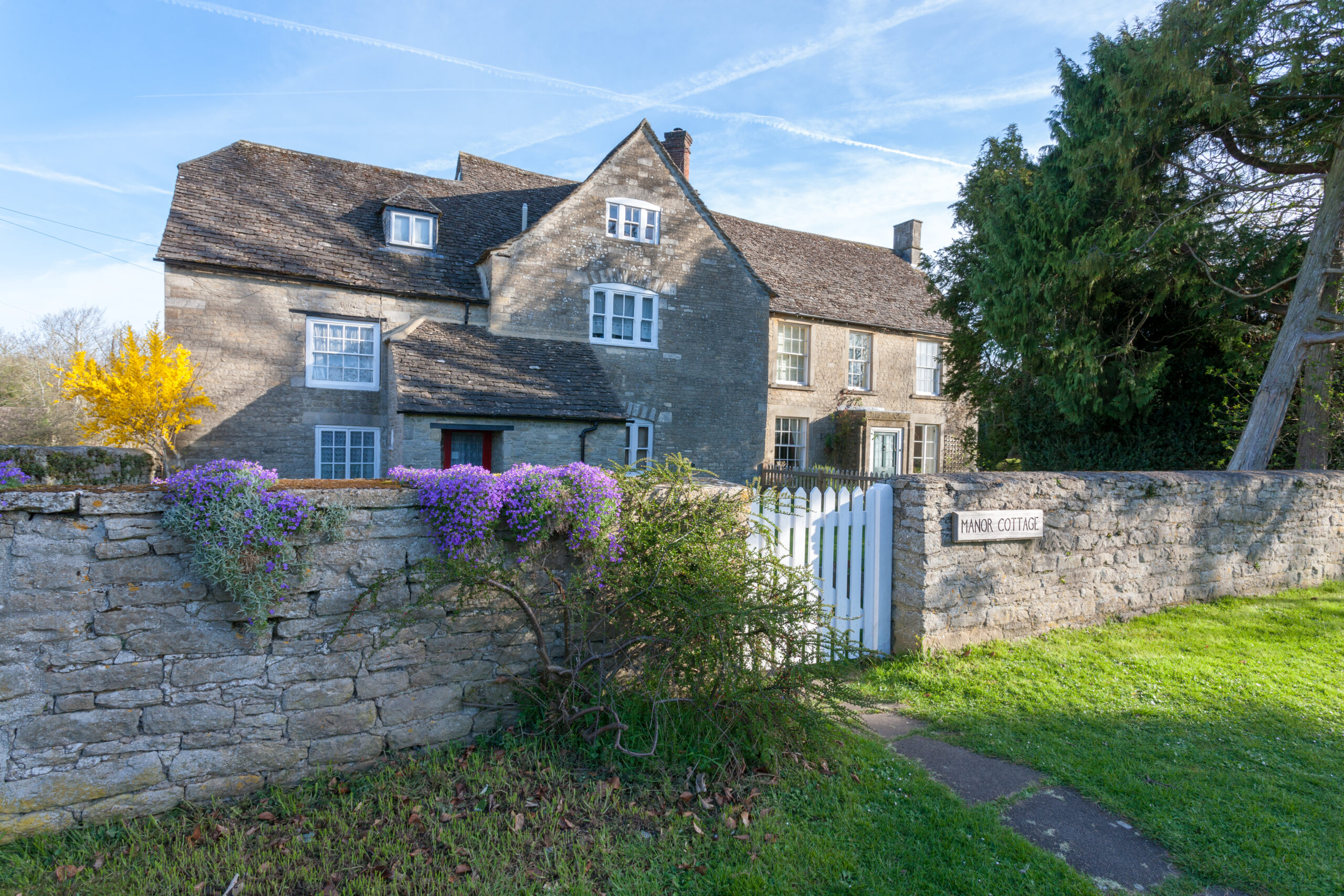
The Manor House, situated in Cheney Manor Road, is a stone tiled, grade two-listed building built during the late 16th century. An area known as Rodbourne Green, once the local village green, surrounds the building and served as a popular meeting place for the local hunt. The green might also have had stocks situated on it for the punishment of the aforementioned lower classes when they stepped out of line.
Rodbourne Manor Rodbourne Manor
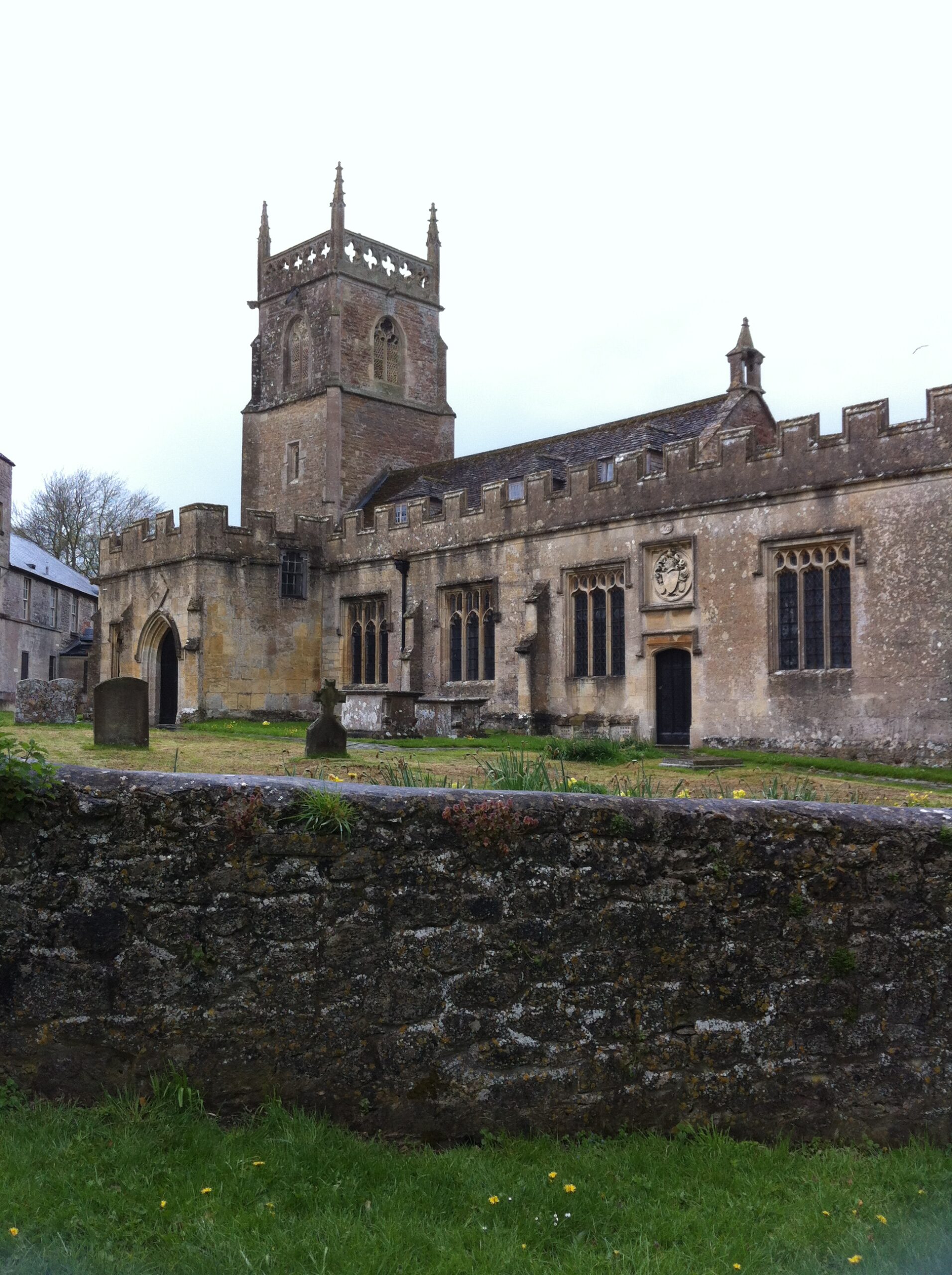
St Mary’s church (See Swindon in 50 More Buildings), served as the religious heart of the early hamlet near Aker’s Way. Standing on the north side of Akers Way and surrounded by an old stone wall, it was consecrated in approximately 1250. The first recorded vicar at the Church was Johannes Channeu in 1308.
The first known written record of the manor of Even Swindon mentions that the Abbess of St Mary in Winchester held land in Swindon worth £4 a year between 1210 and 1212. Even Swindon was probably in existence long before then, and its exact location is not known.
There are two schools of thought as to why this land was called Even Swindon. The former is that the land is extremely flat in comparison with the small high level hamlet of Swindon (probably deriving from Sweyn’s don – the hill of the Danish Invader Sweyn) mentioned in the Doomsday book of 1086. Other people believe Even Swindon was so named because of its level water table and it is true that in periods of excessive rain, parts of the area are still prone to flooding.
ENTREPRENEUR Ashlea Fisher has launched a new venture. iCare4, offers practical support and companionship for older people and vulnerable adults who want to remain independent but may need a helping hand with everyday life.
Ashlea has created the service to address what she believes is an important gap. That between complete independence and the point at which someone needs formal care.
‘This kind of service is so important now. An, to be frank, it’s lacking.
Often families cannot provide companionship or support to older relatives in particular if they live alone. This is due to the fact that they might be working full-time, have other caring responsibilities or may live many miles away. The world has changed, younger generations have more responsibilities often later in life. And people tend to move around far more than previous generations,’ Ashlea said.
Care4 Bridges Care-Companionship Gap – Ashlea Fisher who has started iCare4 helping people with ‘personal assistance’ in Swindon and North Wiltshire.
What iCare4 offers
iCare4 provides personalised personal assistant support for people who are capable of managing their own personal care, medication and daily routines, yet may find tasks such as shopping, housework or attending appointments difficult. The service can also support those experiencing loneliness or isolation.
Ashlea believes that recognising this middle ground can help individuals maintain their independence for longer. But while also providing valuable reassurance for their families.
;Not everyone needs a carer,’ she said. ‘Sometimes all they need is someone there. There are many people who are quite capable of independent living. But would get huge benefit from:
a little practical help
some companionship or …
… having someone they know they can rely on for a few ‘odd everyday jobs,’ said Ashlea, who also runs IRecruit4.
‘I created iCare4 to fill that space as I’ve seen my own relatives and friends struggle with this. The aim is not to take over someone’s life but to help them continue living it in the way they want to. It might be a cup of tea and a conversation. Or going shopping together, getting out for a walk or having someone alongside them when they attend an appointment.’
It also provides an extra person who may notice when something doesn’t seem quite right.
Ashlea hopes this will allow relatives to reclaim some of their family time. Rather than every visit becoming focused on practical tasks rather than spending meaningful time together.
Family time
‘Families want to be there for the people they love, but the reality is that they are often juggling many other responsibilities. I want sons, daughters, husbands, wives and grandchildren to have the opportunity to enjoy spending time with their loved one rather than arriving with a list of jobs that need doing. This can lead to, at best, a feeling that they’re not spending time talking to their loved one at all. Or, at worst, to a feeling of resentment that there is always a long ‘to do’ list,” Ashlea said.
In its first phase iCare4 will focus around Swindon and North Wiltshire and may expand into other geographical areas over time. Prices start from £25 an hour for a two-hour minimum booking. To find out more visit https://www.icare4.uk/
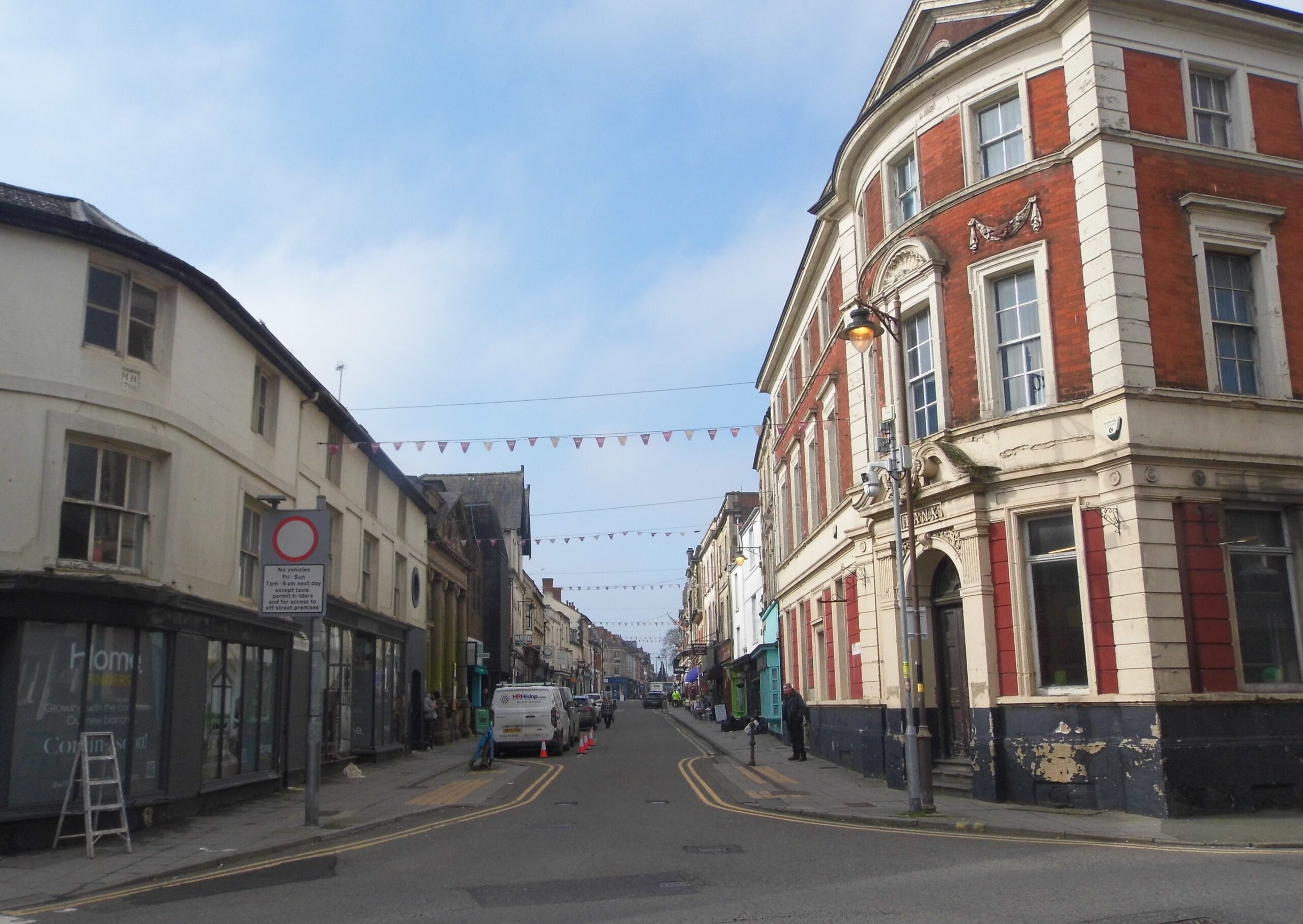
I’m out of synch now with the order that these streets will appear in the finished Swindon in 25 Streets. For some reason, unfathomable to me now, I started writing about Wood Street but then didn’t finish it and moved on to the rest – forgetting all about it. So here we are with this attractive Old Town street not at all in its proper place – I’ll sort that in the actual book.
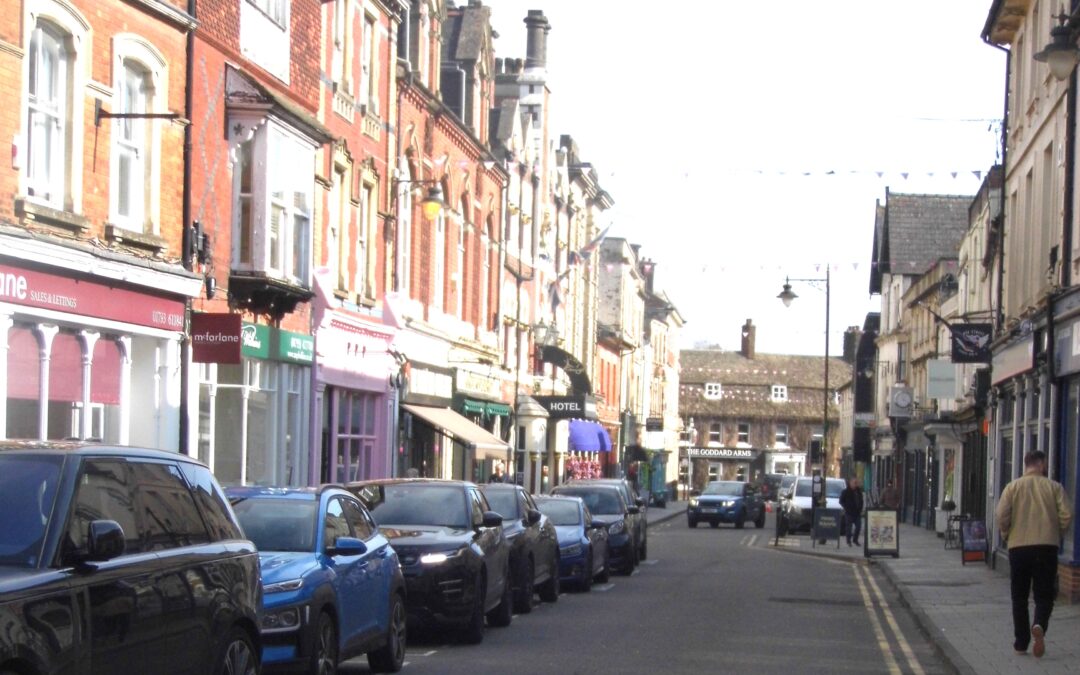
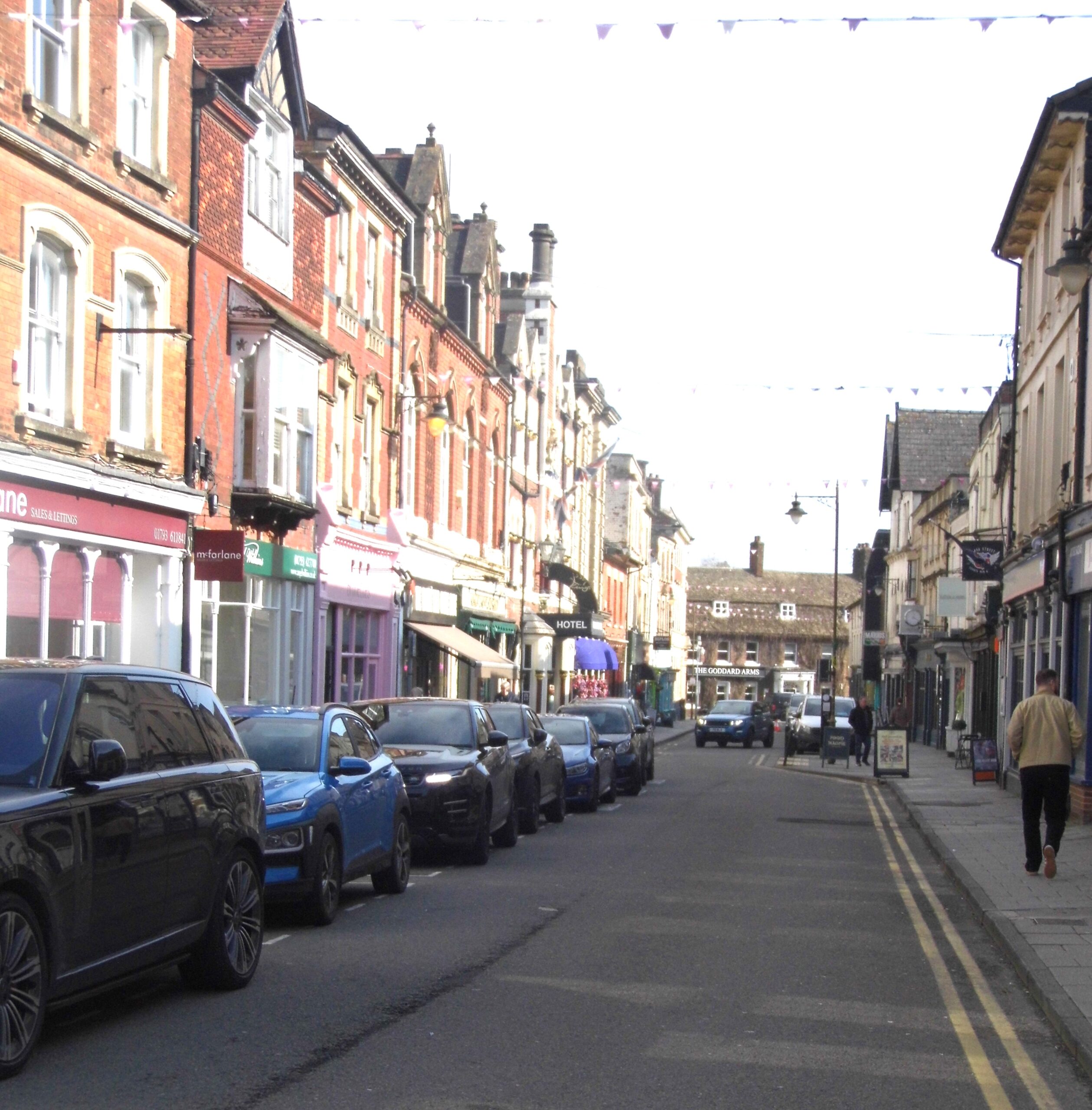
But for now, suspend disbelief and imagine yourself having wandered down Newport Street and High Street, and turned around Limmex Corner* onto Wood Street. As we’ve seen with Newport Street, street names were, for many years, somewhat … fluid. And this one is no exception.
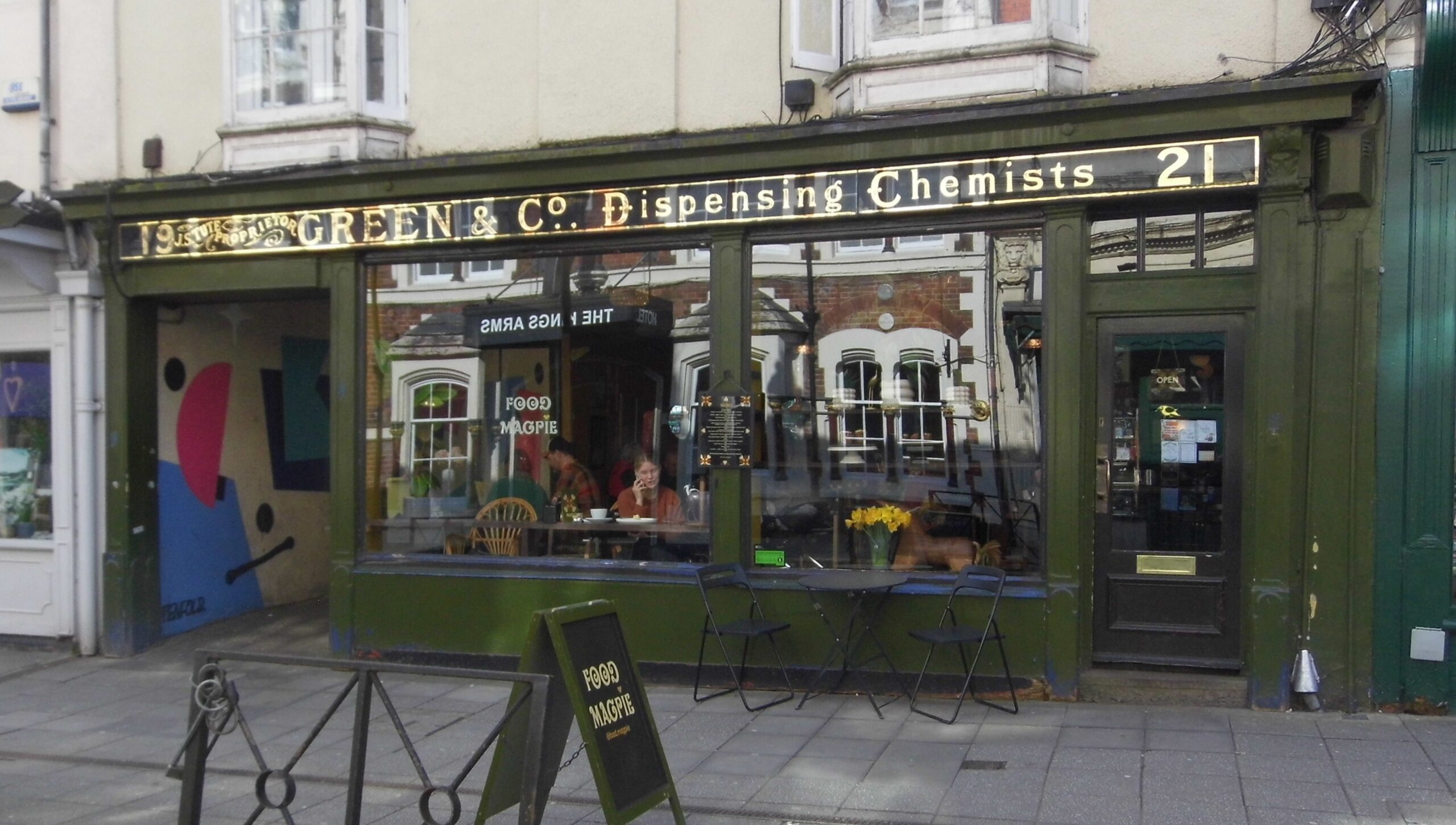
Wood Street Old Town – view down the street towards the Goddard’s Arms on High StreetWhen the owners of Food Magpie stripped the frontage back they found this old chemist shop frontage. Hidden for decades they left it in situ.
Naming conventions
Mark Child’s Swindon Book states that Wood Street went by that name by the late 16th century when populated by thatched cottages tenanted by quarry workers and associated trades – blacksmiths and carpenters and the like.
Suggestions abound that the name derived from the presence of a wood store. Or from the local pronunciation of Wootton Bassett – it being at that time part of the highway to WB. It’s also done duty as Blacksmith Street on account of the forges there.
William Morris, founder of Swindon Advertiser, recalls it named Windmill Street in the 19th century – after the windmill on the site where The King’s Arms, opened between 1832 and 1837, now stands. At the 1324 death of Aymer de Valamce, Swindon’s lord of the manor, his estate included one windmill – most likely the one just mentioned. 1840 saw it demolished in favour of three new cottages.
Well into the 1800s, agricultural tradespeople are still evidence here. At this point there were still several thatched cottages – they weren’t swept away until the 1860s/1870s. It took until the early 19th century for the gradual gentrification to begin. Private schools set themselves up – adding to the upmarket atmosphere.
A principal street
By now, this is one of two principal streets ascribed to the town that began to undergo development in a way that Newport Street didn’t. To put it another way, during the 1880s, Wood Street morphed into a place where the better class of tradespeople placed their businesses. And there were residents of easy means and full pockets in the larger premises arising out of older cottages.
The King’s Arm’s
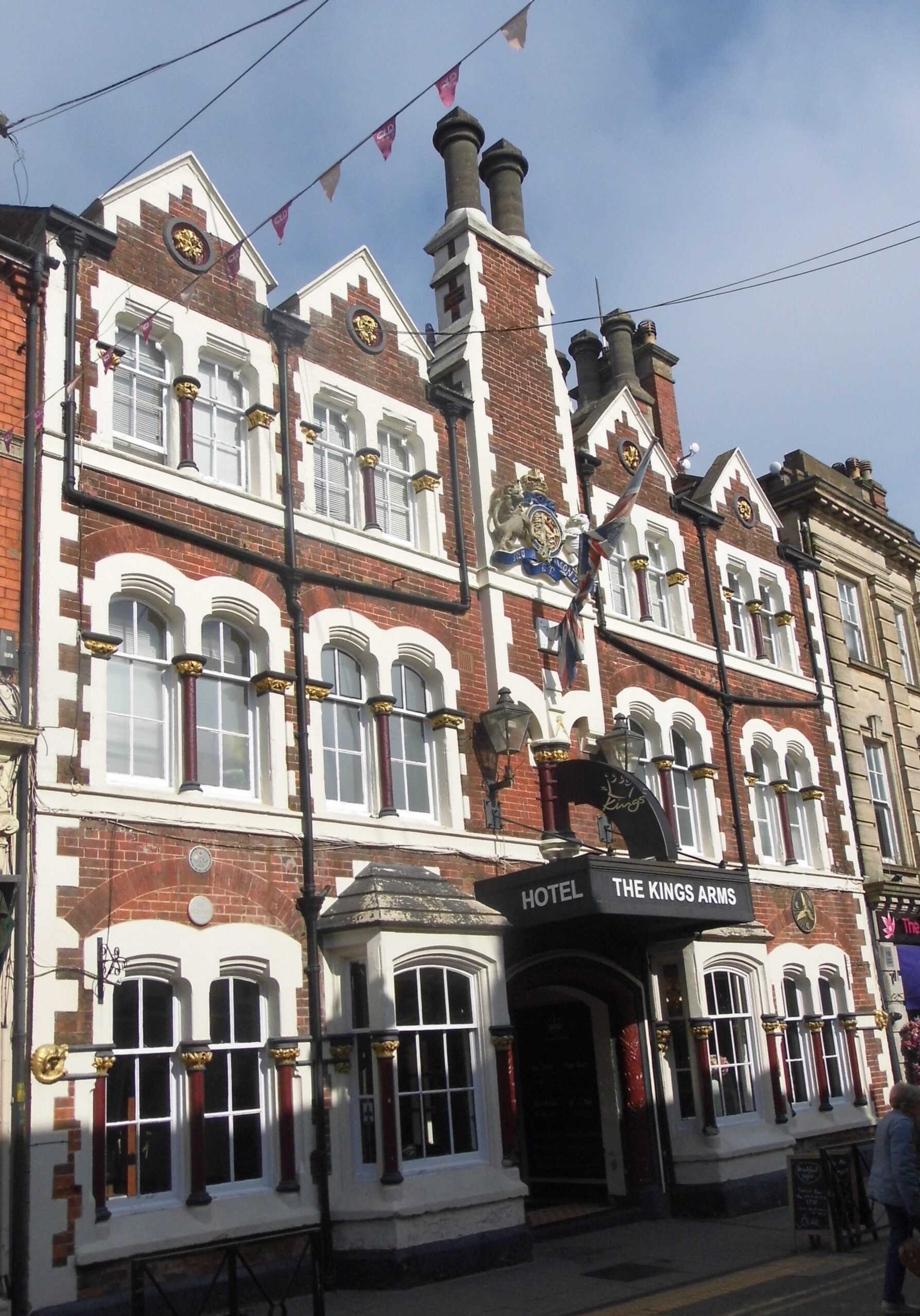
Described by Mark Child as the busiest frontage in Swindon, the King’s Arms was built in the later 1860s. Note the flamboyant coat of arms. On this site, or thereabouts, had stood a windmill associated with one John Godwin Snr. He had a dwelling and a bakehouse that may well have fronted on to Wood Street. It appears that Godwin established an alehouse on his premises circa 1840. Since before that date he appears in records as a baker only.
The King’s Arms is first mentioned in 1842 with Godwin as the innkeeper. Come 1864, John Godwin Jnr. leased land behind the inn from the lord of the manor. He set about rebuilding and extending the existing premises. An entrepreneur in his own right, junior Godwin capitalised on his associations, added the coat of arms to his literature and designated the King’s Arms an Agricultural and Commercial inn.
The inn underwent rebuilding in 1867 and has a Grade II listed façade. Showing the skill of Swindon’s stonemason it’s changed little since.
The King’s Arms Hotel on Wood Street
These days, some of the best 19th century buildings in Old Town line the north side of Wood Street.
In her Blipfoto about Wood Street, Maureen Iles recalls a pork shop that sold everything pertaining, as you’d imagine, to pigs. She recalls how, when she worked in Old Town in the 1970s, she’d shop there for chitterlings (small intestines of a pig) for her husband’s supper if she was planning to be out for the evening.
Limmex Corner*
I can’t talk about Wood Street without giving mention to what many older Swindonians still call Limmex Corner – Despite it being Limmex no more. That being where Wood Street joins High Street. It takes its name from an ironmongery business started by Laurence Lawrence in the first half of the 19th century. Samuel Joseph Limmex took it over in 1881. He, by all accounts, surveyed his empire from a high stool behind a high desk in his small corner office. From 1975 to its closure in the late 1990s, Ray Stevens and his staff ran the shop.
I remember this shop from when I first pitched up in Swindon and shared the sadness when it closed. As Mark Child observes: ‘This was the last shop in which one could purchase a single unit of some insignificant item that logic suggested had not been made for at least half a century …’
On a happier note, there’s now an excellent hardware shop on the opposite side of Wood Street.
View down Wood Street with The Goddard Arms behind you and looking towards Bath Road. Limmex Corner is opposite the old bank building.
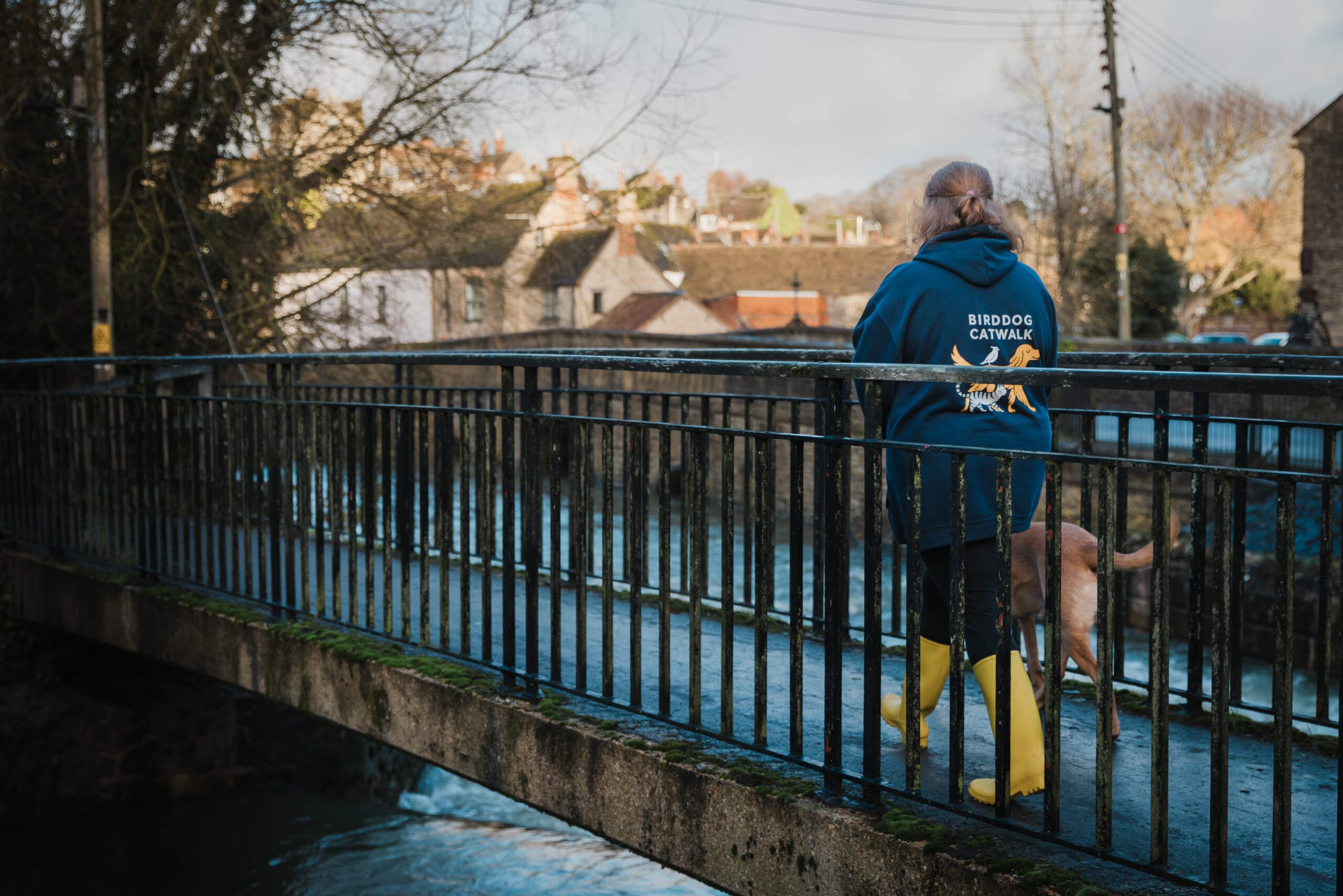
Book Early for Christmas Pet Care is the message from Birddog Catwalk.
Pet owners planning to go away or travel over Christmas are being urged to arrange care for their animals as early as possible. The reason being that bookings for the festive period and October half-term are coming in already.
Holly Bird, founder of premium pet sitting service Birddog Catwalk, says the business often receives late enquiries.And, while the team will always try to help, they can’t guarantee availability during busy holiday periods.
‘We get a lot of last-minute, or late in the day, enquiries. And we’ll always do our very best to accommodate people,’ said Holly. “But we can’t guarantee that a sitter will be available for the dates somebody needs.’
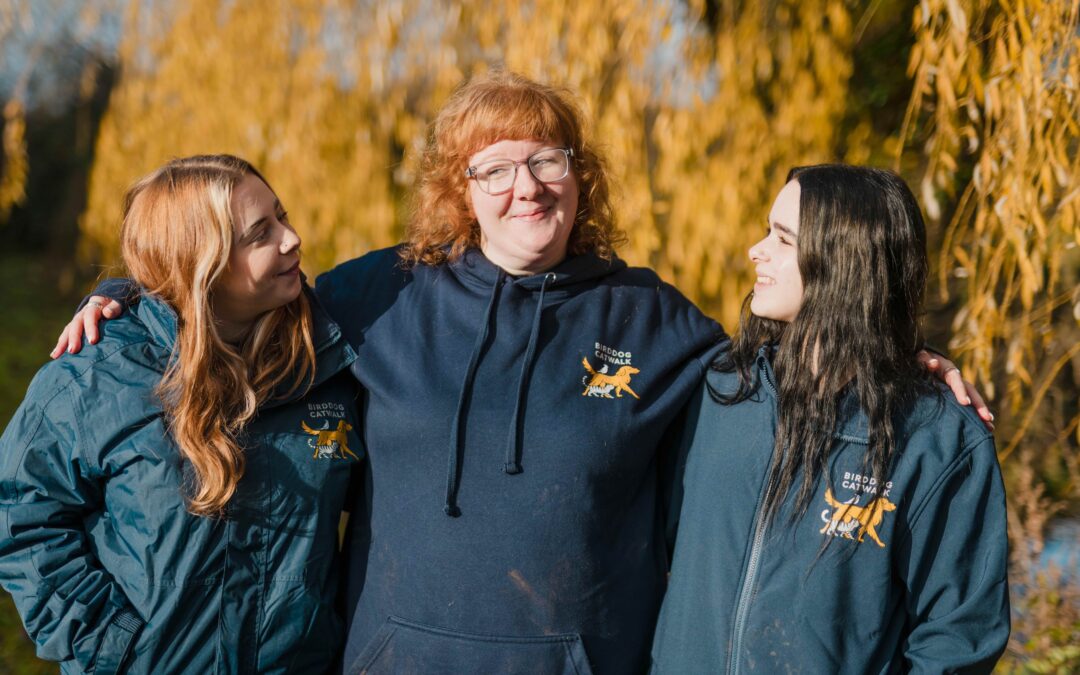
Book Early for Christmas Pet Care – Danny, one of the Birddog Catwalk team, who works in the Calne area.
More at stake than securing a sitter
Holly says arranging care early is about more than securing a sitter. There are several things that need to happen before somebody looks after a pet for the first time.
Birddog Catwalk arranges a meet-and-greet before any new sit or walk to understand:
the pet’s routine
behaviour
allergies and any other needs.
The team also records access instructions and vet details. All while clients complete an agreement and veterinary release form in case of an emergency.
‘There’s more to arranging pet care than finding somebody who is free,’ said Holly. ‘Meeting beforehand means the pet has met us before we walk into their home when their owner isn’t there. And the owner can feel comfortable about the person coming into their home.
‘It also gives our sitter the chance to make sure they feel comfortable and safe with the arrangement.’
DBS checks and more
Holly is encouraging anyone using a pet sitter for the first time to check they’re insured and DBS checked. And ask what procedures they have in place for emergencies and handling personal information.
‘Pet sitting has historically been quite a casual arrangement. But true peace of mind comes from having the right policies, procedures and training in place,’ she said.
Birddog Catwalk enters this Christmas season with a much larger team than it had twelve months ago. Holly took on her first staff members at the end of September 2025. At that time she was still carrying out the bulk of the service delivery around Malmesbury herself.
Today, five active contractors work alongside Holly. There’s another sitter due to join the Bristol team and further recruitment planned around Malmesbury and Tetbury.
The larger team means Birddog Catwalk can:
cover a wider area
provide back-up if a sitter has an emergency
and match animals with sitters suited to their individual needs.
All team members follow the same procedures, software and training.
Clients also receive regular photographs and updates from walks and sits so they can see how their pets are doing while they’re away.
‘Christmas isn’t any different to pet sitting at any other time of year, except that, like the summer, it’s busier,’ said Holly.
‘If you know the dates you’re going to need us, get them to us early. It gives us the best chance of being able to help and means everything can be properly arranged before you go away.’
Birddog Catwalk offers pet sitting, dog walking and home visits across Wiltshire, Bath, Bristol and the Cotswolds. For more information, visit https://birddogcatwalk.com/
Regent Street Swindon – this is one that WILL NOT be going into Swindon in 25 Streets. As worthy as it might be it’s the old story of having to make difficult choices. All that said, it’s good to have it represented on the blog. So this post comes to you courtesy of Jason Spickett who runs the superb Swindon From the Air Facebook page. I’m indebted to him for letting me share it here.
I’ve edited it for SEO purposes – that aside it’s Jason’s research.
t’s a funny fact that, when locals say they are standing at the bottom of Swindon’s Regent Street, they’re actually standing at it’s northern most end. Because, when you look on a map the street actually runs northwest to southeast. But we can forgive the good people of Swindon for this as. And that’s because the street is on a gentle slopes downward from the southeast end at 113m above sea level to the northwest end at 108m above sea level. One day a question about this might come up in a pub quiz, and you’ll be thanking me.
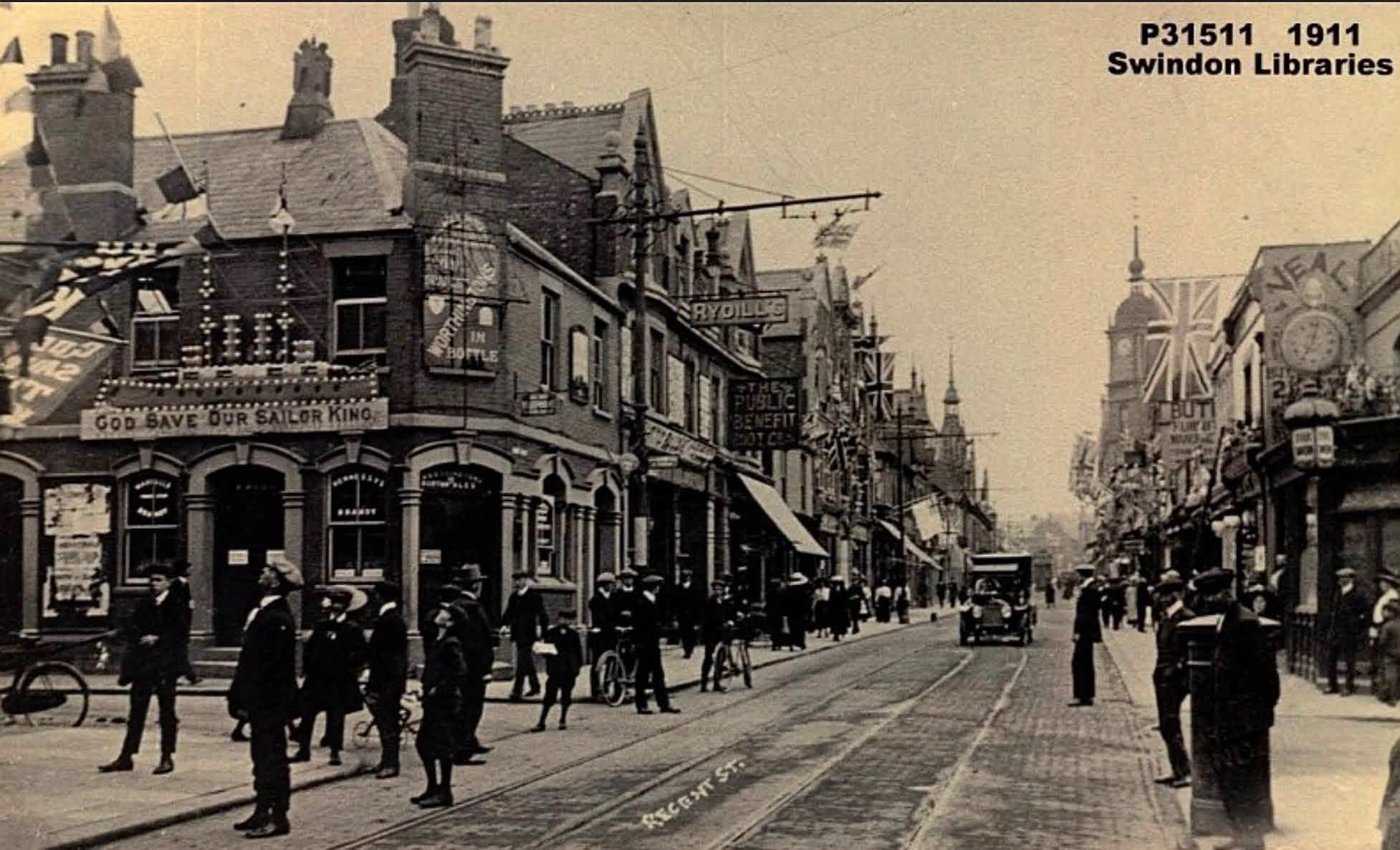
1911 Picture of Regent Street with bunting for coronation of King George V – courtesy of Swindon Libraries Local Studies
To get to the history
Now the historical bit. If you were standing at the lower end in an early 1800s winter you’d be questioning your choice of footwear. Because you’d be standing on a muddy track, surrounded, in the main, by fields.
If you were looking towards the Town Hall end of Regent Street you’d have your back to the Wilts & Berks Canal and a small wooden bridge, constructed in 1807, that crossed the canal into Bridge Street. Or would you? In fact – you wouldn’t! That’s because Bridge Street didn’t exist then, it was again a muddy field with a track called Bridge Lane. And although we know it today as Regent Street you were at the time standing on Brick Kiln Lane! And then to make matters worse there was a toll house that would have fleeced you for a few quid just to pass by.
As the years rolled by the area evolved and land was sold in 1848 to build a chapel – one of the street’s first permanent buildings. Workers cottages were built and the area renamed to Regent Street. (Named after the famous London street) – Or was it? It’s more likely that Regent Street takes its name from the Prince Regent aka Albert – hubby of Queen Victoria.
Then came the railway
The railway saw more people come to the area and some of the houses became shops. Regent Street became even busier when the GWR paid to build a new iron bridge over the canal in 1870. The famous Golden Lion Bridge.*
*Now the gospel according to Royston Cartwright says: yes the GWR built the Golden Lion Bridge. But public donations paid for it after the old wooden one became unsafe to cross with a horse and cart. It appears that most of the money came from business men in Old Town who were desperate to get a shop opened in the new town as that’s where the money was. And we’ve seen that from my piece about Emlyn Square when Old Town business opened branches on what was then called High Street.
Going from strength to strength
Anyway! Regent Street went from strength to strength. And more salubrious, larger shops came to the area such as Mcllroy’s. That opened in 1875 as a drapers shop but at length became a large department store that traded for many years.
As the years passed, the trackway became a road. Horses, carts and carriages were in use and in 1904 shared the street with the latest in technological advancements: the electric tramway. Regent Street was quite narrow, so the tramway’s design bore that in mind and it became the narrowest in the UK with a 42 inch gauge.
Skip forward to September 1911 and Marks & Spencer began trading at 90 Regent Street. And in 1914 Woolworths opened their doors at 23-25 Regent Street.
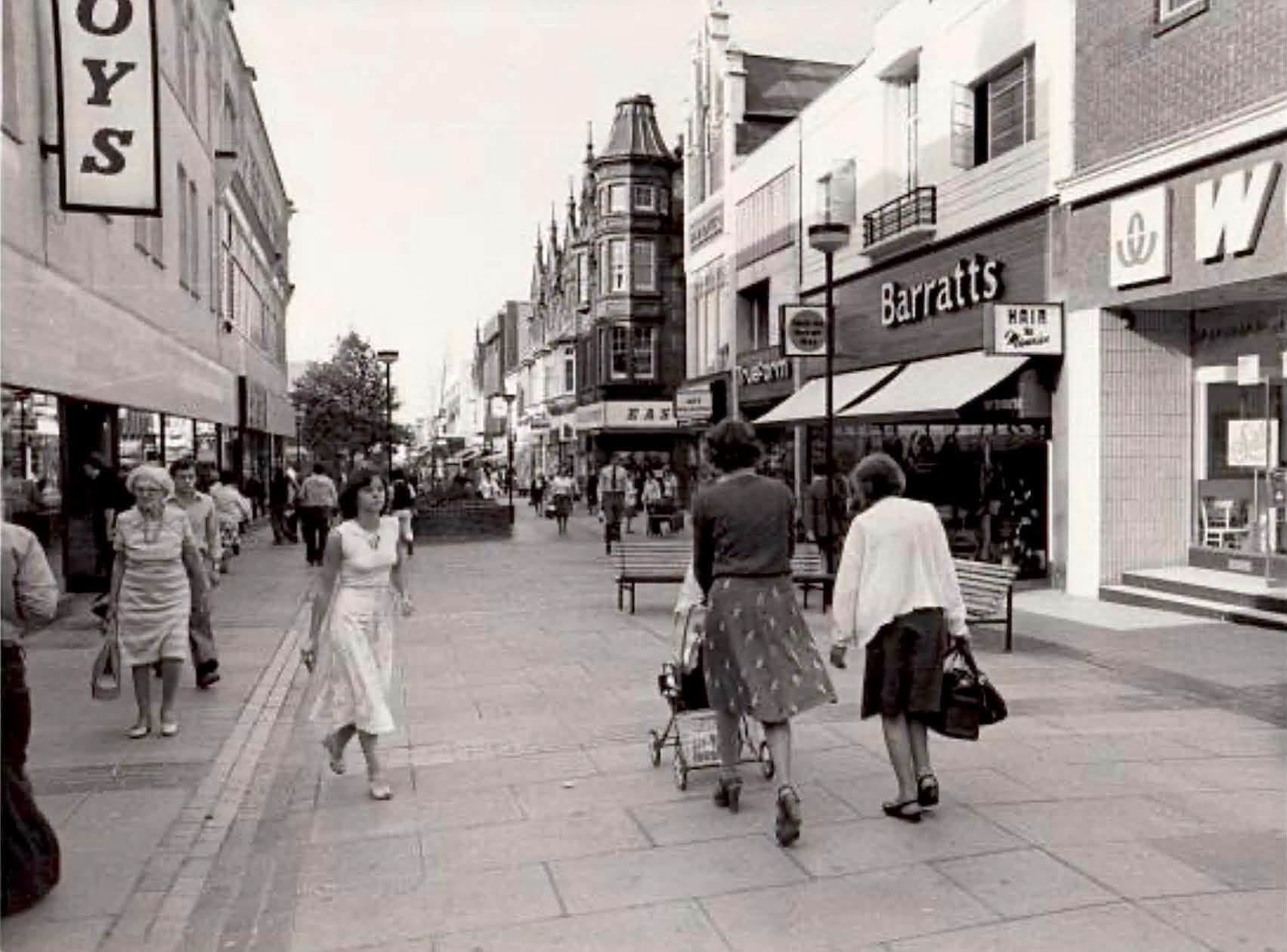
1967 saw Swindon become only the third town in the UK to have a vehicle free pedestrianised main shopping street as Regent Street closed on Saturdays but only for 8 hours a day. In 1973 it became a seven-day-a-week pedestrian zone and closed to all traffic.
Shoppers on Regent Street in 1978 – Newsquest
Over the following years Regent Street became the go to place for shopping in and around the town. More shops opened in the neighbouring streets as the old cottages fell to the wrecking ball for what was then the height of modern retailing in the UK.
I’m not going to get into the politics of the town centre as it stands today, other than to say that pretty much all the big names have gone. But then they’ve gone from everywhere.
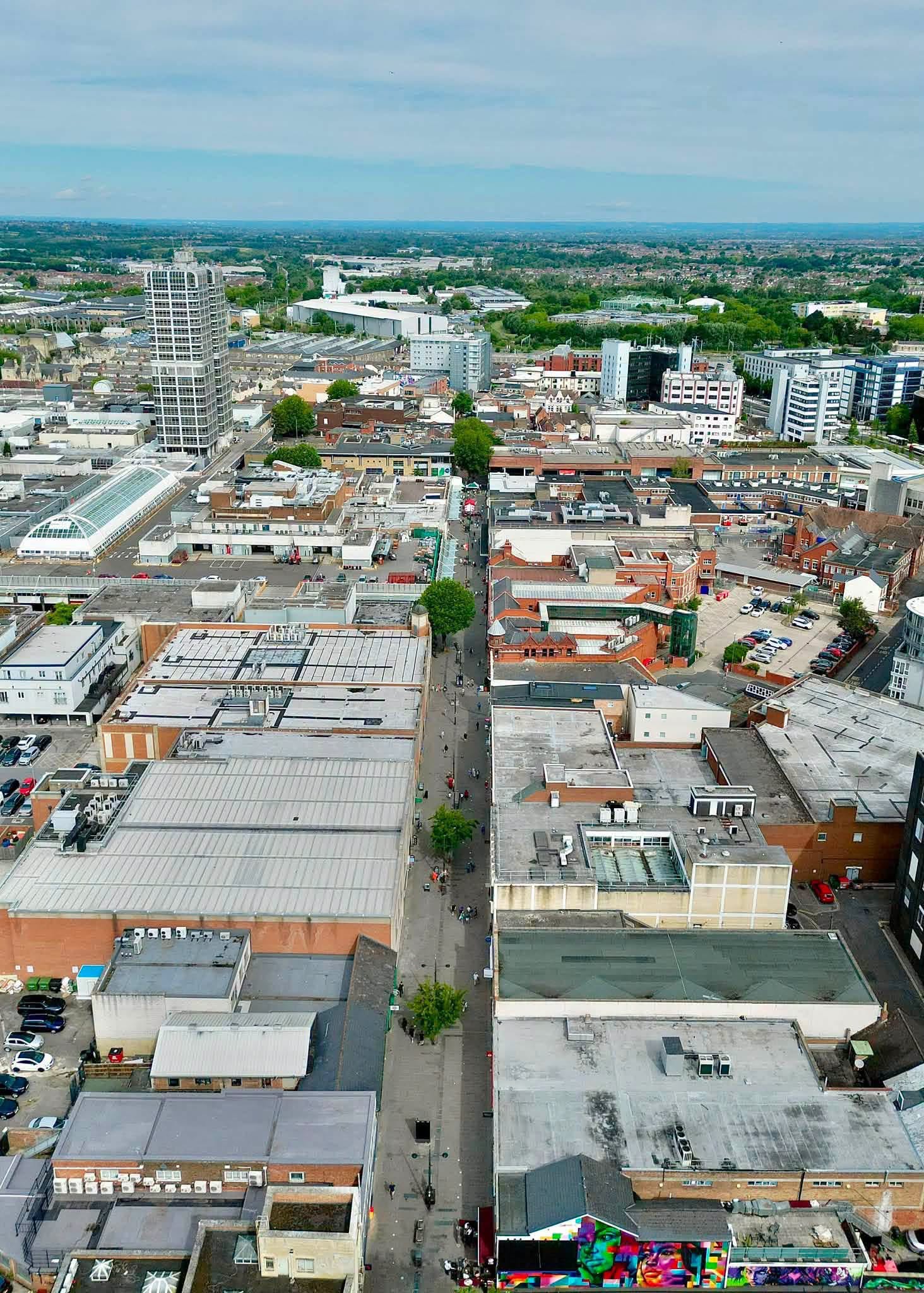
Aerial view of Regent Street by Jason Spickett of Swindon from the Air – 2026
The last word
Comes from Royston:
Many people do not realise just how high Swindon is. So think on this for a moment or two, the platform on Swindon Station is the same height above sea level as the top of the roof of St Paul’s in London. then walk up the hill to Old Town. And then Walk up Liddington Hill and you will see why we had so much trouble taking the motorway over one of the highest roads in England. I think I am right in saying only Shap is higher.