Signal Festival Shortlisted for Award that celebrates outstanding local partnership.
Signal Festival gets named as a finalist for the Inspirational Local Partnership Award at the National Arts and Cultural Education Awards 2026. This recognises the festival’s work bringing young people together through arts and culture across Swindon.
The Signal Festival, Swindon’s youth arts festival for 9 to 25-year-olds, finds itself shortlisted alongside organisations from across the UK. That’s including MADE – Manchester’s Cultural Education Partnership, Salford CEP, and Building Young Brixton. The awards, run by national arts education charity Curious Minds, received more than 250 entries this year across ten categories. Reviewing them all was a panel of 25 judges drawn from the arts, cultural and education sectors.
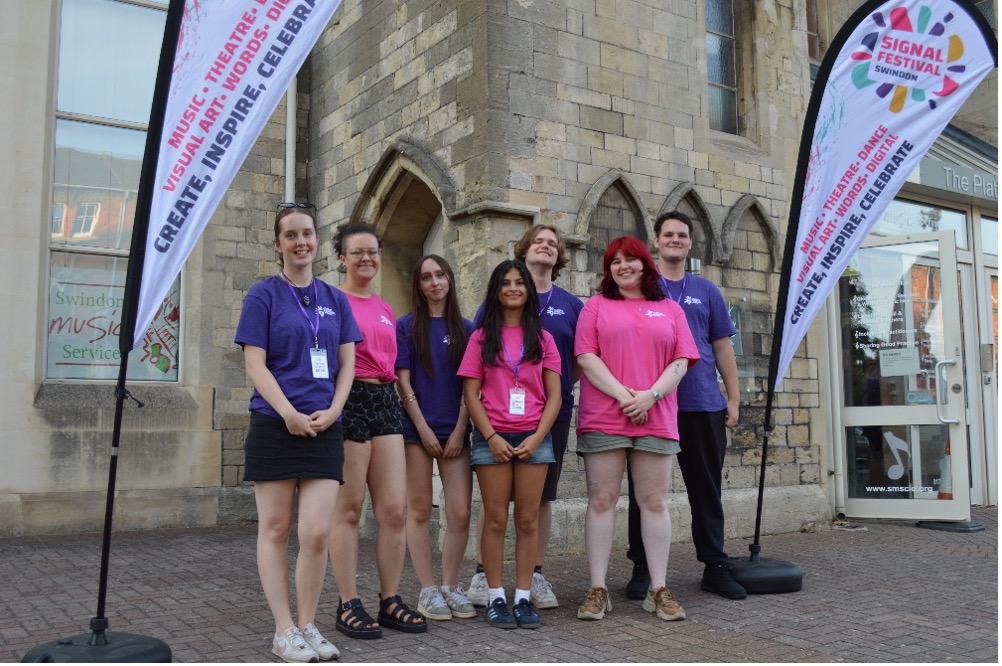
Signal Festival Shortlisted for Award – group standing outside The Platform in the GWR Railway Village
The announcement of the winners is set to take place at a ceremony on Wednesday 21 October at the Royal Northern College of Music in Manchester.
Three years strong
Now in its third year, Signal Festival celebrates and encourages youth creativity in Swindon. It does this through a week-long programme of workshops and performances spanning:
music and dance
visual art
poetry
film and theatre.
Launched and produced by Swindon-based arts charity Prime Theatre, a team of young producers run the festival. They programme it, organise it and promote it with the support of Prime Theatre.
This year’s festival ran from Friday 24 July to Saturday 1 August. It attracted hundreds of audience members across more than forty events at over ten venues. That included whole-day programmes at Town Gardens, Richard Jefferies Museum and The Platform. And delivered in partnership with more than eighty partner organisations, artists and creative practitioners.
Dr Nick Capstick OBE, Chair of the Board of Trustees for Prime Theatre, said:
‘We’re delighted to see Signal Festival get this recognition in this year’s National Arts and Cultural Education Awards. Signal Festival is only made possible by the incredible work of our partner organisations and artists. They work with us each year to deliver incredible opportunities to young people. And put a spotlight on the culture and creativity that Swindon has to offer.’
Councillor Vallender, Cabinet Member for Culture, Planning and Regeneration, added:
‘Signal Festival is a fantastic example of what’s achievable when organisations come together with a shared commitment to young people. This nomination recognises the dedication of Prime Theatre. And the young producers who lead the festival. But also the strength of the partnerships that make it possible.
Showcasing
The festival showcases the creativity, ambition and community spirit that are at the heart of Swindon’s UK City of Culture 2029 bid. Bringing together:
artists
cultural organisations …
and schools and communities … Signal Festival is helping to:
nurture talent
widen participation and show the transformative role culture can play in shaping a brighter future for our town.’
Signal Festival is Prime Theatre’s flagship youth arts programme. It offers free and low-cost creative opportunities for young people aged 9 to 25 across Swindon.
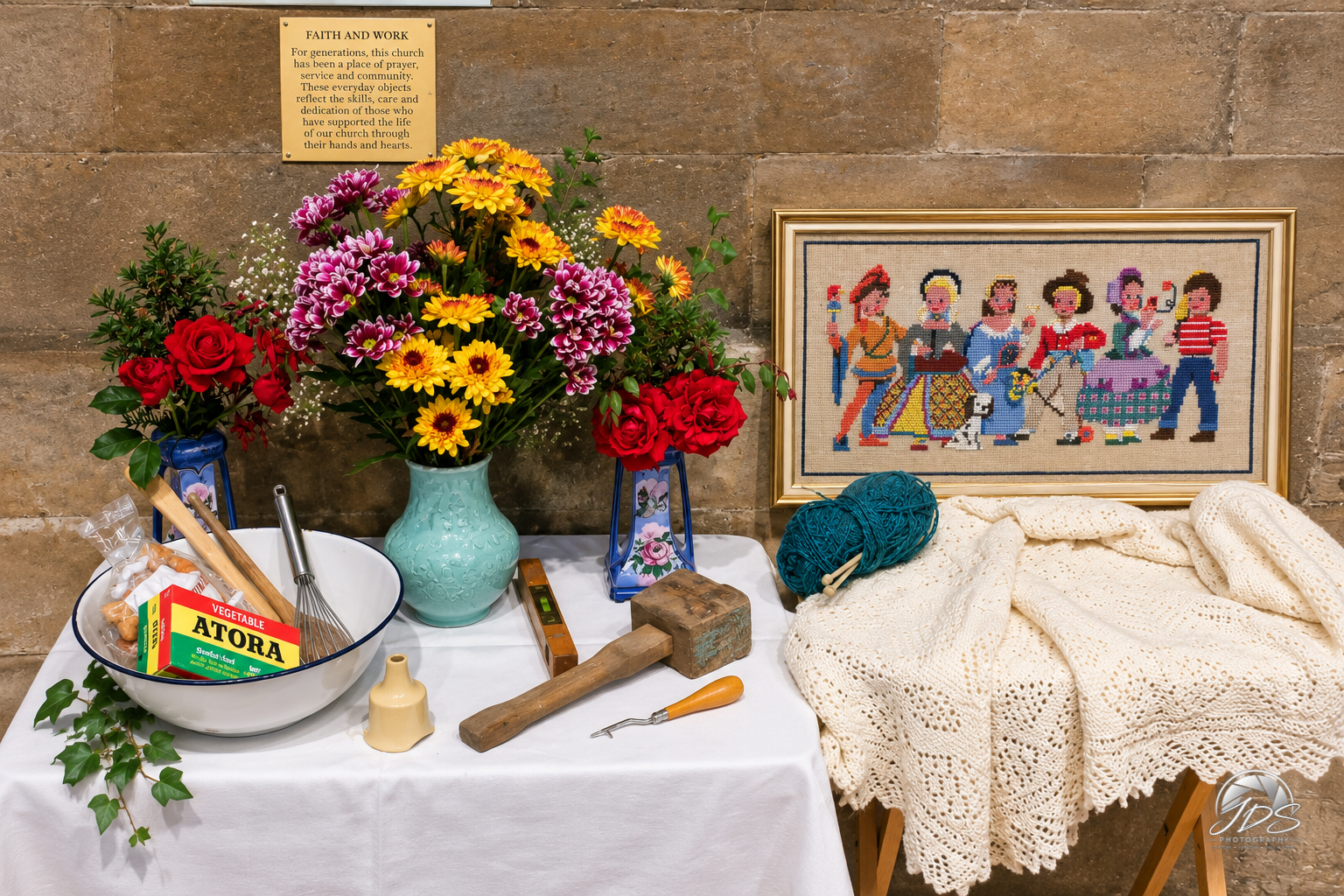
Christ Church, Old Town Swindon, welcomed more than 100 visitors on Saturday 19 September. The reason? For Working Lives in Bloom, a special Flower Festival and Heritage Open Day. The day celebrated the people, crafts, routines and occupations that have shaped the local community through the ages.
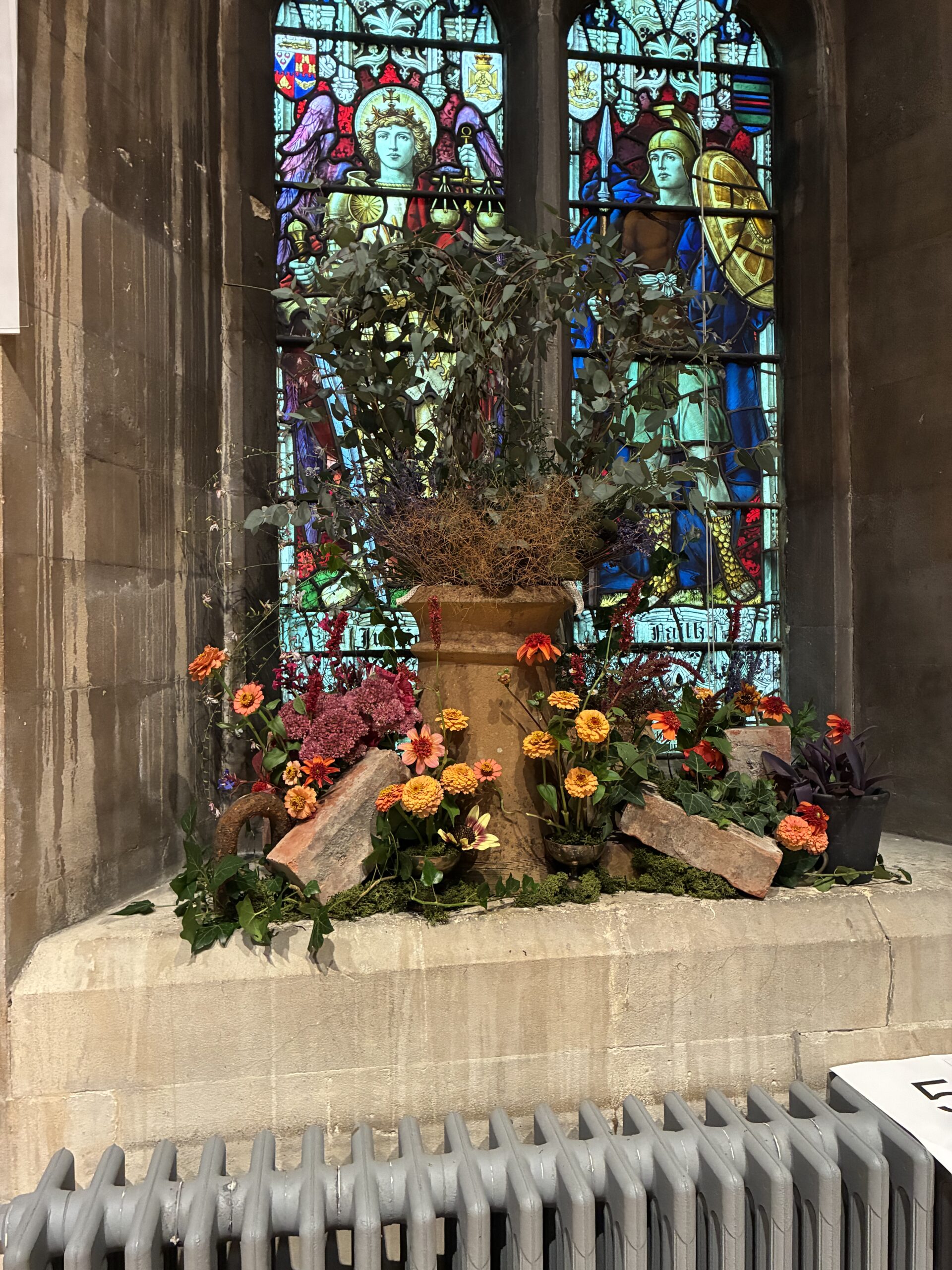
Held from 1pm to 4pm, the event combined 18 beautiful floral displays throughout the church. All alongside heritage activities, church, site and bell tower tours and craft stalls. And opportunities to explore local and family history.
Christ Church Celebrates Local Heritage
The inspiration
Inspired by the 2026 National Heritage Open Days theme of working lives, the event brought together people of all ages. They celebrated the stories, skills and contributions that connect generations.
A particular highlight was the attendance of Dave Logan, a Falklands War veteran. He shared fascinating memorabilia belonging to his father, a Second World War veteran. And also his grandfather, who served in the First World War. The Swindon branch of the Wiltshire Family History Society attended too. They helped visitors explore their family connections and local history.
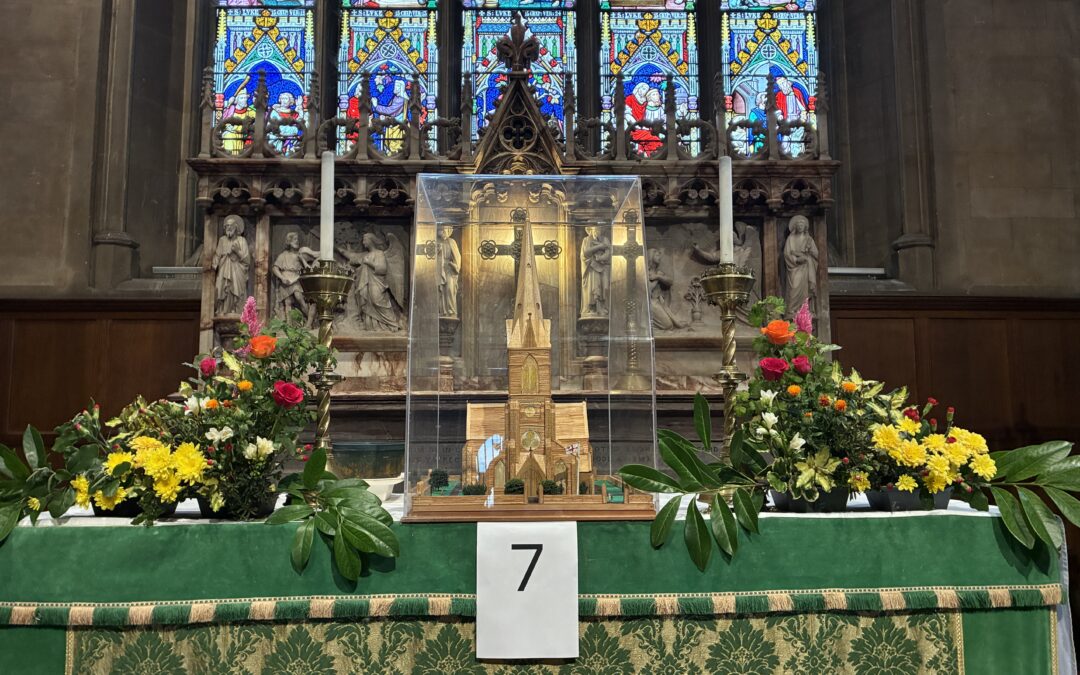
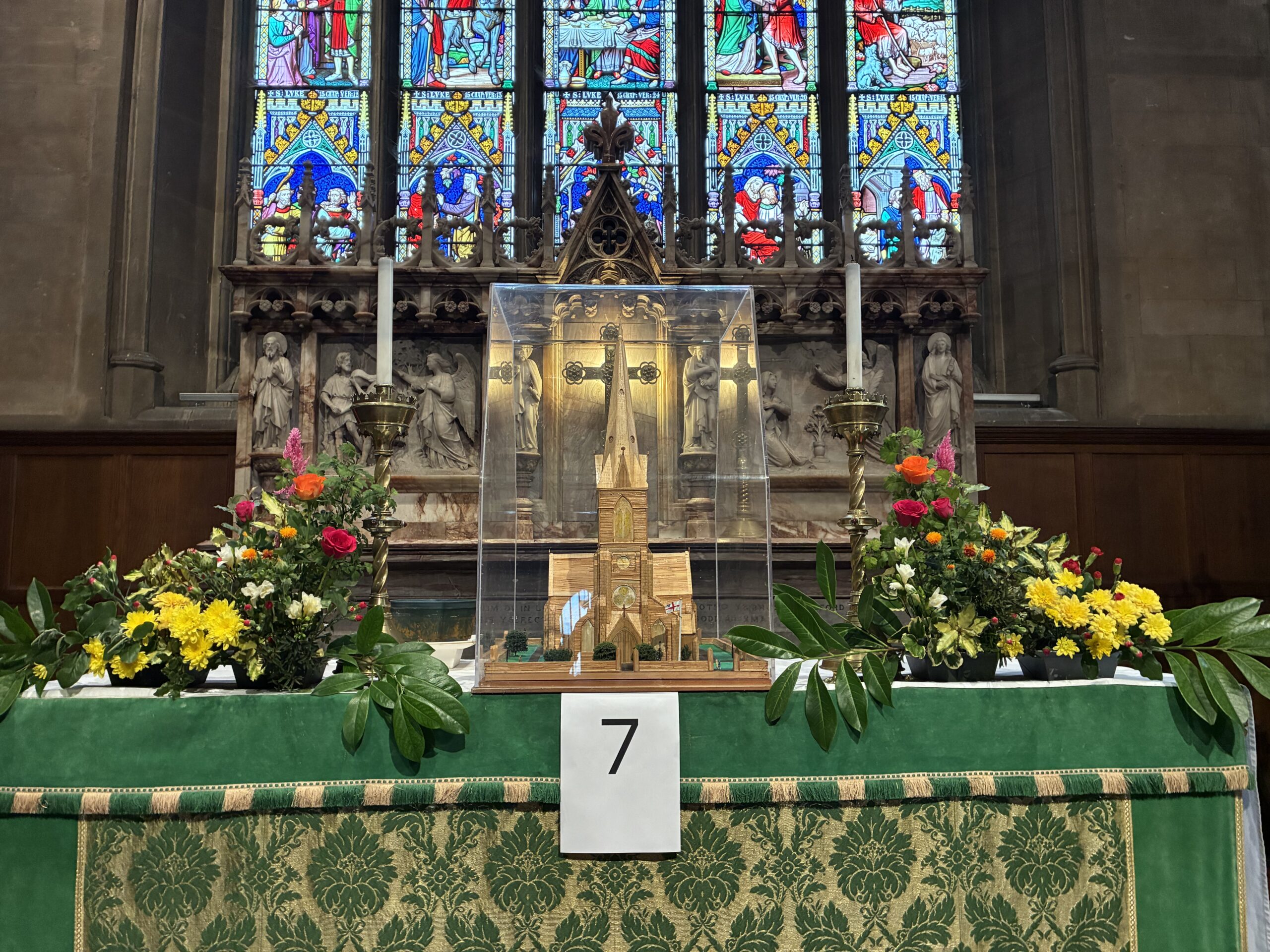
The Flower Festival proved a popular attraction, with visitors invited to vote for their favourite displays. Swindon Growers, represented by Josie Slade took first place, Little Fishes came second. And third place went to a display celebrating 30 years of service by Christ Church’s sexton.
The Friends of Christ Church supported the event with a stall and raffle, alongside a range of craft stalls showcasing locally made items. Refreshment donations raised money for Save the Children.
The event was a wonderful opportunity to bring together Christ Church’s rich heritage and the creativity of its community. All while celebrating the everyday working lives that have helped shape Swindon.
Christ Church would like to thank everyone who:
attended
created floral displays
volunteered
contributed to the stalls and raffle, or supported the event.
Their generosity and enthusiasm helped make Working Lives in Bloom a memorable celebration of local heritage and community spirit.
The Pride in Place team welcomed residents to Buckhurst Community Centre on Tuesday the 15th of September.All for a special exhibition celebrating the history and heritage of Walcot and Parks.
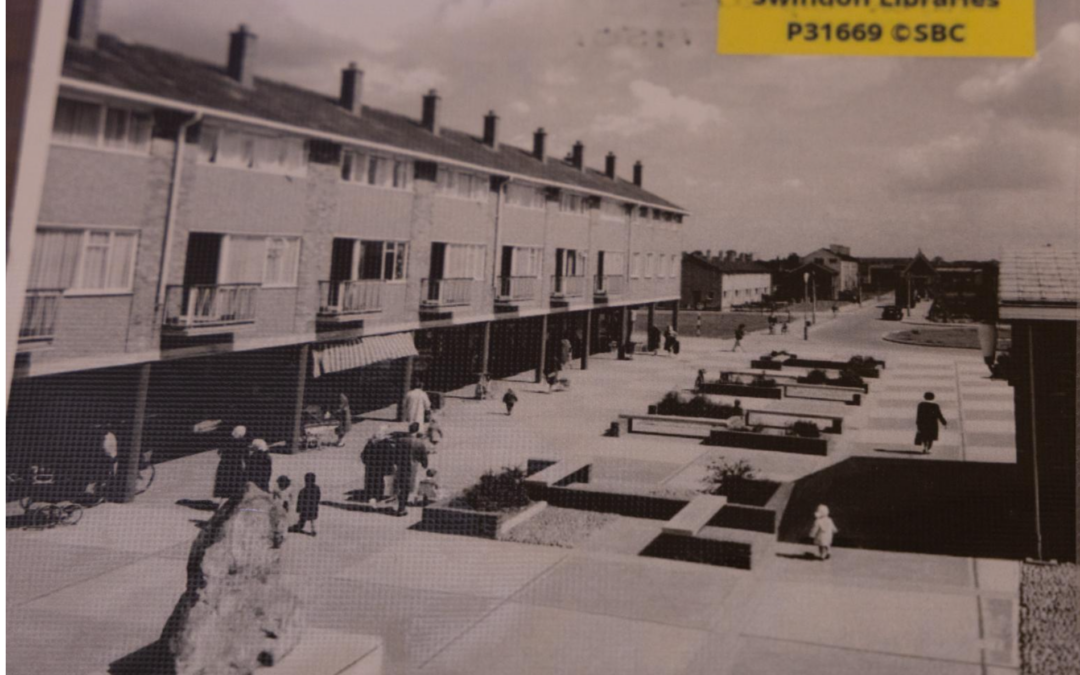
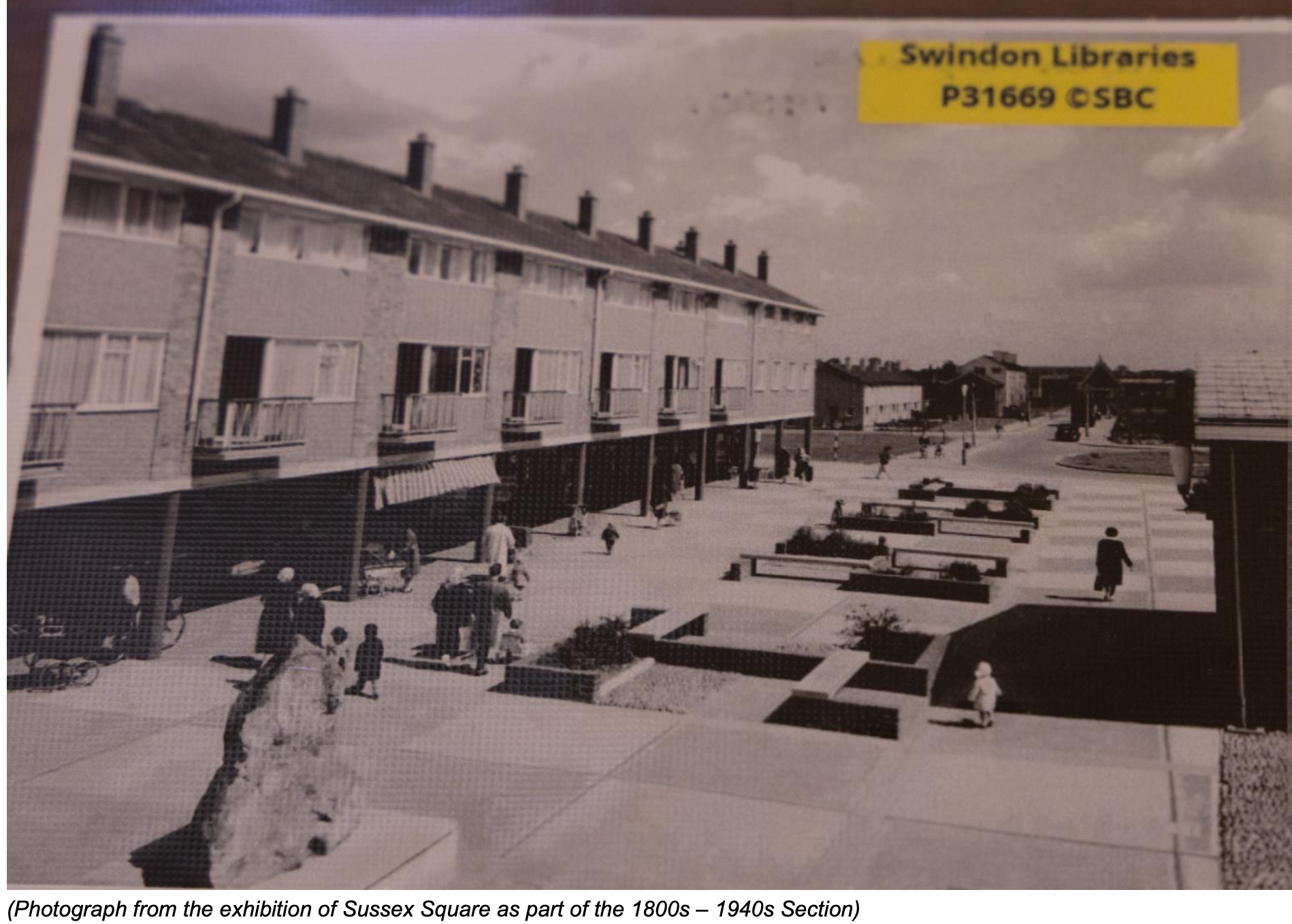
The Walcot and Parks Heritage Day featured a photographic exhibition. It visualised the changing face of the area from the late 1800s through to the present day.
It was also put on as part of Heritage Open Days, the national celebration of England’s history and culture. While local resident Margaret, put the collection together.
The Pride in place team invited residents to contribute their own historic photographs to the exhibition. Thus helping to build a picture of how Walcot and Parks have changed over the generations. Displays took visitors through the area’s history chronologically. All beginning with photographs from the late 1800s to the 1940s. It then progressed decade by decade up to the present day.
Throughout the day, residents explored the exhibition and enjoyed free hot drinks and snacks. They shared their own memories of the area. They also had the opportunity to speak with Margaret, members of the Pride in Place team and Walcot and Parks Neighbourhood Board Chair Jessica Higgins.
South Swindon Parish Council’s Community Engagement Officer Millie Lawlor who put on the event as part of the Pride in Place team said:
‘I’d like to thank everyone who supported the day. With particular thanks to Margaret and Terry for helping to run the event. We were so pleased to welcome so many residents. And to see people sharing their memories and interest in the area. ‘I’d like to thank everyone who supported the day. With particular thanks to Margaret and Terry for helping to run the event.
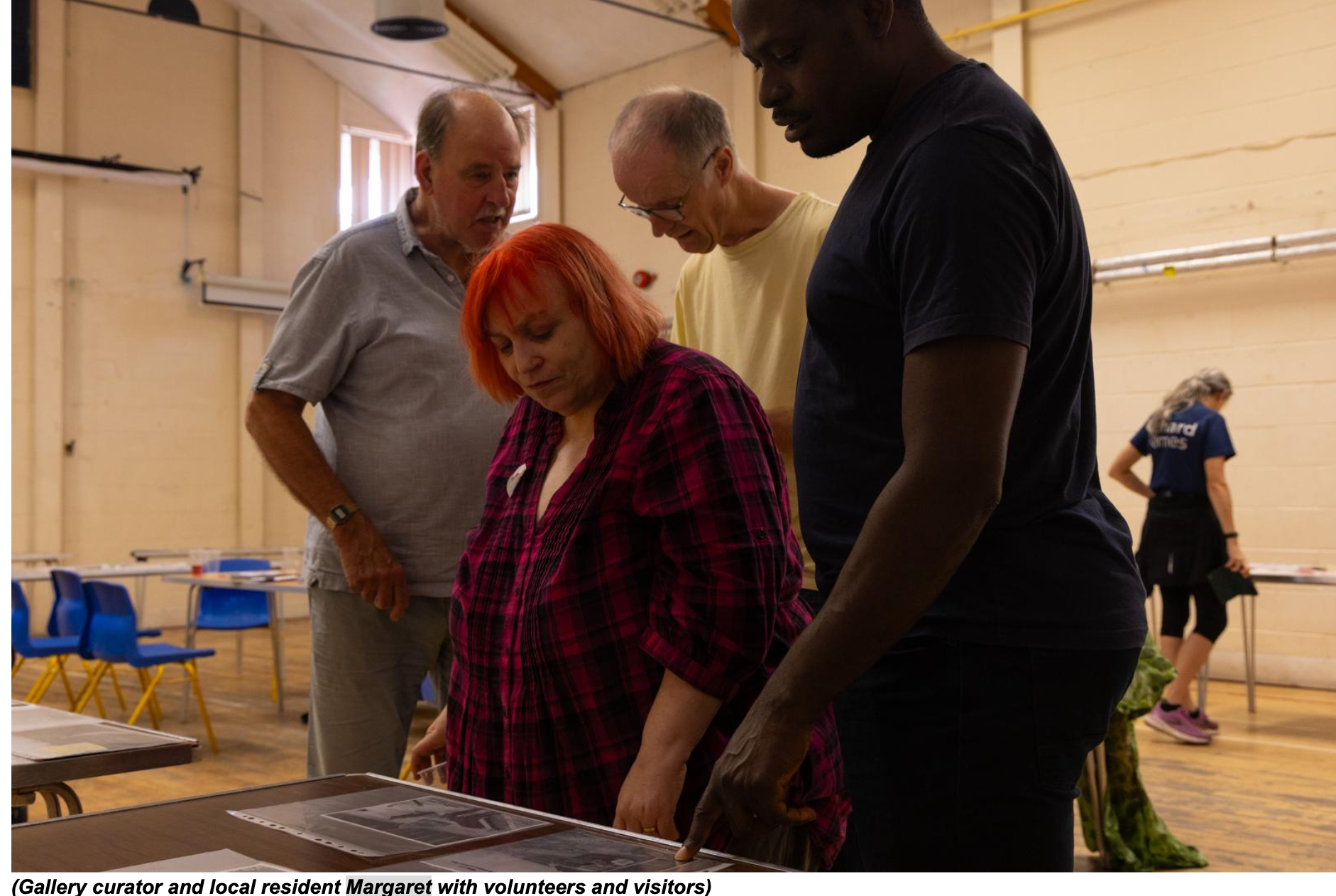
Walcot and Parks History Exhibition – Gallery curator and local resident Margaret with volunteers and visitors
Looking ahead
Following the exhibition, Margaret is now looking to establish a Walcot and Parks history group in January. That will continue collecting, documenting and celebrating the area’s heritage.
For anyone interested in getting involved with the new group, contact Community Engagement Officer Millie Lawlor at: engagement@southswindon-pc.gov.uk
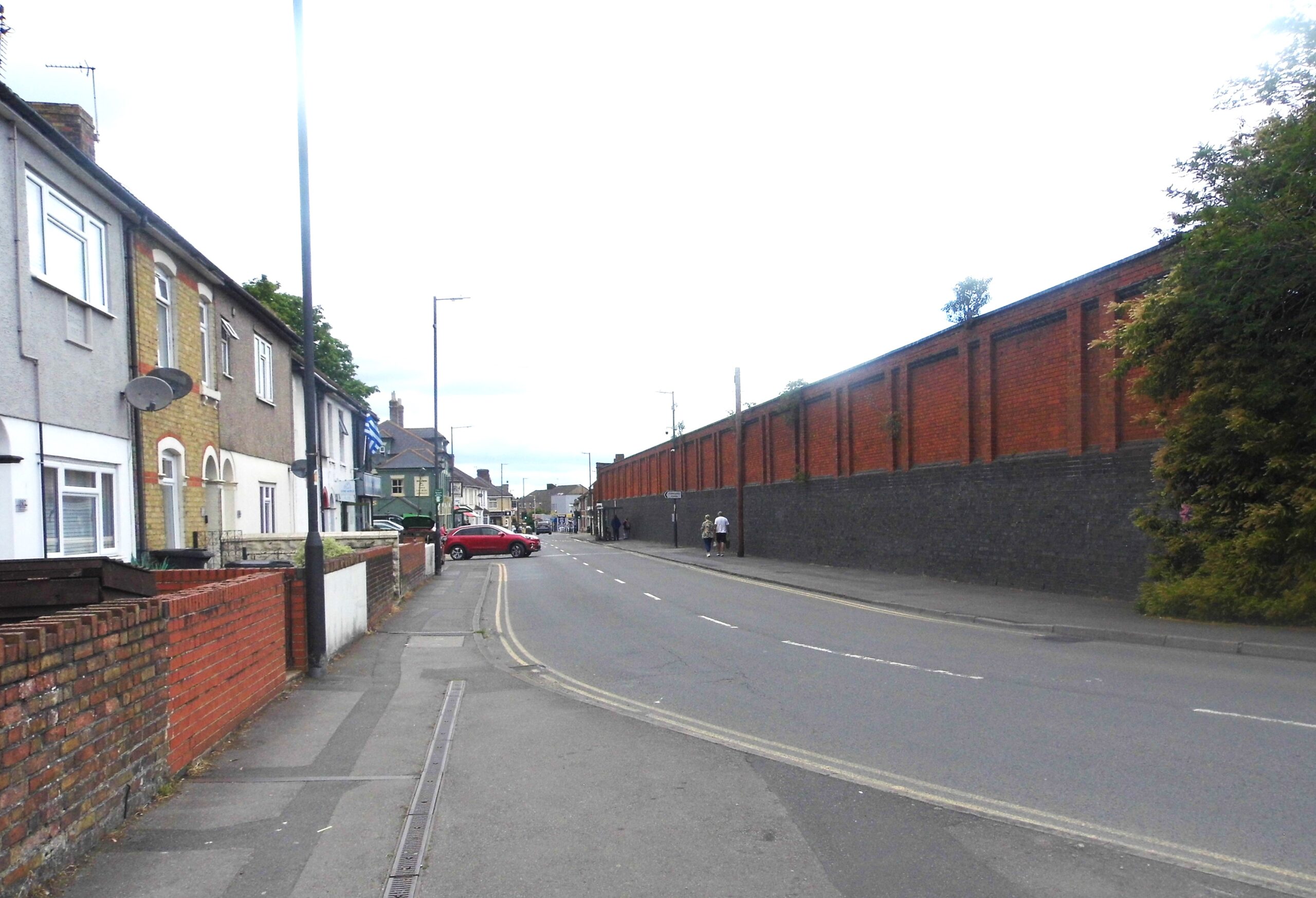
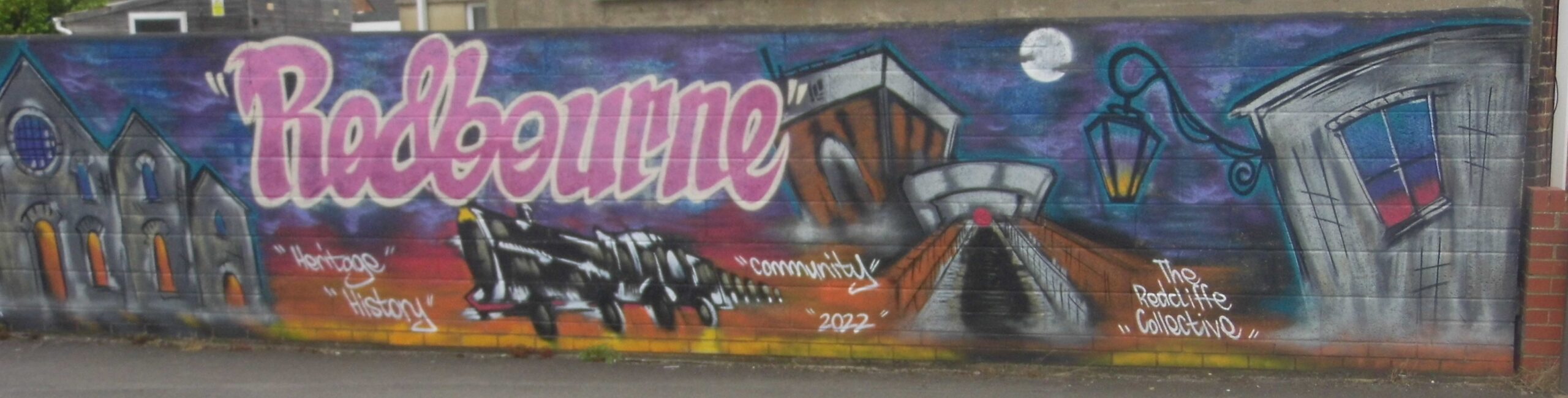
Dominated by the massive brick wall to the side of the Works, Rodbourne Road grew with said factory. Built in stages between 1872 and 1920 (approx.) it served as a main route through the Rodbourne area, built to house and support the ever-growing workforce at the GWR Works.
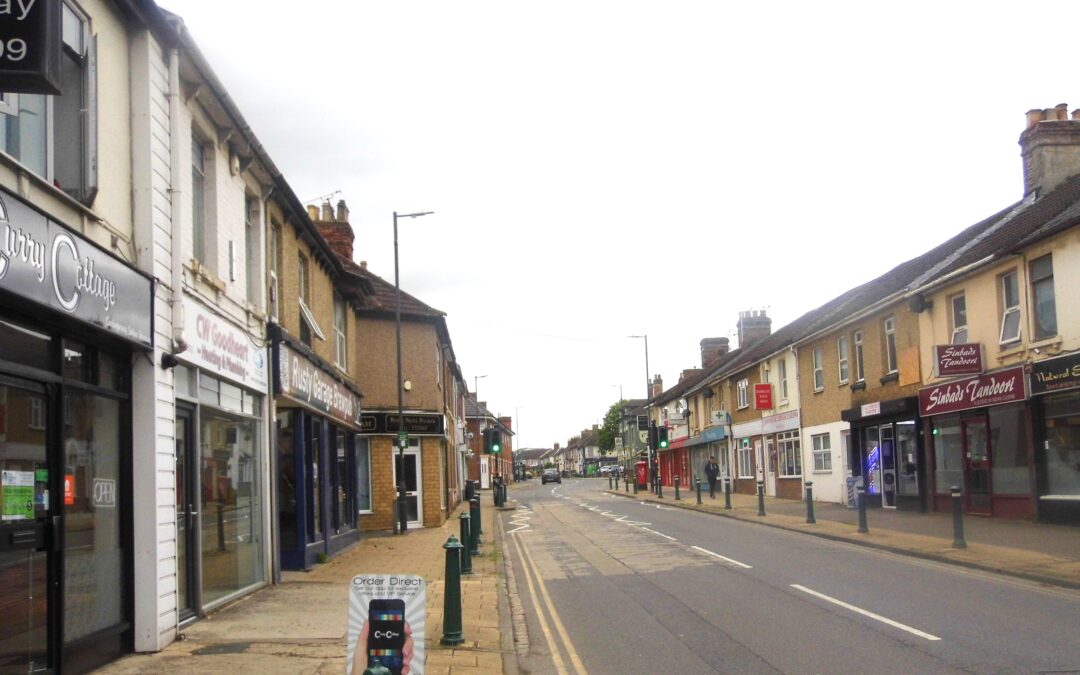
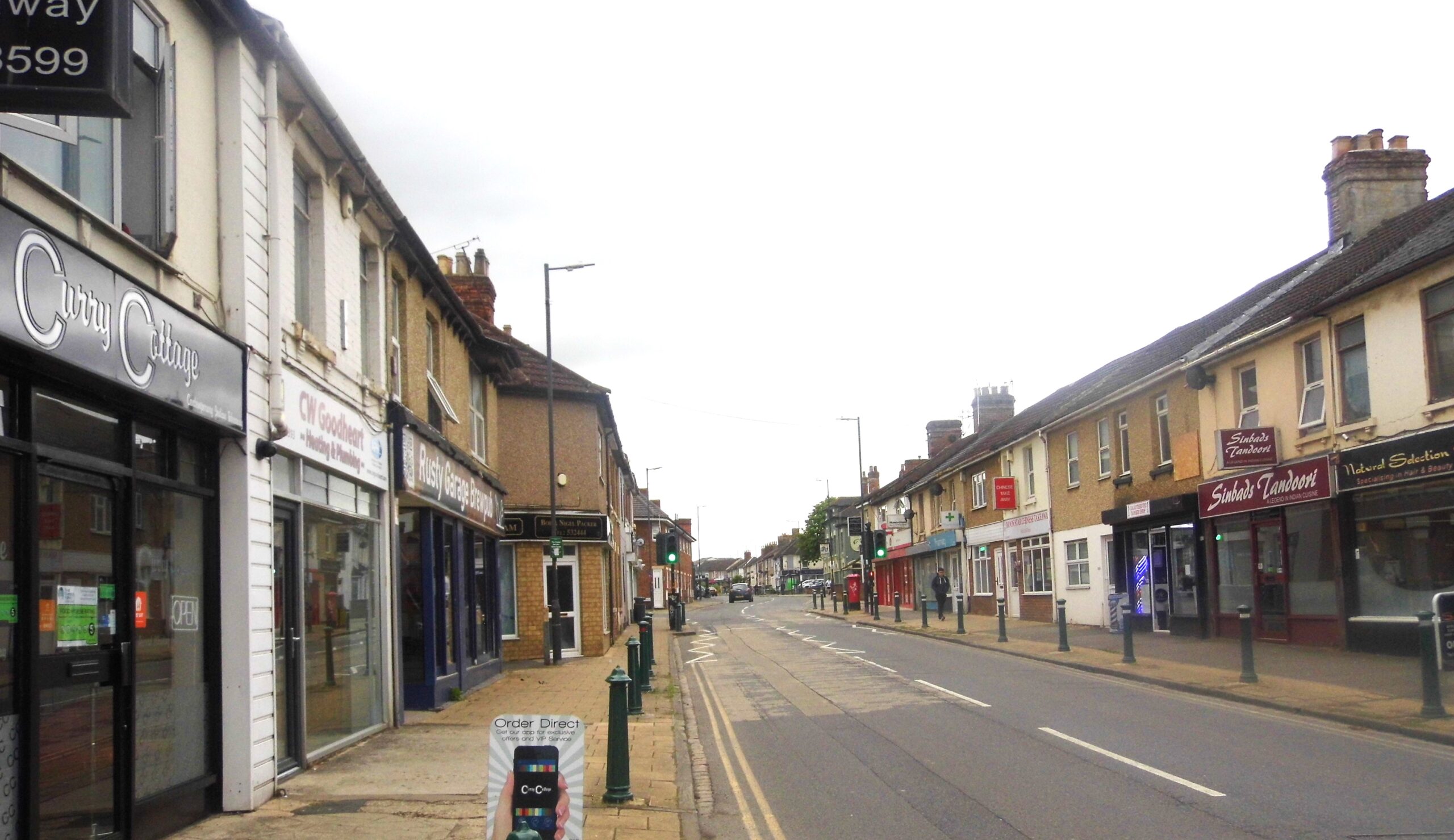
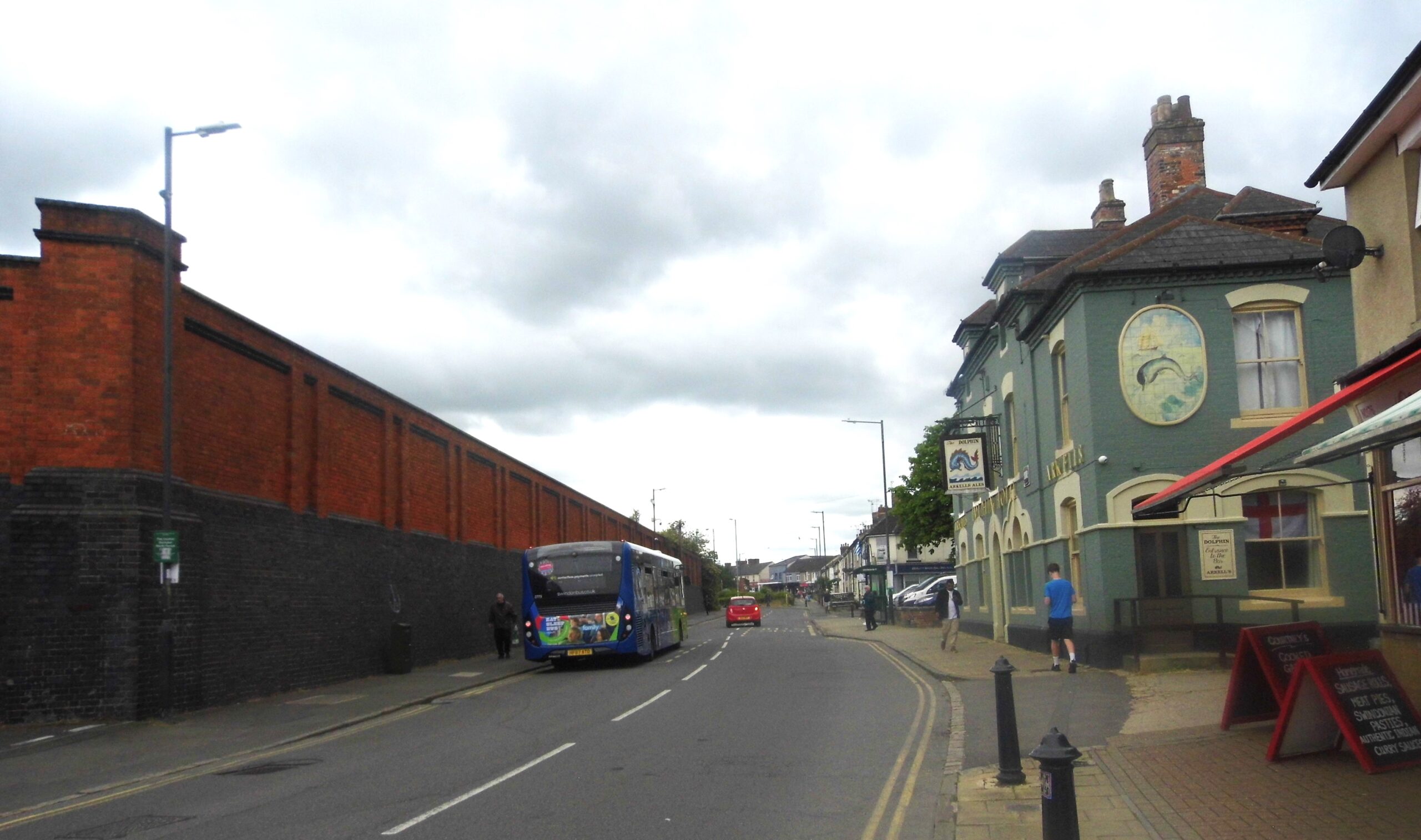
Rodbourne Road looking south. On the right, just beyond the post box, is the Dolphin pub.
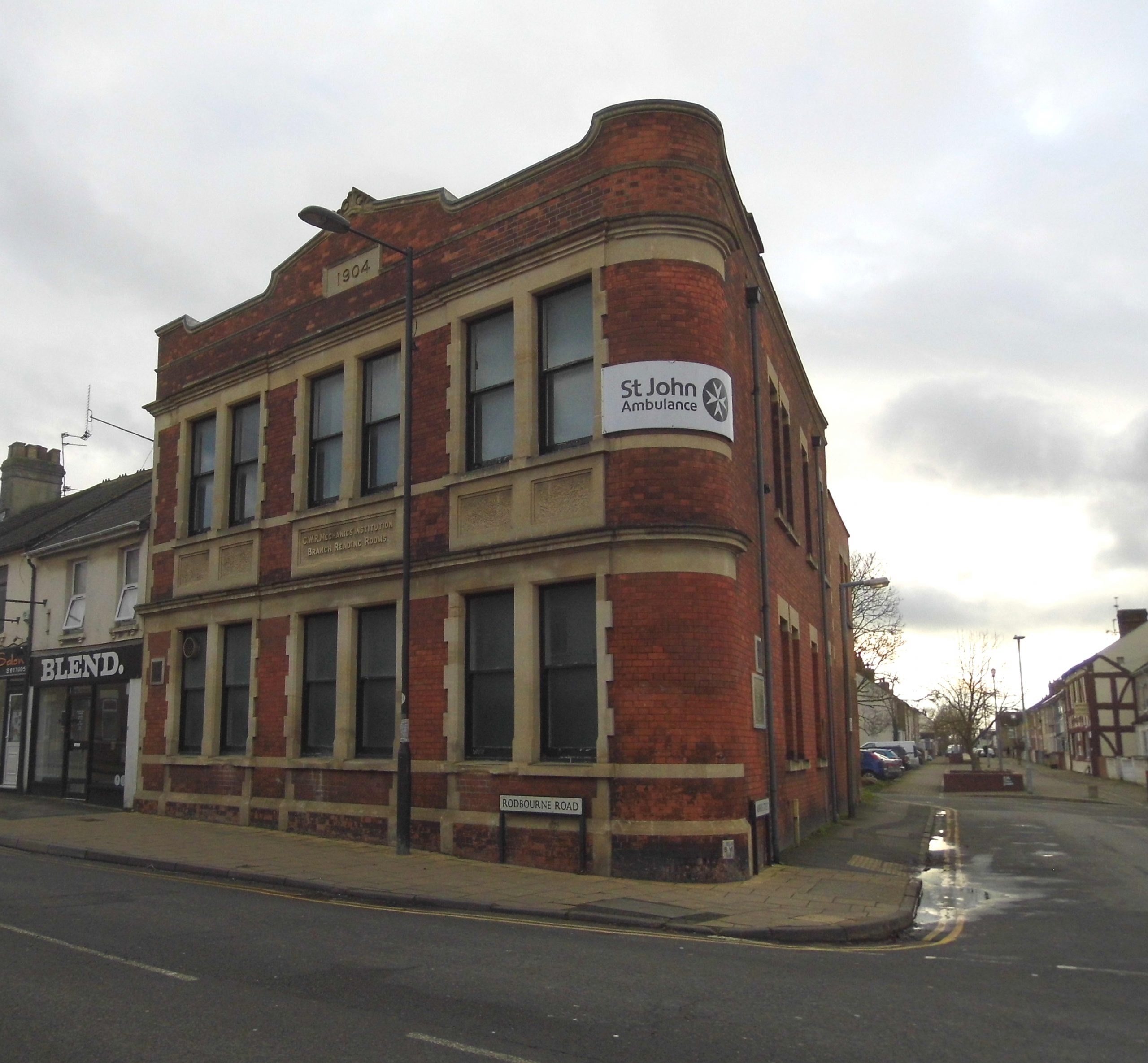
Rodbourne Road today has small shops and cafes along its length with, for the most part, housing behind them. There’s a well-known pub, the Dolphin, and further down the Mechanics’ Institute Reading Rooms on the corner of Rodbourne Road and Morris Street. The latter now houses a local branch of the St John Ambulance Brigade.
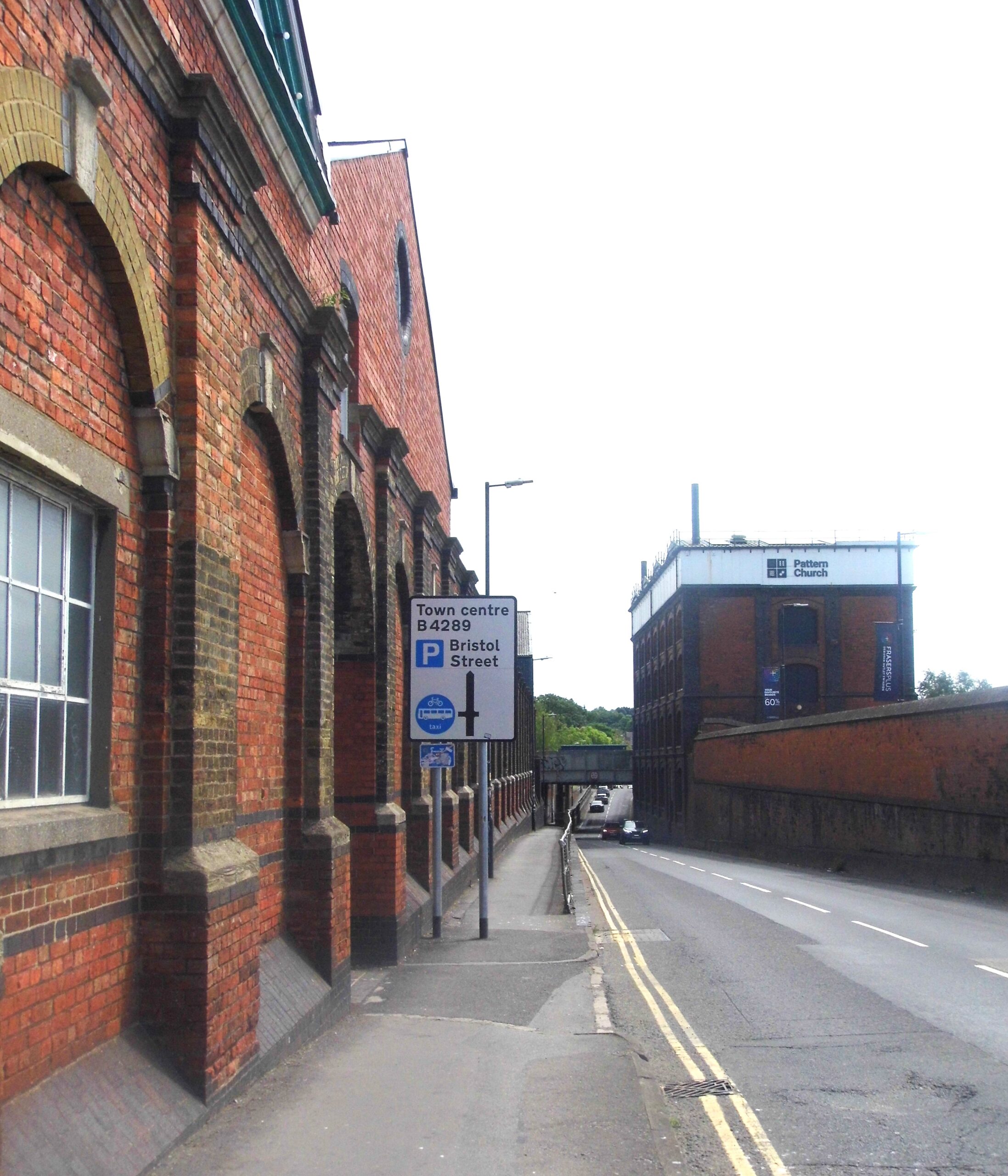
The road starts at its southern end near Church Place and Kemble Drive. It runs north-west past the perimeter wall of the Works in the direction of Bruce Street bridges and Rodbourne Cheney (see The Broadway.)
The view northLooking south to the Pattern Store – now the Pattern ChurchLooking south with the Dolphin pub on the rightThe Mechanics’ Institution reading roomsThe Mechanics’ Institution reading rooms
Significant development milestones
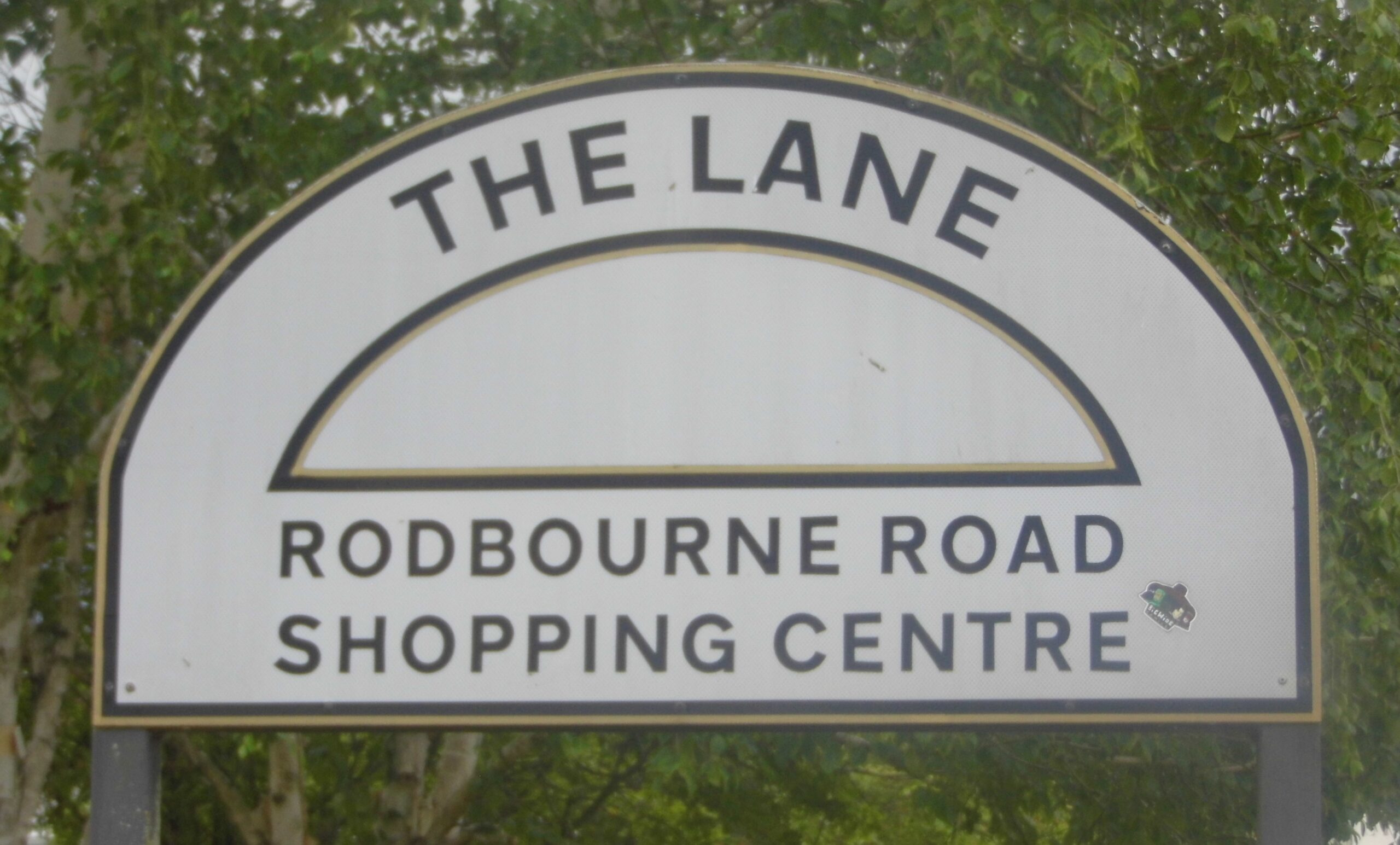
1872: Construction began on the road originally known as ‘The Lane’. This was to accommodate the rapid growth of Swindon as a railway town.
1882–1883: The local community expanded. That led to the formation of the Rodbourne Road religious society and the construction of its first chapel in 1883.
1904: Saw the erection of the GWR Reading Rooms on Rodbourne Road to serve local workers.
1920: The final stages of the original roadside development and surrounding neighbourhood layout reached completion.
Mark Child’s Swindon Book tells us that this thoroughfare and its continuation south of the railway line (nowadays Park Lane) used to be a track that ran between Fleetway/Le Flet (now Fleet Street/Faringdon Road) and the ancient village of Rodbourne Cheney.
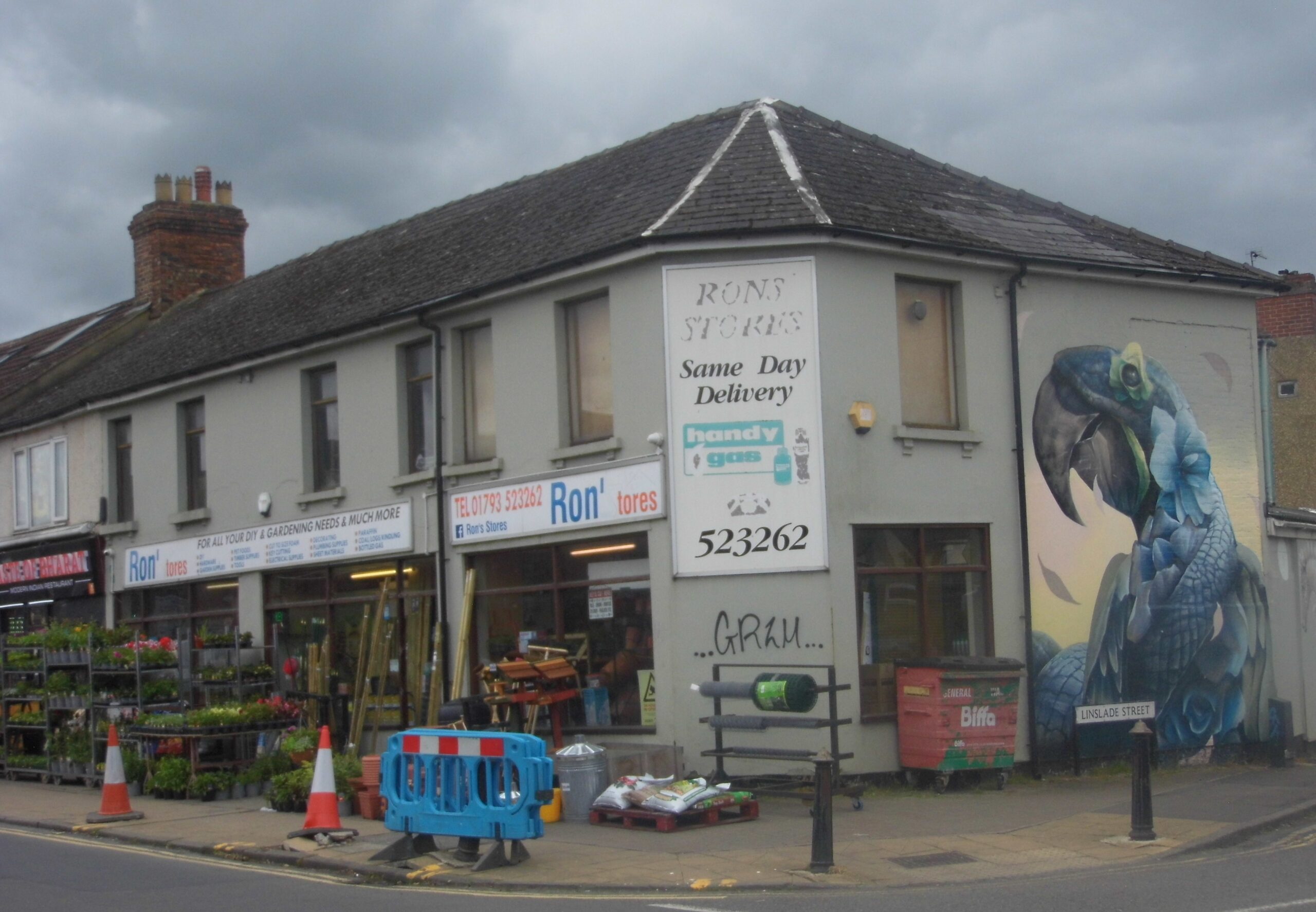
The aforementioned Dolphin public house comprised the earliest public building along this road. Built in 1872-3, opposite a brickworks, it took advantage of trade emerging from the GWR Works at the end of a shift. At this time, the pub stood in splendid isolation – it had no local trade to rely on. It took another decade for the development of Linsdale Street, Guppy Street and Jennings Street.
Rodbourne Rd grew commercially with the dual purpose of serving in its own community and capturing trade from the Works. So small shops set up in its residential terraces and clustered around the GWR exits and, after 1904, the tram terminus close to Bruce Street bridge.
SWINDON’s Let’s Create Art Club celebrate their best summer ever. They smashed records with a fun-filled programme for children and young people.
Founded by local artist, Rachel Bray, Let’s Create Art Club allows children to explore painting, drawing, sculpture and design in a safe, fun, and pressure-free environment. They offer after-school clubs, holiday art camps and Saturday morning art clubs for children ranging from four to twelve.
This summer, they provided their summer art Camp in West Swindon. To which some parents travelled from as far as Ramsbury for their children to access the camp.
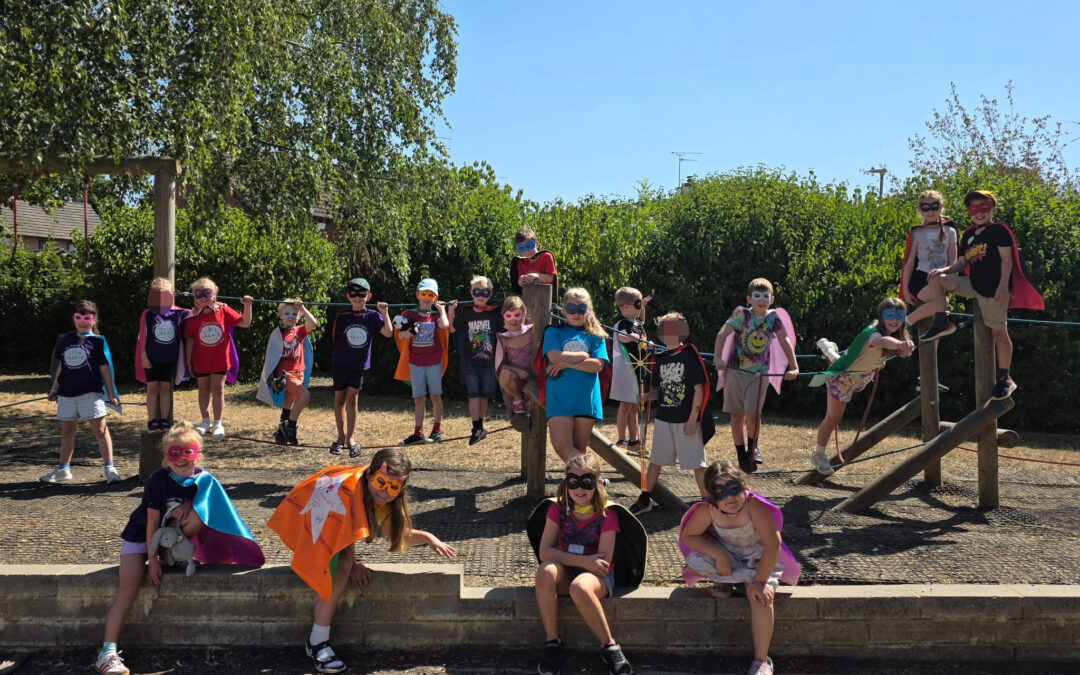
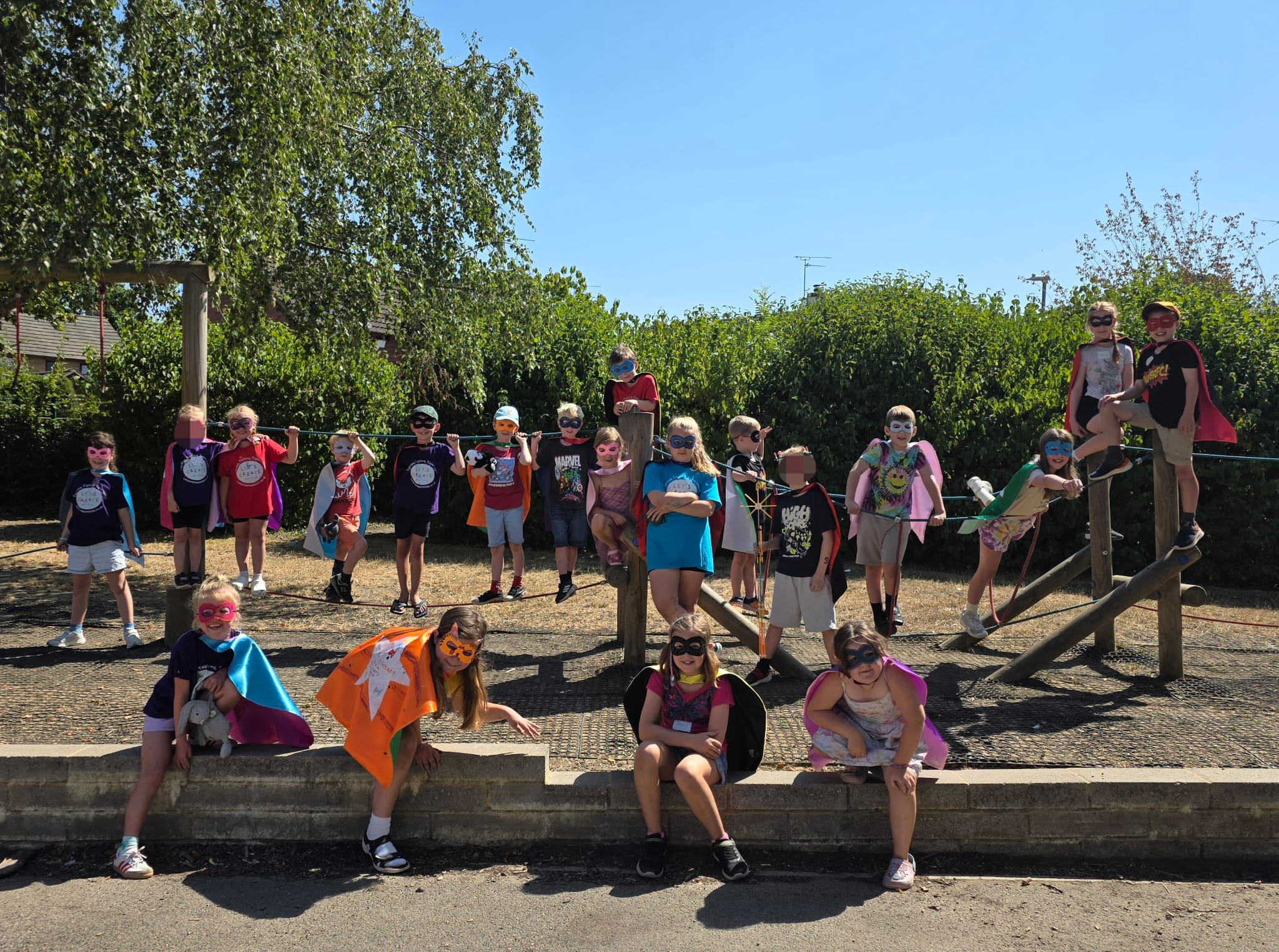
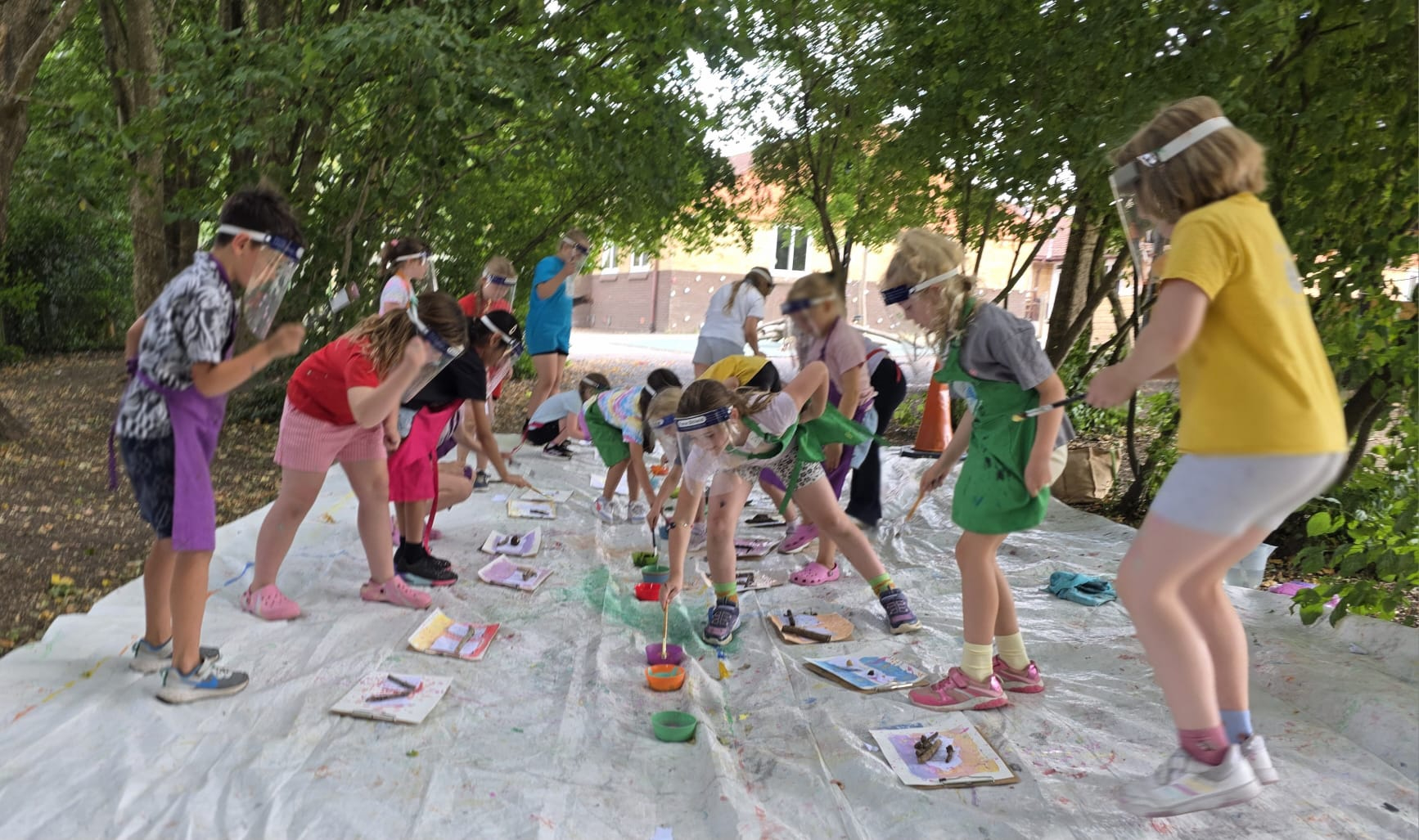
tellar Summer for Swindon Art Club – the let’s create art club
2026
2026 was their busiest summer ever.
‘We delivered 380 spaces over the summer, with some children booking for multiple days and weeks,’ said Rachel.’It was our biggest year to date, where children aged six to 12 attended and we used over 2,000 pieces of paper!’
With a waiting list for most days, the team opened more spaces to accommodate the number of children wanting to partake in the art camp.
‘We still like to keep numbers low because it allows every child to feel heard, that we value their ideas and a part of the day,’ she reflected.
‘It was so lovely to see the children making friends and having fun with art. They were expressing themselves and trying new things and often inspiring each other. It’s so important they get the time to create without any pressure on the outcome.’
The summer programme
Let’s Create Art Club’s summer programme consisted of:
artist-led art activities
games and outdoor play
all along with free creative time for children to explore their own imaginations and different mediums during the school holidays.
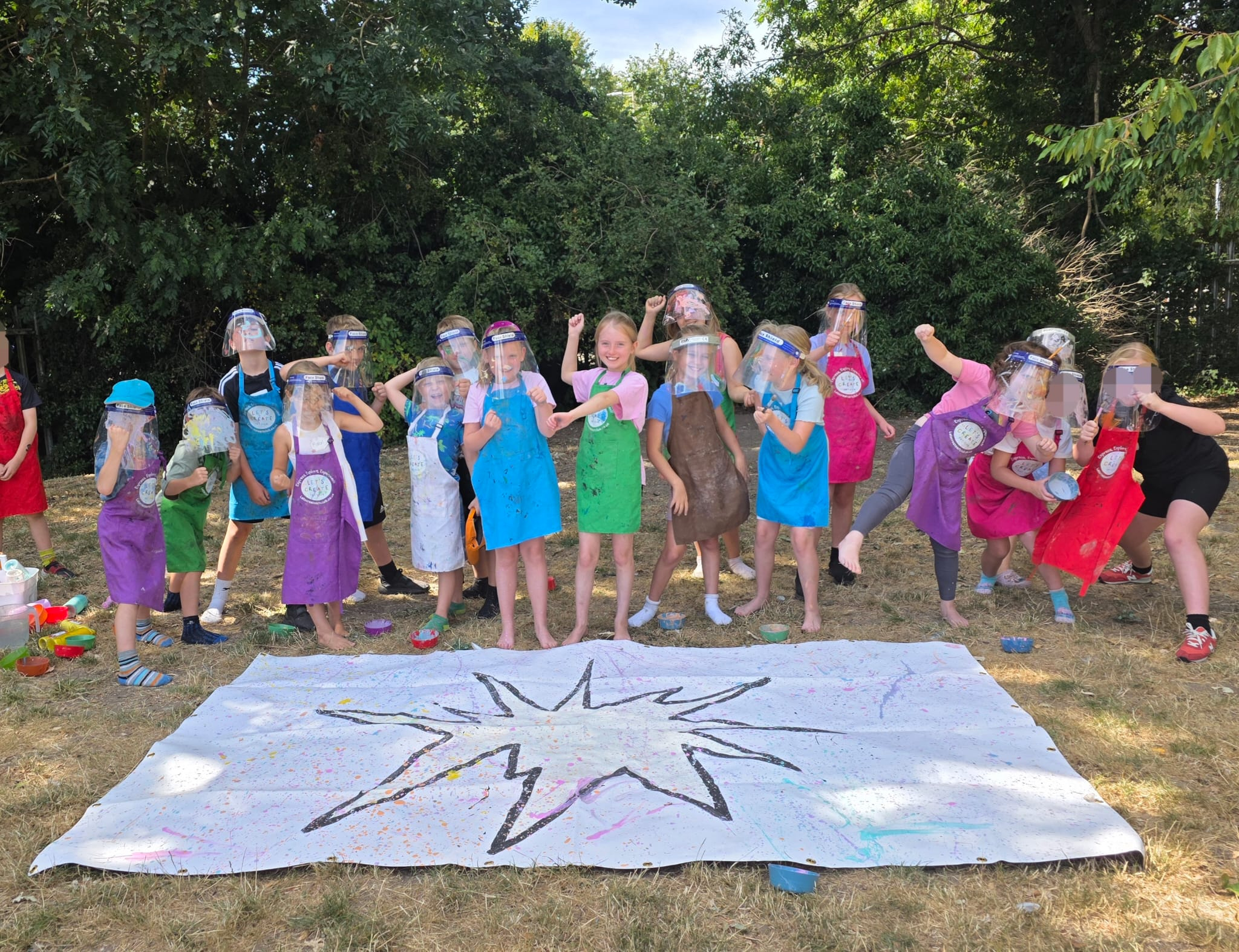
‘There were some definite stand-out moments this year. We all took part in a giant collaborative splash art piece under a tree canopy in 34 degrees!’ Rachel recalled.
‘The look on their faces when they found out we were decorating our own superhero capes and masks was a sight and very heartwarming!’
‘The laughter at the silliness of some of the games and hearing the oohs and aahs when the children saw the fairy houses they’d decorated all lit up in the dark, were fantastic.’
Everything the children created, they got to take home. Although, big art installations are trickier to pack!
‘Sometimes a parent is happy for a giant piece to venture home with them but not very often,’ she laughed. ‘I’m privileged to be able to help children experience how to have fun with art and help to create great childhood memories.’
Their upcoming Halloween Art Camp is set to embrace the spooky festive season. The team is planning a blacked-out room lit with U.V lights for fluorescent painting to immerse young people in the fun and creativity of Halloween.
Let’s Create Art Club is a member of the Institute of Children’s Activity Providers (ICAP). That ensures the club meets high standards for safety, inclusion and engagement. They celebrated being finalists at the ICAP Awards 2025, in their ‘Rising Star – Outstanding achievement in Growth and Visions for the Future’ category.
Bookings for Halloween Art Camp at Tregoze Primary School, 22nd to 30th.
October, 9am to 3pm (early and late available), are open now.