Old Shaw Lane West Swindon.
As I’ve said elsewhere, I have a tendency to think of Old Shaw Lane as a little bit of Swindon’s yesteryear. But of course, it’s not. Because it wasn’t Swindon at all – Swindon as we know it now, didn’t exist over that side of town at all. But it’s a survivor of the 1980s western expansion development all around it and that’s one good reason for featuring it here.
And thanks to its being by-passed, the lane maintains an air of times-gone-by.
Before that, a visit to the Nine Elms pub, in the hamlet of *Nine Elms, comprised a sedate stroll into the countryside for the residents of nearby Swindon – thus providing the landlord with a flow of passing trade as steady as the beer from the pumps.
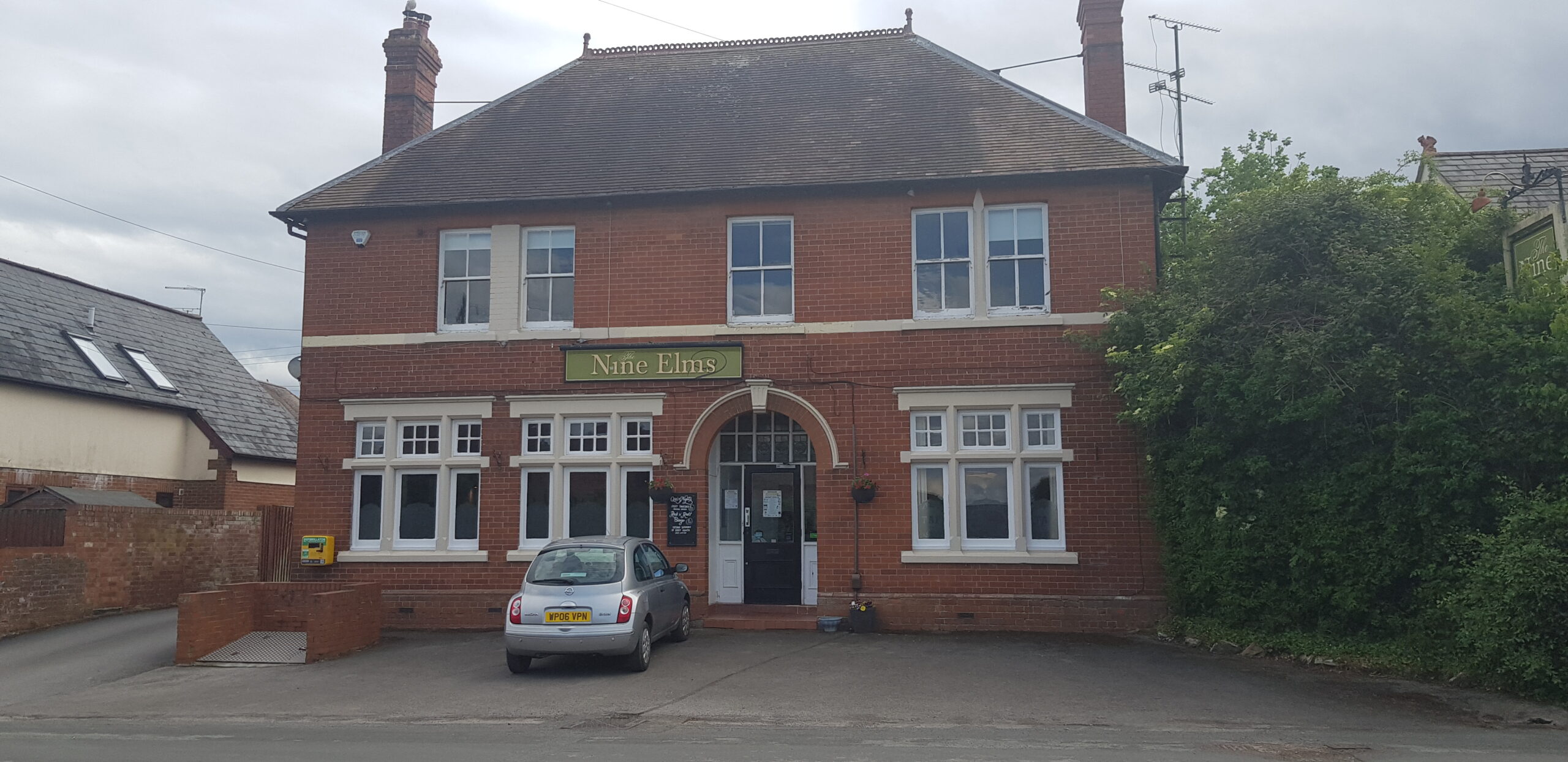
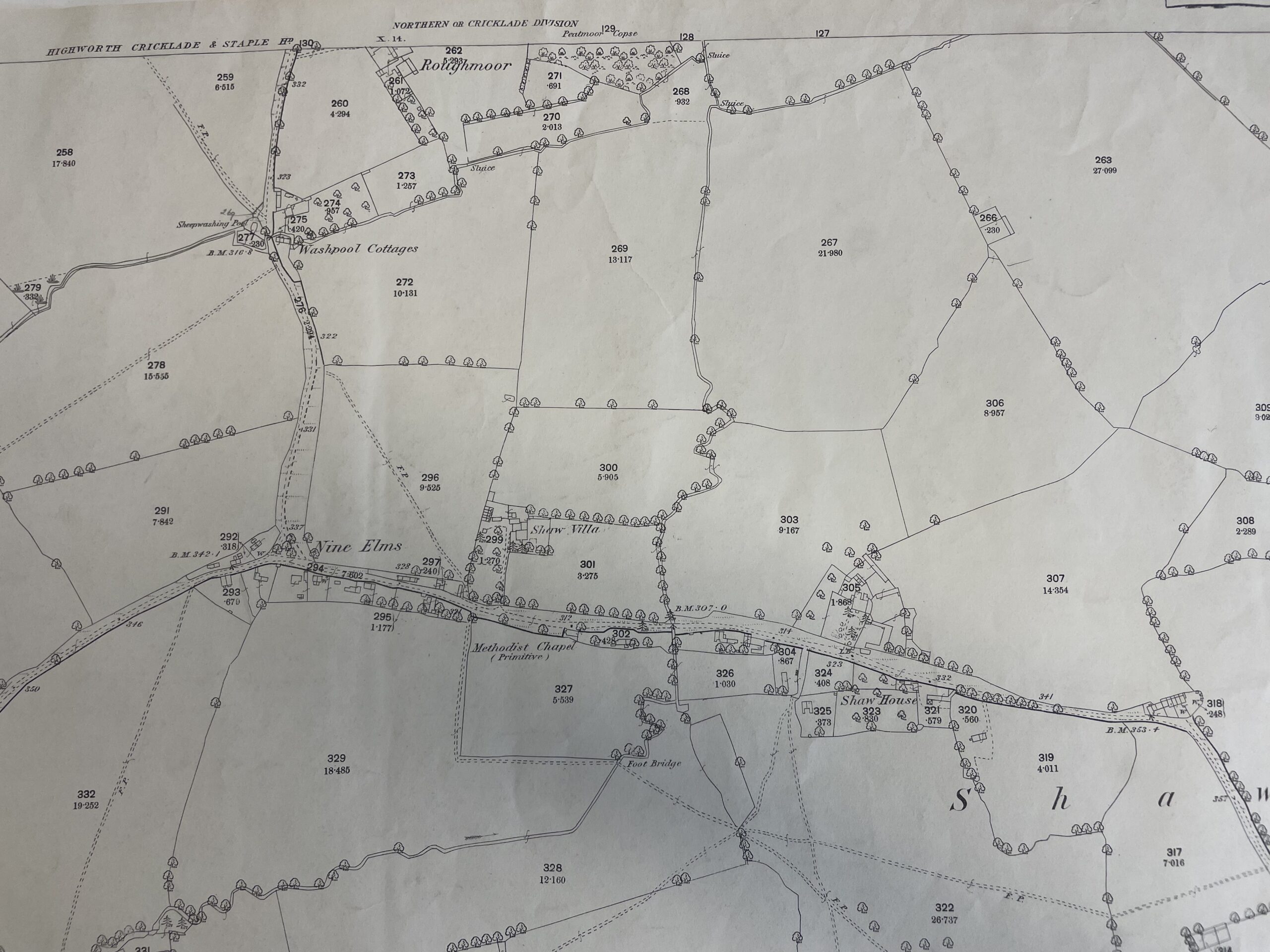
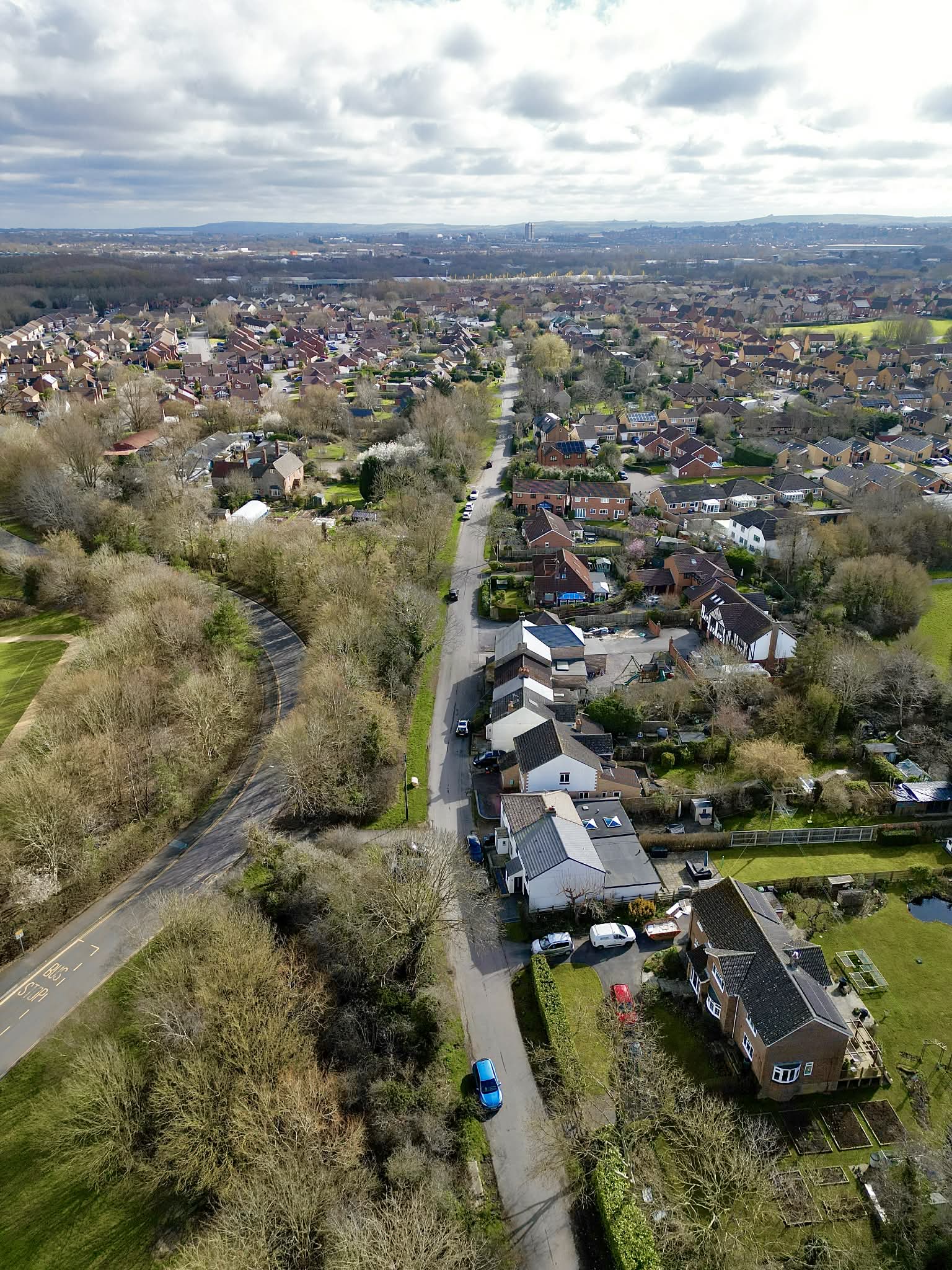
Photo credit Jason Spickett Swindon from the Air
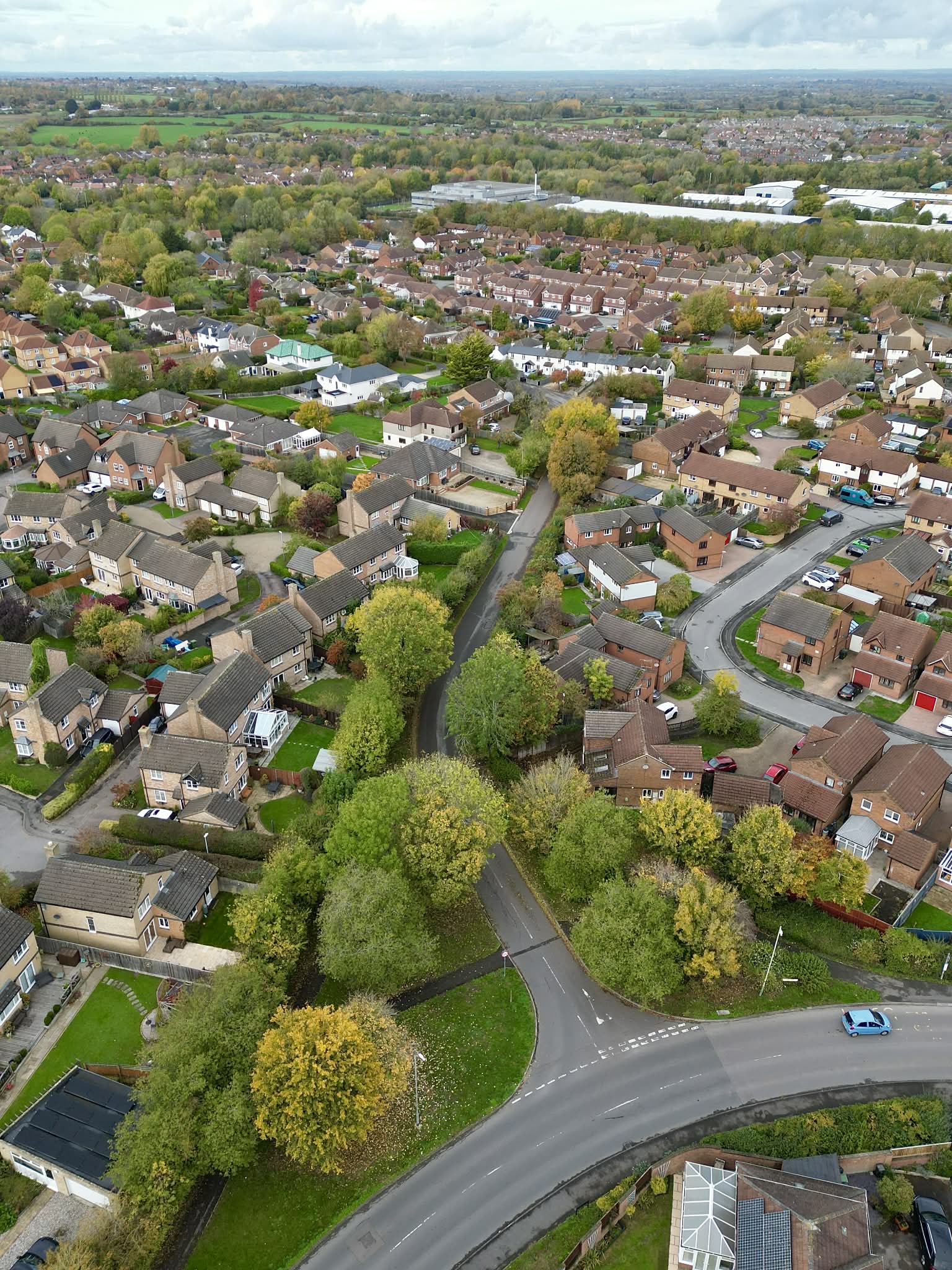
An ancient thoroughfare
Running between the former Lydiard Millicent parish boundary and the tributary of the River Ray, this lane dates back to the Middle Ages. According to the writings of Frances Bevan, building was slow along the thoroughfare known, in 1668, as Shaw Street. Indeed, 200 years later, there were a mere two farmhouses beside the lane.
Shaw Farm, once the property of Viscount Bolingbroke, stood at the south east end and Lower Shaw Farm near the west end. A further thirteen cottages and houses straddled the verges.
Today an eclectic mix of old and new housing rub shoulders along the length of Old Shaw Lane, from the stone-built Shaw House (See Swindon in 50 More Buildings) dating back to the later 17th century to Bradshaw House with its distinctive green roof and Mediterranean vibe.
The 2001 census recorded a population of 9,608 in Shaw and Nine Elms yet, as indicated above, a walk down Old Shaw Lane does still manage to feel like a stroll in the countryside.
Lower Shaw Farm
Worthy of some particular mention, while we take a pleasurable perambulation down Old Shaw Lane, is the aforementioned Lower Shaw Farm; it being the crucible of Swindon’s festival of literature, a renowned cultural happening of some thirty-odd years standing.
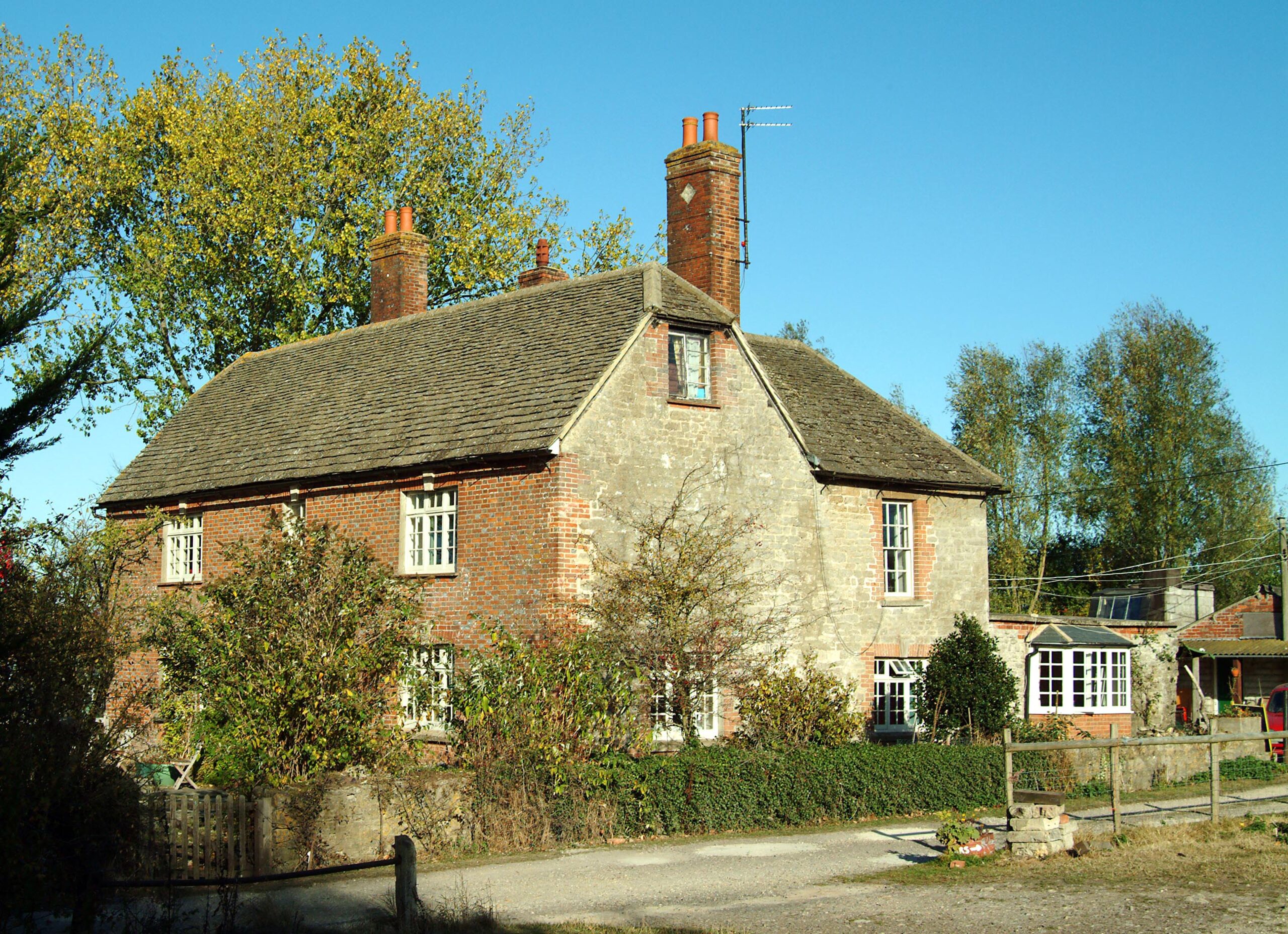
Photo credit Ben Cavanna
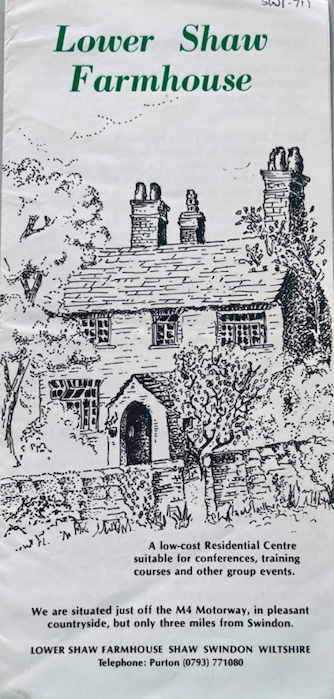
Grade II listed in 1989, owned by Swindon Borough Council, this 18th century farmhouse sits in grounds that once were part of a much larger dairy farm. Now firmly part of Swindon, this farm once sat in the North Wiltshire countryside – a fact illustrated on the front cover of the flyer you see below.
Since 1980, Matt Holland has been tenant at Lower Shaw Farm. Together with his wife, Andrea Hirsch, Matt has built a centre of small-scale farming, arts and literature – and turned the farm into a valuable resource of both national and international standing.
*The Nine Elms hamlet
Frances Bevan conjectured, in the Swindon Advertiser back in 2008, about whether the hamlet took its name from a group of elm trees at a junction in the Swindon to Lydiard Millicent road. But that’s an unconfirmed theory. Be that as it may, the end of the 19th century saw land at Nine Elms, owned by William Breadmore, former farm bailiff at Brook Farm, sold to Henry Carter. Carter built various properties in the hamlet, including a bakery where he later set up business and the Nine Elms public house.