In that five I included two songs by a talented young Swindon man by the name of Hitesh Mistry. But this post is dedicated entirely to Hitish and his newest song: ‘Higher’. He wants to get lots of views on it on his YouTube channel #obvs. So if you click on the link below and have a listen he’d be highly delighted I’m sure.
Hitesh Mistry
Hitesh lives in West Swindon and his videos are so far all made around Swindon. So, if nothing else it’s quite fun seeing what you recognise.
15 years old and the son of Ash & Sheela, owners of the Eggelicious empire, Hitesh is the youngest member of the clan. He’s been writing songs since he was 11.
All of them support the family Eggelicious business in some way and Hitish is the fish marinader. Singer/songwriter and fish marinader. That’s some CV!
As well as flying solo, Hitesh also plays in a band called The Tribe.But his Youtube videos are all of him solo singing and playing.
Dark deeds in Chipping Cleghorn – Announcing a Murder at the Wyvern
Announcing a Murder at the Wyvern.
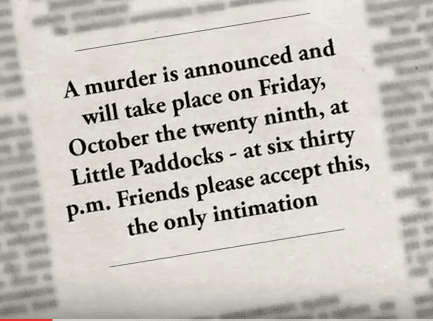
So imagine then. You’ve got your copy of the Swindon Advertiser, you’ve sat down with a coffee and chocolate digestive to peruse its contents and you come across something like this:
Now do some more imagining and think of the frenzy of speculation and gossip. Fever pitch wouldn’t cover it. There’s be a social media maelstrom. Facebook would fall over, Swindon 24 would be beside itself and Twitter would explode. Or is it implode? Anyway …When just such a thing happens in Chipping Cleghorn the sherry glasses shake and the tea cups tremble fit to break.
Red Herrings and all the usual suspects
And so begins an evening of: Red herrings Policemen wearing trilbys Characters who aren’t who they say they are A stereotypical servant with a thick eastern European/Russian accent (these plays werewritten in different times) And of course Miss Marple – the super sleuth in the tweed and clumpy shoes whose ever-present knitting and self-effacing personality disguises a razor sharp mind.
All of which adds up to the a murderously good evening’s entertainment on the stage of the Wyvern Theatre. So if you’ve got an evening free this week book yourself in and lose yourself in the classic, timeless cleverness of Agatha Christie – aka the Queen of Crime.
Agatha Christie’s 50th Book
Promoted either side of the pond as Miss Christie’s 50th book, ‘A Murder is Announced’ was published in 1950.
It’s a staple of the crime fiction genre, one widely considered to the best of the Miss Marple adventures.
‘ The villagers of Chipping Cleghorn, including Jane Marple, are agog with curiosity over an advertisement in the local gazette.It reads: ‘A murder is announced and will take place on Friday October 29th, at Little Paddocks at 6.30 p.m.’
A childish practical joke? Or a hoax intended to scare poor Letitia Blacklock? Unable to resist the mysterious invitation, a crowd begins to gather at Little Paddocks at the appointed time when, without warning, the lights go out…‘ And anymore would be spoilers!
The role of Miss Marple is taken by Judy Cornwell who has been in oodles of things since the 1960s. If you can even imagine such a thing. Though these days she’s probably best known for her role as Daisy in the BBC’s ‘Keeping up Appearances’. And I rather suspect that most of the rest of the cast you’ll have seen somewhere or there in something or other.
To whet your appetite further here’s a nice Youtube link to the official trailer of the production:
The Civic Society Movement & Swindon. Okay! If you’ve been paying attention at all you’ll know by now that here in Swindon we have an organisation by the name of Swindon Civic Voice. But what you might not know – and I didn’t until relatively recently – is that the civic society movement is a national one and there’s civic voices and civic societies all over the shop.
This here is the umbrella website for the civic voice organisations up and down the land: http://www.civicvoice.org.uk: ‘Civic Voice is the national charity for the civic movement in England. We make places more attractive, enjoyable and distinctive. We promote civic pride.’
The civic movement is 167 years old and from the Swindon Civic Voice website – http://www.swindoncivicvoice.org.uk/news/ – you can download and read a ‘Brief History of the Civic Society Movement’ by Lucy E.Hewitt – in which she traces the development of ‘civic virtue’ in England.
The president of Civic Voice (national) is (or was) none other than Griff Rhys-Jones. In the forward to the aforementioned book he says:
‘… I have met Civic Societies, local societies, that are part of Civic Voice, that manage alms houses, that own and control green belt land, that look after parks, that have produced extensive reports on the transport systems of their boroughs, and investigated and reported on living conditions and plans for growth.
There is a lot more than conservation here and, yet, the preservation of heritage is at the forefront of a modern Civic Society’s concerns because it is part of the current democratic pressure for civic responsibility. In other words we are the same citizens. We are continuing the work recorded in this study. We have to do so.
The commentator I quoted at the beginning, a good Conservative, with a capital C, possibly thinks of local amenity societies as “busy bodies”. Well I say let’s get busy. He possibly thinks of them as Nimbys. Well I say let’s look out of the window and get involved in our places. It‘s thanks to the involvement of Civic Societies that the best of Britain looks the way it does and not like a “yard”.
History helps us to understand why more than ever we need to stand up and be counted today.’
Join your local Civic Voice
With so much going on in the town at the moment a strong civic society is vital to even have a hope of holding to account and challenging controversial planning proposals and decisions.
Like the ‘Mothership’, Swindon Civic Voice is a charity and needs membership subscriptions to survive. ERGO – New members are always welcome and you can find out about that here: http://www.swindoncivicvoice.org.uk/membership-2/
Swindon Civic Voice is now on the Twittersphere: @SwindonV
Hello listeners – time for some listening/watching:
Inspired by a post on Facebook by Swindon Web and starting with the video they posted, here’s 5 Swindon-related songs that feature or are related to Swindon in some way. Some of them world famous – one of them not. But all interesting for sure. Enjoy!
Tears for Fears – The Way You Are.Why watch/listen? Some ace footage of the GWR Swindon Works – still working.
2) XTC – English Roundabout.Why watch/listen? Well aside from the fact that XTC hailed from Swindon this song was allegedly inspired by Swindon’s infamous Magic Roundabout – though I’m not sure that’s true. Its other point of interest is that the album cover featured the Uffington White Horse.
https://youtu.be/k05agPAMRhE
3) XTC – The Meeting Place.Why watch/listen? At the song’s start you can briefly hear the GWR hooter.
4) Hitesh Mistry – Thunderstorm.Why watch/listen? Hitesh is a young Swindonian singer/songwriter talent. His family own and run the Eggelcious and E2 empire. And his video is shot all over Swindon so it’s good fun to see what you can spot.
And remember listeners: you saw him here first!
5) Hitesh Mistry – Lose My Mind. Why watch/Listen? See above!
The GWR Hooter Sounds Again Today has been a special day for Swindon. One that not even some pretty diabolical weather could dampen. Despite the howling wind and driving rain a large crowd stoically gathered outside Swindon’s STEAM museum for a long-awaited and much-vaunted moment.
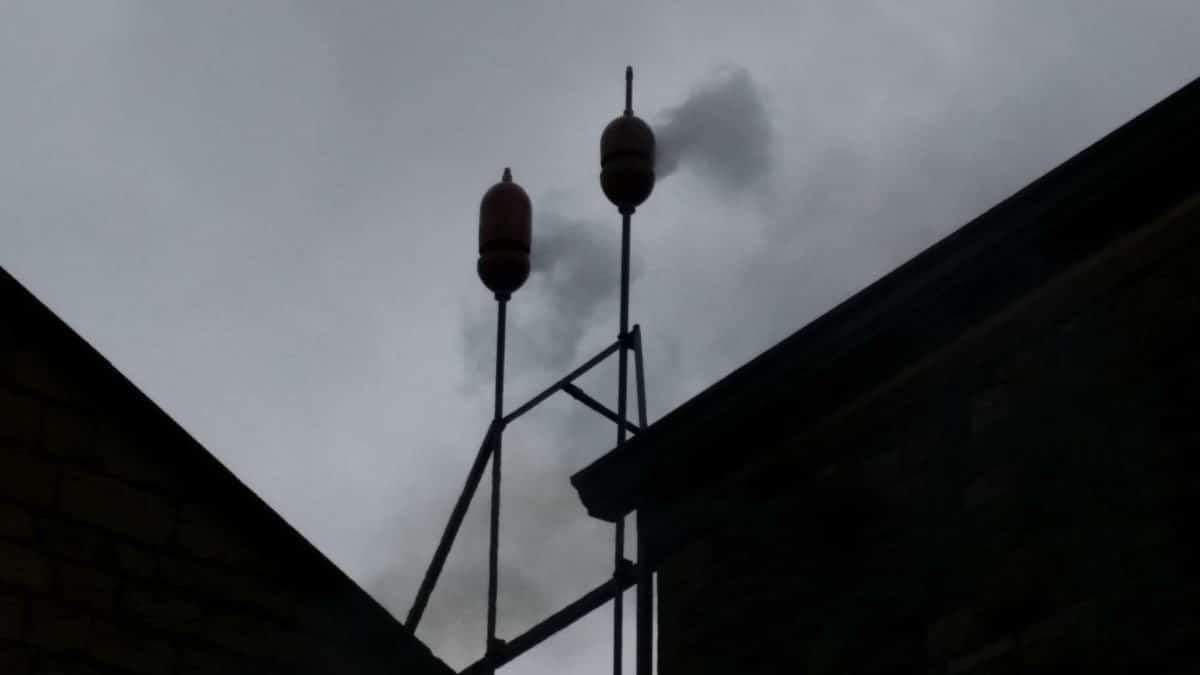
For today, at 4.30pm outside STEAM museum, the replica hooter sounded to mark the 30th anniversary of the closure of the Swindon Works.
I very nearly didn’t bother to go and I got absolutely drenched. Oh how I suffer for this blog! 😉 But I had to be there fo the GWR Hooter Sounds Again event.
See the hooter:
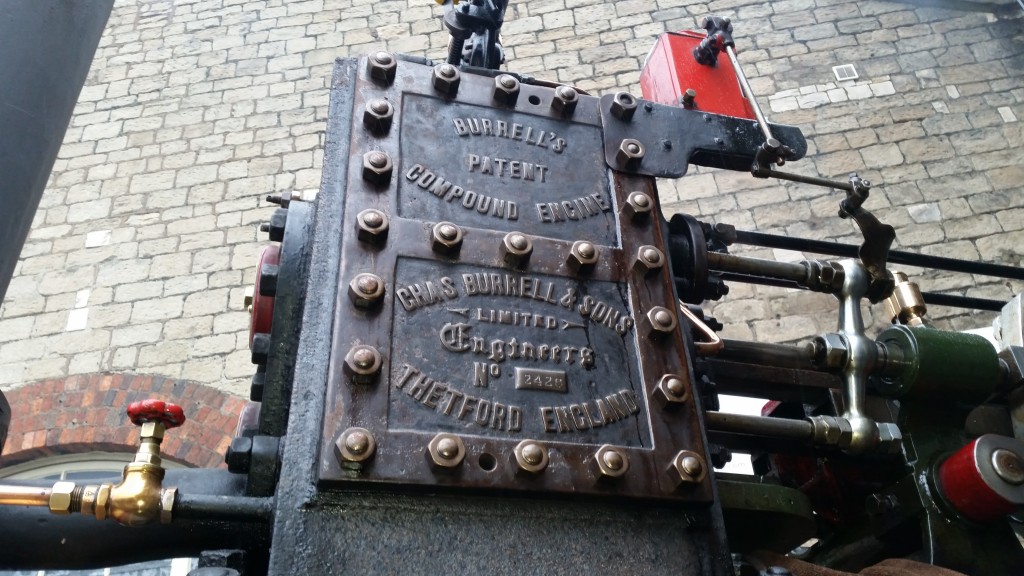
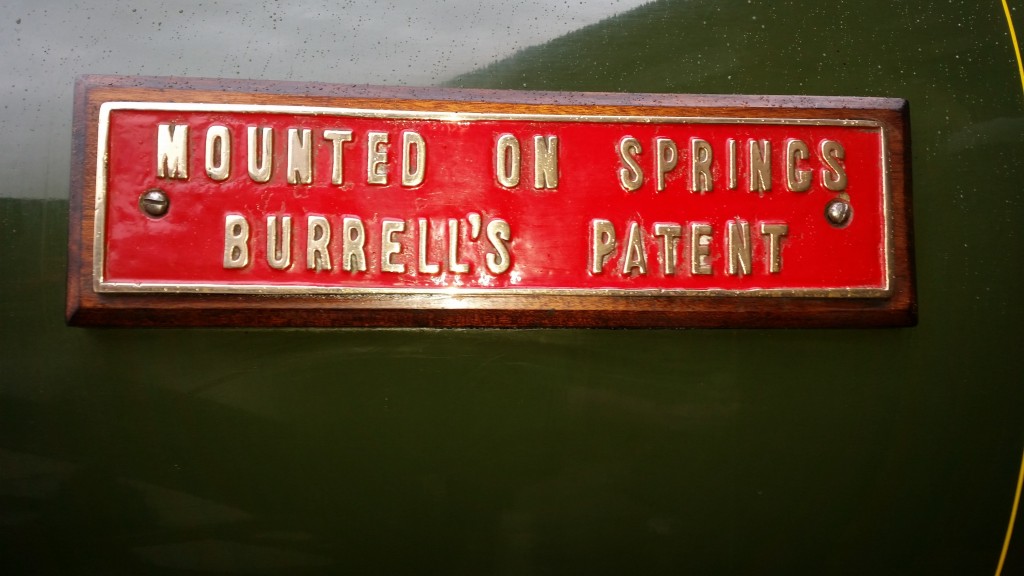
The traction engineThe replica hooter on the roof of STEAM museumThe replica hooter on the roof of STEAM museum