As homeowners thinking of doing any kind of upgrade/update to our home we’re often faced with the dilemma of the potential return of investment (ROI) on our proposed home update against the initial costs.
In the eventuality of deciding to sell will our proposed shark fin sculpture embedded into the roof turn out to be an asset or a liability in terms of ROI?
While adding a decked area to our garden is unlikely to be as controversial as a shark fin in the roof the increase of decking in recent years makes the question of its ROI an interesting one.
Dead wood?
Back in the early 2000s an article in The Telegraph suggested that decking was already becoming so much dead wood. But that prediction doesn’t appear to have been borne out. People are busier than ever and low-maintenance is where it’s at.
The article states that, in 2014, Remodelling Magazine released a study ‘showing that the return on investment for a wooden deck is 87 percent. This figure surpasses all indoor renovations.’
Additionally the article argues that, when it comes to costs, decks will always be the less expensive choice. Even when using high-end materials.
Of course it can’t be escaped that the lifespan of a wooden structure is never going to be as long as that of hard landscaping. But then on the plus side the lifespan of decking can is rapidly increasing with such options as composite materials and all-weather stains. Surely that can only be a good thing when it comes to ROI?
Certainly, as this article from Moneywise points out, a well-kept and designed garden is a huge plus point in terms of growing your garden’s value. So much so that it can be a deal breaker. “In the city, if you‘ve a tiny garden with a well-crafted decking area and some seating, it will be worth more than one up the road where nothing has been done…” Maybe as much as 5-10 percent more.
Moneywise say that a terrace is high on most people’s wish list. So finding ways to step out onto a deck or patio is time and money well spent.
Swindon Decking
As the Swindon Decking website points out, a deck serves as a hub for social gatherings as well as being a low-maintenance solution for your garden.
To return to The Telegraph and its position on adding value they offer this: “Decking can add considerable value if, like a conservatory, it feels an integral and coherent part of the house. If it looks stuck-on and incongruous, it could prove a dubious asset…. Products with a long guarantee are likely to be an investment. But hang on to the certificate to show prospective buyers. Cheap, badly made decking will never add value, particularly if it has been poorly installed.”
Swindon Decking is a well-established Wiltshire-based company offering decking solutions for both domestic and corporate clients.
If you’re considering adding a decked area to your outdoor space you can visit their website or call them on 07711581665.
Back in November of 2015, BBC Wilts got in touch with me to ask if I’d like to take part in a section of their afternoon show called desert island dish. I won’t lie – I was a bit meh about it in the first instance – chiefly cos I’m no great shakes in the kitchen. I LOVE food – eating it that is. But preparing and cooking it I’m a bit less fond of. To understate it somewhat.
Any road up, to cut a very long story short, I did eventually agree to do the programme and a lovely member of BBC Wilts staff, by the name of Emma Colman, came to my home and stuck a recording device in front of me while I talked and talked. And talked some more.
I never did get round to to listening to the actual programme my bit was a part of. However, on New Years Eve, Marie Lennon did a round up of some of her fave bits of the year in that day’s show. And whadda ya know? My desert island dish was one of those select titbits. Isn’t that lovely? Well I think so anyway. But then I would eh? 🙂
[jetpack_subscription_form]
She actually said she thought mine was her favourite desert island dish of the year. And yes – I’m showing off a bit. Okay, okay. I know – no-one likes a smart arse. Hey ho. 😉
So thank you to BBC Wilts for inviting me to do it, thank you to the lovely Emma who came to record me – she was a delight, and thanks to Marie Lennon for her kind words. It’s much appreciated.
So if you fancy a listen – here it is – it’s only five minutes. I’ve no idea how much of it was originally used. This much probably:
10 reasons to love Swindon: a northerner’s perspective
Swindon: THIS is Swindon
To be fair I could easily have called this post ’10 reason’s to love Swindon: another northerner’s perspective. What with hailing from a northern direction myself.
An earlier guest post from Brian Carter about how multicultural Swindon is, noted the situational irony of this particular northerner recognising all that was wonderful about Swindon.
However this guest post from Cheryl Tanner, is another example of someone from another part of the country pitching up in this town and asking ‘Why?’ As in ‘why does this town get so much flak?’ Indeed countless are the times I’ve chatted to many incomers to Swindon who ask that very same question. It’s always mystified me as much as it’s mystified Cheryl and all the other people I’ve come across.
Indeed on that note, my friend and fellowbusiness owner Sandra Trusty, owner of Fabulous Functions UK, told me that she too experienced that same negativity from others when she was moving to Swindon but has been delighted by the place, its people and the staggering amount of green spaces we have here.
10 reasons to love Swindon: a northerner’s perspective
Anyway – to the point. Here in her own words, are what the author likes about Swindon – a very insightful young lady I must say. Welcome to Swindon Cheryl.
“I moved to Swindon a year and a half ago for a new job and I can honestly say me and my husband are really happy here and don’t want to leave anytime soon.
We didn’t quite know what to expect when we moved here, because the motivation for moving was a new job and finding out about the town was a bit of an after thought. Between us we’ve lived in quite a few places and we’ve got used to moving somewhere new and finding out about it as we go so – you can say we were quite relaxed about the whole thing.
However when we told people where we were going, the most a lot of people could say about Swindon was “The magic roundabout”, “wasn’t that where The Office was based?” and ” oh, could you not find a job in London then?” So we were pleasantly surprised by what we found when we came here and can honestly say that Swindon’s got a lot going for it.
Here I’ve listed 10 of the reasons why I love Swindon:
1) A lot of big organisations are based here, so a greater variety of jobs
Compared to where I’ve lived before, Swindon has a variety of jobs going and not just in the retail sector. I moved here for a good job in the Civil Service, based in the centre of Swindon and there were a number of other Government bodies based in the same building.
Swindon has head offices and large offices for a lot of other national firms here too in a number of sectors, which just goes to show you don’t have to live in London to get a decent job. Speaking of London…
Close to the capital and the south-west
2) It’s only an hour’s train journey to London
It seems amazing to me that housing and rent prices aren’t a lot higher then they are as you are only an hour’s train ride from the capital. It’s an easy distance for a day trip and the trains run frequently. Yeah there are delays, but you will get that just about everywhere. But before I start kicking off about trains, let’s move on…
3) Independent shops and restaurants
I was surprised by the amount of independent businesses you have for a town this size and it’s really refreshing to see. There are all the restaurants and bars up in old town, the shops in the tented market, the unique shops opening on the main high street and the ones already in the Brunel centre to name a few. It just adds a nice bit of variety and character to the town.
4) The weather is better here (she’s right – it’s a top coat warmer)
This is more of a general comment for the south of England but the weather is better here. When you move from one place where it seems to rain most of the time you really notice the difference.
Great countryside in and around Swindon
5) You’re a short drive to countryside and historic sites
You don’t have to travel very far before you hit fields, big open parks, castles and historic walks. Plus there are a number of buses to popular sites which is great for non-drivers.
6) You’re close to a number of city breaks and trips
Even if you don’t like Swindon you are very close to a number of popular city breaks and trips like Bath, Bristol, Salisbury, Cheltenham and Oxford to name just a few. Not to mention skipping London airports and using Bristol airport instead – saves on the train fare and there is a bus straight to the airport from Bristol Temple Meads.
7) Investment and development
Since we’ve moved here there have been improvements made like the new Regent Circus development and all the new housing being built and renovated by the retail outlet and in the town centre.
8) Retail outlet which is walking distance from town
This is a big plus. There was a McArthur Glen outlet near Chester but you normally needed to drive or get the bus and would take most of the day to go around and travel to and from it. But here you can just wander over after work or for part of a Saturday.
9) Nice area to live
It’s unavoidable that every city or town has areas which aren’t as nice as others and since moving we’ve heard about the areas which are meant to be rough. But to be honest, the parts of Swindon we’ve seen aren’t that bad at all. I feel safe walking alone when its dark and generally it looks nice. Not exactly a critical analysis of the complicated elements of city planning I know.But security, feeling safe and being able to walk where I need to go is what’s important to me.
Plenty to do
10) Activities like ice hockey, zorbing, comedy clubs, theatres , museums, gin tasting nights and more!
I remember before we had even moved here, I had booked two tickets to go see the Swindon Wildcats.
My husband had always wanted to see an Ice hockey game. I hadn’t realised it was popular in the UK let alone here. Again, we didn’t know what to expect and I thought it would be quite a small match with a small audience. But the atmosphere was amazing and they really do well with the lights and music to make it feel like an event.Plus the Swindon team is brilliant so it gives you something to cheer for! There‘s a whole host of things to do here and I‘ve no where near covered it all. But it helped us settle in.
This is probably listing things many resident Swindonians already know.It’s sometimes hard to get excited about a place you’ve lived in for a long time. I feel the same about some of my previous homes. But you’ve got a lot to be proud of and to us it already feels like home.”
Though not intentionally planned that way, it turned out to be rather timely that Jess (@swindondriver) and I should go on an EXPOTITION and go exploring the New Swindon ‘trail’ put together by Swindon Civic voice just a few days ago. How so? Well because just last week there was a launch event to announce and to kick off the 2016 events that will happen in celebration of ‘New Swindon’ being 175 years old. Read more of that here: https://swindonian.me/2015/11/19/made-in-swindon-celebrating-175-years/
Loving a bit of urban exploration and discovery as we do, Jess and I – and Daisy the dog – set out on a blustery day last week to photograph a few elements of the explorers’ guide. It’s a wonderfully detailed leaflet that lists 100 points of interest/interesting facts all related to New Swindon.
If you wanted to follow the whole thing round it could very easily take a day – maybe even more- what with coffee stops and lunch breaks etc. Not having that much time to spare we simply selected bits of it and took some photos of things marked on the trial and a few that aren’t – and you can see those below. But really the best thing to do is to get a copy of the leaflet from the library and check it out. It’s only a £1! It really is a mine of information. For instance, and in no particular order:
I hadn’t previously noticed the flying pig gargoyle adorning Radnor Street chapel.
The Brunel Centre was an award winner in 1975 being the first mall in the UK. Who knew?
The 1843 brick built market was demolished in the 1970s because it was ‘out of character’ with the new Brunel Centre. *sigh* – not that Swindon is the only town guilty of such crimes! And old and new can exist perfectly well together – UTC being a fabulous example.
The Cenotaph erected in 1920, replaced an earlier wooden one burned down by protestors in 1919 who felt that a wood structure was not sufficiently respectful to the dead servicemen. Prior to that there’d been a horse trough on the site. Clearly there used to be a radical element in Swindon, what with this and the flagpole riots: http://www.bbc.co.uk/programmes/p01qb45n – a really amazing story.
I can really see this thing as an app for mobile devices – we had terrible trouble controlling the leaflet on such a windy day! It would be great to have it mapped out properly so you could know the distance and how long it would take to do the whole thing.
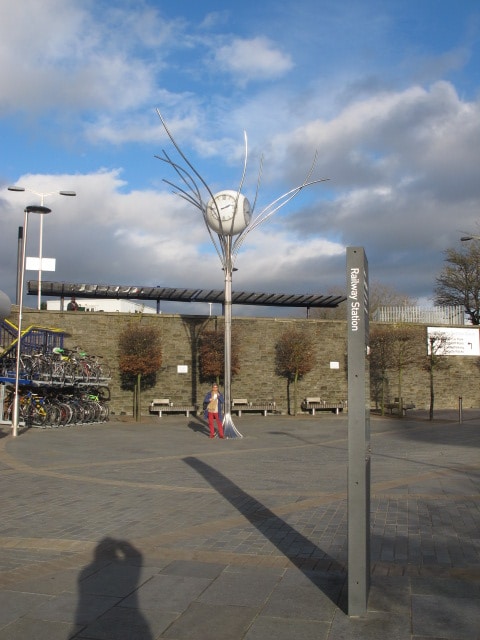
The trail starts and ends at Swindon Station. Swindon – this is Swindon:
The Jubilee clock Swindon Station
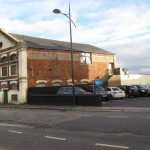
The old steam laundry
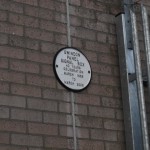
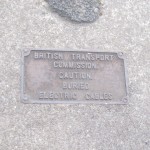
signal box plaque
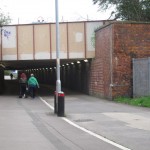
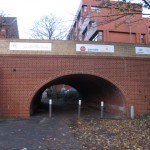
Old canal bed – now footpath
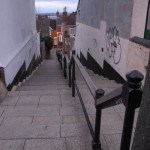
Old gates once accessed GWR works
Old gates once accessed GWR works
View to David Murray John tower
The Mechanic’s Institue
The old water tower at UTC.
Pretend shop fronts
St Mark’s Church
Central community centre – once the medical fund society hospital
The year 2016 marks 175 years since the birth of Swindon as a railway town…Made in Swindon: Celebrating 175 years
I am going to design… a Station after my own fancy; that is, with engineering roofs, etc. Isambard Kingdom Brunel
And he did rather didn’t he?
*****************************
It’s rather fitting I think, that this multicultural town of Swindon – the new Swindon – was made possible by a man of French descent. Though born in England, Isambard was sent to school in France for a time before returning to work with his father, Sir Marc Isambard Brunel.
Last night I was fortunate enough to attend the launch ‘do’ for a year of celebrations to mark 175 years of the birth of Swindon as a railway town. And a very splendidly done affair it was too.
Not only was the event a fabulous platform (brace yourselves now – railway related word play is likely to puther out as thickly as when the City of Truro was getting up a full head of steam!) to launch the events of 2016, it was also a reminder of just how proud of Swindon we really should be. Yes – becauseof Brunel and God’s Wonderful railway. But not just because of that.
Made in Swindon can be described as ‘Trains, planes and automobiles’ – but gosh there’s so much more besides! YES THERE IS. Don’t doubt it.
Indeed Graham Carter gave a fantastic presentation listing tons of reasons why we should be proud of Swindon. Yup. Tons of fantastic, wonderful amazing ‘things’ that were made in Swindon.
Here – taken at random – are six of them.
The King George V – the most powerful and beautiful loco from the golden age of steam. Made in Swindonin 1927.
The GWR medical fund: this was the forerunner of the NHS and that didn’t come about for another 101 years. Made in Swindon in 1847.
Garrard record decks – Swindon-based inventors of the record changes.
Spitfire – the world’s most iconic aircraft. Made in Swindon since 1943
Cars – from the 1950s Swindon has designed and built cars, including over 2,000,000 Hondas.
So toot the whistle people of Swindon. Get behind the train of events ( I told ya!) – it’s gonna be an awesome, eclectic ride through 2016. You surely don’t want to be the wrong side of the tracks?! 😉
Roll on with Made in Swindon: Celebrating 175 years