But I’ve now had a chance to spend a night there so can share my impressions of the Thistle Express Swindon with you. And they are favourable!
I think the thing that impressed me most – or at least impressed me a great deal – was the free Wi-Fi. Now before you shrug your shoulders and say ‘Oh, big deal, free Wi-Fi is everywhere now’ let me clarify. This is free Wi-Fi that you can connect your device straight to. No need to register. No need to have to give your name, DOB, marital status, bra size and inside leg measurement. And even then every single time you want to use it you have to log on and accept terms and conditions. GWR, Southwest trains and Thamesdown Transport take note.
I’ve only experienced easy access Wi-Fi like this sur le continent so well done Thistle! Market research told them that people wanted this and they’ve listened.
Now – my room.
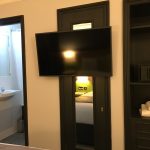
It had everything you could need: iron and ironing board, TV, safe, plenty of storage, a desk/dressing table – you get the idea. There was lots of versatile lighting and – lots of easy to access sockets. I’ve stayed in hotels where there’s been a dearth of sockets and what there was has been well hidden. So good work there. One wee niggle: I was disappointed there was no kettle and hospitality tray in the room. I do love a coffee before I do ANYTHING. Still, I guess if you’re that desperate for a cuppa you could chuck on a robe, get in the lift and grab one from the hot drink station near reception and in the eating area.
That quibble aside my room was what you’d expect: smart, modern, comfortable. The bed was super comfortable and dressed with only one cushion. Hurrah! I’m not a fan of this trend for piling the bed up with tons of cushions. Where do you put the blasted things when it’s sleep time? On the floor probably – where outside shoes have been. Yuk.
I didn’t actually have the best night’s sleep but that was to do with too much red wine that evening and no reflection on the room or comfort of the bed!
What there is downstairs is ample long/counter with sockets space for plugging in your devices. You don’t have to be a guest to go in for breakfast or coffee. The breakfast is included in your rate if you’re a guest. If you’re coming in off the street it’s round £9 including tea/coffee – a decent deal I reckon. And a coffee is £1.50.
Pleasingly it’s neither Starmucks nor Costa Lotta and it’s okay. I take my coffee black and find it hard to get a reasonable black Americano. This was. I’m not talking Brazilian beans crushed between a maiden’s thighs here – but a drinkable coffee (I had two so it can’t be that bad) at a sensible price point. I’ll definitely bear this place in mind next time I need a meeting with a client where we need Wi-Fi and a coffee that doesn’t require a small mortgage. It’s comfortable enough and it does the job.
The Bottomless Breakfast
I didn’t plan this trip at all well. The night I stayed I’d been out for dinner and eaten a mound of antipasto and pasta. Ergo I wasn’t hungry enough the next morning to take full advantage of the breakfast. I did though have some scrambled eggs and they were rather tasty actually. Suffice it to say there’s cereals, fruit and yoghurt and pastries. Water and juice and all the coffee and tea you can drink. You serve yourself with that from the drink station.
So all things considered I’d recommend this place for business accommodation and for a casual business meeting. I won’t lie – it’s nice to have an alternative to the Jury’s Inn. Not that there’s anything wrong with that place. Far from it – it’s comfy and nice. But it’s the ubiquitous Costa coffee. I’m fed up with it.
And this place has easy-peasy Wi-Fi. And it’s dead handy for Debenhams! That’s a big thumbs up from me!
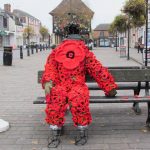
Last year they made a six-foot poppy man to sit on a bench in Royal Wootton Basset.
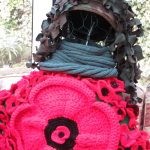
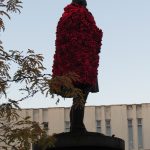
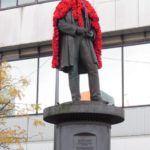
This year they have made a poppy cloak for the town centre statue of Brunel to wear.
The problem hasn’t been the making of the poppies or the cloak, the challenge has been how are they going to get the cloak on Mr Brunel? He himself is six-foot-tall and he’s standing on an eight-foot column. The group had wanted to sneakily put the cloak on Brunel themselves early one morning anonymously, but the height of the statue defeated them and they have had to do it with the collaboration of InSwindon.
Due to health and safety, ladders aren’t allowed and cherry pickers are thin on the ground with all the preparations for Christmas under way. The fire brigade were asked if they could assist, but they didn’t get back to the ladies. Just how are they going to manage it?
So why the Brunel statue? The town of Swindon wouldn’t be here without Brunel and his railways, and they wanted to make something that hadn’t been already done with poppies. They decided to combine the two. Also, they group like to go big, and the poppy cloak will look big up there on the statue in the autumn light.
Here is Brunel wearing his finery:
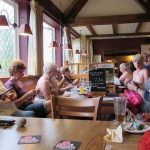
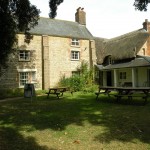
The ladies at Stitch and Bitch knitting group said that they wanted to do something new and exciting with poppies for the town. They explained that the poppy appeal has become very much part of their group’s calendar. Not only have they been making poppy features, but they also make poppies to sell and to raise money for The Royal British Legion. They have already started selling poppies and Jo Jones has said that the customers are loving the variety and designs of the poppies combined with the unusual buttons. You can buy one of the groups Poppies by calling in to the Manor Farm pub on a Monday evening from 7.30pm where the group meet to cook up new knitting projects.
Here’s the ladies of Swindon Stitch ‘n’ Bitch in action:
The dressing of Mr Brunel in a poppy cloak will take place on Monday the 6th of November.
Members of Stitch and Bitch will be there from 10am to answer any questions about making the cloak or poppies.
Stitch ‘n Bitch is a name that has been used to refer to social knitting groups since at least World War II.[1] Before the slang term “Stitch ‘n Bitch” was used, groups of women in the 1940s would join to knit and talk in organized Stitch and Bitch clubs. The term was further used in the 1980s as part of the book Social History of American Knitting by Anne Macdonald.[2] It is partly due to the book’s success that the modern day Stitch n’ Bitch knitting groups have emerged in cities around the world
Yes listeners. We DO have our very own symphony orchestra! Who knew?! Not me until relatively recently. Yet it’s been here for twenty-eight years! We also have people performing chamber music recitals in Swindon too. Who knew that?
I’ve said it before and I’ll say it again: WHAT are people looking for when they say there’s nothing to do, nowhere to go, nothing to see and no culture in Swindon? Aside from big West End plays and musicals – and get real this is a town not a city – what is out there that’s not here? I truly don’t understand it.
‘Did you know Swindon has it’s very own Symphony Orchestra? Described by the organisers of Swindon175 last year as “Swindon’s best kept secret”, the orchestra has been performing in the town for twenty-eight years!
A brief History
The Swindon Symphony Orchestra performs two concerts each year, with members who are talented musicians from Swindon and surrounding areas. They play because of their shared love of music, their desire to be something bigger than just a lone person practising at home and because they want to do some good for local and national charities whilst providing entertainment for people in and around Swindon.
This is how it all began . . .
The orchestra was the brain-child of late, enthusiastic local musician John Birkin. His original plan was simply to bring high-quality musicians together for a one-off concert at the Wyvern Theatre in 1989, to raise funds for what was then the Wiltshire Youth Orchestra. However, the music-making was so popular, with audience and musicians alike, that John was persuaded to continue running the orchestra. The initial concert had been a huge undertaking, organised solely by John, so a committee of willing volunteers was formed to spread the workload, and that is how the orchestra still functions today.
Despite its roots reaching back to the 1980s, there have been surprisingly few conductors of the orchestra over the years. Malcolm, our current conductor, has done much to increase the range of music and composers that the orchestra tackles, helping to increase and retain membership in addition to stretching the abilities of the orchestral members and occasionally filling the hearts of the players with fear owing to the sheer number of notes on the page!
Our Concerts
There have been many memorable concerts over the years (very often because the previous concert venue, a church, was so cold!). On one occasion a brave, local conductor Jonathan Trim had to be enlisted to conduct the orchestra with only a few hours’ notice on the day of the concert without prior sight of the programme, as Malcolm had put his back out. One sell-out occasion was a concert at Bath Road Methodist Church when the orchestra performed Peter and the Wolf with the very entertaining and greatly missed Jonny Morris, of Animal Magic fame. On the basis that ‘if you don’t ask, you don’t get’ the orchestra invited him along, cheekily adding that it had no money to pay him a fee but hoped he would perform anyway as the concert was to raise money for charity. Sometimes, being cheeky pays off!
Concerto soloists are often regular members of the orchestra, with flute, clarinet, bassoon, horn, cello and violin works performed in recent years. Other recent guest instrumentalists have added trumpet, oboe and piano works into the mix.
The orchestra’s repertoire not only includes the standard classical and romantic composers like Mozart, Beethoven, Dvorak, Tchaikovsky, Rachmaninov and Shostakovich, but also lesser known works by Suk, Rautavaara, Khachaturian, Reinecke, Horowitz, Arutiunian and Kodaly.
In Autumn 2016 the Orchestra were proud to performed to a sell-out audience in the Great Western Hall at STEAM, Museum of the Great Western Railway, as part of the Swindon 175 celebrations, with the very talented soloist, Daniel Lebhart, delighting us with his skilful performance of Rachmaninov’s Piano Concerto No. 2.
Although he is no longer with us, hopefully John Birkin would have been proud of the progress and development made by the Swindon Symphony Orchestra, and the orchestra members are grateful for his insight and unrelenting hard work in founding the Orchestra all those years ago.
Our next concert
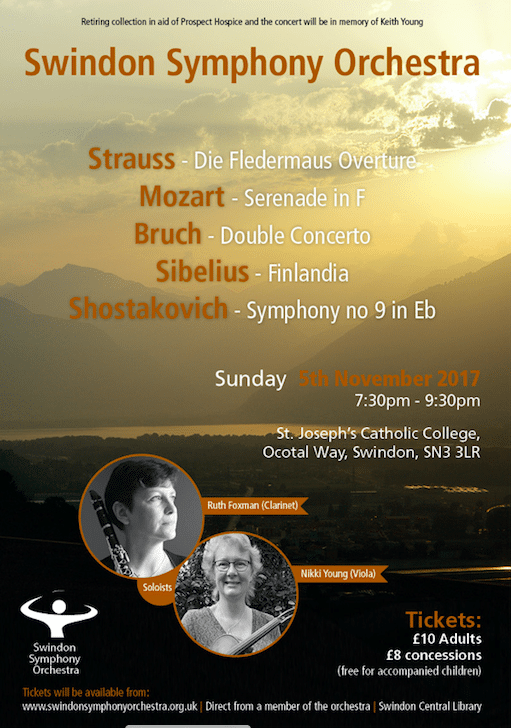
Our next concert is this coming Sunday, 5th November 2017, 7:30pm at St Joseph’s Catholic College where you will be able to hear two of our members, Nikki Young (viola) and Ruth Foxman (clarinet) play Bruch’s Double Concerto for Viola and Clarinet. Other works in the programme are Johann Strauss Jr’s Die Fledermaus Overture, Wolfgang Amadeus Mozart’s Serenade No. 2, Sibelius’s Finlandia Op. 26. and Shostakovich’s – Symphony No 9.
Join the orchestra or follow us
We are always very interested to hear from musicians who would like to play with the orchestra, especially advanced string and brass players.
All of which is really fab and I’m trying not to be irritated by the fact that they’ve spelt ‘programme’ as ‘program’ all the way through their website. In British English it’s programme for everything apart from computer software when it’s ‘program’. That aside – well done them on recognising Swindon’s greatness!
‘Handpicked Top 3 Places To Visit in Swindon. How do we actually find the most highly rated places to visit? Our 50-Point Inspection includes everything from checking reputation, history, complaints, local reviews, nearness, satisfaction, trust and cost to the general excellence. That’s not all… businesses do not pay us to list them. You deserve only the best!’
Now, there’s lots of other fab things in Swindon of course – let’s not run away with the idea that these three places constitute the entirety of Swindon’s attractions. But it’s lovely to see them on this website nevertheless.
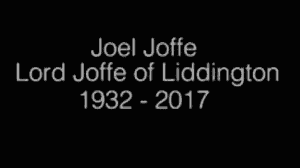
But it was only relatively recently that I had the pleasure of meeting him.
Carole Bent, a friend of Joel’s for 18 years and latterly a close colleague facilitated the introduction. As part of their work together , Carole introduced Joel to a range of people also positively engaged in Swindon – some of whom he knew – and some previously unknown to him. The common factor being that all were taking positive actions in reference to Swindon.
Anyway, the nice upshot of all that was Joel taking an interest in this here blog and signing up to follow it – which thrilled me to death of course! I love a new blog follower of any description!
Always the lawyer, chatting with Joel felt ever so slightly like an interrogation. But it was a privilege to be so interrogated. 🙂
Last night’s event, organised by Carole at the request of Joel’s wife and daughters, constituted a wonderful opportunity for representatives of Swindon’s community organisations and businesses to pay fitting tribute to him.
Held in the central atrium of the UTC this was a splendid affair, in a super splendid building, in a splendid town honouring a splendid man. This man who had saved Nelson Mandela from execution was the biggest champion for and advocate of Swindon.
There’s no finer tribute to Joel than this film from Swindon’s Create Studios. He tells his story in his words and pays tribute to the Swindon people who worked for him.
My favourite bit? I‘m paraphrasing slightly: ‘Everything is good about Swindon. But I sometimes don’t think the people of Swindon realise how good it is. I want everyone to be proud of Swindon and say ‘hey – this is a good place, we’re proud to be from Swindon.’
He’s right. Everything IS good about Swindon. Well – almost everything anyway. And I can’t begin to convey the frustration I feel when I hear people knocking the place.
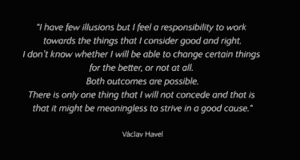
I like the entire thing, but in particular the last sentence: ‘There is only one thing that I will not concede and that is that might be meaningless to strive in a good cause.’
Thank goodness for the Václavs and the Joels of this world. And thank goodness too for the groups and individuals in this town that continue to strive for good causes. I’m in awe of the effort they put in. There’s too many to mention here but Swindon would be poorer without them for sure.
It was a delight to know you Joel – albeit briefly. From one Born again Swindonian to another: RIP.