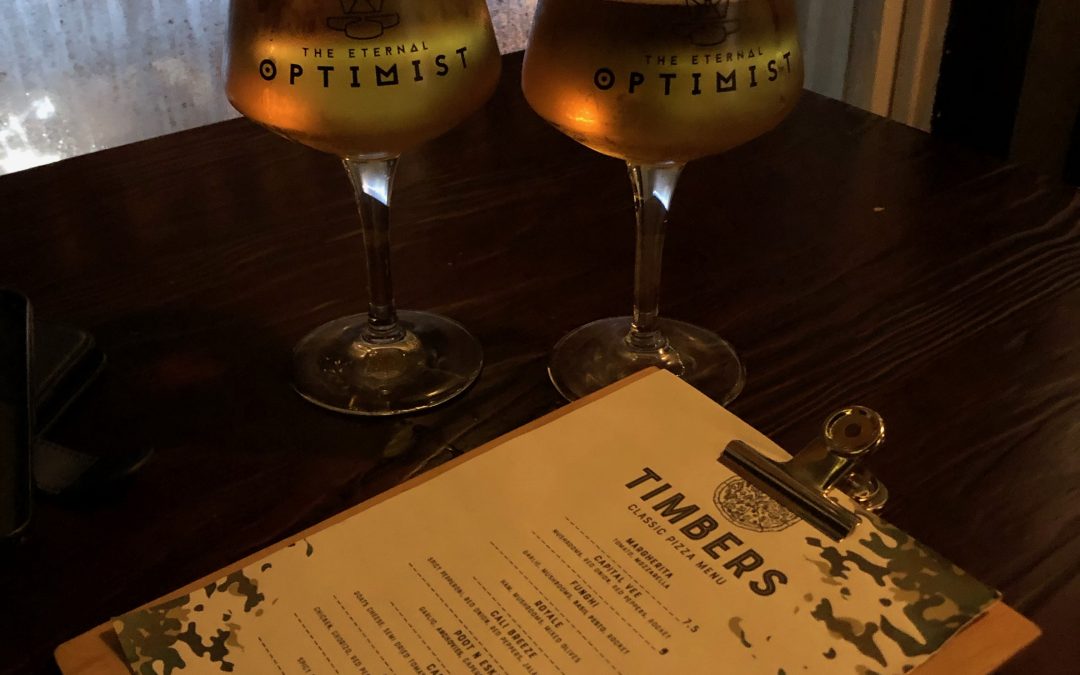
For this post and this drink, Hop Kettle Pilsner Lager (brewed for the Eternal Optimist) we make a return visit to The Eternal Optimist bar on Devizes Rd above Los Gatos.
According to the Beerwulf website, lager is bottom-fermented – whereas ale is top fermented. So ALL lager is beer but not all beer is a lager.
Lager, the website tells us, is a collective name for many bottom-fermenting beer styles. The colour of them can vary from dark brown to light blonde and the alcohol percentage can range from alcohol-free to over 10%.
Origin of the wordLager: the word’s root is in the German word lagern – meaning ‘to store’. Bottom fermentation beers need a longer rest period after the main fermentation that occurs in cold conditions (around 0 degrees) compared to top fermenting beers. This rest period (or storage) is called lagering and that is why we call all these beers lager.
The difference between lager and Pilsner: Pilsner is a type of later. It’s named after the Czech city of Plzen. Bavarian brewer Josef Groll first brewed Pilsner in 1842, when the good folk of Plzen asked him to brew a good, stable beer. He brought with yeast from Bavaria – the yeast used to brew lagers.
Founded by Tom Gee, the brewery is based in Swindon and Cricklade.
The Pilsner that we drank in The Eternal Optimist is a special brew for the bar. And, I have to say, it’s jolly nice. I’m not an expert at all but I thought I detected a malty hint to it. Either way, I liked it a lot.
Now, before I go much further I have to confess that folk music is not particularly my ‘thing’. I’m more than happy to confess that my tastes are middlebrow in all things: music, art, literature, theatre. There’ll be odds and sods that I like from other genres – but for the most part I remain middlebrow.
But ages back now, Bryony Gramont messaged me on my Born again Swindonian Facebook page asking me to come along. And because Born again Swindonian aims to be all things to all people I was delighted to agree. But then life got in the way as life does. And then I got ill – for ages ….but at length I managed to get it together.
Thus, thanks to the kindness of club member Alan Rothwell who gave me a lift, I made a visit to the club.
Swindon Folk Club: Traditional, modern and accoustic folk music in Swindon.
About Swindon Folk Club
I was somewhat surprised to discover from the club’s website, that it came into being in 1960! Who knew?! Not me. As the website says, ‘Founded by Ted & Ivy Poole and friends in 1960, the club (formerly Swindon Folksingers’ Club) has a long history of keeping traditional music alive in this busy town in north-west Wiltshire.’
Anyhow, off I went with eyes peeled for beards and fingers and ears!
So what did I find?
Well listeners, there was a noticeable and, slightly disappointing, lack of fingers in ears. But, you’ll be pleased to hear, good news on the beards front. Phew!
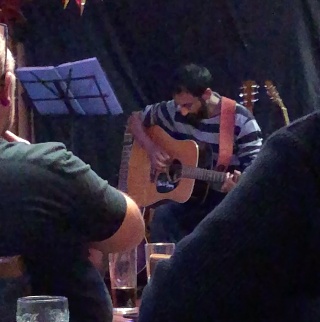
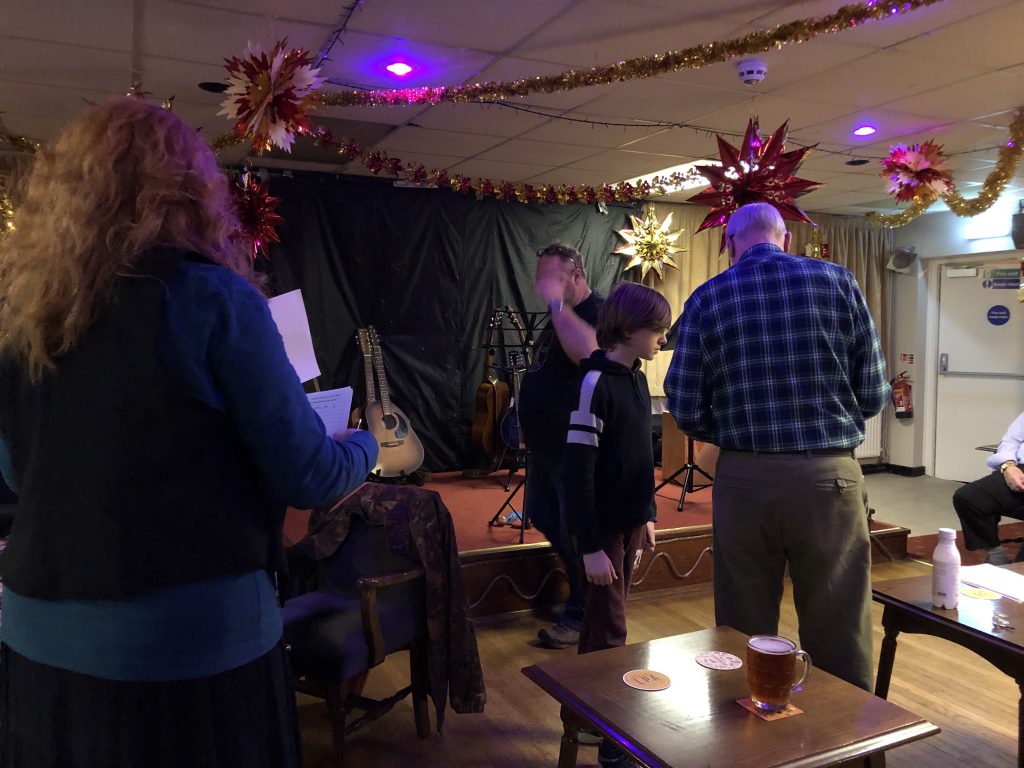
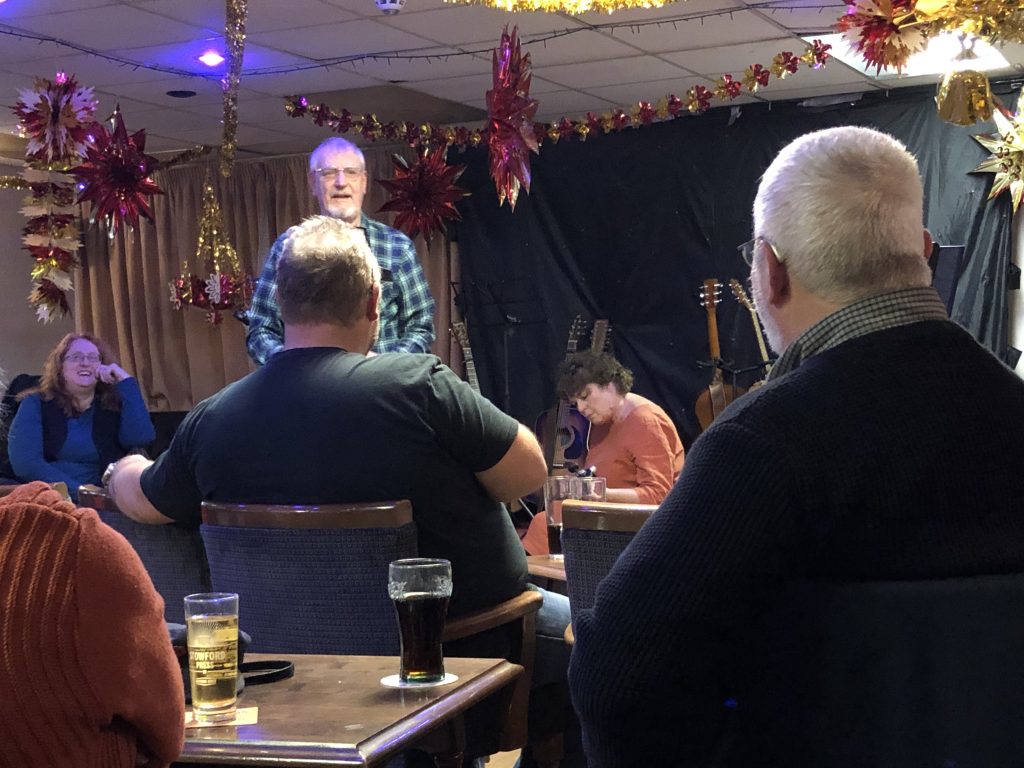
Aside from beards though, the other thing I found was a warm and welcoming atmosphere. The night I attended was an open mic affair with a guest band. It being an open-mic-everyone-that-wants-to-having-a-go evening some of the voices were not – how shall I put this – recording contract quality. Not that I can talk mind you – my three year old granddaughter tells me to stop when I sing!
Anyway! That didn’t matter at all. Because what shone through was what a wonderful, welcoming, inclusive and safe environment Swindon Folk Club offers. This group is a wonderful place for anyone with an interest in folk music to have a go. And that’s a wonderful thing wouldn’t you say?
So if having an interest in folk music – whether listening or participating – I’d urge you to pay a visit to this lovely bunch of people.
Taken from the group’s Facebook page is their own write-up of the eveningwhich will give you a good flavour of one of their events:
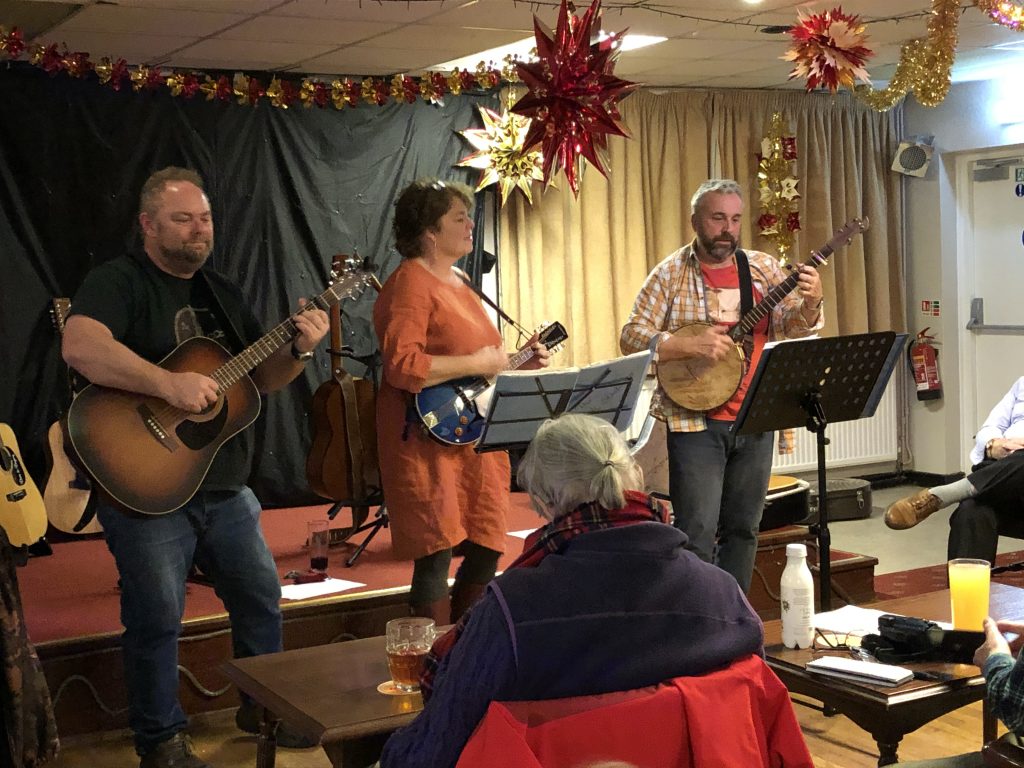
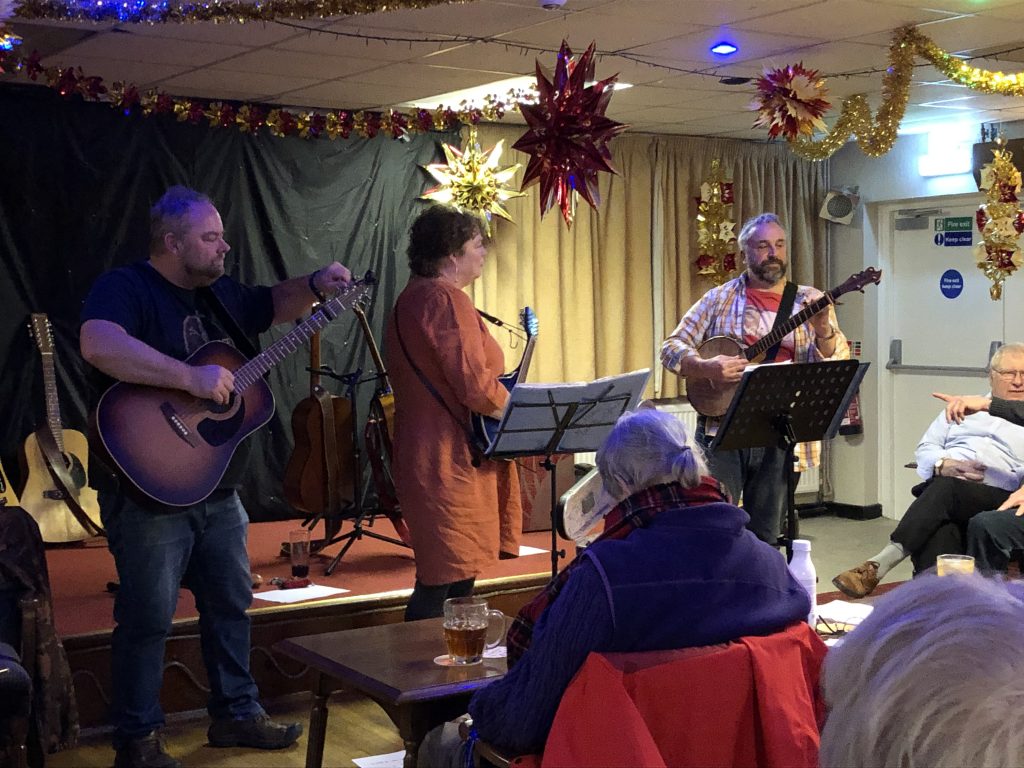
‘On Friday 6th December at Swindon Folk Club, we welcomed The Marsh Starlings, a folk/bluegrass trio performing a range of songs as well as their own material. A great mix of laid back and up-beat folk tunes. Singer & guitarist Lynn Marie Bateman, Banjo player Kevin Starling and Guitarist & singer Ian Marsh. Thank you, we really enjoyed your two sets, and are still chuckling at Kev’s solo singing spot, ‘In the Morning!’
The evening started with the usual singaround from club members, starting with Dave our MC for the evening. It was nice to have one of our youngest members Lucien (12) singing for us whilst his older brother was at home ill. Great to see Trevor back again to play and sing for us now that his hand is healing well. Che gave us a couple of numbers and was joined by Lynn and Kevin for an impromptu session for his second one.
The dreaded lurgy was still playing havoc with some of our singers but Steve Anderson managed a couple of beautiful instrumentals on his guitar and a vocalzone for Chris Turpin helped him give us a rousing song in the second half.
Bryony, who usually prepares this write-up, is also still under the weather so this one is much shorter than usual. Despite the inclement weather the turnout was quite high and an enjoyable evening was had by all, even those that just came into the RAFA club for a drink, paid, stayed and enjoyed, made favourable noises about returning.’
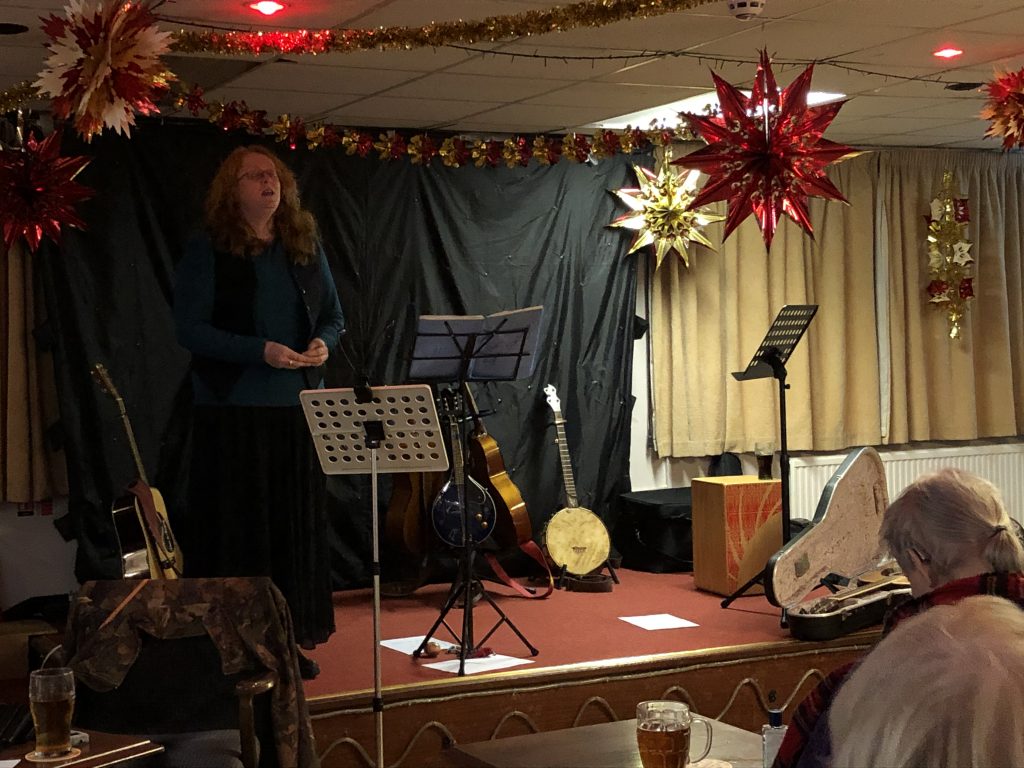
A few photographs of the night
Bryony Gramont
The Marsh Starlings
The Marsh Starlings
When and where and all that stuff
Swindon Folk club meets on the FIRST and THIRD FRIDAY of every month from 8:00 pm to 11:00 pm.
The venue is the RAFA Club, 41-43 Belle Vue Rd, Swindon SN1 3HN. The club has a licensed bar, car parking (at the rear) and level access.
If you’re not aware, Swindon polymath Alfred Williams took it upon himself to cycle around Wiltshire transcribing Wiltshire folk songs before they were lost. They’re all on stored on this database.
It’s so fabulous to meet another Swindon enthusiast. Which is why, the other week, I enjoyed having a good chat with Michelle Jones – the power behind the Positive Swindon social media campaign,over coffee in DaPaolo’s on Commercial Road.
What I’ve done with content via this blog, Michelle has done via her social media campaign. And that is to bang the Swindon drum and shout about the town’s many positive attributes and outright beauty.
Four years ago, in 2015, Michelle wanted to do something to help local people to speak in positive terms about Swindon. She also wanted to encourage more pride within the town.
At the time Michelle had two young daughters and she didn’t want them to feel embarrassed about the town of their birth. She also felt the need to reduce the amount of negative press the town received.
From living in Portsmouth and London for a few years, Michelle realised that most of the negativity aimed at Swindon came from some Swindonians. But then working on Swindon economic development marketing campaigns showed Michelle the opposite side of the coin. People that want to combat the negative perceptions by being positive about the town.
The We Are Swindon Instagram account was born and the hashtag #we_are_swindon became tagged on more and more positive photos – over 5,000 times now. By sharing local people’s own positive photographs of Swindon, Michelle has been able to share over 1,000 photos.
Michelle said “I remember when I first started the campaign on Instagram and got stuck on 17 followers. In the main my friends. I felt so frustrated and almost gave up.
In the end though, my determination and belief in Swindon kept me going. I’d like to thank all the 2,415 followers we now have. The campaign would be nothing without them and I’m so proud that it’s giving people with positive things to say and photography to share a platform”.
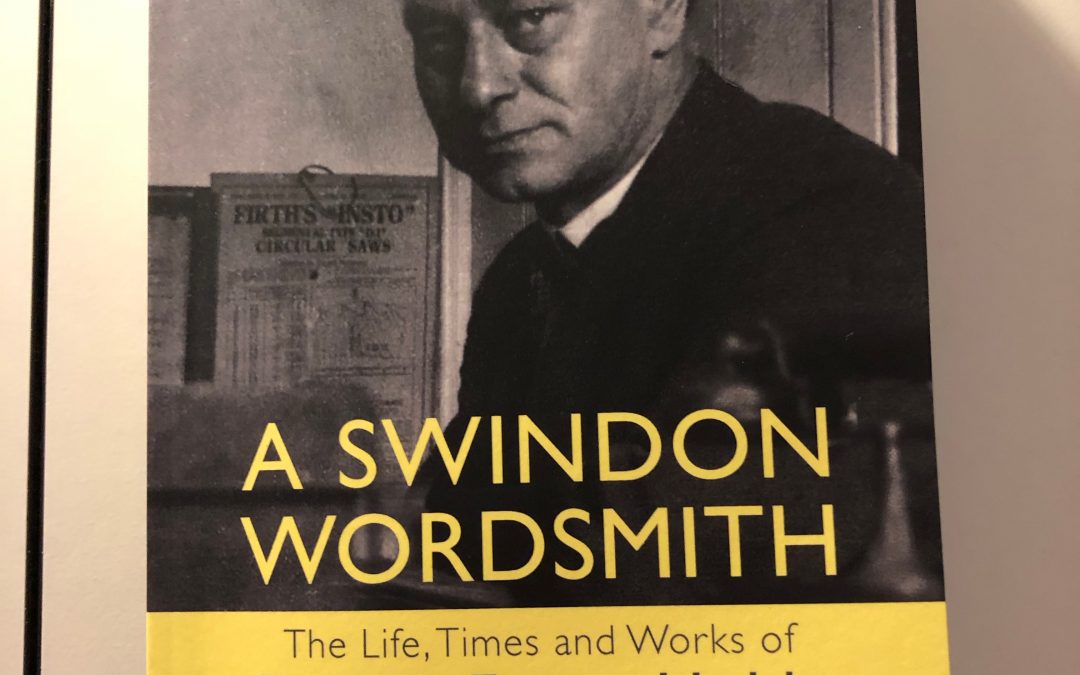
A Swindon Wordsmith: The Life, Times and Works of George Ewart Hobbs
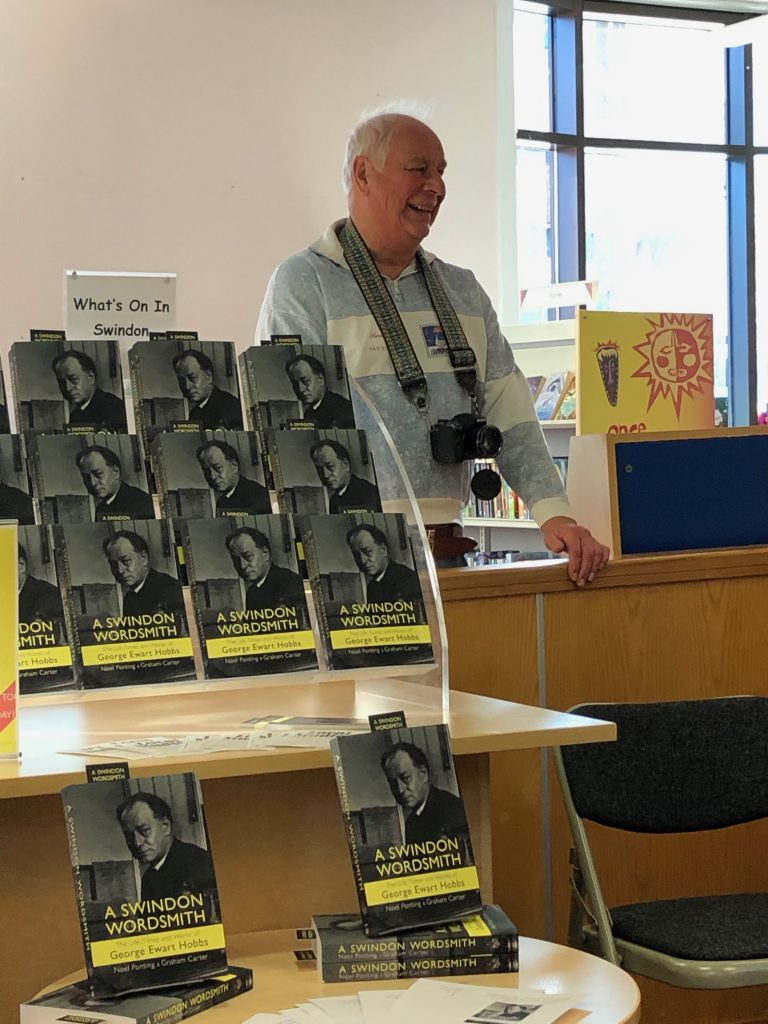
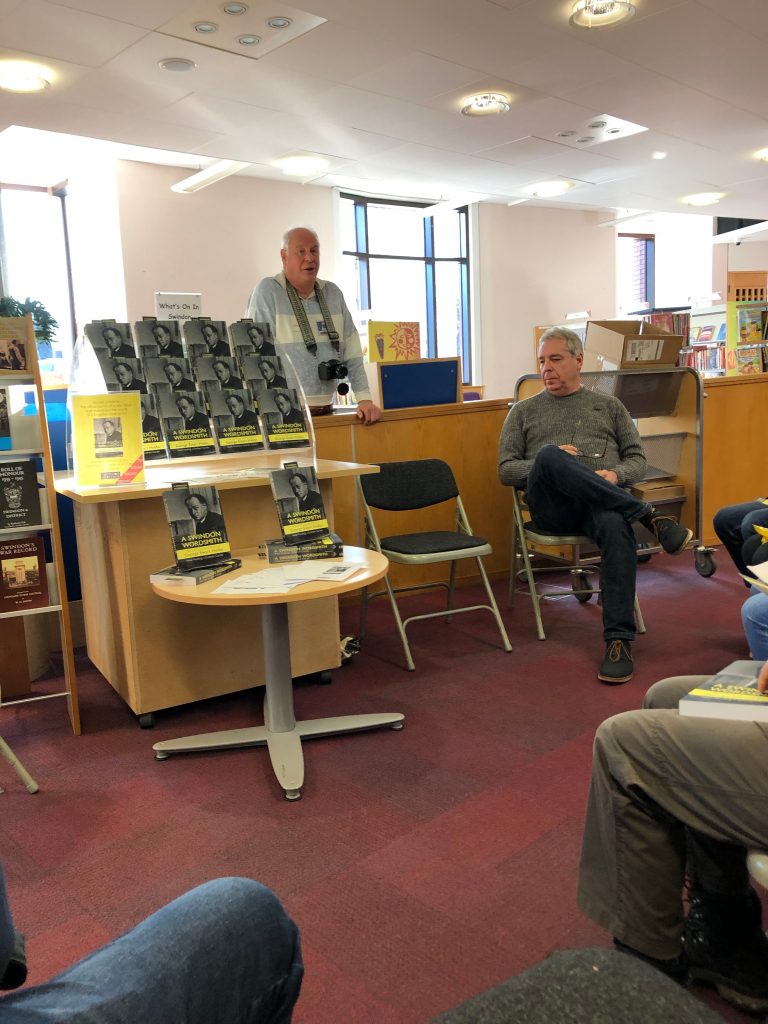
Well here’s a bit of a novelty, as Graham Carter himself commented. What is? Me attending someone else’s book launch for a change. Rather than them being at mine –info on my own publications here.
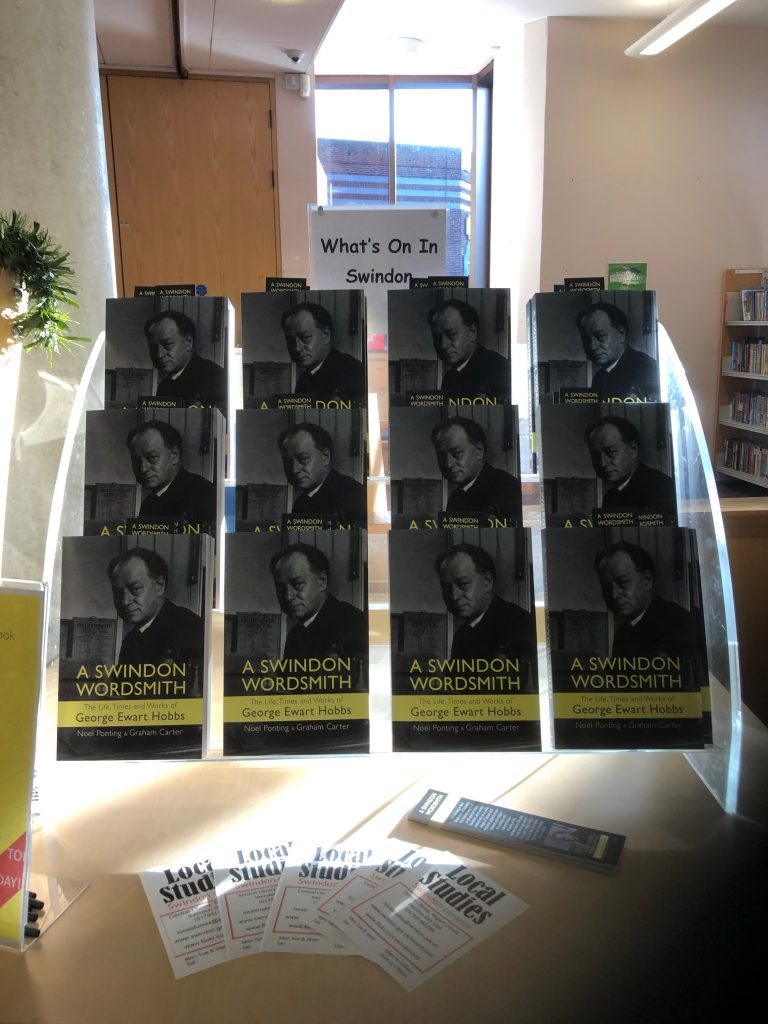
For today saw the launch, at Swindon Central library of a new Swindon book by Noel Ponting and Graham Carter: A Swindon Wordsmith: The Life, Times and Works of George Ewart Hobbs.
And a wonderful addition to Swindon’s own, extensive, literary canon it is.
The blurb on the book’s back cover tells us that George Ewart Hobbs deserves a place in the hallowed ranks of fellow Swindon writers, Alfred Williams (see Secret Swindon for some information about him) and Richard Jeffries – see also Secret Swindon and Swindon in 50 Buildings.
Our man Hobbs was no exception to the general Swindon rule: for over half a century he worked as a Great Western Railway engineer.
That aside, he wrote prolifically – largely in weekly columns for the Swindon Advertiser.
This book then is more than an account of his life and times. It also, as the title suggests, republishes some of his works. Including articles about religion, philosophy and more.
As the book blurb says: ‘George Ewart Hobbs’ vivid writing provides us with a unique and brilliantly observed insight into everyday and so-called “ordinary” life in Swindon a century ago.’
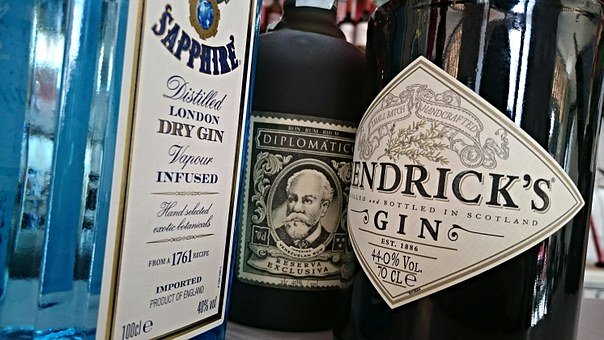
Gin and tonic. I have a confession to make. I loathe gin. And I’m not a fan of tonic either. Which is as bit of a bummer given that every bar in the land is awash with every variety of Mothers’ Ruin you can imagine. And, I daresay, some you can’t. So I can’t tell you how pleased I was when my good chum, Jo Garton, volunteered to take one for the team and write a few lines about her gin & tonic experience at Old Town bar, The Eternal Optimist.And more on that in a bit. Their Facebook page is here.
Meanwhile, I remain eternally optimistic that Sherry or Rum – two drinks I dolike – will soon have their moment in the sun.
Mother’s Ruin
I referred above to gin’s other moniker: mother’s ruin. You’ll many of you be familiar with the famous Hogarth engraving of the baby falling from its inebriated mother’s arms. This article from Historic UK about Mother’s Ruin shows it. As the article explains – if you think modern drug use is bad it had nothing on the gin-drinking habits of mid-eighteenth century English society. The drink even started as a medicine – thought to cure gout and indigestion. But by far its biggest attraction was its cheapness.
What is gin?
Well according to that fount of all knowledge (sort of) Wikipedia – ‘gin is a distilled alcoholic drink that derives its predominant flavour from juniper berries. Gin is one of the broadest categories of spirits, all of various origins, styles, and flavour profiles, that revolve around juniper as a common ingredient.’ They also say:
‘The earliest known written reference to jenever appears in the 13th-century encyclopaedic work Der Naturen Bloeme (Bruges). The earliest printed recipe for jenever dating from 16th-century work Een Constelijck Distileerboec (Antwerp).
The physician Franciscus Sylvius was falsely credited with the invention of gin in the mid-17th century. That said,Philip Massinger’s play The Duke of Milan (1623) confirms the existence of Jenever, when Sylvius would have been about nine years old.
It’s further claimed that English soldiers, who provided support in Antwerp against the Spanish in 1585, during the Eighty Years’ War, were already drinking jenever for its calming effects before battle. It’s thought the term Dutch courage stems from that.
According to some unconfirmed accounts, gin originated in Italy.’
Back to Gin & Tonic at the Eternal Optimist
On her experiences at the Old Town bar Jo writes:
Do you like your gin and tonic in a European style glass with an unexpected blueberry in an achingly hip environment? If so, then The Eternal Optimist may be for you. Well, I say ‘achingly hip,’ but I’m a dumpy, 55-year-old in comfortable shoes and an anorak, so you could be correct in thinking I may not be the best judge.
Perhaps I should offer some evidence for the hip credentials. Firstly the beard count: fourteen bearded to four unbearded men. It seemed churlish to count the women. The Eternal Optimist is up well-worn wooden stairs, nothing so suburban as stair carpet.
Then there is the decor, which is a blend of vintage 70s- breadfruit plants for example and the, very now, industrial lighting and jumble of empty gin bottles. The walls are grey with arty swirls of black, which might put you in mind of your stomach lining if you drink too much.
They have an impressive range of craft beers on the wall,as they are partnered with the Hop Kettle Brewery. More to my taste they have some interesting gins, many off the beaten track. I went for Boe Violet, but I’m keen to explore more of the range. they also have an extensive range of tonics, no bog-standard here. If I might make one small criticism, a black plastic straw is not in keeping with the ecological zeitgeist. My beloved, very much a creature of habit, went for the house wine, which he found extremely acceptable.
A somewhat, as is fitting, blurred photograph of a G&T with ice and a slice and a glass of house red at The Eternal Optimist.
The seating in the bar
The seats are, as you might expect, very random. Long tables with wooden chairs for larger parties and a couple of very comfy winged armchairs for a more intimate conversation.
All this and they offer home baked pizza three nights a week from the relocatedPizza Man – Timber’s Pizza. I’m sure they are, as Born-Again Swindonian tells me, delicious, but I fear I must avoid them in order to avoid my beloved’s lengthy conversations with said Pizza man, about the relative benefits of varieties of dough. Not a problem that most of you will have in this quirky hideaway bar in the midst of Old Town.
What a tonic
And finally a word about tonic water. According to Medical News Today, tonic water is a soft drink containing quinine. It’s that which gives it a bitter taste. Quinine is a common malaria treatment – thought also to help with leg cramps and restless legs syndrome.