An Agreeable Church and a Railway Church: St Augustine’s Church Swindon
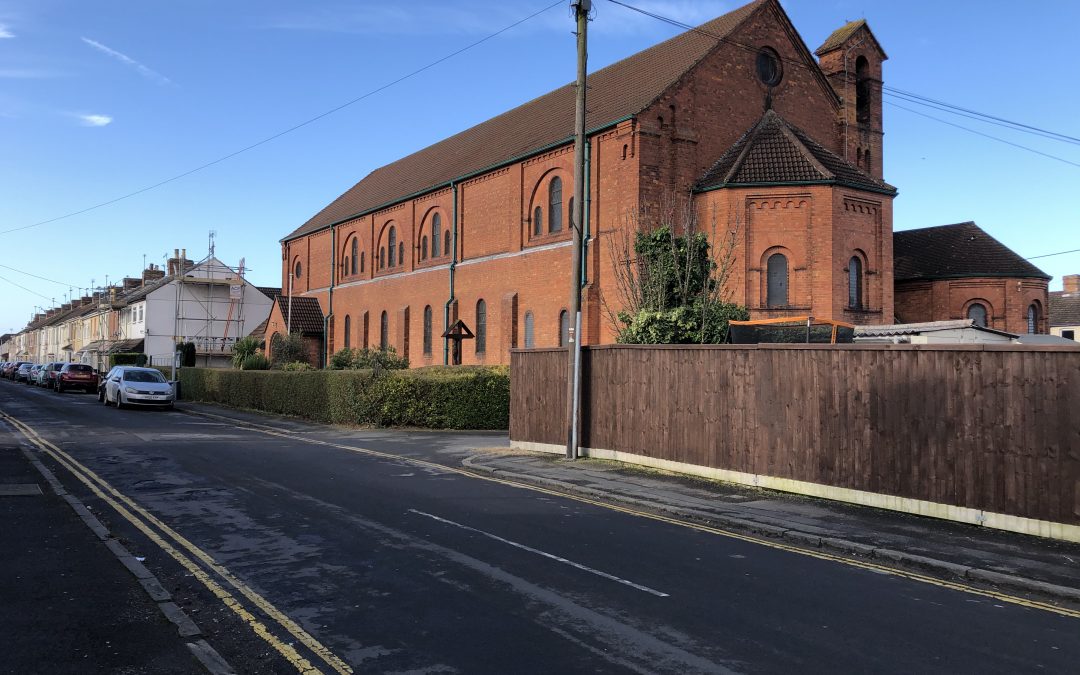
I have to say, I think this is a delightful church. Perhaps because it’s a brick rather than stone building, the church has a warmth to it. Sir John Betjeman visited it several times and even invited its choir to his Wantage estate. I enjoyed my visit to it anyway.
Along with first St Mark’s (by the GWR Park) then St Barnabas in Gorse Hill and St Luke’s on Broad Street, St Augustine’s came into being to meet the spiritual needs of the burgeoning population of New Swindon. Those who came to Swindon to work in the GWR Works.
Designed by W A H Masters the church is part of the Diocese of Bristol and province of Canterbury. It’s dedicated to St Augustine of Canterbury and is one of only a few churches Roman Basilica style churches in the south of England.
Fleur Kelly completed a series of gorgeous Byzantine artworks, like the one below, between 1987 and 1995.
Visit the church, and I urge you so to do, and you’ll find they have a handy leaflet that gives a short tour of the church and a brief history. It tells us that: ‘The acoustics in the church are good and that there’s a strong musical tradition there. In its early years, the choir often numbered 50 voices, singing in churches and cathedrals across the country. (or visit their website: https://staugustines-swindon.co.uk/history/)
Back in the 1960s, the church choir presented a steam locomotive plate to the choir of Westminster Abbey. And while we’re on the subject of trains – the following is lovely to see:
Commemorative plaque of GWR workers lost in WWI Legend on the GWR plaque
Early History
St Augustine’s began life as a former schoolroom, across the road from where Daniel (Sir) Gooch House now stands.
Church records show the earliest recorded baptism as being in 1885, while the licence for the performance of Divine Services was issued on 2nd April 1881.
Bell tower at St Augustine’s RodbourneByzantine style art in the Apse Interior of St Augustine’s. RodbourneStained glass window, St Augustine’s, Rodourne
And I loved these mosaics. Having seen them on the church’s Instagram feed I wanted to see them for myself.
I am Alpha and Omega, the beginning and the end, the first and the last. Revelation 22:13
Alpha mosaic in St Augustine’s Church RodbourneLoaves and fishes mosaicTree of Life mosaicOmega mosaic in St Augustine’s church Rodbourne
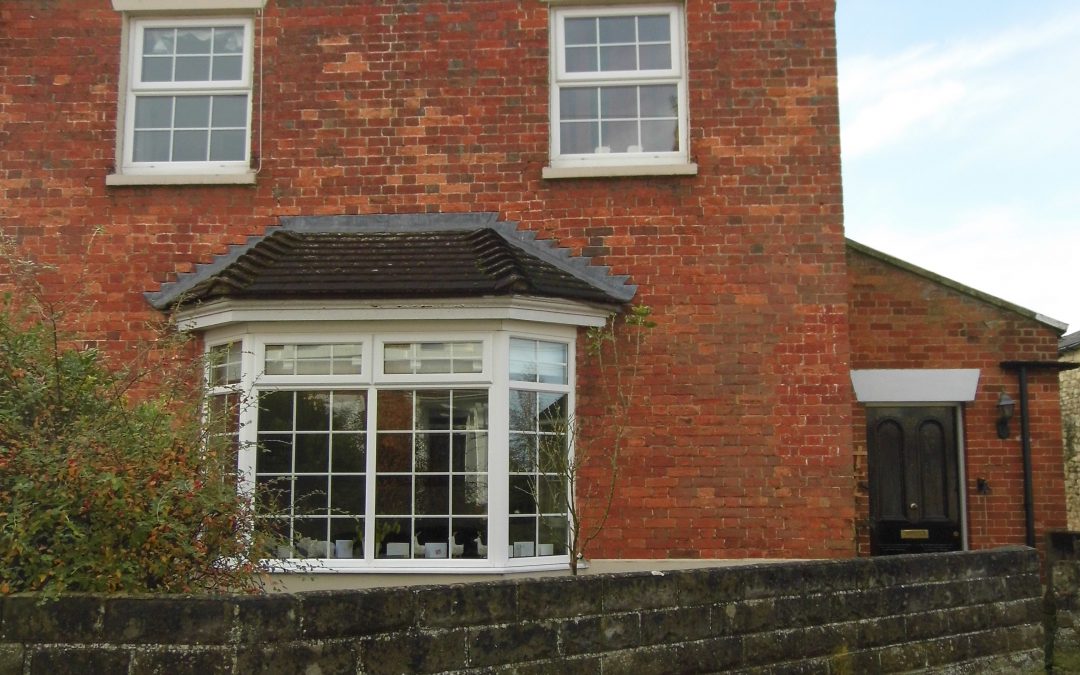
The Prospect Beerhouse is a building with an interesting history – both during and after its period as a beerhouse. And it’s now the home of friends of mine. It’s a curious thing, because when you’re in the house you do get a feel for its early life.
The front of the house that was once the Prospect Beerhouse
John Stooke’s book, Last Orders, has an entry for the Prospect Beerhouse – historically 20 Prospect Place. This is much to the delight of its current owners.
This building stands where South Street and Prospect Place join. According to John, in his book, ex-stonemason John Jones established the Prospect Beerhouse in 1848, with the Jones family running the place throughout its history as a beerhouse.
It seems that by 1850, John’s 68 year old mother held the licence – though, come 1853 the back door had John Jones’ name over it once more.
According to Last Orders, all appearances are that Jones’ beer selling venture didn’t end well – it seems that Frederick Large – in his Swindon retrospective recalls an 1865 incident of the landlord’s furniture being thrown out of the house and onto the street.
In the cellar at Prospect Place – the Beerhouse as was
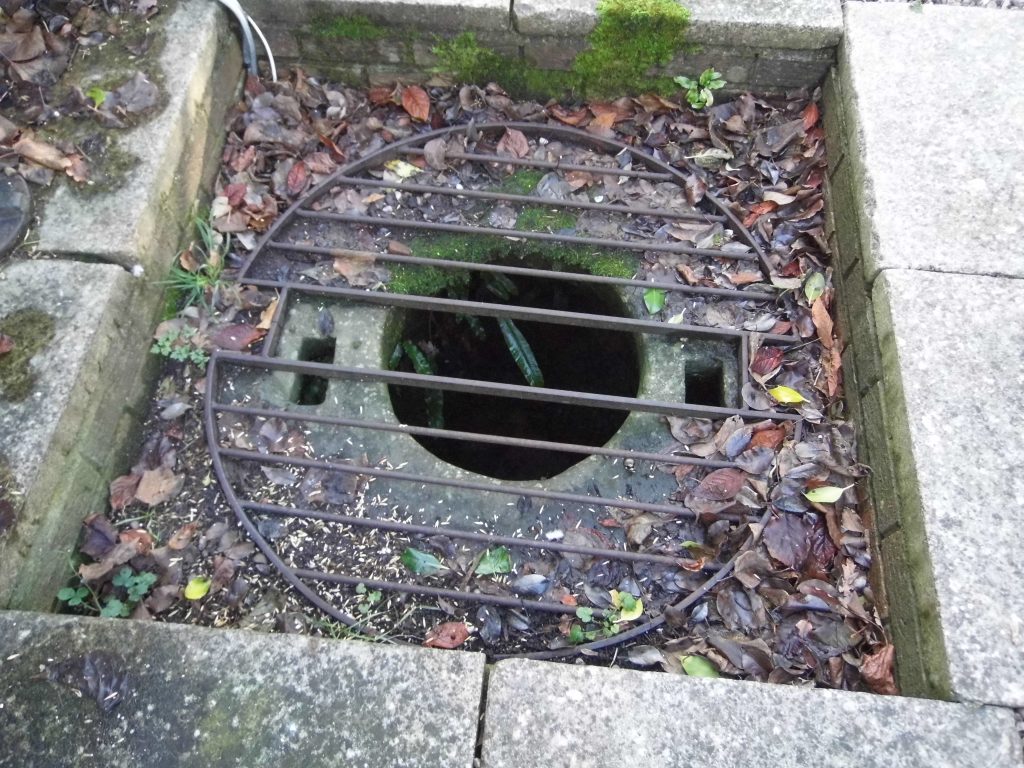
The well at Prospect Place – the Beerhouse as was
Life After Beer
The current residents of this house in Prospect Place, my aforementioned friends, have done some research into the well-known, Gateshead-born, founder of Swindon Ironworks: William Affleck – 1816-1894. His son Fred, occupied the former beerhouse, now domestic residence.
AS Mark Child points out in his Swindon Book, innumerable pieces of ironmongery – drain covers in particular – around Swindon bear his name. Why? The Affleck Ironworks that’s why.
During the 1850s, Affleck established his Prospect Works, off Eastcott Hill.
1887 saw the Old Town cattle market laid out and Affleck’s Prospect works supplied most of the pens. When you’re wandering around Swindon, take a look at the manhole covers. Many of them bear Affleck’s name.
And gardening too
With a slight touch of the bizarre, it transpires that Affleck was a talented gardener too. In 1869, Affleck placed an advert in the local paper for the sale of Capital Swedes. It’s interesting that the advert gave no address – only his name. So we can assume he was well known for his swedes and that people knew where to go for them. Given that he describes the swedes as capital, do we assume that 1869 was a good year – swede-wise?
Hello listeners. Here I am taking one for the team and continuing my tour round Swindon in 50 Drinks. If your perception of sherry is the dark, somewhat sweet stuff you remember your granny drinking in a schooner at Christmas – prepare for a surprise. Because there’s as much variety with it as there is with other wines. The fortified wine you associate with grandma and Christmas is more than likely Harvey’s Bristol Cream – or something similar. And you might be even more surprised to know that chilled is how you should serve it – according to them.
The merchant William Perry founded Harveys, in Bristol, in 1756. During the 19th C, Harveys turned themselves into one the biggest importers of sherry, from the Bay of Cadiz to Bristol.
In 1882, John Harvey II and his brother Edward created Harveys Bristol Cream from a blend of Fino, Oloroso, Amontillado and Pedro Ximenez grapes. If, like me, you can’t bear this stuff, rejoice! For there’s a world of sherry to explore. And the best news is that you can do your exploring right here in Swindon, at the Los Gatos tapas restaurant in Old Town.
What is Sherry?
A treasure of the wine world aside, according to Wine Anorak, sherry is ‘a fortified wine made from vineyards in the far south of Spain, where extreme heat—summer temperatures regularly exceed 40 ºC—is countered by cooling breezes from the Atlantic.’
Sherry Basics
With thanks to Los Gatos for some useful notes.
Sherry comes only from one small Spanish region. 50 million bottles are produced each year from 7000 hectares of vineyards. After the Spanish themselves the UK is the largest sherry consumer – 30%. No surprises there methinks.
Most sherries come from the Palamino grape variety. And doesn’t that sound like a horse? Only Palamino, Moscatel and Pedro Ximinez can be used for Sherry.
Every bottle has the Jerez or Manzanilla stamp and a unique number.
A Sherry Sampling Session
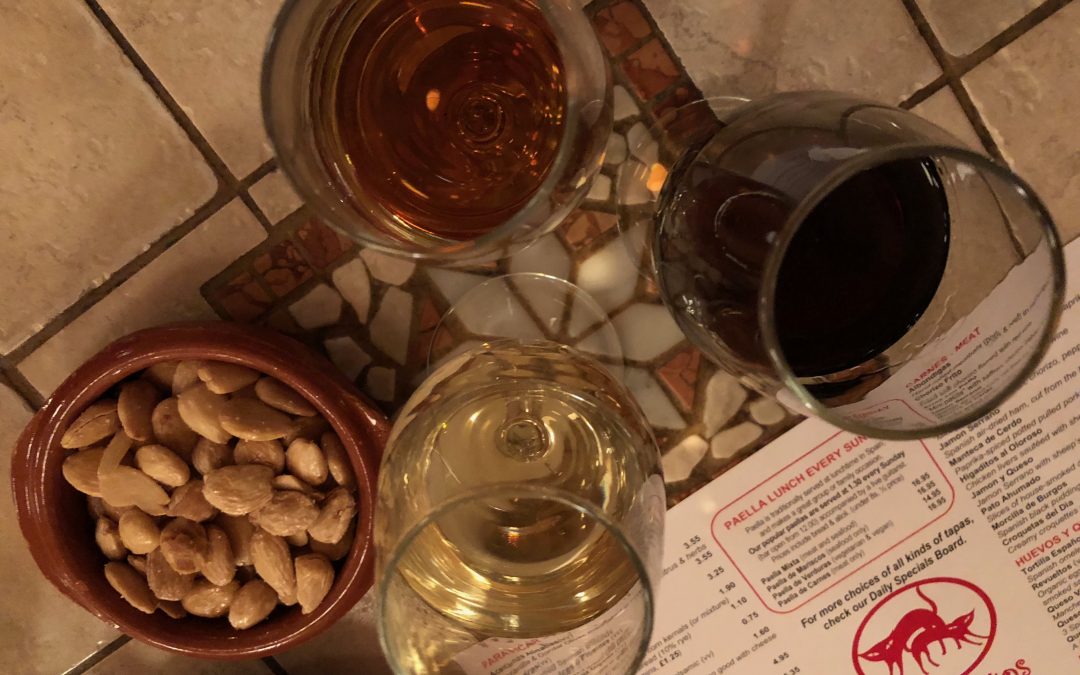
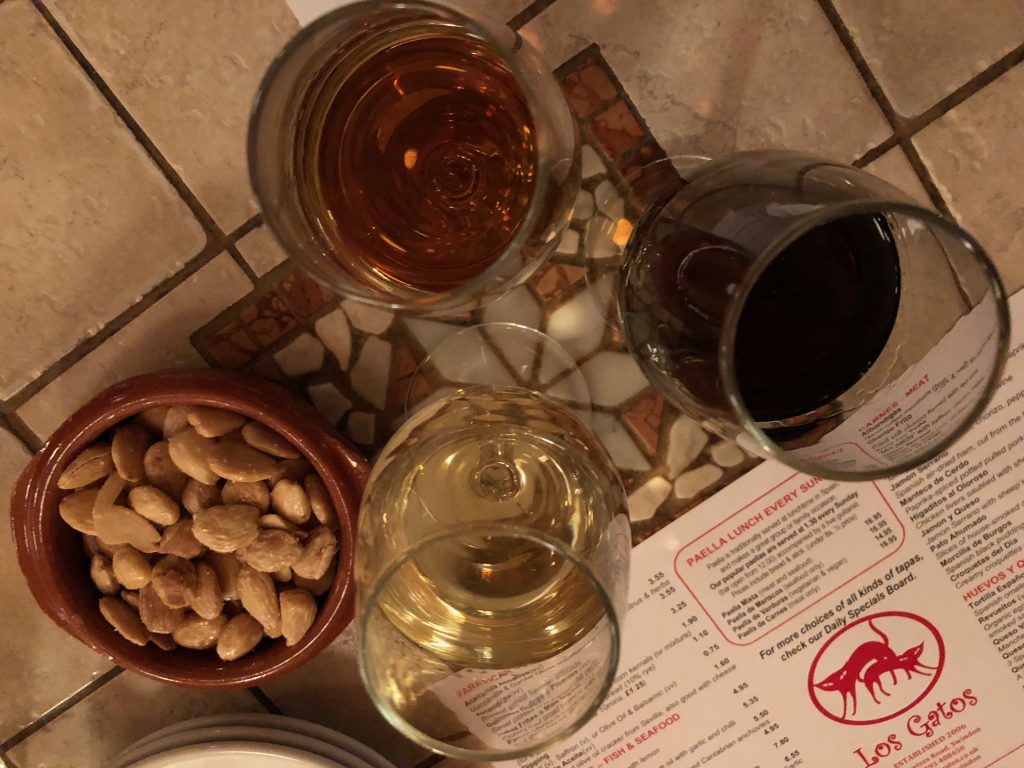
Myself and my chum Jo Garton, are both somewhat partial to a drop of the Spanish stuff. So not long back we two and a third friend headed to Los Gatos on Devizes Rd for a little libation. Or two. Chilled to perfection and with a bowl of salted almonds there are few things finer.
My friend Jo favours a Pedro Ximénez – the darkest one in the pictures above. That’s still too sweet for my palate. I like a Fino. Or, my fave, a Manzanilla – the middle one you see. I believe Amontillado is the third sherry in the pictures.
Sherry Tasting Notes
Los Gatos kindly gave me some tasting notes about sherry to use in this blog, so what follows is thanks to them.
Manzanilla
Only produced in the town of Sanlucar
Very pale, straw-yellow colour.
Pungent, yeasty nose with hints of almonds and camomile.
Dry, fresh, delicate and nicely bitter on the palate, with salty notes.
Always serve well chilled.
Great with seafood
Amontillado
Amber to pale mahogany colour
Slightly pungent, with a deep, complex, nutty nose.
Full and smooth on the palate, with a dry finish and a persistent aftertaste.
A good all rounder with cheese and meat
Pedro Ximénez
Extremely dark mahogany colour and dense, syrupy appearance.
Deep aromas of dried fruits (raisins), gaining complexity with ageing: toffee, liquorice…
Very sweet taste, with a smooth, velvety texture. Very long aftertaste.
Great with bitter chocolate desserts or poured over vanilla ice cream
I’ve been meaning to do this post about Revolution Performing Arts for a while now. But y’know how it is. I’m sorry Fi!
Fiona Di Silva Adams invited me to attend the show, by Revolution Performing Arts, called Be Your Unique at Swindon’s Arts Centre earlier in January. It’s taken me until now to get round to give it a mention here.
‘Being unique is better than being perfect‘
‘RPA Rapport is a performing arts company with a difference – actively encouraging young people to find and celebrate their differences.
Changing young people’s lives. RPA nurtures all young people, empowering them to feel fabulous and celebrating the amazing individuals they are: revolutionpa.co.uk
In this annual sharing performance, the teenage members of RPA Rapport worked with professional arts practitioners to create pieces that explored what it means to be unique. This uplifting and thought-provoking performance comprised short drama, dance and music pieces all designed and technically managed by the young people themselves in their own words and attitudes.”
There were insightful monologues written by the young people themselves. They did the choreography themselves also. And, above all, as it says on the groups Facebook page: ‘showed that with young people in this world we can all make a difference to embrace our uniqueness and make the world a better place.’
As a friend of mine, Carole Bent, said of the dress rehearsal of this performance:
‘A genuine privilege to witness the dress rehearsal of ‘Be Your Unique’. Very well done to every single young person taking part, RPA team & the Arts Centre.
Am sure that the audience tonight will be as moved and engaged as I was & hope that everyone on stage enjoys every moment. Thankyou Fiona Fi Da Silva-Adams Paul, Sam Olly & all xx’
And Amen to that says I. Because being unique is sooooooo much better than being perfect!
Between September and November 2019, the popular Beat the Street game returned to Swindon. And a new report shows improvements in activity levels for adults and children across the borough. Beat the Street gets Swindon moving!
This was the second time the town’s residents had played the game. And this time, almost 26,000 people walked, ran and cycled 252,127 miles. Sixty-nine schools got involved with the initiative, with six out of 10 primary school children taking part.
They surveyed participants at the start of the game and immediately after, to see if their activity habits had changed. Key results show a decrease in the number of adults reporting less than 30 minutes of activity per week. While almost one in ten did more. There was also an increase in the number of adults reporting that they are doing the government’s guideline of 150 or more minutes of activity per week. With almost three in 20 people doing more.
As with the first Beat the Street game in 2018, the game helped encourage them to walk or cycle more often, visit new places and spend more time with their friends and family. One participant said: “I recently lost my job and spent a lot of time inside and was becoming very annoyed by being in the same four walls. Doing Beat the Street got me out the house. The exercise made me tired so I slept better. It also gave me quality time with my boys and something we could bond over. I don’t get involved with computers or football so it made me happier.”
And I will walk 500 Miles … or more …
The player who travelled the furthest in 2018, went one better in 2019 and ran, walked and cycled more than 2,500 miles. Greg Wells, a passionate parkrunner, clocked an amazing tally of 80,000 points, three times more than he achieved in 2018.
He has travelled further than anyone else who has played Beat the Street in the UK and beyond, and his score is higher than many team totals.
Greg said: ‘I loved Beat the Street. I like a physical challenge and I did go around other areas of Swindon and discovered new parts of the town. Anything that gets people off the sofa, people who don’t tend to exercise, is great. And it was good to see people getting out there and being active with their children.’
Beat the Street gets Swindon moving!
Councillor Brian Ford, Swindon Borough Council’s Cabinet Member for Adults and Health added: “We’re delighted at the findings in this report and the legacy left by Beat the Street. The scheme was the talk of the town. It continues to encourage local residents to get more active and improve the health and wellbeing for everyone across the borough.”
Now, Beat the Street Swindon is back for one day with a Street Orienteering event. It’s taking place on Saturday, 1st February at the Link Centre in West Swindon from 10.30am to 1.30pm. Registrations are open from 10.30-12.00. Visit the North Wiltshire Orienteers website for full details – www.northwilts.org.uk.
About Intelligent Health
Intelligent Health’s mission is to build active communities. Created by Dr William Bird MBE, we embed understanding on the impact of the social determinants of health in programmes including health workforce training, social prescription, the development of city-wide strategies and Beat the Street.