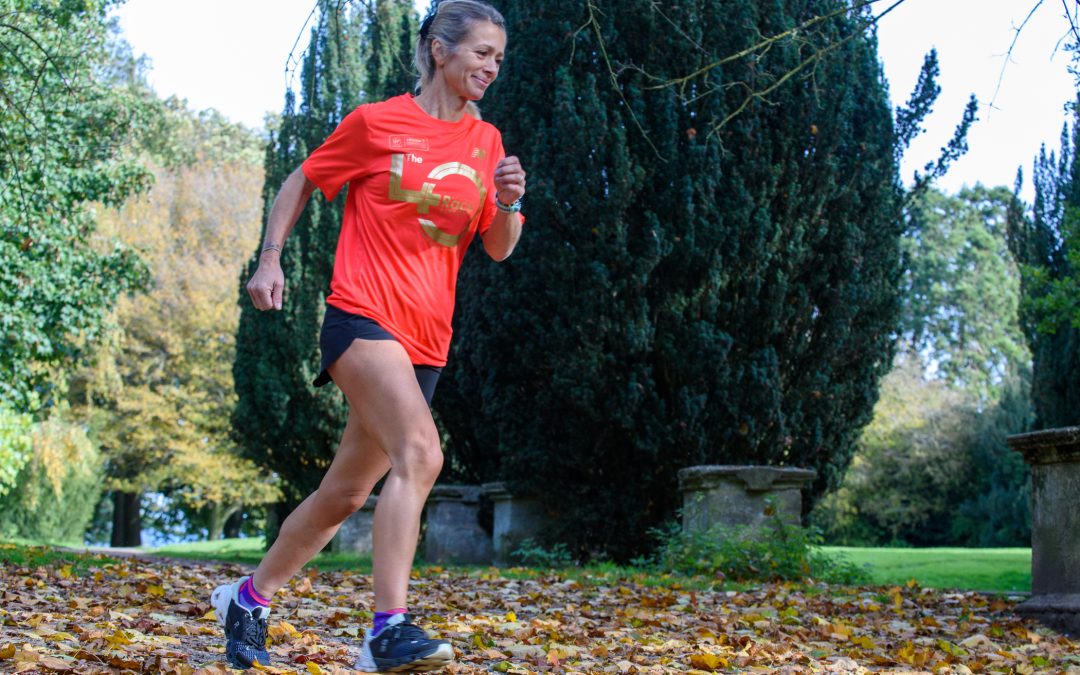
Known by everyone as Chelle, Michelle White is in training for a gruelling 48 hour challenge to run more than 251 miles on a treadmill. The aim? To raise £4,800 for charity.
The 48-year-old, who lives with her family in North Swindon, set herself this personal challenge after getting the running bug a mere five years ago. She started running after losing her mum Linda to lung cancer and wanting to do something in her memory.
I did Race For Life after mum passed away and that was it. Since then I’ve run thousands of miles from 10k runs to half marathons to marathons. I did the London Marathon last year in 3 hours 43 minutes. I’m classed in the top five per cent of runners for my age group. I also did this year’s virtual London Marathon running to Bromley and back, completing it in 3 hours and 24 minutes.”
On Friday November 20, Chelle will start running on a treadmill at the premises of Any Time Fitness in Old Town – one of her sponsors. She’ll attempt to win a Guinness World Record for miles run on a treadmill in 48 hours. This currently stands at 200 miles for women and 251 for men. Chelle wants to beat both records.
About Doing it for Dan
Doing It For Dan is a charity created in memory of Daniel Climance. He died, aged 11 after, in a road traffic collision in Purton while cycling.
His parents set up the charity. It provides grants to individuals, teams and organisations around Swindon and Wiltshire that give young people the chance to take part in sport. Dan was sports mad himself, particularly when it came to football and martial arts.
His mum Helen said: “We’re thrilled Chelle has offered to do this and support Doing It For Dan. We’ll use any money she raises to support young people in taking part in sporting activities. Something that was so important to my son and also to his wellbeing. To be able to help others engage in sporting activities is wonderful.”
Training before the challenge with Mike Land from Nickel Design and friend Helen Hancock as well as hubsand Matthew White supporting her all the way. Chelle is rasing money for local charity, Doing It For Dan. Photos taken by Barbara Leatham Photography on October 19th in Old Town Swindon. Thanks to Anytime Fitness in Swindon for access to where Chelle will be doing her challenge.
Dedication to running
Chelle’s dedication to running is even more inspiring because she suffers from an incurable auto immune condition, rheumatoid arthritis. Her condition which causes joints to swell and become very painful. They can become permanently distorted. After her diagnosis, Chelle was put on strong drugs. Yet she found her quality of life was poor with constant sickness and exhaustion.
“I have RA, it doesn’t define me,” Chelle said. “I decided I don’t want to take drugs which make me feel terrible, I want to live my best life. Now I take painkillers only when necessary, I exercise and I have recently adopted a vegan diet. That hasn’t been easy but it’s made a world of difference.
Since training for the event I’ve lost two stones, when I didn’t have two stones to lose and this shows the real toil of training. I couldn’t be more serious about this endeavour.
To support Chelle’s efforts – runner doing it for Dan
Great news for children in North Swindon who love singing, dancing and acting with a new performing arts class for North Swindon. The class will start at the Great Western Academy on Thursday November 5th.
One of the town’s leading performing arts company, Revolution Performing Arts, is offering a socially distanced class.
The classes will be in the sports hall at Great Western Academy in William Morris Way (SN25 2PP) weekly from Thursday November 5 from 5.30pm to 6.30pm.
Founder Fi Da Silva Adams said: “We’re starting the Great Western AllStars for children aged between four and 11 years old.
“We have an ethos of empowering children who can sing their favourite music, create their own dramatic scene, share their own dance moves and feel safe and secure in doing so. If they don’t want to perform they don’t have to. We want to create a fantastic, relaxing and fun experience for them.”
The Before Times
Until now, RPA were holding classes in local primary schools. But those schools are not allowing third parties to use their facilities to until 2021. Fi Da Silva Adams and her team of leaders believe youngsters need to get back to activities as soon as possible for their mental and physical wellbeing.
“Our classes are a safe and Covid-secure environment where we ‘re serious about social distancing. It’s our belief that children need to look forward to taking part in activities which bring them joy. And that’s why we’ve now found an alternative venue for our class.”
RPA leader Jade Carroll will run the new performing arts class for North Swindon with her thirteen years of dance experience.
Jade Carroll, the leader of the new Great Western AllStars group run by Revolution Performing Arts. Photographs taken by Laura Barnes.
RPA leader Jade Carroll will run the new group with her thirteen years of dance experience.
She said: “I’m excited to be starting this new class and look forward to meeting the children and their parents. We do ask that everyone books in advance so that we can ensure safe social distancing measures.
Note though that everyone’s first session is free of charge!”
About RPA
Fi Da Silva Adams founded RPA in 2007. The team have run online sessions throughout lockdown. They’re now getting back to Covid-safe classes across Swindon and surrounding areas.
The organisation received a grant from Arts Council England through the Covid19 Emergency Fund to enable them to continue supporting local children.
All their teachers are DBS checked, trained in first aid and receive full training in safeguarding protocols. It specialises in empowering young people to celebrate their individuality through the power of performing arts.
Kimmerfields site identified as location for Swindon’s new Cultural Quarter
Kimmerfields for Swindon’s new Cultural Quarter – or looks that way anyway.
Exciting plans to rejuvenate the arts in Swindon could get a huge boost next week. Why? It’s when members of Swindon Borough Council’s Cabinet decide on where to build a brand new cultural quarter.
Over the past 12 months, the Council has worked at close quarters with key partners in Swindon’s arts, cultural and business sectors. Together they’ve developed a credible and deliverable plan to create a new Cultural Quarter. The aim of it to help revitalise the town centre and boost the town’s cultural offer.
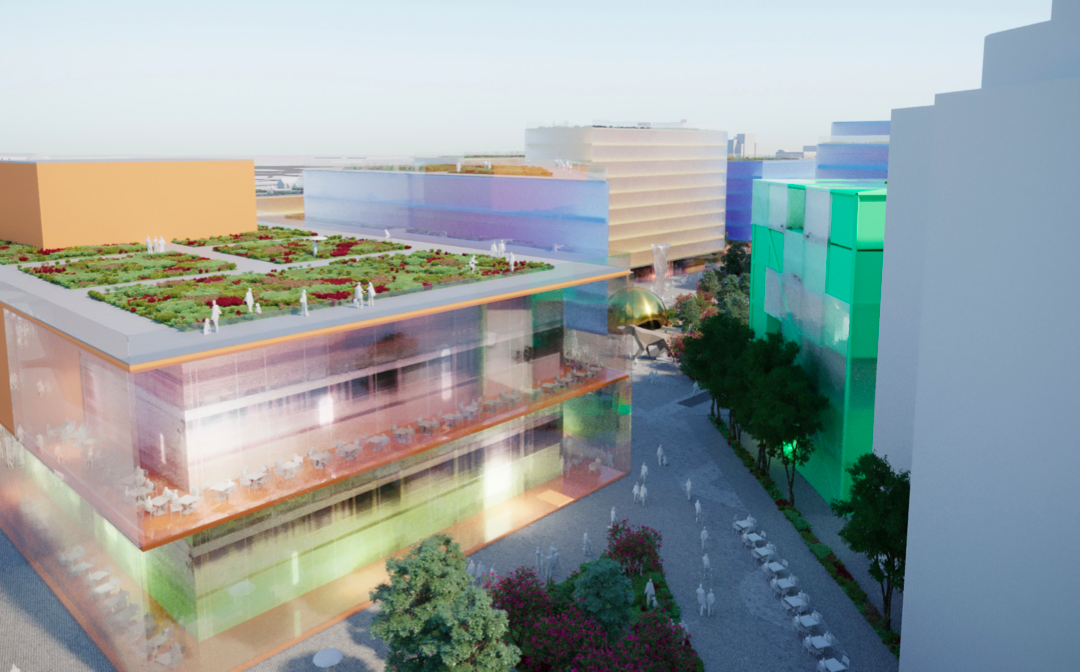
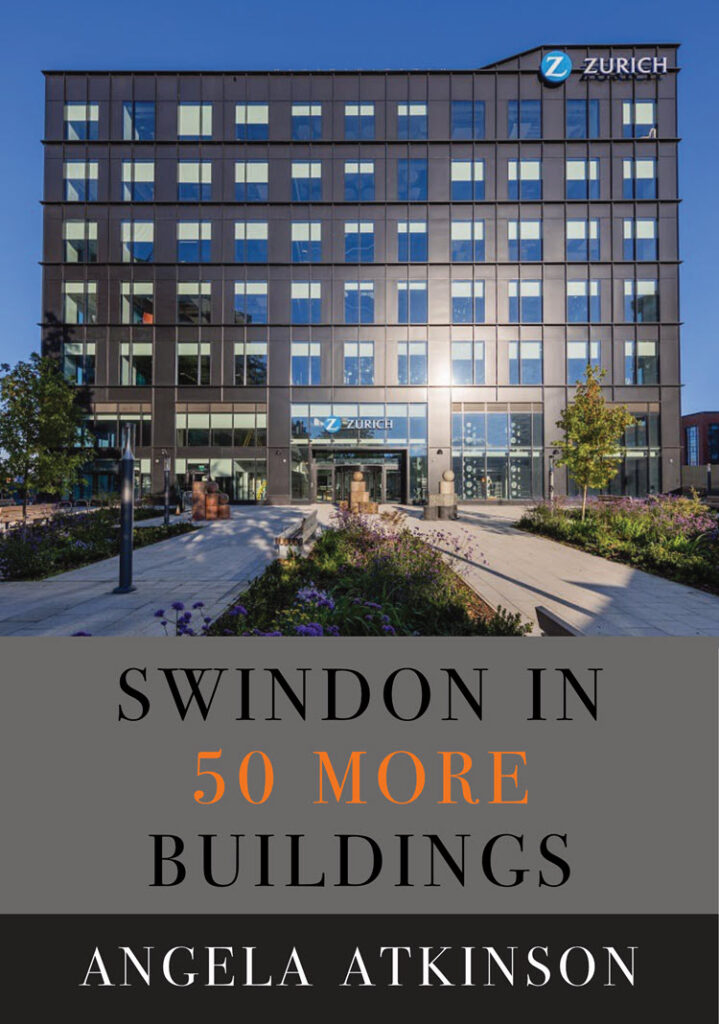
The Council’s Cabinet will discuss a report next Wednesday (21 Oct). It proposes to move the Wyvern Theatre and build the cultural quarter on the derelict Kimmerfields site. A key site which lies between the railway station and opposite Debenhams on Fleming Way. Kimmerfields will also be home to the new flagship Zurich office. This is the first major office development in Swindon town centre for 20 years.
Artist’s impression of new Zurich offices
Funding for the project
SWELP (Swindon and Wiltshire Local Enterprise partnership are the funders of the exercise. It’s followed and established development process with input from professionals in the sector.
Built in the 1960s, the town’s Wyvern Theatre is reaching the end of its life and new cultural forms and audiences need new facilities in which to thrive. Engineering reports highlight that there is a need for over £20 million of refurbishments.
It’s expected that the plans for the cultural quarter will come to fruition over the next decade. It will include, among other things:
A new theatre
A dance centre,
Digital media and arts hub and …
… new facilities to display Swindon’s nationally-significant art collection.
The costs
Expected costs for the whole thing are in the region of £80m. Of course the coronavirus pandemic has placed on hold most funding routes for cultural projects and capital infrastructure. That said, the Council expects an announcement of new schemes later this year and into next. This work will ensure Swindon is well prepared for the next round of bids.
An economic impact assessment has concluded that the cultural quarter could add more than £35m a year to Swindon’s economy. In addition it could create as many as 1,200 jobs for the town.
Assuming the reaching of an agreement at Cabinet next week, progression of the plans will take place via a partnership. This approach will bring together:
The town
Swindon’s arts sector
diverse public and private sector stakeholders and
funding bodies
All working together to develop and sustain a long-term cultural offer of internationally recognised scale and quality for all Swindon’s citizens.
Councillor Dale Heenan, Swindon Borough Council’s Cabinet Member for the Town Centre, Culture and Heritage, said: “When I took over as cabinet member, I made it clear to everyone that there needed to be a focus on fewer, more impactful projects. Projects that will make a visible difference to Swindon. And that change doesn’t happen overnight.
The jigsaw is coming together
“The pieces of the jigsaw are coming together. There are now cranes and diggers on site for the first new office development in 20 years. Further, expect imminent decisions for £50 million of funding bids for the town centre, a refurbished Health Hydro, completion of the fantastic Carriage Works regeneration, new Hampton by Hilton and Premier Inn hotels and much more.
Now is the time to present plans for a new Cultural Quarter and build on Swindon’s momentum to ensure that, by 2030, we will see a very different town centre.
Hampton by Hilton – artist’s impression
“Cabinet’s ambition is to see the building of a new Wyvern Theatre with capacity doubled to 1,200 seats. This way we can attract the best national and regional shows and performers for residents to enjoy. We also want to deliver a new museum and art gallery that is proud to display Swindon’s nationally recognised collection of artefacts and exhibits.
“If approved by Cabinet next week, the next six months will see focus placed on writing the financial business case and investment prospectus, for the £78m needed to bring the Culture Quarter to life. This is a fantastic opportunity for Swindon and we must grasp it with both hands.”
Two prospective sites
The process of identifying an appropriate location for the cultural quarter involved the consideration of two sites:
1. The current one at Princes Street, with the existing Wyvern, former town hall and Central Library at its core and … 2. … the Kimmerfields site.
Options were developed for both sites. Then, following an analysis of the relative strengths, opportunities and weaknesses of the two sites, a preferred solution of development at Kimmerfields came into view. A viable and attractive back up opportunity at the Princes Street site will also be available were this not to progress.
The Kimmerfields site has significant development benefits, with much of it already cleared and ready for construction. It occupies a central location close to the railway station. And, as a gateway to the heart of the town centre, it provides the opportunity to spearhead town centre regeneration.
The proposals sit against a backdrop of significant change happening in high streets and town centres across the country. These changes are both pre and post pandemic, affecting footfall and the viability of retail led centres. Investment in Swindon’s cultural offer represents an opportunity. An opportunity to address these challenges by driving footfall in the town centre and allowing other amenities and businesses to prosper.
Swindon Dance
Viv Slayford, Artistic Director at Swindon Dance, said: “Swindon Dance has had its base in the town hall for over 40 years. And while the building has been the bedrock to our early development it is now a cap on our future growth.
“Moving to the cultural quarter will give us the space and facilities to continue to grow and prosper across all areas of our work. That in professional and non-professional, local and international. It will also enable us to work with Swindon’s other cultural organisations. To kick start the town’s economy and bring the passion and heart back to our town centre.
“Swindon Dance has a national and international reputation for developing young and professional talent in the dance world. It supports the growth of the art-form on the international stage. What’s more it makes quality dance projects accessible to our local community regardless of a persons’ background.”
Back to SWELP
Paddy Bradley, CEO of the Swindon and Wiltshire Local Enterprise Partnership, said: “This is an exciting project for Swindon – so rich in both arts and culture. Swindon has always had a fantastic cultural offering. From its amazing art and museum collections, through to its nationally recognised dance and theatre companies and vibrant music scene.
“The choice of the Kimmerfields site for this development is an inspired one. It links the railway station transport hub with the town centre through a cultural quarter buzzing with people.
We’re delighted at The SWLEP to help cement the future of Swindon’s cultural sector allowing it to expand and thrive.”
Before I talk about Marlborough Lane wildlife corridor in particular let’s first define what a wildlife corridor is – and what it does.
Well, the Woodlands UK website tells us that the term refers to any linear feature in a landscape that wildlife can use to migrate or disperse.
Put another way, a wildlife corridor is a strip of natural habitat connecting populations of wildlife otherwise separated by cultivated land, roads, etc.
Download a PDF all about The Great Copse from the Wildlife Sites Project for Wiltshire and Swindon
Such a thing is a link of wildlife habitat – as a rule native vegetation. It joins two or more larger areas of similar wildlife habitat. These corridors are critical for the maintenance of ecological processes – including allowing animals to move from one place to another. And to allow viable populations to continue.
Wildlife corridors are critical for the maintenance of ecological processes, including allowing for the movement of animals and the continuation of viable populations. And Swindon has the great, good fortune to be particularly blessed in all things nature and wildlife. I’m thinking not only of wildlife corridors such as this but of the wildlife lagoons over to the west, Hagbourne Copse and many, many more green spaces besides. All of them important for biodiversity. Indeed a chap from Wiltshire Wildlife once commented to me how underestimated Swindon is – in general but in particular for its astonishing amount of green spaces and wildlife habitat.
About Marlborough Lane wildlife corridor
Though not too welll-known, Marlborough Lane comprises one of Swindon’s longest-standing natural wildlife corridors. It stretches from the Great Copse, along Marlborough Lane to willow trees on the embankment. Over 200 mature trees along its length provide an essential foraging route for bats, birds and bees.
The corridor also forms a vital barrier between the large car park belonging to the Marriott Hotel and all who either live on the lane or travel along it to the Croft sports centre, school and playgroup.
The tree line lies on the Marriott’s land. But it’s the residents of the lane that have planted the long laurel hedge along the mid-section and the shrubs and flowering plants on the end of the lane.
The Embankment
The embankment once had a life as the old railway line. A few years ago an initiative started by residents Adrian and Andrea Downing led to the planting of sixty trees with Cllrs, residents and the Croft School’s first intake of pupils.
The embankment is bedecked too with a host of daffodils sufficient to inspire Wordsworth himself. Or his sister, Dorothea. But I digress. Swindon Borough Council gave the bulbs towards an early spring clean by Old Town Residents Association (OTRA). Many got involved in planting them including the Scouts. OTRA created the flower bed on the embankment and maintain it to this day.
Background/context
One of the movers and shakers behind this particular wildlife corridor is Marlborough Lane resident, Carole Bent. Her motivation for highlighting the importance of this particular tree line began around ten years ago.
Said Carole: ‘like many, I’ve had a lifelong love of nature. It inspired my first small (in physical size) book Wisdom of the Catfish in which I mention learnings from our natural world – including those close to home. Earlier this year the British Naturalist Society asked me to write an article highlighting the Great Copse and the wildlife corridor.’
NB – see the link above for a downloadable PDF about the Great Copse.
At the start of Covid-19 we saw a dramatic reduction in traffic and an increase in people’s appreciation of nature and their environment in general. And that made me think how great it would be to use this period to help people take a fresh look at the natural environment. Both close to their home and on their way to the Croft.’
A chat with Croft School
‘A conversation with Elaine Murphy, head of Croft School, and her husband reinforced my thoughts about seeing the area as a mini nature reserve and a place worth looking after. ‘
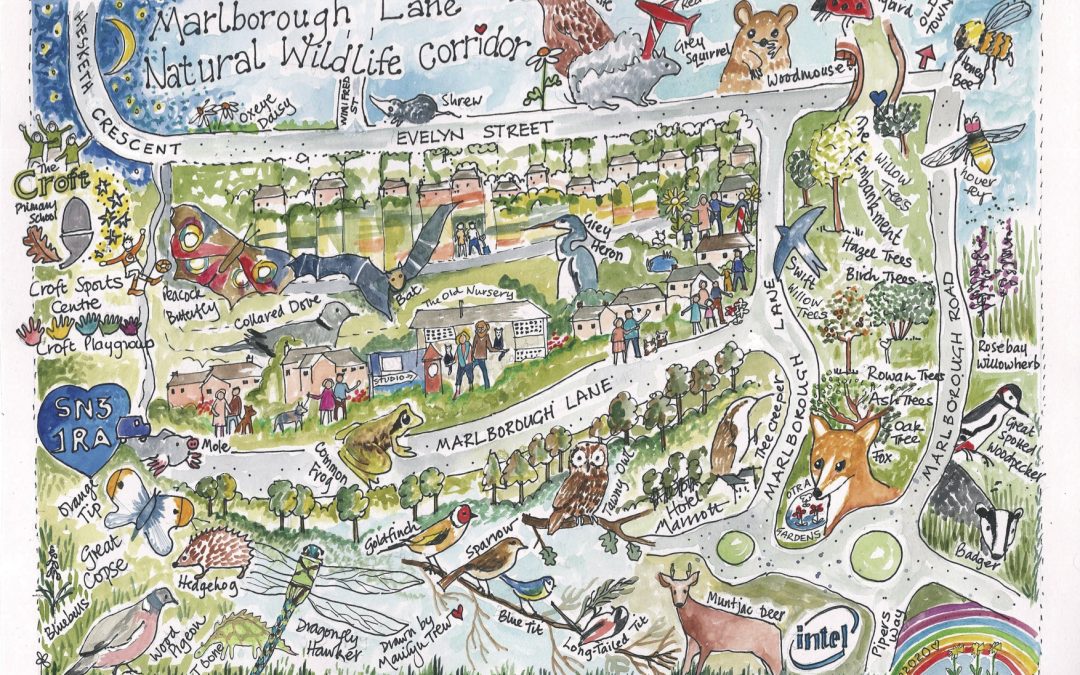
Thus Carole approached Swindon artist Marilyn Trew (someone slowly mapping Swindon) to create an artwork. Said Carole: ‘I love the way that her work engages people with nature & felt that a visual interpretation would be positive – including for the young children who go to the school, playgroup & all ages at the sports centre. I knew this would be something uplifting for them to see when they returned to school in September.
‘A group of neighbours met in our garden & we shared our knowledge of the wildlife and plants with her. Marilyn has kindly gifted this to our community, including access to a black and white version for children of all ages to colour in! Marilyn & I intend to visit the school at a time to suit the head teacher.
We hope to have full sizes signs also made & will follow this up with Parish & SBC Councillors. The effect of nature on our wellbeing is well-recorded and seems more important now than ever.’
If you’d like to download the black and white version of Marilyn’s map to colour in yourself there’s a link below.
Marilyn has long held an interest in all aspects of nature. She now manages 3 art groups in Swindon and exhibits her work around Swindon and its environs. Currently Marilyn is concentrating her efforts on nature and heritage charities.
Well listeners – here I am again with yet another new-to-me cafe. This time Cafe Nexus Cheney Manor.
Yep, tucked away at the back of a business block on the Cheney Manor industrial estate. Who knew? Well a lot of people it seems as I think it’s been there for a good old while. Anyway – earlier this week I visited it for first time for breakfast with some chums of mine.
‘If you’re looking for an affordable breakfast or lunch that doesn’t compromise on quality, then visit us at Café Nexus.
Situated overlooking a riverside, Café Nexus is the idyllic setting to enjoy freshly-made food in comfortable surroundings.
Create your perfect breakfast or lunch from our deli bar, or order from the kitchen one of our carefully designed dishes or specials.
And for those in a hurry, why not simply pre-order your meal for collection? Serving the finest illy Coffee, Tea and nutritious food, make Café Nexus your weekday eatery. Hot food served until 14:30 Monday to Friday Deli bar until 17:00 Monday to Thursday 15:00 Friday.’
NB: COVID SERVICE – REDUCED HOURS:
Monday to Friday: hot food served until 14:00 Deli food served until 14:15
The office building behind which you’ll find Cafe NexusCheney Manor.
A surprising setting
What makes this cafe so charming, aside from the tasty food and super friendly service, is the cafe’s setting. Because what you’d never know from the view you see above is that it enjoys a delightful river view. Isn’t that fabulous?
In the current Covid climate they’ve created an environment that feels safe and comfortable – so it’s definitely worth a visit. But you do have to book of course.
There’s ample free parking in front of the building so another good reason to give it a try.
The review below is from Gary Hazell, one of the party with whom I went to the cafe.
I opted for the small English breakfast and a regular black coffee – and jolly nice it was too. It kept me full for hours.
The small English breakfast at Cafe Nexus Cheney Manor