A SoMAG response to SBC’s leader’s response to a question
SoMAG responds to SBC’s leader NB: I’ve edited the following only for the purposes of SEO &YOAST
Dr Barbara Swan sits on the committee of the Friends of the Museum and Art Gallery. At SBC’s cabinet meeting on 13th Oct 2021 she asked this question of the Leader:
( a title I can’t hear without thinking of Daleks …)
‘Can the council explain the financial logic of selling off a substantial piece of property in a prime location [Apsley House], at a time when interest rates on cash deposits are very low, to part- fund a project that has no starting date as yet?
Property is the one asset that increases substantially in value. So what’s the financial argument for selling the building now? Surely it makes far better sense to make the necessary repairs (which we understand you’re making in order to make it saleable) and hang on to it so the council can get maximum benefit from its future appreciation in value?’
The Leader of the council responded thus:
‘Thank you for your question.
As we explained at the previous meetings of Cabinet and Scrutiny, we need to sel Apsley House to contribute to a new permanent facility in the Town Centre. The sale of Apsley House will make a small contribution to the cultural quarter as a whole. But a potentially significant contribution to an Art Pavilion in the Cultural Quarter or a relocated museum elsewhere.
We need to move quickly with the sale of Apsley House. That will enable us to deliver a solution that will minimise the time that the collections spend in a temporary location. The costs of repairing Apsley House are significant. And the problems of disabled access into the majority of the building were detailed at the previous Cabinet and Scrutiny meetings. The Council cannot make Apsley House DDA compliant. And we cannot continue to permanently operate a facility in a building that does not enable access for all.
Of course, not all improvements costed for Apsley need doing prior to any sale. Indeed a number could prove abortive depending on the end use of the building.
There is no guarantee that the value of the building would increase if it were retained. Buildings deteriorate quite quickly when they’re empty. Especially so in this instance as the building is listed, so there are holding costs for maintenance and for security. In the circumstances, there is nothing to justify the Council retaining ownership of the building.’
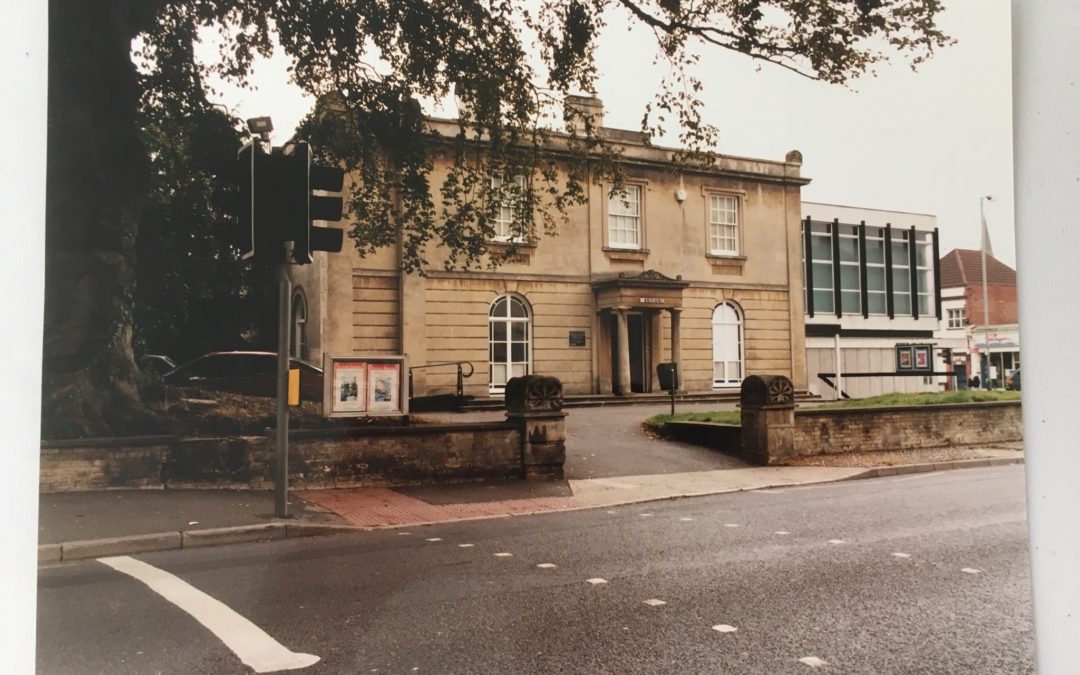
Aspley House home of Swindon museum and art gallery – Swindon Museum and Art Gallery Closure
SoMAG’s response
A spokesperson for Save Our Museum and Art Gallery (SoMAG) said:
To be very clear, SoMAG is in full support of the concept of establishing a cultural quarter. One that includes a museum and art gallery, in Swindon’s town centre.
Indeed, many of our 5,000 plus supporters, from all areas of the borough, worked to support the 2017 Heritage Lottery Fund bid for a new museum and art gallery in that very area. That demonstrates our passion for a central cultural quarter.
Yet SBC’s response to Dr Swann’s question is alarming for several reasons
In 2017, as part of the bid for HLF funding for a central museum and art gallery, the Council committed to retaining Apsley House as a community asset. The Council has come under fire over the years for failing to safeguard buildings it doesn’t actually own and thus has little control over. The Mechanics’ Institute and the Corn Exchange being two examples.
But the Council does own Apsley House. It can control that building’s future, at least until realisation of its vision for the town centre.
It’s worth remembering that, in 2017, SBC requested the Parish Council take on Apsley house for community use in the event of success with the Heritage Lottery Fund bid. Indeed, South Swindon Parish Council did register an expression of interest in 2017.
SBC state the sale of Apsley House has the potential to make a significant contribution to an art pavilion in the cultural quarter or a relocated museum. In which case isn’t it crucial that SBC does all it can to maximise the real value of the sale?
A disingenuous assertion?
They assert ‘there is no guarantee that the value of the building would increase were it retained. That is either very naïve or disingenuous.
‘There’s no guarantee about almost anything in life. But history shows that well-maintained property very much tends to increase in value. We’re not proposing that Apsley House remain empty, to deteriorate. Rather we’re urging SBC to take South Swindon Parish Council up on its offer to take on a lease and running it.
That way, the Council can sell Apsley House for a far larger sum when everything is in place to start on the art pavilion in the cultural quarter.
3. If Swindon Borough Council sells Apsley House now, the money will sit in an account earning very little interest. Meanwhile the cost of a potential art pavilion is almost certain to rise as inflation bites and construction costs rise.
Light years away
By the Council’s own admission, the cultural quarter is years away from happening. And, by the time it does, the contribution from the sale will make will be a drop in the ocean.
Referring to Apsley House, SBC also says: ‘it can’t continue to operate, on a permanent basis, a facility in a building that “doesn’t enable access for all”. But as things stand now, there is access for no-one.
The final words from SBC, that ‘there is nothing to justify the Council retaining ownership of the building’ are both shocking and sad.
2017
In 2017, as part of the bid for HLF funding for a central museum and art gallery, the Council committed to retaining Apsley House as an asset for the community. The Council has come under fire over the years for failing to safeguard buildings which it doesn’t actually own, and thus has little control over. The Mechanics’ Institute and the Corn Exchange being two examples.
But the Council does own Apsley House. It can control that building’s future, at least until realisation of its vision for the town centre.
It’s worth remembering that, in 2017, SBC requested the Parish Council take on Apsley house for community use in the event of success with the Heritage Lottery Fund bid for a new museum and art gallery. Indeed, South Swindon Parish Council did register an expression of interest in 2017.
A beseechment to SBC
Let the parish council take a lease on it and run it in the meantime. That rather than sell it to a speculative developer and risk it going the same way as those other historically significant buildings.
Beat the Street Swindon enters its final week with nearly 30,000 people from the town playing the physical activity game!
19th October 2021
Final push for Beat the Street Swindon! Beat the Street – the game taking place across Swindon – draws to a close this week.
From Wednesday 20th October, it’s the game’s Go Celebrate week, where each Beat Box will give out double points.
The game will come to an end at 7pm on the 27th October. On that date the leaderboard comes down. The winners get announced shortly after the competition.
More than 29,200 people have signed up and have together walked, cycled, wheeled, run and scooted an incredible 284,000 miles so far in the competition.
Haydonleigh Primary School leads the total points leaderboard. Meanwhile, Centurion Wolf Explorers is at the top of the average points leaderboard.
Councillor Brian Ford, Swindon Borough Council’s Cabinet Member for Adults and Health, said: ‘The six-week game has gone by so fast. It’s been the talk of the town for the past few weeks.
‘It’s been fantastic to see everyone getting active as a community. And, what’s more, hearing stories of people spending more time as a family and chatting more to their neighbours. Players have got to experience green spaces and parts of the town that they may not have known about before.
The Beat the Street game itself is only the start though. When the game comes to an end, we’ll continue to work with the local community to ensure that these healthy lifestyle habits continue.
To find out other ways you can stay active and reduce your impact on the environment beyond the game, visit the Be the Change webpages: www.swindon.gov.uk/bethechange
Beat the Street Swindon invites you to Go Active! The Beat the Street challenge taking place in Swindon enters its Go Active themed week on Wednesday, 13th October. The aim of the Go Active week is to encourage participants to find new activities and sports to try out.
It’s hoped that people will:
a. Find something that they’ve not tried before b. Continue being active after the Beat the Street competition finishes at the end of October. c And explore the sports and leisure options on offer.
Beat the Street Swindon invites you to Go Active!
Bonus points
There are bonus points available at parkrun and junior parkrun events this weekend at Lydiard Park and Seven Fields. Plus Beat the Street Swindon players can join free health walks from Haydon Centre.
Almost 29,000 people have signed up to play the Beat the Street Swindon game this year. Between them they’ve walked, cycled, wheeled, run and scooted an incredible 244,000 miles so far in the competition.
Anyone of any age can take part and you can still get involved now by picking up a card from one of the distribution points on www.beatthestreet.me/swindon. You can join an existing school, community group or workplace team or you can set up your own. Or, you can join the charity teams Jessie May and the Harbour Project.
Teams including schools, community groups and workplaces have been battling it out across the average and total points leaderboards, to take home prize book vouchers. There are also prizes for individuals and ‘lucky spot’ prizes simply for taking part.
The leaderboard
Haydonleigh Primary School once again leads the total points leaderboard. Meanwhile Centurion Wolf Explorers leads the average points leaderboard.
Beat the Street comes to you via Swindon Borough Council working in partnership with Wiltshire and Swindon Sport (WASP), and Swindon Healthy Schools. Intelligent Health deliver it.
Councillor Brian Ford, Swindon Borough Council’s Cabinet Member for Adults and Health said: ‘The aim of Beat the Street is to encourage communities to become more active. And to encourage residents to incorporate healthy habits into their lives.
‘The Go Active-themed week is a celebration of all the ways you can get moving in and around the area. It’s also a great opportunity to try out something new without any pressure.’
My Memories of Swindon Museum by Rebecca Davies BSc (Hons)
Having written a short piece on my memories of The Oasis,it feels timely to think back on another important, but threatened piece of Swindon heritage, the Bath Road Museum. So here goes with my memories of Swindon museum.
As a matter of fact, I have not been in the Bath Road Museum in many years. When did I last visit it? It must have been before my mother died, and that was 1991. So it was a long time ago – my grandad used to take me. Indeed my grandfather used to take me all sorts of places. He was my special friend. My father worked long hours, and my mother was often ill. So my grandparents,who lived in a bungalow at the bottom of the village, cared for me often. Nan used to cook and garden, but it was my grandad who took me out.
He took me all over. We went to Coate water, to Lechlade, Painswick Beacon, Western-Super-Mare and to the Kensington museums.
Bath Road and Town Gardens
My mother used to attend a chiropodist in Bath Road. And while she was there my grandfather would take me to the museum. Either that or to the Town Gardens. I will admit I was not thrilled by the Town Gardens. It was a bit formal for my liking and lacked the lake and greenhouse that attracted me to Queen’s Park. I’m sure Town gardens afficionados will disagree with this.
But the museum certainly pleased me.
Swindon museum and art gallery
Aspley House home of Swindon museum and art gallery – Swindon Museum and Art Gallery Closure
Being a classical scholar sometimes – I wear many hats as you know. Thus always when in a museum I ponder on the Muses, who watch over all scholastic endeavour. The Great Library of Alexandria was an archive, a research centre and a museum. But it was also a holy place.
So, does a modern museum honour the Muses as it surely should?
I don’t remember much about what was in the museum, only that it was in several rooms over different levels. On the left hand side, as you went in, there was a room with old school desks and a Penny Farthing bicycle. On the right hand side, I seem to remember it was more ethnographic curios, such as a ritual sword made from Chinese coins laced together. These were the ones with a square hole in, which I regarded as very exotic – on a par with triangular postage stamps!
Archeological finds
Upstairs I think, the contents were, for the most part, local archaeological finds. There was the Roman pavement from Pavenhill, the area on the edge of the escarpment in Purton in the 19th century. Hence the name of the area. Indeed there was a lot of Roman activity in the village. There’s a street named Blacklands because the soil is very dark in colour, rather than the ordinary brown of most of the village. The reason for this is the discovery of several pottery kilns of the Roman period. No wonder the soil was so dark, it was full of ash and charcoal.
Other Roman finds in this area include a high status cemetery in the grounds of North View and a drain in the high street. It is evident that, though not on a (known) main road, Purton saw much activity at that time. Yet, no-one has found the expected villa. And that in spite of the presence of that pavement.
Taxidermy
The room at the back of the top floor was the one with all the taxidermied animals in it. This was one of my favourite sections. There were several cases, all of a different habitat. The animals seemed old and a bit sad looking, dating from the Victorian times.
In the centre was Swindon’s famous crocodile. Well, the fish eating gharial to be precise and not the more fearsome Mugger. I don’t know how big this famed specimen is but to a small person he looked huge! That’s it, we will end with what for many is the high point of the museum, its famed crocodile.
At this point I must confess I never went in the art gallery as I am not much interested in paintings. Sorry!
I seem to recall that my grandparents donated items they found to the museum at one point. Things like Roman coins and the like. I wonder if I could find these in the database?
The future of the museum
What will happen to the museum and art gallery in the future? (Good question says I! – See the link at the bottom of this post for recent occurrences in the campaign.)
To tell the truth I am not bothered as long as the new museum honours the old. Culture is not a static thing and museums should reflect that. You could argue that, since culture is a living thing it does not belong in a museum, anymore than living creatures and people do.
There is nothing wrong with the more old fashioned museums, the ones with cases full of often unrelated artefacts, and plenty to gawk at? People like cluttered collections I find.
The artefacts should be the genuine article, young people these days have a strong sense of authenticity. But this does not preclude modernity.
Organisations like the Petrie museum, that lies behind the British Museum in London, are uncompromisingly conservative. Yet they can be very modern too. This museum caters to all levels of scholarly ability ranging from pre-school to post grad and welcomes independent researchers too. It also has strong community ties.
They blog often and hold related events like book signings and have a stand at the British Science Fiction Convention. This museum works hard to be `busy` and keep in the public eye.
Huge thanks to Bernard Philips for these photographs of some of the artefacts as they were displayed in the recently revamped archeological gallery.
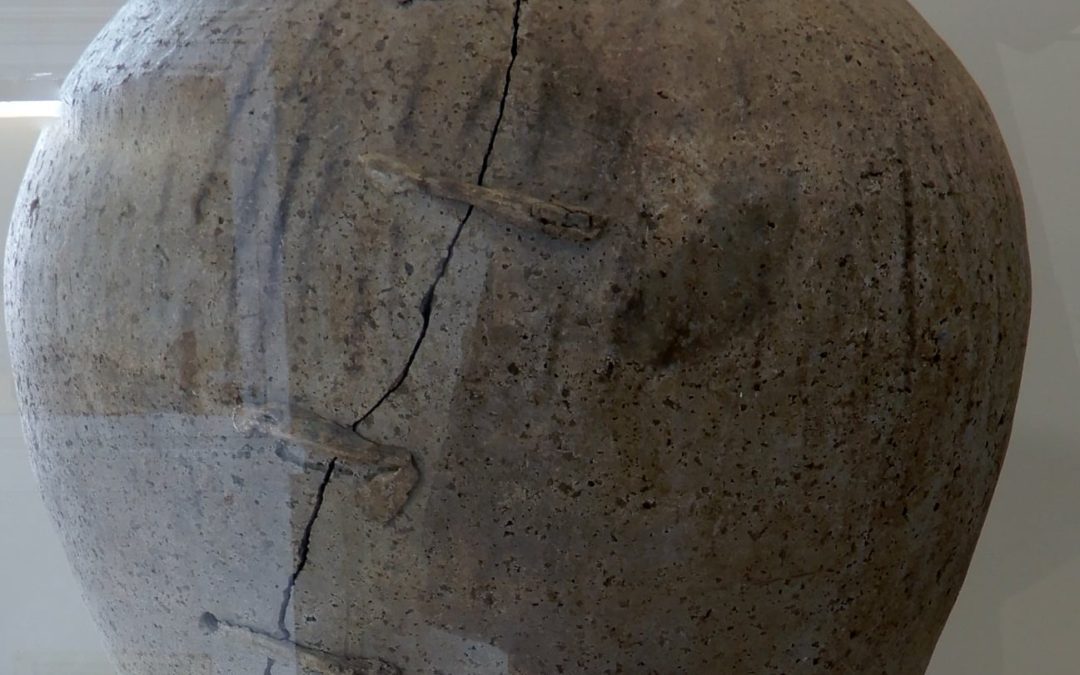
Large second century Savernake ware pottery vessel that had been repaired with lead-rivets. Found at Highworth. Pottery kilns in Savernake Forest were operating in the-later first and second century AD.
First century AD Roman bronze wine strainer found at Lower Wanborough
Museum and Art Gallery Latest This post is by way of giving a round-up of recent occurrences in the Swindon museum and art gallery situation.
The South Swindon Parish Council Proposal
South Swindon Parish Council passed a resolution at the recent Full Council meeting. The resolution allowed the Parish Chair to begin discussions with SBC about a short-term transfer of SMAG to the Parish Council.
The proposed transfer of the facility could see the Parish Council amalgamate the Old Town Library provision into Apsley House. A move that would add value to the final proposition. The option would give the Borough Council breathing space. Space to progress their aspirations to provide a purpose built Museum and Art Gallery as part of the cultural quarter offering. That’s currently expected in 2030.
We understand that SBC is now considering moving SMAG to the first floor of the Civic Building on Euclid Street. This would be a temporary move.
Note there are no costings for this proposal nor has it been the subject of a feasibility study.
Cllr Chris Watts, Chair of South Swindon Parish Council says, ‘I’ve requested an initial meeting with the lead member and officers of SBC. We want to kickstart discussions on a proposal that could see the Museum and Art Gallery remain at Apsley House.
The Parish understands that Apsley House is not the ideal facility to house the town’s Museum and Art Gallery. But there’s no viable near-term alternative. And it’s vital a town the size of Swindon has this facility open and accessible to the public. We’re pleased to have the support of the Friends of the Museum and Art Gallery and the Old Town Business Association.’
Background information
The Museum and Art Gallery first closed at the start of the pandemic. In June 2021, Swindon Borough Council informed Councillors and the Friends of the Museum and Art Gallery their intention to not reopen Apsley House. And further to place the collection into storage until completion of a new facility in the proposed Cultural Quarter in 2030. The Borough Council also informed stakeholders that they intend to put Apsley House up for sale.
Friends of SMAG blogspot
www.friendsofsmag.blogspot.com has information about the campaign, including photos so do check there. There’s loads more information there.
We would like to keep up the pressure by asking questions at upcoming meetings, Cabinet on the 13th October 6pm and Scrutiny on the 18th October 6pm but we need more new faces to ask the questions. If you’d like to get involved email: admin@friendsofsmag.org
If you see any ‘Art on Tour’ or ‘Museum without Walls’ events around Swindon then please let us know about them and take photographs if possible. It’s vital we keep track of the paintings and artefacts and the way they’re being displayed and treated. We also need to check whether people are actually seeing more art than they did in Apsley House.