SWINDON THEATRES TO RAISE FUNDS FOR MOBILOO AT THEIR PANTOMIME
Swindon Theatres Mobiloo Fundraising As Swindon approaches Christmas and the fun and frolics of panto season, Swindon Theatres are on a mission to create an accessible experience for even more families this year. They want to hire a specialist mobile toilet for guests with additional needs.
The fully attended vehicle, known as a Mobiloo, comes complete with an adult-sized bench and a hoist. It provides those with disabilities a more accessible and dignified facility than many fixed toilets can offer them. In fact, there are over a quarter of a million people in the UK for whom a standard accessible toilet doesn’t meet their needs. This often means they face the choice between staying at home or risking injury or infection by having their personal care needs met on a public toilet floor. The sort of occurrence that the Wyvern Theatre want to help eliminate this Christmas.
‘We’re so excited to see the return of our annual pantomime next month. We want to be able to involve as many families as possible in our celebrations’ explains Community & Education Officer Kate Claxton. ‘I’ve been working with the fabulous Mums on a Mission Swindon to find ways to make our relaxed performance of Jack and the Beanstalk even more accessible for our local community. It’s clear that a Mobiloo would make a huge difference for many. We now need a little help to raise the money.’
Mobiloo are a registered charity and do subsidise hire fees with donations. But the theatre need to raise the remaining £495 to provide this much-needed facility. So they’re asking the town to get involved with fundraising – with the support of local campaign group Mum’s on a Mission.
‘We’re so delighted that there’s a prospect of a Mobiloo coming to the Wyvern for this year’s relaxed performance of Jack and the Beanstalk!’ says Mum’s on a Mission’s Anna Bird. ‘In the past we’ve had terrible experiences of changing our children on cold, dirty toilet floors. And that is heart-breaking. But these facilities will allow us to meet our children’s toileting needs in a safe, hygienic, and dignified way.
When children with disabilities get older, baby changing facilities become completely unsuitable for them. But they deserve to have all the same experiences as any other child, and that includes going to watch the panto!
We’re confident that the brilliant team at the Wyvern will raise the funds for the Mobiloo, along with our support. And we’re so excited now about the relaxed performance that we’ve booked tickets!’
Relaxed performance of the panto – Friday 10th December 1pm
The relaxed performance of Jack and the Beanstalk is a specially adapted staging of the pantomime. It’s suitable for customers who find it difficult to cope with a traditional theatre atmosphere due to having learning difficulties. It’s suitable too for those on the autism spectrum. The performance is open to everyone. It may also appeal to parents or schools of children who are sensitive to loud noises or don’t like the dark. We’ll site the Mobiloo outside the theatre’s ramped entrance for the duration of this performance.
SWINDON CITY OF SANCTUARY celebrates after receiving 5 years’ funding from the National Lottery to help them bring Sanctuary Awards to sectors across the town to contribute to Swindon becoming a more welcoming, inclusive town for all
Lottery Award for Swindon Community Group Local community group, Swindon City of Sanctuary, is celebrating. How so? They’ve received an award of about £235,000 in National Lottery funding. This windfall will support its work helping to make Swindon a welcoming & inclusive for all town. One that’s proud to welcome people fleeing war and persecution to find safety here. The group, based in Swindon town centre, will use the funds to bring the national City of Sanctuary scheme of sanctuary awards to sectors across the town.
The sanctuary awards focus on encouraging the town’s communities to come together. And in doing so embed the concepts of welcome, safety and inclusion within their professions, sectors and organisations. Participants can gain national Sanctuary Award accreditation through following a series of guidelines:
1. Learn about what it means to be seeking sanctuary, migration and Swindon’s diverse, multi-cultural community.
2. Take positive action to embed concepts of welcome, safety and inclusion within the organisation, profession or sector.
3. Be proud to share the vision and achievements.
The focus of the awards
The Awards will focus on schools and libraries for the first three years of funding. The funding will enable the charity to employ new staff. It will also help to safeguard the future of the charity. That in turn will enable it to make a significant increase in the positive effect it has across the Swindon community.
Swindon City of Sanctuary has been running since 2016. It became a registered charity in 2018. They have two staff members and are now advertising for two extra roles. That’s thanks also to funding from the Wiltshire Community Foundation & a dedicated team of volunteers and board of trustees.
Swindon City of Sanctuary grew from a group of local people compelled to support the increasing numbers of people from across the world seeking refuge. As war, hunger, political turmoil and climate change have continued to drive people from their homes and families. Since 2016, over 1,000 people and organisations in Swindon have supported Swindon City of Sanctuary’s cause. They’ve worked with the charity to make Swindon a welcoming and inclusive place for all. This no matter who they are or where they’ve come from.
We’re open
Alongside the new sanctuary awards, Swindon City of Sanctuary runs an evening social project called ‘We’re Open’, at The Bakers café in the GWR railway village, every Thursday evening. Open to all, it’s a place for the community to meet, have free hot drinks, play boardgames and listen to live music. Something much needed after many felt isolated during the pandemic.
FAB
The charity also run the FAB! (Family Activity Boxes) project which began during the first lockdown. It now provides resources for EAL children in schools. With over 130 languages spoken in Swindon, the FABs are a welcome addition for schools.
The FABs contain a mixture of kinaesthetic, literacy and oracy puzzles, games, activities and multi-lingual books. Schools can use them to support their work with multilingual children.
The FAB project also assists schools in setting-up culturally supportive learning environments through Global Libraries. Thus the project encourages schools to invest in a range of culturally diverse books. ie. books with positive role models for all young people and / or books written by writers from culturally diverse backgrounds.
The National Lottery Community Fund, which distributes money raised by National Lottery players for good causes, is the largest funder of community activity in the UK.
The new funding will see Swindon City of Sanctuary’s work expand across the town and thus affect how services will engage with the public. It will also help to support organisations in their EDI (Equality, Diversity and Inclusion) journeys.
The charity manager
Nicola Wood, Charity Manager said: ‘We’re delighted that the National Lottery Community Fund has recognised our work in this way. Now, thanks to National Lottery players we’ll be able to press on with exciting plans. Plans that are community led through our Sanctuary Awards. It’s our belief that, through better understanding of each other we can bridge divides and be a true beacon of welcome and hope in our town. The funding will allow us to expand our positive reach across the community. We look forward to partnering with the National Lottery Community Fund over the coming months and years.’
Opportunity knocks
There are opportunities to join Swindon City of Sanctuary at this exciting time via two paid roles. One for a ‘Streams and Awards Co-ordinator’ and the other as a ‘Volunteer Co-ordinator’. Or why not volunteer on their trustee board?
FTO Big Band to make big sounds and even bigger impact at Wyvern Theatre, Swindon
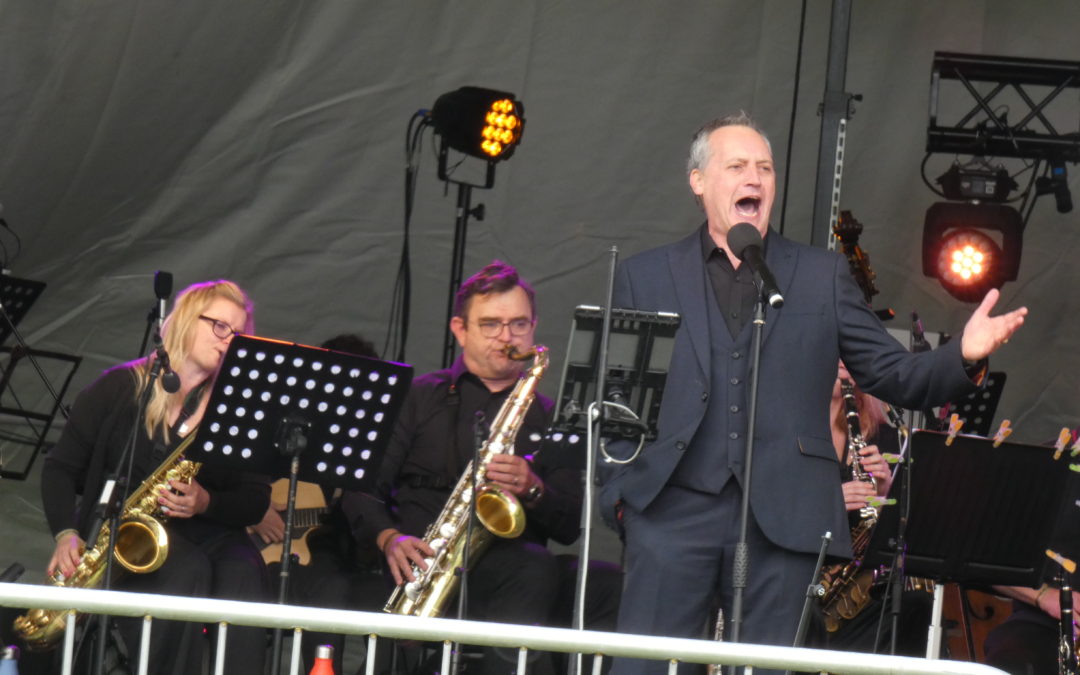
FTO Big Band Coming to Wyvern Lovers of swing and jazz music are in for a treat! The Wiltshire-based ensemble FTO Big Band is taking to the stage at the Wyvern Theatre, Swindon.
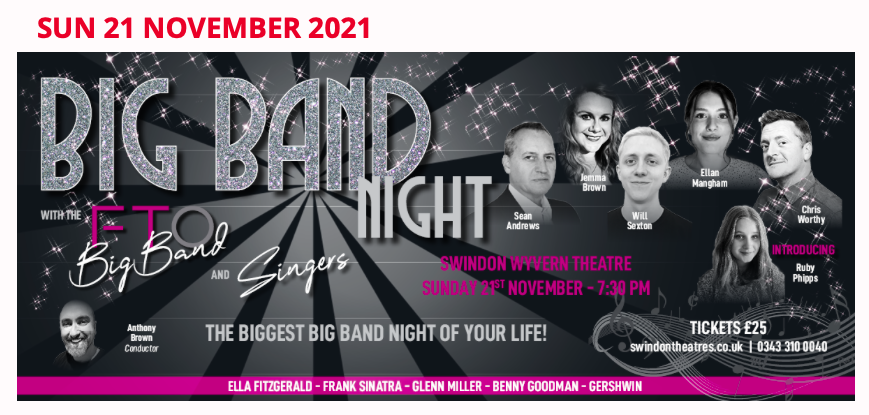
Big Band Nighttakes place on Sunday November 21.
Performing all the greats, including hits from Glen Miller, Ella Fitzgerald, Frank Sinatra and Gershwin, the 20-strong jazz orchestra is gearing up for an evening of high-energy toe-tapping classics.
FTO Big Band launched in August this year, to an ecstatic reception, at the Fulltone Music Festival in Devizes. Now Musical Director Anthony ‘Tone’ Brown is preparing to take the band to the next level.
FTO Big Band Coming to Wyvern
‘We’re combining some of the best players in the West with knockout singers to create music that’s the stuff of magic,’ he says. “It’s a must for any Big Band lover out there.’
One star of the show will be Swindon-born Ruby Phipps. A mere 11 years old, she’ll be duetting with fellow vocalist Jemma Brown. ‘It’s ridiculously exciting giving someone so young, with such a fantastic voice, the opportunity to sing on a large stage,’ Anthony says.
FTO Big Band is a jazz-loving offshoot of the popular Wiltshire-based Fulltone Orchestra. They played at the Wyvern before the pandemic. Now FTO Big Band is aiming to turn up the volume and provide a joyful treat to those of us who’ve missed live music so much.
Big Band Night starts at 7.30pm on Sunday November 21. Tickets cost £25 from the Wyvern box office, swindontheatres.co.uk
New community hub, arts space and café opens in Swindon town centre
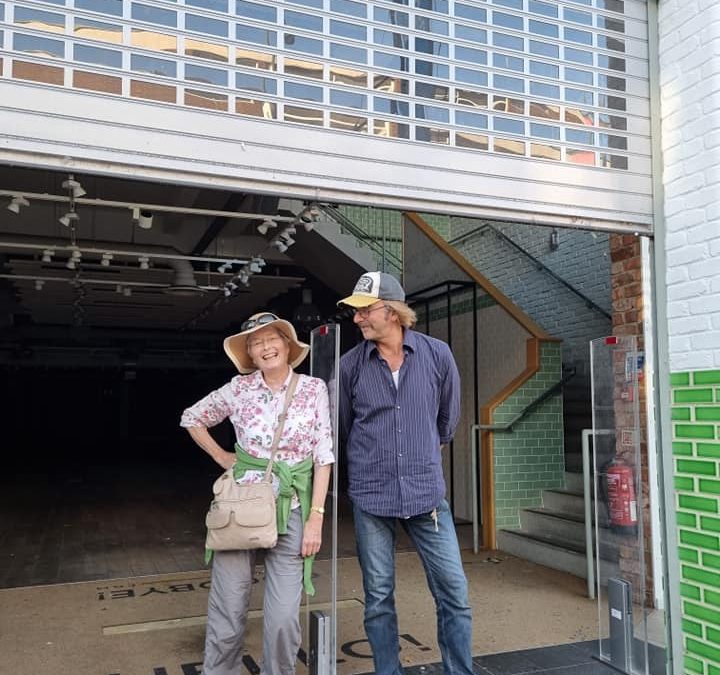
New Swindon Community Hub – Helen Holly and Jol Rose
A new community hub opens this weekend in Swindon town centre, with performers, poets and pop-ups.
Based in the former River Island building, Swindon Hub will provide a welcoming café and community arts space, areas for meetings and events. It’ll also offer pop-up stands for start-up businesses and local traders.
A group of volunteers have brought the project together. They’re all united in their aim of bringing life to the town centre and supporting communities and individuals from across Swindon. They want also to raise awareness of issues around climate and sustainability.
A long haul
‘It’s been a long haul with plenty of ups and downs. But we’re finally ready to open our doors this weekend’ says Ed Colton, one of the volunteers behind the project.
The Hub will be open daily between 11am to 6pm, and closed on Mondays.
Poets and performers will provide entertainment throughout the opening weekend. The Hub cafe will be ready with hot drinks, sandwiches and samosas.
Celebrating the opening of Swindon Hub, there’s a special exhibition of local photographers’ images under the theme ‘Celebrating Swindon’ on display.
Tony Hillier, a member of Save Oasis Swindon campaign and a volunteer at the Swindon Hub said: ‘Countless people have been through the Oasis during its 45 years and it has a fond place in their hearts.
‘Swathes of people feel a great sadness it’s shut so this is a great opportunity to celebrate until a decision has been made on its future.’
Visitors will see the original building plan sketches and black and white photographs of the building’s construction as well as Ken White’s sketches of the mural painted on the walls. The Swindon-born artist is best known for the ‘Scarlet Lady’ which features on Virgin Atlantic aircraft.
Ticket stubs from Ed Sheeran, Peter Andre, the Sugababes and Lily Allen concerts will also be on display. There is a folder dedicated to the efforts to save the venue and people can write their memories in a personalised memory book.’
Environmental ethos
Underlining the Hub’s strong environmental ethos, a special session will hear from Swindon residents who took part in the COP26 conference in Glasgow this week. Taking place at 12 noon this Satruday, the presentations and discussion will look at the global picture as well as what local action there might be.
The project also hopes to support the regeneration of Swindon’s town centre. The problem of empty shops and the need for a community space is one thing they’ll look at. One where groups and individuals can interact, exchange ideas, and share resources in a sustainable, low cost venue.
We want the local community to be at the heart of deciding what happens at the Hub. It’s a project by the community, for the community’ said Natalie North, another of the volunteers behind the project. “We want anyone interested to pop in, have a chat or send us an email.”
You can find more information about Swindon Hub on Facebook or at www.swindonhub.org.uk
SWINDON’S YOUNG TALENT PERFORMS THE ICONIC PLAY THE TERRIBLE INFANTS
‘Naughty children, an invisible boy, A girl telling tales and broken toys. Step into the world of Les Enfants Terribles with their award winning show ‘The Terrible Infants’. Mischievous children do not listen, Running wild, their only mission. This delectably dark, succulently sinister, wonderfully woeful, collection of cautionary curiosities is performed in a comedic but dangerously maddening manner. Run wild in this world of wonder, Be transported as we follow 6 individuals in their journeys. Enjoy the mishaps and shenanigans of this unfortunate few. But remember… Be careful what you wish for, It might just come true.’
RPA Youngsters Staging Iconic Play Young people from RPA (Revolution Performing Arts) Rapport CIC are working hard to make their next amazing live Swindon performance a visual and musical feast.
Based on the original Les Enfants Terrible, Oliver Lansley’s production of The Terrible Infants, is good, old-fashioned storytelling. The Terrible Infants production comprises a collection of cautionary tales told through puppetry, dance and storytelling. Dan Wyatt and Jim Stretton, both of whom are leaders at RPA, are the directors. RPA is one of the South West’s top performing arts companies for children and young people.
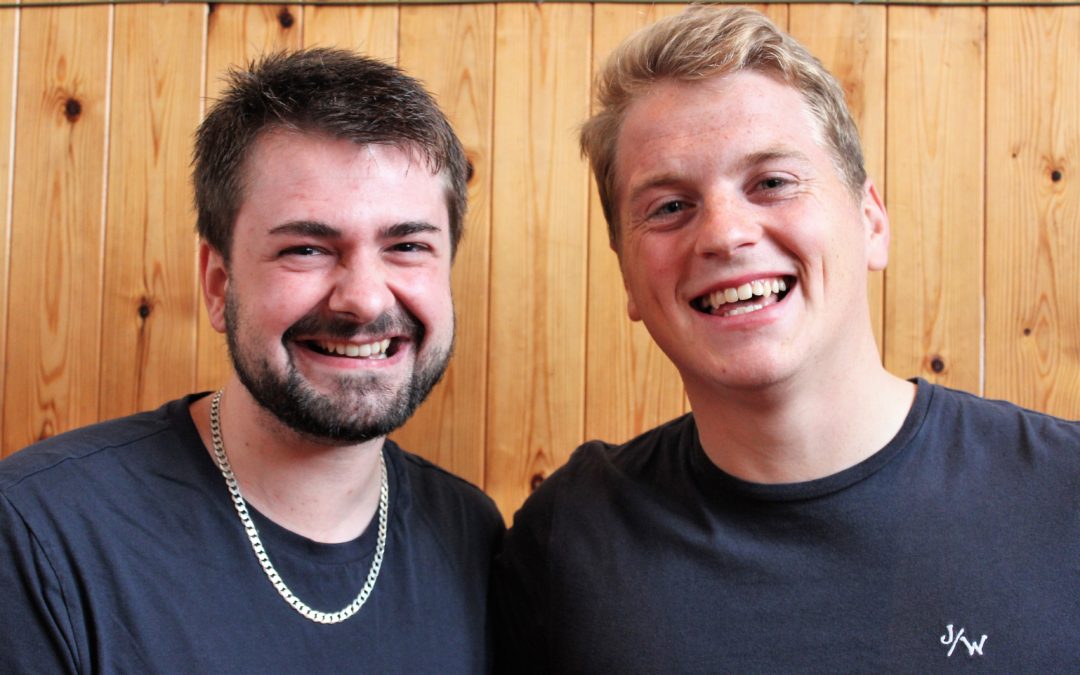
Dan Wyatt & Jim Stretton, of RPA Rapport (part of one of the South West’s leading performing arts organisations Revolution Performing Arts) who are directing The Terrible Infants by Oliver Lansley at the Swindon Arts Centre this month.
Les Enfants Terrible/The Terrible Infants
Dan and Jim are quite new at RPA Rapport and this will be their first big directing job. Dan, who lives in North Swindon, joined RPA four years ago, but then left to go to drama school. He returned about two years ago to become a leader with Rapport. After studying acting at Bristol, Jim joined RPA whilst Dan was away at drama school. He then took on his first leader position with Rapport in June 2020.
Dan said: ‘It’s been my absolute pleasure and privilege to be a part of the wonderful team creating this performance. I’m filled with pride and happiness watching these gifted young people bring words on a page to life and see their confidence grow.’
Jim continued: ‘The storyline is great for big kids and small grown-ups, as it takes them back to a childhood state of curiosity. The production is very theatrical. It’s also a scary, funny, sad, silly, junk-filled, puppetry-packed, dark, delicious, musical, magical piece of performance!’
A cast of thousands …
… okay – nine – all young people from Rapport – plus four dancers have been rehearsing for five weeks. All the lines are scripted from the original, which has had a little editing. And, as there’s no main character, there’s equal division of the lines.
Oliver Lansley describes The Terrible Infants as his homage to all the great children’s stories he remembers from his youth. Be that Roald Dahl or The Brothers Grimm. And he remembers them because they were the ones that scared and excited him the most.
‘The young people have involvement in every part of the production process. That’s from the actors and the set design to the tech and stage management’, explained Dan. ‘The myriad of props and puppets have been either bought or adapted or created and painted by the talented youngsters. They are all so inspirational in their commitment to this performance.’
The productions also features compositions and music by professional musician, Sharron Lindo. Lindo is a multi-instrumentalist who has done much theatre work. The list includes Shakespeare’s Globe Theatre, the National Theatre and Cheltenham’s Everyman Theatre.