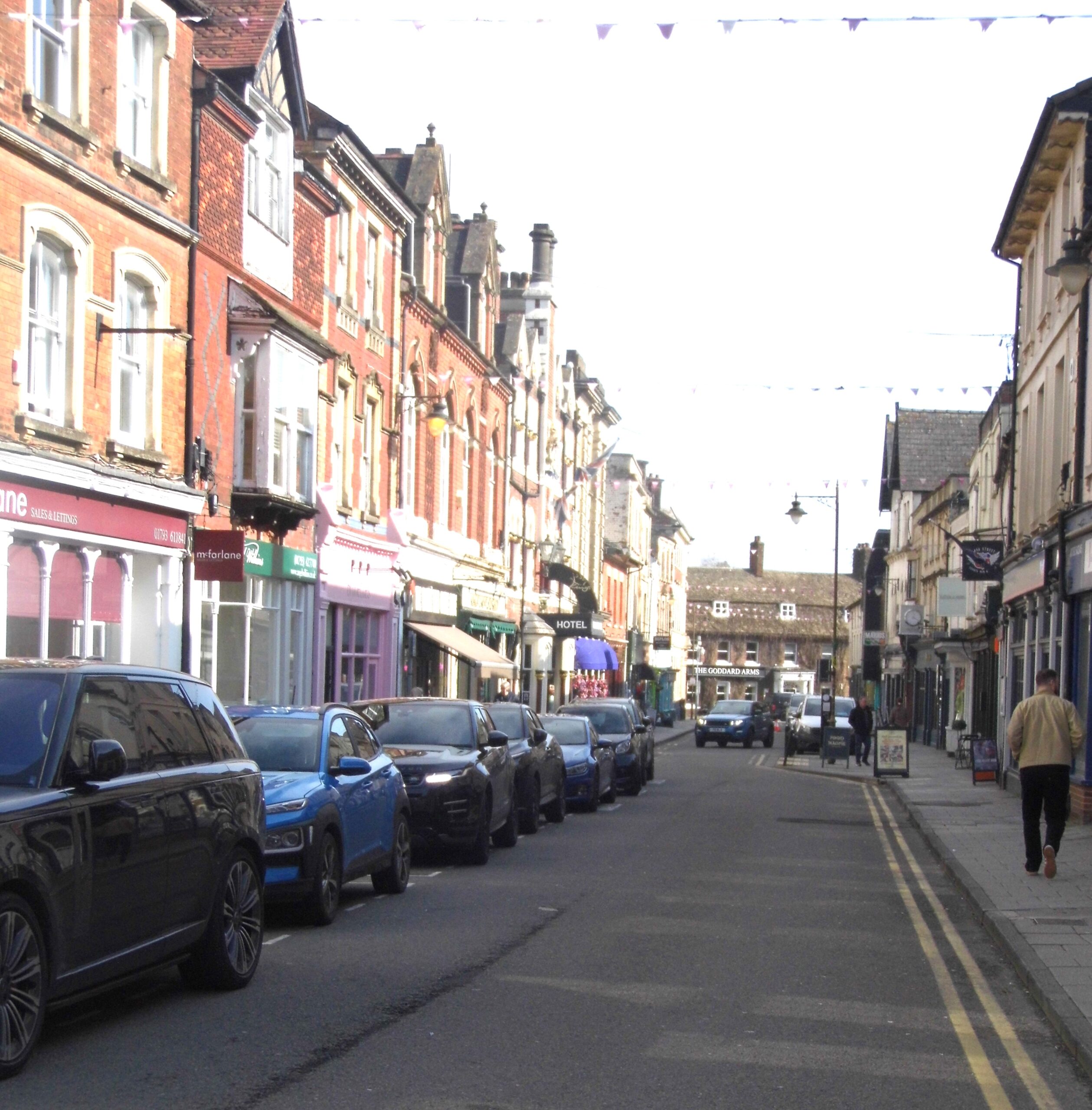
Wood Street Old Town.
I’m out of synch now with the order that these streets will appear in the finished Swindon in 25 Streets. For some reason, unfathomable to me now, I started writing about Wood Street but then didn’t finish it and moved on to the rest – forgetting all about it. So here we are with this attractive Old Town street not at all in its proper place – I’ll sort that in the actual book.
But for now, suspend disbelief and imagine yourself having wandered down Newport Street and High Street, and turned around Limmex Corner* onto Wood Street. As we’ve seen with Newport Street, street names were, for many years, somewhat … fluid. And this one is no exception.
Naming conventions
Mark Child’s Swindon Book states that Wood Street went by that name by the late 16th century when populated by thatched cottages tenanted by quarry workers and associated trades – blacksmiths and carpenters and the like.
Suggestions abound that the name derived from the presence of a wood store. Or from the local pronunciation of Wootton Bassett – it being at that time part of the highway to WB. It’s also done duty as Blacksmith Street on account of the forges there.
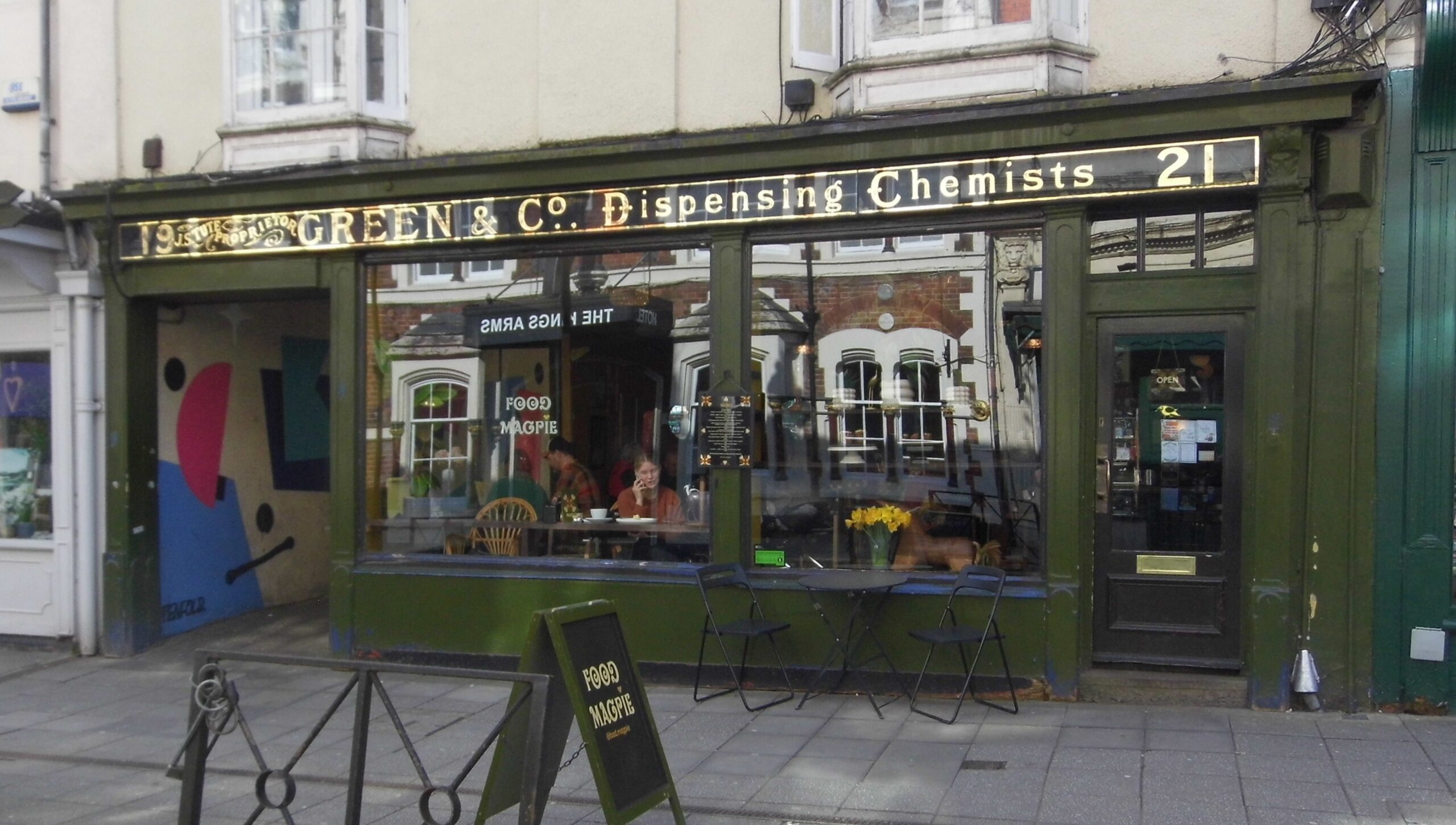
William Morris, founder of Swindon Advertiser, recalls it named Windmill Street in the 19th century – after the windmill on the site where The King’s Arms, opened between 1832 and 1837, now stands. At the 1324 death of Aymer de Valamce, Swindon’s lord of the manor, his estate included one windmill – most likely the one just mentioned. 1840 saw it demolished in favour of three new cottages.
Well into the 1800s, agricultural tradespeople are still evidence here. At this point there were still several thatched cottages – they weren’t swept away until the 1860s/1870s. It took until the early 19th century for the gradual gentrification to begin. Private schools set themselves up – adding to the upmarket atmosphere.
A principal street
By now, this is one of two principal streets ascribed to the town that began to undergo development in a way that Newport Street didn’t. To put it another way, during the 1880s, Wood Street morphed into a place where the better class of tradespeople placed their businesses. And there were residents of easy means and full pockets in the larger premises arising out of older cottages.
The King’s Arm’s
Described by Mark Child as the busiest frontage in Swindon, the King’s Arms was built in the later 1860s. Note the flamboyant coat of arms. On this site, or thereabouts, had stood a windmill associated with one John Godwin Snr. He had a dwelling and a bakehouse that may well have fronted on to Wood Street. It appears that Godwin established an alehouse on his premises circa 1840. Since before that date he appears in records as a baker only.
The King’s Arms is first mentioned in 1842 with Godwin as the innkeeper. Come 1864, John Godwin Jnr. leased land behind the inn from the lord of the manor. He set about rebuilding and extending the existing premises. An entrepreneur in his own right, junior Godwin capitalised on his associations, added the coat of arms to his literature and designated the King’s Arms an Agricultural and Commercial inn.
The inn underwent rebuilding in 1867 and has a Grade II listed façade. Showing the skill of Swindon’s stonemason it’s changed little since.
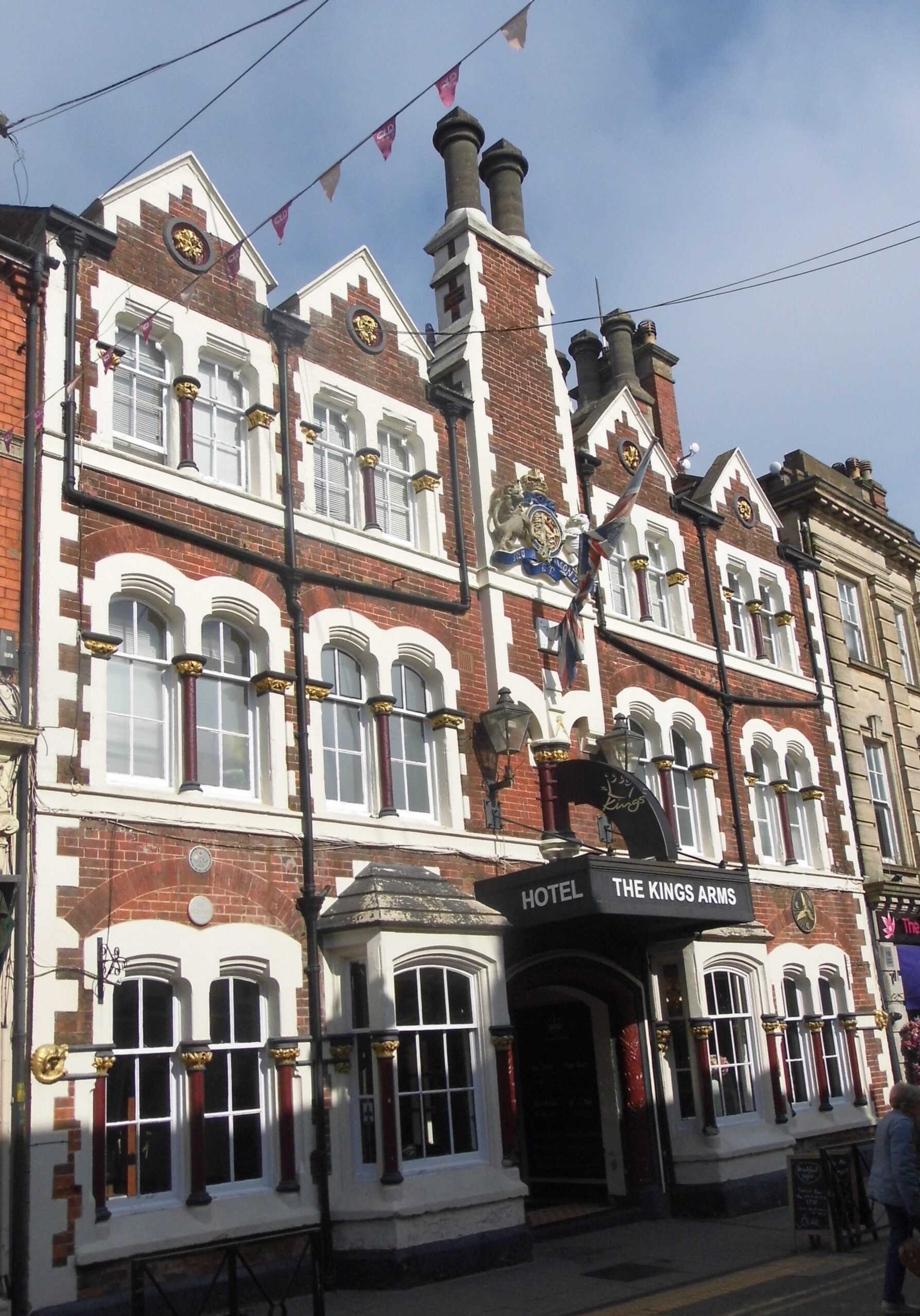
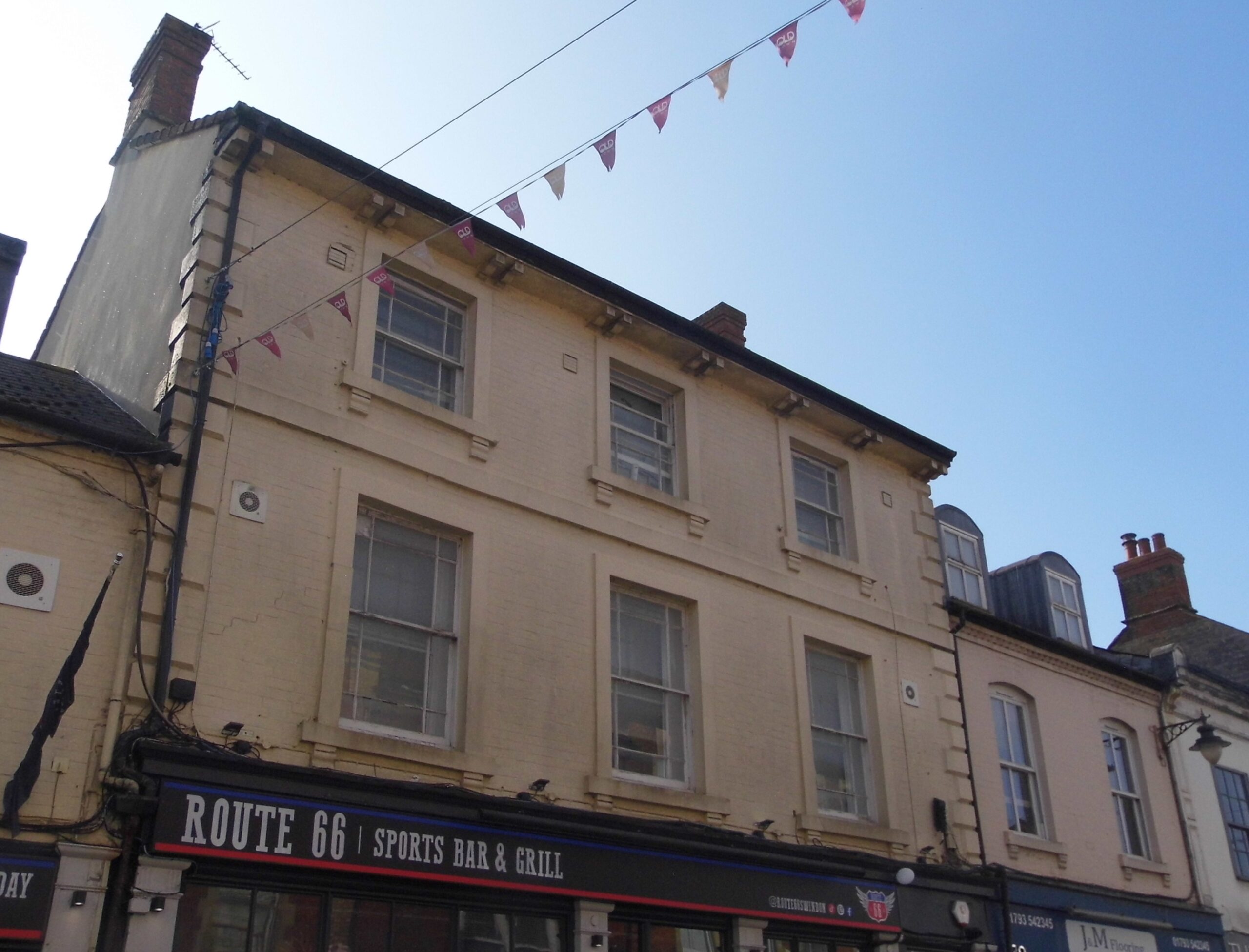
These days, some of the best 19th century buildings in Old Town line the north side of Wood Street.
Wood Street memories
In her Blipfoto about Wood Street, Maureen Iles recalls a pork shop that sold everything pertaining, as you’d imagine, to pigs. She recalls how, when she worked in Old Town in the 1970s, she’d shop there for chitterlings (small intestines of a pig) for her husband’s supper if she was planning to be out for the evening.
Limmex Corner*
I can’t talk about Wood Street without giving mention to what many older Swindonians still call Limmex Corner – Despite it being Limmex no more. That being where Wood Street joins High Street. It takes its name from an ironmongery business started by Laurence Lawrence in the first half of the 19th century. Samuel Joseph Limmex took it over in 1881. He, by all accounts, surveyed his empire from a high stool behind a high desk in his small corner office. From 1975 to its closure in the late 1990s, Ray Stevens and his staff ran the shop.
I remember this shop from when I first pitched up in Swindon and shared the sadness when it closed. As Mark Child observes: ‘This was the last shop in which one could purchase a single unit of some insignificant item that logic suggested had not been made for at least half a century …’
On a happier note, there’s now an excellent hardware shop on the opposite side of Wood Street.
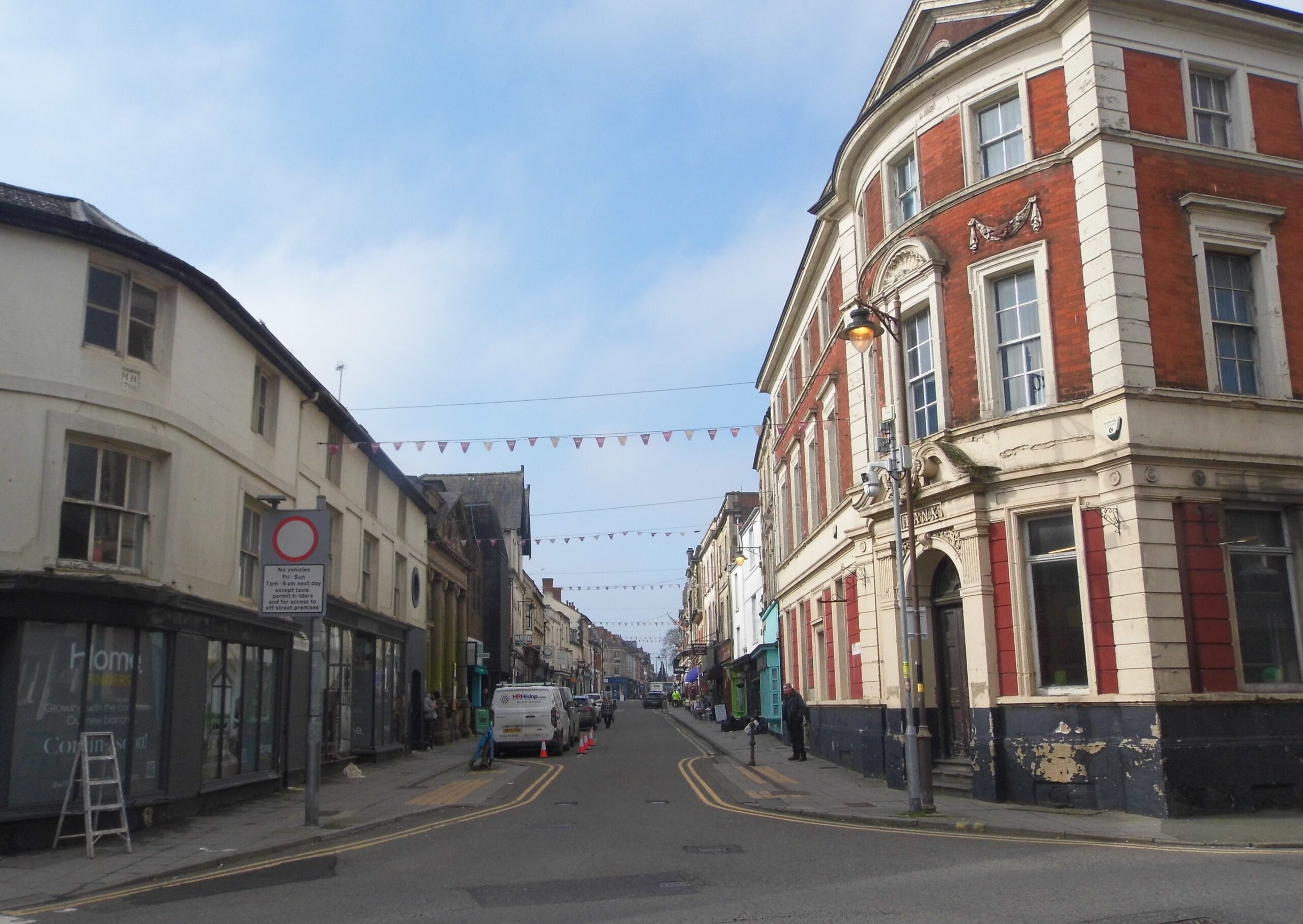
On the topic of businesses on this street, there’s an excellent independent wine merchant by the name of Magnum’s. And Deacon’s, a famous and long-established jewellery business still run by the founding family.
Leaving Wood Street we’re now going to visit Little London.