Newport Street Old Town. And we’re off on another stroll down Swindon in 25 Streets.
Looking for old when it comes to Swindon’s streets? Newport Street is it. This one is a chart topper. Ok, if we’re going to be pedantic, then the Roman road, Ermin Street, over in Stratton, is older. But what’s key here is that Newport Street is the oldest named thoroughfare in a town whose street pattern was established by the 13th century.
In their 1979 publication Roadways: The History of Swindon’s Street Names, Sheldon and Tomkins write that the earliest known reference to a Swindon street is Nyweport Street. That’s in a document in the Goddard papers, granting a tenement, dated 2nd July 1346. The belief is that the name means ‘New Market’ and shows Old Swindon’s earliest efforts to get a foothold in the commerce world.
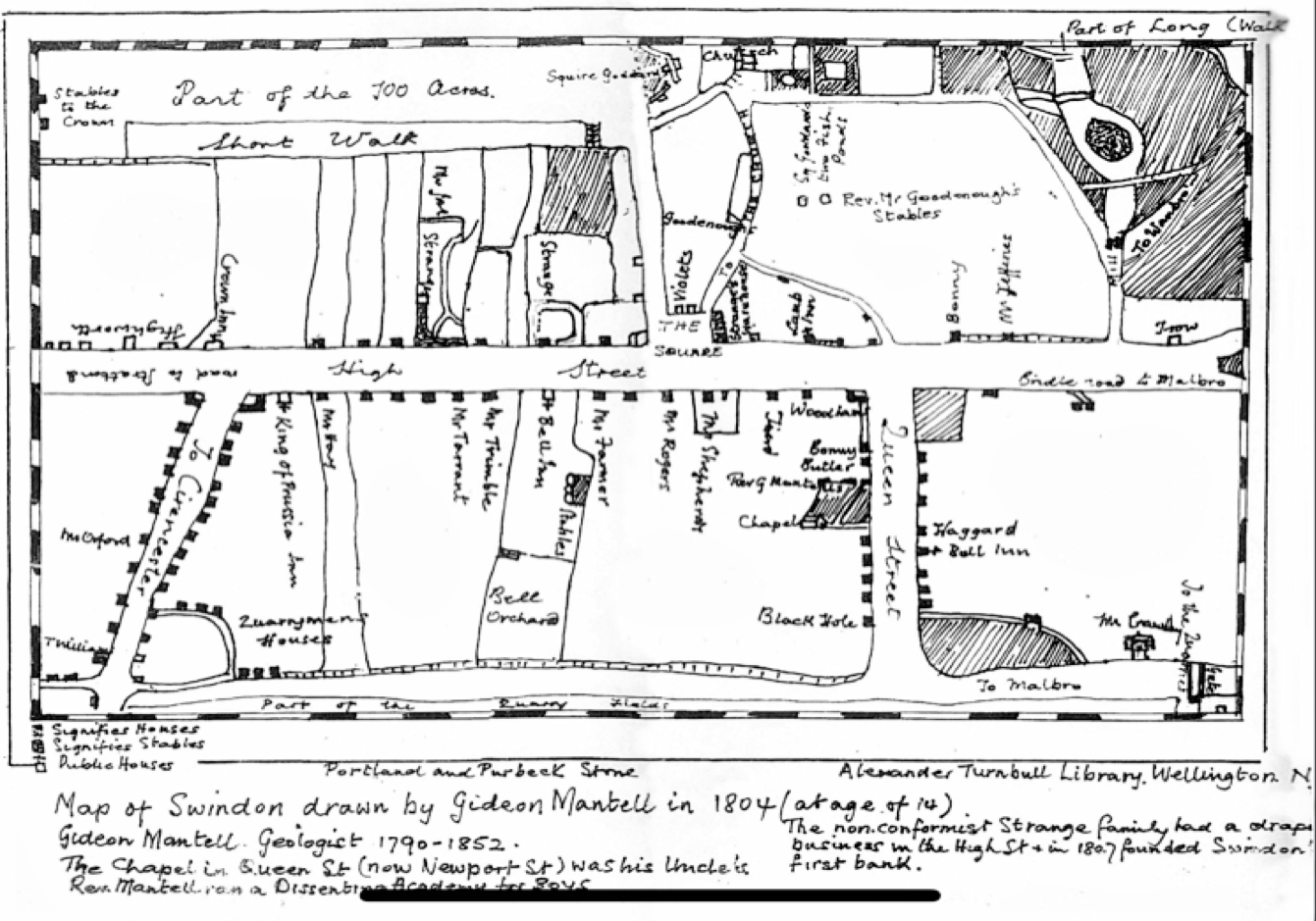
We should note though that, according to the 1804 Mantell map, the street did a stint as Queen Street. And as Bull Street in the 19th century after The Bull public house.
It seems that 19th C Newport Street didn’t present an altogether agreeable picture. In 1828 the Court Leet (forerunner of our modern Council) reported the footpaths as being ‘very much out of repair’. Plus ça change! And n 1851, Rev George Pilgrim, who lived there, reported to the public health inspector that ‘the atmosphere of my house is notoriously unpleasant to all who enter it, either in close or rainy weather.’ The good old days eh?
A Swindon notable born here was James Hinton, entrepreneur and alderman. Find out more about him on Frances Bevan’s blog here: https://radnorstreetcemetery.blog/2024/06/15/the-entrepreneurial-james-hinton/
Swindon from the air
Oldest house
One might think that the oldest street would have the town’s oldest house on it – but no. The Grade II listed Nos 17 & 18, in effect two properties remodelled into one, has 14th century cellars – so there must have been something else there once. But, according to Historic England’s list entry, it’s late 18th/early 19th century with a 19th century carriage way running through the central bay. Ergo, I can’t think that it qualifies. The Bell Inn on High Street and the 1580 Rodbourne Cheney Manor (see Swindon in 50 Buildings) have better claim to the title. But then the Bell is a pub – not a house. So I’m going with the manor as Swindon’s oldest house.
Unless anyone knows any different?
Be all that as it may, in 1970, the owners of said property established it as an art gallery bearing the name Easthope and Fripp and the legend Fine Art Gallery. I recall that being the case when I pitched up in Swindon in the early 1990s.
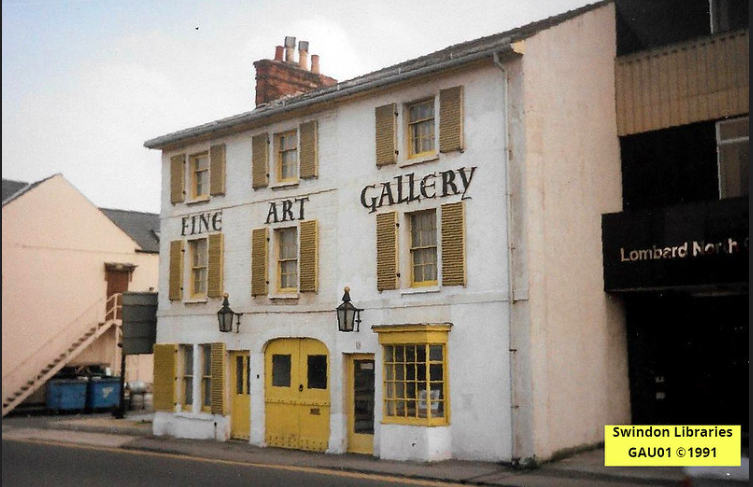
Anyway, that was then and this is now. And now this building is now a ubiquitous HMO.
Getting back to the street
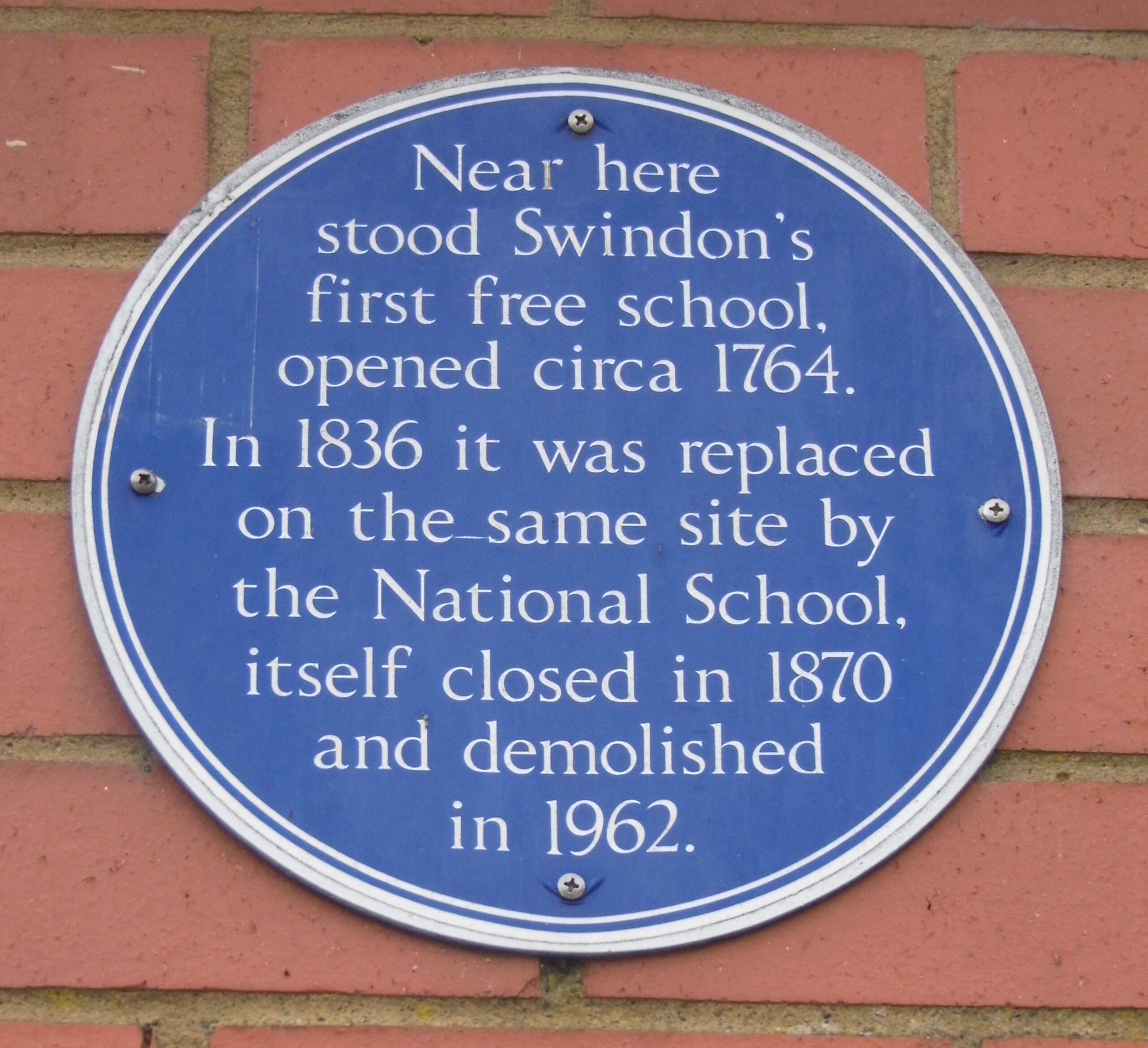
A noteworthy loss from this street is Swindon’s first free school (1764) – later the National School. Funded through local charitable contributions it operated out of a residential building. 1836 saw that early school house replaced by a new National School on the same site – demolished in 1962. At that time, the stone bearing the National School name was salvaged and installed at the west end of the petrol station forecourt that replaced the school. It and other buildings were sacrificed to unable yet more road widening. But here we have a mystery. Some while ago, that name stone disappeared, to where we do not know.
Now a blue plaque marks the spot where Swindon writer, Richard Jefferies, went to school in the 1860s.
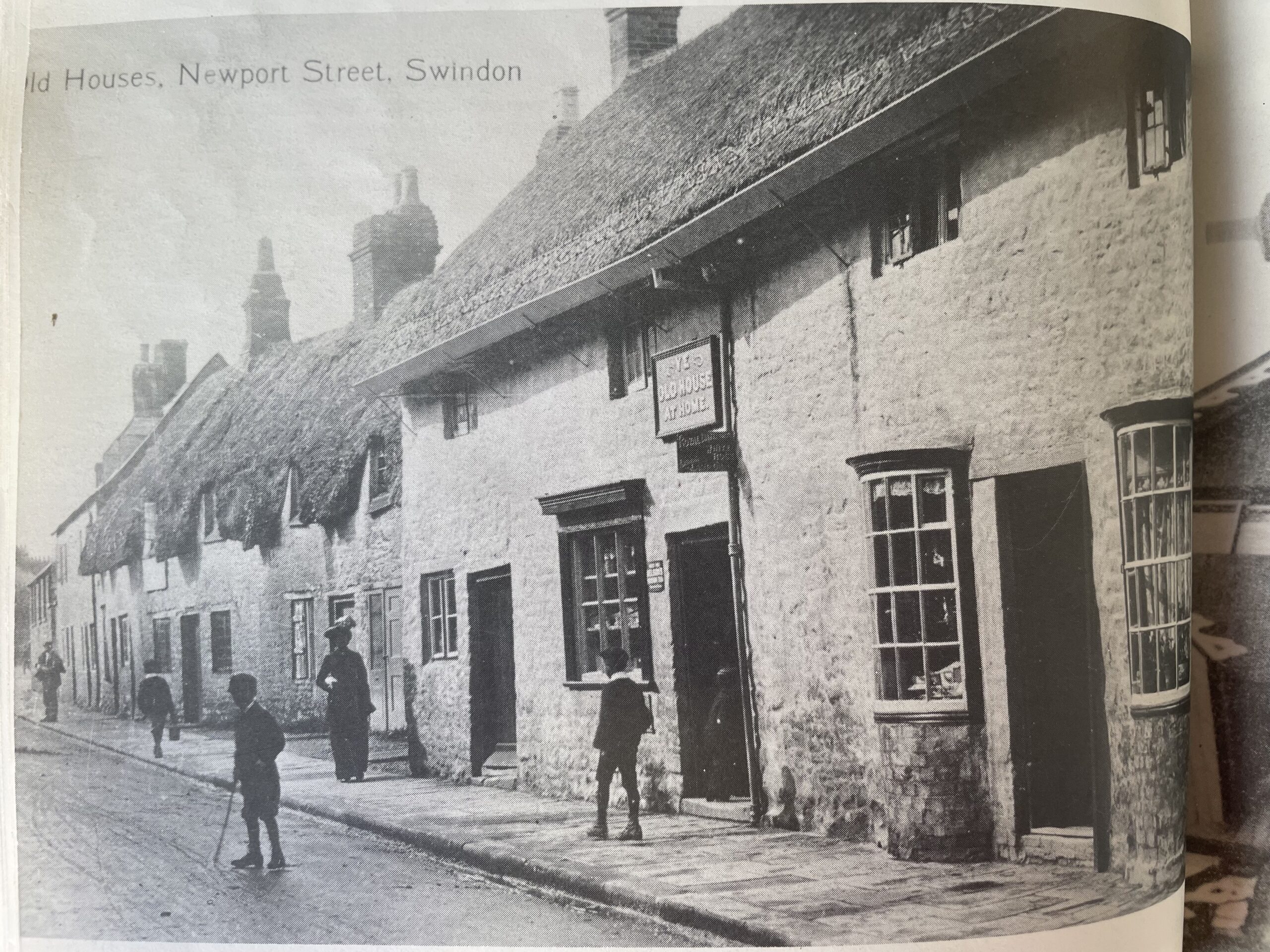
The fine art gallery aside, there’s little left of the original Newport Street. In her Blipfoto entry for Newport Street, Swindonian Maureen Iles, writes that most of the long-gone dwellings were thatched, whitewashed cottages. She does though give mention to a building that stood next to the National School – a thatched building believed to date back to circa 1677, The Olde House at Home, partially destroyed by fire during a hot, dry summer in June 1910. A Swindon Advertiser article of the day reported: ‘The three houses involved on Saturday form one of the most ancient, if not the oldest properties of the kind in Swindon.’ And, the aforementioned Olde House at Home, owned by the Lamb Brewery Company, formed part of this property.
I’m still standing
We’ve established then that most of the Newport Street of yesteryear is long-gone. Two exceptions being the aforementioned fine art gallery turned HMO and the Steam Railway pub.
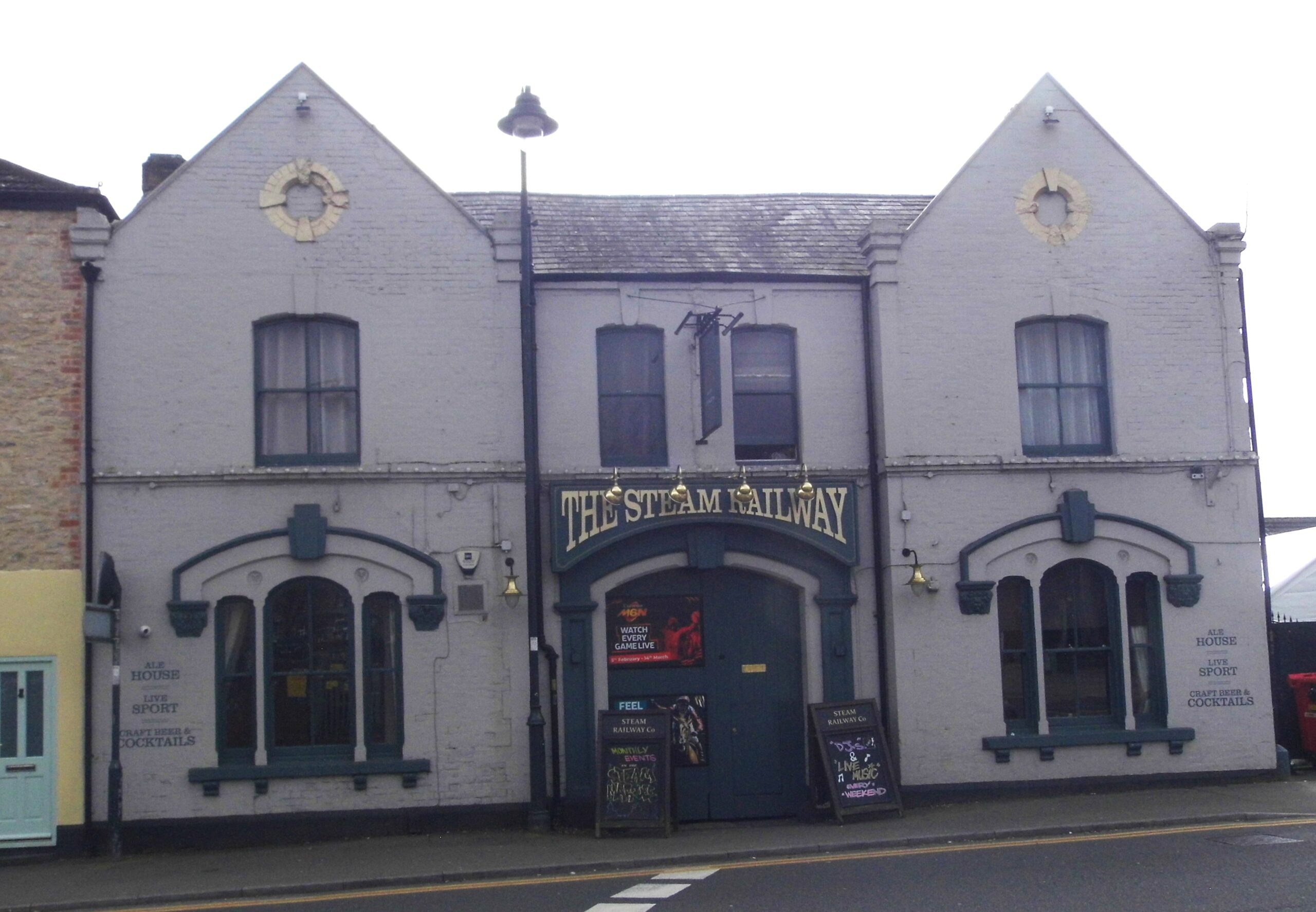
Mark Child’s Swindon Book companion tells that 1876 saw the erection of the double-gabled front with central linking carriageway entrance.
Beyond that, it’s a confusing story of TWO pubs called the White Hart, one of which at length became the Steam Railway, on different sides of the roads at different times. And there being a Bull Inn there somewhere that I don’t have the word count to explore. Should you want the lowdown then check out John Stooke’s book, Last Orders.
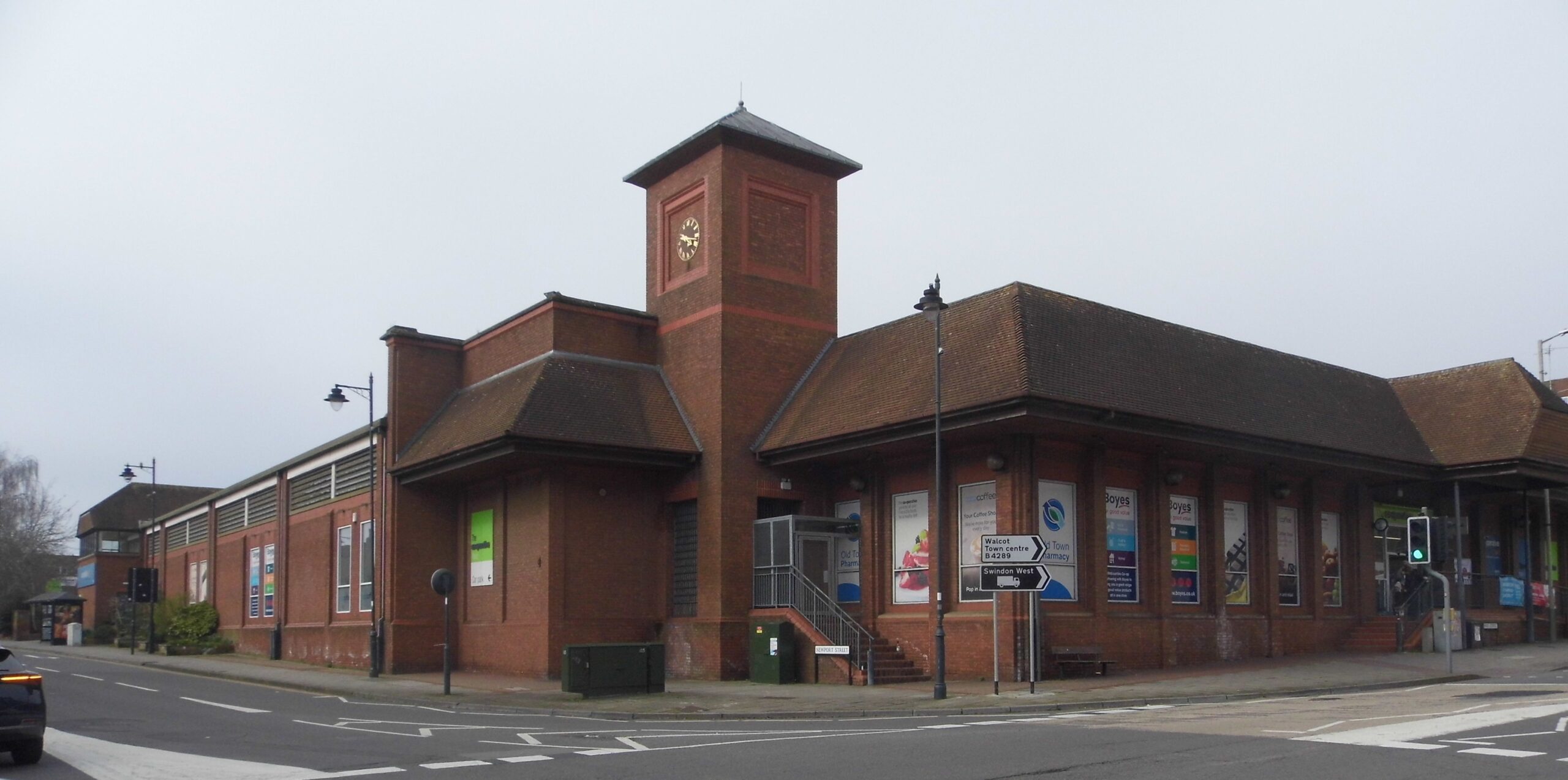
So now let’s stroll down Newport Street to Gilbert’s furnishing store on the corner. After admiring what we see in the window we cross the road where the Co-op superstore sits and turn left onto High Street.
The pub stuff
I’m doubtful I’ll have room for this in the book – word count and all that – but here for the craic and referring to John Stooke’s splendid tome Last Orders. The gospel according to John is:
The pub we know now as The Steam Railway was, until the 1820s, known as the White Hart, owned by the Farmer family since 1741. BUT – there was another White Hart directly opposite the Steam Railway/White Hart though not at the same time.
Note though that the Steam Railway/White Hart also had a stint as The Railway Inn – after being The Bull and before becoming The Steam Railway.
It seems that White Hart Mark II arose out of a malthouse that stood opposite the Steam Railway/White Hart.
Confused? You’re not alone in that!
Apparently, Swindon landowner and brewer, John Henry Harding Sheppard built White Hart Mark II in 1844, having bought at auction the land and their second malthouse from the Farmer clan opposite. BUT – by this time the pub opposite (White Hart Mark I) had undergone an identity crisis and had changed its name to The Bull or the Black Bull. Hence the White Hart name became available.
So there you go – clear as mud!
John’s story continues on page 265 of his book. And also, to complicate matters still further, there had been a Bull Inn on the High Street from 1627 to 1782. This is now 17-21 High Street. See pages 50-52 of Last Orders for more on that.
The black hole of Newport Street – aka the Blind House
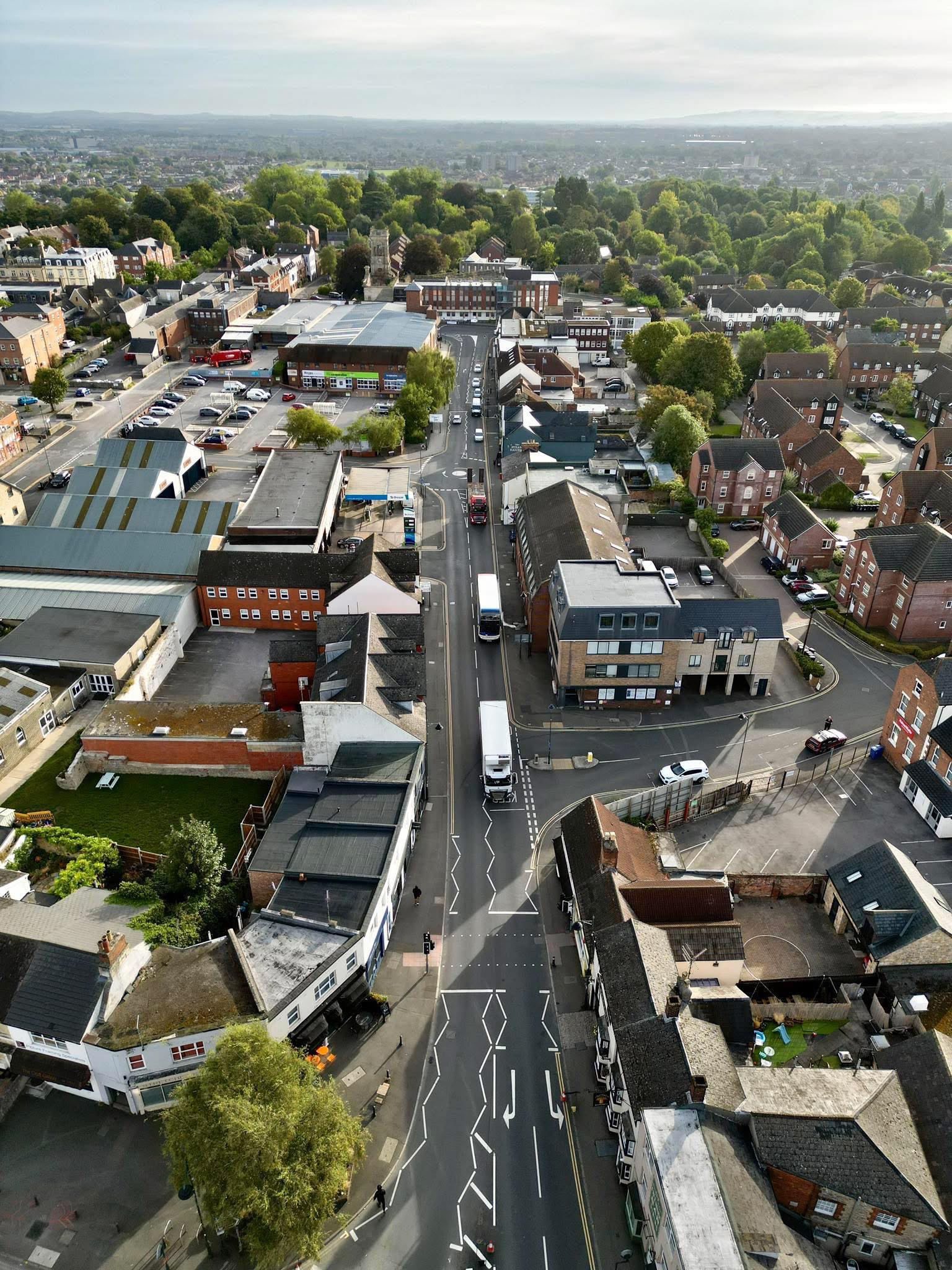
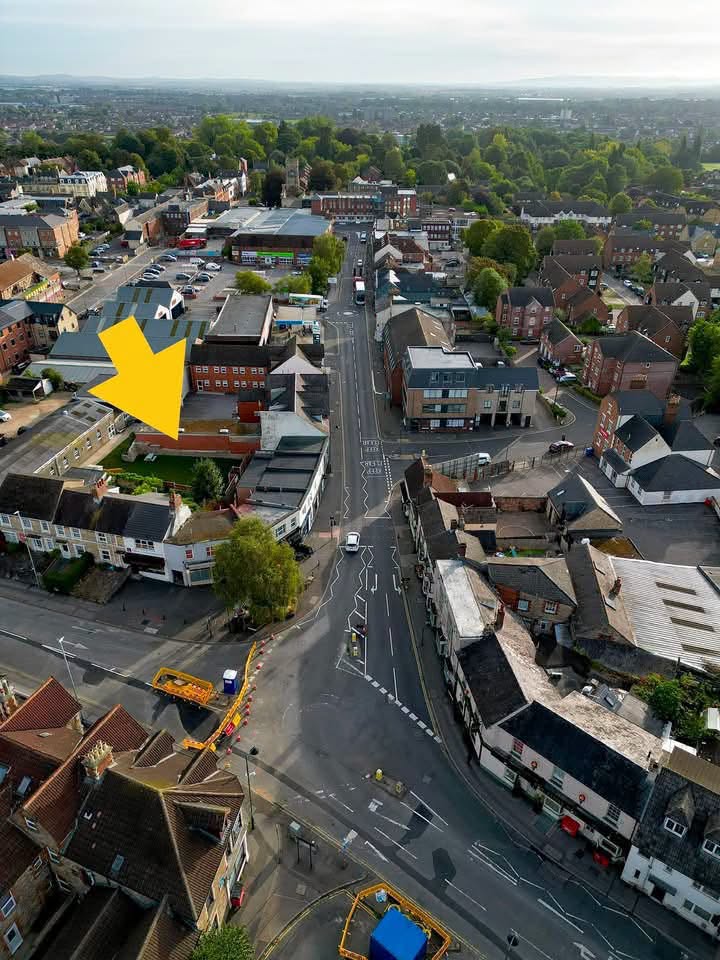
With thanks to Graham Carter and Jason Spickett (Swindon from the air) for what follows.
You’ll see a reference to Old Town’s Black Hole on the pictured (above) old map drawn by a 14 year old lad by the name of Gideon Mantell in the year 1804. You’ll notice on the map that Gideon has marked what we call Newport Street as Queen St – for reasons unknown.
So what was the Black Hole? It dated back to the 18th Century and stood pretty much on the corner of Devizes Road and Newport Street. Look at Jason’s aerial picture and you’ll see it stood about where the yellow arrow is pointing.
Its proper title was the Blind House. Towns up and down the country had them. They were small windowless stone buildings and were generally dark, smelly, cold and damp buildings. Should you ever find yourself locked in one it would be so dark that you could barely see. Hence the title of Blind House.
So, should you:
- Have yourself caught drunk in the street
- Of have started a drunken bar brawl or…
- … just made a nuisance of yourself because you had a few too many then the parish constables would give you a good working over and throw you in the Blind House until you had sobered up in the morning.
Depending on what you had done to deserve a spell in the Black Hole/Blind House would depend on if you had to go before a judge. Or if you got given another good hiding and then sent packing!