
Little London Old Town, Swindon.
Back in 2010, historian Frances Bevan wrote for the Swindon Advertiser, how Old Town once enjoyed a level of depravity and notoriety. Not the whole of Old Town you understand – but a notorious, nefarious, neighbourhood of Swindon’s Old Town.
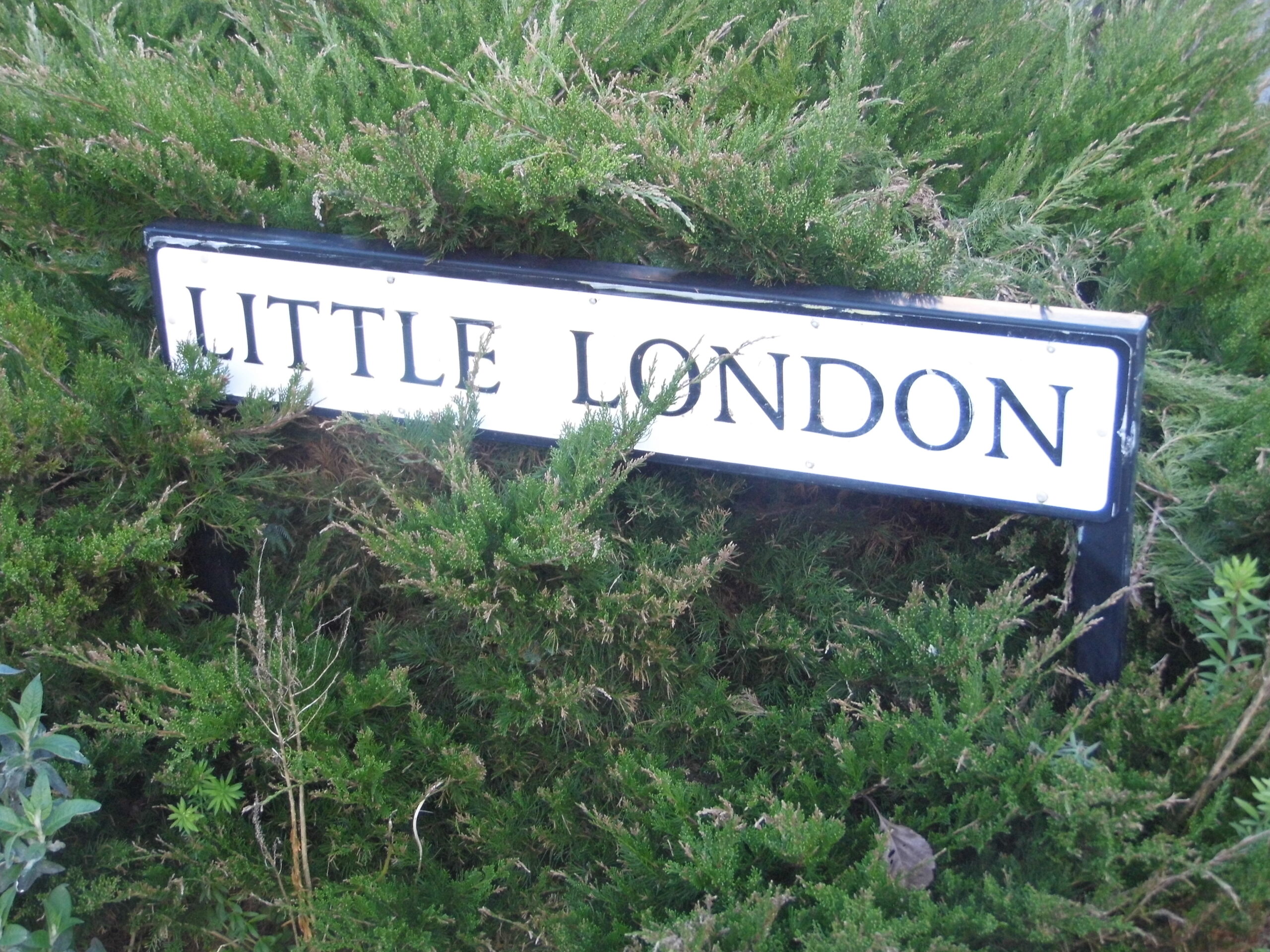
As she wrote, the office block called Little London Court that you see today, stands in an area once cloaked with a dubious reputation as Old Swindon’s meanest street. And we’ll return to that. But first, we must pose the question: what’s in a name?

An early overspill
Records show the area as Home Ground back in 1643. But the wisdom, according to Mark Child’s ubiquitous Swindon Book, is that migrant workers from London settled in a field immediately to the north of Wood Street early in the 19th c. Hence Little London. Thus making Swindon an overspill town way back before Walcot became a 20th C London overspill estate.

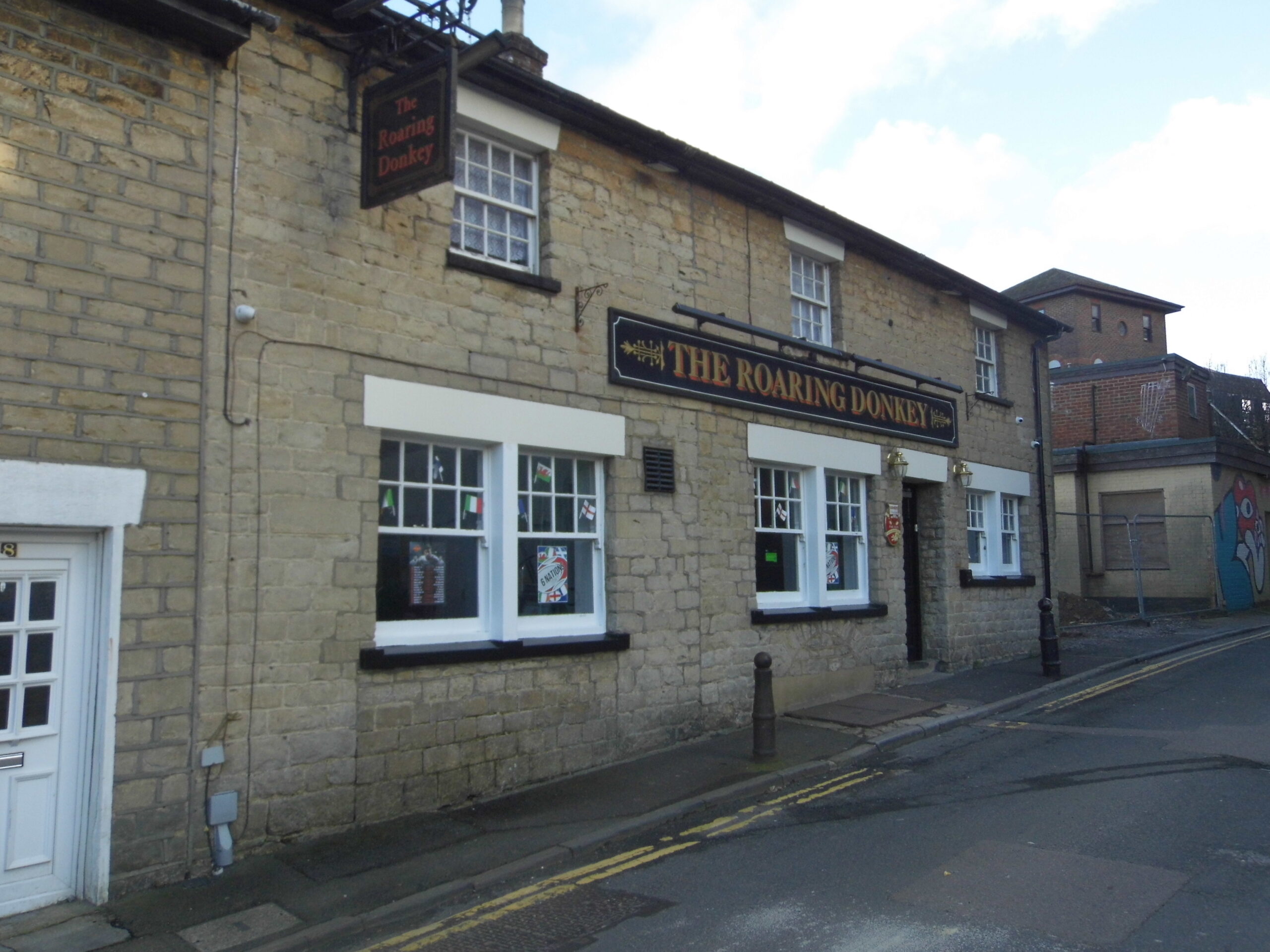
At the time, anyone wanting to reach their field, had to do so via a track called Back Lane. This lane also gave access to Albert Street, home of the Roaring Donkey pub. Part of said lane became known as London Lane. Then Little London Lane until, by 1855, it had morphed into London Street. Flanking the lane at one time, were tiny cottages into which the labouring poor crammed themselves.

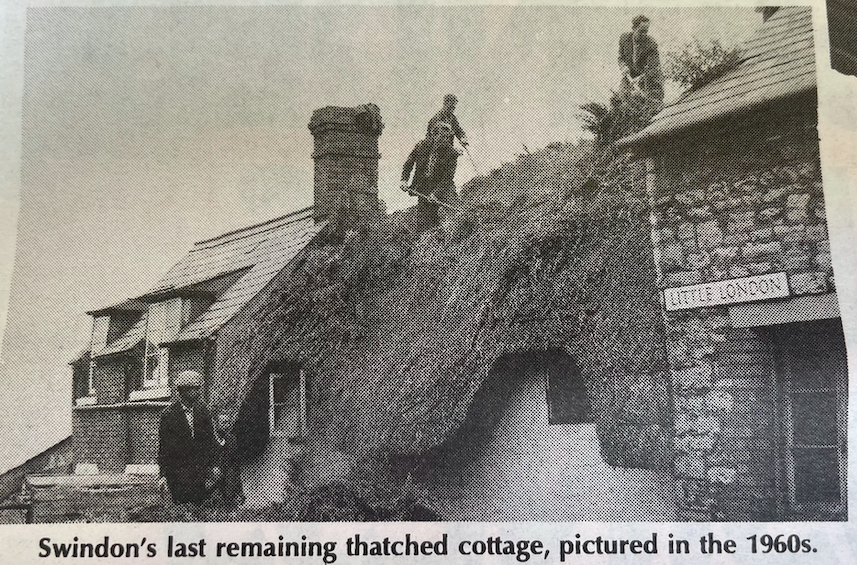
Mark Child also tells how, by the mid-1800s the southern end of Albert Street, Little London and back lane were, in effect, a single thoroughfare. Albeit one that only its residents would set foot on. And that further, from 1879, the area included a terrace of seven cottages, built off at right-angles to the east and named Victory Row. Before meeting its reckoning with the wrecking ball in the 1960s, it had upon it, Swindon’s last thatched cottage.
To be a pilgrim
Mean this lane may have been. But it’s believed that the street sat on the site of the old Pilgrim’s Way that ran from Wanborough through Swindon. It also served as the most direct route for travellers between Devizes and Cricklade. Further, the lane was likely to have been a stagecoach route when Cricklade Street, the erstwhile Brock Hill, became impassable in bad weather.
1877 saw a total of twenty-seven houses. With occupants recorded as being a haulier, a charwoman, two grocers, a baker and a chimney sweep.
Anyway! As well and good as all this is, I’m sure that what you all really, really want to know is more about the depravity, the debauchery and the insanitary.
The juicy bits
Returning to Frances’ account then we learn of one George T Clark, a Board of Health Officer who, in 1851, published a damning report. It noted the lack of a sewer system with effluent from houses draining into cesspools. He further noted blood flowing down Newport Street from the slaughter houses, tainted water on Prospect Place and a filthy open pit on Albert Street. 1848 saw the local doctor laid low with Typhus fever – and one house in Cricklade Street had five children die during a seven-week period.
As I’ve said elsewhere in this tome, so much for the good old days!
Albert Street, built circa 1848 and named for Queen Victoria’s husband, had the dubious honour of being mid-Victorian, Old Swindon’s, red-light district. At the centre of this vortex of dissolution was the Rhinoceros public house – once described in court as the most notorious inn in town, frequented as it was by beggars, thieves and prostitutes. A well-known song by Cher rather springs to mind.
Long-gone the Rhinoceros may be but standing firm is The Roaring Donkey. Beginning life as the Heart in Hand it became the Rising Sun and then the Roaring Donkey. Legend has it that this name arose from its proximity to the printing presses in the nearby Swindon Advertiser offices and the ‘Hee Haw, Hee Haw’ sound they made. Someone would shout ‘back to work lads, the donkey is roaring’. The pub didn’t officially adopt the name until the 1990s despite being known as such for many years.
Trying to make a difference
One person who tried to make a difference in this den of iniquity was Italian Angelo Vitti. Born in Sette Frate, a small village in the Province of Frosinone, just south of Rome, Vitti came to England in the early 1890s. He bought the former Rhinoceros, by then a lodging house, and eventually bought up the adjoining cottages too. But Angelo Vitti wasn’t the first to rent out rooms at the premises in Albert Street. In 1881 Sarah White was the lodging house keeper at number 25 and 26 Albert Street. She counted among her lodgers, musicians John Lewis, Henry Culverwell and John Fliseney.
Swindon has lost a colourful and romantic personality by the death of Mr Angelo Vitti,’ the Advertiser reported following Angelo’s death on Sunday, April 21, 1940. As a lodging house proprietor, he became the friend, and earned the respect, of thousands of men and women, a genuine family man and a friend of poor people.’



Marvellous piece of history
Thanks
Stephen – such history stories are all around us if we look for them.
Glad you enjoyed it and thanks for engaging. 🙂
Fascinating thank you. Love reading about Swindons history.