High Street Old Town – another instalment in the Swindon in 25 Streets project. This time, a street that used to be the main shopping destination in Old Swindon – what we now know as Old Town.

What’s in a name?
Before talking about the high street in Swindon’s Old Town it’s worthwhile examining the term itself. It’s been used for centuries now, as a descriptor for a town or village’s main thoroughfare. Indeed, some quarters report it as first appearing in the 12th century when the term high served to signal superior rank or importance. Thus, for example, a High Church, is one that puts emphasis on elaborate rituals, sacraments, vestments and so on. That’s in contrast with Low Church – characterized by simpler worship.
As for Old Town’s high street, Peter Sheldon in A Century of Swindon states it as being first known in 1581. There’s another explanation though for this Old Town street’s moniker. It could as easily derive from the street’s actual, physical height. A theory given weight by the fact that, during the 13th century, Old Swindon went by the name High Swindon.
Further to this claim to the name, Mark Child’s Swindon Book, states that, in the 14th century inhabitants knew the settlement as Hegherswyndon (High Swindon) because of its location. Compelling evidence. Mark Child backs up Peter Sheldon’s 1581 statement, adding that it appears in manorial records from 1615.
Becoming a shopping centre
Mark Child goes on to say that shops began being mentioned from the early 1700s, with Swindon’s first-named grocer’s shop being started here in 1705, by Robert and Margaret Boxwell. Their premises became part of The Bull Inn – later incorporated into Mason’s grocery store.
Meanwhile, High Street experienced a gradual build-up of small traders and cottage industries.
1807 saw a bank established. For the most part this would have been to facilitate the needs of market traders. And of course, the street had taken on more trade. Old Swindon residents in the 1820s enjoyed the services of a baker, basket maker, two blacksmiths, a butcher, a carpenter, drapers, dressmakers, hairdressers and an ironmonger.
Professionals also were now making a living in Old Swindon’s High Street. The town boasted John and Joseph Gay, the sibling surgeons, Jonah Reeve – auctioneer, and Charles Rose the postmaster.
It’s unsurprising to note that, thanks to the proximity of the High Street to Lawn, the Goddard estate, it attracted to it the gentry and business people of means. Thus it was that, by 1870, High Street had become Old Swindon’s main shopping destination. Among the usual suspects of grocers and butchers and drapers the busy retail thoroughfare also boasted tailors and outfitters, a fishmonger a chemist and a wine merchant. Not to mention being a favoured location for auctioneers and solicitors. Indeed, in the latter case, it still is. Frances George, solicitor advocate, has his office on High Street.
High Street today
Stand on High Street now, looking south towards Marlborough Road and you’re on a section of the street changed beyond all recognition. 1969-70 saw road widening and car park construction sweep away anything much of interest. The HSBC bank complex and its car park now cover it. And whether any of it should have happened in a conservation area is a moot point.
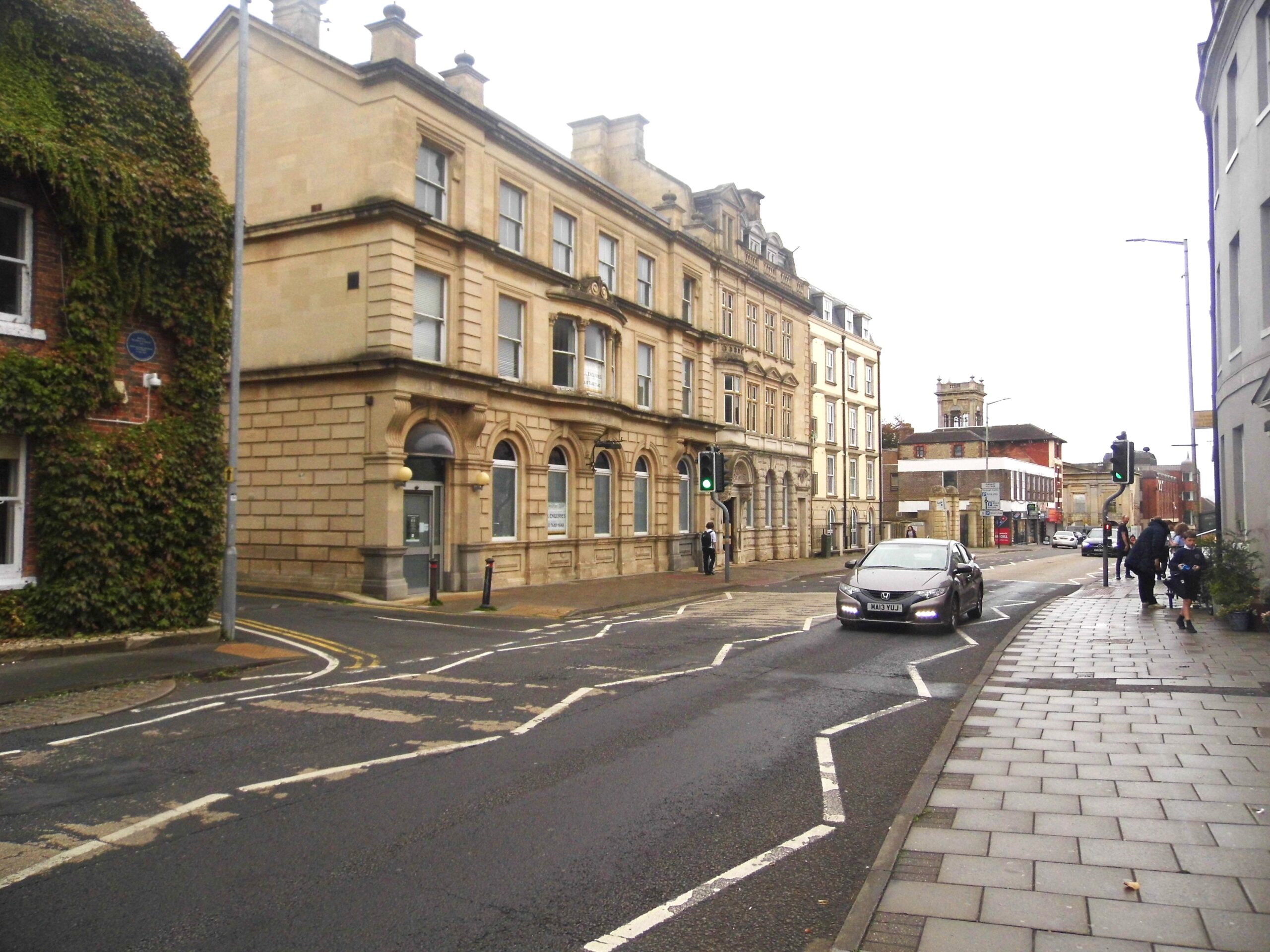
In her Blipfoto blog about Old Town’s High Street, Swindonian Maureen Iles writes about a case in point. As a young woman she worked for the Vauxhall motor dealer, Skurray’s who had premises, in the form of a mock Tudor showroom, on the corner of High Street/Newport Street. Maureen writes that 1971 saw this showroom demolished (by Vauxhall) to make way for, what she describes as ‘a concrete and glass monstrosity’. Only for it to meet the wrecking ball itself a mere thirteen years later.
The site now houses the large Co-op complex, outside which you’ll find the High Street, street sign.
Now, I’m not against modern architecture. In fact, I like a lot of it. But I’m not a fan at all of pastiche such as mock Tudor. But, look at this Local Studies Flickr image of the original 1930s built Skurray’s showroom. Despite my personal lack of love for pastiche, the loss of this does seem a shame. And this mock Tudor is so much better done than that round my estate. #JustSaying

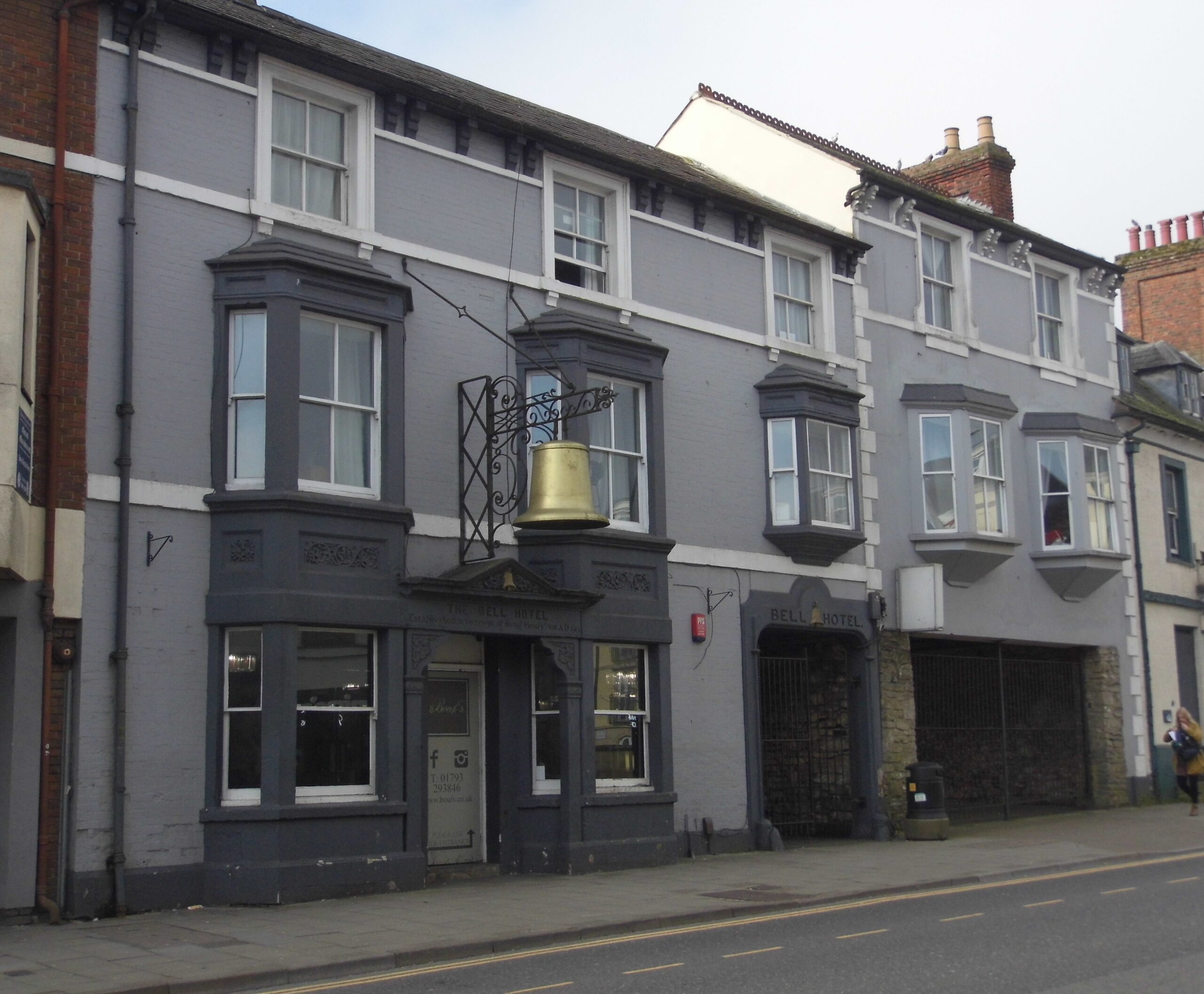
Looking north, the picture is less bleak. On the left we still have the Bell Inn, bearing, under the bell, the inscription ‘Established in ye reygn of Kyng Henry VIII AD 1515’. The inn served as departure point for the tri-weekly coach to London and, in the 1830s, as a post office.
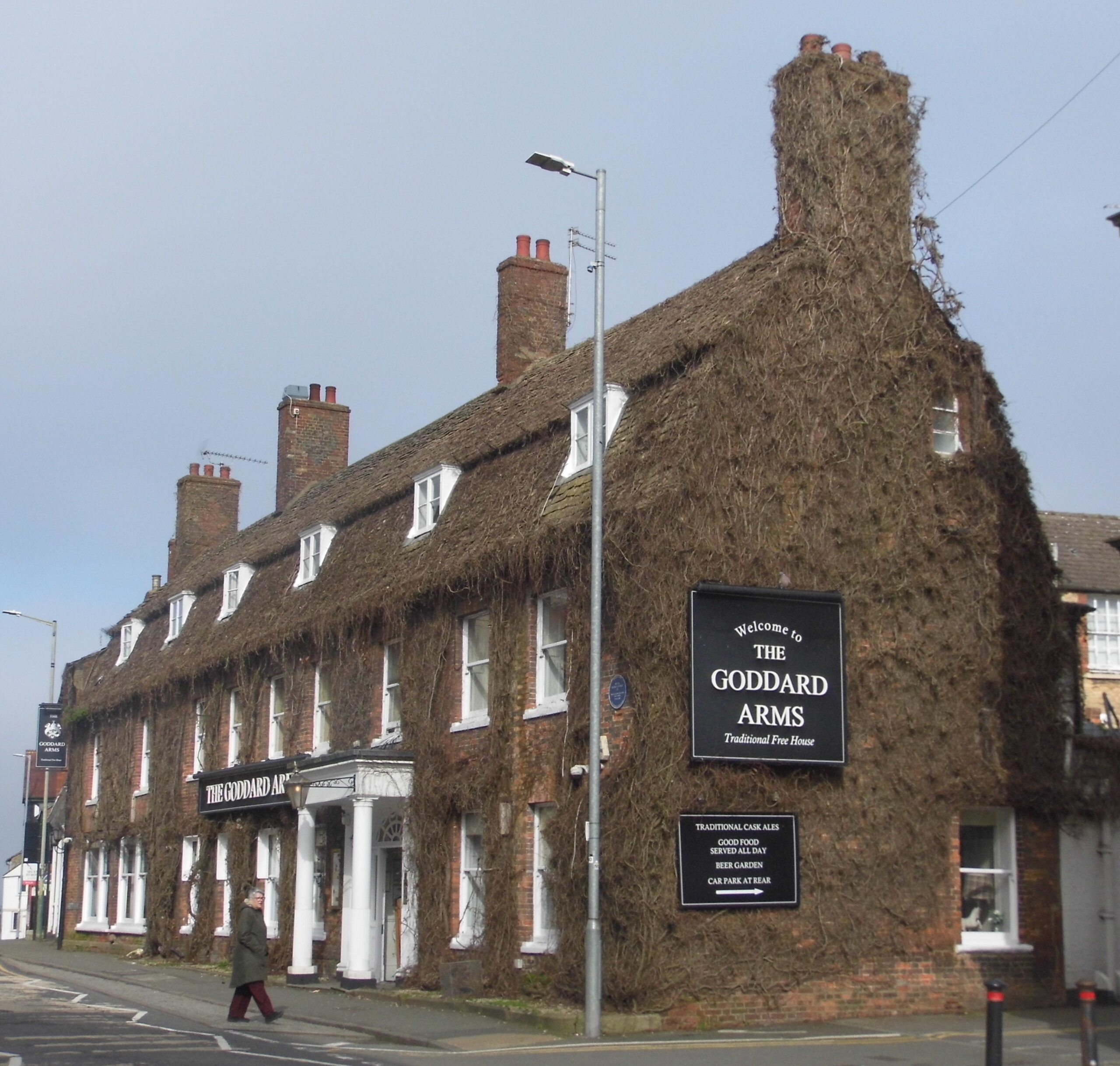
Across the road is The Goddard Arms. An inn stood on this site for 400 years. Known as The Crown until approx. 1810, it was renamed in honour of the Goddard family, the lords of the manor of High Swindon. The inn served as Swindon’s magistrates court until the 1852 building of the town hall on Market Square. It also did duty as the location of the first Meeting of the Royal Sussex Lodge on May 1st 1818 – and a blue plaque commemorates the fact. Find out more about that here: https://www.swindonheritageblueplaques.com/masonic.html
The Goddard’s grounds
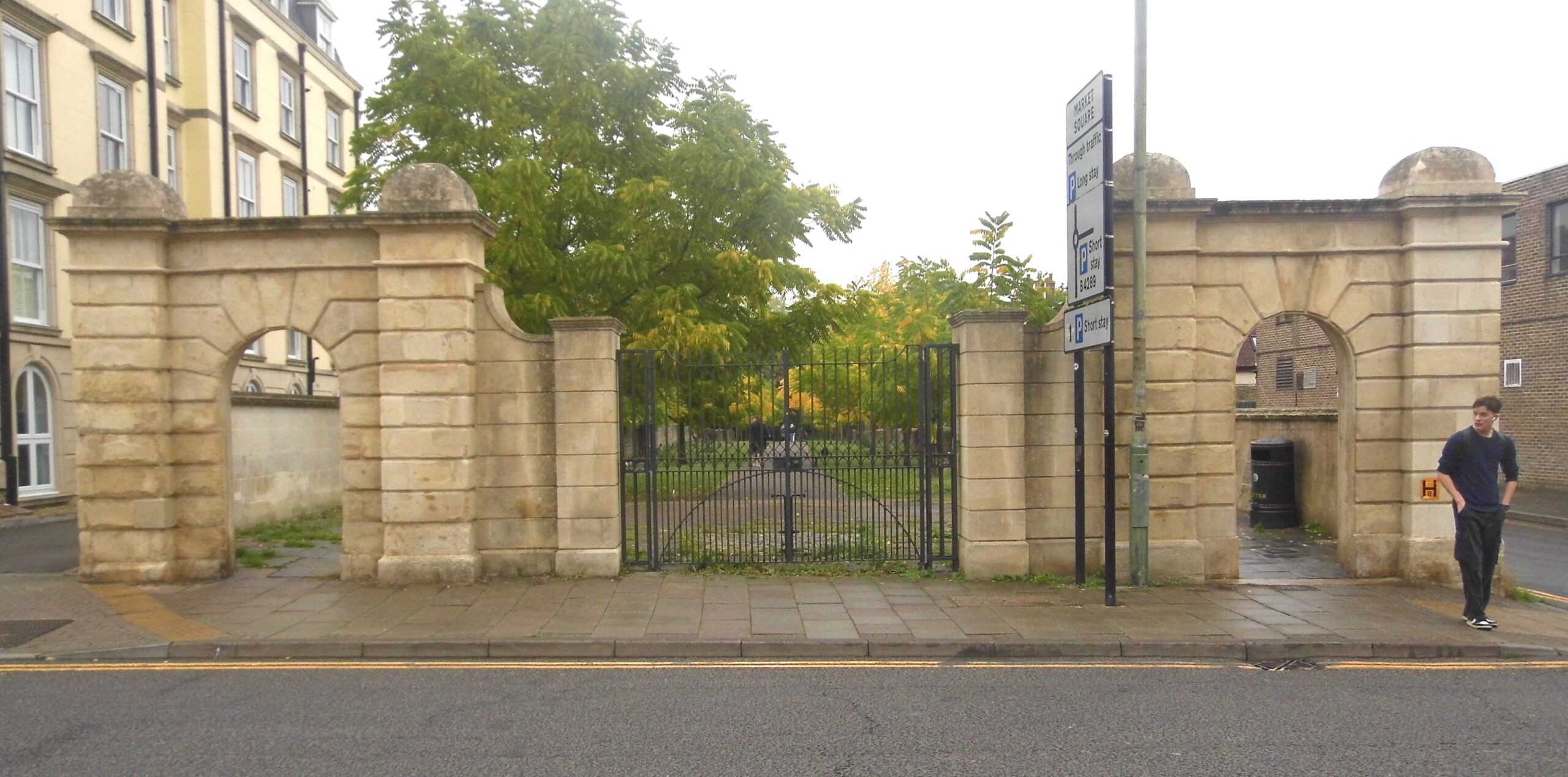
On the same side as the Goddard Arms, marking the entrance to the Lawn park, erstwhile stomping ground of the Goddard clan, are early 19th century gate piers and stone walls. Beyond those gate piers, hiding in plain sight, is Lawn park – erstwhile estate of the Goddard family.
I