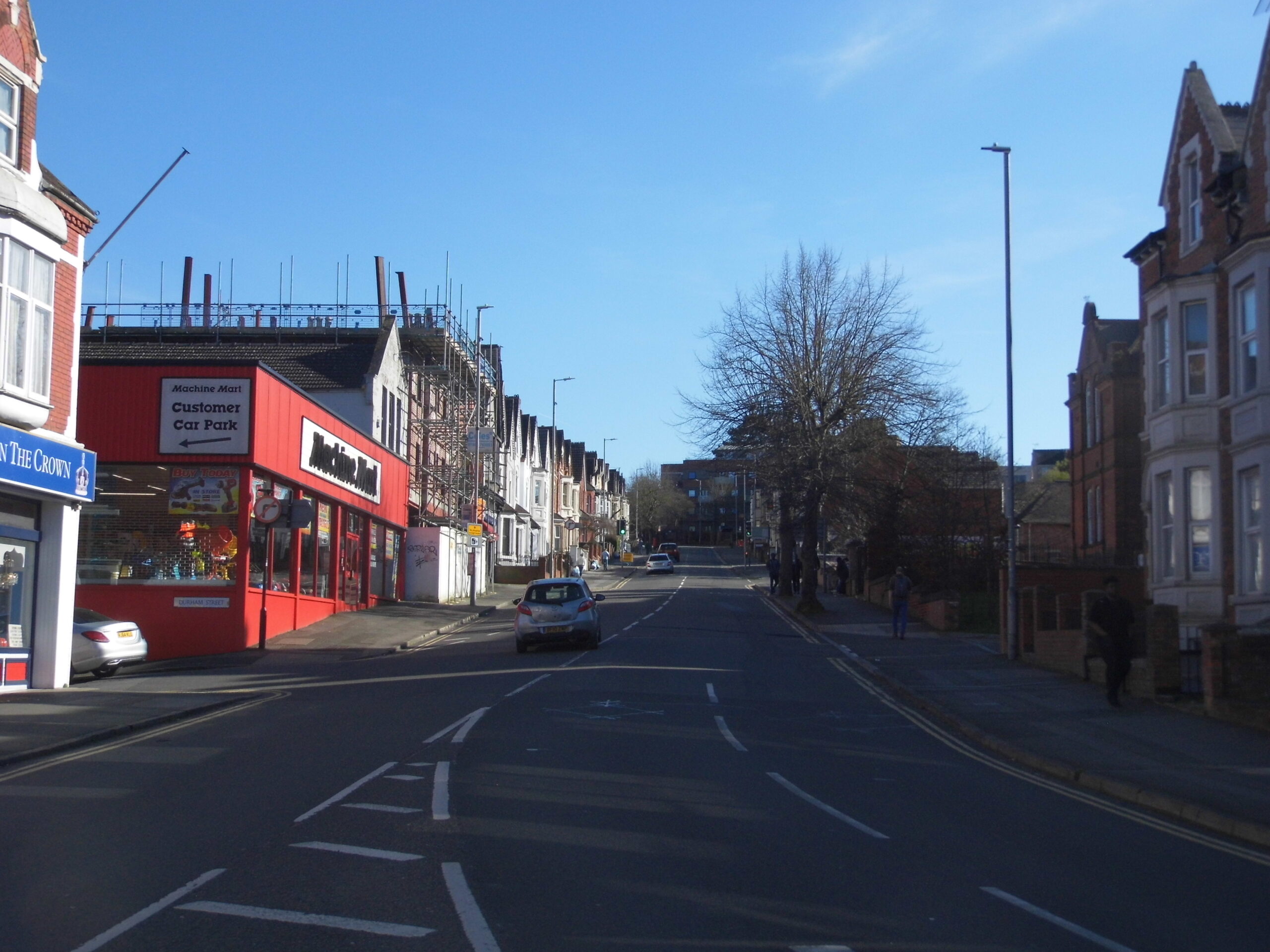
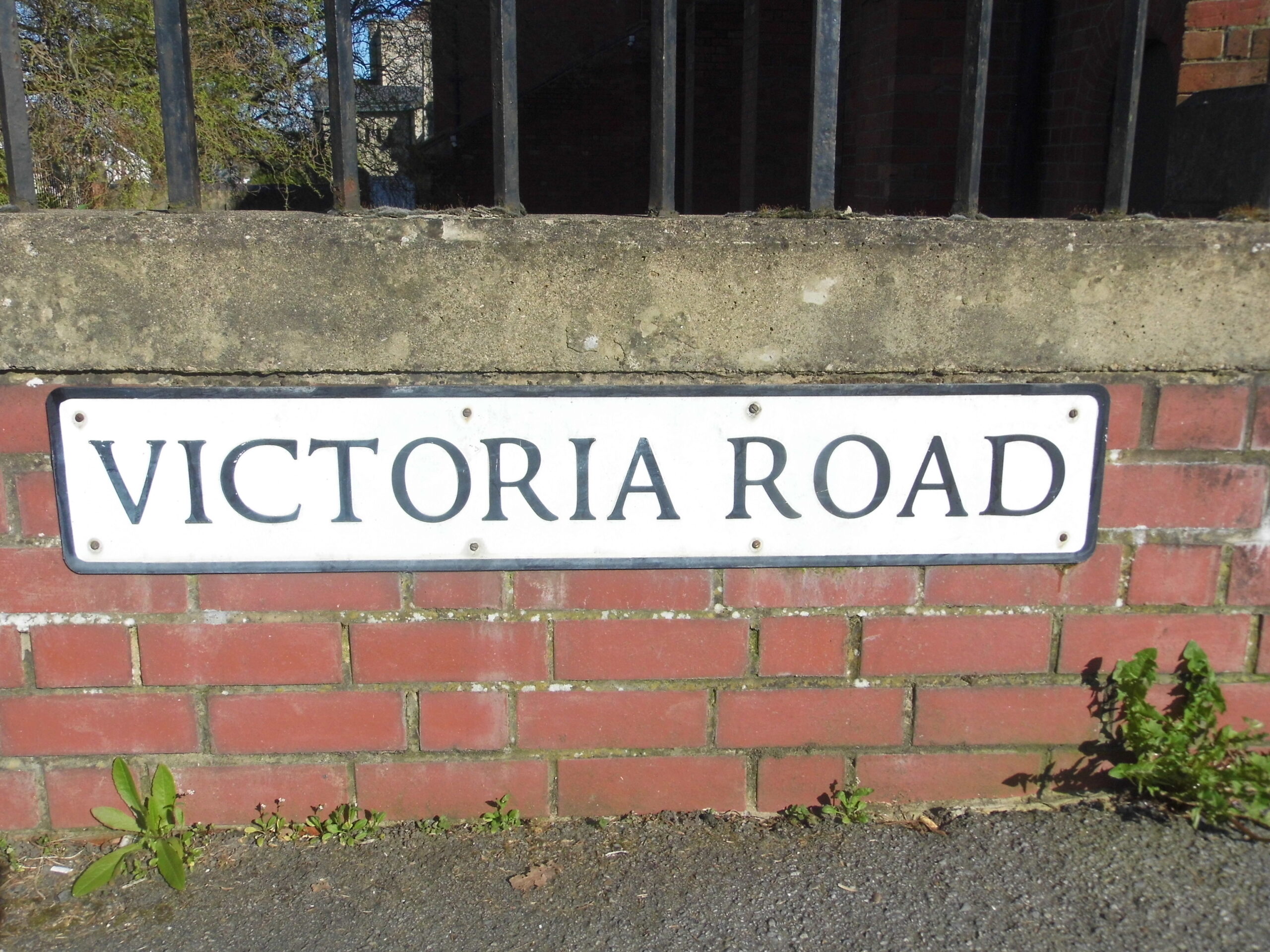
Victoria Road Swindon. As with so much else in the 19th century, this link between the old and new Swindons takes its name from HRH Queen Victoria.
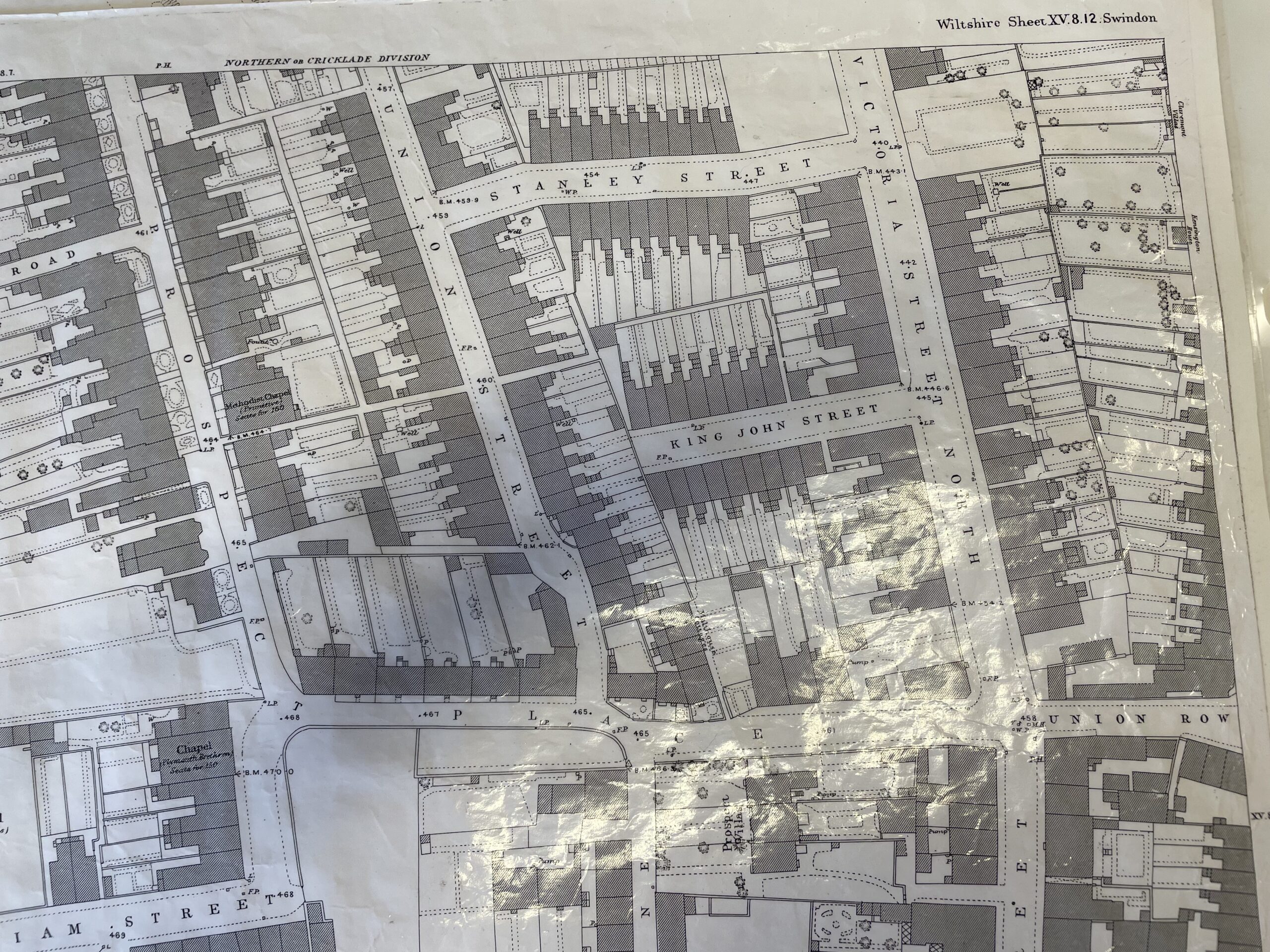
Mark Child, in his Swindon book, tell us: Before the 1840s a short street extended from The Sands (later to become Bath Road) to the junction with Prospect Place – a mere 100 yards away. Beyond that lay the hill sloping down towards the marshlands through which ran the Wilts & Berks canal – an area crossed by a single bridleway. On the lowlands below, New Swindon arose from the 1840s.*
In 1844 this short street still had no name – but by 1848 it appears on documents as Victoria Street. Mr Child goes on to posit that the name Victoria Street may well have been suggested by the neighbouring Albert Street in Little London. Built circa 1841, and named for the queen’s consort, it ran parallel to the newly-named Victoria Street.
Just beyond
Just beyond Victoria Street there lay allotments, gardens and orchards. This was all private land but the footfalls of folk trudging (so much trudging) between the old Swindon on the hill and the new Swindon emerging below, created a desire path. This trackway comprised an alternative to the earlier route from New Swindon forged across fields and at length emerging into Prospect Place.
It appears that, as early as the 1840s, the southern section of what became Victoria Street was, in essence, an extension of Wood Street. At least in terms of commerce and trade.
At that time there was a ladies’ finishing school, the residences of the high bailiff of the county court, the town’s main auctioneer and a couple of residents of independent means. The street was also home to tailors and drapers a carpenter and a tanner.
There was one common lodging house and one beer retailer – but all-in-all, early Victoria Street was respectable. It remained so until 1871 when the Old Swindon local board proposed extending it to link Old Town and New Swindon. This began in 1873. 1875 saw it largely laid down but not finished and called New Road. And thereafter came numerous complaints to the respective local boards about the state of this section of roadway – residents of both towns now considering the initial work a waste of money. Plus ça change one might say.
A Swindon notable or two
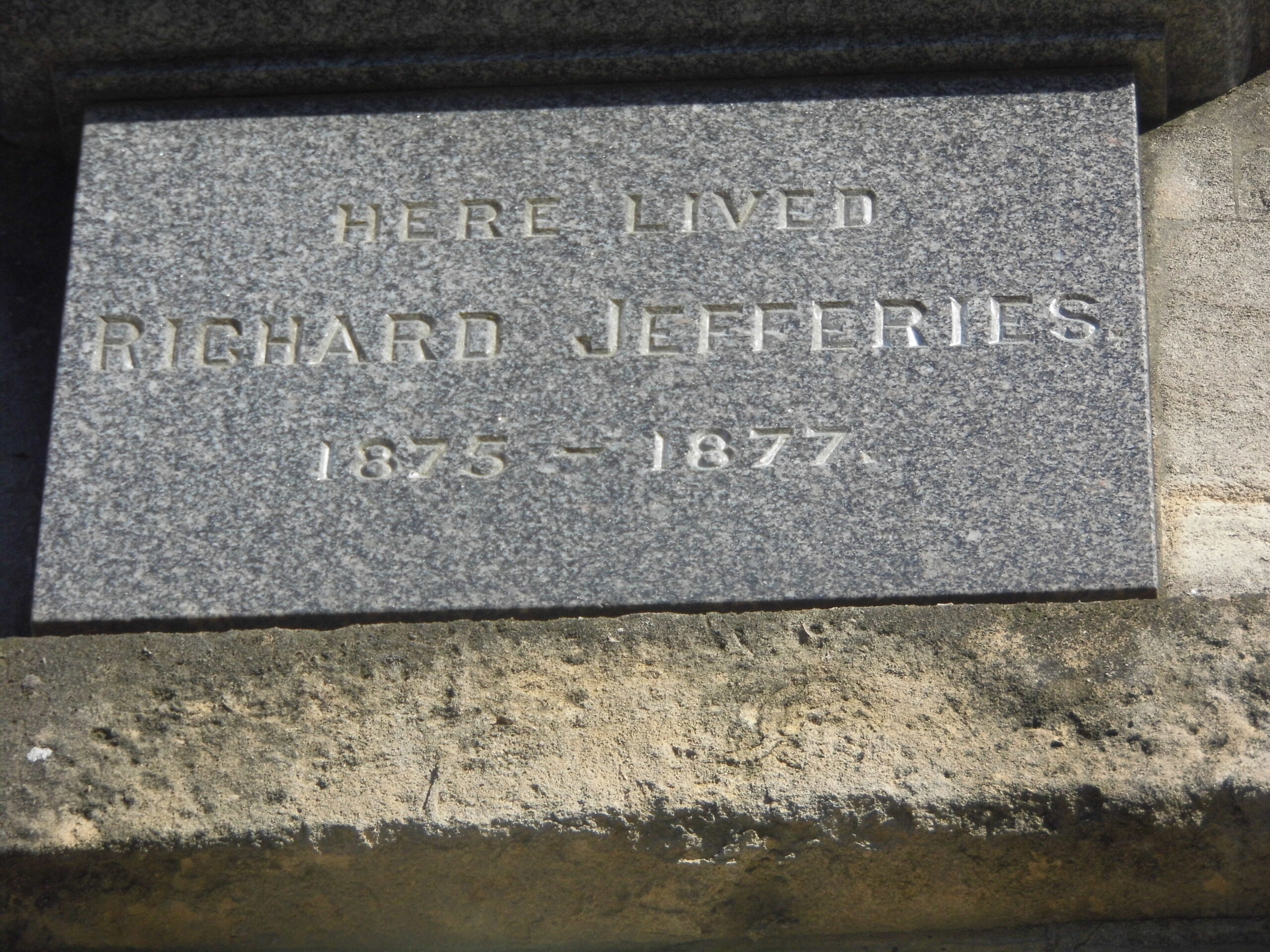
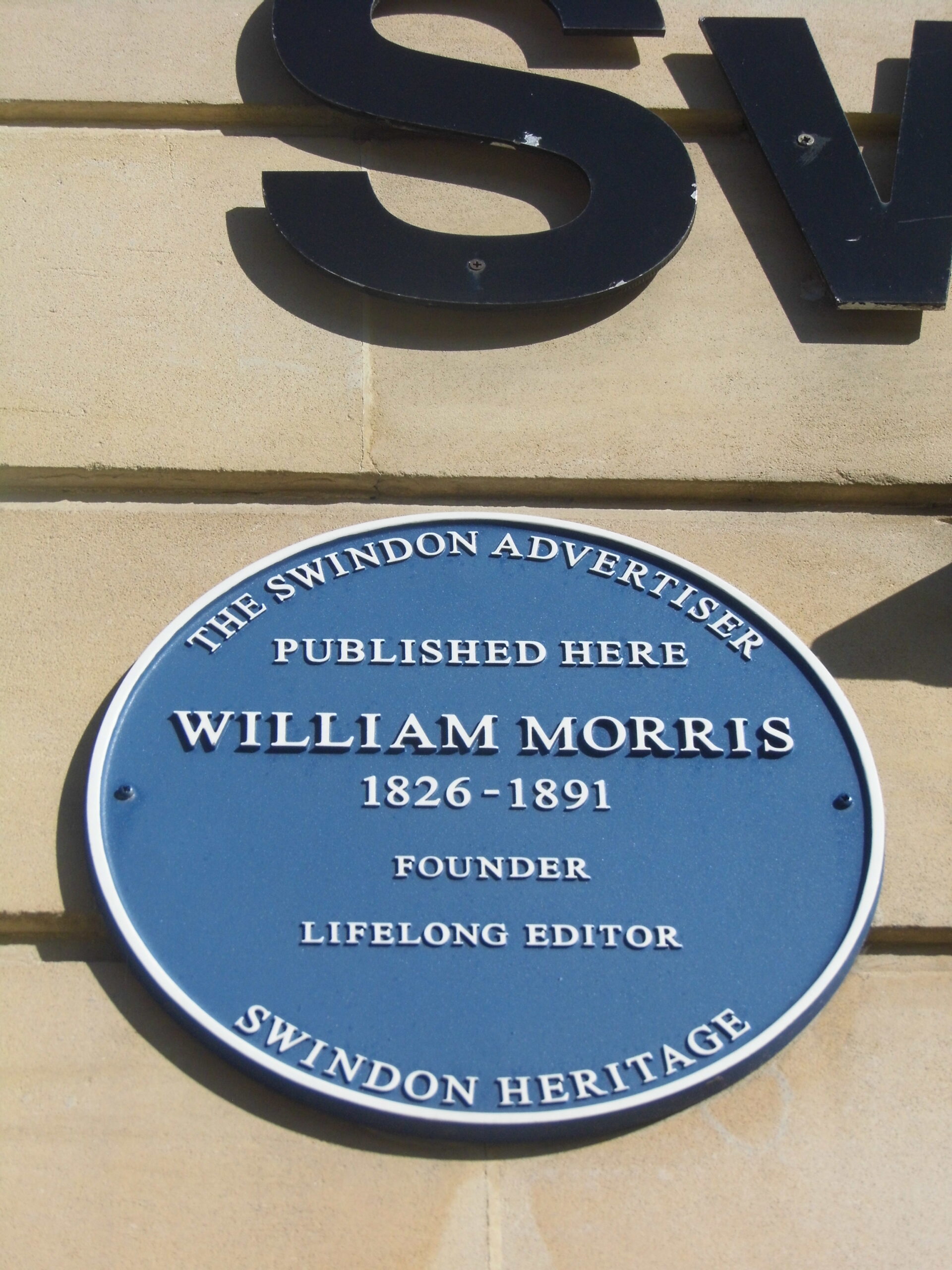
A Swindon notable, the writer Richard Jefferies spent a short sojurn at what is now No 93, but used to be No 22, from 1875 to 1877. Look up and you’ll see a Scotch grey, granite plaque marking the dwelling, installed, in 1902, to great fanfare by the North Wilts Field and Camera Club. But before Richard Jefferies and his wife lived there, William Morris, founder and editor of The Swindon Advertiser resided there – for quite some years. The same residence also served as home to a Mr John Hampden, by all accounts a notorious flat earther. It seems he was the subject of a celebrated law-suit when he failed to prove the flatness of the earth on the Bedford Canal.
The 1880s saw this extended thoroughfare first designated as Jubilee Road and then Victoria Street North. It became the major road between the two towns by approx. 1888, becoming tree lined in 1889.
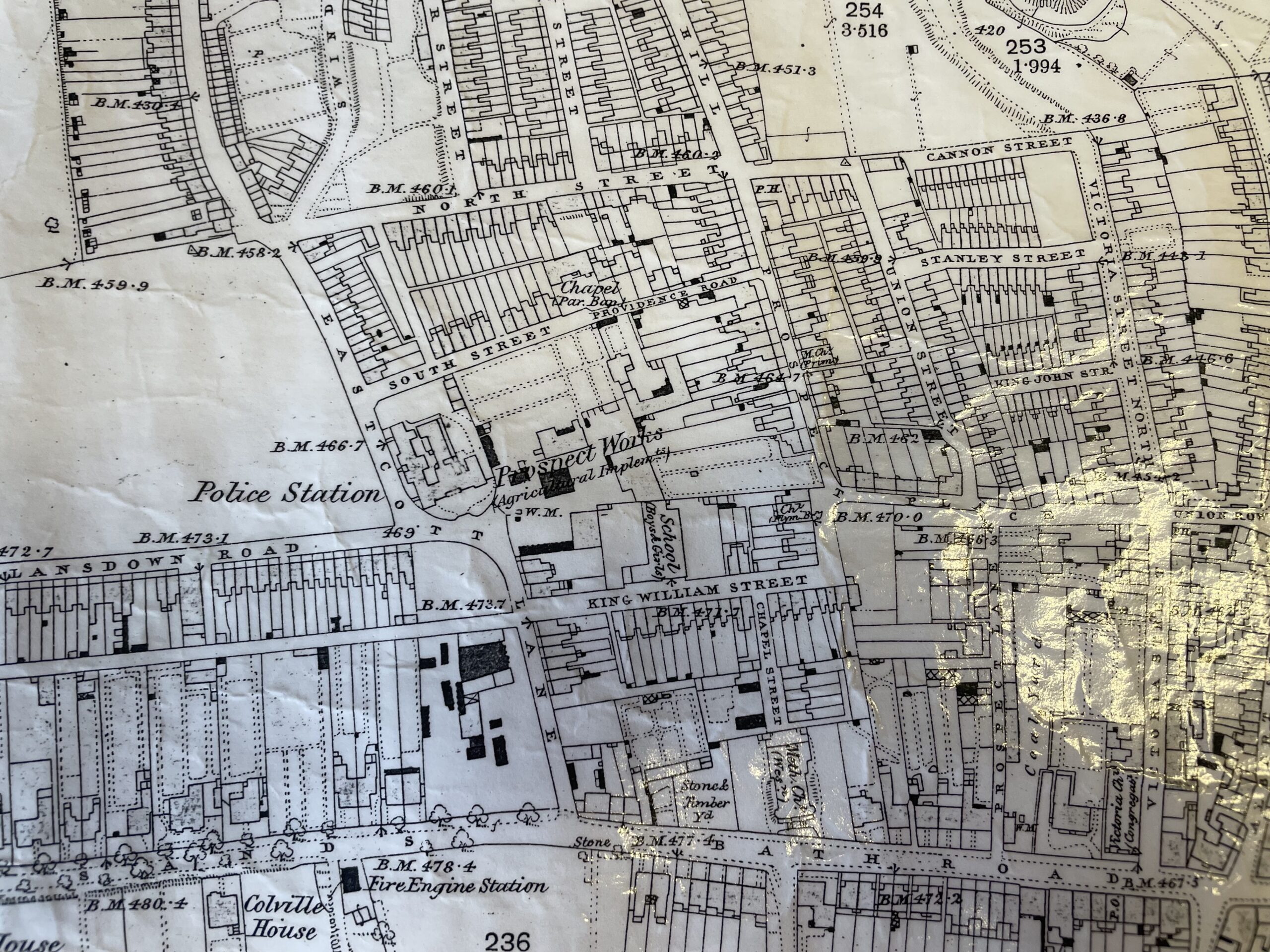
Then came plans to link the square at York Place, later to become Regent Circus, With Faringdon Road. Thus, came the assumption that the whole of this street, begun in Old Town, would, on completion, take the name Victoria Road. But that wasn’t how it panned out. Instead the section between Regent Circus and Faringdon Road took the name Commercial Road. And its continuation across the canal became, in in 1895, Milton Road – home of the famous baths.
By 1899, the section of the thoroughfare running between Bath Road and Regent Circus was entirely built-up. It took the name Victoria Road in 1903.
Notable buildings
I’ve already mentioned No 93, about half-way up on the left as you walk up the hill, erstwhile home of Richard Jefferies.
Also of note, at the top of the hill, is the Grade II listed, ex Swindon Advertiser building. Once two separate buildings, 99 and 100 features a unified Bath stone façade with classical detailing. This building’s historic interest lies in it being the erstwhile premises of The Advertiser – the first penny paper in the country and Wiltshire’s first steam-powered newspaper.
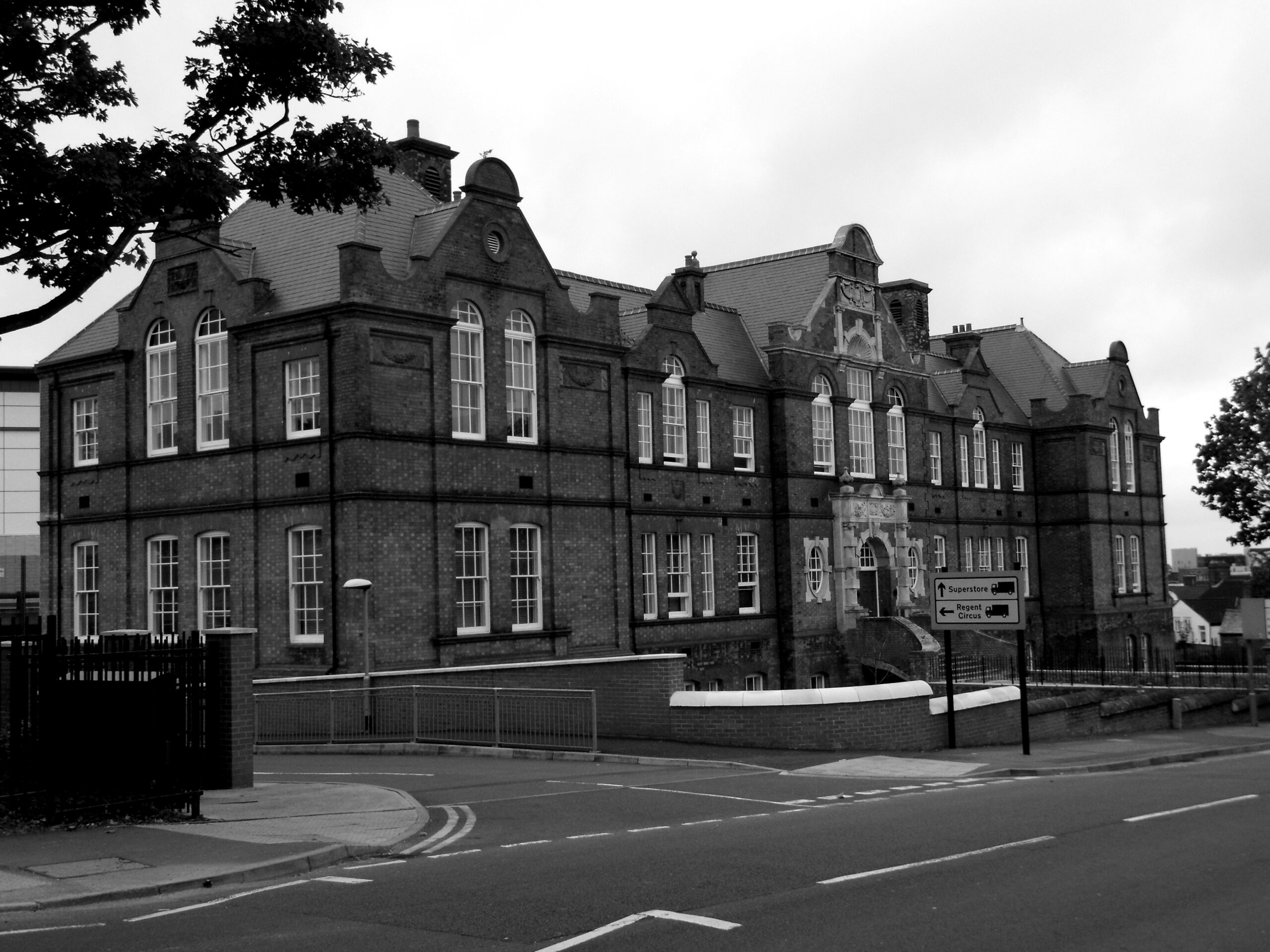
Going to the bottom of the hill we find the 1897 Burkhardt Hall. Now converted into flats, this Flemish-Baroque style building used to serve as Swindon’s technical college.
See Swindon in 50 Buildings for more about this edifice.
*Jason Spickett, owner of the Swindon from the Air, Facebook page, observes: ‘Sometimes, when flying my drone, I have to look at topography maps if I’m near to, or flying from, a hill. The roundabout at the top of Victoria Road is 145m above sea-level. And Canal Walk, in New Swindon, is 108m. That’s a difference of thirty-seven metres or 121 feet. So you’d have had quite the view from the top of that hill. Indeed, Prospect Place in Old Town is so named because of its literal prospect/view over the flatlands below.
The tram accident
In her blipfoto entry for Victoria Street, Maureen Iles writes about the infamous tram accident of June 1906.
As the tram proceeded down the hill its brakes failed, the driver lost control and it crashed at the bottom of the hill. Four people died and many more were injured, for the tram was packed with people returning from the Bath and West Southern Counties Show at Broome Manor Farm.