A Year in Malmesbury Life. For a small rural market town, with a population a little over 7,000 people, Malmesbury has crammed a lot into 2023.
And as residents sit back and reflect on the year, it’s notable how many events have been ‘firsts’ for the town -nestling in the north of Wiltshire, on the edge of the Cotswolds.
Led by Malmesbury Town Council, often working in partnership with other local organisations, not a month goes by without something going on.
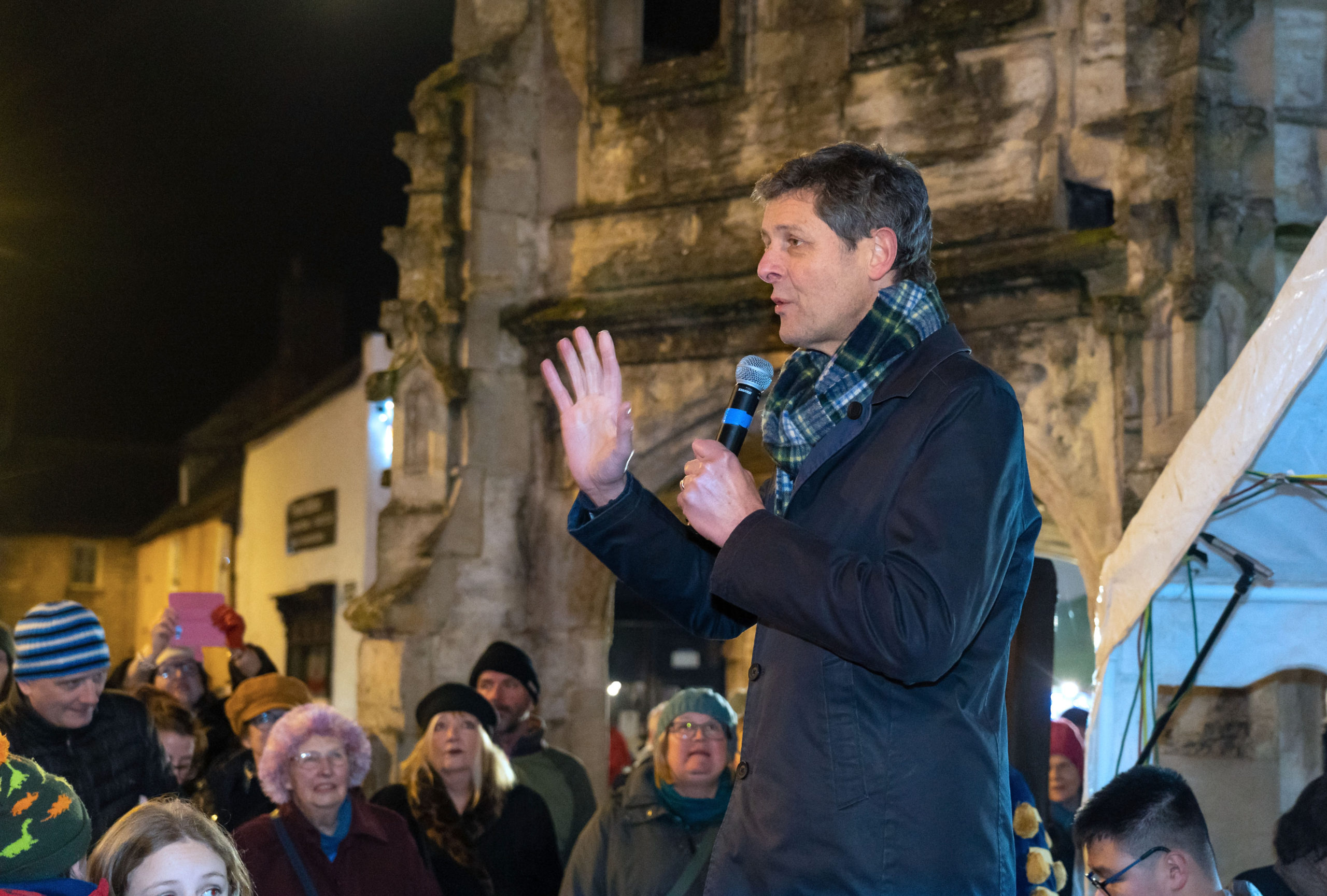
A Year in Malmesbury Life – Hugh Pym speaking
So, what’s been happening during 2023?
Well! As the oldest borough in England, the town likes to hold a ceremony or two. March saw a Jubilee tree dedication take place. Then in May, town staged the annual Mayor’s Ball, followed a few days later by the Mayor’s Robing Ceremony.
April saw a ‘first’ organised by the Town Council. In an effort to support and thank the many clubs and community groups that continued to provide a service during the pandemic, they organised a community day.
Military ties
The town has strong ties with servicemen and women at 9 Regiment Royal Logistic Corps. And in May the town awarded them the Freedom of the Town of Malmesbury. People turned out in droves to watch the regiment parade through the town.
June was a big month for the versatile town hall building – used as a venue for productions and cinema screenings. Malmesbury Town Council performed the official opening of its new retractable tiered seating. That replacef the old dining style chairs. So now audiences can watch in comfort, with much improved viewing.
Malmesbury has a strong cultural heritage. So August saw the month-long High Street Arts Gallery. Then retailers displayed the work of local artists, creating a trail of artwork around the town.
Another ‘first’ came in September, and hitting a high note, was the town’s inaugural Folk & Roots Festival. Organised in record time, and staged in the Cloister Gardens of Malmesbury Abbey, the event was a sellout. So plans are already underway for an encore in 2024.
November saw 9 Regiment RLC on parade in the town again, for the Service of Remembrance.
Then came December
Then onto December and the annual Christmas late night shopping. Son of Malmesbury, BBC Health Editor Hugh Pymperformed the opening ceremony.
Dotted amongst all this, throughout the year, were celebrations of Ukraine’s festival of Ivana Kupala, organised with Malmesbury Stands by Ukraine and the many Ukrainian refugees in the town. German schoolchildren visited Malmesbury School to strengthen the 70-year-old ties with Malmesbury’s twin town, Niebull. There was a town picnic to mark the King’s Coronation. And Malmesbury Town Council ran its annual Malmesbury in Bloom competition for residents, traders and schoolchildren.
‘We’re nothing if not busy in Malmesbury,’ said Town Mayor Cllr Gavin Grant. ‘Our town councillors and local groups work together to ensure there is plenty going on for residents, businesses and visitors. And thanks to their hard work our small market town is on the map.’
The late Poet Laureate Sir John Betjeman loved Malmesbury, calling it, ‘A city set on a hill which cannot be hid.’ The town is, for certain, making sure its activities are in the spotlight.
So what’s planned for 2024? More of the same, with one special ‘first’. Next year marks 1100 years since the naming of King Athelstan as the first King of England. And guess where he lived and is reputedly buried? Malmesbury.
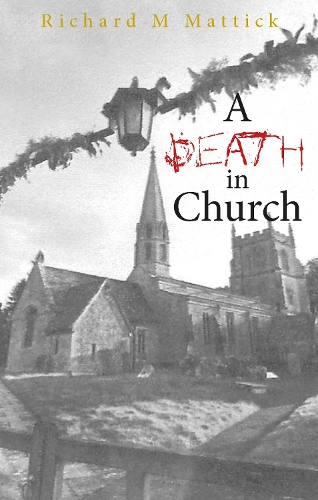
The A Death in Church novel, written by Richard M Mattick is helping to raise funds for the Big Breakfast Plus Swindon.
A Death in Church – front cover
Well-known in Swindon and beyond for his writings about Swindon Town Football club,* Richard has turned his hand to this murder mystery tale. If you’re looking for a stocking filler then this could well do the job and you’d be helping a great cause too.
Anyway – back to the book. You can get it from the Pilgrim Centre on Regent Circus until 24 December between 7.30 and 9.30. Or by post for a 0.99p P&P charge. Order it via: charlotte@bigbreakfastplus.org.uk
I guess I should mention that you can also get it at Waterstones – along with his football productions for that matter – but whether that benefits BPP I’m not sure. Anyway, the link is here: https://www.waterstones.com/author/richard-mattick/259103
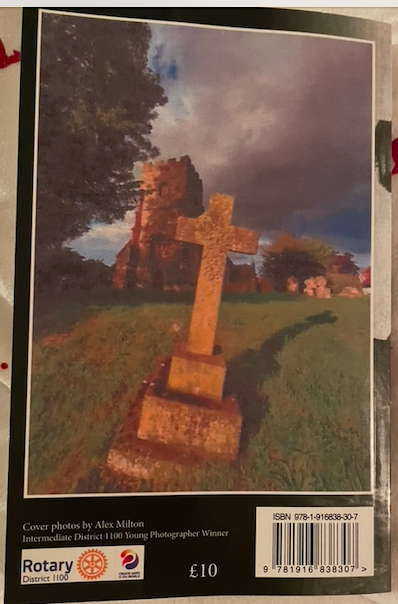
The back cover of A Death in Church by Richard Mattick.
I’ve only just begun reading it so not giving any spoilers away – for myself or anyone else!
Big Breakfast Plus Swindon
The Big Breakfast Plus in Swindon now serves the hungry in Swindon seven days a week. And to do that it needs support from you, the Swindon community via donations of volunteer time or money. So any help you can give them will be more welcome than you know. Whether it’s by buying this book or making a donation via this link. Anything you can spare will help.
Find out more about Big Breakfast Plus and the great things they do here:
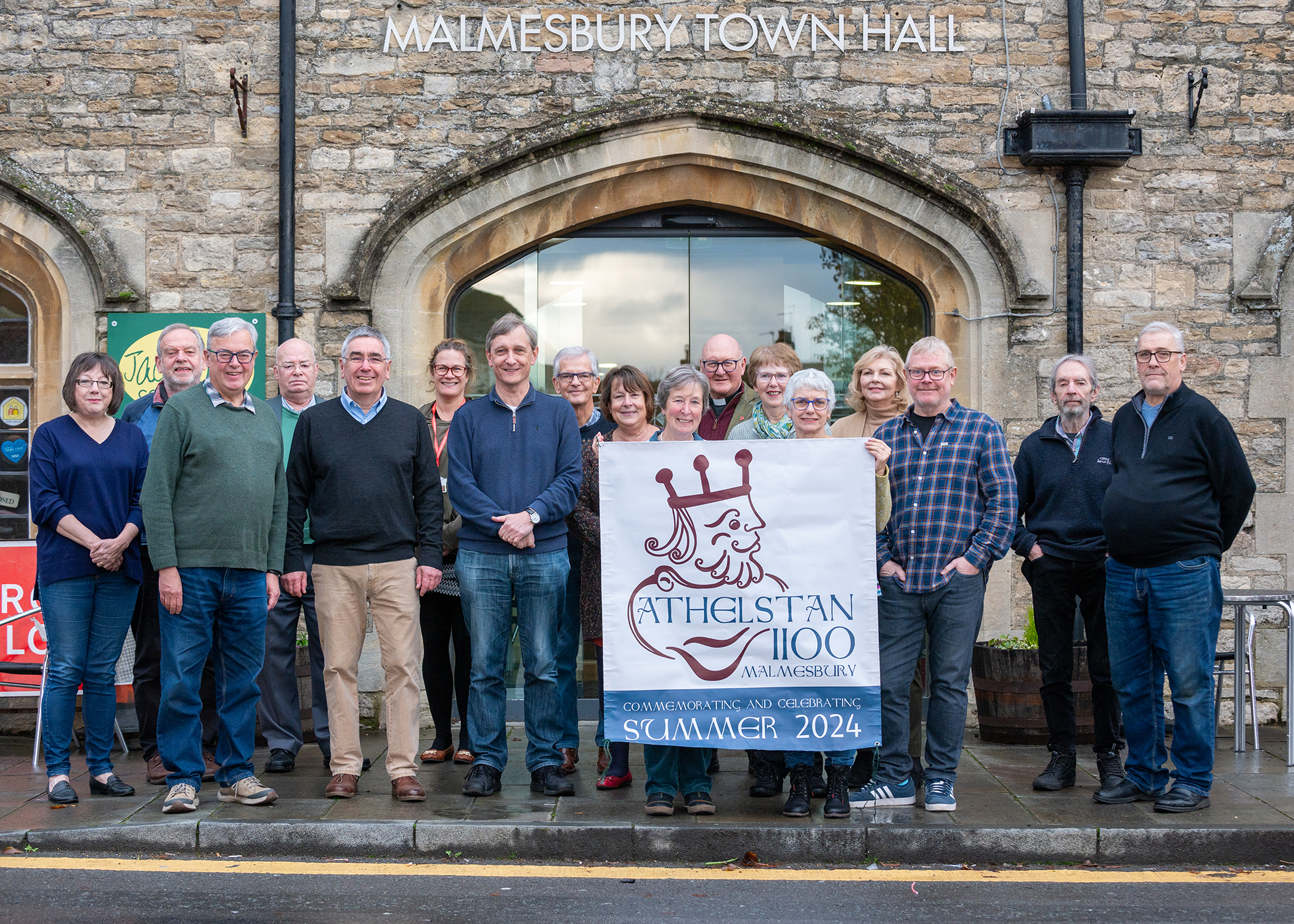
Introducing the Athelstan 1100 project celebrating the 1100th anniversary of Athelstan becoming King
In 2024, Malmesbury will play host to a bumper programme of events to mark the 1100th anniversary of the accession of King Athelstan. And he has a very special relationship with the town.
It was in 924 AD that Athelstan, the grandson of Alfred the Great, became king of Mercia and Wessex. That comprised his first steps on his journey to becoming the first King of England. His relationship with Malmesbury runs deep in the DNA of the town and he chose Malmesbury Abbey to be his burial place.
1100 years
2024 marks 1100 years since Athelstan became king. So a team of community organisations have been working together to create a series of events to mark this iconic moment. They include:
The Athelstan Museum
Malmesbury Town Council
Malmesbury Town Team
the Warden and Freemen of Malmesbury (who trace their origins to Athelstan)
Malmesbury History Society
Wessex Week
Malmesbury Abbey
Athelstan Players
Meet the team
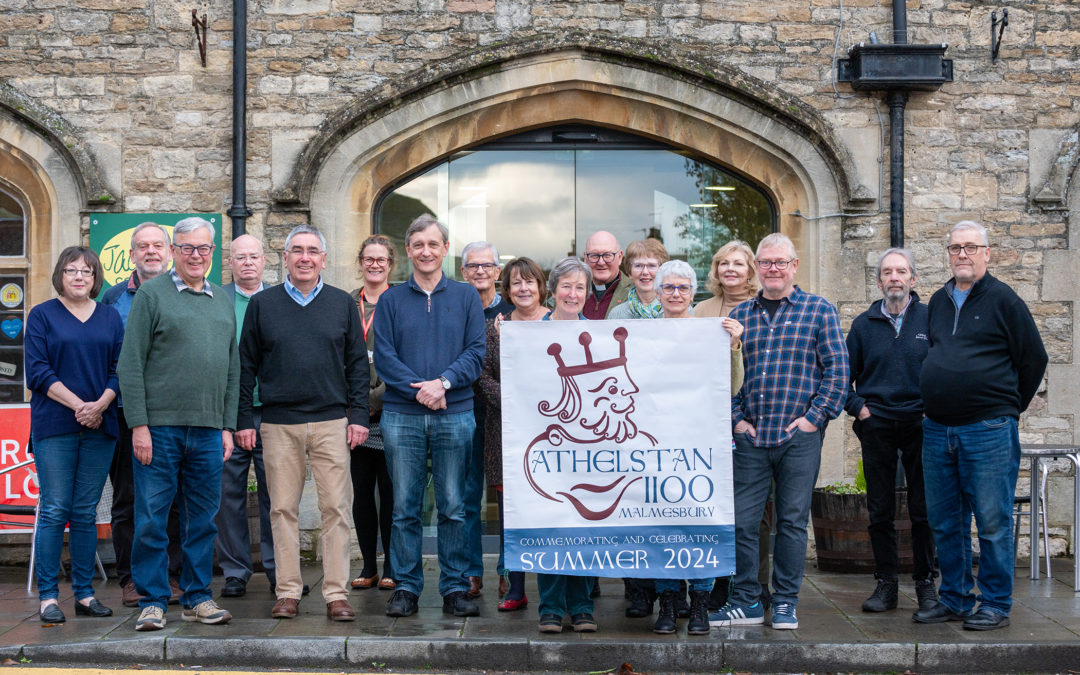
MALMESBURY AND ATHELSTAN – the project team
Project Leader Campbell Ritchie said ‘Malmesbury has a rich and rewarding heritage that’s the backbone of our economy and culture. Athelstan’s national importance and his focus on our town, his gifts, and the inspiration he drew from this community is worth celebrating. It creates a moment to show how proud we are of our home.’
Series of events
There’ll be a series of events from May to October 2024. And key to those will be celebrations taking place across three weekends in July:
*The first weekend of July, the 6 and 7 will be Malmesbury’s Big Athelstan Dig. That will involve community archaeology at sites around town – even in people’s gardens! Visitors will be able to follow a trail and meet professional archaeologists who will help interpret finds. It’s well known that Malmesbury was the site of Athelstan’s buriel. Yet his body got moved, though no one knows where. Perhaps that mystery will find a solution too.
*July 13 and 14 will feature live multi-media performances at Malmesbury Abbey. These will tell how Athelstan became the first King of England. And Malmesbury’s beautiful Cloister Gardens will be buzzing with a children-focused Big Athelstan picnic and an immersive Anglo-Saxon food, drink and craft fair.
Top name speakers, a ground-breaking exhibition at the Athelstan Museum it’s guaranteed there’ll be events and activities for all throughout the summer. Further, there’ll be the Athelstan-themed Malmesbury carnival procession in the Athelstan and Anglo-Saxon focused Wessex week in October.
Mayor of Malmesbury, Cllr Gavin Grant said ‘Malmesbury is getting behind Athelstan 1100. It’s great to see so many groups and individuals working together with more becoming involved as plans progress.
The early support of Malmesbury Town Council, Mindvision, Cotswold Archaeology, Scott Media and the Warden and Freemen of Malmesbury is much appreciated by the project team. And there are now many opportunities for local businesses and residents to get involved. That means we can maximise the benefit of this important anniversary and Athelstan’s relationship with Malmesbury for our residents and visitors.’
Turner Art Project Success. The Athelstan Museum in Malmesbury is celebrating its three-year JMW Turner Malmesbury Abbey project as a huge success. The celebration comes after completion of a report detailing its impact.
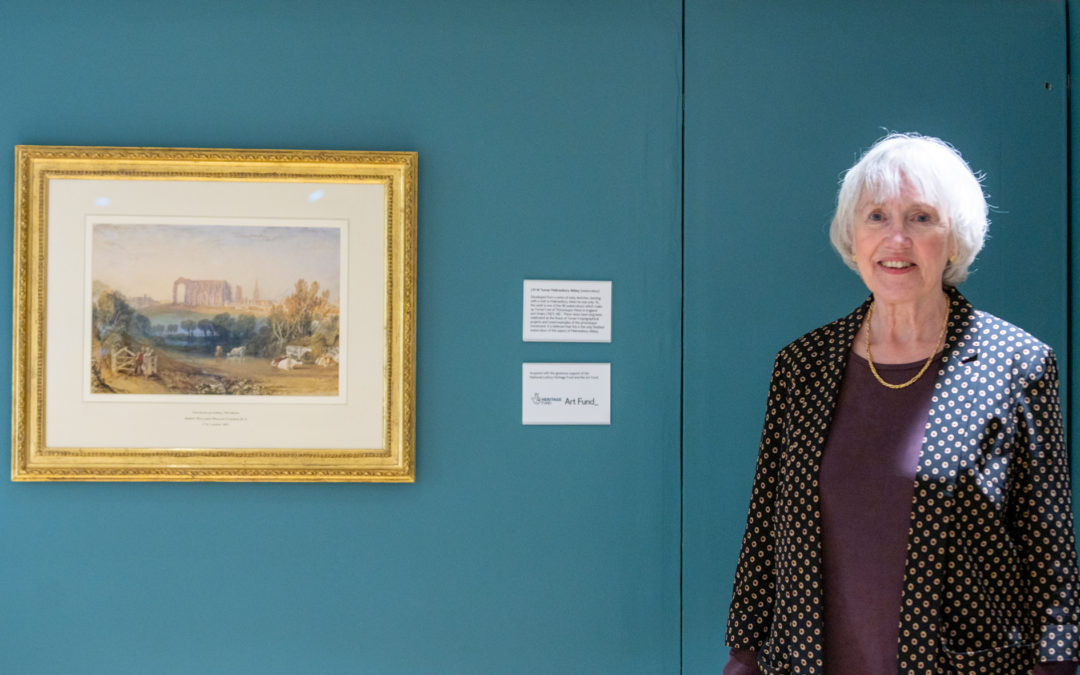
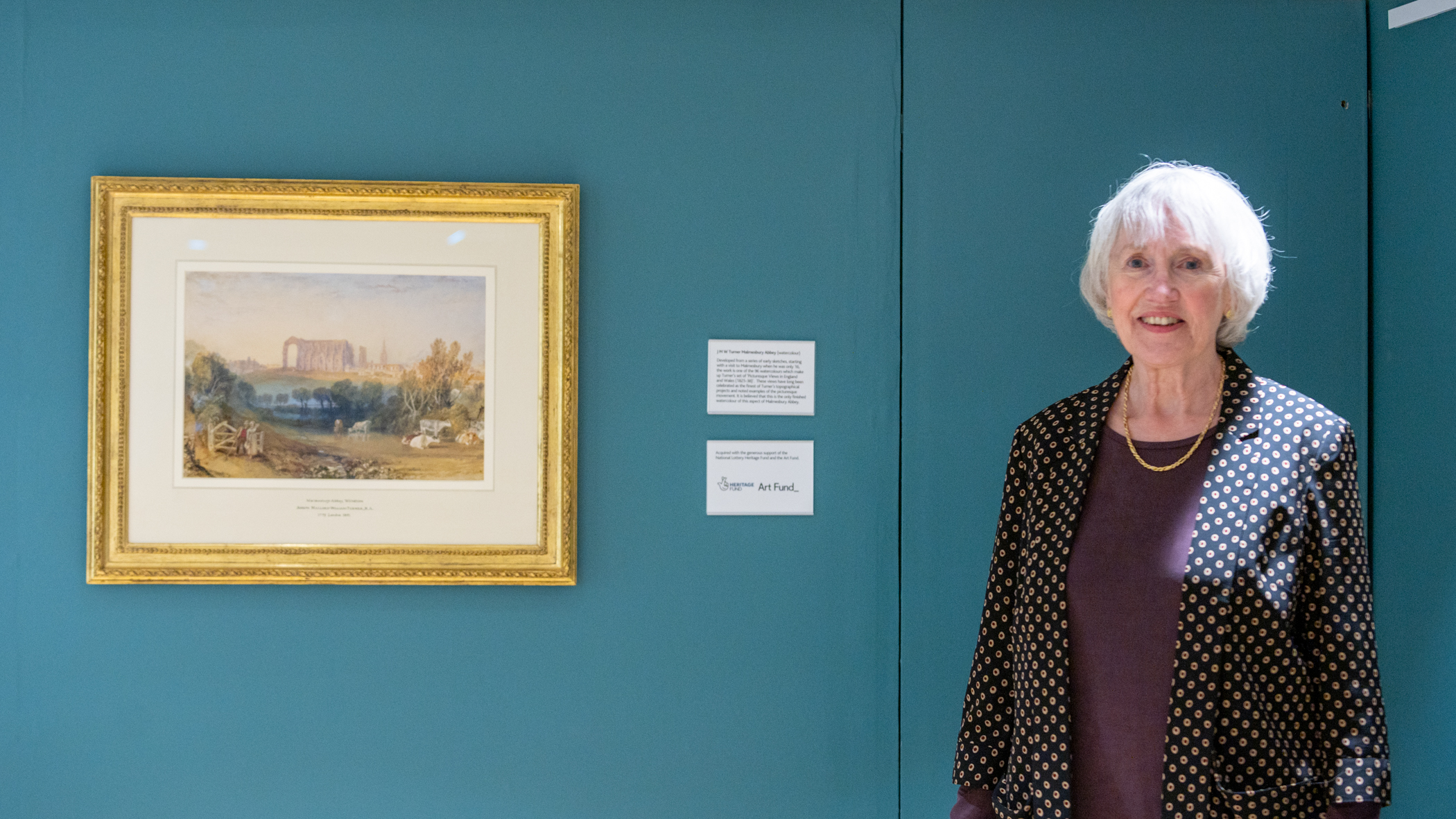
Turner Art Project Success – Sharon Nolan and the Turner
It began in the before times
The Turner project began before the Covid lockdowns in 2020. Then the museum sought to buy the painting, “Malmesbury Abbey, Wiltshire”, by iconic artist, JMW Turner. The artwork, believed to have been painted c.1827, hadn’t been on public display since 1833. It was at risk of falling into private hands and taken abroad had the museum team not acted.
After thousands of hours put in by volunteers, the museum managed to secure £150,000 from The Art Fund. Then a further £275,000 from the National Heritage Lottery Fund (NLHF), allowing them to acquire the painting.
Eleanor McGrath, head of grants at the Art Fund, said the determination of a small, volunteer-run museum such as the Athelstan to get the painting was bold and ambitious.
It represents the fantastic community behind the work of art itself,’ she said.
About more than a painting on the wall
The Turner Project didn’t mean simply acquiring the painting. It came with a whole range of activities. These included a programme of events, activities, exhibitions and outreach for the community.
It began with a formal exhibition opening. Then came Saturday morning sessions to introduce the painting to viewers. There were partnerships and outreach with local schools. All as well as monthly art sessions facilitated by the museum’s resident artist for people living with dementia and their carers.
When the Covid-19 pandemic arrived and the lockdowns affected the public’s ability to visit museums and galleries, some aspects of the project became a challenge to deliver. Thus the museum team had to rethink some of its plans.
‘Covid meant that, in some respects, the project had to take a different path to that expected,. says Susan Mockler, vice-chair of the Athelstan Museum management team. ‘But, we remained committed to delivering a worthwhile, interesting and legacy-minded programme. One that could work with the challenges of the pandemic and we’re thrilled it has achieved significant and, in some cases, unexpected positive outcomes.’
Reviewing the situation
To ensure the project remained in keeping with its original intentions and scope the team adapted the programme. They relocated some of the planned talks and activities and tweaked others.
‘It was vital to us that the painting coming to live at the Athelstan equalled a gain for the whole community and the wider general public, not just the museum, ‘says Susan Mockler.
Since the lifting of lockdown, the Athelstan has seen a large increase in its visitor numbers because of the acquisition. And a greater number of people than ever before coming from outside the area. 77% of people who visited the Museum in the last year did so for the first time. This shows the significant part the Turner has played in the growing reputation and standing of the Athelstan.
A diverse diversity programme
Sharon Nolan, Chair of the Museum’s trustees said:
‘Thanks to volunteers Susan Mockler and Sue Poolman, Athelstan Museum’s Turner diversity programme has been a huge success. In spite of having to adapt initial plans because of Covid and other setbacks Susan and Sue used the Turner watercolour to inspire a diverse range of people to enjoy making their own paintings.
‘They took Turner to people in care homes in the area. And Carolyn Brothwood worked with Malmesbury School to organise a programme with students. They created their own artwork, some of which we’ve showcased alongside the Turner in the museum. It has been a positive and memorable experience for all involved.’
The project has developed a long-lasting legacy for both the Athelstan and the local community. The painting is now displayed in the renovated mezzanine level of the museum.
The project has developed a long-lasting legacy for both the Athelstan and the local community. The painting is now displayed in the renovated mezzanine level of the museum.
Visitors’ experience has been further enhanced by the museum’s volunteers benefiting from a special training programme. That’s increased their understanding of Turner, the painting and its history. Further, King Charles III, who was HRH Prince of Wales and patron of the Turner Society at the time, recorded an introduction to the museum’s series of talks about the painting. You can see them on the museum’s website.
‘The project is nothing short of remarkable,’ says Susan Mockler. ‘We’ve save the painting for the nation. And further we’ve put on free, public display. More people are now aware of the museum and more than 30,000 people have visited us since we acquired the piece in 2020. We’ve got strengthened partnerships with the local community, including schools and retirement homes. And the Athelstan is in its most robust position for years.’
The report about the success of the project will soon be available. For more information about the Athelstan Museum visit https://www.athelstanmuseum.org.uk
So last night I got to see the Wyvern Theatre Snow White panto production for 2023. And Swindon, you’re in for a treat. The cast and the junior ensemble tell the tale of the princess poisoned by thebite of a Royal Gala with much aplomb. The whole thing is fab fun and as entertaining as it gets. *Most of the usual panto elements are present – there’s cheering and booing and hissing and the ‘he’s behind you’ ghost scene. Not to mention nerf guns – when DID they become a thing? Anyway – they’re clearly an integral part of the performance now. I managed to get nerfed in the circle! This site gives a great beginners guide to British pantomime traditions if you want to delve a bit deeper into all that.
* With the exception of the pantomime song routine ‘If I weren’t upon the stage/in pantomime a xxx I would be.’ I just love the careful choreography that goes into this routine. PLEEEEAAAASE can we have this back next year!
The issue of the seven dwarves was, I have to say, dealt with rather cleverly. But no spoilers as to how. Their names were changed somewhat because Disney have copyright on the names they used in their film.**
As per last year, we have David Ashley playing Nurse Nora , the pantomime dame. He is a great dame! And Paul Burling returns as Nurse Nora’s son, Muddles. They are a fab team to be fair – not least because of the height differential!
Precipitating all the booing and hissing is Divina De Campo as the wicked stepmother – aka Queen Morgiana – in some TERRIFIC outfits!
Nathan Connor as Prince Boris and Samantha Dorrance as Snow White, I’d not encountered before – I live a sheltered life!
Everyone was wonderful and a special mention for the ensemble who did a superb job.
I’ve booked to take my granddaughter just before Christmas and I’m def looking forward to it. And with luck she’ll get nerfed instead of me! 😉
So if you’ve not booked yet – what are you waiting for? It makes for a brilliant afternoon/evening. Oh yes it does!
Wyvern Theatre Snow White
The Origins of the Snow White story
It’s worth pointing out, as ever, that of course Disney didn’t invent this tale of a murderous and jealous stepmother. Like many of our popular pantomimes, this too came from the Brothers Grimm. Though it is in fact more complex than that. So if you’re nerdy enough I’ll direct you to this website for the full background. But suffice it to say that the dwarves in one of the early versions of the tale didn’t have names at all. **Thus when Disney made his animated film he copyrighted the names he gave them and with which we’re all familiar.
And of course the original versions were grisly! In Cinderella, if memory serves, the ugly sisters slice of their heels in order to get into the glass slipper. And in early versions of this particular tale:
‘Snow White and the prince get married, and the evil step-mother is invited to the wedding. Here’s my favorite part. When she sees Snow White, alive and marrying a prince, she is “so petrified with fright that she could not budge. Iron slippers had already been heated over a fire, and they were brought over to her with tongs. Finally, she had to put on the red-hot slippers and dance until she fell down dead.” ‘ Nice!
For more info on the cast list and on Imagine Cruising go here: