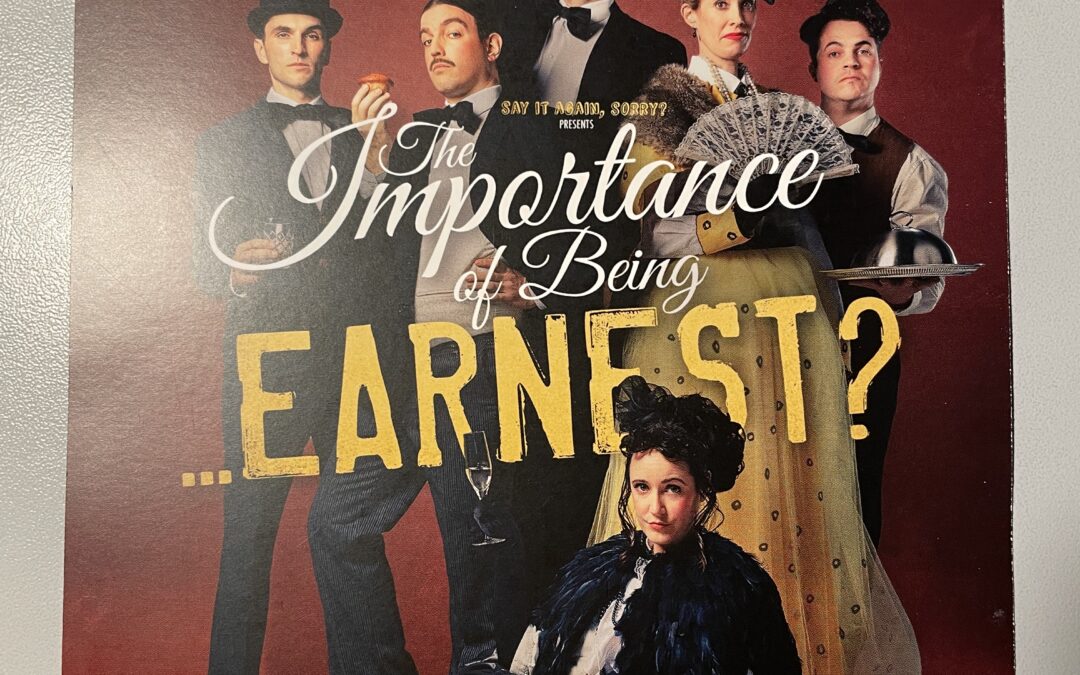
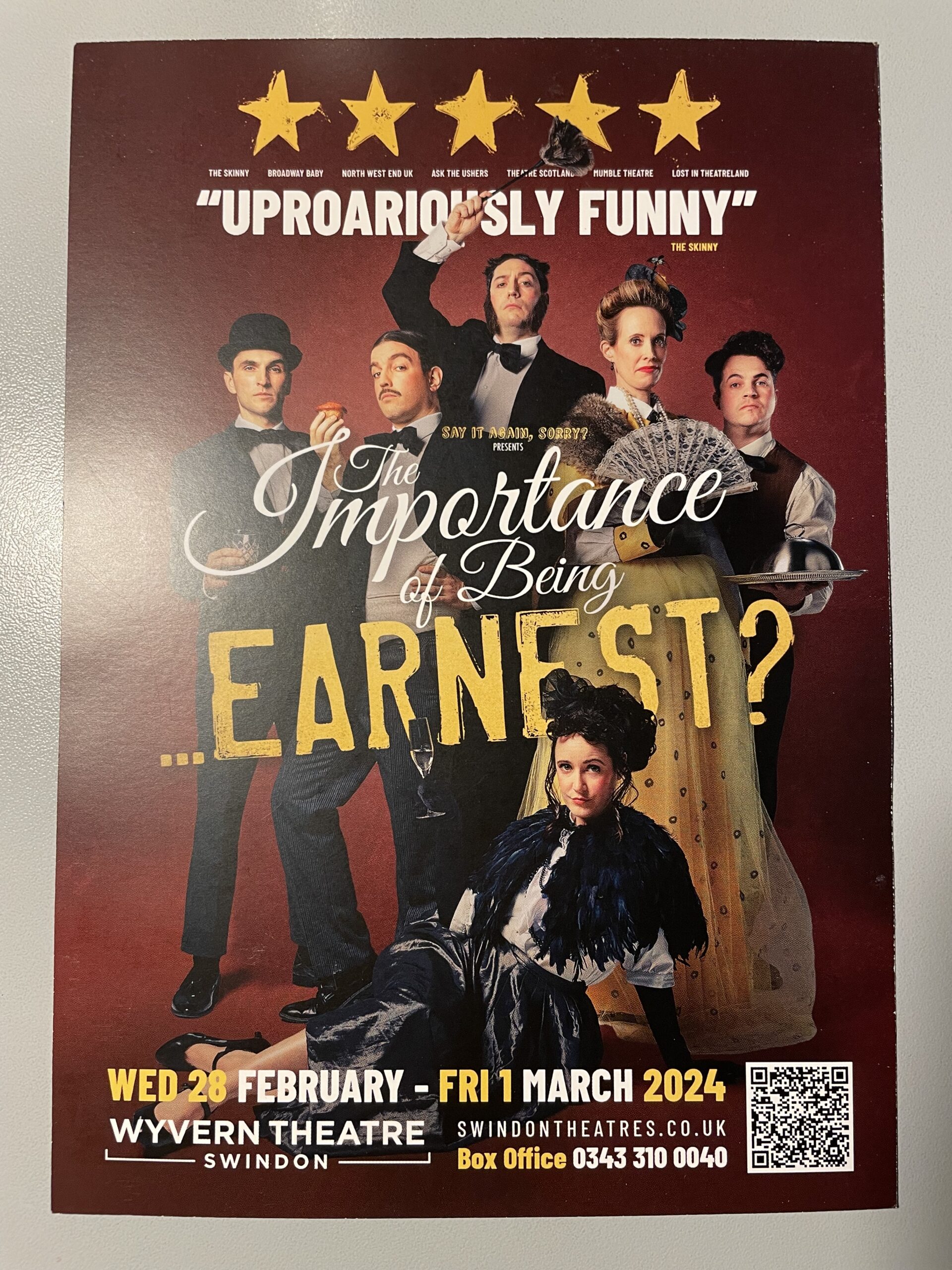
Oscar Wilde – sort of! What do I mean by that? Well, what I mean is a performance of Oscar Wilde’s, The Importance of Being Earnest– but as you’ve never seen it before.
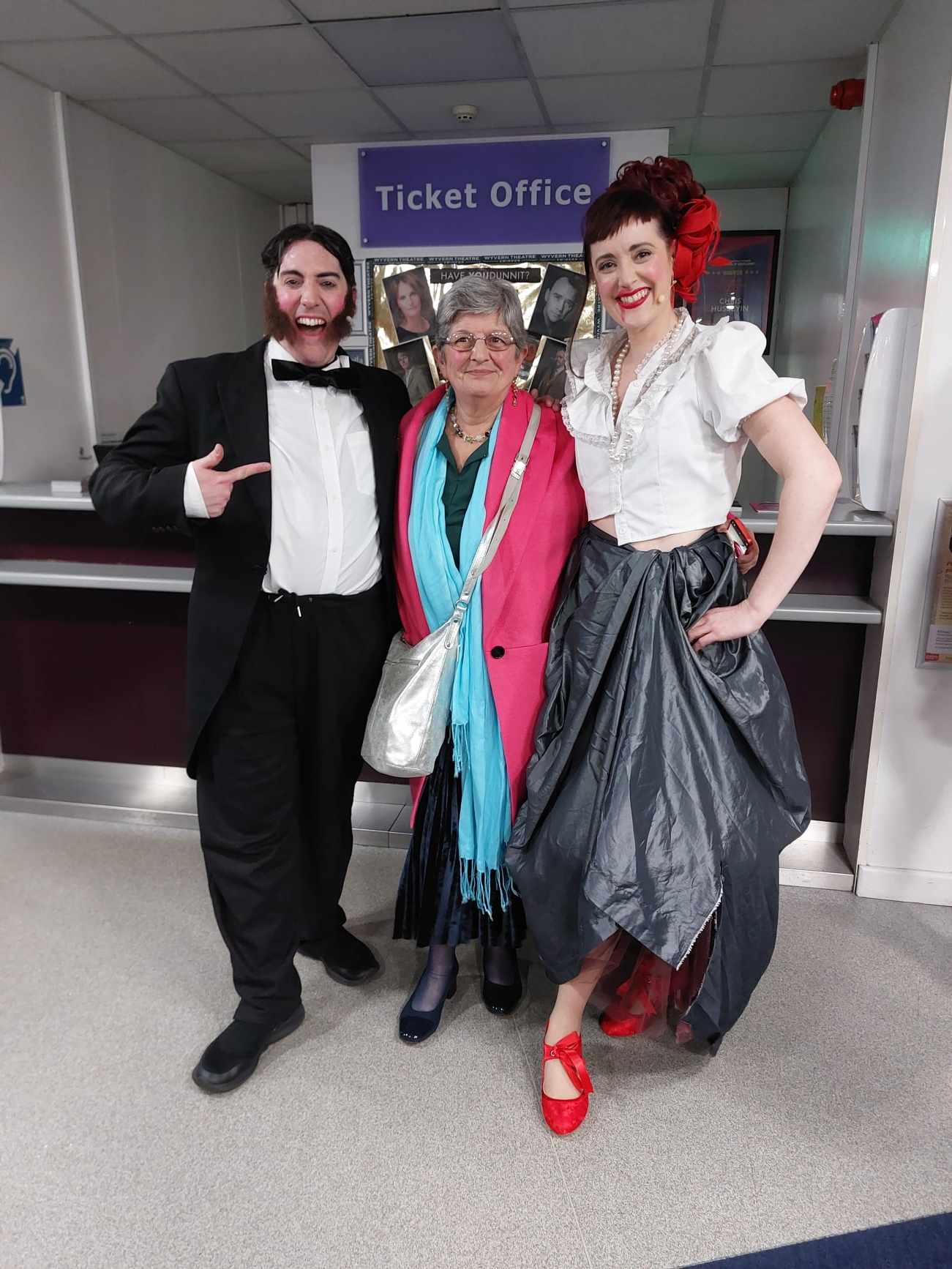
Last night, at the Wyvern Theatre, I saw the Say It Again, Sorry? theatre company present their anarchic version of this much-loved play. And it’s very, very funny!
Oscar Wilde – sort of!
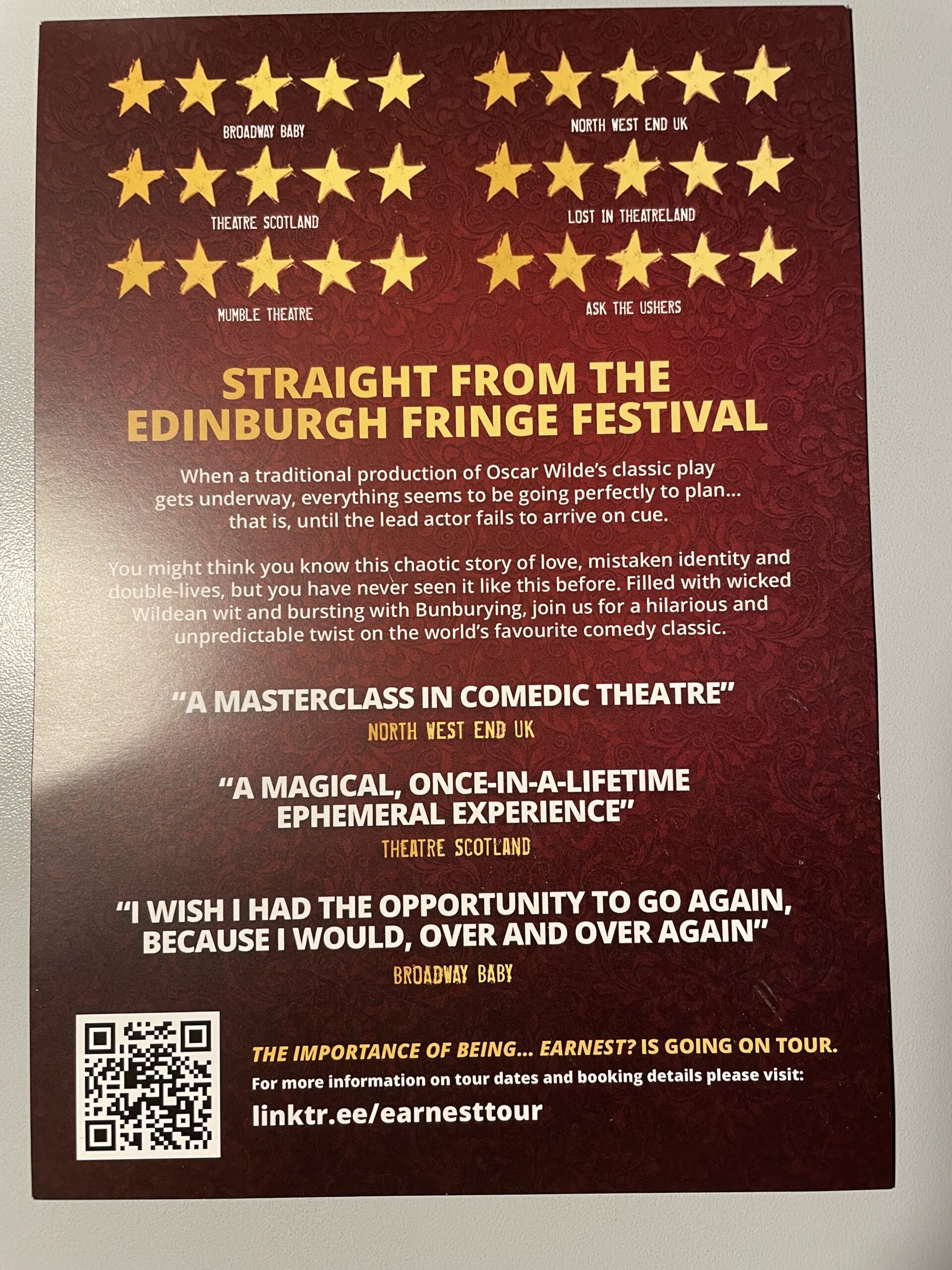
As their flyer says:
‘You might think you know this chaotic story of love, mistaken identity and double lives. But you’ve never seen it like this before. Filled with Wildean wit and bursting with Bunburying, join us for a hilarious and unpredictable twist on the world’s favourite comedy classic.’
The basic premise of this show is that a troupe of actors begin to perform Oscar’s famous play – but it goes wrong at once when Ernest misses his cue. Cue audience involvement. And if you think avoiding the front row will save you – it won’t!
This is an interactive show, it’s a clever bit of comedic theatre – the actual actors have to bounce off and work with the audience members they’ve got on stage – and they can’t know what they’re going to get. And they’l get different with each performance. As will the audience.
I won’t lie – I spent a lot of the time wondering if it was all a set-up. But apparently not!
It’s an exceedingly entertaining show. There’s a performance this afternoon and again this evening. There are tickets available so if you can -do!
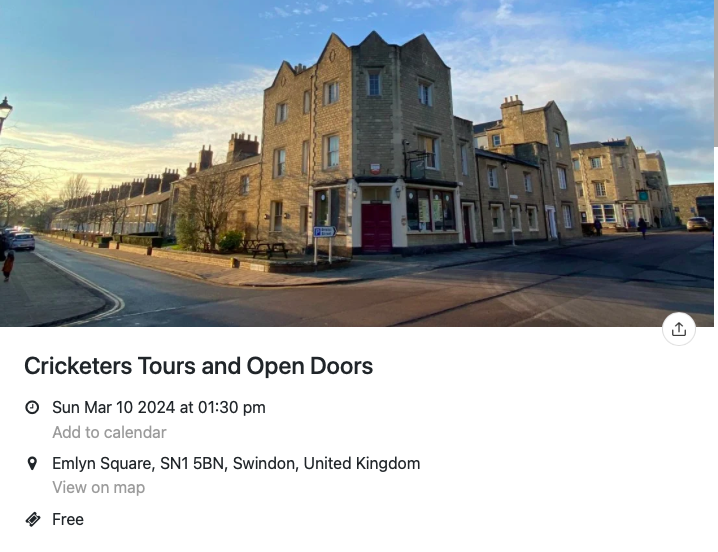
Cricketers Tours & Open Doors for National Lottery Open Week March 2024
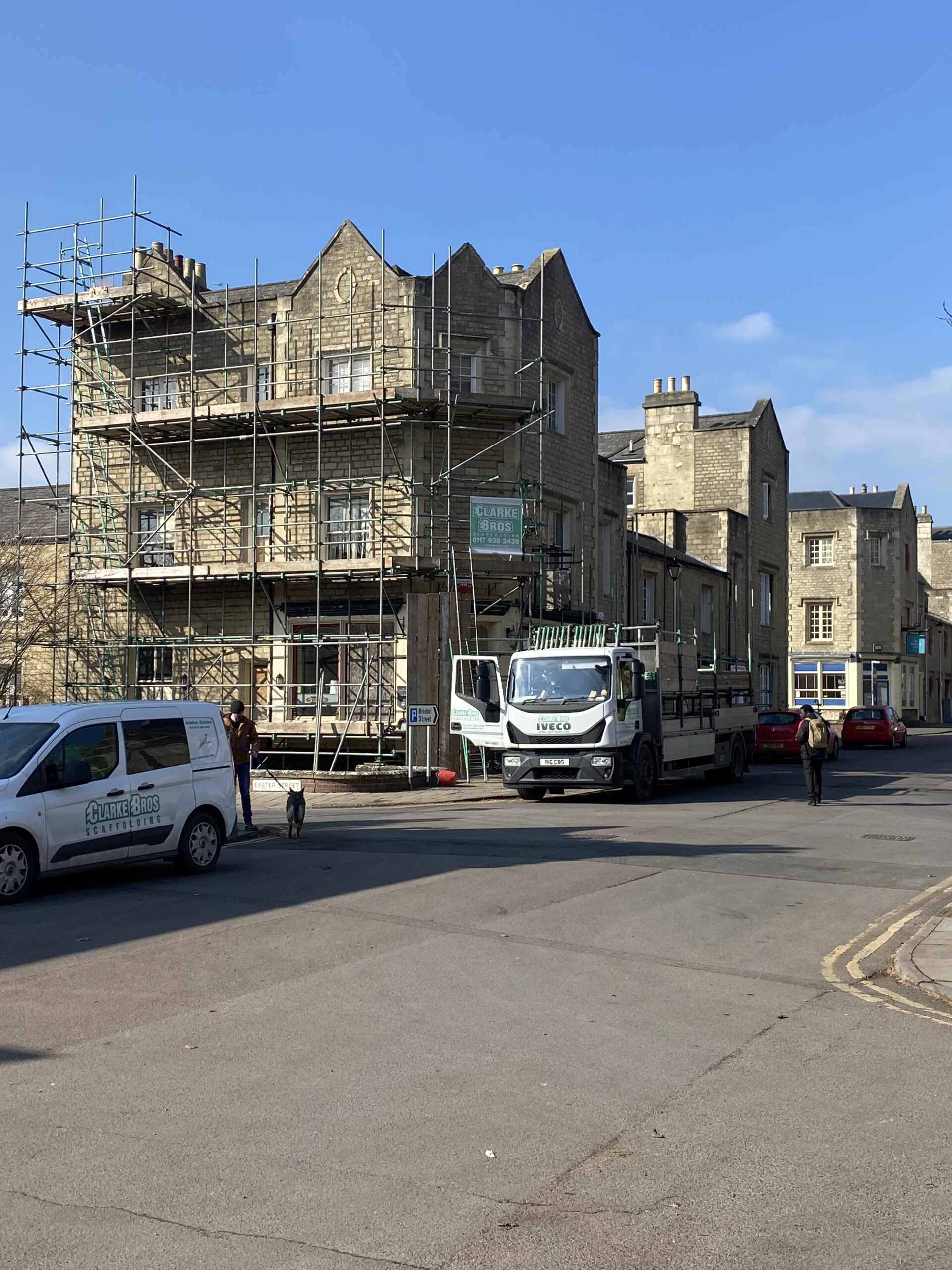
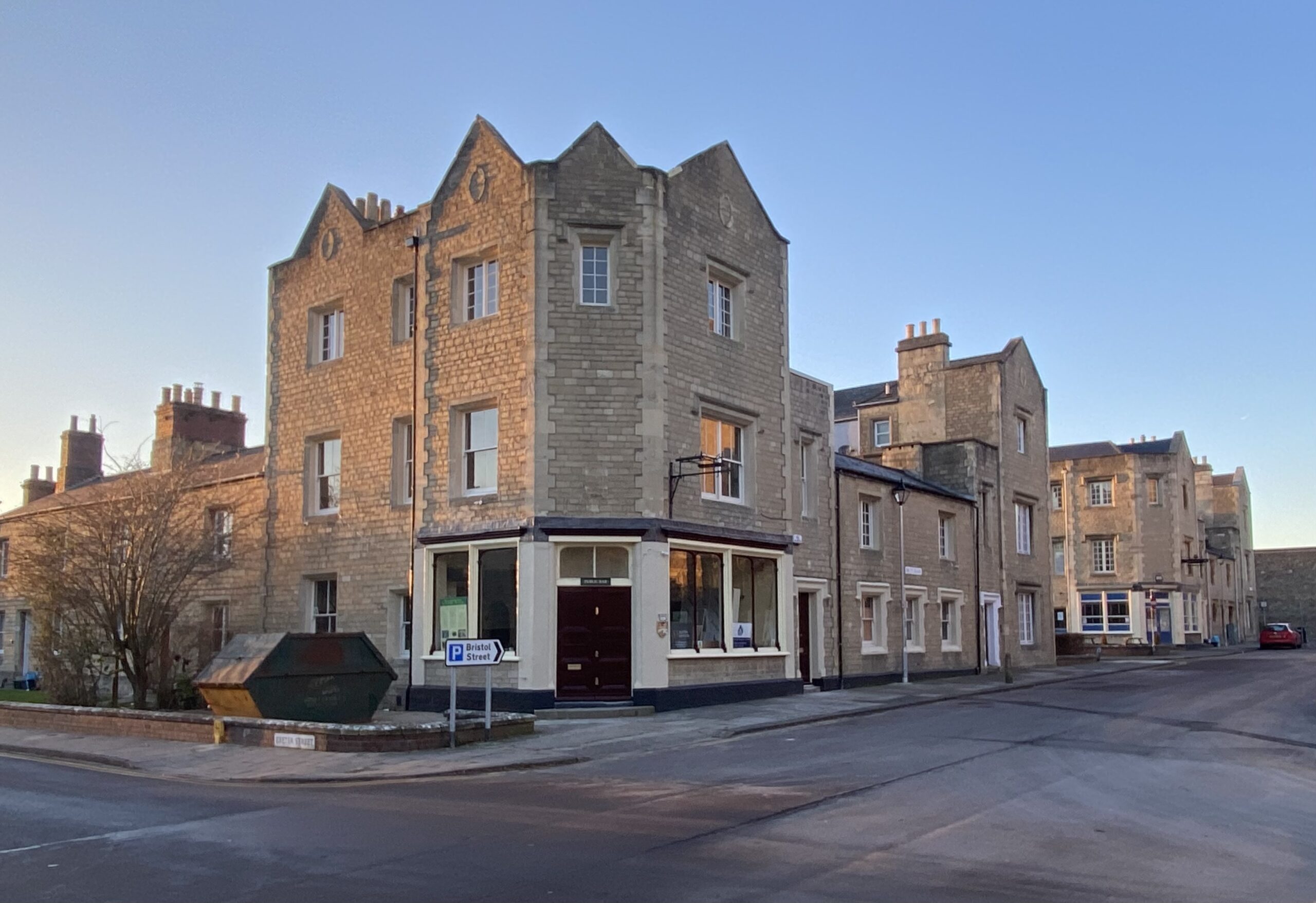
Step inside the beloved Cricketers building for an exclusive peek at the restoration work being undertaken by Swindon’s Heritage Preservation Trust. AKA The Mechanics’ Institution Trust.
The National Lottery has funded a variety of Trust projects in the past. We want to be clear that it’s the support of National Lottery players that helps fantastic projects and organisations to continue to make a difference to people and communities. And National Lottery Open Week is the perfect way to say #ThanksToYou.
This tour will guide you through the history of the building, its condition, and the work happening restore it for community use.
Learn how this former public house was a thriving community hub in the heart of Swindon’s town centre for over 100 years. Help us to build a picture of the role this building is going to play for future generations. And for the development of the WORKS area and the Mechanics’ Institute.
Join us in the historic Bakers Arms for refreshments. And then join us afterwards for a drink in the Gluepot… The full pub crawl!
We’ll provide visitors with a safety briefing at the beginning of each tour.
You WILL have to wear personal protective equipment such as a Hi-Visibility Vest.
We advise visitors to wear sensible footwear, which are flat and fully enclosed, along with long sleeved clothing. So no Jimmy Choos!
If you’re sensitive to dust and smells then consider that this tour isn’t suitable for you.
Accessibility:
The tour requires visitors to be able to navigate tight corridors, walk on uneven flooring and climb stairs. If you’re not able to do this, but would like to attend, please get in touch with us so we can try to make arrangements to accommodate your visit.
National Lottery Open Week takes place from Saturday 9th March to Sunday 17th March 2024
WHAT IS THE NATIONAL LOTTERY OPEN WEEK?
The idea is simple. Anyone who visits a National Lottery supported project and shows a National Lottery ticket, Instant Win Game, or scratchcard (physical or digital) is able to take up a special offer.
The National Lottery has funded a variety of Trust projects in the past. We want to be ultra clear that it’s the support of National Lottery players that helps fantastic projects and organisations to continue to make a difference to people and communities. And National Lottery Open Week is the perfect way to say #ThanksToYou.
WHAT DOES A SPECIAL OFFER LOOK LIKE?
From free entry into:
Some of the UK’s most loved museums and heritage sites
To behind the scenes tours of world class sporting venues
A complimentary gift or cup of tea and cake
Or setting aside tickets to a sold-out theatre performance
There are so many ways for everyone to say #ThanksToYou this National Lottery Open Week. This is a great opportunity to highlight the work you’re doing.
I first met Caroline Day in Town Gardens where she and other members of the Town Gardens art group were busy doing their thing. That was years ago. Since then I’ve bumped into Caroline at countless community events apropos the artistic community in Swindon. And I’m the proud owner of a couple of Caroline’s non-floral pieces. So – a big well done from me Caroline!
WILTSHIRE ARTIST CELEBRATES HER FIRST SOLO EXHIBITION
Wiltshire artist Caroline Day, well known for her floral artwork, is opening her first solo exhibition at the new View Gallery in Royal Wootton Bassett this weekend (Saturday March 2).
The exhibition, Everyone Blooms, will run for a month. It’ll be open to the public from 10am to 4pm until Saturday March 30 (excluding Sundays and Mondays).
The View Gallery is on the first floor of a recently renovated £3m building. It shares the location with RWB Auctions and the soon to open Quercus Bistro. You can find both of them on the ground floor.
Events
A series of complementary events will run throughout the month. The events include:
Floristry classes
A talk by an art historian on representations of florals in art history
And also a ‘meet the artist’ day with Caroline on Saturday March 16. There she’ll be drawing and answering questions about her art.
‘I’m thrilled and honoured to be holding my first solo exhibition here in my home county,’ Caroline, who lives in Old Town, Swindon, said.
I root my compositions in a reverence for places and nature, during the ever-changing seasons. Florals, in particular, allow me to engage with colour, light and structure in a wonderful way.’
Raised in Swindon, Caroline, studied fine art and specialised in ceramics before finding her niche in impactful floral art and ‘place’ art. She also taught art for fifteen years before deciding to commit her professional life to creating art full-time back in her home town.
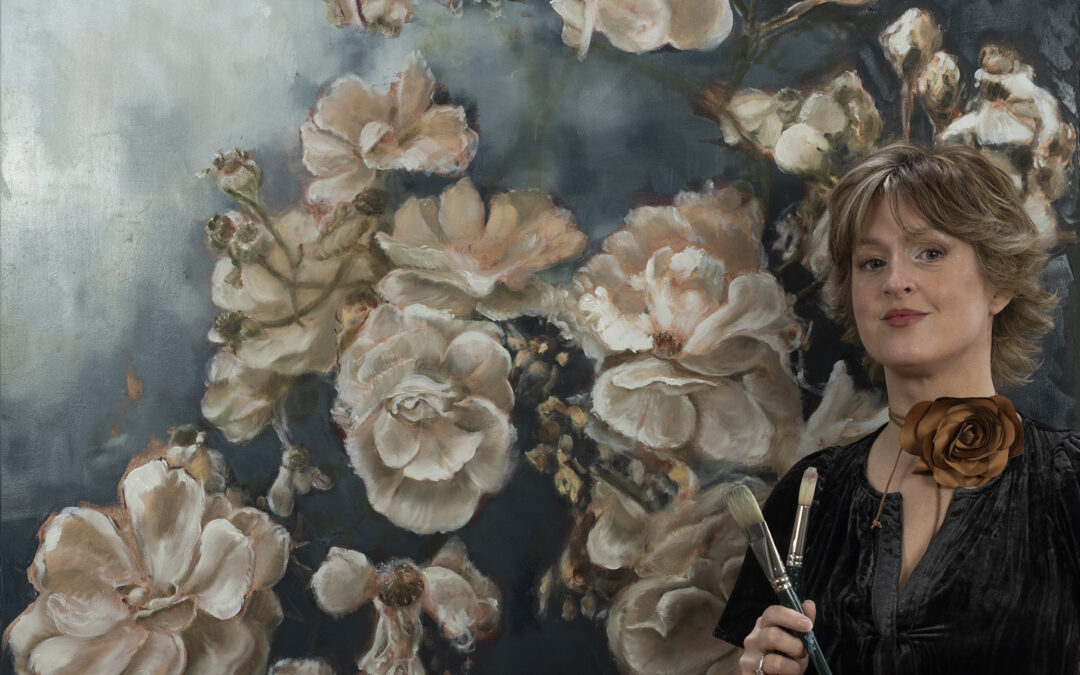
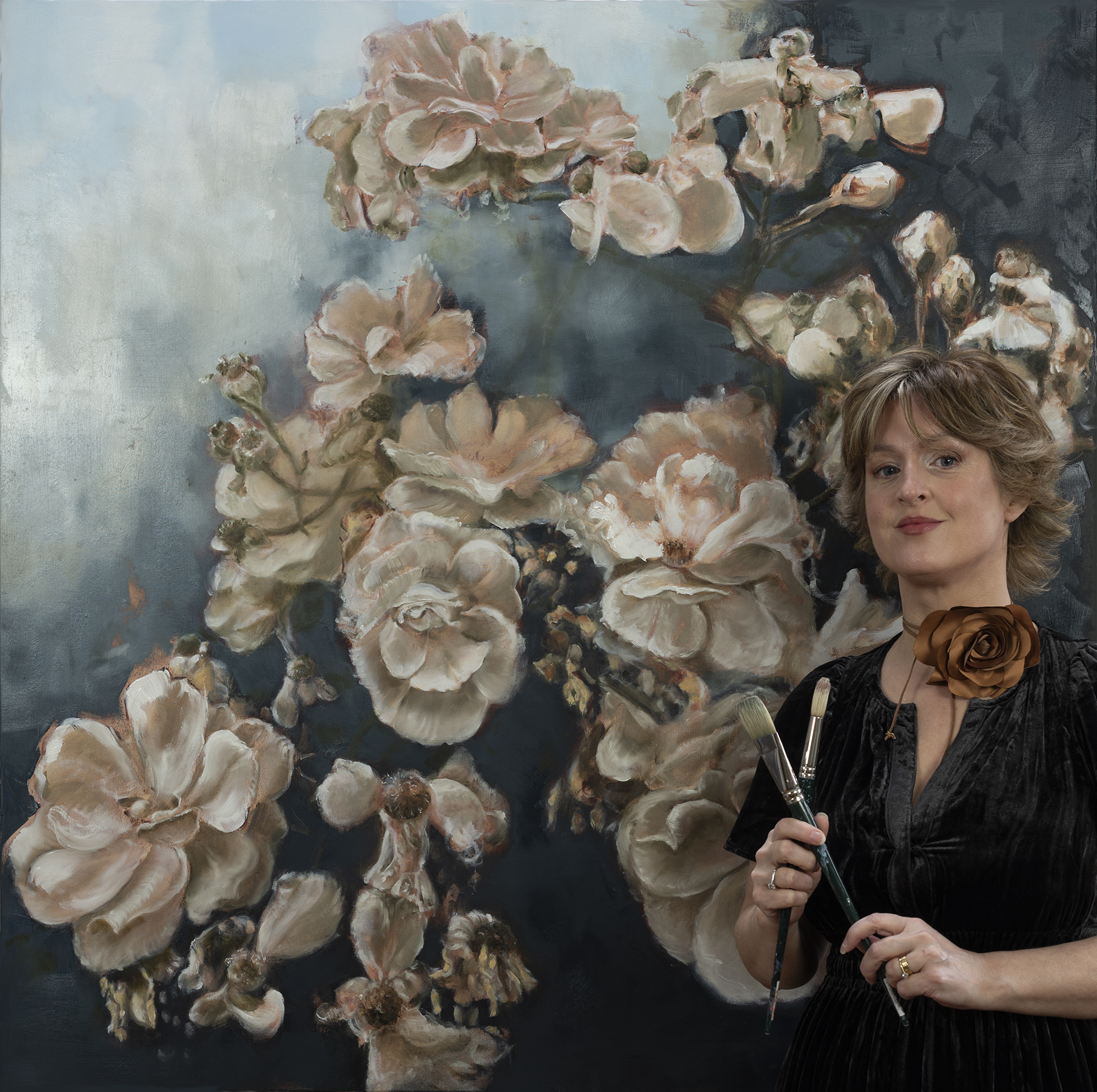
Caroline Day, the Swindon-based artist who will be holding her first solo exhibition at the View Gallery in Royal Wootton Bassett during March. She’s pictured with one of her well known works featuring David Austin Roses.
Swindon’s cultural life – YES there is one!
Caroline has heavy involvment in the cultural life of Swindon and North Wiltshire. She’s well known for her particular love of David Austin Roses which have the look and depth of peonies but are actually famous roses which fascinate her. All along with other flowers including cherry blossom and forsythia.
Her artwork creates an almost 3D effect known as ‘chiaroscuro’. The term means the ‘illusion of a 3D space’. Caroline has received many commissions.
In 2016 she won a commission from English Heritage to create an exclusive range of artwork for them – Rose In Bloom – based on her love of David Austin Roses. English Heritage have used her work on a range orf merchandise that’s now available as far afield as Japan. Her artwork for this Wiltshire exhibition is a new collection.
‘These beautiful roses have always intrigued me,’ Caroline said. “I approach the anatomy of an object, or a flower, in much the same way as I would a human form. It’s about emphasising its planes and contours. This exhibition will feature pieces which include David Austin roses and also cherry blossom. I’ve been working long hours to finish the pieces, and it’s very exciting for me.’
The View Gallery
Jennifer Allison is the Gallery Manager at the View Gallery:
‘We’re so proud to be able to share this new collection by Caroline, who is the first solo artist to feature at the View Gallery. While the works are beautiful to see, they also encourage the viewer to look deeper, to notice the small details. And then to reflect on our own perceptions of beauty and the inevitable passing of time. We cannot wait to share her art with as many visitors as possible.’
The purpose of the View Gallery is to share works by professional artists from across the UK, both emerging and established. And further to showcase a range of mediums, styles and prices. The 2024 calendar has already been planned with themes ranging from ‘Earth’ through to ‘Colours’, and even a special Halloween inspired exhibition.
While all the works displayed in the gallery are available to buy, the team are keen to encourage people to come in and view the art, even if they aren’t looking to buy.
The space is a beautiful place to contemplate art works and to find out more about contemporary art,’ Jennifer said.
For more information about the View Gallery, Caroline’s exhibition and other events in 2024 visit https://theviewgallery.co.uk
Even though I’m a regular user of Swindon railway station for my frequent Surrey schlep to the grandchildren I tend to forget half of Brunel’s original station remains. My memory on this point isn’t helped by the modern station frontage with Signal Point behind it. Surely the only redeeming feature of that building is the large, red Network Rail logo it bears?* *I’m not, as a rule, in favour of demolishing buildings – the greenest building is the existing building and all that. But you could persuade me to make an exception for that one. Anyway …
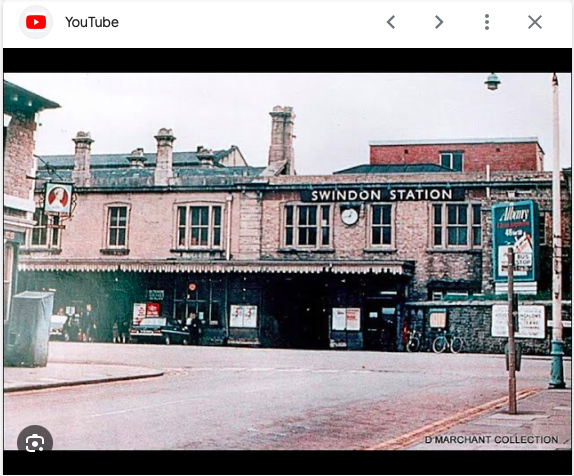
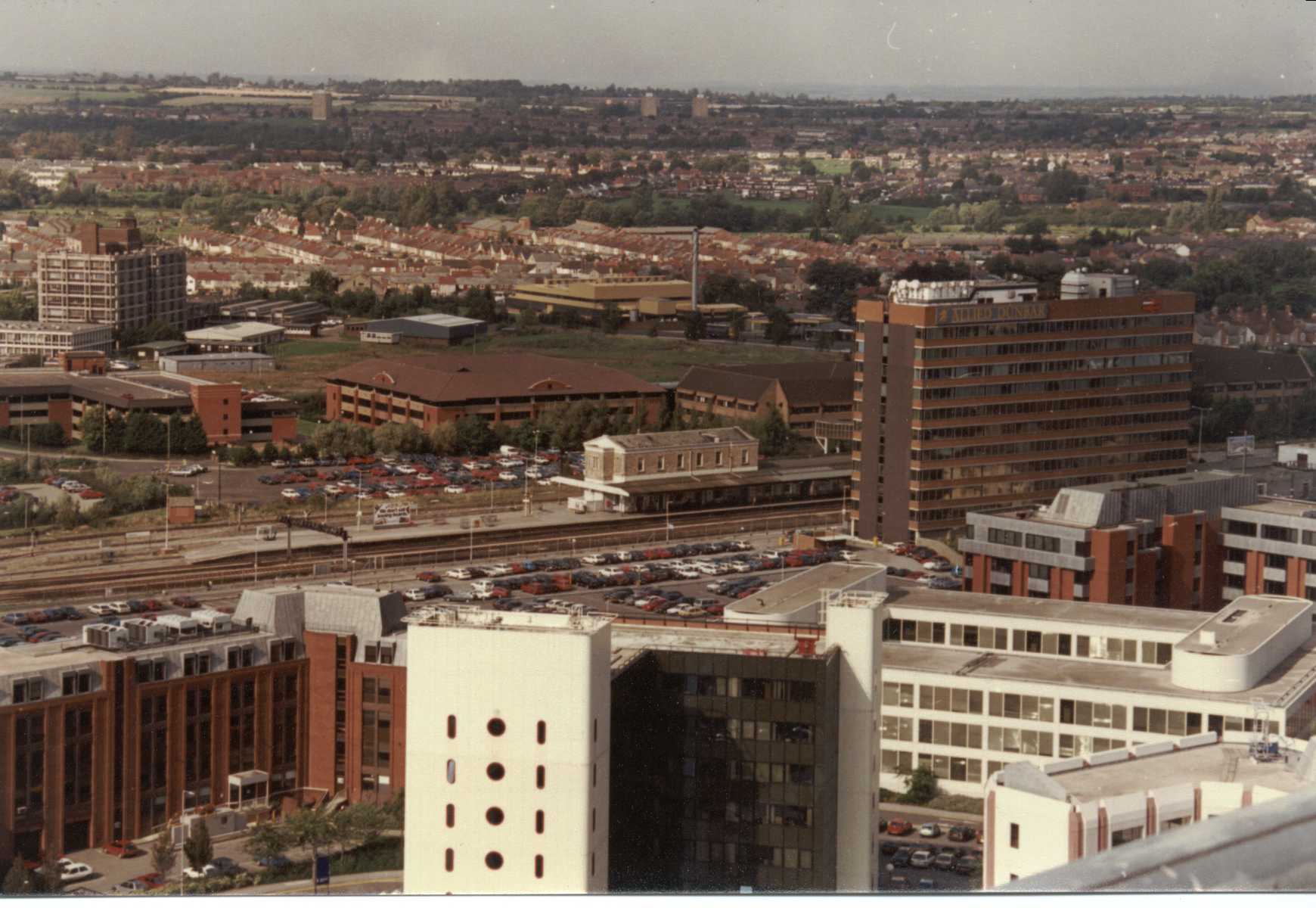
Swindon Railway Station as it was before demolition and the building of Signal Point
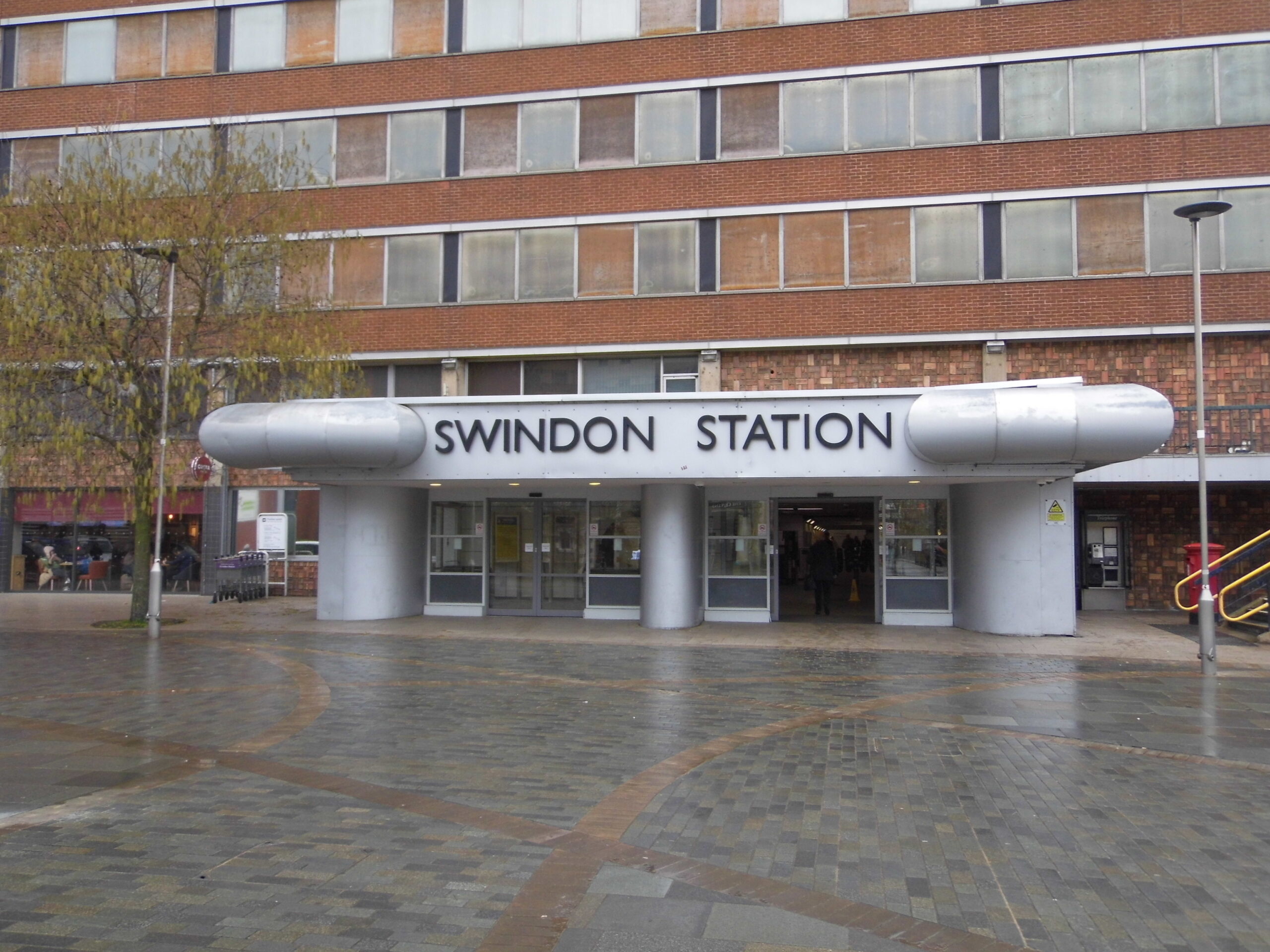
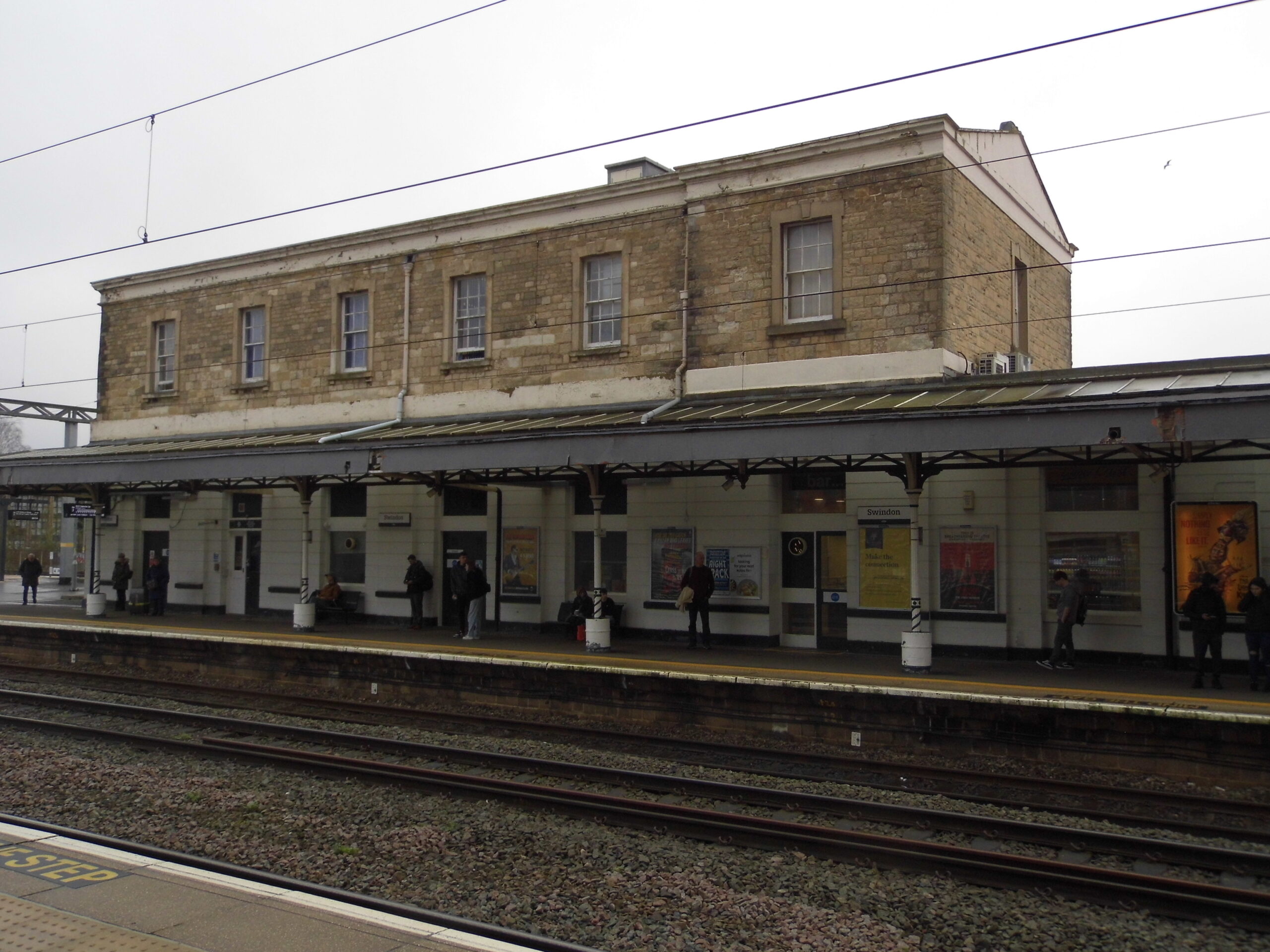
And how it looks today:
The modern frontage of Swindon station – I like the font … that’s about it … thanks Chris Eley for the image.
Now here’s an aerial shot that shows Signal Point (you can make out the Network Rail logo on the right-hand corner) and the remaining station building behind it – sadly blocked from view from the town side by Signal Point. Thanks Jack Hayward for this one.
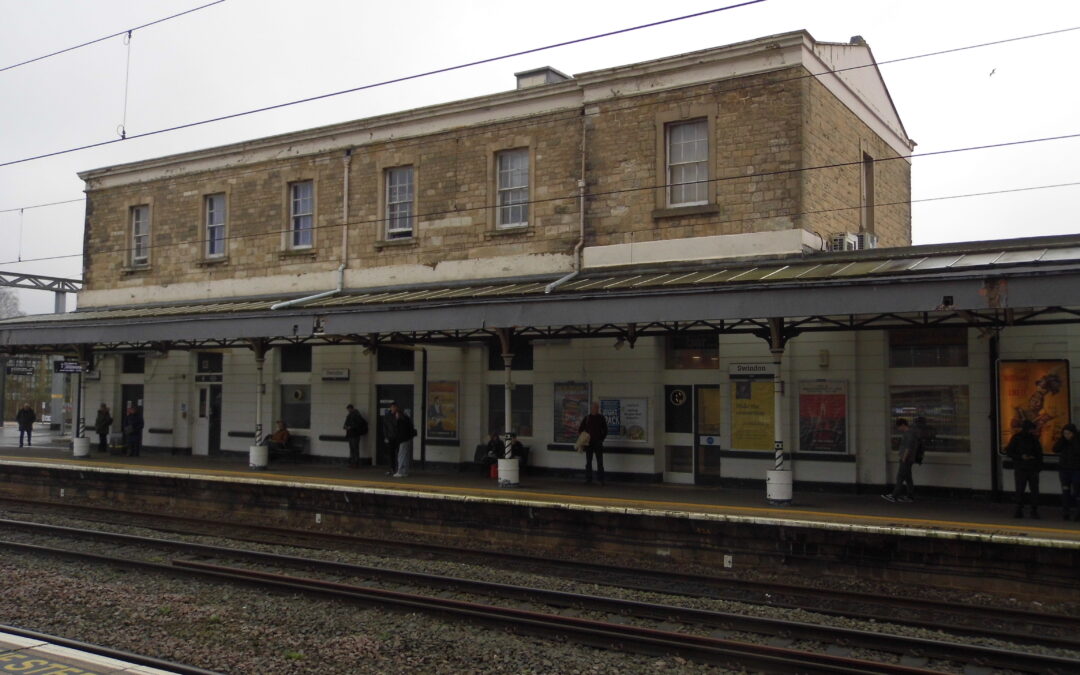
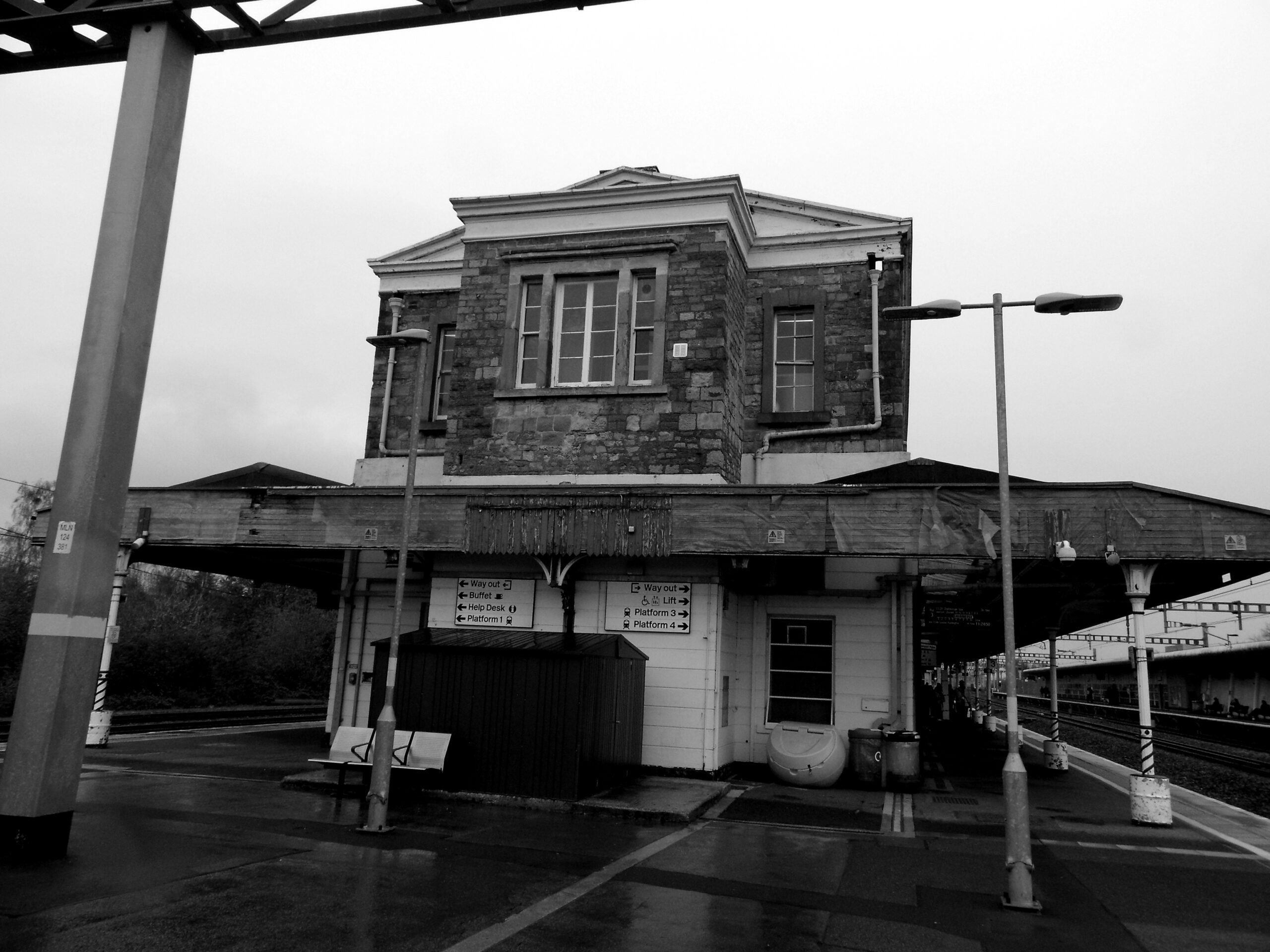
And a close-up of the remaining station building viewed from the platform 4 side.
Swindon Railway Station 1842 – viewed from the platform 4 side. This is all that remains of Brunel’s masterpiece. Referred to by the London Gazette in 1845 as to be, ‘second to none in the Kingdom, and the hotel accommodation is of the most elegant and splendid description. They communicate with each other by a covered passage way over the Railway.’
Swindon – this is Swindon – Swindon is your next station stop
The Historic England list entry about the station describes the remaining Grade II listed station building as a: ‘Two-storey classical building on the island platform at Swindon Station, opened in 1842, truncated by five bays at the eastern end c.1880s. With attached canopies c.1880s.
Side view of Swindon Railway Station – courtesy of Chris Eley.
Reasons for designation
Opened in 1842 to the designs of Isambard Kingdom Brunel, the station forms part of the pioneering phase of the Great Western Railway.
Architectural interest: Despite some not inconsiderable alteration to the 1842 building and the loss of its southern partner, architectural interest remains. The surviving building ‘has a strong classical styling with characterful Swindon masonry and maintains an architectural presence of a scale uncommon amongst GWR railway stations.
Historic interest: Then of course, Swindon is of real importance to the GWR’s history. Thus the station has significance as the hub connecting east and west with Swindon’s railway works.
Group value: there’s an inter-visible relationship with the Grade II-listed former drawing offices to the west and the Grade II-listed workshops to the south-west, and an architectural resonance with many of the surviving and listed railway and related buildings nearby.
A purpose – or three
Swindon’s station had three specific purposes:
To act as an interchange for the line to Gloucester, which opened in that year
To provide refreshment rooms for passengers travelling between London and Bristol whilst trains were stopped to swap locomotives
And to provide hotel accommodation for passengers.
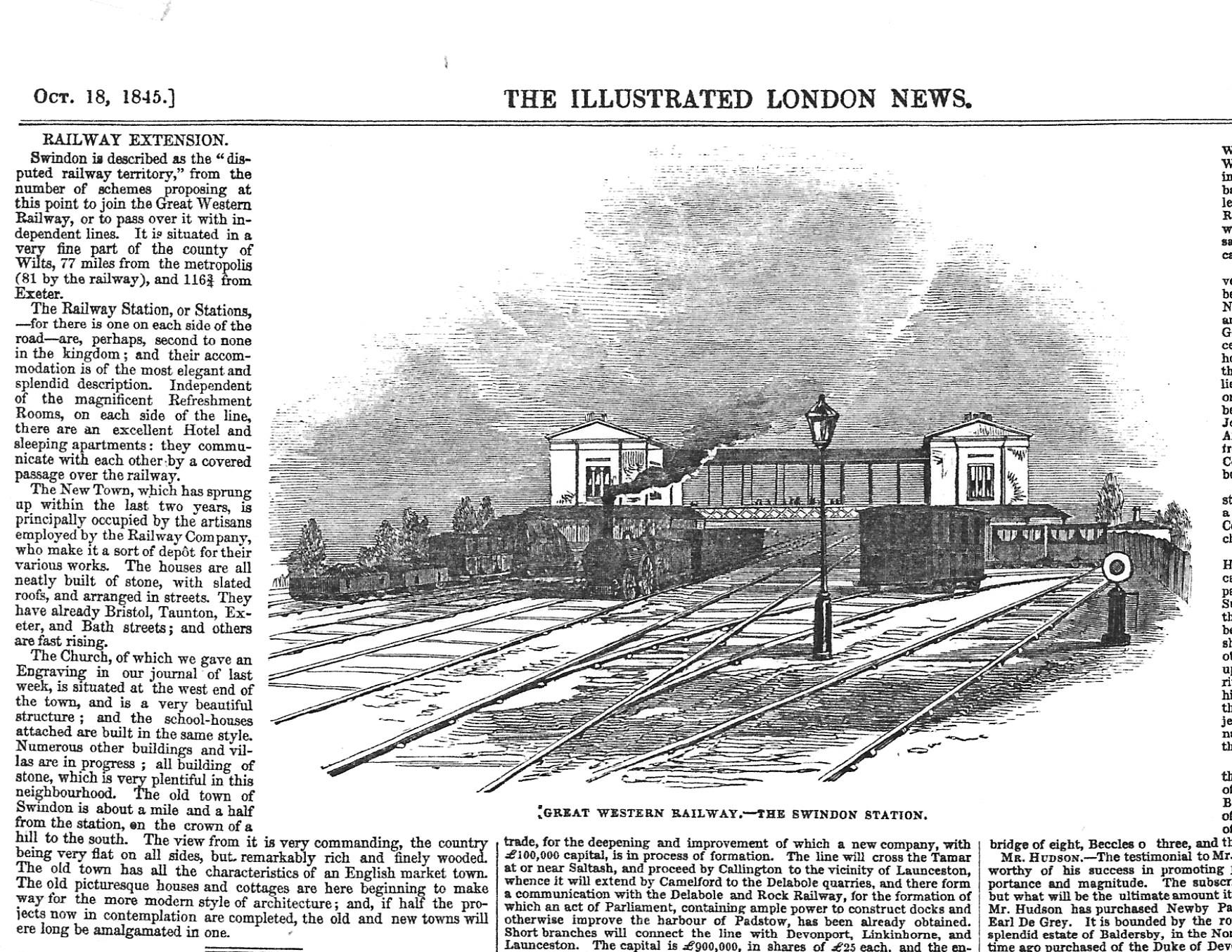
Brunel’s solution was a station with two island platforms. Each platform had an identical two-storey building with attached timber canopies, linked together by an iron footbridge.
Extract from the Illustrated London News 1845 showing Swindon station in its entirety with the linking footbridge.
Bourne in his ‘History’ describes the layout of these buildings in some detail. They had refreshment rooms on the ground floor in an ‘Arabesque’ style. Biddle suggests that the architect Francis Thompson may have been consulted on their design. The upper floors contained a hotel. The now lost southern building contained the public rooms and the surviving northern block the bedrooms. Bourne describes a basement which contained the kitchens and other service areas.
Deal or no deal
The Great Western Railway struck a deal with the contractors, JD and C Rigby to build Swindon’s railway station. But at their own expense. In return for footing that bill they were to keep the profits from the refreshment rooms and hotel business that would be carried out there.
To sweeten the deal, the GWR agreed to stop all trains at Swindon station for ten minutes so that the passengers could take refreshments.
Such facilities were vital. At that time it took approx four hours to get from Paddington to Bristol. And for the first few years locomotives had to be changed at Swindon. So the ten-minute stop also coincided with the GWR’s operational needs. And Swindon was the only station between Paddington and Bristol where travellers could slake their thirsts.
Thus, I’m sure you can see what’s coming, Rigby’s could look forward to a monopoly. A situation made even more attractive by the ninety-nine year rental lease of the refreshment rooms for an annual rental of one penny!
The STEAM museum website tells us that, as per Brunel’s own specifications, the station boasted large and beautifully ornate First Class refreshment rooms comparable to the décor found in a first rate hotel.
Sadly, it wasn’t long before poor service, poor quality and high prices gave the refreshment rooms a bad reputation. All of which somewhat foreshadows the infamous, and now embedded in popular culture, British Rail sandwich.
Even IKB himself wrote that the coffee was inferior and tasted as if it were made from roasted corn. He signed off the letter in which he made that comment by saying: ‘I have long ceased to make complaints at Swindon. I avoid taking anything there when I can help it.
From 30 January 2024, the cast of the iconic murder-mystery on tour will include Todd Carty (EastEnders, Grange Hill, Dancing on Ice) who continues to play Major Metcalf. And Gwyneth Strong (known for playing Cassandra in Only Fools and Horses) as Mrs. Boyle.
Joining them are:
Neerja Naik as Mollie Ralston
Barnaby Jago as Giles Ralston
Shaun McCourt as Christopher Wren
Amy Spinks as Miss Casewell
Steven Elliot as Mr. Paravicini
and Michael Ayiotis as Detective Sgt. Trotter
The queen of crime
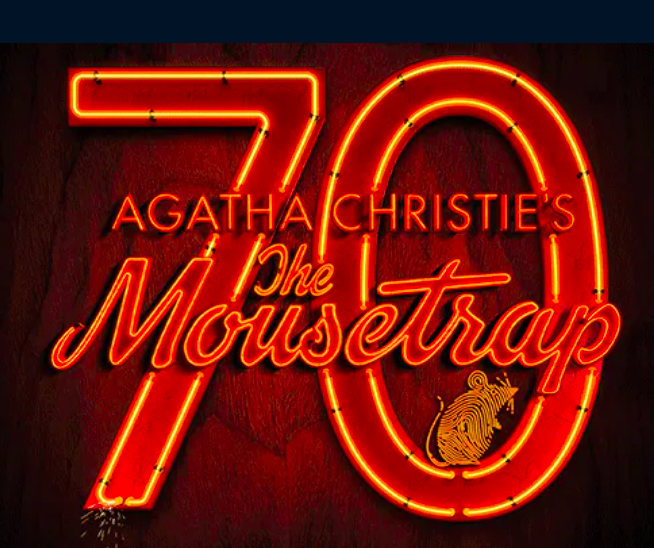
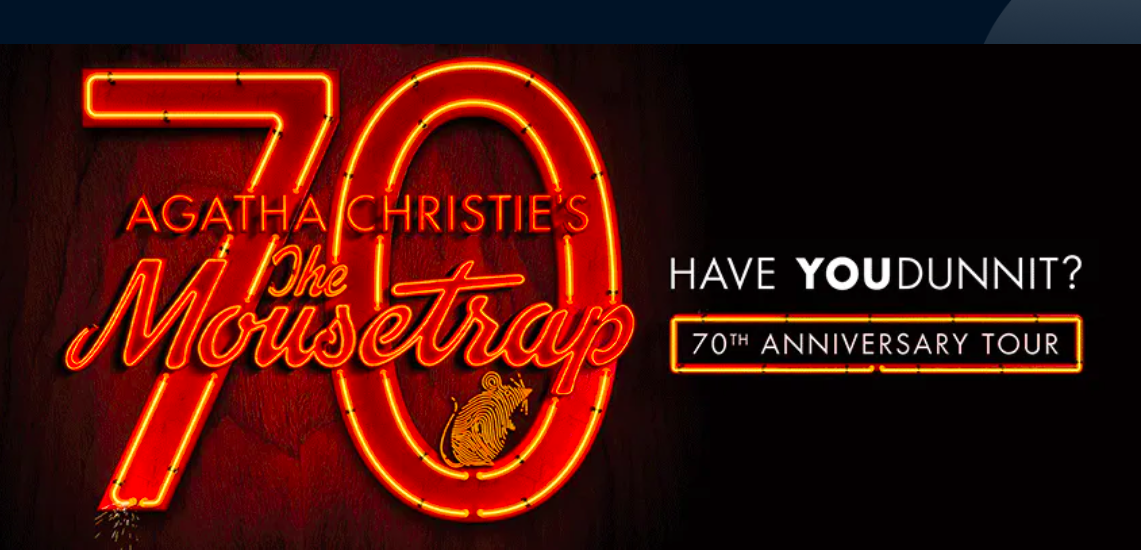
Genre-defining murder mystery The Mousetrap, written by Agatha Christie, the world’s best-selling novelist of all time, premiered at Theatre Royal Nottingham in 1952. It toured the UK before opening in the West End. There it continues its record-breaking engagement at the St Martin’s Theatre, 70 years on. The iconic thriller’s 70th Anniversary tour also opened in Nottingham in September 2022. It continues to travel throughout the UK and Ireland. It’s marking its milestone anniversary by visiting over 70 theatres, including all cities to which it first played seventy years ago.
A full tour schedule, further information, theatre listings and ticket purchase through the website MousetrapOnTour.co.uk
As news spreads of a murder in London, a group of seven strangers find themselves snowed in at Monkswell Manor, a remote countryside guesthouse. When a police sergeant arrives, the guests discover – to their horror – that a killer is in their midst. One by one, the suspicious characters reveal their sordid pasts. Which one is the murderer? Who will be their next victim?
The Mousetrap is produced by Adam Spiegel with Direction by Ian Talbot OBE and Denise Silvey.