Tom Holland Speaking in Malmesbury. Leading historian, broadcaster and podcast host Tom Holland will be the keynote speaker to open the new Athelstan Pilgrim Way. And his talk will also form part of Malmesbury’s events to celebrate the Athelstan 1100 anniversary this summer.
Tom, who published his biography ‘Athelstan’ in 2016, will present his talk ‘On The Trail of the First King of England: Why Athelstan Deserves Pilgrims’ at Malmesbury Abbey at 2pm on Sunday June 30.
Tom Holland Speaking in Malmesbury
Project patron
Tom’s talk will be a ticket-only event. All proceeds will go towards the development and operation of the new Athelstan Pilgrim Way. Tom is the patron of the project.
He said: ‘It will be no secret to anyone who’s listened to my podcast, The Rest Is History, that I championed Athelstan as the greatest of England’s monarchs. And I’m also delighted to champion a walking route across his kingdom of Wessex. A route that seeks to remind us of his Christian sensibility and the religious culture of his time.’
Sheona Beaumont, of the Athelstan Pilgrim Way project team, said: ‘Tom brings fantastic enthusiasm and insight to English history and its Christian heritage. We’re so excited he’s joining our pilgrimage of celebration. A celebration of churches, countryside, and faith.’
Following Tom’s talk on King Athelstan there will be an official opening of the new Athelstan Pilgrim Way, led by the Diocese of Bristol. At length it’ll link thirty-six churches on a new 100-mile walking and cycling route across North Wiltshire.
The Athelstan pilgrim way
In the first instance, the Athelstan Pilgrim Way will link thirteen walks. It’ll take in thirteen churchs in 2024 with more coming on stream in 2025. The opening on June 30 will start at Malmesbury Abbey. It will then continue to St John The Baptist Church at Brokenborough.
Malmesbury Town Team chair, Cllr Campbell Ritchie, leads the team of volunteers who are organizing the Athelstan 1100 programme of events.
He said: ‘We’re thrilled that Tom is able to take time from his busy schedule to join us and celebrate. Not only the opening of the Athelstan Pilgrim Way but also the celebrations for Athelstan 1100. It’s an honour to welcome him and our other renowned historians including Michael Wood and the Reverend Sarah Foot.’ (or similar)
Tom Holland …
… is well-known globally as an accomplished and award-winning historian. He’s published numerous books around Roman and Greek history – as well as his passion for England’s First King. His latest book is ‘Pax – War and Peace In Rome’s Golden Age’.
His podcast ‘The Rest Is History’ is a little over four years old and co-hosted with fellow historian Dominic Sandbrook. It’s now the world’s most popular history podcast with well over 60 million downloads and is ranked as one of the top podcasts in the world. In the UK it’s currently ranked as the second most popular podcast across all genres.
It was in 924 AD that Athelstan, the grandson of Alfred the Great, became King of Mercia and Wessex. And took the first steps on his journey to becoming the first King of England. Many events are free and tickets for paid for events are already on sale with some already sold out.
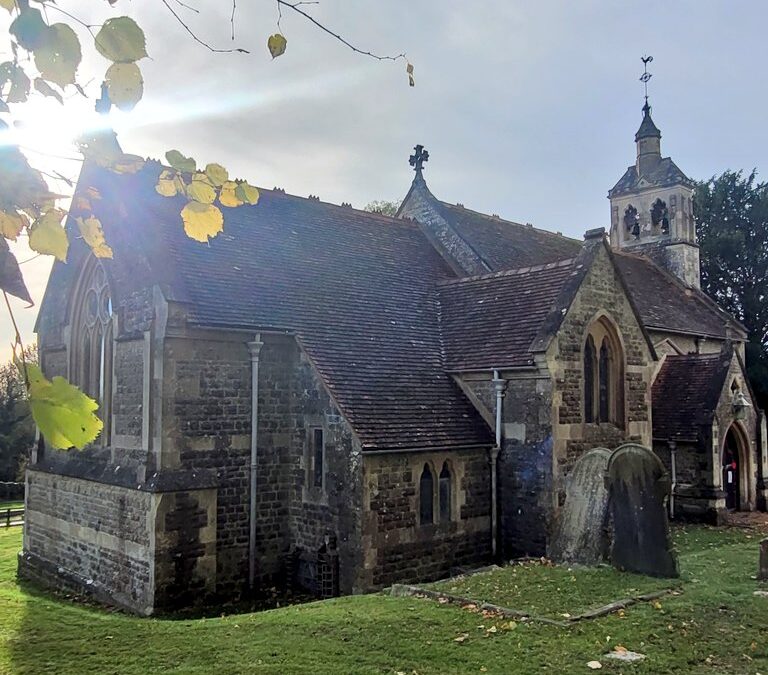
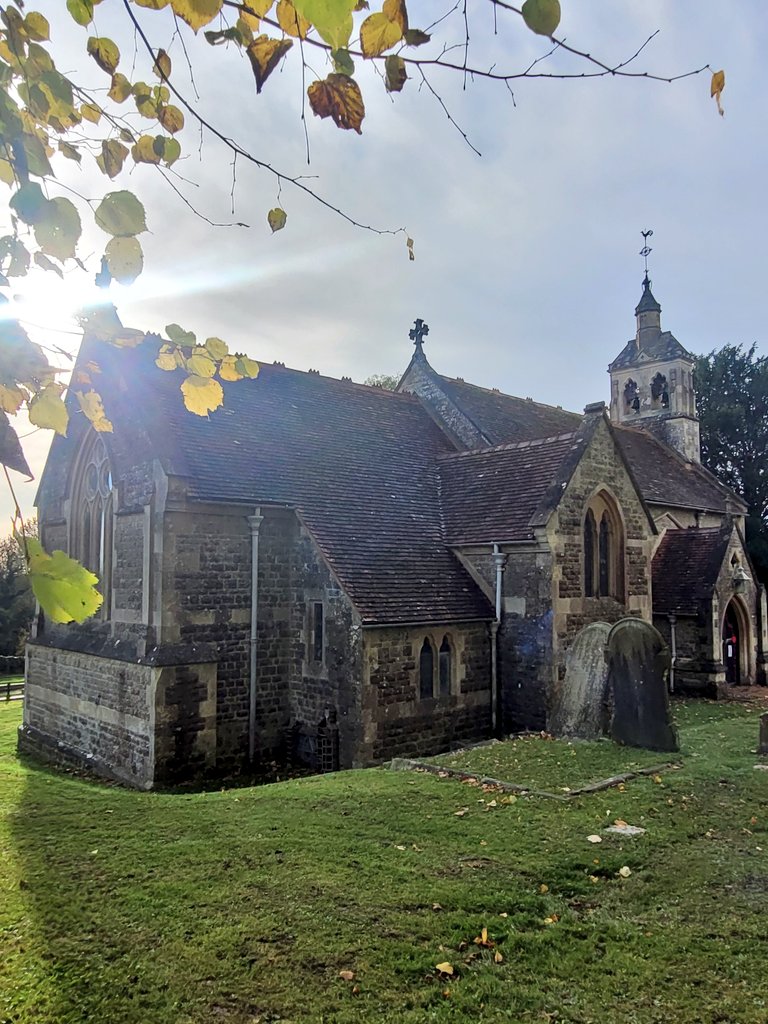
St Andrew’s North Swindon – Blunsdon to be precise – isn’t a church I’m familiar with myself. But a Twitter chum, Lee, suggested I include it in Swindon in 50 More Buildings because it’s a delightful church, really rather old (13th C approx) and little known. So here it is. And thanks to Lee for the photos.
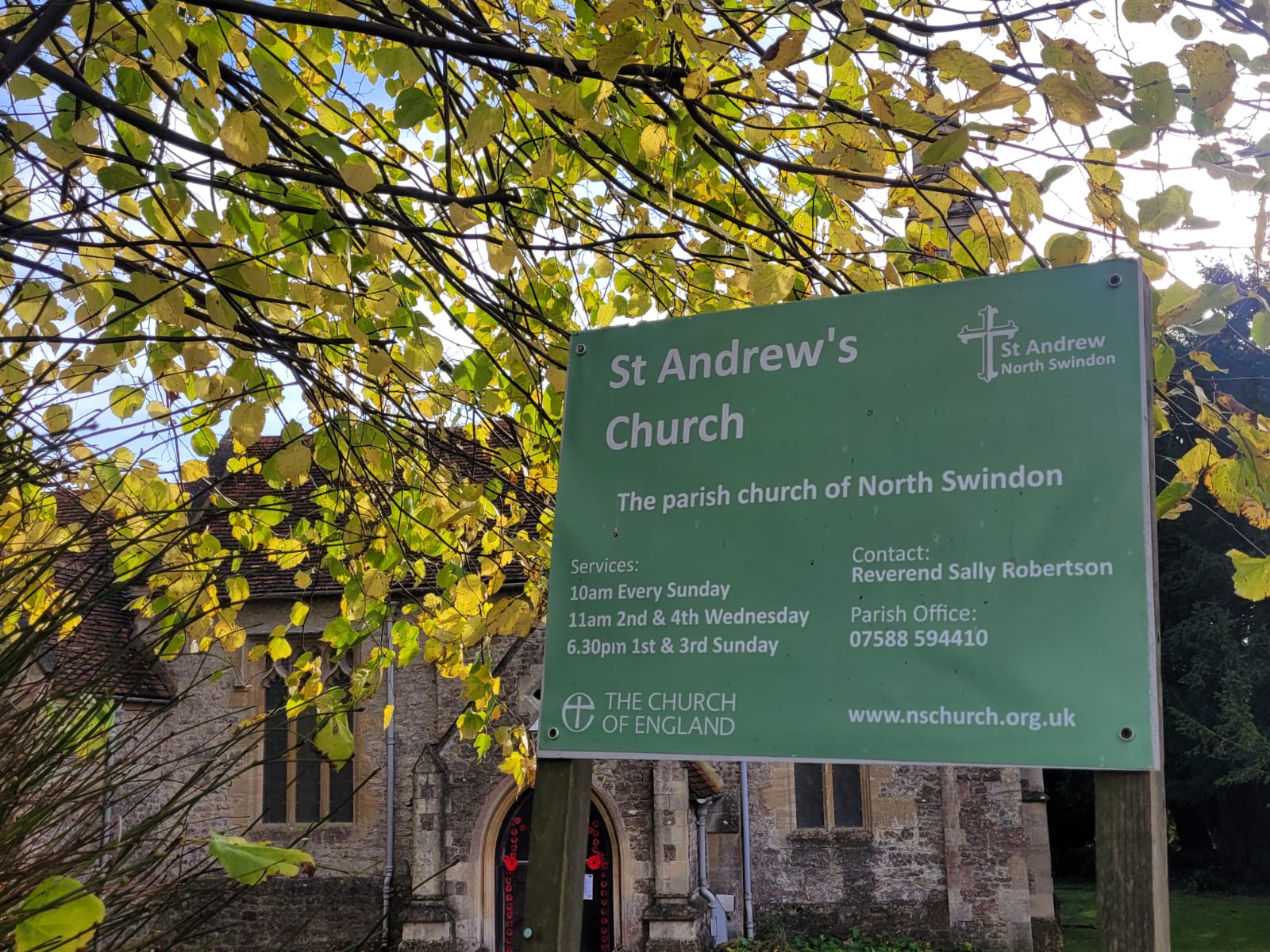
St Andrew’s North Swindon – BlunsdonSign at St Andrew’s in North Swindon
About the church
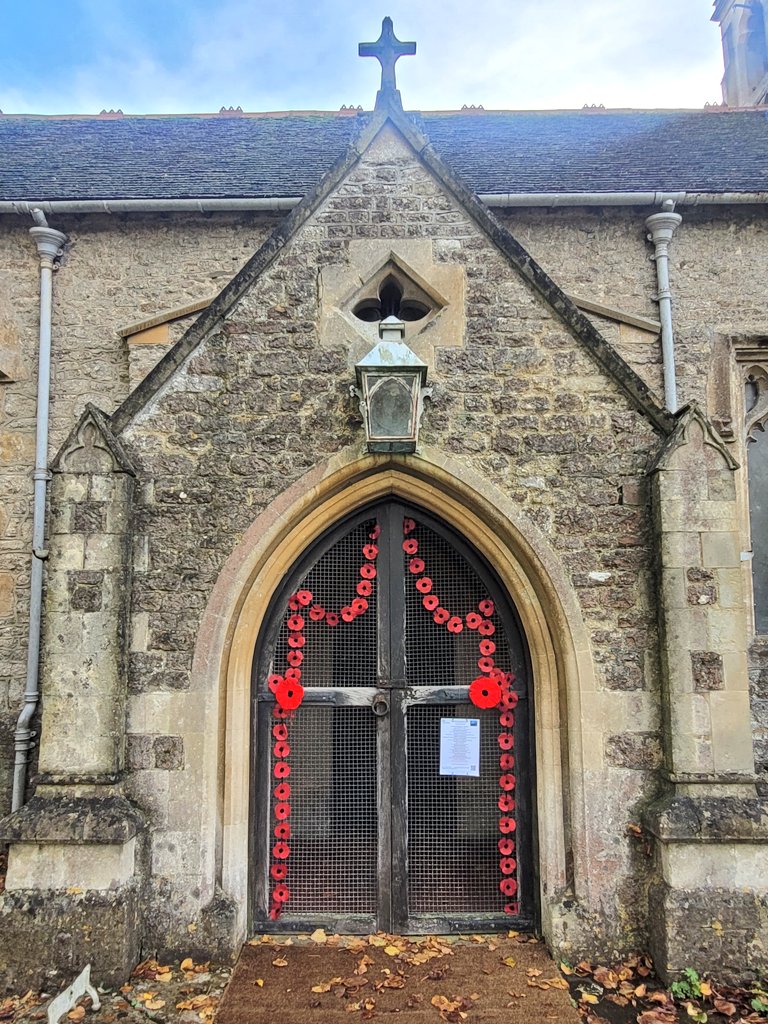
The church websitetells us that ‘St Andrew’s is a small structure, built in the Early English style.’ It further explains that a church has stood on that site since the 11th century. And further that it used to be much larger than it is now. It seems that, when the Victorians carried out some renovations, they found evidence of a large porch, tower and an extra aisle.
The carved stone heads (corbel stones) of nuns and a bishop, sitting high on the walls in St Andrew’s church date from the 1280s. It’s probable they supported the roof beams of an even earlier structure.
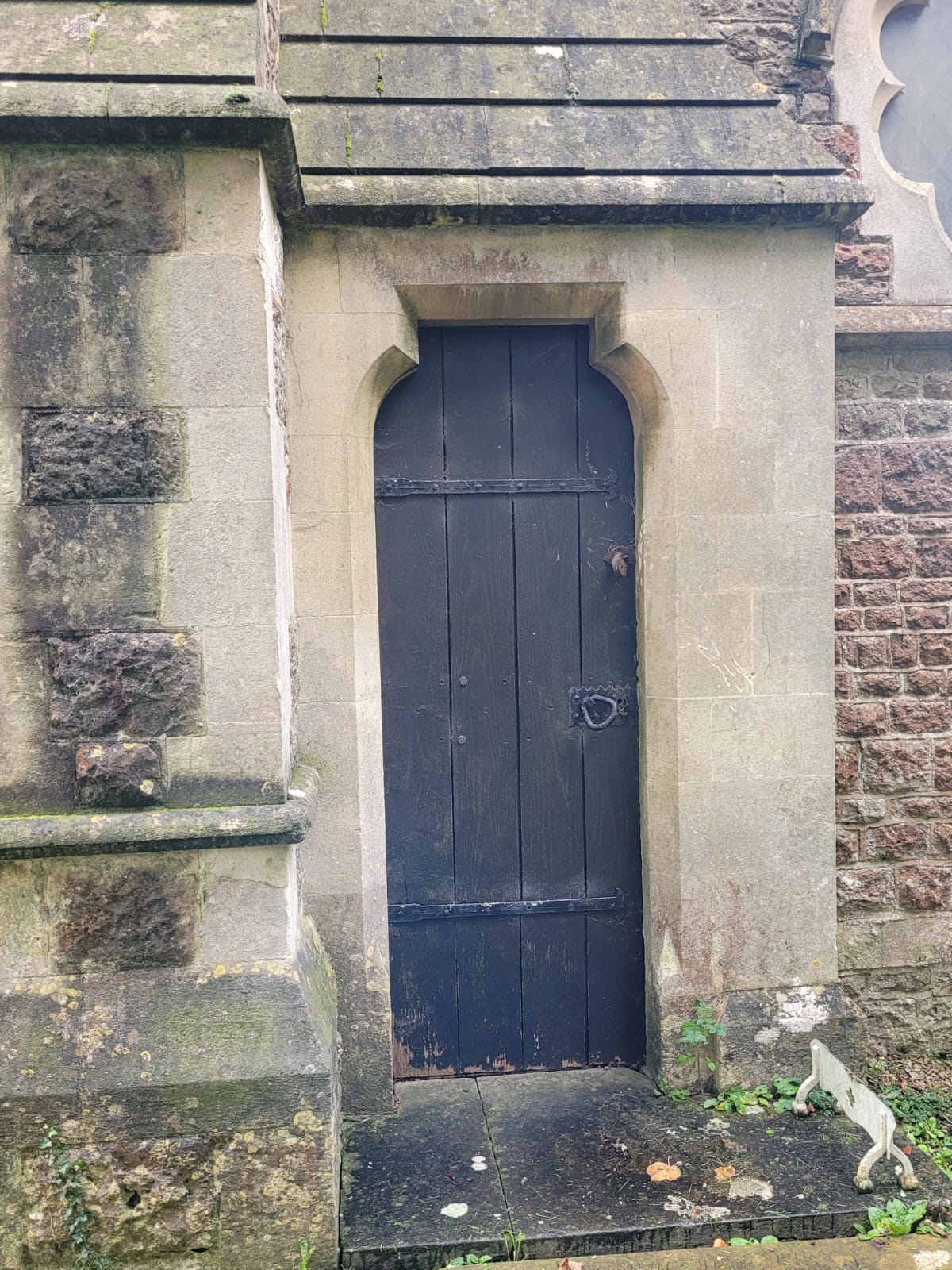
The website goes on to say that much of what we see today results from major restoration work by church architect William Butterfield, between 1864 and 1868. He designed the west front with its bellcote, spirelet and weathercock. And specifications for some of the windows. Yet some older features remain. For instance, the doorway used to enter the church dates from the 13th century.
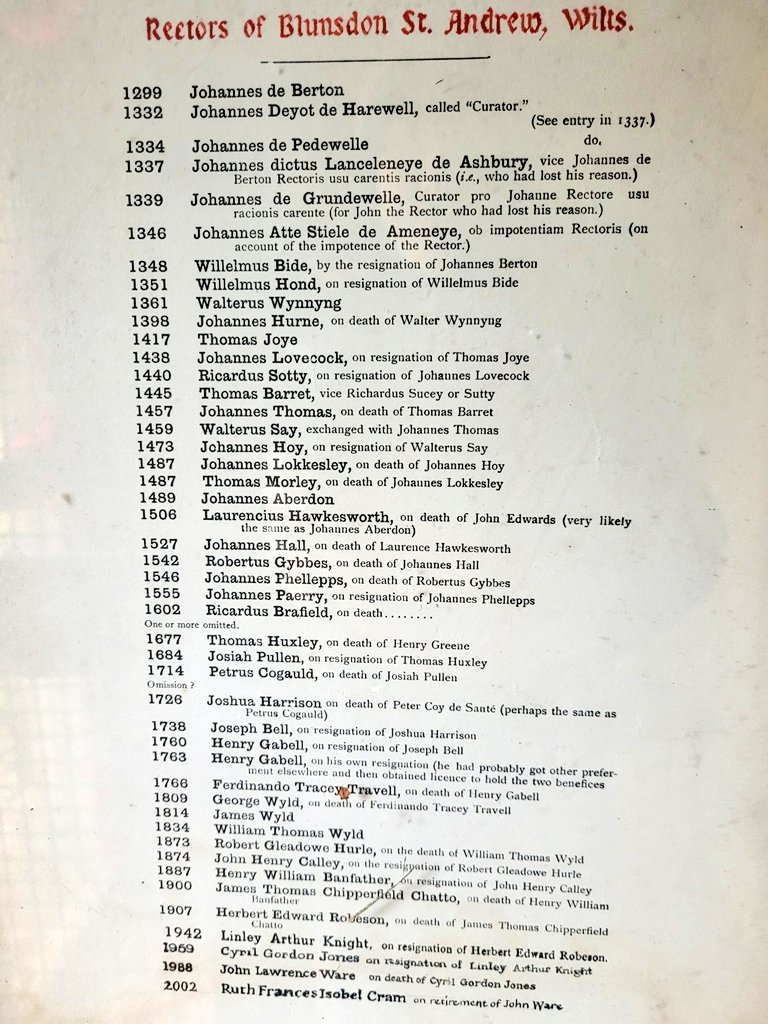
Rectors of Blunsdon St AndrewsMain entrance of St Andrew’s churchSide door at St Andrew’s Blunsdon
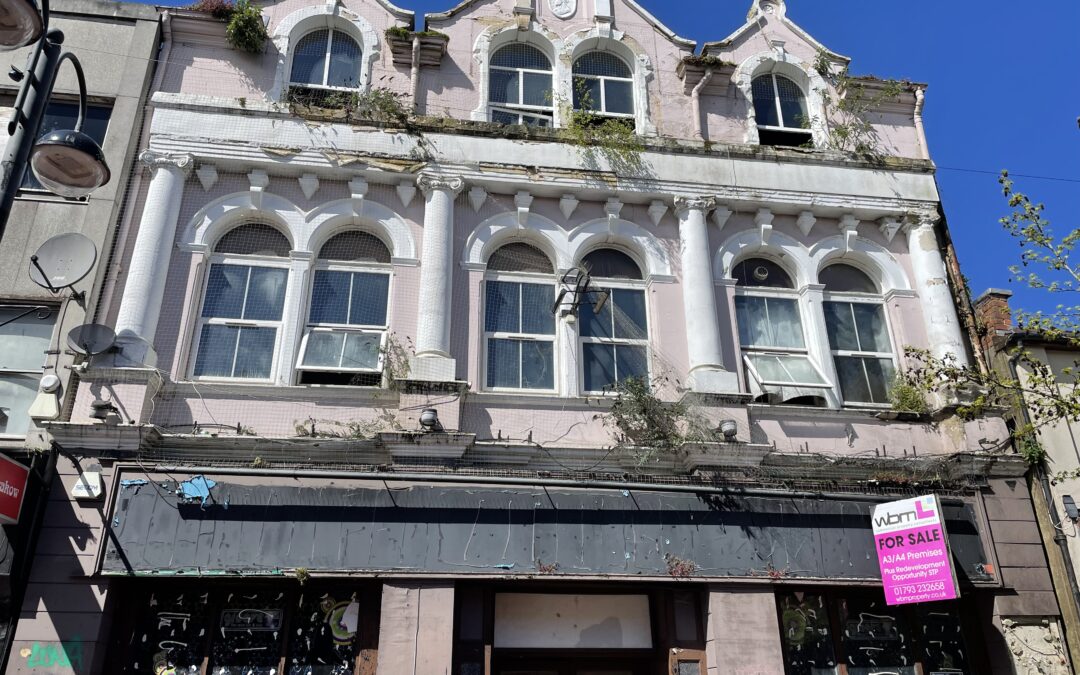
20 Fleet Street Swindon is in a sorry state. Even so it warrants a place in Swindon in 50 More Buildings. For this once fine building has had a varied history. One that I want to record before it gets into a worse state and/or ends up ruined like its near neighbour at No 24 Fleet Street – otherwise known as The Public Benefit Boot Company. The developers actions on the windows of that building are an utter travesty. That’s with ‘enforcement’ apparently …
Besides that, I mention this building in my Born Again Swindonian’s guide book in a New Swindon walk/trail. In the book I urge readers to look up. I mean … it’s still worth doing that of course. Take a look and consider how lovely it was once. Look past what you see now – and what you see now is what you see below. It’s got windows open, a plantation growing on it … just going to rack and ruin in general.
It’s in private ownership – more on that later – and that’s an all too common scenario. Private landlords sit on buildings that get into this state and slowly ghettoise the areas in which they’re located. As this building – and the Burton building on the corner – are doing to Fleet Street/bottom end of Bridge Street.
20 Fleet Street Swindon 1897 photographed in May 2024
How it began life
Drew & Sons architects and builders built 20 Fleet Street in 1897 as the North Wilts Conservative and Liberal Unionist Club.
Drawing taken from ‘Architects & Building Craftsmen with Work in Wiltshire Part 2’
Over the years the building has housed the Southern Electricity Board offices, the Litten Tree pub, The Big Fish (2007), Fever (2013), Groove in 2014 and, most recently, Incognito. (Thanks to Strolling in Swindon for that info)
It makes me so bluddy sad to see what used to be a lovely Victorian building reduced to this.
Another HMO – yay!! While I understand we need quality residential stock in what was a retail area and all that stuff – a giant HMO – can we not do better than that?
‘The former YMCA and more latterly pub at 20 Fleet Street can be converted into either a 34-room house of multiple occupation or two flats and a 10-bed HMO.
But it still stands empty and the distinctive façade has paint peeling off and plants such as buddleia growing from nooks and crannies and widows falling in nearly a year after Andrew Thomas of Fleet Street property based in Malmesbury was given permission by Swindon Borough Council to put either of his proposals into action.’
So, Mr Andrew Thomas of Fleet Street Property Malmesbury – I put it to you that the people of Swindon deserve better from you than a decaying building and a matching decaying area … so crack on. ‘Cos even a giant HMO is better than what we’re looking at!
The Old Post Office, Highworth – 23 High Street SN6 7AG
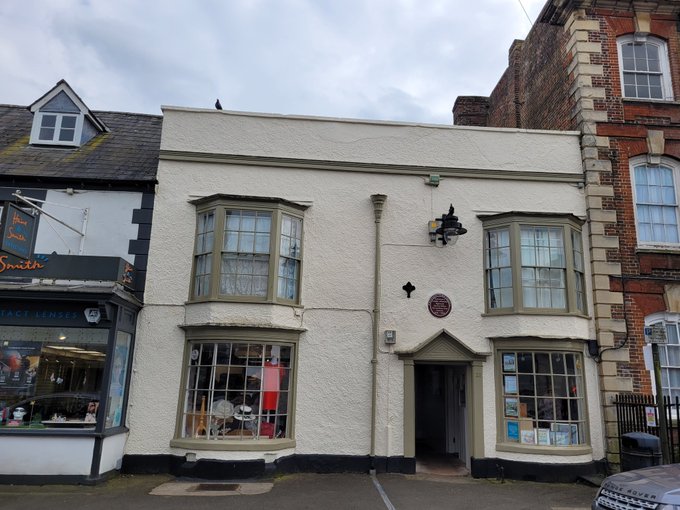
The Historic England entry for 23 High Street Highworth tells us that this Grade II* listed early C18 building bears evidence, in its physical fabric of an earlier C16 structure. The latter was, it’s most probable, timber-framed, of at least two bays on a double burgage plot. Surviving features include an original closed wattle and daub roof truss.
HE further opines on the existence of documentary references pointing to an inn on this site in the C17 and C18. It would seem that, in 1738, No 23 and the adjoining Inigo House were owned by a merchant, Thomas Hewer. When the inn closed it became a shop and a bakery. As for the post office, that appears to have existed from 1918 at least.
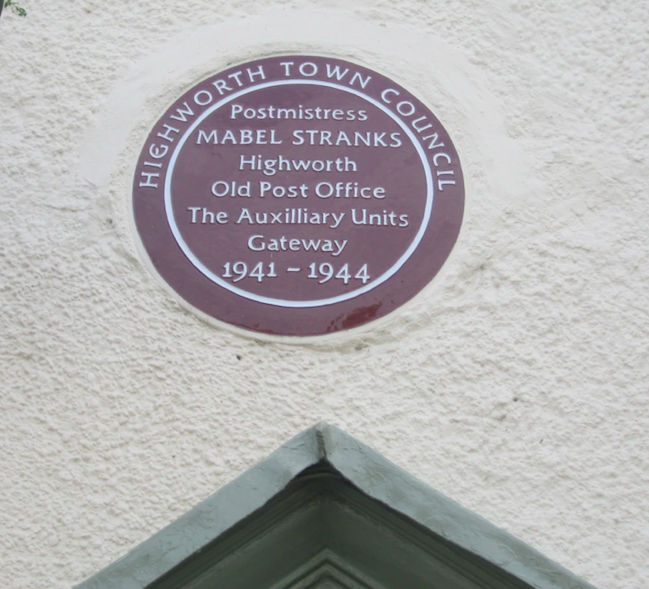
And it’s for the post office – or rather a postmistress, Mabel Stranks – that you find this building within this Swindon in 50 More Buildings series. For it holds within its fabric an astonishing tale of an astonishing woman.
If the reason for including in this series, at least some of the buildings that I have, is because of the stories they tell, then this one is the ubiquitous no-brainer.
Old Post Office Highworth – it now houses a charity shopCommemorative plaque from Highworth town Council on the old post office Highworth
Who was Mabel Stranks?
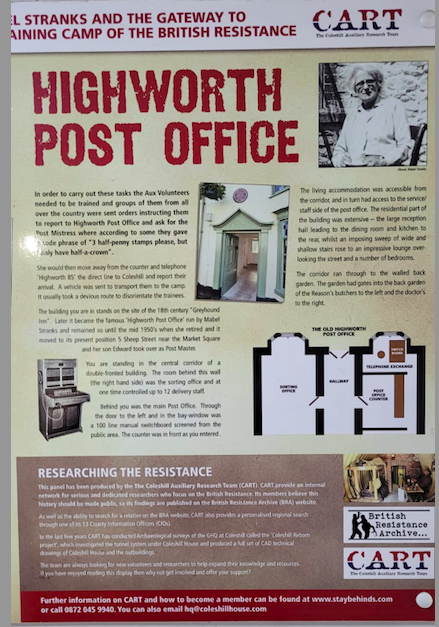
Who indeed? Well, Mrs Stranks served as Highworth’s postmistress, sending telegrams and sorting stamps for over half-a-century. But what no-one who entered that post office knew – indeed even her closest family didn’t know. Was that this woman, who looked like anyone’s grandma, was a key figure in Winston Churchill’s guerrilla army. And that as such she became a name on Hitler’s hit list. *
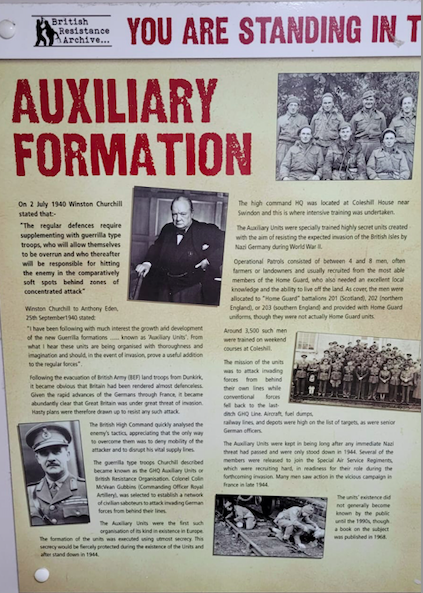
So, as the aforementioned blog explains, in the dark days of 1940, Britain had the Nazis poised across the channel. During this time the country set up a secret resistance force. As part of this process, dozens of volunteers worked in roles considered vital for the war effort. So the gov asked them instead to undertake what was, in essence a suicide mission. Should an occupation happen that is.
And who would suspect a postmistress? A pillar of the community surely?
It’s hard now to imagine sleepy Highworth and its grey-haired postmistress having involvement in top secret, dangerous shenanigans. But involved they were. Not that the town knew at the time that, between 1941 and 1944, Mabel assisted in the secret recruitment of the Auxiliary Units.
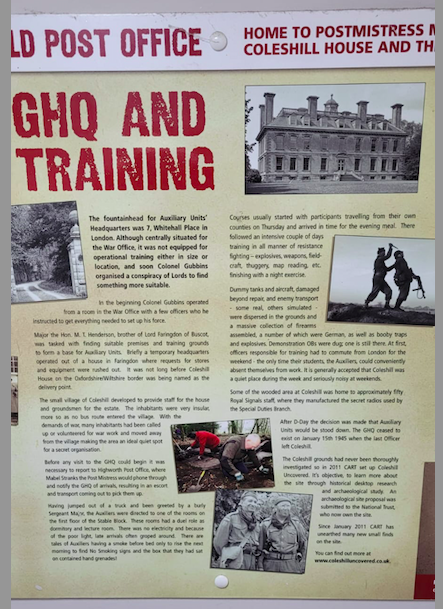
I’m not going to reproduce the whole of the British Resistance Archive blog here. You can follow the link and read it for yourself. AND – visit the old post office and read the information board there. See below.
But – as Tom Sykes, founder of CART said. ‘This is a remarkable story of an incredible woman and the part she played in one of the most secretive organisations of WWII.
We can’t underestimate the bravery of Mrs Stranks. The life expectancy of an Auxiliary Unit member was just 14 days. And Mabel was all too aware of the reprisals that had been meted out by the Germans to anyone found to be resisting or helping those that were. She never accepted recognition for her part in this secret operation. And, like many of those she screened, she never talked to anyone about her role until her very last days.’
The Coleshill Auxiliary Research Team (CART) publishes its findings on the British Resistance Archive (BRA) website. CART also provides an internal network for serious and dedicated researchers. These researchers focus on the British Resistance and agree with CART’s core value of making the research public.
CART is made up of select volunteer historians and published writers known as County Information Officers (CIOS) and also public members.
CART is not a business or an academic body of professional researchers.
CART is non-profit making and has no financial support from any company or organisation. It’s funded solely by donations and the revenue it makes from the sale of various items sold in the shop.
Since CART’s birth in June 2009 the website has seen over 110,000 unique visitors. Further it’s attracted TV, Radio and national press attention.
Hidden away in the countryside near Swindon, thousands of civilians were trained to form a lethal army of guerilla fighters ready to thwart any German invasion.
All these stories and more are bound up in Coleshill, an estate in the Cotswolds that was the secret HQ of Britain’s guerrilla army during WWII….’
Malmesbury to Light a Beacon to mark 80th anniversary of D-Day landings. The town of Malmesbury will join the international programme of activities to commemorate the 80th anniversary of the D-Day landings on Thursday June 6. This will include the lighting of a beacon as a mark of remembrance and respect.
D-Day was the largest naval, air and land operation ever seen, with a collaboration of allies joining forces. It was a turning point in World War 2 which then ended on 8 May 1945.
A tribute will be read and the beacon lit in Cuckingstool Mead, Malmesbury at 9.15pm. Residents and visitors will be welcomed to the commemoration evening from 8pm.
Musical accompaniment
The event will include music from Malmesbury Concert Band, a bar, and fish & chip mobile van, as it’s also National Fish & Chip Day. And that’s quintessentially British. Malmesbury Concert Band has twenty-five musicians who will play a varied repertoire of music appropriate for the occasion. They’ll play from 8pm to 8.45pm then from 9.30pm to the event’s close.
Malmesbury’s Mayor Cllr Phil Exton said: ‘We’re proud to be part of the international 80th D Day celebrations. It’s very important to remember the D Day landings and give our thanks for the courage and bravery of all those who took part in the military operation. Whether on the frontline or behind the scenes. Every community in the UK felt the effect of the war. And we are thankful to those who defended our freedoms then and today.
We hope many people in Malmesbury and nearby will join us to mark this auspicious occasion.’
The battle that ensued led to the loss of 1000s of lives but proved pivotal in the fight against the Nazis. It was a turning point in the war – it ended almost a year later.
The first international beacon will be lit at 8.15pm overlooking Gold Beach, in Normandy. Following it are beacons on the beaches of Utah, Omaha, Juno and Sword. This will then lead to beacons being lit around the world to remember.
Other activities taking place in Malmesbury the same day include the official proclamation at the Town Hall at 8am and the town bells ringing at 6.30pm.
This community event is free to attend and updates are available on the council’s website or social media – https://www.malmesbury.gov.uk