Having written about Desmond Morris way back and featured the sculpture of Diana Dors in my series about the West Swindon sculpture walk, I figured I ought to do a small piece with a bit of focus on Swindon’s very own screen siren herself – as opposed to the sculpture of her. The reason I mention Desmond Morris here is that, in their youth, they were close friends for a while.
I’m the kind of girl that things naturally happen to. When they don’t, I give them a push’.
Now I’ve been in Swindon for thirty+ years. Yet I’ve still not quite got used to the fact of living in the birthplace of someone so familiar to me from films and TV viewed during my childhood. Who knew that, back in Whitwell and watching Miss Dors in the TV sitcom Queenie’s Castle, I’d one day live in the town of her birth? Ditto with XTC for that matter. And Gilbert O’Sullivan – whose LPs I still have. And Rick Davies of Supertramp fame. Anyone else detecting a theme here?
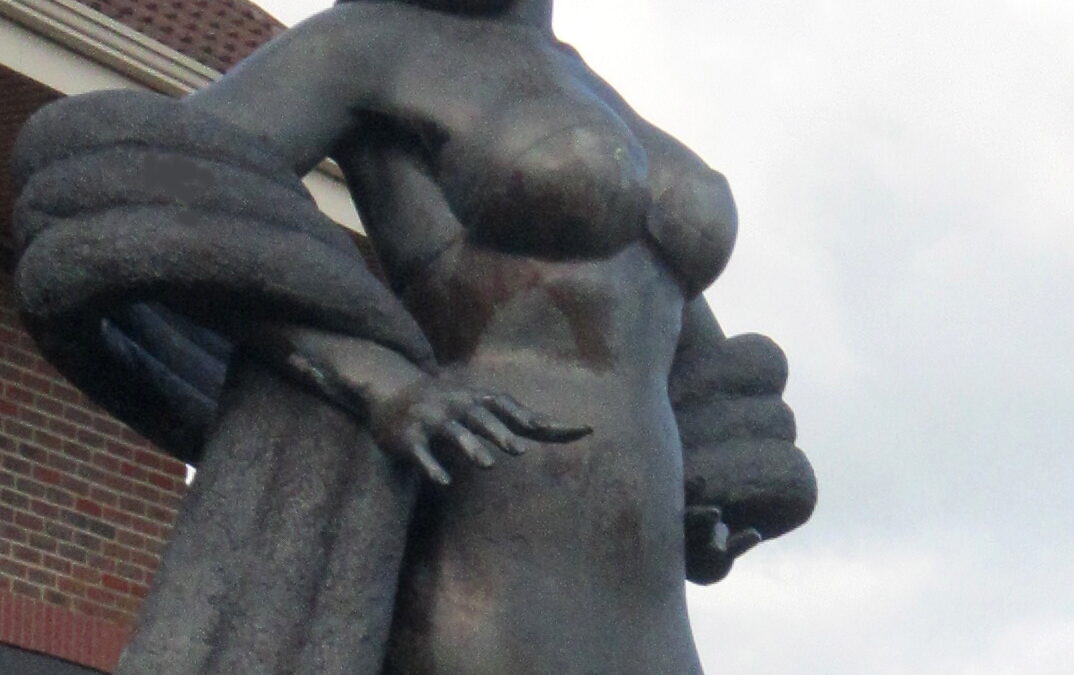
Diana Dors Swindon Siren – sculpture of Diana in West Swindon
A blue plaque above the Dors
Back in January of 2017, the Swindon Heritage folks installed a blue plaque on 61/62 Kent Road in Old Town. The address had, as the Haven Nursing Home, served as the birthplace of the infant Diana.
Now, I’ve had a few surreal experiences during my years in Swindon. But the sight of a metonymy for the American dream, a candy pink Cadillac, on an Old Town street has to be up there.
Pink cadillac owned by Diana Dors
Shepperton Studios gave the car to Diana and it once bore the registration DD200. It’s now owned by Mendip Cars and is available to hire. Just imagine driving around in the Hollywood sunshine in such a car… *sigh*
Immortalized in bronze
It goes without saying that Diana is immortalized on celluloid and in hundreds – nay thousands – of photographs. But she’s immortalized in bronze too. The Swindon collection has in its possession a bronze bust of Diana, sculpted by artist Enid Mitchell. But that’s not all.
One of the sculptures on the West Swindon sculpture walk is a fittingly larger-than-life bronze edifice of the larger-than-life character that was Diana. Entitled ‘Diana Dors – Film Star’, the statue depicts her in a slinky evening gown with fur stole, as she appeared when she starred in the 1956 crime drama, Yield to the Night.The work of artist Jon Clinch, it stands outside the cinema complex at Shaw Ridge. In 1991, David Putnam and Diana’s son, Jason Dors-Lake, performed the unveiling. See the image above.
A literary alter-ego
Anyone familiar with Jasper Fforde’s Thursday Next novels will know that R Diana has another identity there as Lola Vavoom. Although even larger-than-life than the actual sculpture and in a different location, Lola Vavoom, in Fforde’s 7 Wonders of Swindon, is at once recognisable as Diana Dors.
But … who was Diana?
As we’ve seen, Diana entered the world at the Haven Nursing Home, on Kent Road, on the 23rd October 1931 the only child of Mary and Albert Fluck.
A difficult delivery, late in life, that almost killed both mother and baby, determined Diana’s mother to give her daughter everything she herself had yearned for. And the opportunity to do everything she herself had dreamed of. Thus, she heaped upon Diana clothes, toys and dance lessons. And private education.
When the time came for the young Diana to go to school, her mother went against her husband’s wishes and sent her to a small private school called Selwood House. It’s no surprise that Diana would write the names of film stars in the margins of her text books rather than concentrating on her studies. It’s reported that her father raged over her lacklustre school reports but her mother always defended her.
Diana grew up fast – in every sense. By the time she turned twelve, she looked and acted much older than her age. There’s no doubt that the hours she spent studying actresses on screen and then emulating them had quite some influence on her early maturity.
Of her physical appearance, Diana said: ‘The figure was fabulous, but my face was never much, little eyes and lips like rubber tyres, I did well because I was the first and only British blonde bombshell.’
Diana desired no less than to go to the USA and Hollywood and to stake her place in film history. Her first step to achieving that ambition came when, aged 13, she achieved a good placing in a local beauty contest. That led to her being offered a role in a drama group.
The Rank organisation
The age of fifteen saw Diana sign a contract with the famous Rank organisation. Whereupon she joined J. Arthur Rank’s ‘Charm School’ for young actors. Subsequently she appeared in many of their films. Other famous names to emerge from Rank’s Charm School include Petula Clark, Claire Bloom and Christopher Lee.
Although Diana disliked the Charm School she got more publicity than many thanks to her willingness to be photographed in glamour shots and attending premieres. Shrewd as well as talented then.
An August 1947 article cited her nickname as ‘The Body’.
Said Diana: ‘I was the first home-grown sex symbol, rather like Britain’s naughty seaside postcards. When Marilyn Monroe’s first film, the Asphalt Jungle, played here, a columnist actually wrote “How much like our Diana Dors she is.”.’
From Fluck to Dors
When it came to the signing of contracts, in agreement with her father and from a suggestion by her mother, she changed her contractual name to Dors. That being the maiden name of her maternal grandmother. Dors later said of the name change:
‘They asked me to change my name. I suppose they were afraid that if my real name, Diana Fluck, was in lights and one of the lights blew ….’
Despite and because of, the arguable handicap of her looks and physique, Diana Dors enjoyed a long career in films and TV. One in which she demonstrated, in no uncertain terms, that she was far from being a dumb blonde and that she could actually ACT. Indeed, as the piece about her on the Swindon heritage blue plaques website states:
‘She was more than a woman who exuded her sexy side, she was a fine actress as her films showed. As the 1960s turned into the 1970s, she began to play more mature roles with an effectiveness that was hard to match. Films such as Craze (1974), Swedish Wildcats (1972), The Amorous Milkman (1975) and Three for All (1975) helped fill out her resume.’
There’s no question that Diana fulfilled her youthful desire to have her name blaze bright in Hollywood’s lights.
In 1985, not long after filming Steaming, Diana received a cancer diagnosis. The siren of Swindon died, aged fifty-two, on May 4th, in Windsor, Berkshire. And the nation lost a unique piece of its culture.
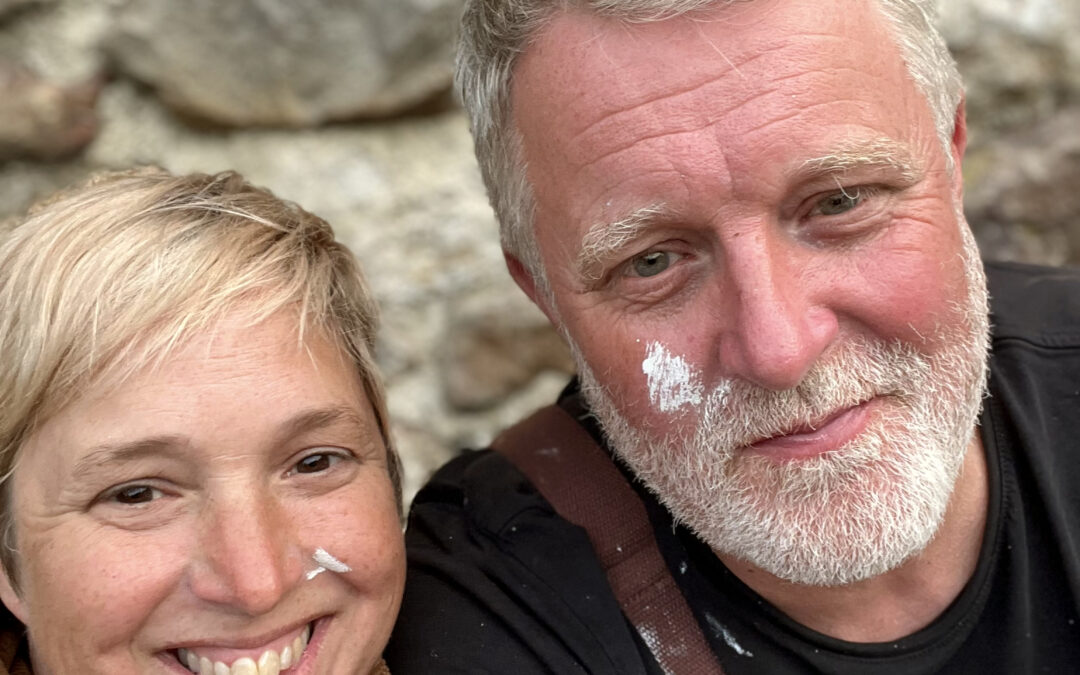
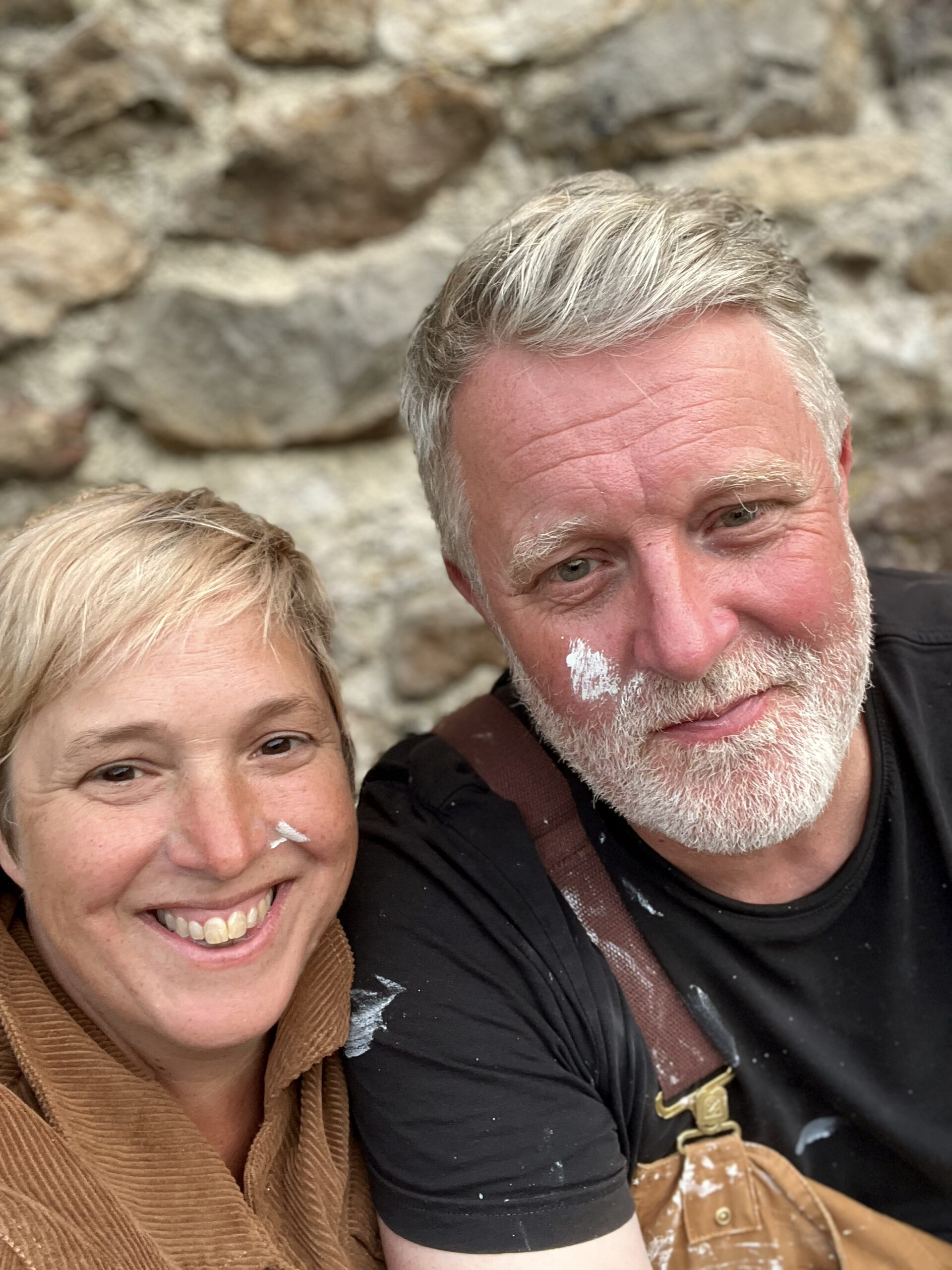
Introducing Bothy Gardens. A couple’s vision to re-create a modern version of a walled garden and a Grade II* listed Bothy on the outskirts of Swindon is taking shape. Jules Gilleland and Mark Wheeler, AKA ‘The Plant Hunter’, are investing their savings and lives into a horitcultaral enterprise. They’re turning a forgotten Georgian walled garden and its historic bothy, into a vibrant haven of creativity, nature, and heritage.
Bothy gardens are located on the edge of the Burderop estate outside Chiseldon, near Swindon.
Greenhouses
Flood plant beds and …
… nurseries for rare plants, including orchids, a garden library, and an atelier/classroom. After years of meticulous planning and waiting, this ambitious vision is now taking shape. It’s been a long journey for the couple who bought the site in 2021.
Dream location
‘This site is our dream location for our lives together,’ Jules said. ‘Mark is the mastermind behind the plants. He’s an award-winning horticulturist with a reputation that precedes him. As for me, I’m an established designer with a huge passion for art and design. That includes painting and creating spaces for learning. The Bothy Gardens will combine our lives and passions alongside a wholesale plant business.’
The bothy is a building that forms part of Bothy Gardens. The term comes from the Georgian and Victorian eras. Back then, such buildings, usually attached to a walled garden, were the humble homes of so-called ‘Bothy Boys’. They worked, often in poor conditions, to maintain and look after the greenhouses, gardens and grounds of stately homes. They were servants and didn’t have the status of the head gardener. He’d direct their daily tasks and would have had his own property within any estate.
In this case, the bothy fell out of use for many years. When Jules and Mark purchased the property, it had lain abandoned for over 20 years. The bothy will become their dream home. And the surrounding gardens will undergo restoration to their former glory.
The Victorian greenhouse sat marked for demolition. It was on the brink of collapse, tangled in vines and brambles, with a pair of unruly fig trees bursting through the shattered glass. But, where others saw ruin, Jules and Mark saw potential. As we speak, the greenhouse is being restored. It’s destined to become both Jules’s creative studio and a sanctuary for propagating rare orchids. But that’s merely the beginning.
To get to this point where we can now start to plan the future of Bothy Gardens has required so much hard work,’ Jules said.
Introducing Bothy Gardens – Jules and Mark
Emotional investment in introducing bothy gardens
We’ve put our hearts and souls into this project,’ Jules said. ‘And we’re committed to preserving the heritage of this place while infusing it with new life. We want to share Bothy Gardens with others who share our love for gardening, art and the simple joys of nature.’
Mark already has an established plant nursery in North London but has always dreamed of owning a walled garden. He’s well known in the gardening world for his encyclopaedic knowledge and love of plants. In particular, rare breeds/species, such as:
Schefflera Rhododendrifolia (Umbrella tree),
Ruscus Hypoglossum (spineless butcher’s broom) and …
Salvia Oxyphora (Fuzzy Bolivian Sage)
Vision
My vision for Bothy Gardens extends beyond restoring a historic space. It’s also about creating something unique. A living legacy of rare and extraordinary plants,’ Mark explained.
‘I’ve spent years collecting and cultivating plants that are often overlooked or forgotten. Here, within the walls of this garden, I see an opportunity to build something that will outlive us. A sanctuary where rare species can thrive and have future generations appreciate them.
It’s about more than a business. It’s about preserving and sharing the beauty and diversity of the plant world with like-minded enthusiasts. I want Bothy Gardens to be a place where people come to learn and find inspiration. And to leave with a deeper appreciation for the natural world.’
Jules is an accomplished designer who’s been running her company, Turtlewings, from Brussels, Belgium, for many years. With a background in design she has a passion for creating spaces that inspire wonder and well-being. In 2014, she founded Think with Things after winning the Open Education Challenge. That earned her a spot as one of the top seven EdTech companies in Europe. Now, Jules is thrilled to bring both Think with Things and her design studio, Turtlewings, to Wiltshire.
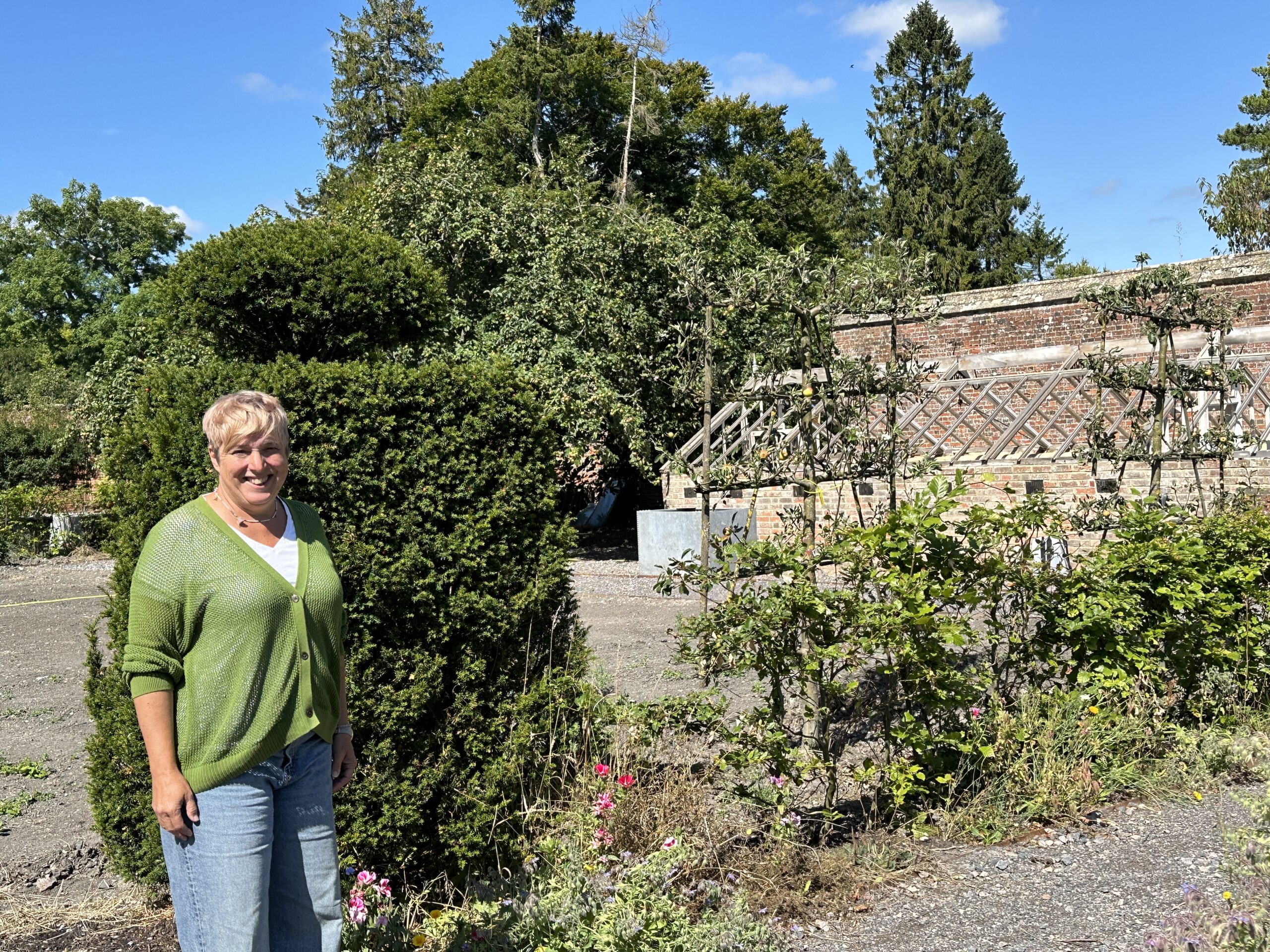
Jules Gilleland in the Bothy Gardens on the Burderop Estate, Chiseldon
Wonderful Wiltshire
The couple, who met over six years ago in Brussels, are eager to contribute to Wiltshire’s creative and cultural scene.
‘I adore the English countryside,’ Jules shared with a smile. ‘It takes me back to the farmlands of Iowa where I grew up. But unlike Iowa, you have these little villages and every turn reveals a scene straight out of a postcard. After 24 years in the bustling city of Brussels, I’m more than ready to reconnect with my roots and live in the countryside. I want to cultivate a space that blends English charm with the traditions of Iowan country living. Like my mother and grandmothers did.’
In the spirit of community, Jules and Mark recently opened Bothy Gardens to volunteers for four days a month. That came after many locals expressed an interest in discovering more and learning from the couple after following the Bothy Gardens blog and Instagram feed. Jules posts often about their work and journey so far.
By the spring of next year, she hopes to be running her first art & garden classes on the site for small groups. To find out more about the volunteering opportunities and to register an interest in upcoming classes, visit https://www.bothygardens.com/
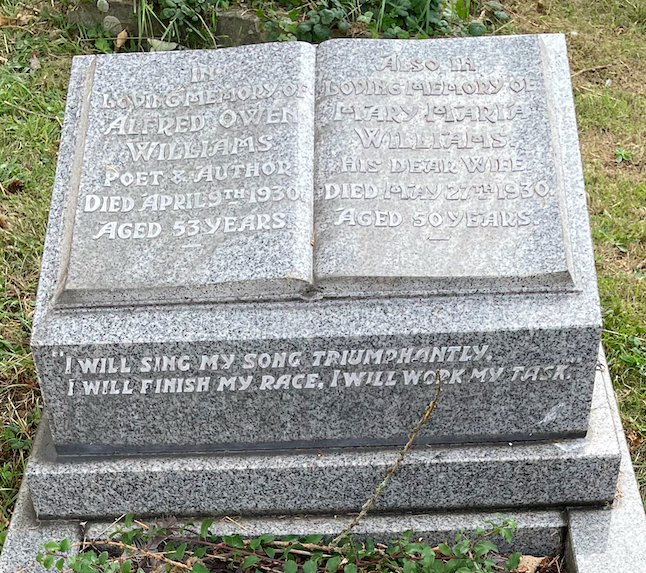
Alfred Williams Hammerman Poet – 1877 to 1930. It appears that I’ve never mentioned the South-Marston-born polymath on this blog before now. But a visit to South Marston yesterday to see the houses with which Alfred’s short and rather tragiclife intertwined, has prompted me to correct that.
I have though dedicated space to him on pages 29-32 of Secret Swindon. Many thanks to Graham Carter for the information that went on those pages. And thanks go too, to Graham, and Ian Hampson, for yesterday’s walk around South Marston.
Alfred Williams Hammerman Poet – the grave in South Marston’s churchyard of Alfred Williams and his wife, Mary Peck.
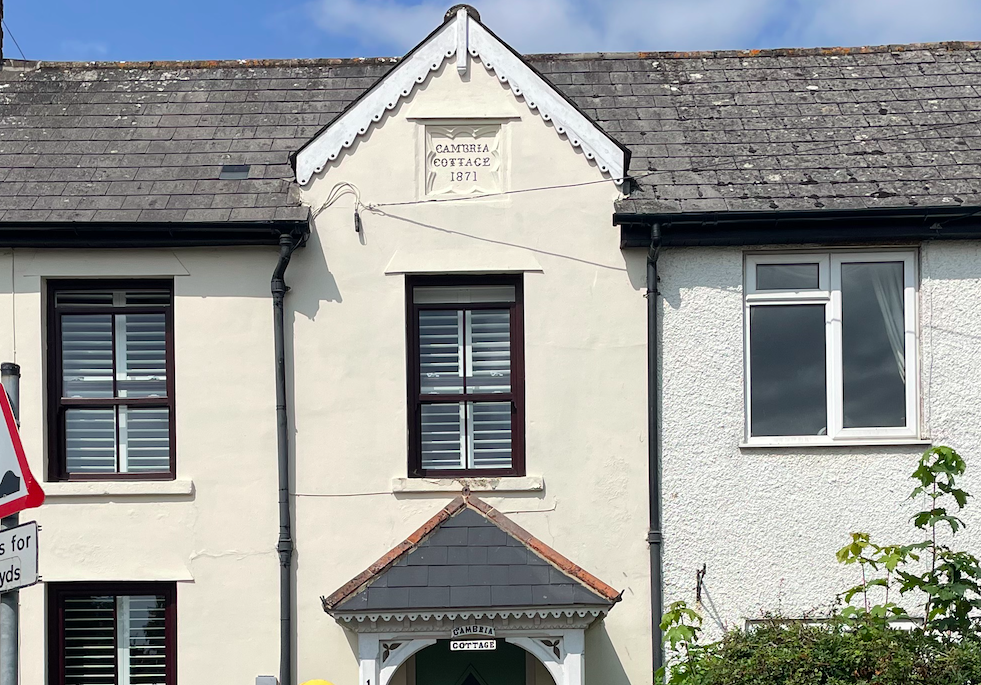
The infant Alfred entered the world in the house you see below, Cambria Cottage.
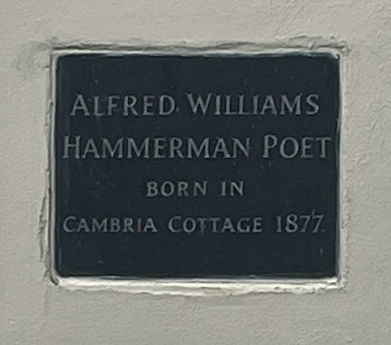
Alfred William’s South Marston birthplace Cambria CottagePlaque on Cambria cottage South Marston – birthplace of Alfred Williams
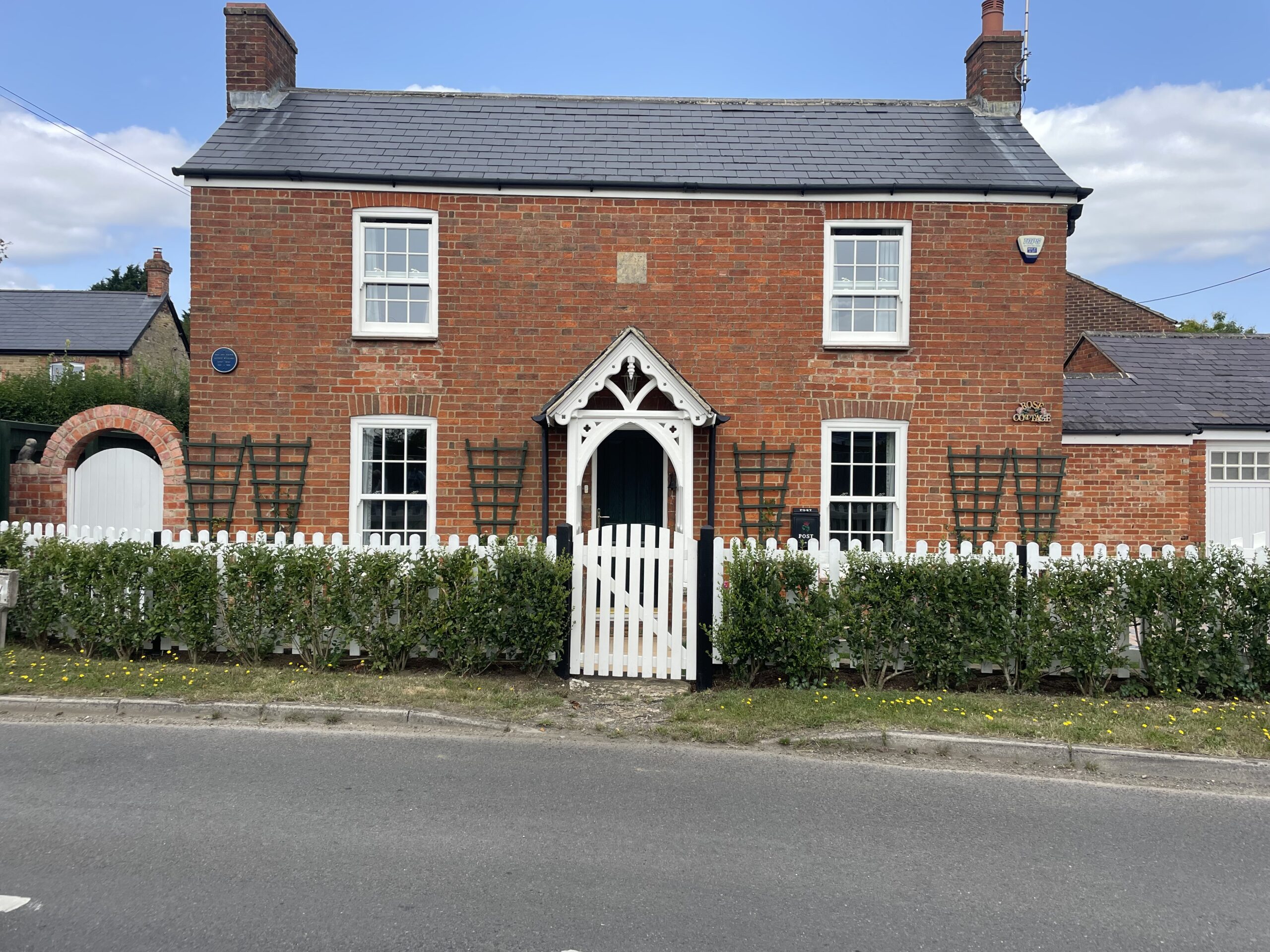
When Alfred was around four or five years old his mother became a single parent. Whether Alfred’s father left of his own accord or was asked to go isn’t clear. Either way, the event forced young Alfred’s mother to move her brood to Rose Cottage, close to his South Marston, Cambria Cottage birthplace.
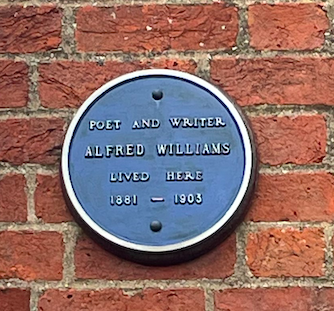
Unofficial blue plaque Rose Cottage in South Marston, one time home of Alfred WilliamsRose Cottage in South Marston, one time home of Alfred Williams
Education and self-education
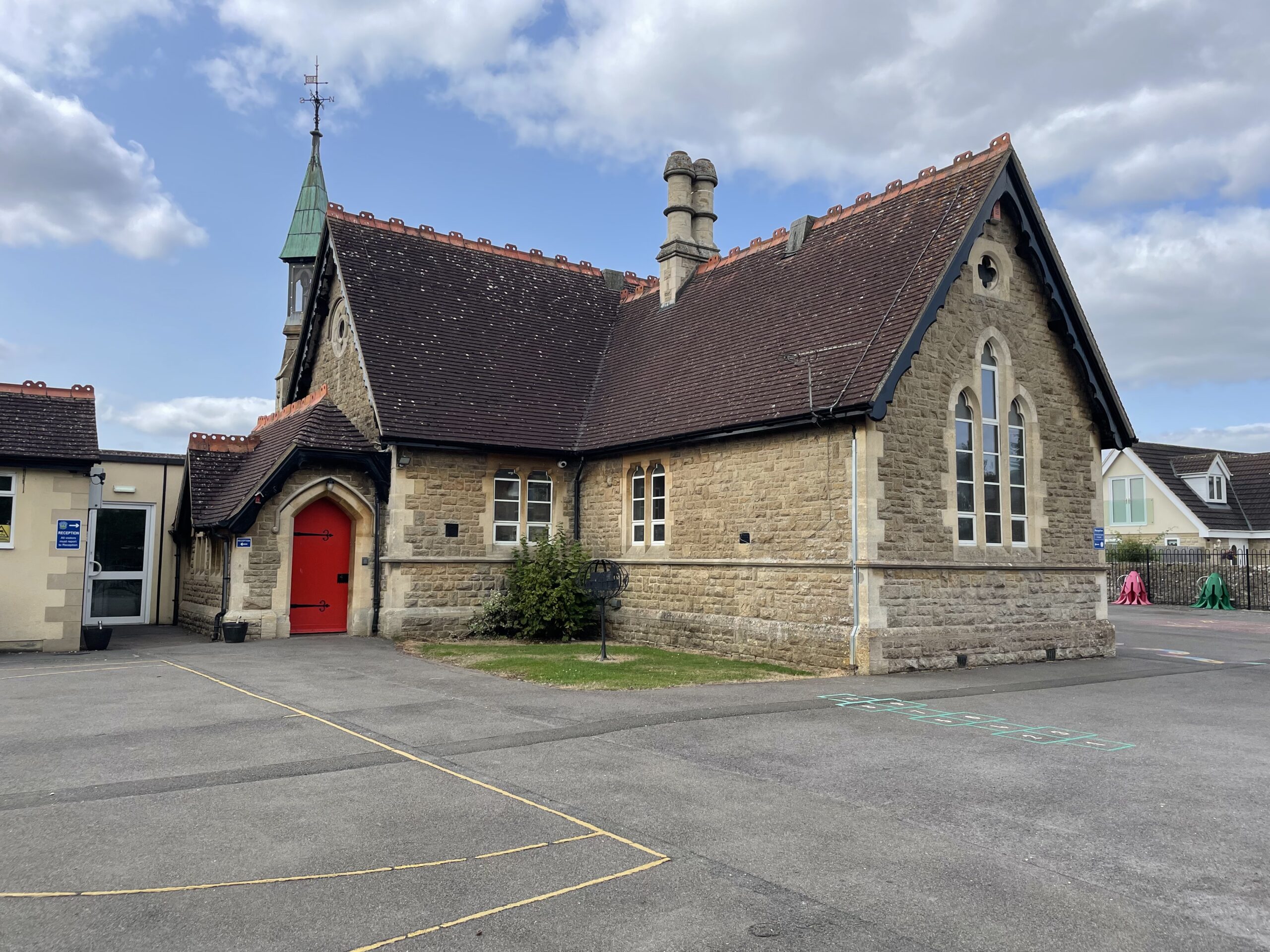
South Marston village school attended by Alfred Williams – little changed from his day I think.
The rudimentary education Alfred received was soon usurped by the need to get farm work to support the struggling family. Working on the land though provided a precarious living and Alfred faced a harsh choice. His heart belonged to the fields and the outdoors but he couldn’t justify ignoring the security and better pay of the Works, as soul-destroying for him as it was. Yet the young man forced to give the best years of his life to the stamping shop compensated by educating himself and following his creative urges in his downtime.
He set about learning the classics. He read Shakespeare, experimented with painting and learned Greek, Latin and French to further his education. Legend has it that, in his breaks at work, he’d chalk Greek and Latin letters on his furnace to learn them.
Cutting short a long story we come to1914. Now, dogged by ill health, Alfred left the railway works scrawling Vici (I conquered) in chalk above his furnace as he went. If nothing else, leaving the Works gave him the chance to complete Life in a Railway Factory. This the warts and all exposé of life inside that he’d begun in 1911. Williams’ biographer Leonard Clark described the book as the bravest and most comprehensive condemnation of factory life to appear in Europe in thirty years. Alfred himself was pleased with his work. He said it was ‘the only good book on factory life that we have in England written by a working man.’ Without doubt his book made an important commentary on the history of Swindon. And a landmark documentary of British industrial life. Yet it sold only a dozen copies in Swindon in the six years after its publication.
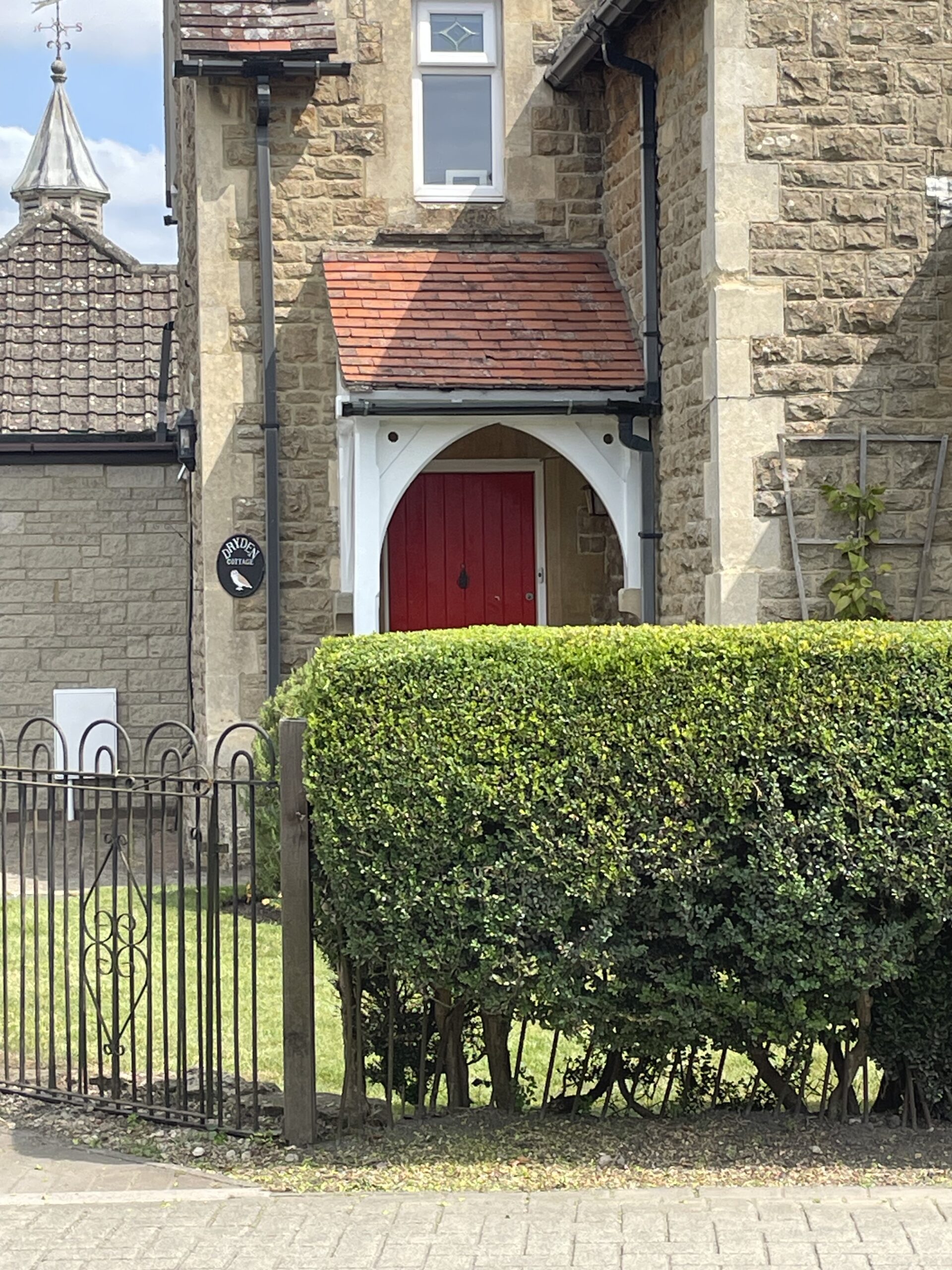
Alfred and Mary married at St Saviours Church in Eddington on the 21st of October 1903. They honeymooned in Torquay. Alfred, at the time of his marriage, left Rose Cottage and moved into Dryden Cottage opposite Cambria Cottage, his birth place. They lived in Dryden Cottage for the next fifteen years.
Dryden cottage in South Marston. The first marital home of Mary and Alfred
Alfred’s military service
After a brief spell in South Africa, he arrived in India in November 1917. And soon became fascinated with its history and culture. He was by now working on a book called Indian Life and Scenery. Like many, he became ill with fever. As things worked out, he found himself in Ranikhet. That, as you’ll see, has a connection with a small Wiltshire village many thousands of miles away. He was captivated with India and noted that if he were younger, he would have invited Mary to join him. He also saw the Taj Mahal.
It was during his stay in India that Mary informed him they had have to move house. Dryden Cottage had been purchased by a local farmer who’d decided to live in it.
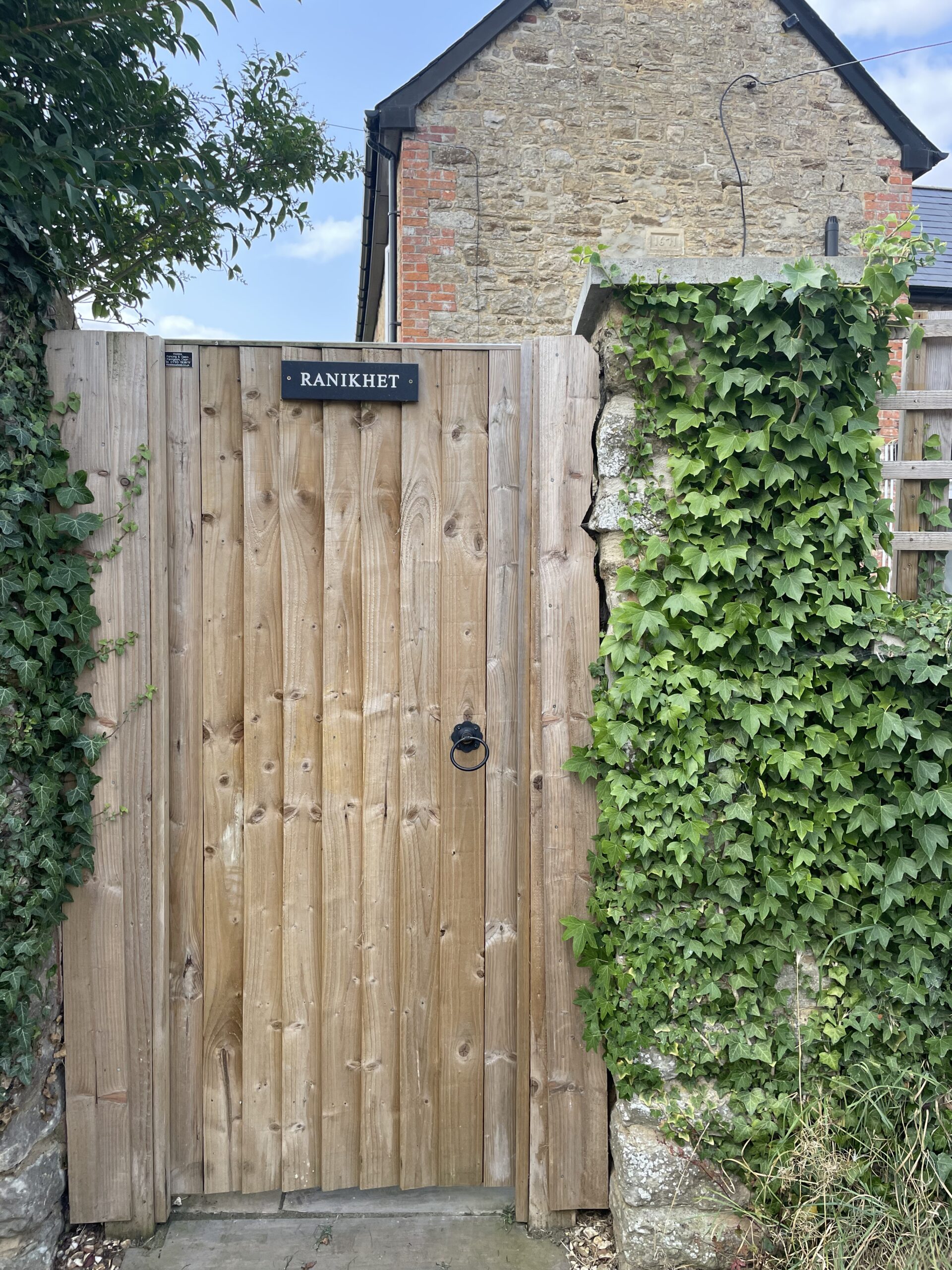
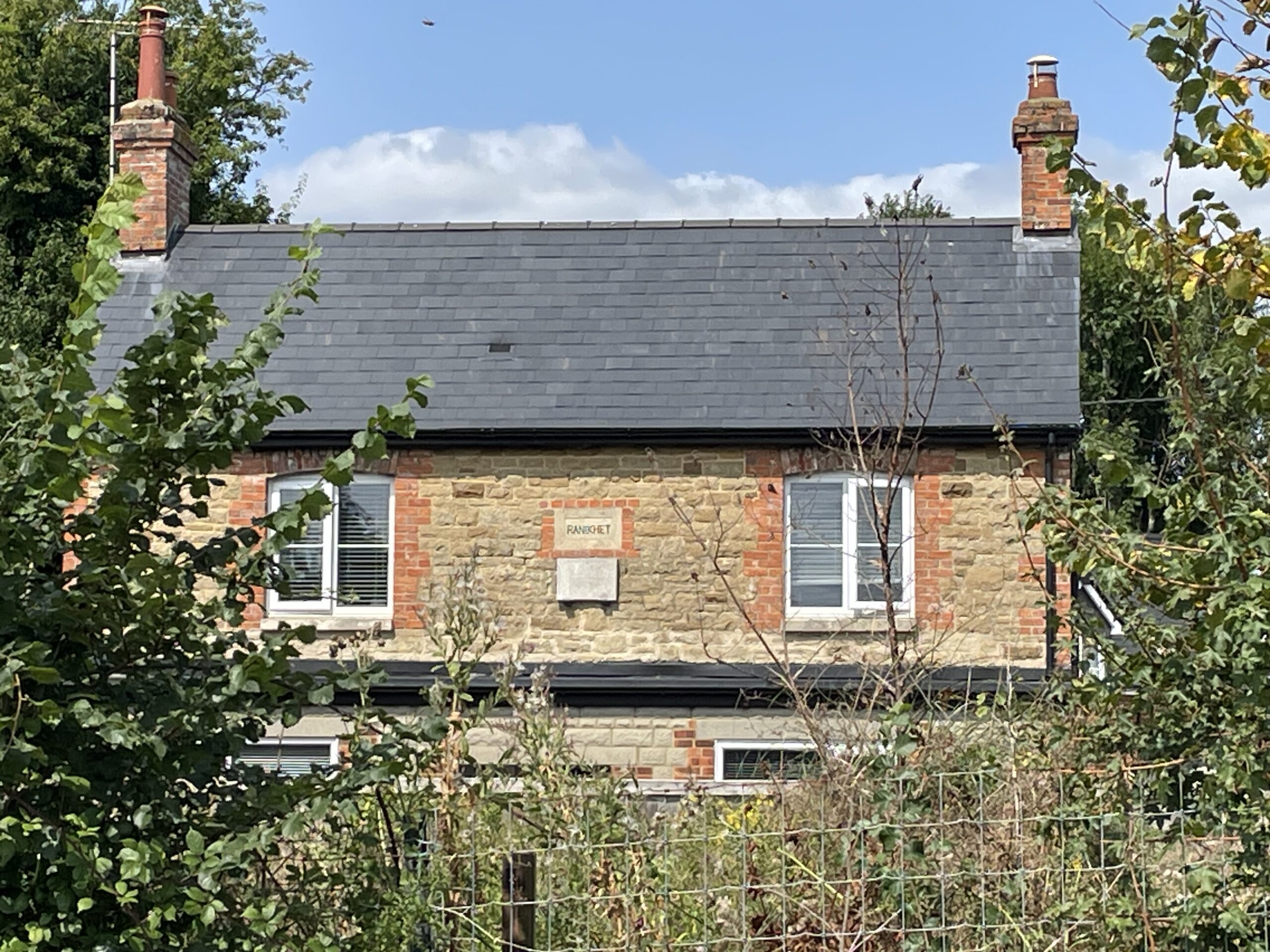
Again cutting a story short, Mary and Alfred decided to build their own house. This they did, pretty much with their own bare hands. And they called it Ranikhet.
Side gate on Ranikhet in South Marston
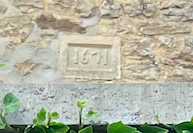
Note this date plaque on the side of Ranikhet. It bears no relation to the house – it was built in the early 1920s. It’ll be, I imagine, some random bit of rubble that Alfred & Mary used when building the house.
Ranikhet random date plaqueRanikhet in South Marston – as much of a view of it as is possible
Alfred’s legacy
Alfred already has two titles, but we can attribute a third one to him: social historian. He left behind his poetry and his prose yes, but he did something else too. He appointed himself a collector of Wiltshire folk song lyrics to prevent their disappearance. This undertaking was mammoth. He visited ninety-seven towns and villages on his bike. He covered something like 7,000 miles (take that The Proclaimers!) to collect over 1,000 songs. He’d have to have done this in the winter months, in the hours of darkness as during summer time and daylight hours, agricultural workers, from whom he collected the lyrics, would be hard at work.
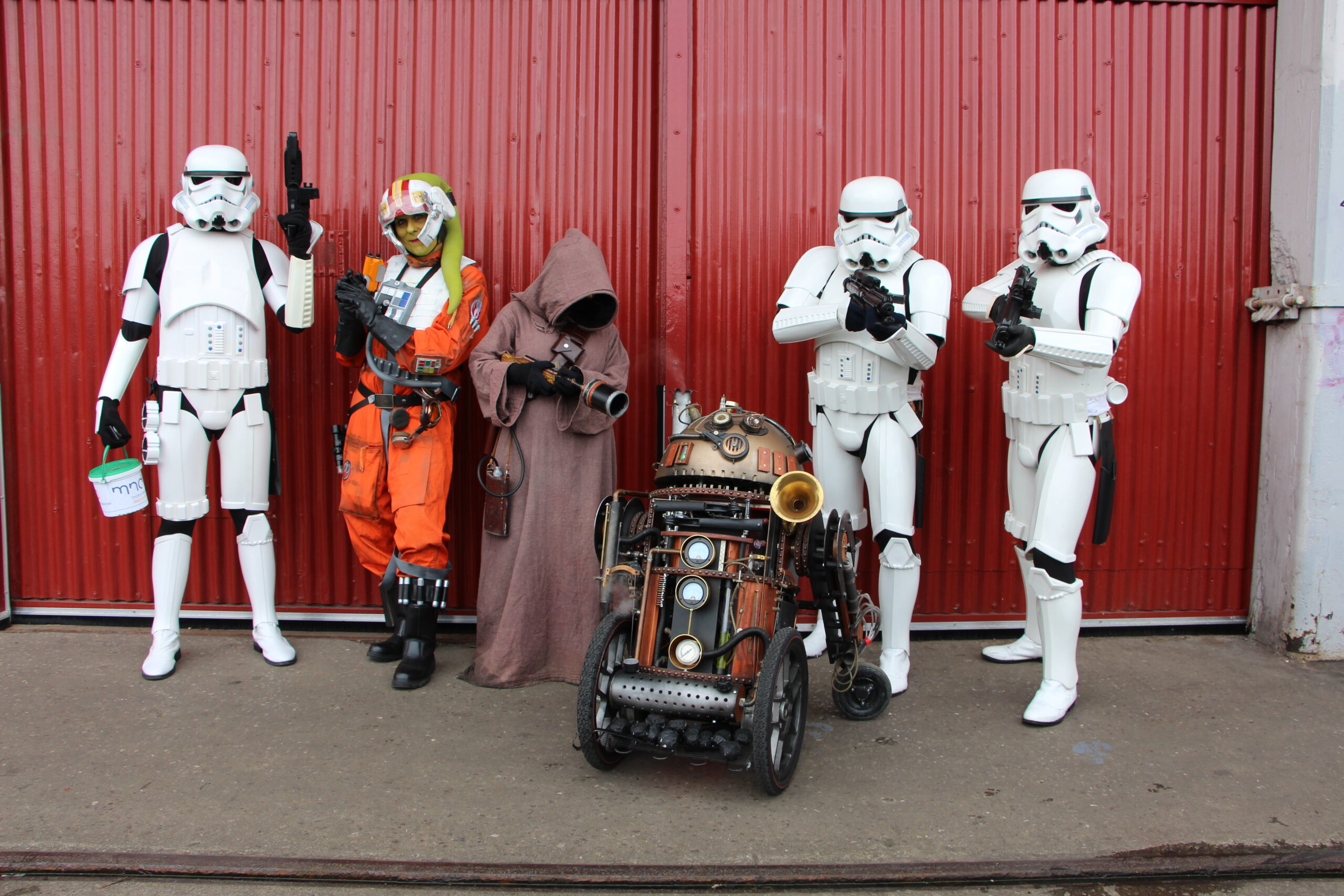
Following the recent theft of Banksy’s ‘Howling Wolf’ from Peckham, one of the venues in Swindon Open Studios (SOS) has called on a garrison of Stormtroopers and Daleks. Their mission to provide extra protection for the work of 20 artists and craftspeople at the Carriage Works on September 21st.
A family fun day kicks off the opening of the exhibition at 11am. Children are invited to come dressed as their favourite Sci-fi character, in the spirit of a Comicon event*. Apart from paintings, pottery, digital art, photography and jewellery, there’ll be two children’s book authors exhibiting.
Swindon New College will be demonstrating media make-up too, so there’s something for everyone with an interest in the arts.
QR Code SOS Website of artists work
Taking part
Swindon Open Studios has 130 participants in 56 different venues in and around Swindon this year. The event at Armstrong’s Carriage Works presents a once-only opportunity for artists to exhibit together in this superb space. Immediately afterwards, the historic listed building will undergo a major renovation.
The family fun day with café was the brainchild of Mark and Anna Enright who run Podpadstudios. They jumped at the chance of working with Swindon Borough Council and Create Studiosto use the huge Carriage Works space. That’s because they’ve never before been able to exhibit their entire collection of life-size film props under one roof.
*Joining the:
Podpadstudios Terminator-inspired Robot T-1-FNY
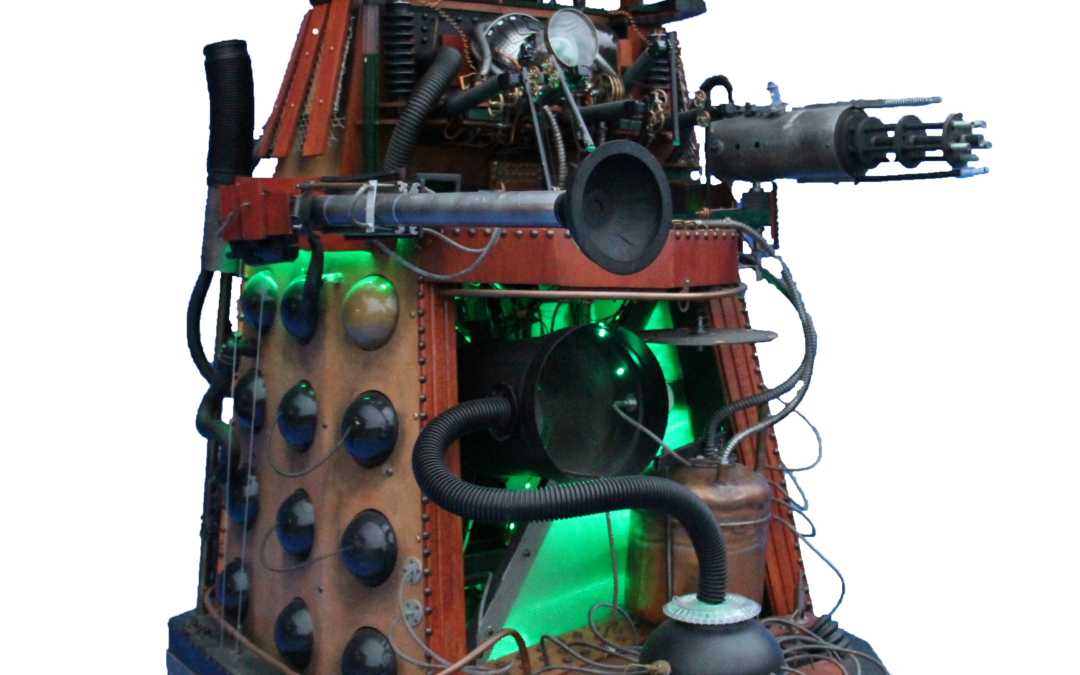
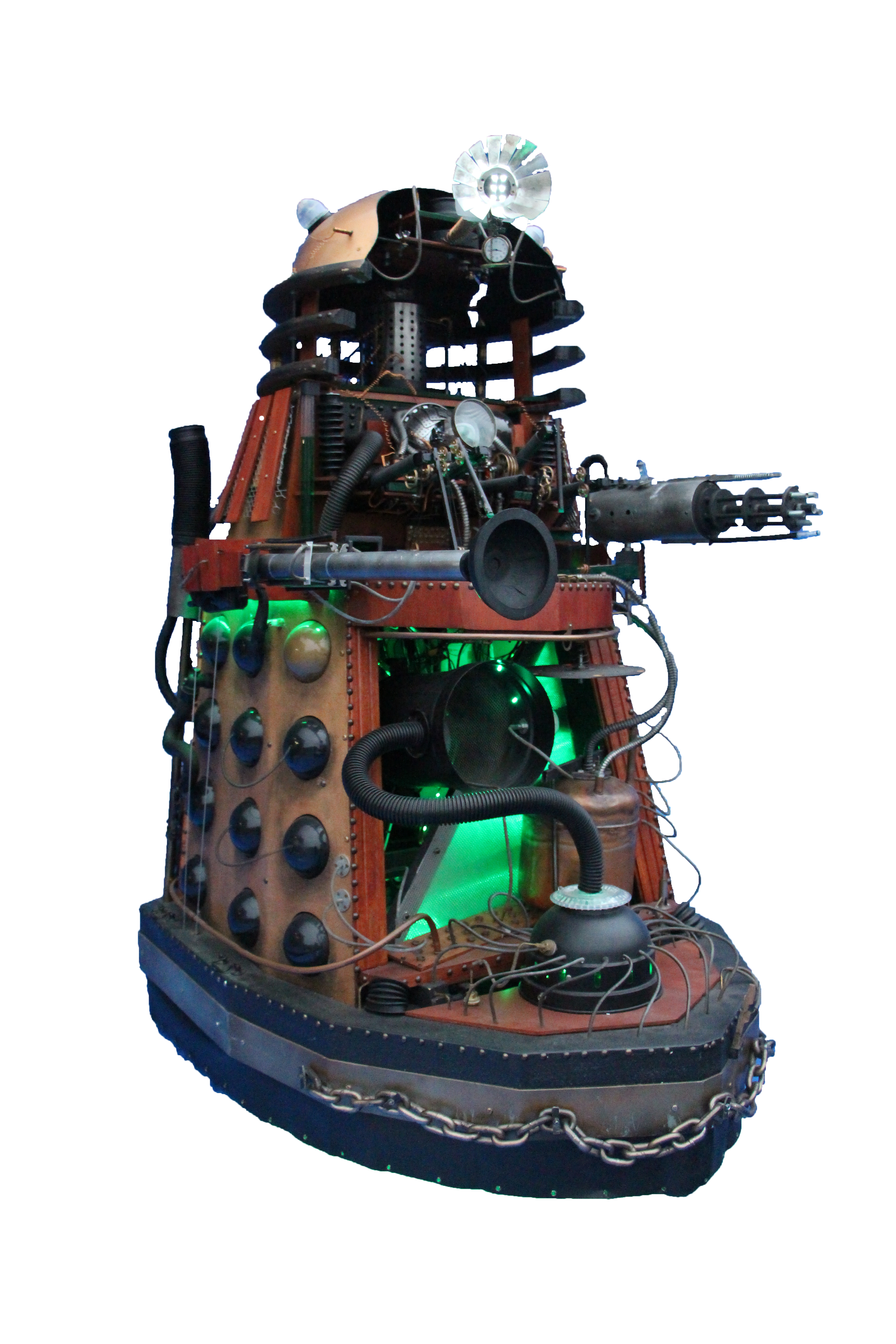
Steampunk Dalek
Dr Who’s K9
Star Wars R2D2 droids
Animatronic dragons and …
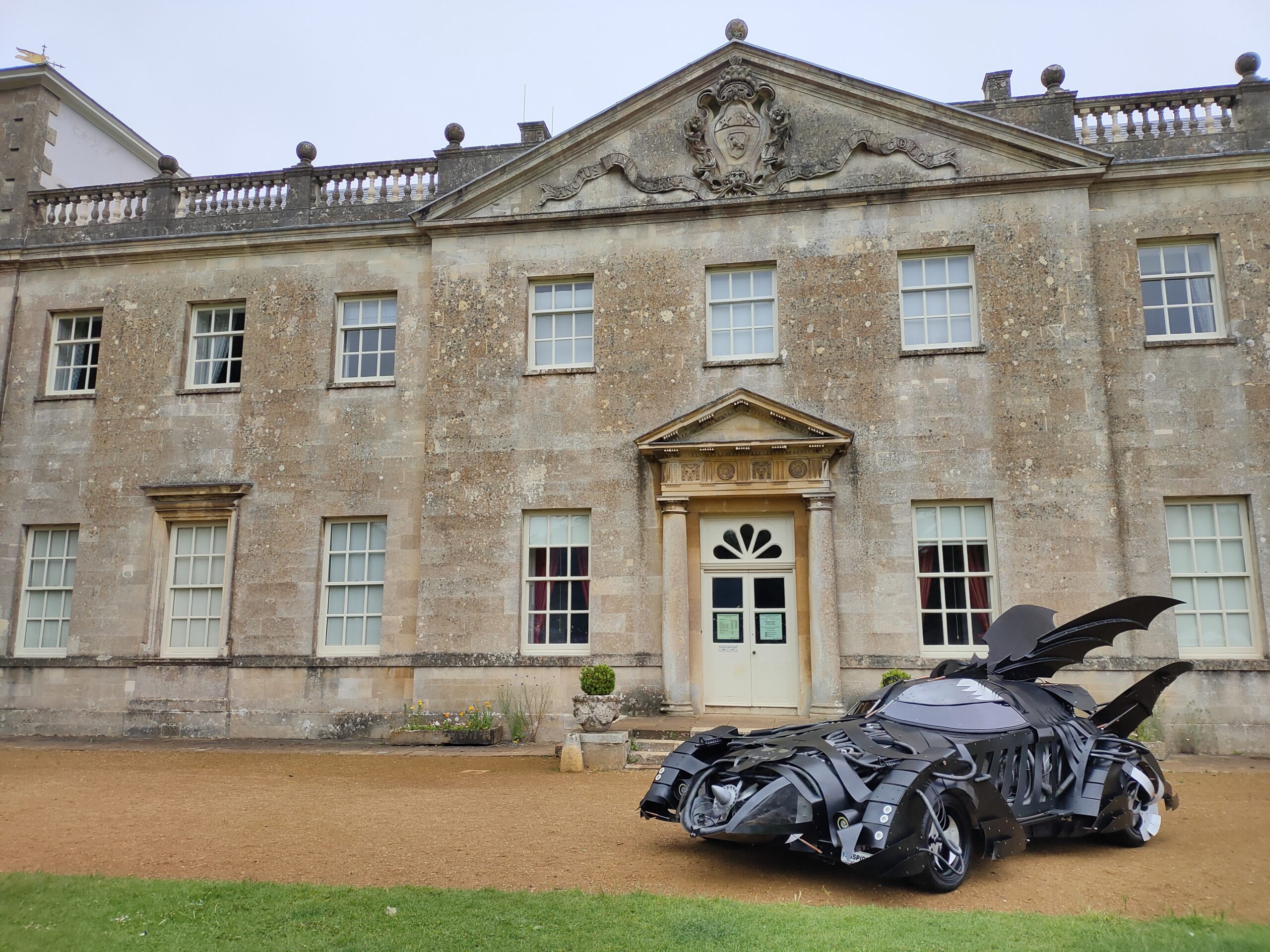
A life-sized Batmobile …
.. will be Stormtroopers from MKG who will be fund raising for Prospect Hospice, Swindon. All of which goes to show that not all Stormtroopers and Daleks are baddies after all! Entry is completely FREE to the family fun Day and Swindon Open Studios exhibition which runs for the last two weekends of September.
MKG With Izzy Steampunk Droid (1)Batmobile at Lydiard HouseQR code for SOS 24 map
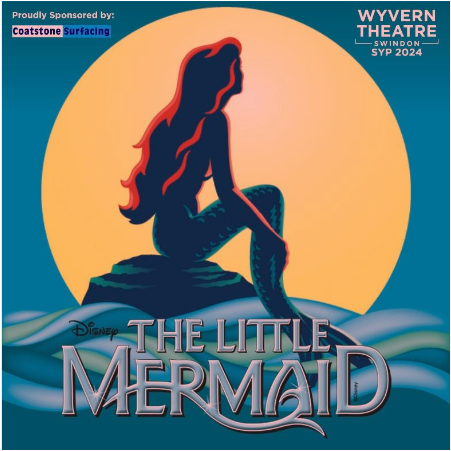
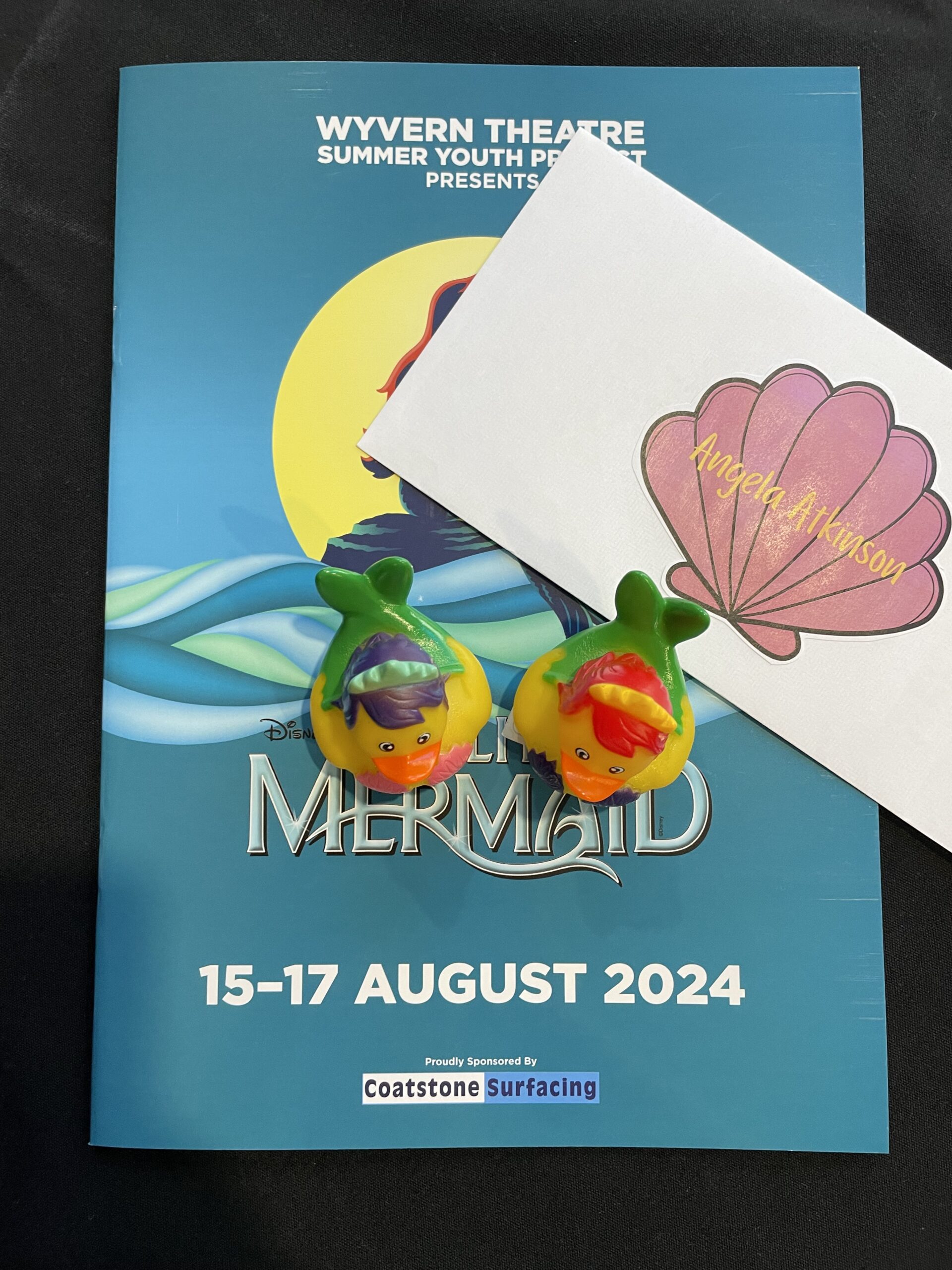
Wyvern Theatre SYP 2024. Yes folks – it’s that time again – the Wyvern Theatre’s summer youth project 2024. I’ve seen several summer youth projects over the years and they’ve always been splendid. And in this year’s production, (the THIRTIETH SYP), The Little Mermaid and the high production values of these productions are as much in evidence in this joyous production as ever.
Directed by that Pantomime Dame extraordinaire, David Ashely, the entire cast and ensemble shimmered their way around the stage and the entire auditorium – no aisle knowingly goes to waste in the SYP!
It was all wonderful and nothing fishy about it at all. The jokes won’t get any better than that so I’ll stop there.
Wyvern’s Summer Youth Project – The little mermaid
Awesome
I have a Canadian friend, who I tease a tease a little, over her use of the adjective ‘awesome’. But when it comes to the SYP – we’ve seen several together now, including this one – there couldn’t be a better one. Writing as someone who still hasn’t memorized their mobile phone number, I’m in total awe that the young people involved learn all their words and their moves in such a short time. The whole thing is confected from the raw ingredients to the finished soufflé in about ten days. And that culinary reference makes a nifty segue into giving a special mention to two cast members.
Of course EVERYONE is terrific. But a spotlight for making us laugh goes to Toby Barton as the French chef Louis displaying some excellent, exaggerated Gallic shrugging. He was great value. I have to stay though, during that scene I was somewhat expecting it to conclude with the crab, Sebastian, on a plate. But then that would have been less Hans Christian Anderson/Disney and more Quentin Tarantino …
Then, besides the main characters of course, we both enjoyed Bethany Tunley as Scuttle the seagull. Also good value, she flapped her way around the stage with aplomb. And I loved her outfit with the flying goggles on her head. V clever and amusing.
About the Little Mermaid
As I’m pretty sure I’ve mentioned here before, there’s nothing new under the sun – or in this case – the sea. For, way before Disney turned this watery tale into a block-busting movie it existed as a fairy tale written by Danish writer, Hans Christian Andersen.
The Little Mermaid then (in Danish, Den lille havfrue), sometimes translated in English ‘As the Little Sea Maid was first published in 1837 as part of a collection of fairy tales for children. So it’s a story almost as old as the oceans – well ok – that’s an exaggeration. But it had been around a long time before it got the Disney treatment.
The story tells a tale of a young mermaid princess, willing to give up her oceanic life to have a human soul. I daresay you all know the story anyway so I’ll say no more about this lovely story about identity and self-discovery. I will note though that, and relevant considering recent events, it also carried a message about not fearing different. That not all different is bad. ‘Not all humans are bad’ – I’m paraphrasing – cried Ariel. Indeed they’re not. And likewise neither are all Muslims, Jews, Gays, brown-eyed people … etc, etc, etc. And so, as this Guardian article explains, that’s why we need the black Ariel in Disney’s film.
PS: I’ve been attending these things for a few years now and have never, until last night, seen the presence of MPs/Cllrs. Not once. Last night broke the mould – both our MPS and a borough cllr (and partners) were in attendance. And not only for the reception but the entire performance. Good to see.