I share a birthday with Harold Starr! On Thursday the 8th of September I’ll be 60 years old. And it’s thanks to Harold and his ilk that I’m here to celebrate that milestone. So when I raise a glass to toast my birthday I’ll raise one to toast Harold and his brother too. Starrs in every sense of the word!
Starr Brothers Blue Plaques
‘Two of Swindon’s bravest sons were honoured on Thursday 8th Sept 2016 when the Swindon Heritage Team www.swindonheritage.com unveiled not one but two commemorative Starr Brothers Blue Plaques in the heart of the town.
Brothers Harold Starr and Norman ‘John’ Starr entered this world in the Central Hotel, Regent Street, Swindon. The hotel was replaced with a cinema in the 1930s and today the Art Deco building houses the popular Weatherspoon’s pub, The Savoy.
As soon as www.jdwetherspoon.com were approached about the idea of having blue plaques on The Savoy they immediately said yes and have been assisting with logistics ever since.
The Starr Brothers
Squadron Leader Harold Starr (1914 – 1940)
Squadron Leader Harold Starr was born and raised in Swindon. He bailed out of his burning Hurricane during the Battle of Britain in 1940. But a Messerschmitt gunned him down as he floated down to earth in his parachute. His wife was carrying their unborn child.
Harold Starr lies in Radnor St Cemetery in Swindon in a Commonwealth War Grave. He was 25 years old.
Here’s a young and handsome Harold on his wedding day:
Harold Starr on his wedding day
Wing Commander Norman John Starr DFC and BAR (1917 – 1945)
Like Harold, Norman was born and raised in Swindon. The 27 year old Norman’s fate was being shot down and killed whilst piloting an Avro Anson over Dunkirk in 1945. He was flying back to England to marry his sweetheart the following day.
Norman lies along with his three crew members in Dunkirk Town Cemetery in a Commonwealth War Grave.
Well that was a lot of fun! The grand opening of the Richard Jefferies Railway Halt.
I’ve mentioned often how much I love a miniature railway, or cable car or funicular or land train. So today was simply lovely. It was all a bit ‘Railway Children’ for sure! But we had flags instead of red flannel petticoats.
The Coate Water miniature railway
I’ve written before about the Coate Water Miniature railway. ‘Tis a wonderful thing and has been so since the 1960s I’m sure. But now – with the extension to the line and the addition of the Richard Jefferies Halt it’s even more fabulous fun. So all aboard, full steam ahead, toot that whistle – you get the idea!
Mike Pringle et al, the Swindon 175 team and Arkell’s brewery made today’s opening very special. I’m so glad I was able to attend. And ride the trains. Twice! 🙂 🙂 🙂 Not forgetting of course the volunteers on the miniature railway.
While not quite up to Disneyland Express standards the route round had been brilliantly peppered with stuffed toys of every kind, gorillas, tigers and teddys. Plus a collection of garden gnomes. A cheeky TIC nod to Disney perhaps? Brilliant fun. Well done.
Gorilla in the undergrowth
Here’s a few photos to give you a flavour:
It’s all a super homage to Jefferies and his work with references to ‘Bevis’ and ‘After London’ around the garden:
A bit about Jefferies
“John Richard Jefferies (6 November 1848 – 14 August 1887) was an English nature writer. Jefferies was noted for his depiction of English rural life in essays, books of natural history, and novels. His childhood on a small Wiltshire farm had a great influence on him and provides the background to all his major works of fiction.
Jeffries’ corpus of writings includes a diversity of genres and topics, including Bevis (1882), a classic children’s book, and After London(1885), an early work of science fiction.
For much of his adult life, he suffered from tuberculosis. His struggles with the illness and with poverty also play a role in his writing. Jefferies valued and cultivated an intensity of feeling in his experience of the world around him. A cultivation that he describes in detail in The Story of My Heart (1883).
This work, an introspective depiction of his thoughts and feelings on the world, gained him the reputation of a nature mystic at the time. But it‘s his success in conveying his awareness of nature and people within it, both in his fiction and in essay collections such as The Amateur Poacher (1879) and Round About a Great Estate (1880), that has drawn most admirers.
Walter Besant wrote of his reaction on first reading Jefferies: “Why, we must have been blind all our lives; here were the most wonderful things possible going on under our very noses, but we saw them not.”
Not so many years ago, well for people of a certain age at least, the garden often consisted of a scrubby patch of lawn with flower borders around the edge and possibly a rose bed in the middle. How times have changed. And Swindon Turf Direct have the answers to your gardening woes.
If the basic principles of grass cutting with a cylinder mower have barely changed since their infancy 100 years ago it’s probably fair to say that the desire for lawns is much less than it once was. But that doesn’t mean we’ve lost interest in our gardens. Far from it.
These days our gardens often have as much time, effort and money lavished upon them as do our homes. Indeed there’s now a crossover in home and lifestyle magazines into garden tips and projects with much talk of making one’s garden an extension of one’s living space: the outdoor room even.
It’s a nice idea. If only the great British weather allowed this fantasy to be a reality more often than is actually the case.
But be that as it may and whether your garden is of the English country garden variety or comprises cool urban decking, a Mediterranean planting scheme or the ubiquitous striped lush lawn – some level of maintenance is required.
If you’re an avid listener to Gardener’s Question Time on Radio 4 then you possibly don’t need to read any further. If however you’re less green fingered and more all fingers and thumbs in the garden – or are simply too busy to give your garden whatever level of attention it needs then help is at hand.
Help! I need somebody!
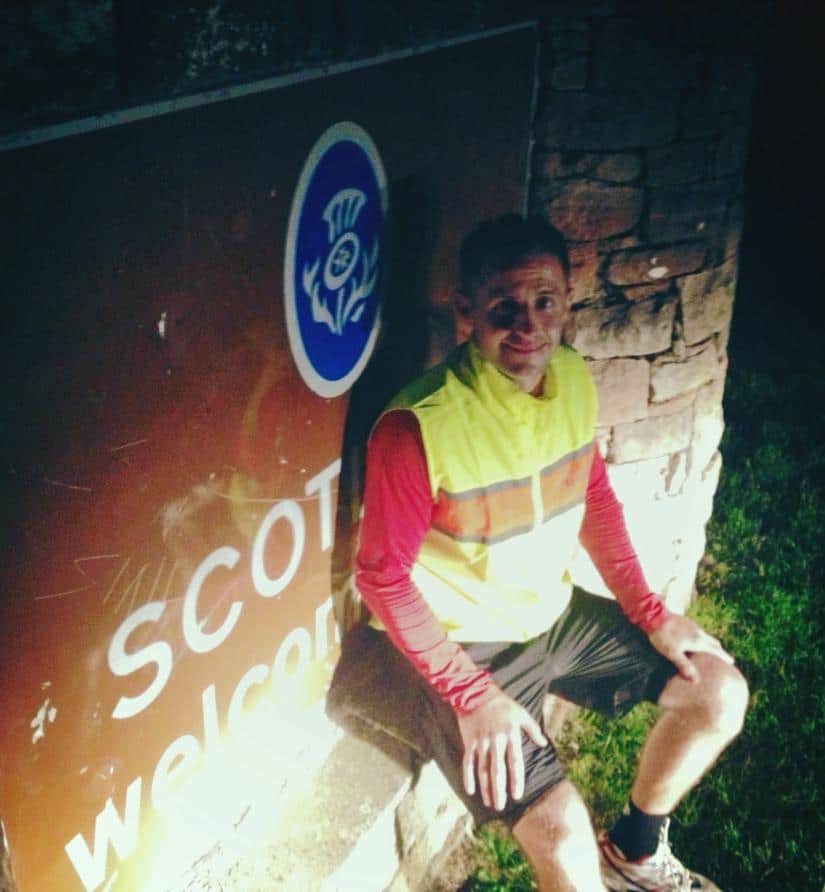
Carl Taylor of Swindon runs Swindon Turf Direct – a garden maintenance service in the Swindon and Wiltshire area.
And, prior to that, Carl and two others cycled from Swindon to Penzance to raise money for a young Swindon boy with cerebral palsy. So pushing your lawn mower should be no problem to him!
Bespoke Garden Services
A graduate of the family business, Carl cut his gardening teeth with a lawn care and turf laying practice when still in his teens.
Today Carl and his team offer a range of garden services from getting your deck and driveway looking spick and span to tree services, specialised lawn care and landscaping services.
Branching out
NPCT (http://www.nptc.org.uk) qualified, the team have been providing tree management and felling services in Wiltshire for over a decade. Clearly you can get a complete garden and landscape service with the Taylor family.
To find out more about how they can help you contact them on: 01793 340000 or email info@SwindonTurfDirect.co.uk.
Oh listeners. I AM ashamed. All the years I’ve been in Swindon and have walked past the town hall – now the home of Swindon Dance – I’ve never noticed the Swindon town hall railings and how beautiful they are. How on EARTH have I missed them until now? It’s shocking!
And I can’t actually lay claim to ‘noticing’ them even now. I’m only aware of them because my good friend Carole Bent mentioned them on Facebook so I made a point of going to see them.
“Avril Wilson’s studio practice and research interests explores how the interplay between image, material and process affect interpretation of place and notions of identity. “
These wonderful railings were it seems designed to detail hand gestures and dance movements.
“Avril Wilson is a craftsperson, designer and artist, whose specialism is in blacksmithing and steel fabrication.
Avril Wilson was the first female artist-blacksmith to be awarded a bronze medal by The Worshipful Company of Blacksmiths in recognition for her contribution to architectural metalwork. Her work explores identity of place through commissioned work in the public realm and gallery exhibitions.”
NB: Swindon town hall is now the home of Swindon Dance. The building also houses the sculpture of Charlotte Corday and a mural by Carleton Atwood creator of The Watchers at Toothill village centre – part of the West Swindon Sculpture trail.
Well listeners. This is a bit exciting and no mistake. This week I got a message via the blog from a lady called Julie Livsey – the creator of ‘White Horse Pacified’ – part of the West Swindon Sculpture trail. So this post is White Horse Pacified Rides again!
Said Julie: “It was a lovely surprise to see the image of my sculpture The White Horse Pacified in your article about the Swindon Sculpture Trail. In 1987, when artist in residence for Thamesdown CC , the horse got commissioned. The poet Carol Ann Duffy was Poet in Residence the same year.
If you want any further information about the ins and out of this sculpture I‘m happy to answer your questions. With best wishes Julie Livsey”
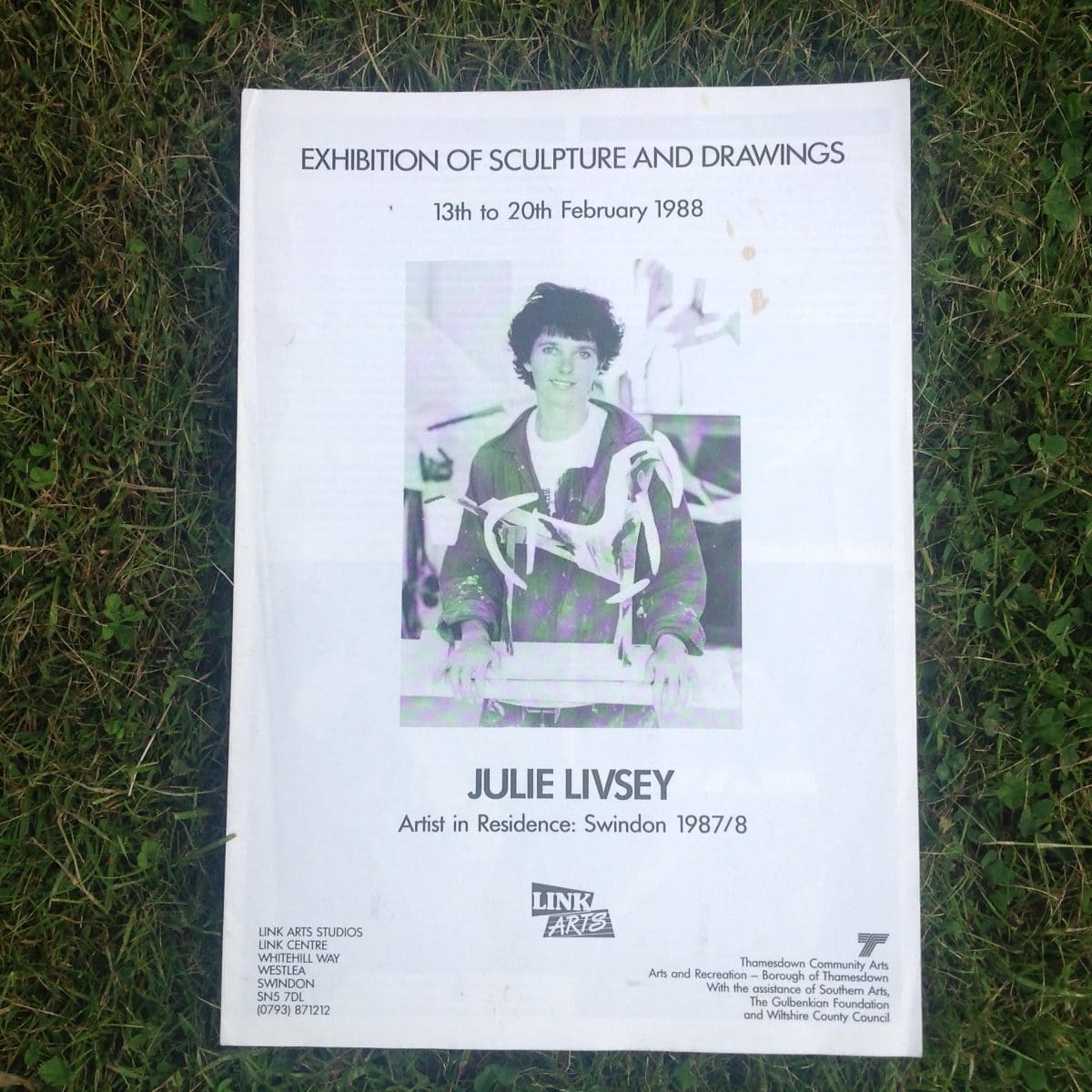
Wasn’t that lovely? She also kindly scanned and sent across the leaflet about the sculpture. So here it is – straight from the horse’s mouth as it were…
Julie Livsey – The artistThe White Horse Pacified About Julie’s residencyArtist’s statement
In March 2018, Swindon Link Magazine wrote: ‘In early 1988 community artist Julie Livsey aimed to complete her large steel and concrete sculpture, White Horse Pacified, by mid-February.
But gale force winds and heavy rain played havoc with her efforts and the Mayor of Thamesdown Peter Owen and council leader Tony Mayer had to unveil the work under the cover of a large tent.
Julie said her work, funded by the Gulbenkian Foundation, represented the ancient ‘God Like’ horses cut into the landscape around Swindon …
… Although there have been a few attempts to clean the imposing landmark, and large willows which were saplings when the White Horse was unveiled were cut back in 2018, the work needs a major makeover, rediscovered and promoted as an important feature in Swindon’s cultural landscape … ‘
Yes! Amen to that. As do all the rest of the sculptures on the trail.