‘A cufflink is a decorative fastener. One worn by men or women to fasten the two sides of the cuff on a dress shirt or blouse.
Cufflinks are designed only for use with link cuffs.Known as French Cuffs or double cuffs), which have buttonholes on both sides but no buttons. These may be either single or double-length (“French”) cuffs, and may be worn either “kissing,” with the ends pinched together, or “barrel-style,” with one end overlapping the other. Kissing cuffs are usually preferred.’
There’s not too many men that don’t have at least one pair of cufflinks lurking in their bedside drawer. Though there are cufflink aficionados out there who could easily wear a different pair every day of the year.
Cufflinks as heirlooms
Cufflinks get passed down from father to son. Or they’re bought by a groom as a gift for his best man and groomsmen. They are also a favoured romantic gift. Indeed, back in 1935, when the affair between the American divorcee Wallis Simpson and Edward VIII was still a secret, Mrs Simpson presented her lover with a set of diamond cufflinks bearing the inscription ‘Hold Tight’.
It barely gets more romantic than that. The most scandalous romance of the 20th Century.
As much variety and creativity goes into the design of cufflinks as into any other form of jewellery.
Along with tie pins and clips, it’s arguable that cufflinks are one of the few ways that men can legitimately both adorn themselves and express their hobbies and interests in jewellery form. As with these enamel golf cufflinks for instance:
The evolution of this functional accessory that can be elegant, novelty, classy or flashy is closely aligned with the history of men’s shirts. And it was the Industrial revolution that made possible their mass production, and therefore, accessibility to everyone.
In the beginning
Almost from back when Noah engaged himself in ship-building enterprises men have worn shirt-like garments.
Yes, the cut and construction have changed over the centuries but the basic shape remains unchanged. That of a front opening tunic, with long or short sleeves and a collar of some sort.
Worn next to the skin and washable the shirt helped to prevent soiling of outer layers from close contact with the body. It also formed a protective barrier between the skin and rougher, heavier outer garments by extending beyond it at the neck and wrists. Areas where chafing was most likely to occur.
Evolving fashions
After the late Middle Ages, the visible areas of the shirt became the focus of male fashion and started to complement the main outer garment with frills and embroidery. A precursor to the cuff as we know it first appeared in the early 1500s.
It was in the 17th century that the fancy shirt ruffles evolved into cuffs and neck ruffs were modified to become a recognisable shirt collar.
Before all that though, graves of our Germanic ancestors (having migrated to our shores in the 5th & 6th centuries A.D.) yielded an interesting cufflink forerunner.
‘They made much use of decorated jewellery, both for the purposes of show and function. In eastern England, we find a particular item known as a “wrist-clasp”. Pairs of these, usually in gilded bronze with ornamental design, were sewn to cuffs and clipped together so as to hold the folds of the sleeve tight.
However, these ancient symbols of civility were not worn by Anglo-Saxon gentlemen but by the ladies. So it‘s they that can take credit for starting a trend which in later centuries has come to embody gentlemanly style.’
Well done ladies. Leaders of the pack in all things sartorial!
But back to the 17th century:
These early wristbands or cuffs had a small opening that was fastened together with thin ribbon or string. A similar fastening used to close the shirt collar was the forerunner of the cravat.
Although having a garment that would be recognizable to modern man as a shirt it nevertheless took men sometime to realize that the wristband closing was a missed opportunity for flaunting wealth. Even Louis XIV, a man not known for being modest and minimalist in anything, probably dressed his shirtsleeves with nothing more ostentatious than coloured strings.
Although towards the end of Louis XIV’s reign dedicated followers of fashion began to wear pair of identical or similar buttons joined by a short chain. Cuff strings were worn until the early 19th century.
Early references to cufflinks
According to this article from Office-dress-shirts.com one of the earliest references to what we’d now recognize as cufflinks was made in a 1684 edition of the London Gazette. The publication referred to a pair of cuff buttons set with diamonds. In 1686 the same journal also described a pair of gold enamelled cuff buttons.
The article goes on to suggest that, despite this early appearance of cufflinks, the taste for elaborate wrist ruffles prevailed for some time to come.
It appears that it wasn’t until the middle of the 19th century that the cufflink came into its own, when it was out with Dandyish ruffles and in with minimal, functional sleeves. This transition from frills to cuffs was aided by the arrival of the French Cuff – known also as the Double Cuff. Or, as the French themselves called it, the poignet mousquetaire – the musketeer’s cuff.
Of course cufflink use was, in the first instance, confined to the upper echelons of society. The working classes had not the revenue for such symbols of sartorial elegance. But this situation changed with the Industrial Revolution and the development of electroplating processes on precious metal. That ‘allowed the masses to adorn their cuffs in a way that had formerly been beyond their means.’
Across the pond meanwhile, during the 1880s, with the introduction of removable starched collars and cuffs, one George Krementz patented a device adapted from a Civil War cartridge shell-making machine. It produced one-piece collar buttons and cufflinks.
As a result almost every major business in the first half of the 20th century commissioned cufflinks for advertising purposes for corporate gifts and incentives.
To come up to the present day:
‘The Roaring 20s were probably the height of cuff-link invention. Manufacturers created a variety of devices and designs to do one simple thing. And that was to permit a fellow to insert and remove his cufflinks with a minimum of difficulty and a maximum of security. In the 1950s, the “stirrup” link enjoyed some popularity. This was a curved bar encompassing the cuff from one side to the other.
Later, the solid T-bar link came into being, That’s still the most popular method in use today.’
NB: Along with the online references thanks also to the book ‘Cufflinks’ by Susan Jonas and Marilyn Nissenson.
Simon Webb Artisan
So we’ve seen how the cufflink has made its way into common usage and deployment as a gift for all manner of occasions.
If you’ve a cufflink lover that you’re looking to buy for this Christmas and want something a little different to ‘off-the-peg’ – or should that be ‘off the cuff’? – then you might consider looking at the work of Simon Webb Artisan: http://www.simon-webb.co.uk
‘Simon Webb is a small artisan company creating beautiful, desirable but yet functional objects destined to be new family heirlooms.
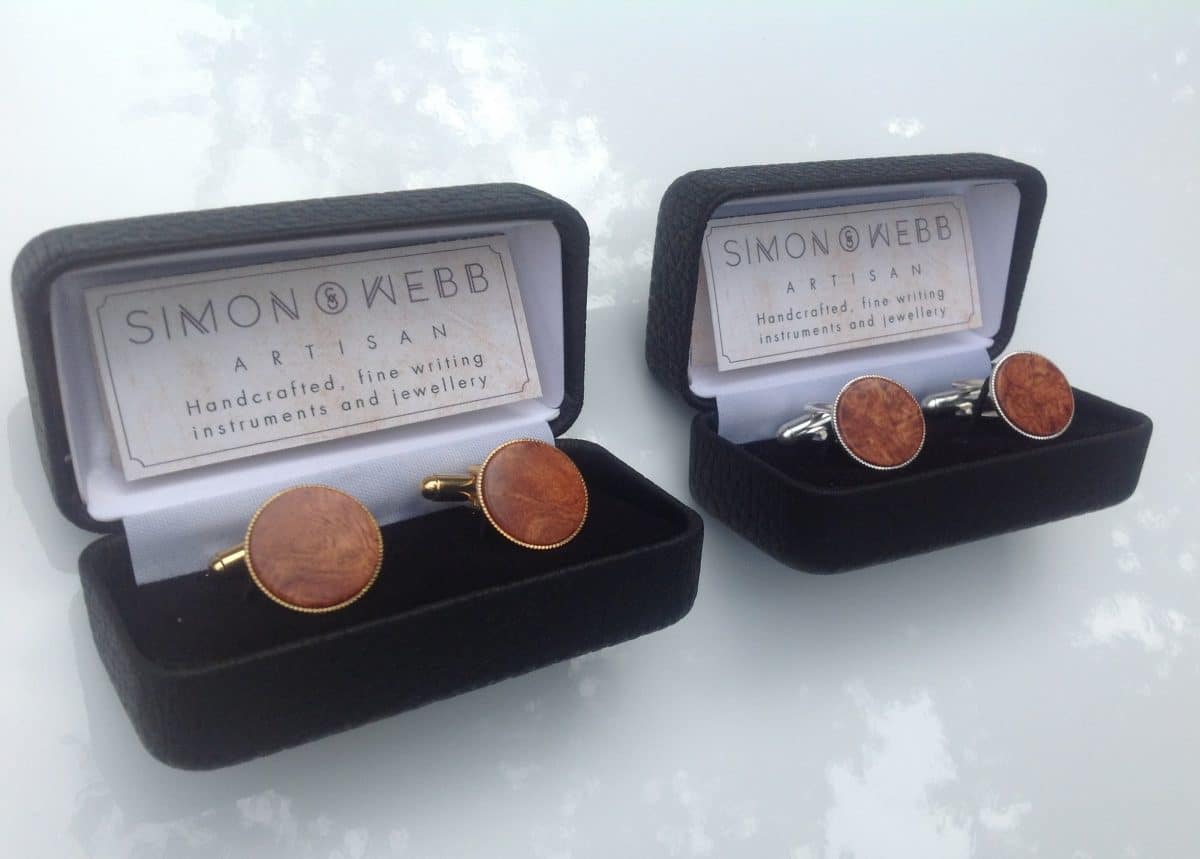
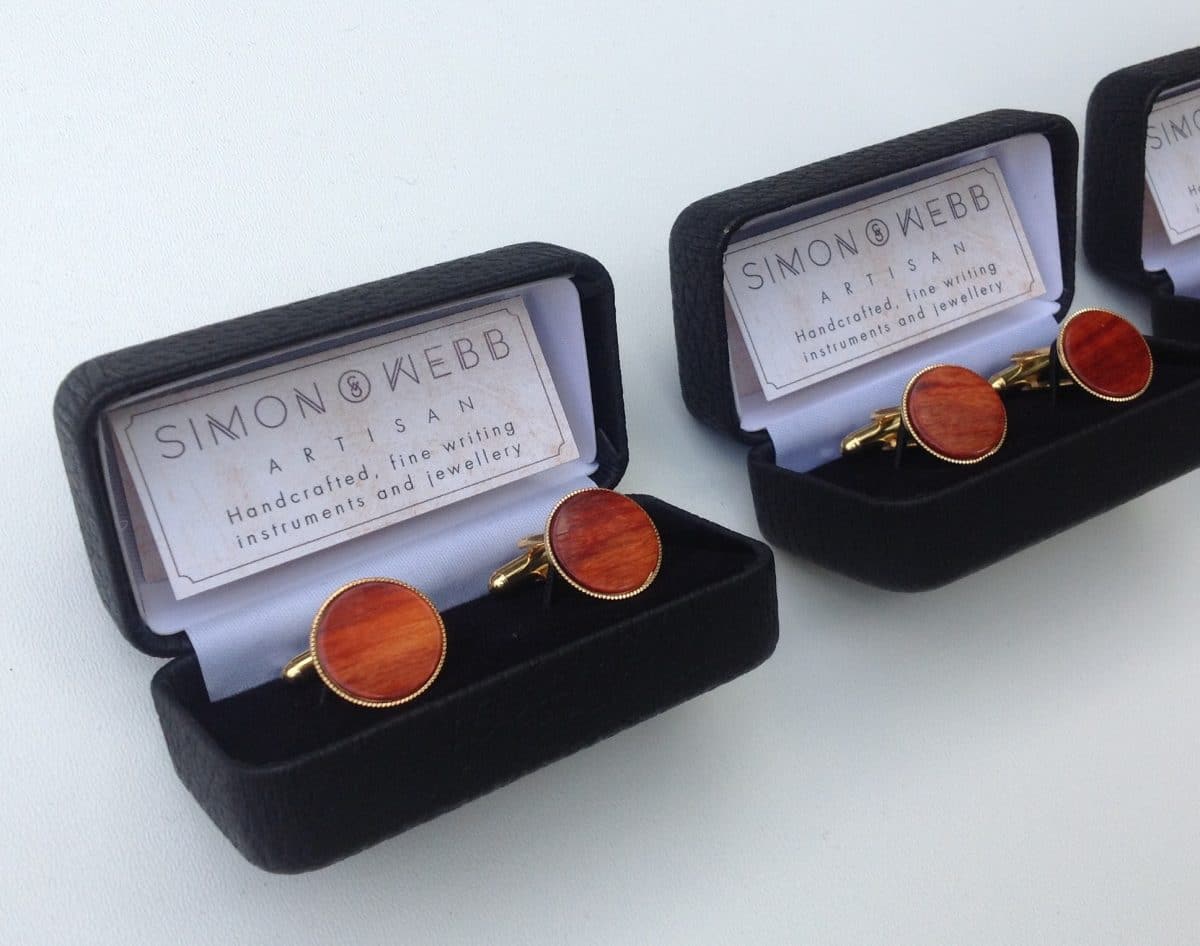
Based in Wiltshire, Simon access to some truly special materials. This allows the making of products for enjoyment for years to come. Well-known around Wiltshire for his beautiful hand-turned wooden pens, Simon also turns (sorry) his hand to cufflinks. Cufflinks such as these elegant and tasteful beauties:
Get in touch with Simon
A friendly chap, he’ll be thrilled to hear from you. Call him on: 07834 375628 or email: sales@simon-webb.co.uk.
5th November 2016 – Aviation Exhibition Takes Flight
Sky High: Exhibition of David Bent’s work at St George’s, Bristol
David Bent Exhibition St George’s – Situated in the crypt at St George’s is an exhibition of David Bent’s work. The building is described by a director of the British Museum as ‘a building which we think of as a twin sister’ – both were designed by the same architect, Sir Robert Smirke. Presumably he wasn’t having a laugh…
‘A fantastic exhibition of aviation inspired art opens at St George’s in Bristol in November, as part of the venue’s year-long ‘Art of Flight’ series.
Acclaimed artist David Bent Hon CRAeS has taken a life-long passion for flight and transferred it to canvas and to print , creating works of art that are thrilling, enthralling and utterly memorable.
Credited with leading a new movement in modern aviation art, David’s work is collected and supported around the world. Recent commissions include Universities and major aerospace companies. He has recently been made an ‘Honorary Companion’ by the Royal Aeronautical Society, its distinction reserved for those whose professional achievements are not exclusively in aerospace but who have made a substantial contribution to the profession. Awarded to David Bent in recognition of his exceptional contribution in transforming aviation art with iconic paintings , bringing aviation, technology and art together to a completely new audience.
David is also the artist most closely associated with the Red Arrows, depicting their creative and world leading displays with an impressive collection of paintings and photo collages. He has also created a bold series of work paying tribute to British aircraft manufacturers. His Bristol Tribute features within this new exhibition at St George’s.
Visitors to the venue, which is located on Great George Street (just off Park Street), will have the opportunity to see a collection of David’s artworks in the venue’s Doric Room before and during concerts throughout November and early December.
The ‘Art of Flight’ series, which began earlier this year, is a celebration of music inspired by flight and Bristol’s aviation story. A weekend of concerts and events forms something of a grand finale from 25-27 November, presented as part of the Bristol800 weekender programme.
New music commissions by composers Graham Fitkin (‘Wing’) and Liz Lane (‘Innovation 216’) receive their world premiere performances on Friday 25 and Sunday 27 November respectively.
Also on Sunday 27 November the venue will be open throughout the day for a ‘Family Flight Day’, featuring hands-on exhibits from At-Bristol, space food and the chance to create and test paper airplanes.
Visitors to the family day will also have the opportunity to ‘Meet the Artist’, as David will be in attendance from 1pm and happy to discuss his work and answer questions.’
David Bent – The Art of Flight, will be at St George’s from Wednesday 3 November until Monday 5 December.
In the midst of the Covid19 pandemicthere’s much talk of supporting local businesses – whether they’re online or bricks and mortar. It’s a topic I’ve banged on about a lot over the years, indeed I first put this post together in 2016.
So here are 7 reasons why you should shop locally and 4 places to do it in Swindon.
It’s important to remember that the Small Business Saturday and any shopping local movement is not only about buying products but about buying services locally. Like business blogging by me for instance!
“From literary bestsellers to the latest gadgets, there is no denying that the Internet makes it far easier to compare the price of shopping. But some retailers claim the shift is now towards the high street, and buying locally is the message behind Small Business Saturday.
“Christmas sales can account for between a third and nearly two-thirds of a retailer’s annual turnover. A bad Christmas can mark disaster for a small business. Sadly, it really is a case of ‘use it or lose it’.”
The article mentioned above details 7 good reasons why you should shop locally and support small business. For the full info read the article but in brief:
1. Spending locally boosts the local economy
Research on spending by local authorities shows that for every £1 spent with a small or medium-sized business 63p stayed in the local economy, compared to 40p with a larger business.
2. It’s an ethical choice
When you shop at local butchers, bakers, farm shops and green grocers, it is likely that a decent percentage of the produce has had a short field-to-fork journey. Along with supporting local farmers, it means the food is likely to contain more nutrients and have less packaging.’
3. You can get quirky and one-off gifts
Independent shops often stock items which are made locally and aren’t available elsewhere: buy a dress by a fledgling designer and there is little chance of turning up to the office Christmas party wearing the same as someone else.
4. Shopping locally supports British entrepreneurs
Artisan markets, such as Bath Artisan Market, help foster the talents of the next generation of British designers and retailers.
5. Shopping locally builds communities
Bookshops, cafes and craft shops often drum up custom by hosting events, from book groups to knitting clubs and children’s events. If the businesses are not supported, the local groups tend to disappear too.
6. You might get a better deal or some good advice
Independent retailers can use their discretion to reward regular custom. That might mean you get discounts on the items you actually want to buy, rather than being tempted by multi-buy offers in the big chains.
7. Sometimes you can try before you buy
Major retailers have the advantage of economies of scale. They can afford to slash prices and offer reduced costs. Yet, that makes it easy to waste money on products you end up not even liking all that much.
Where to shop locally in Swindon to support small businesses
Okay listeners. That’s the why. Now for the where.
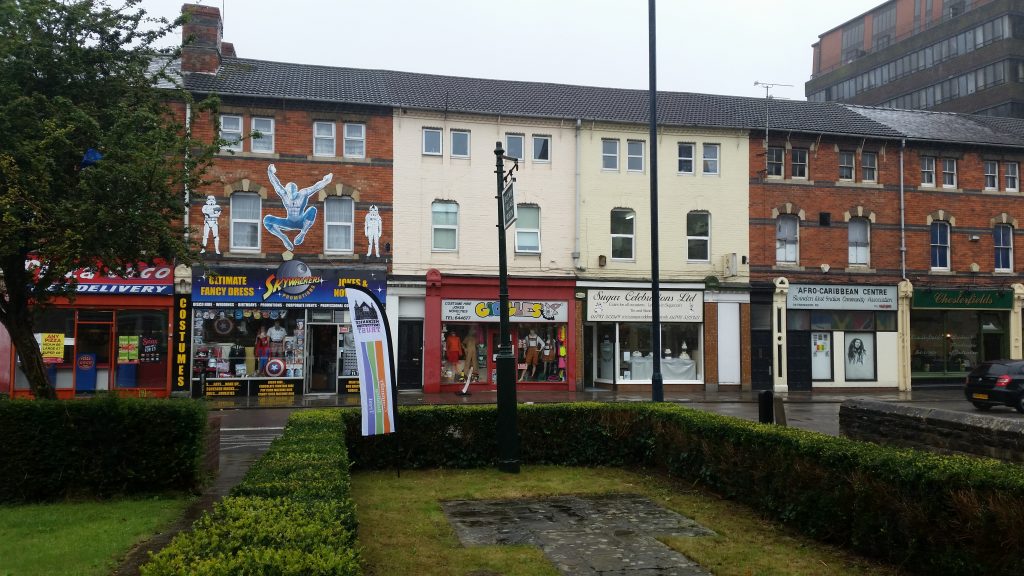
Swindon benefits from all manner of independent businesses. On the streets of Swindon there are numerous independent coffee shops and restaurants many of which I’ve written about elsewhere on this blog here.
So, I’ll tell you now of some of them I know and those I miss I’ll beg your pardon
1. Pink and Green Organic and Vegan Skincare
Created and run by Carol Aplin, Pink&Green is a purveyor of gorgeous organic skincare products. They’re a touch of luxury and quality at an acceptable and accessible price.
‘Simon Webb is a small artisan company creating beautiful, desirable but yet functional objects destined to be new family heirlooms.
Based in Wiltshire, the company has access to some truly special materials, making products that can be enjoyed for years and even generations to come.’
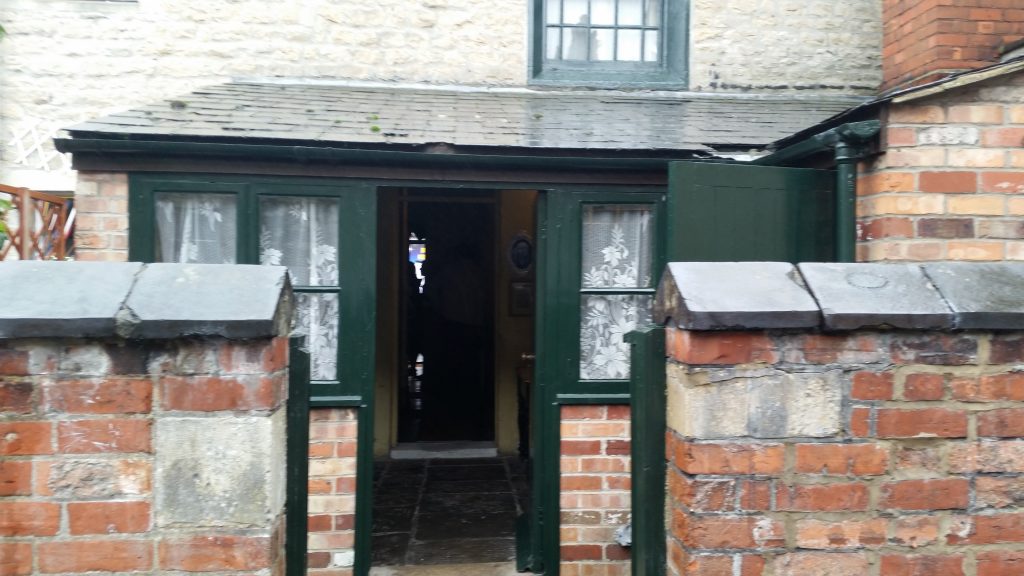
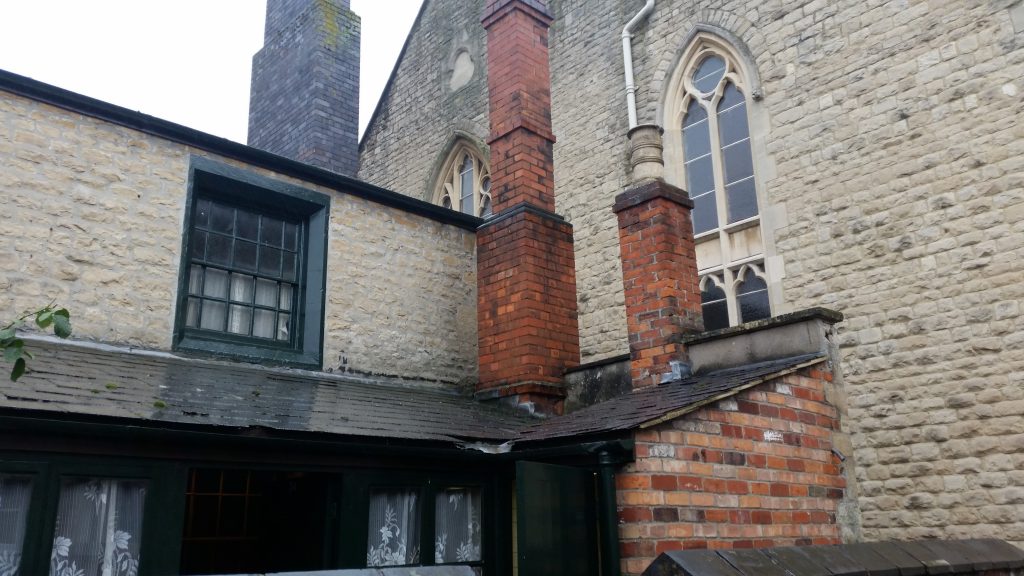
SHP, thanks to volunteer help, open the cottage up on some summer weekends and other special occasions. They also run tours of the GWR Railway Village itself.
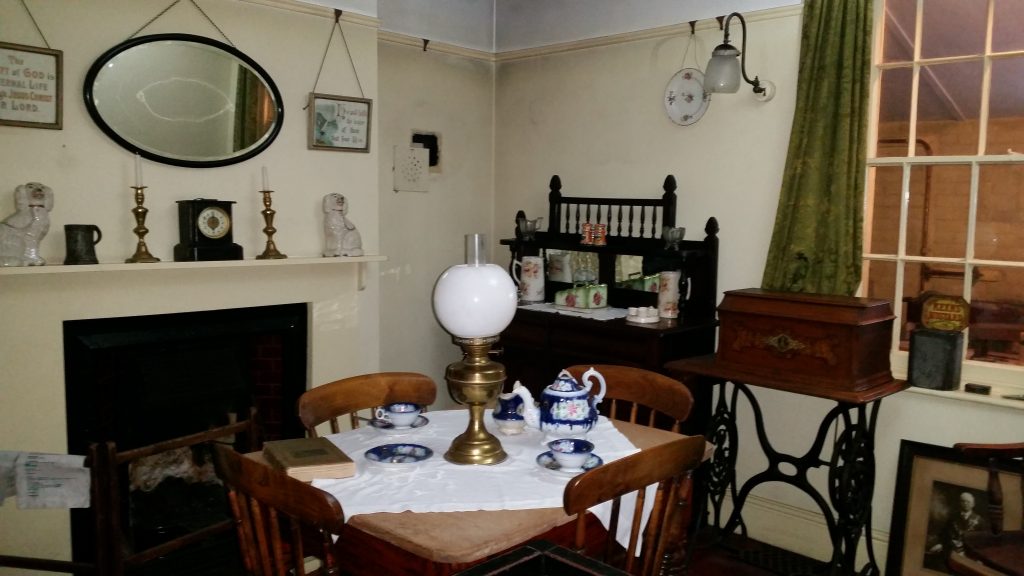
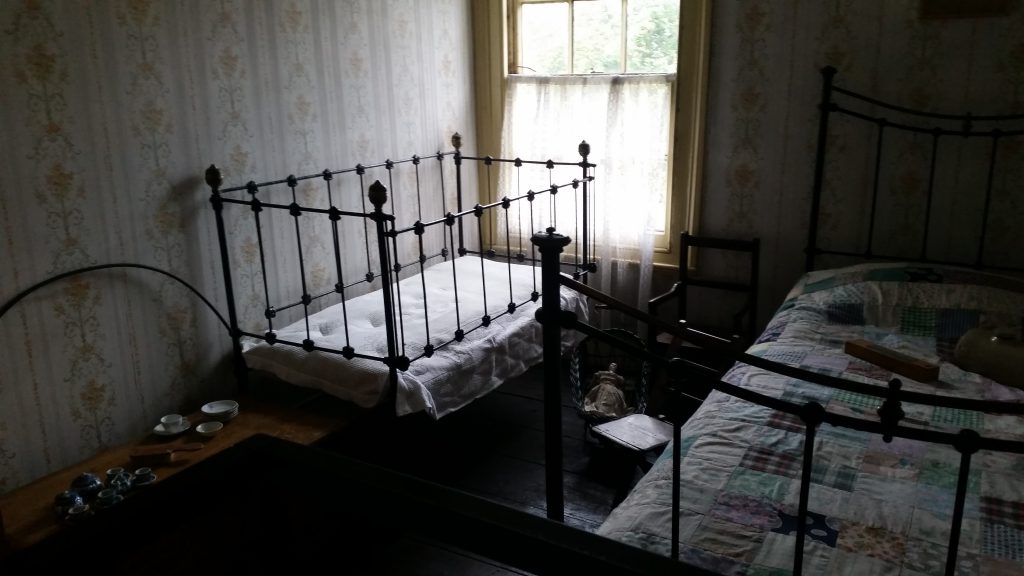
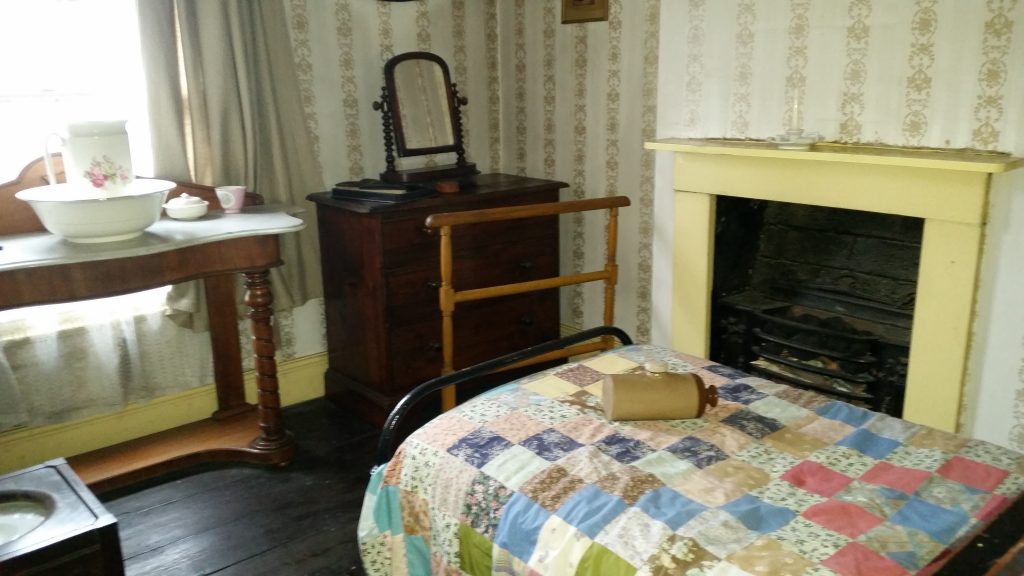
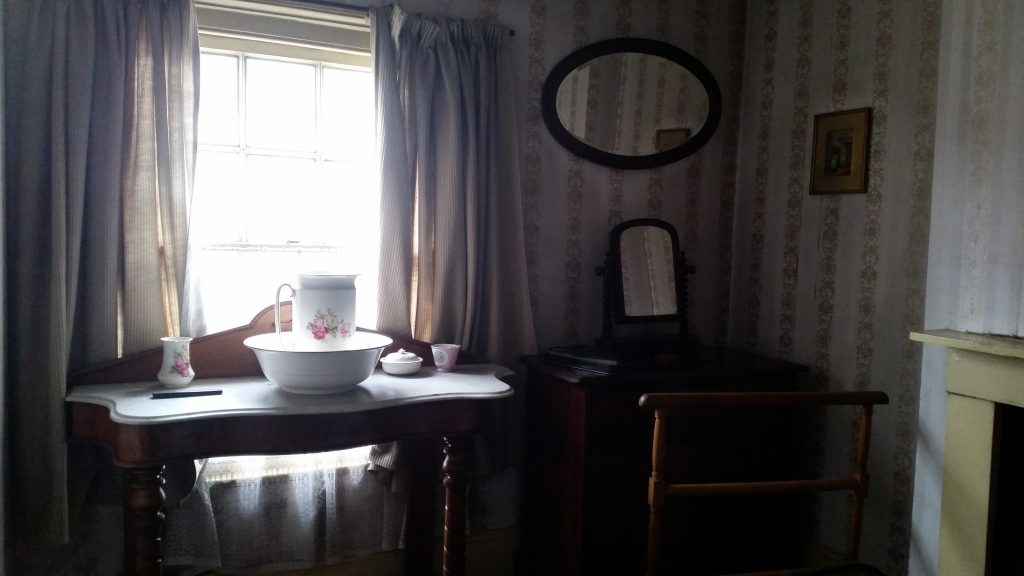
The Cottage is a unique example of what life was like living in Swindon’s Railway Village in the early 1900s.
Cottage and The Platform
Swindon Heritage Preservation
SHP is …..
.
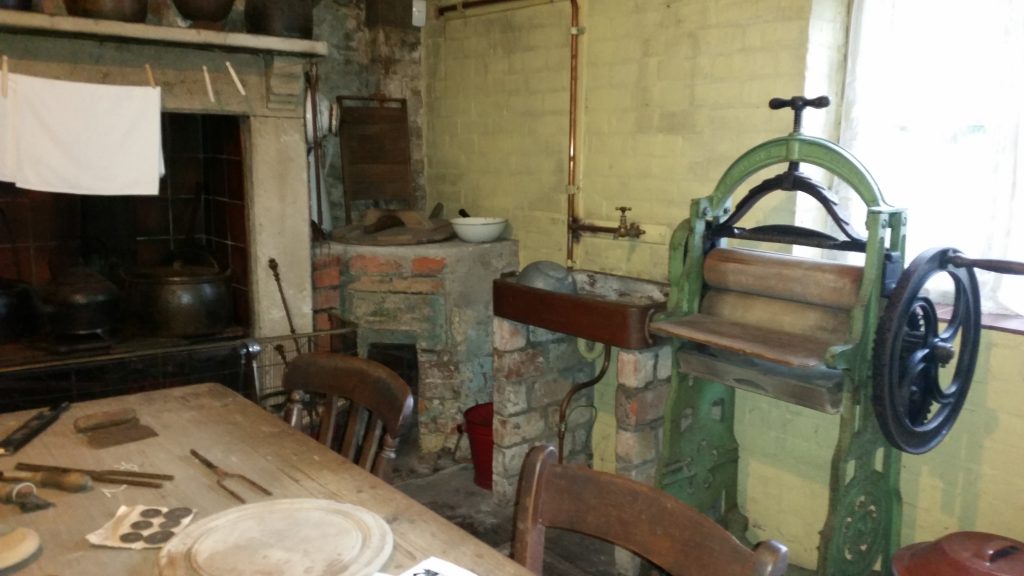
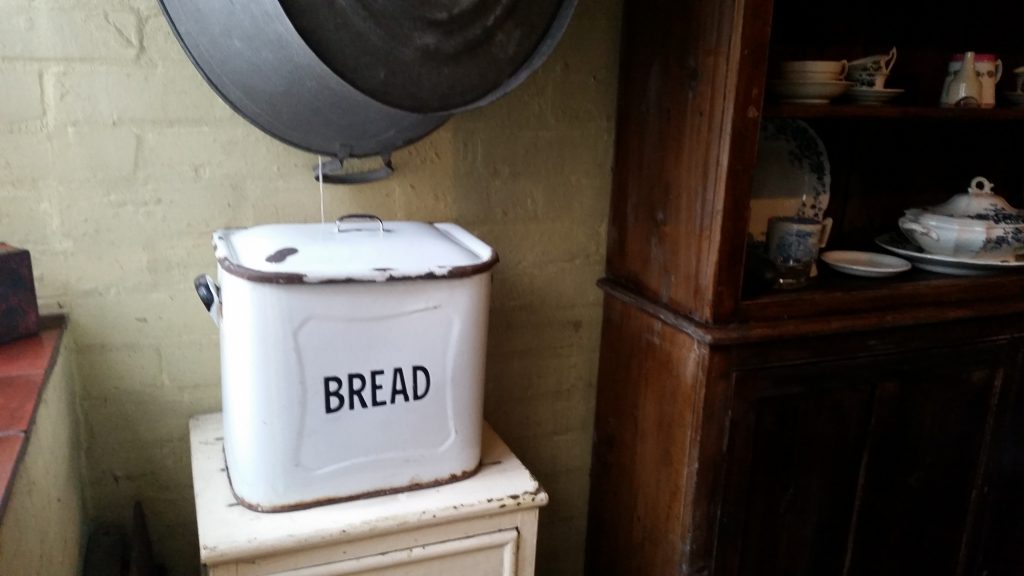
I have an enamel bread bin much like the one below at home. And OH how I remember mangling in the wash house on Mondays. And ponching and boiling the whites in the copper. Gosh that takes me back.
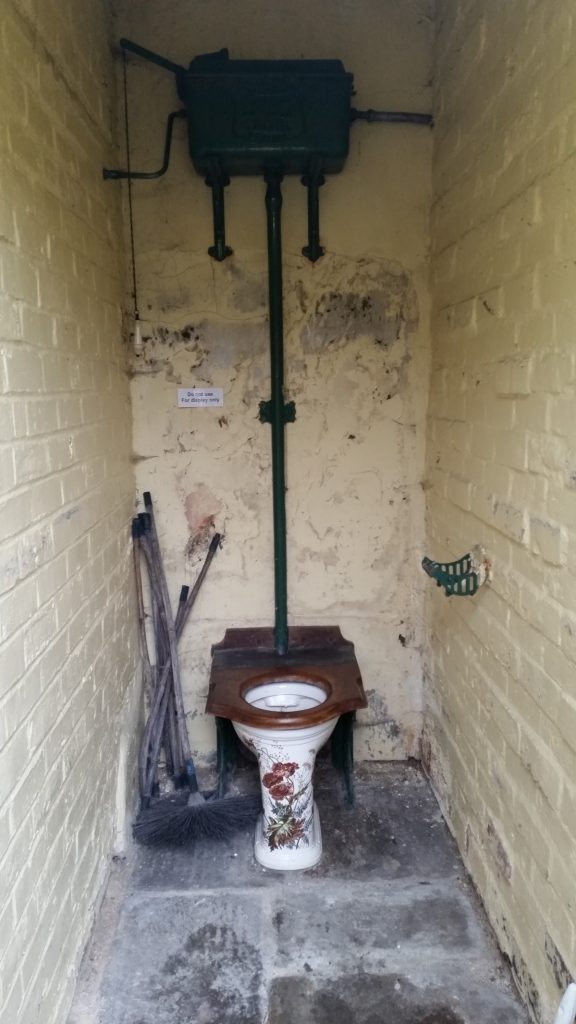
In 1840 three hundred cottages were
 built by the G.W.R for their workers.
 These cottages were tiny,with 2 or 3
 small bedrooms,a livingroom and a
 kitchen.There was no bathroom and the
 toilet was outside in the yard. Food
 could be cooked on an iron stove
 heated with coal,and water had to be
 fetched in.These cottages were
 modernised in 1980 and provide limited
 but stylish accommodation.They are a
 lasting memorial to the G.W.R.
We explore what life is like living in the Swindon Railway Village 160 years after it was first built by the GWR
Stood in Emlyn Square enjoying the fabulous Brunel 200 celebrations I overheard a young girl who cannot have been more than four years old turn to her mother and ask: “Mummy, did they build all this just for the festival?”
She was, I can only presume, referring to the model railway village itself; its remarkably symmetrical parallel grids of distinctive Victorian terraces that disappear into the distance, shielding any traces of modernity from those within.’
David Bent, Russell-Cotes and a bender round Bournemouth
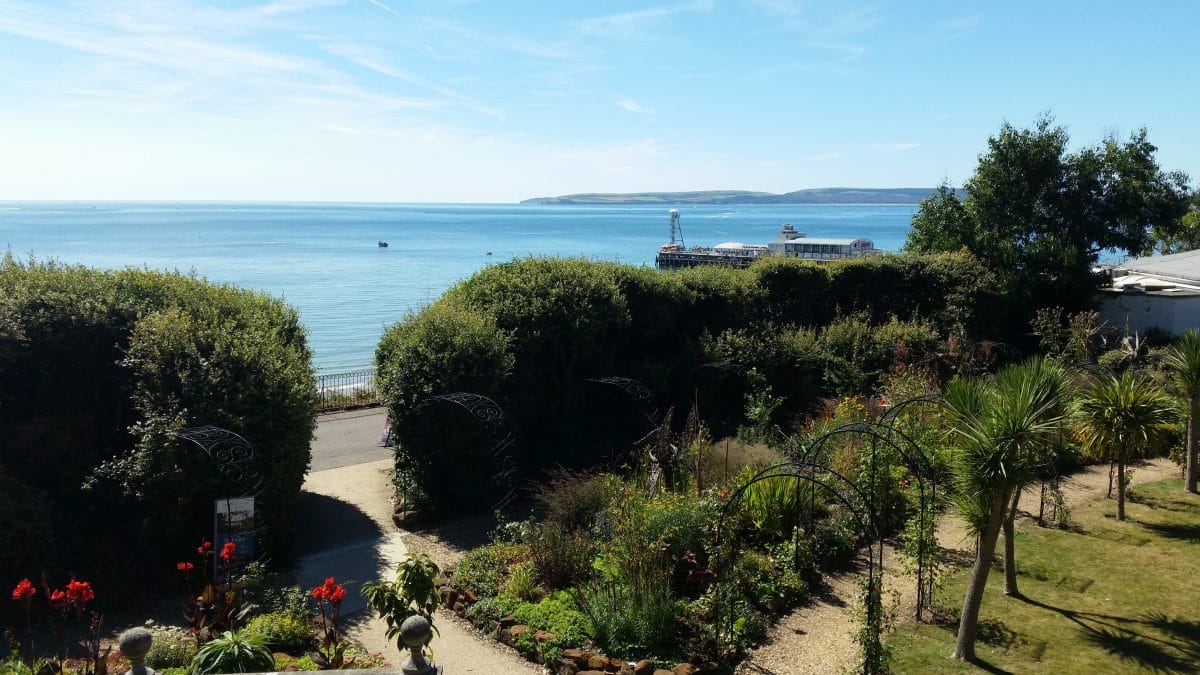
David Bent at Russell-Cotes. Well I say bender. It was more a sedate meander with Carole Bent around the wonderful Russell-Cotes museum, David’s exhibition there and beautiful Bournemouth on the best, brilliantly sunny and perfect day.
David is currently exhibiting at the Russell-Cotes museum so Carole kindly took me down there to visit as she had a meeting there. While she was busy doing important meeting stuff I was lucky enough to have a gander around this utter gem of a place. I’d never heard of it let alone been to it – and if you haven’t then you must! Preferably while David’s exhibition is still running because his art is wonderful and worth seeing always – but just generally too.
So now you get the pleasure of some of my characteristically out-of-focus photos – it’s my trademark okay?
And yes – I KNOW this blog is about Swindon not Bournemouth but David has lived here for eons now so he’s as much a Swindonian as I am. And he and Carole are involved in many Swindon things and this is his art and anyway – as I’ve said many times – there’s no point having a bloody blog if you can’t give a shout-out to friends. So here we are. 😉
David Bent exhibits at Russell-Cotes – 17th August to 16th October 2016
Air mobile
David Bent chats to member of Red Arrows
David and Carole Bent with the Reds
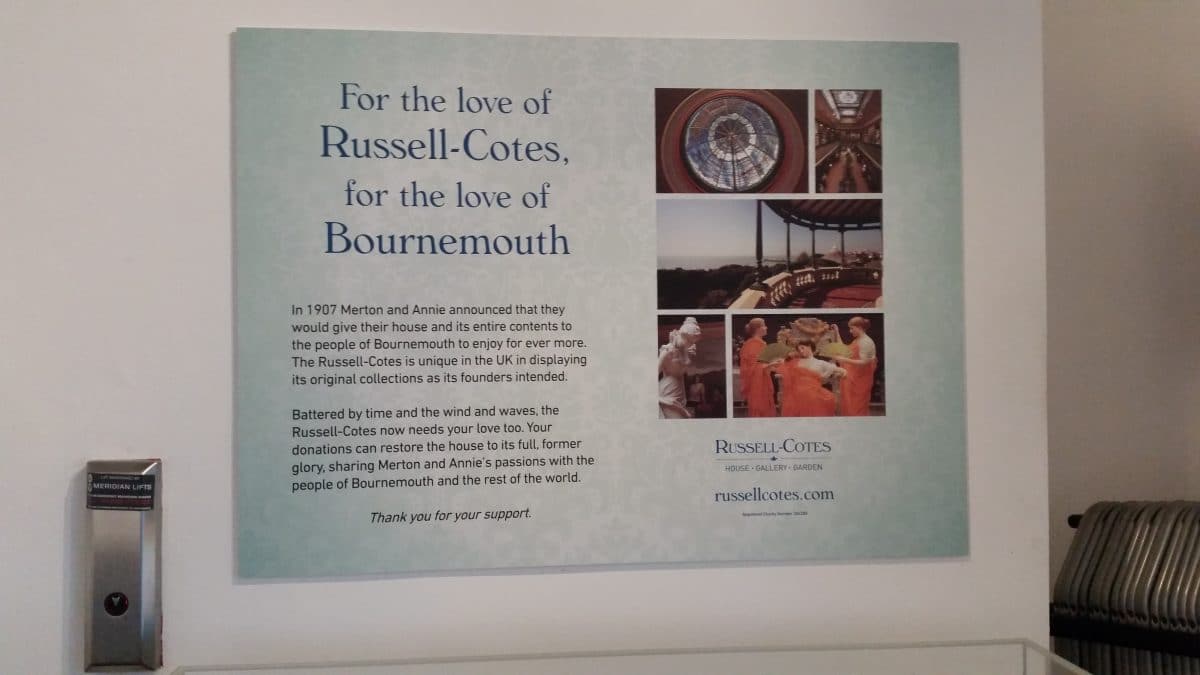
The Russell-Cotes Museum and Gallery
Having mentioned the place – it’d be rude not to eh? And it IS a fabulous place. Is it just me or does that building remind you of something from the Adams Family?