‘I’m the kind of girl that things naturally happen to. When they don’t, I give them a push’.
Diana Dors
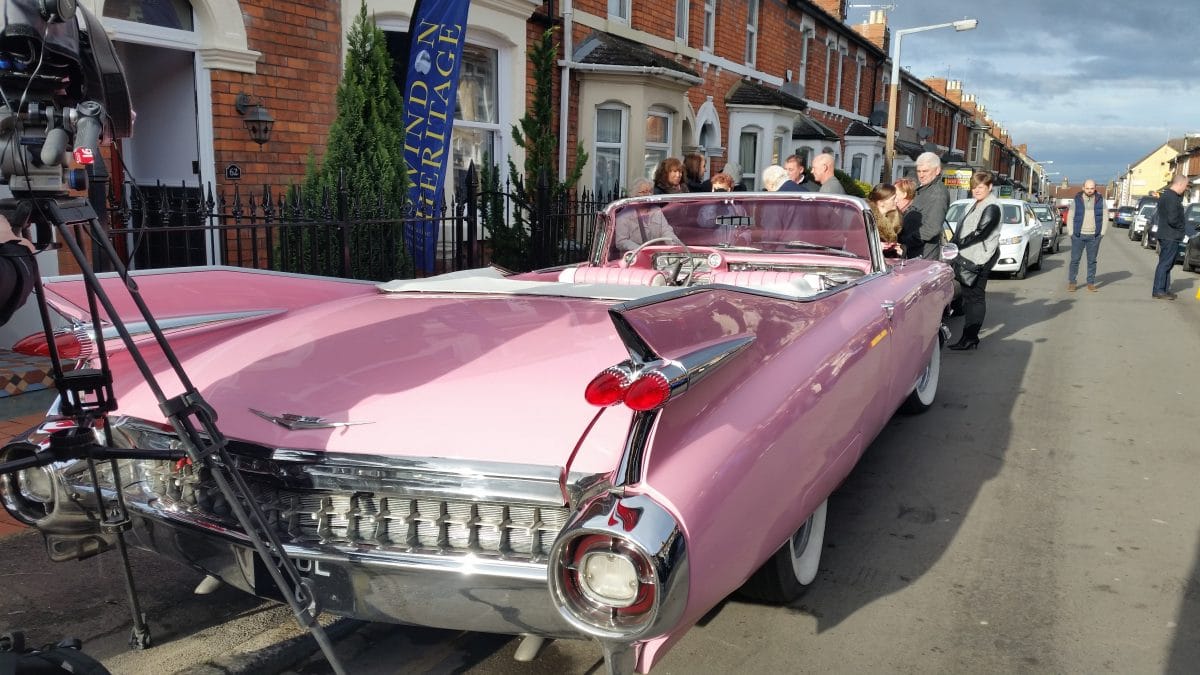
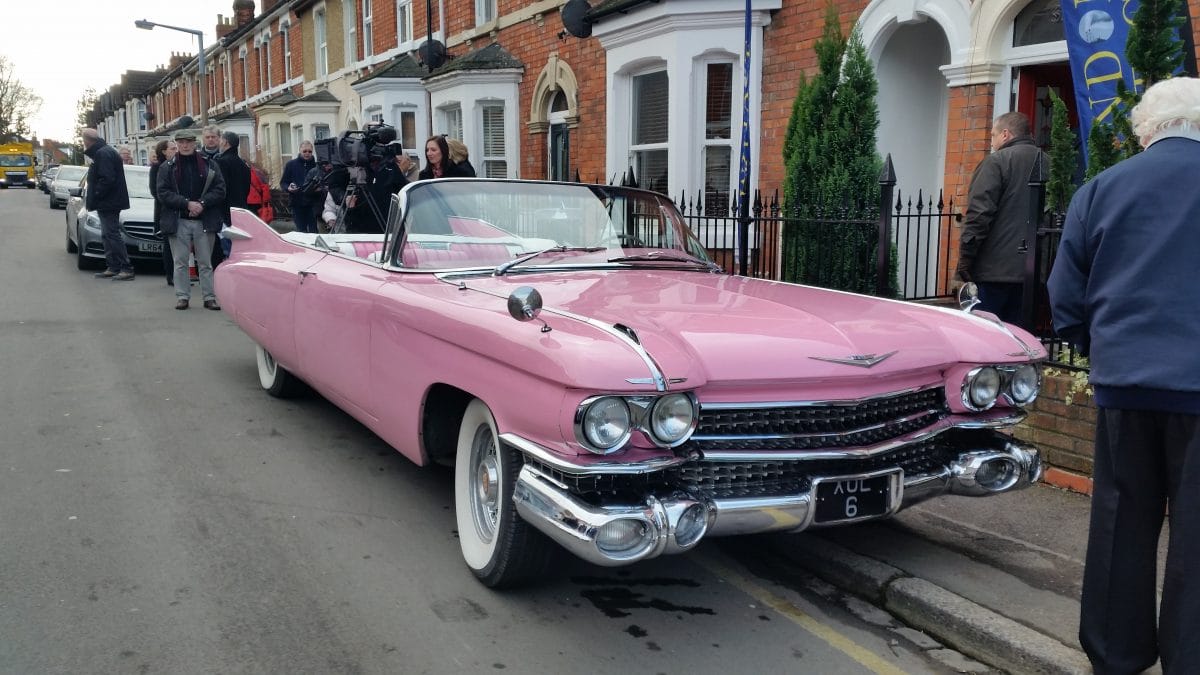
A Diana Dors Blue Plaque. Well! It’s not every day you see a candy pink Cadillac in Old Town that’s for sure. How come? The occasion of the unveiling of a blue plaque to commemorate someone that surely must rank as Swindon’s most famous daughter? None other than Diana Dors!
And about time too I say. So all kudos and thanks to the people of the now extinct Swindon Heritage magazine for adding Diana to the growing number of blue plaques gracing Swindon’s walls.
We’ve so far got Edith New, Swindon’s suffragette, and the Starr brothers – now Diana joins them.
It’s really kinda odd. When I watched Diana Dors in films and TV when I was growing up who would’ve thought I’d end up living in the town that was her birthplace? I like that. I’ve always been something of a fan.
Dors was often given the epithet of the ‘British Marilyn Monroe’ – but I think that’s to do her an injustice. She was a fine actress. And one that we can argue never reached her full potential.
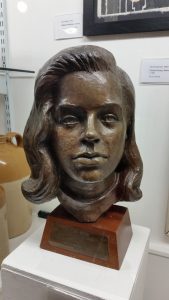
Jason Lake, Dor’s son (from her final marriage to Alan Lake) and her granddaughter Ruby – who I fancy has a look of Diana about her – unveiled the plaque.
Bust of Diana Dors
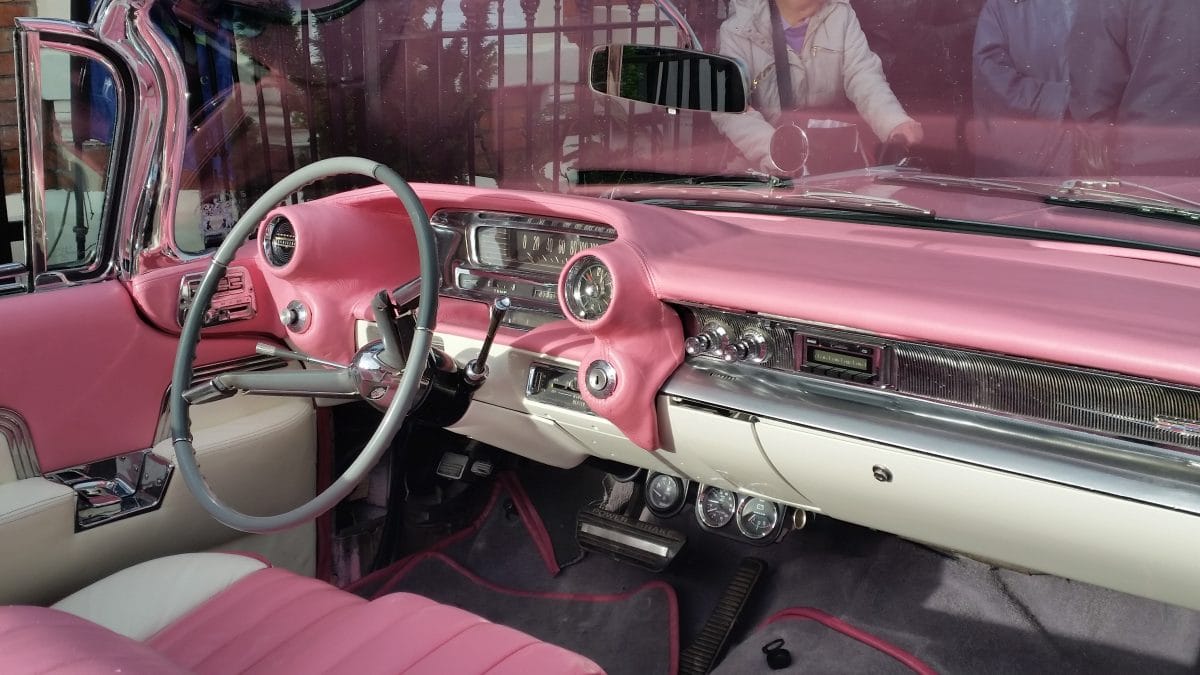
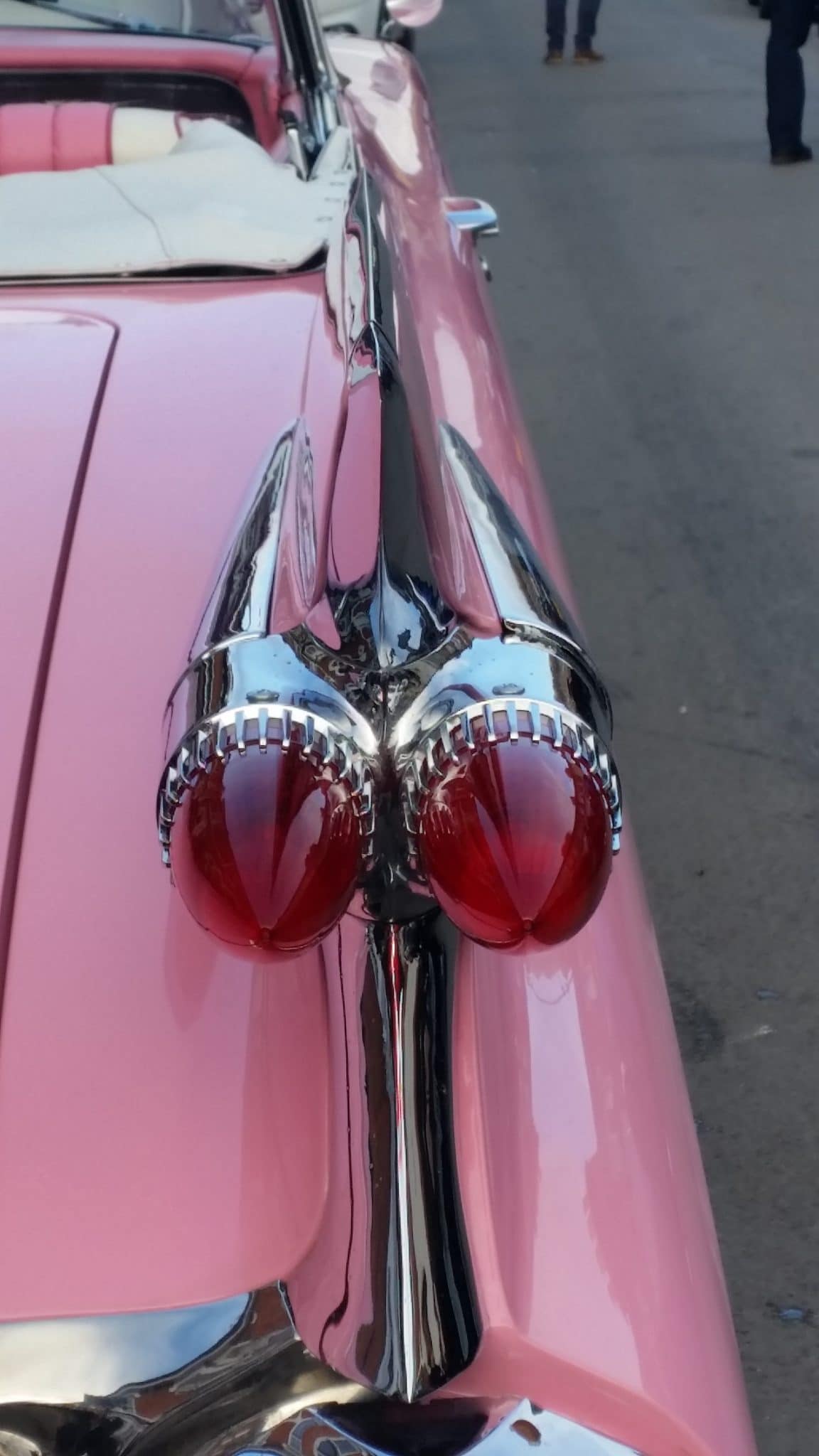
Diana’s Infamous Pink Car
Here’s the car that serves as a mytonomy, well a Thunderbird and Ford Mustang too I guess, of the American Dream that was so incongruously parked on a street in Old Town today. Isn’t it amazing? How wonderful must it have been to drive around in that in the Hollywood sunshine? So, so cool. I’m so jealous.
Below you’ll find an Amazon shop of Diana Dors related media products. I have an affiliate programme set up with Amazon. Should you click through and buy something I get a little bag of glittery poo – or similar. Thank you!
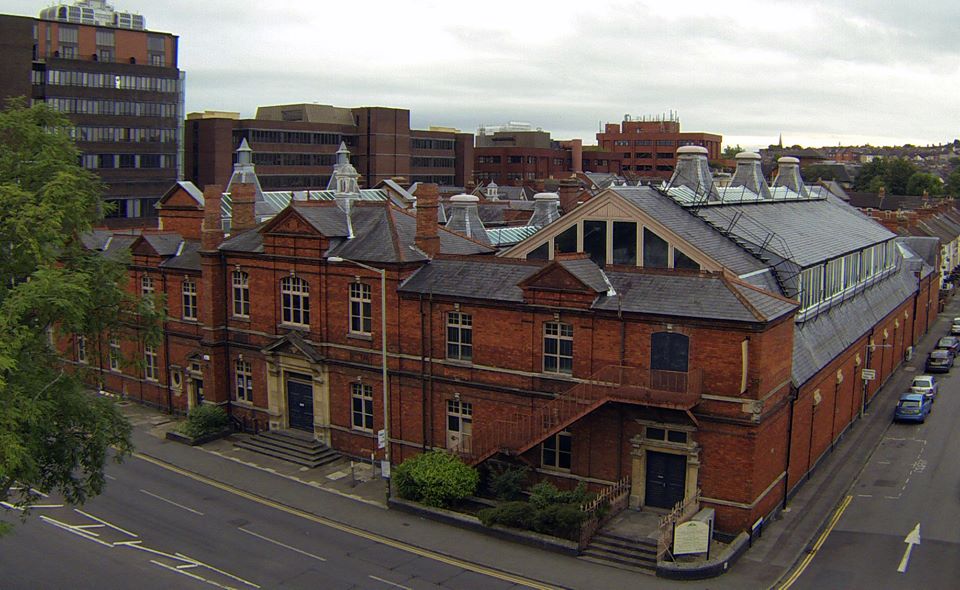
Whenever I walk into the Health Hydro Swindon(aka Milton Road baths) I’m transported back in time to my childhood in Derbyshire. For in Cresswell we had a mini version of the Health Hydro in the form of a Victorian swimming baths.
Ours wasn’t on the scale of Swindon’s Health Hydro. But it was built with the same principles in mind and had a similar style. I remember the glazed bricks just like the ones in the Health Hydro. I remember too the changing cubicles along each side of the pool. And the bathrooms where locals with no washing facilities in their homes would come for a bath.
We never referred to going swimming – we always referred to ‘going t’baths.’
As with the HH in Swindon, many local children learnt to swim in this pool. We went there on a coach from our school in Whitwell. During school holidays we’d walk across the fields with our swimming gear under our arms to ‘go t’baths.’ And all these memories are evoked each time I walk in to the Health Hydro. I love it.
Stained glass in health hydroTurkish bathsDetail on Victorian urinal in the health hydroVictorian urinal in health hydro
As the Victorian Society once wrote
‘What an amazing thing the Swindon Health Hydro is. And it’s a hidden gem: passing it on Faringdon Road you get no sense that the building is open, and it looks more like a railway works than a swimming baths.’ And they’re right. It IS amazing.
And, as they also point out,‘I can’t help thinking that improving the Faringdon Road front, replacing the railings removed in the war, would make everyone notice it a lot more, and perhaps come in for a dip!’ More here: https://www.victoriansociety.org.uk/news/health-hydro-swindon
What others say about it
Do check out this post from Frances Bevan on her Swindon History Blogspot: This blog offers a great potted history of the hydro and gives some idea of how forward thinking all of this was at the time:
‘Keeping up with the times, the Medical Fund committee installed both Turkish and Russian baths. The Turkish bath with dry air heated rooms, followed by a full body wash and massage was seen as being ‘of great value as a sanitary and cleansing agent.’ The Russian baths were a variation on this theme, a vapour bath created by the throwing of water on hot stones, followed by a massage that involved being hit with a besom made of birch twigs and leaves. In the battle against disease and premature death, anything was worth trying.’
Then rounding up this post is this offering from Chris Humphreys of the Swindon Advertiser. Again well worth a read and a good gallery of pictures.
The Health Hydro’s place at the heart of a healthcare revolution
‘… Indeed, when Nye Bevan, the architect of the NHS, was seeking inspiration for what such a service might look like, it was to Swindon his gaze was drawn.
“There it was,” he is said to have remarked. “A complete health service. All we had to do was expand it to embrace the whole country….’
But what did the Health Hydro mean to the community?
As Graham Carter once said on a social media post:
‘I think it is important to stress that the Health Hydro is far more than baths.
That, alone, would be good reason to protect and keep them, especially as they‘re a rare example of Victorian baths, still in use in the building’s 125th year.
Milton Road baths was conceived as a cutting edge health centre. And that made it a cradle of the NHS –but 101 years older.And, even in recent times, it’s housed a wide range of health and wellbeing practitioners, before SBC (the Conservative administration) began running it down.
Over the years it’s served as a hospital for First World soldiers.And the boarded-over pool hosted dances and rollerskating events at which generations of young Swindon people met their partners. And much more besides. It’s a gem that has suffered from poor marketing for years.’
Our town’s name ‘Swindon’ might be derived from the Old English words “swine” and “dun” meaning “pig hill”. Though another possible explanation is that of Sweyn’s hill, where Sweyn is a personal name’ – see: https://en.wikipedia.org/wiki/Swindon.
So given the former hypothesis, why oh why is there not, SOMEWHERE, a sculpture of a pig?! I’m not for a moment suggesting that there shouldn’t be a ram but surely there ought to be pig too? Don’t you think? Why is there a ram but no ham?!
Other animal-themed public art in Swindon
We’ve got a gorilla and a cowand a ram. Then there’s Turtle Storm in Queen’s Park and The Wishhounds up near Nationwide HQ. Then we have a lion and whole host of other public art but no pig in a town purportedly named Pig Hill. I mean – this is rash surely? Shouldn’t someone be sheepish about this omission? The baaaaaa faced cheek of it.
The Ram in Old Town: Old Wiltshire Horn
About the ram
Installed in 1989 and fashioned from bronze, this stolid Old Wiltshire Horn (1989) the work of Jon Buck guards a small housing estate off Marlborough Road in Old Town.
Project details: Commissioned by Thamesdown Borough Council through the Percent for Art Policy and funded by Trencherwood Homes (Western) Ltd. The ram is placed on the site of the old livestock market.
Directions: Travelling north on the Marlborough Road, Dewell Mews is on the left before Newport Street.
And here he is – a handsome beast albeit minus the wellies that some wag once dressed him in.
And here he is sporting his Hello Kitty wellies! A case of mutton dressed as ram?!
Now before you start to wonder why I’m putting this on a Swindon-Centric blog there’s a good reason: David Bent – a Swindon resident for some 20 year or so now. Ergo – like me – a Born again Swindonian.
Famed aviation artist David Bent stands in front of a C-130 Hercules at the 2016 Royal International Air Tattoo.
Well known, nay renowned, for his aviation art, David has produced an art work in celebration of a half-century partnership between RAF Marshal Aerospace & Defence and Lockheed Martin – the manufacturer of the Hercules C130.
Said David about his artwork: “I hope people are pleased and uplifted by this artwork, and that it is a positive reflection of all the hard work and ingenuity put into [the C-130] through 50 years of collaboration,” Bent said. “Pieces of art have their own lives and I hope this one has a long and happy one.”
David is a tremendously talented artist, somewhat under-celebrated in this town – and that’s my own personal opinion.
Though not by this particular blogger and certainly not by others beyond Swindon. As you’ll see if you read this extract from the above mentioned press release – though the entire thing is an interesting read.
Not only am I of the belief that David should be celebrated because of his artistic talent but because of his many contributions to the town’s artistic landscape. But the listeners would be another post entirely. So to the point of this one:
One Artist: Many Talents
It’s often said that the C-130 Hercules is one aircraft that supports many missions. That sentiment can also be applied to Bent, who is truly one artist with many talents.
Bent’s portfolio is wide ranging from “aerobots” to landscape geometry. He is creatively fluent across many different media and approaches, including painting, photography, graphic arts and printmaking.
David Bent’s Influences
His influences are also wide-ranging, including American pop artists like Andy Warhol and fellow Englishmen including Paul Nash and David Hockney. All regarded as leaders in their genres.
A glimpse into Bent’s significant collection of work reflects his many interests and influences, both in muses and mediums. Aerospace, however, remains a dominant and constant theme.
His interest in aviation is linked directly to his father, an aircraft enthusiast, expert aeromodeller and, in his early days, a junior technician supporting Sir Alan Cobham’s “Flying Circus” aviation displays that were part of the UK skies in the 1930s.
“He just knew every airplane that flew the skies,” Bent said. “By the time my brother and I were 5-years-old, we were taught to observe aircraft and we knew almost every aircraft that flew the skies.”
His brother retired as a RAF wing commander, while Bent himself went off to art college. But, his love of aviation was never lost.
“[Aviation] is partly an academic interest for me,” he said. “But, I genuinely love the whole industry and much about it. It’s cutting edge, forward looking, high tech. It’s a great subject that I’m very happy to promote to younger artists as a relevant subject.”
An Aviation Icon On An Aviation Icon
Bent is viewed as one of the world’s leading modern aviation artists and beloved by the UK aviation community.
His awards and recognitions are expansive, ranging from a year long solo exhibition at the Royal Air Force Museum, London, to being awarded “Honorary Companion of the Royal Aeronautical Society,” which is the organization’s highest distinction to those who have made a significant contribution to the aerospace profession. He’s been referred to the artist most “closely associated with the Red Arrows,” the RAF’s Aerobatic team. Bent is also closely connected to RIAT, through his exhibitions at the event and the commemorative prints created for UK events.
His works include almost every kind of aircraft to grace the skies. Stealth 5th Generation fighters. Vulcans. Tornados. Drones. Harriers. Spitfires. The Concorde. The Red Arrows. And the Hercules.
The C-130 has surfaced in several of Bent’s pieces and collections, starting with a piece entitled, “Spinning Hercules.”
The Hercules
“I was working on my first aviation collection when I took the straight on photograph of the Hercules,” he said. “By doubling it, it became a very striking image.”
The Hercules also features within Bent’s “Tribute” and “Transport Command” collections.
So, what has drawn him to immortalize the C-130 in his art? Is it the Herc’s rugged good looks? Purposeful design? Versatility? Or, the place that it holds in many hearts? All of those things, actually, according to the artist.
“The Hercules, of course, is an iconic aircraft,” Bent said. “In the case of the Hercules, form follows function. Like the Bauhaus mantra. Obviously aircraft have special purposes and the Hercules proves that it gets the job done. It’s got character, lots of variants and many different uses.”
While Bent has spent time inside a few Hercs to learn more about that aforementioned function and form, he’s also spent many days with it flying overhead. His home and studio are located between two RAF bases: RAF Brize Norton (where the RAF’s C-130 fleet is currently operated out of) and RAF Lynham (where the RAF’s C-130 was previously operated out of prior to its closing in 2012).
“[The Hercules] has been a dependable mainstay of the RAF transport command for many years,” Bent said. “It’s certainly well-loved in this country — and around the world.”
*Hon CRAeS is Honorary Companion of the Royal Aeronautical Society. David Bent is the first artist in 30 years to be awarded this title.
And I surely can’t be the only person in Swindon – a town with a charity like the Harbour Project, a town with City of Sanctuary status, that thinks these art works by David ought to be obtained for the museum and art gallery? I mean – it’s a no brainer surely?
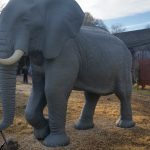
‘Today I went to a field in Wiltshire to witness the unveiling of a life-sized plaster elephant.’ A sentence I expected to utter never.
But life is full of surprises huh? So. We have an elephant. in Swindon – well Liddington. But that’s close enough for government work. Sadly not called Nellie – what’s the world coming to? 😉
Created by yet another Swindonian – well Swindon area resident at least – that I’ve never heard of: David Lomax – this ‘ere elephant is the Hoarusib elephant bull.
Once you get over the incongruity of an elephant in Liddington it does, as you can see from the pictures below, look rather magnificent. It was most splendid to see and I’m so glad I got the chance – via trunk call! (see what I did there?)
I do hope it’ll be warm enough. It was a tidy nippy in that there Coombe today. Thank goodness for the mulled wine and hot soup that’s what I say! A cold day it was but it was sunny and bright so that was a big bonus for sure. And what a great opportunity this was. Amazing.
‘David Lomax is married with four children and lives near Swindon in Wiltshire, U.K.
He was brought up in the horse racing world on a farm, and now works from Bishopstone, Wiltshire. Over the years his work has been quite varied in subject matter and in the use of materials.
Whether exploring the individuality of a particular animal in the portrait sculpture “Hoarusib Bull” or working more freely in “Plant Torso” , his work is underpinned by an interest in the continuities between species and an attempt to understand and celebrate the natural world.’
A bit about the elephant
The Hoarusib Elephant Bull
On Sunday 4 December Robert Buckland MP unveiled the Hoarusib Elephant Bull, a tour de force sculpted by the talented Swindon sculptor David Lomax.
David was commissioned in 1992 by the UK zoo owner John Aspinall to go to Namibia to observe and photograph this elephant, and then on return to the UK to sculpt a full-size portrait in the Pangolin Foundry in Gloucestershire.
The four ton sculpture was then cast in bronze, three copies of which were acquired by millionaire collectors in Los Angeles, Australia and Mexico. Imagine the logistics of the transport!
The elephant is now sited overlooking a green meadow in Swindon, where it gazes at a flock of Wiltshire sheep. (Goodness only knows what they make of it – ‘what the flock?! I shouldn’t wonder…)
‘Richard David ShepherdCBEFRSAFGRA (born 25 April 1931) is a British artist and one of the world’s most outspoken conservationists.[1]
He is most famous for his paintings of steam locomotives(he owns a number of them) and wildlife, although he also often paints aircraft, portraits (notably The Queen Mother) and landscapes.
His work has been extremely popular since the 1960s in limited edition print reproduction and poster form, as well as other media such as Wedgwood limited edition plates.
He has written five books about his art,[2] including an autobiography.’