by Angela | Feb 20, 2018 | Arts/Culture/Heritage, Community
20th February 2018
[jetpack_subscription_form]
Swindon celebrities get knitted
If you’re in the vicinity of Stitch ‘n’ bitch ladies you’ll hear the click clack click of knitting needles as they get to work on their latest project aimed at raising funds for Swindon Mind. What they’re creating is a knitted art installation for display in Swindon’s museum and art gallery from the 28th March. What fun! This is when the ladies made a poppy cloak for Brunel: https://www.facebook.com/SwindonSnB/
Read more about it all below.
A Stitch in Time to Make another Nine
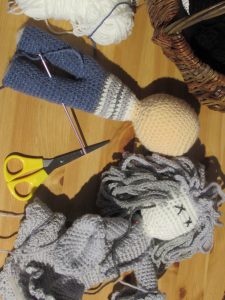
‘Swindon Stitch and Bitch are Swindon based crafters and they are currently working against the clock to create an art installation for the Swindon Museum and Gallery in old town.
The exhibit that they are making is titled ‘The Characters – Tapestry of Swindon’, which will go on display on the 28th of March 2018. The group are making dolls that represent past and present characters that have had some influence on Swindon. They hope to create 30 figures in total and at present they have 21 completed. Nine dolls may not sound very many, but with so many hours going into creating each one, it is a labour of love.
Tracey Major said “We wanted to select characters past and present, because its all part of the story of our town, things don’t change over night it takes the passage of time.
We didn’t just want to choose ‘famous’ people to create, because so many other people of Swindon influence our lives and the town.”
Although they want to keep the dolls under wraps until the big day, they are happy to publish a list of the figures that they intend to create.
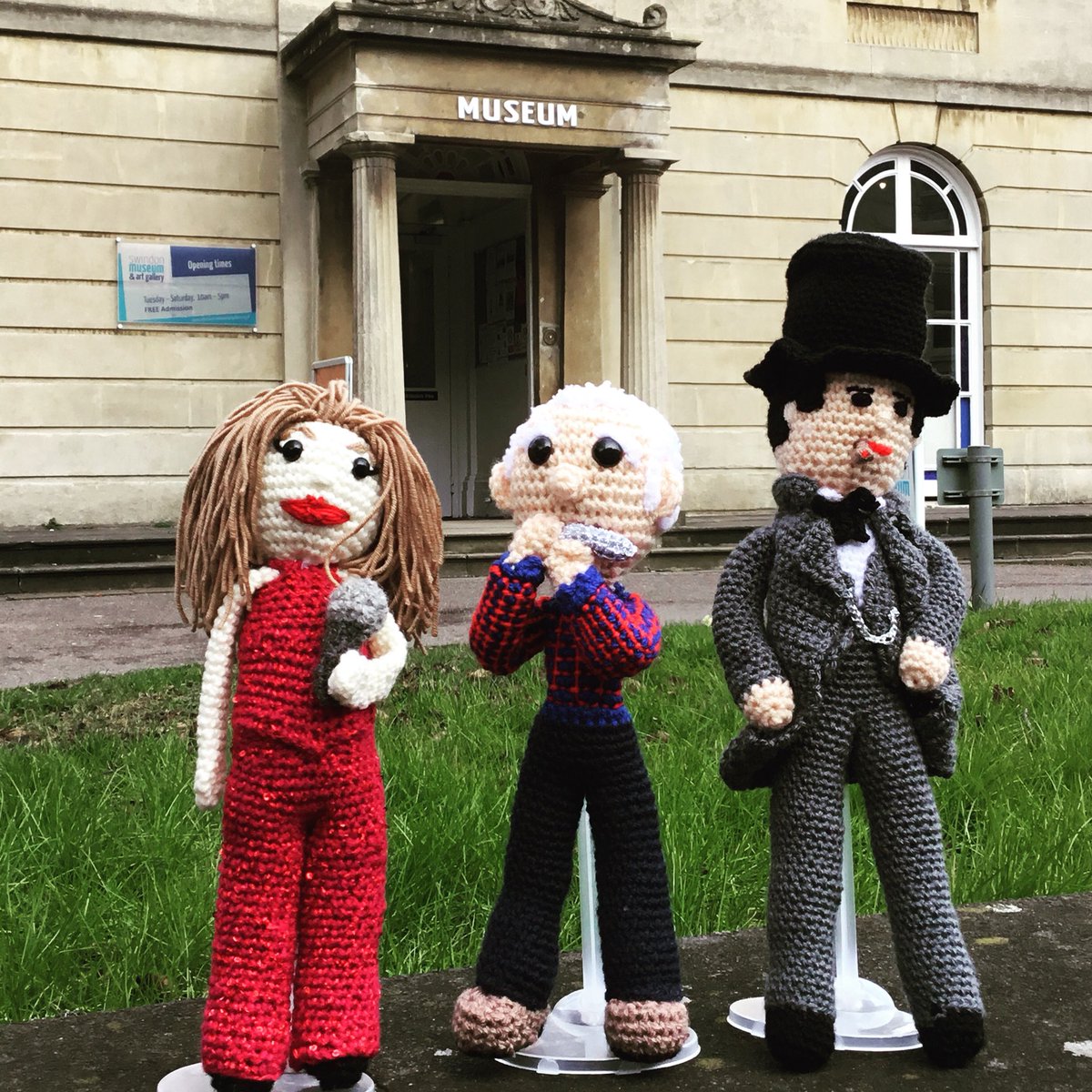
Billie Piper, the harmonica man and Isambard Kingdom Brunel
Julian Clary
Jamie Cox
Justin Hayward
David Howell
Mark Lamar
Melinda Messenger
Gilbert O’Sullivan
Billie Piper
Isambard Brunel
Michael Thomas
Edith New
Don Rodgers
Bob Kilby
Jaime King
Alfred Owen Williams
Harold Fleming
Maureen Penny
Fred Ferris
Steve Rowbotham
Desmond Morris
Tony Collins
Hamis Murray
Robert Turner Watkins
Bruce the collecting dog
D-low
Jahmene
Mable Stranks
Sophie Grigson
Thaila Zucchi
The Grey Lady
If you are in the list above or are related to anyone in the list, the group would love to invite you to the launch day – 28thMarch 2018 at 2pm, at the Swindon Museum and Art Gallery, SN1 4BA to see the figures and to meet the crafters.
After the exhibition, all the figures will be sold to raise money for Swindon Mind. If you’d like to buy any of the dolls, please leave your contact details with the museum team and the crafters will get back to you.’
[jetpack_subscription_form]
SaveSave

by Angela | Feb 9, 2018 | Arts/Culture/Heritage, Community
9th February 2018
[jetpack_subscription_form]
The Swindon Recital Series

Not infrequently, and always on social media, is heard the cry ‘There’s no culture in Swindon’ and words to that effect. I have NEVER understood this attitude. There’s more culture and creativity in Swindon than you can shake a Doric column at. And therein perhaps lies the problem. The absence of buildings with columns on. Perhaps there exists for some a relationship between columns on buildings and culture. A bit like a horse and carriage, you can’t have one without the other. I have no idea – I merely posit this thought.
It’s not true of course – and what’s more it never has been. From the early days of the Mechanics’ Institute, Swindon’s people have pursued an interest in the arts – of all kinds. It’s all here – but you might have to look a bit. Okay – so we haven’t got Shakespeare at the Tobacco Factory as in Bristol. Nor do we have a great deal of opera. But to suggest that there’s nothing in the way of culture in Swindon is risible. Worse, it’s arguably insulting to the founding fathers of New Swindon that were so very engaged in the arts.
Symphony and Chamber Music
It’s only relatively recently I learned that Swindon has a symphony orchestra. Yup. We do. And there’s this: Swindon Recital Series: professional live chamber music. Another long standing Swindon entity.
I’m not going to lie to you – I’m not sure that Chamber music is my ‘bag’. Middlebrow and proud me. Though I have heard of their patron, Dame Evelyn Glennie. She’s a solo percussionist if you didn’t know – profoundly deaf from a young age.
Yet how wonderful is it that musical performances such as these, from this chamber music group, are here – right on our doorstep if one wants them.
With support from Bower and Bailey (solicitors) these wonderful people (a registered charity) bring their talents to the people of Swindon and its environs. Lucky, lucky them.
Check out their ‘About’ page to find out more: http://www.swindonrecitalseries.org/about/
Their current newsletter found its way in to my inbox via another mailing list that I’m on so if you want to know more about them that’s a good way to go: Swindon recital January 2018 newsletter
Or contact them on:
recitals@hotmail.co.uk
Musically, Swindon Symphony Orchestra and this recital music series are not the only offerings. I’m sure listeners, you know more than me on that front. Then of course there’s the Wyvern Theatre and the Arts Centre, the poetry scene, the literature scene, museums and artists, Swindon open studios – it goes on and on and on. Much like an Aritson washing machine. So please – stop it with the ‘Swindon is a cultural desert’ stuff. Enough already.
[jetpack_subscription_form]
by Angela | Feb 7, 2018 | Community
7th February 2018
[jetpack_subscription_form]
Twigs Snowdrops and soup day 2018

A quick shout out listeners for the wonderfully alliterative Twigs community gardens annual snowdrops and soup day.
When is it happening?
Sunday 11th February 2017 11 am – 3 pm
Admission: Adults £2.00, Concessions £1.50, Children FREE
* On display will be 10,000 Snowdrops we planted around our beau ful gardens in 2016. We’ve checked on them and they’re already star ng to come up.
*There will be di erent varie es of Snowdrop on display, so see if you can spot the di erences between them.
* Find out all the things about snowdrops that you didn’t know that you wanted to know, and some of the stories associated with them.
* Also on display will be art and cra work on a Snowdrop theme.
After you’ve walked round the gardens and admired the other brave plants that share this owering me with the Snowdrops, warm up with some delicious home- made soup or some cake.
To find out about other Twigs events go here: http://www.friendsoftwigs.org.uk/events/
See a previous Twigs open day here: https://youtu.be/Jih4V0lluyE
A brief bit about Twigs: ‘TWIGS (Therapeutic Work In Gardening Swindon) came into being in November 1997. It was created by Pride of Swindon winner Anne Billingham, who realised the therapeutic benefits that working with nature could bring to those experiencing mental health problems. At first TWIGS operated from the old Swindon Borough Council (SBC) Amenity Horticulture buildings (where the Manor Garden Centre now stands) and volunteers provided gardening and craft activities for around eight people.’
Friends of Twigs: http://www.friendsoftwigs.org.uk
‘Friends of Twigs is an independent charity which gives financial and practical support to TWIGS and the Olive Tree Café, two mental health projects in Swindon. We have no administration costs.’
[jetpack_subscription_form]
SaveSaveSaveSaveSaveSave

by Angela | Jan 31, 2018 | Arts/Culture/Heritage, Community
31st January 2018
[jetpack_subscription_form]
Swindon Library Local Studies
Hello dear listeners. I hope you’re well.
It’s struck me that, aside from a post the other day about volunteers for the Citizen’s advice centre, I’ve been a bit lax about posting on here this month. What can I say? I’m busy! Busy with AA Editorial Services, busy with Swindon Civic Voice, busy with Swindon Hour (Twitter) and busy with a personal project of mine. And that brings me to the purpose of this post. Which is simply to give a shout-out to the lovely people running the Swindon Library Local studies section – up in the gods of the central library. And gods they are!
I’ve always known that the local studies service is a terrific one. That’s no a surprise. But I’m in there a lot at the moment for help with a book I’m writing about Swindon (due out in the summer if it all comes off) so I now have cause to experience their service myself. And it’s great!
Many moons ago, before the current library came to pass, I’m told that the stuff they have in the local collection was packed away in boxes, on high shelves that you probably needed an appt 6 months in advance to access. So how – how lucky is Swindon to have this reams and reams of stuff all about Swindon so easily to hand? And even better with friendly staff that are sooooooo knowledgable. Though they will go to lunch just as I’m rocking up. The audacity – it’s outrageous! 😉 But seriously – from this Born again Swindonian – a big thank you for all the help so far. I’ll be back though. As Arnie says. #obvs
Key Resources
The full list of resources that local studies can provide is here: https://www.swindon.gov.uk/info/20026/libraries/302/local_studies_local_history_and_genealogy
Here’s a few to whet your appetite:
- A comprehensive collection of printed historical material for the Borough of Swindon and the surrounding area.
- Books, reports, pamphlets, scrapbooks, DVDs, VHS, ephemera – covering all topics.
- We offer extensive genealogical resources, such as the GRO index of all births, marriages & deaths in England & Wales (1837-1999), the GRO Overseas Index, the International Genealogical Index (LDS) and local census records with surname & street indexes where available.
- All local parish registers and Bishops Transcripts (from 1538).
- Free access to premium websites like Ancestry and the British Newspaper Archive.
- Extensive collection of local periodicals like parish magazines, and journals.
- This includes staff newsletters for local firms like Austin Rover, British Rail, Garrard, Great Western Railway, Pressed Steel, Will’s Tobacco, and Vickers.
Sadly their opening hours have been reduced. Cut backs don’t ya know?! So this is when you’ll find them:
Monday, Tuesday, and Wednesday 10.00am – 4.00pm
Saturday 10.00am – 1.30pm
Unless they’re at lunch!
The other totally fantastic thing they do is this:
Local Studies photograph collection
‘Our online photographic gallery can be found at www.flickr.com/swindonlocal
- Includes over 5,500 fascinating images and still growing.
- Most are selected from the Local Studies collection but thousands were kindly shared with us by current and former local residents and local history enthusiasts.
- Free to view and fully searchable by name, date, place, street or other keyword.
These images are only a small fraction of the main collection which can be viewed in Local Studies.’
It’s incredible!
In the ether:
E-mail: localstudies@swindon.gov.uk
Telephone: (01793) 463238
Please follow us on Twitter (@SwindonLocal) and like us on Facebook: www.facebook.com/LocalStudiesSwindon
[jetpack_subscription_form]
by Angela | Jan 19, 2018 | Arts/Culture/Heritage, Community, Theatre
19th January 2018
[jetpack_subscription_form]
The Phoenix Players
Well dear listeners. Earlier this week, Swindon Old Town Rotary kindly invited me along to one of their breakfast meetings to talk to them about this here blog and related matters. They are a jolly friendly bunch of people so despite public speaking not being my favourite thing it was okay. I think. Old Town Rotary are of course the organisers of the world famous (in Swindon) charity duck race: http://swindonoldtownrotary.org/duckrace/
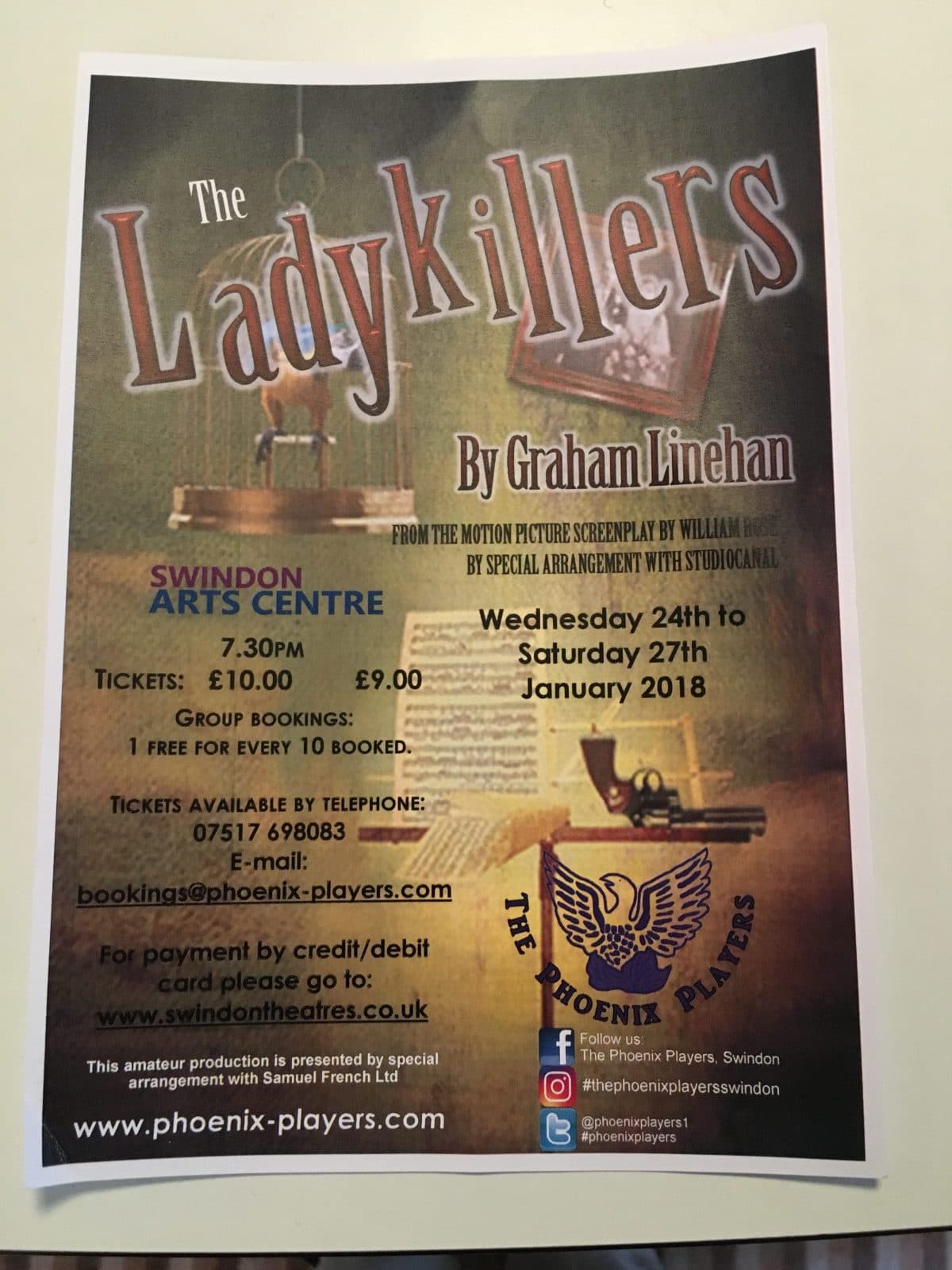
However! The main purpose of this post is to give a shout-out to the Phoenix players (a rotarian shoved a flyer into my hand so I thought I best had TBH 😉 ) and their forthcoming production of The Ladykillers at Swindon Arts Centre.

The Phoenix Players presents
“The Ladykillers” by Graham Linehan
A classic combination of black comedy and slapstick farce directed by Colin Wilkins.
Wednesday 24 to Saturday 27 January 2018.
At the Arts Centre, Devizes Road, Swindon at 7.30pm.
Click here to buy tickets: https://swindontheatres.co.uk/Online/tickets-phoenix-players-swindon-january-2018
About the Phoenix Players
From their website:
‘The Phoenix Players started life in 1954 but under a different name, The Poetry Circle Players. The story behind this is that way back in the past, 1946 to be precise, the first Arts Centre opened in Swindon. At that time one of the Public Library Ancillary Societies was the Poetry Circle, a group which met at the Arts Centre to read and discuss poetry and verse plays.
The group flourished and reached a point where it was decided to present these verse plays to the public, which proved to be a popular decision and in 1954 a drama section was formed. In September of that year the Poetry Circle Players presented their first production, ‘The Firstborn’ by Christopher Fry. In the early 1960’s the Poetry Circle ceased to exist. This meant that the now flourishing drama section needed a new name and so became The Phoenix Players.
It is now one of the leading drama groups in the town with a string of successes to its name. To date it has presented well over 200 productions and in September 2014 The Phoenix Players celebrated their 60th anniversary … ‘
If you’re feeling social, find them on Facebook: https://www.facebook.com/thephoenixplayersswindon/ and on Twitter:
[jetpack_subscription_form]