Latest news from the Save the Oasis Campaign Council Meeting Accepts Labour Group’s Oasis Motion
26th March 2021
Council Meeting Accepts Oasis Motion At last night’s Full Council meeting, Labour put forward a motion. The motion requested that the Council leader, Cllr David Renard, work with the iconic leisure centre’s current owners to produce a report detailing a full building and works survey. The report would include costs for work needed. The Conservative administration accepted the motion and voted for it with one small amendment. The Council leader now has three months to produce said report. Failure so to do means he has to return to Full Council to explain why.
Needless to say, the Save the Oasis campaign is full of delight at the passing of this motion. It’s clear to us that this should have happened months ago but we’re overjoyed that it’s going to happen at last. It’s our sincere our hope that a full report into the state of the Oasis will allow all parties to work out the merits, or otherwise, of the various options.
As a campaign group, we couldn’t be more pleased with the positivity that emerged in the Full Council meeting. In particular when this has not always been the case.
We received much praise for our campaign and the steps we’ve taken to speak to engineers about how to save the original dome. While not wanting to get too excited, it feels like a clear and positive shift in direction for the town’s administration. They appear to now be receptive to the idea of retaining the landmark dome.
The campaign doesn’t view the dome andthe Oasisthrough sentimentality and rose-tinted glasses alone. We’re all-too aware of the potential difficulties but also feel that sustainable solutions aren’t impossible. We ask only that the council exhaust all such possibilities before taking any drastic decisions.
Last night’s unanimous acceptance, by the current administration, of the Labour group’s motion is, we feel, a big step in the right direction.
SWINDON ENTREPRENEUR AND CHARITY FOUNDER JOINS SOCIAL ENTERPRISE SUPPORTING YOUNG PEOPLE
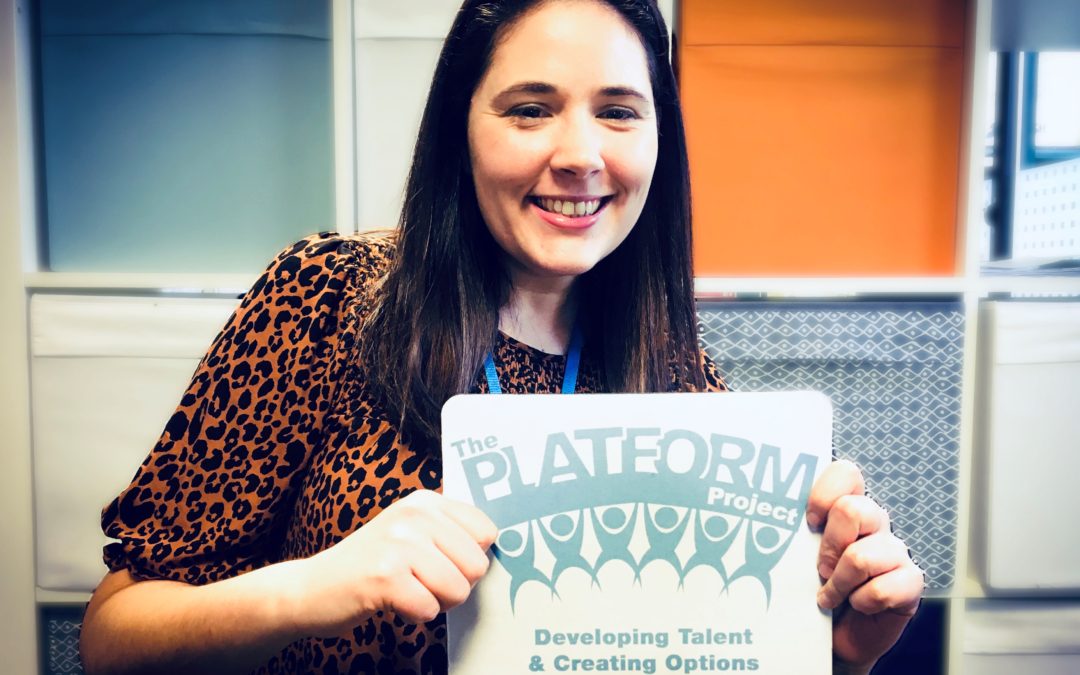
Fiona Simpson Joins Platform Project Charity founder, Fiona Simpson, couldn’t be more thrilled to have joined the Swindon-based social enterprise The Platform Project. She’ll be support young people aged 13-21 to find work or take their next steps in life.
Fiona joined The Platform Project recently as a youth development manager on a part-time basis thanks to several new funding grants. Fiona has worked with young people in various roles, including co-founding a charitable foundation in 2016.
She explained: ‘I’m so fortunate to get the offer of a role working with Sadie at The Platform Project. It allows me the opportunity to share my passion for making a difference to the lives of young people. I’m so inspired by what The Platform Project has achieved so far.’
About Fiona’s new role
Fiona’s new role will help with the overall development of the internship programme. That’s where young people aged 16-21 attend the projects “training workplace” to do developmental work-experience.
The interns rotate around different roles and projects. They include a youth magazine, a digital media marketing agency, and even a self-employment project. They develop skills including:
Using Microsoft Teams
Pitching and presenting
Social media management
Website design
Videography
Client liaison
Time and project management all whilst working alongside industry professionals from partner organisations.
The practical, hands-on experiences help build CVs and employability skills. It also offers the opportunity for the interns to try out different career roles before they’re paired up with a mentor to help broker their next steps on the career ladder. This could include moving into work or even setting up their own business.
Fiona said: ‘Almost 90% of the students on the internship programme go straight into employment or further education. That happens because the range of experiences on offer focuses on getting them work ready.
‘But, if they don’t get employment at once, they ‘ll get further mentoring support. That support will guide them into an employment placement. And they all have the ability to earn their own self-employed income as well. Our programme aims to produce professionals who are as pandemic-proof as possible!’
Sadie Sharp and the Platform Project
Sadie Sharp, founder and managing director of The Platform Project said:
‘We’ve grown so fast since we launched. We’ve only been able to achieve that growth because we’ve had the right people working with us. The scale of the issues for young people around employability and creating opportunities has never been greater after Covid19. And we are keen, with Fiona’s appointment, to take our youth enterprise projects to more schools to help tackle the challenges presented by the pandemic.’
To find out more about The Platform Project internships, or to become an employer partners, visit: www.PlatformProject.co.uk
Possible solution found to preserve the famous iconic dome
Save Oasis Campaign Seeks Sustainable Solutions Not letting themselves become clouded by sentimentality, the Save the Oasis campaign group have set themselves the task of seeking sustainable solutions. Of course they want the dome preserving. But they have full understanding that to keep it, it must function better than it ever has.
And, to that end, with great excitement, they have a possible breakthrough to announce.
The dome under threat – Save Oasis Campaign Seeks Sustainable Solutions
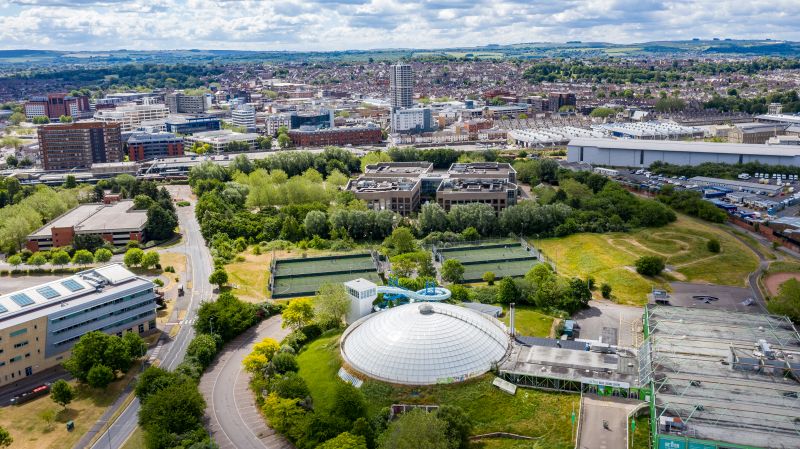
The dome – which forms an integral part of the famous Swindon Oasis Leisure Centre – came under threat recently. The threat occurred when Seven Capital and Swindon Borough Council released a computer-generated image, of what appeared to be new building.
The Save Oasis Swindon campaign questioned why the dome was missing from the plans. In particular when the Council administration had promised a refurbishment of the dome not a demolition.
A spokesman for Save Oasis Swindon said: ‘The council administration told us that the building is not energy efficient, as the pool costs £1,500 a day to heat. We were also told by the head of Swindon Borough Council, Councillor David Renard, that the dome has reached the end of its life.
‘We don’t think that Seven Capital have exhausted every option to preserve the iconic dome. The panels on the dome were only replaced in 2015, some six years ago. The previous panels before that were in place for almost four decades. Swindonians should ask questions about why, in 2015, the heat inefficient dome panels installed . Fast forward six years, and now the developer is saying the building isn’t viable. We can’t sit back and accept that situation.
‘The information we got stated that the current dome panels consist of single-ply polycarbonate sheets, installed on the lightweight aluminium space frame. Further, Seven Capital stated that they have a very low U value. This means that he pool has poor insulation and heat retaining properties.
Set about seeking advice
Undeterred, the campaign group set about getting external, expert advice.
Said campaigner leader Neil, ‘We contacted an historical architecture group who pointed us to engineers that specialise in pool restorations. We explained the current problem with the Oasis dome. To our amazement, they came back with a solution that would enable the iconic dome structure to remain.
Iceni Futures suggested using ‘EFTE pillows’. In essence the bubble type panels the Eden Project uses. The company said they would improve energy efficiency. Further they’re lightweight, so the existing structure could support them. These pillows are a tried and tested solution and would work well at the Oasis.
They even said that the pillows would replicate the appearance of the existing ‘bubble’ type panels present at the Oasis before 2015. They confirmed that the EFTE pillows would be more energy efficient than the current flat polycarbonate sheets. It’s also possible to embed solar cells within them.
It seems that the EFTE solution would have been available in 2015. So they imagine that the flat sheets got chosen due to cost. But at £1,500 a day to heat, it’s definitely a false economy.
‘Iceni Futures promised to work with a structural engineer and the EFTE manufacturer to devise a custom solution for the Oasis. They would calculate the energy improvements and the potential daily heating costs.
Next steps
The Save Oasis Swindon campaign have sent their findings to Swindon Borough Council and Councillor David Renard for consideration. Also to Seven Capital.
Said the campaign: ‘The administration must do more to investigate ways to make the existing dome and building viable. Many people love the Oasis for what it already offers.
“We hope that Seven Capital take this exciting opportunity to work with Iceni Futures and see what it’s possible to achieve at the Oasis. This will enable preservation of the iconic dome structure, regardless of the Historic England listing outcome.’
The spokesman concluded: ‘Labour Councillor Jim Grant has been in fulll support of our plan to save the famous dome. He said this could be the answer we are all looking for. He told us the Labour group are one hundred percent behind it. Our campaign hopes that all the council political parties can sign up to our plan to save the dome. Jim also thanked our campaign and said the people of Swindon should be ever grateful.’
The Save Oasis Swindon campaign, which has almost 2,000 followers on Facebook – and backed by many celebrities. If you want to follow them you’ll find them here: https://www.facebook.com/saveoasis
The recent regeneration received heavy criticism. The Oasis is a symbol of Swindon and is a well-known, treasured landmark. It’s well loved by Swindon residents, and those further afield who travel to Swindon to enjoy the Oasis. You can read more of that here:
Swindon charity appeals for swimmers to make a splash and save lives
Swindon Swimmers Needed to Fundraise Calling all swimmers! If you want to get fit and make a splash for children then one Swindon charity needs your help.
SwimTayka runs drowning prevention programmes around the globe and teaches children to swim. Now they’re looking for people to sign up for the annual Thames Marathon, planned for August 15.
SwimTayka is an official charity partner for the event, and has several free places to give away.
Organised by Henley Swim, the Thames Marathon is a 14km long-distance swim challenge from Henley-on-Thames to Marlow. It’s become one of open water swimming’s most prestigious marathon swims. It’s usually a sell-out. But by entering via SwimTayka swimmers can be sure of a place.
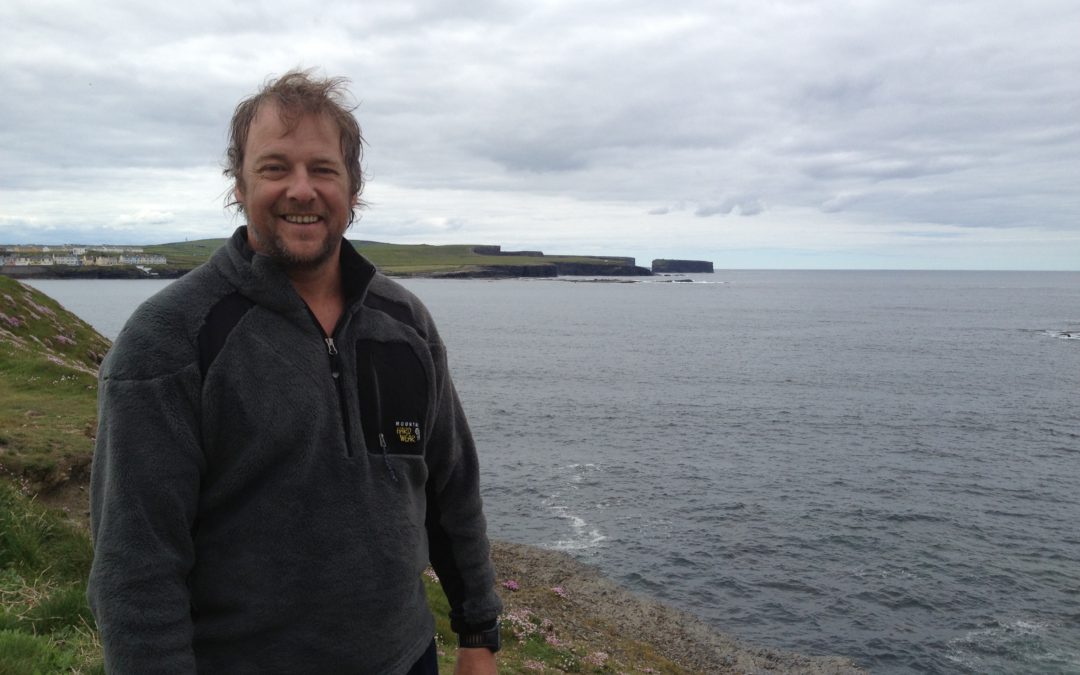
Bryan Avery
How to register for the event
Swimmers can register for a free place through SwimTayka, and commit to fundraising for the charity. Or they can buy a place direct from Henley Swim, but also take the opportunity to fundraise.
With the swimming lakes at Cotswold Water Park about to reopen, there’s plenty of time to train for the event. Although it’s an endurance event it caters both for fast swimmers and those who swim at a more leisurely pace.
Swindonian and keen open water swimmer Bryan Avery, founded SwimTayka in 2017. He started it when he realised how many young lives drowing claims.
‘In the UK we take learning to swim for granted, but this doesn’t happen in many countries,’ said Bryan. ‘Children living near open water are at severe risk of drowning. In fact, drowning is a silent epidemic. It claims an estimated 360,000 lives every year and is the third highest cause of unintentional injury death worldwide. These deaths are both wasted and preventable.
During this pandemic our work has never been more important as people gain respite in open water. And it’s a shame that that they don’t always have the skills they need.
About SwimTakya
SwimTayka runs programmes in locations as far flung as Mozambique, Peru and Brazil. They give free swimming lessons to children and teach them water stewardship, to teach them about caring for the environment.
Bryan said: ‘I set up SwimTayka as I’m driven to help children in low resource communities around the world, learn to swim. I tried to find a charity that already existed that we could support. But I found there was none that focused on swimming and giving free lessons. And so SwimTayka was born!”
The charity started with one project in Huanchaco, northern Peru, partnering with an established NGO based there.
“In a few weeks we had children confident with techniques to prevent drowning and loving every minute of it. Their sheer joy at realising they could swim made it all worthwhile,” Bryan said. ‘But like any charity, we need funds. That’s why we’re appealing for swimmers looking for a challenge who want to take part in the Thames Marathon, to book their place through us, and raise money for SwimTayka in sponsorship.’
Thames Marathon Director of Operations, Juliet Hume, said: “The demand for the Thames Marathon has always been huge. It’s an award-winning event with a reputation for offering a challenging, well-organised and beautiful swim. It’s great we can offer places to support this incredible charity.’
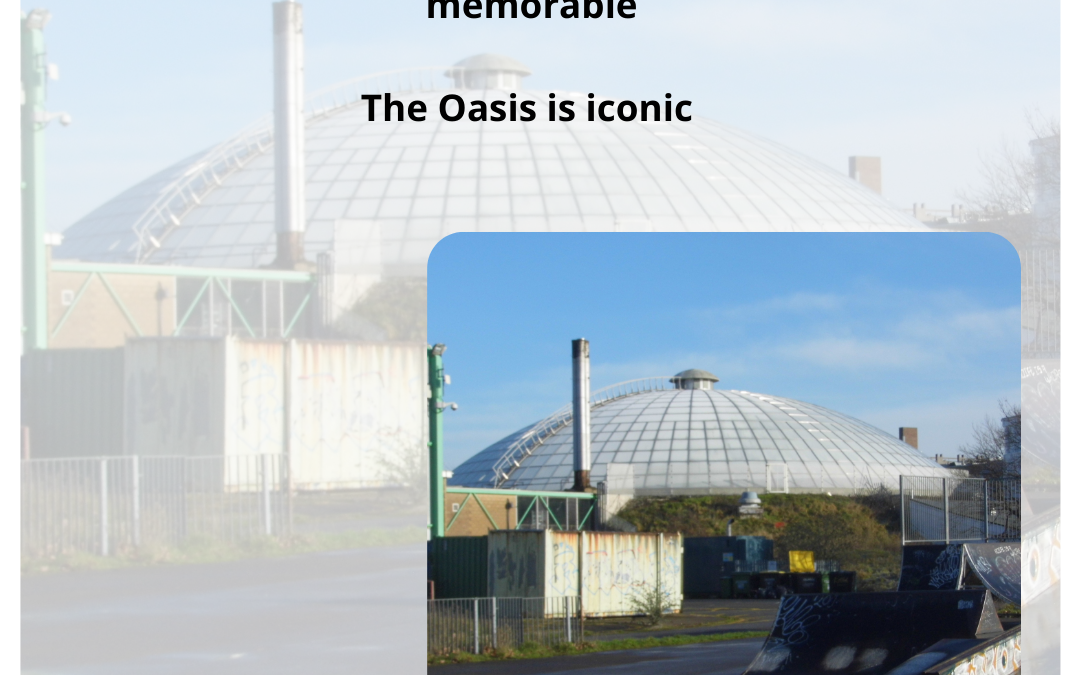
Iconic Swindon Structures Controversy ranges in Swindon as I bash out this blog, around the Oasis Pleasure Dome. A term bandied about around this leisure centre is ‘iconic’. Thus I thought I’d have a look at the term – what it means – and what it means to Swindon.
So, iconic design then is something recognisable and memorable. Thus, it’s irrefutable that The Oasis, warrants the description.
Okay – it’s a complex situation, with many ins and outs that I’m not going into it all here – it’s not the place. But I do have to mention something that has incurred the wrath of many, including me – for all manner of reasons. Namely this:
Aside from the fact that this CGI shoved out at the start of this week resembles a gasometer – and that’s bad enough – it misses two important points.
1. The Oasis and the dome are synonymous – and the ‘iconic’ part of the whole thing is its very form: the dome.
2. The term Oasis means: ‘a fertile spot in a desert where you find water.’
All elements of the Oasis combined to meet the description of a fertile spot in a desert where you find water. The desert part being the urban sprawl in which it sits.
So, the much-loved dome let sunshine stream in and blue skies canopy bathers, giving them a sense of being outside. And all this decades before Center Parcs came our way.
Aside from the dome itself, what made the eponymous leisure pool so famous and so worthy of its name was the carefully planned, tropical themed interior – right down to real banana plants. It all combined to create a totally tropical paradise experience.
Accessibility factors
The other factor making this pool special is its accessibility. This is a super important point that’s being overlooked I fear.
The Oasis, in its current form, is the only leisure/fun pool for MILES – the nearest being Bracknell. It’s also the only fully accessible facility for children and those with mobility issues.
Its lagoon shape, that you can simply walk into as you’d walk into the sea itself, is perfect for families and the less mobile. There is nothing else like it in Swindon – or for miles around.
My ire
So why am I so irked? Aside from suffering from SBC CGI overload that is? *heaves heavy sigh*
Well, the image above shows what may well be a perfectly fine leisure centre. I‘m cynical about that – but let’s, for the sake of argument, assume it does.
It still misses the iconic point by a wide margin. It also misses ‘The Oasis’ point. Which is of course … the tropical part.
What that image shows is not refurbishing ‘an iconic leisure venue that has brought joy to residents and visitors for four decades’.
There’s nothing iconic about it – and, unless it intends to recreate the tropical theme, there’s nothing oasis about it either. Thus, unless this new plan incorporates that tropical theme, at the very least, it’s not even the Oasis Mark II. What it is, in fact, is The North Star leisure centre.
So this is, aside from all the other stuff going on, a disingenuous at best and at worst … plain dishonest, misrepresentation. It purports to be a restoration when in fact it’s raze-it-and-start-all-over-again!
I’d have more respect for it and SBC if they weren’t making this out to be something it’s not. Do they think we won’t notice? Surely not? That would be both arrogant and insulting …