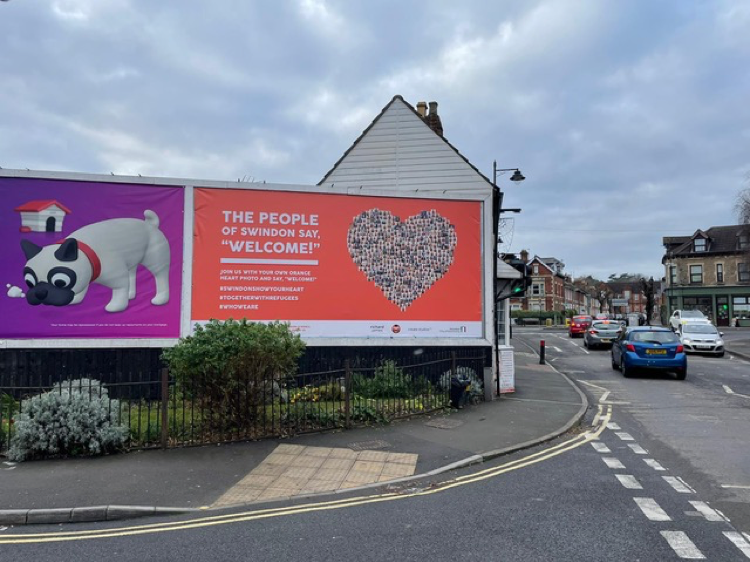
SWINDON CITY OF SANCTUARY delighted to announce the appearance of hundreds of messages of welcome on a billboard in Old Town!
Hope Messages from Swindon City of Sanctuary In collaboration with Create Studios and with the support of Richard James estate agents, Swindon City of Sanctuary is sharing messages of welcome and support. Written on orange hearts, the messages are to all people who come to live here in Swindon. In particular those who’ve fled danger and are seeking safety here with everyone in the town.
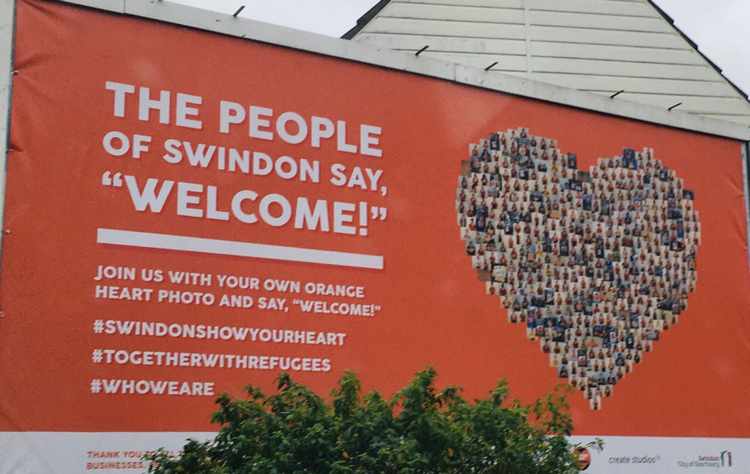
You can see the messages within a huge orange heart shape on the billboard in Old Town’s Newport Street. The billboard says: ‘The People of Swindon Say WELCOME!’ (And a message to join in).
The messages were all written during Swindon City of Sanctuary’s Show Your Heart Month of Welcome in November. They show the true spirit of welcome and kindness in the hearts of the people of Swindon.
The message givers
School children and staff, local businesses, community organisations and faith groups wrote the messages. During one week in November, Swindon City of Sanctuary invited Swindonians to send in selfies of themselves, holding up welcome messages. There was also a special day of welcome in Old Town’s The Tuppenny pub. People popped in throughout the day to write their messages.
Create Studios and photographer Elmar Rubio, captured hundreds of images. These images came together via Create’s marketing team for display in a large heart shape on a billboard.
(*All involved donated their time free of charge.)
Nicola Wood, Charity Manager, Swindon City of Sanctuary, said:
‘Our Swindon messages of welcome on orange hearts show our support to people forced to flee their homes.
We want people to be able to seek safety in our country, no matter how they’ve arrived here. We want people to live in dignity and safety here while they wait. While they wait for the decision granting them protection and giving them Leave to Remain here in the UK. We welcome people into our town. We want to show them that they belong here so they can begin re-building their lives in safety and become involved in their new community. If any one of us feared for our lives or the lives of our loved ones, we’d want to know that others would help us to safety, wouldn’t we? This is our chance to show our messages of welcome and support for everyone. No matter what we look like nor where we come from.’
Shahina Johnson MBE, CEO and Artistic Director, Create Studios, said:
‘It was great to work with our partners and friends at Swindon City of Sanctuary / Schools of Sanctuary to make this incredible image reflecting love and support for refugees arriving in Swindon. The Create Studios team worked with over 600 people of all ages and backgrounds across Swindon to make the composite image of the big heart at the centre of the Show your Heart campaign. We’re so proud to be part of a town where that message is loud and clear. And it’s great that creativity and partnership has been at the heart of making this project a reality.’
Why the orange heart?
The orange heart represents compassion for people fleeing war, persecution or violence. Inspired by the Refugee Nation flag and the colours of a lifebelt, the heart symbolises hope and kindness. It’s also a symbol of the Show Your Heart campaign championed by Together with Refugees. That coalition of members includes grassroots, community and refugee-led groups. Also international development charities, trade unions and faith groups. Swindon City of Sanctuary are proud to be members of such bodies.
Ben Jackson, Chair of Trustees, Swindon City of Sanctuary, said, ‘Although our work is not exactly the same as all groups and organisations in the Together with Refugees coalition, one thing we all share is a belief inf showing compassion for people fleeing war and persecution. And in working for a kinder, fairer and more effective approach to supporting refugees in the UK.’
Join in and show your own ‘Orange Hearts’ with messages of welcome by tagging Swindon City of Sanctuary on Facebook/Twitter/Instagram including hashtags:
Creativity and mental health – a season of events at Swindon Hub
17th December 2021
Mental Health Events at Swindon Hub Swindon’s newest town centre community project launches a three-month programme of events and exhibitions themed around health, wellbeing and creativity.
The Hub, opened a mere one month ago. has already hosted meetings, concerts and a Christmas market. Now the volunteers behind the project are busy planning the next event. It’s called Exploring Art as Therapy and will involve local artists, community groups and charities.
We want the Hub to be a place where people can talk about things that matter most to them’ says Josie Slade, one of the volunteers organising the programme. ‘Mental health and wellbeing have never been more important. And we have lots of people visiting the Hub who have something important to say about that.’
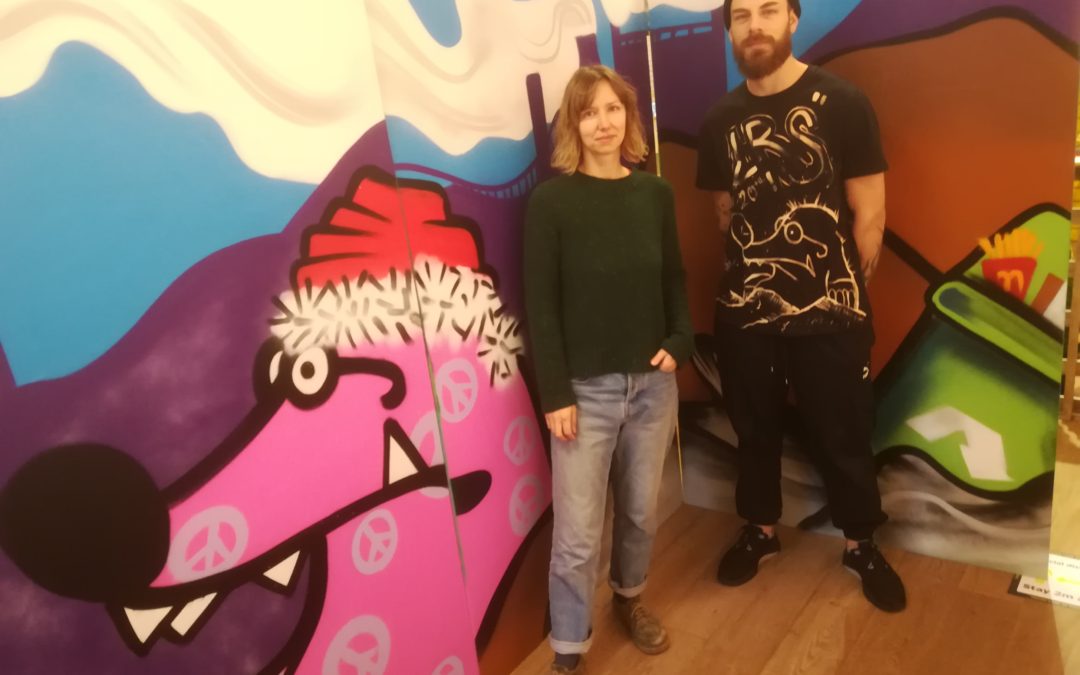
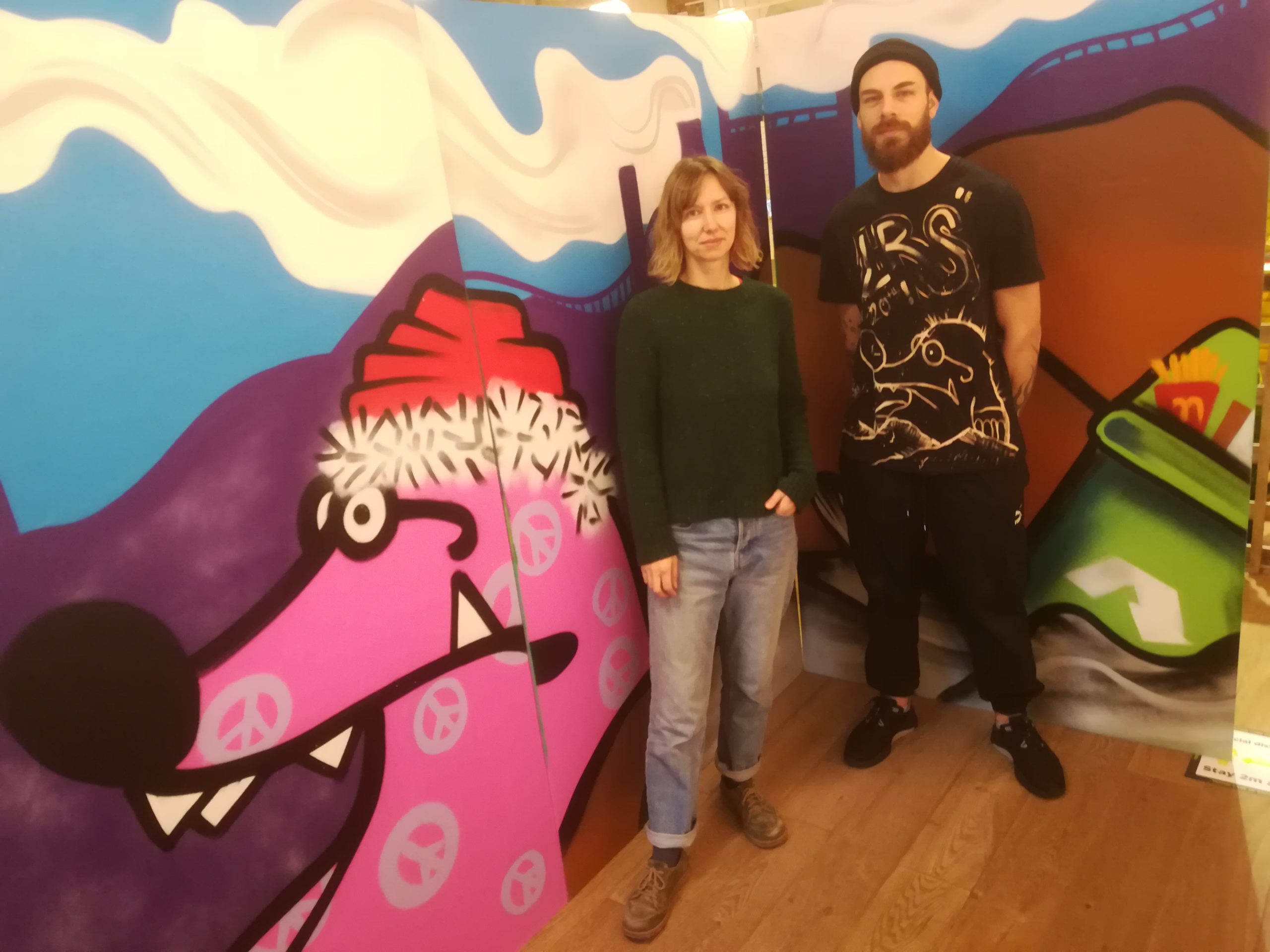
Keith Bull and Josie Slade
The programme of events
The programme of events kicks off with a display of graffiti, created for the Hub by local artist Keith Bull. Going under his graffiti name of Inca the mole, Bull’s work links his own mental health experiences with his views on the environment, modern life, lockdowns and Christmas.
‘Lockdown made me think hard about how I could use art’ says Bull. ‘I decided to create a cartoon character called Mole. It sprung from wanting something that could travel with me online and express how I was feeling’ he added.
IPSUM
IPSUMis one of several local charities who’ll be supporting the project. There’ll be art workshops, information displays and exhibitions. ”We’re delighted to have such a central location in Swindon where we can share all that we know about how art and music can help people with their mental health’ says Barbara Lorusso, project manager at IPSUM. ‘Working with the Hub is a great opportunity to reach out and show what we can do to help.’
Graffiti artist Inca the mole agrees. Local charities like IPSUM and Twigs community gardens have helped me a lot. It’s a big comfort to know they are there for you, and I urge anyone who needs to talk to get in touch with them.’
The graffiti show will run until 15th January. Then, following that, will be displays of work by Swindon creatives as well as an exhibition of art created by Hub visitors at workshops and events throughout the start of 2022. Anyone wanting to find out more can email events@swindonhub.org.uk
About Swindon Hub
Based in the former River Island building, Swindon Hub offers a welcoming café, retail stands for local crafters, a community arts space as well as areas for meetings and events.
The Hub is open Tuesday to Saturday, 11am to 6pm – everyone is welcome to drop in and say ‘hi’.
Run and staffed completely by volunteers, the project aims to bring life to the town centre and to support communities and people from all Swindon. And also to raise awareness of issues around climate and sustainability.
Jack and the Beanstalk Pantomime Yes folks it’s panto time. ‘Oh no it isn’t!’ I hear you cry. ‘Oh yes it is!’ I respond.
This afternoon I’ve bean (see what I did there?!) to a marvellous matinee performance of Jack and the Beanstalk at the Wyvern Theatre in Swindon.
It felt good to be back after the Covid-created-Christmas-hiatus of 2019 – Nerf guns at the ready!
So this year’s panto offering from the Wyvern Theatre is the much-loved tale of Jack and the Beanstalk – billed as the giant (geddit?) pantomime spectacular.
Headlining the cast, as the Spirit of the Beans, is Louie Spence. And it seems I may be the only person in Swindon to comment ‘Louie who?’ at that information. Sorry – never heard of him. Well I have now! What a vision in pea green tights and cute silver boots he presented as he pirouetted on stage whenever it was his cue. What with that and his charmingly camp (affected?) demeanour I’m now quite conversant with Louie Spence! And that’s a good thing.
All panto productions contain around five stock characters:
1. The evil villain – in this production, Fleshcreep 2. The damsel in distress – Jill in this instance 3. The hero – Jack 4. The Principle boy – sometimes the same as 3 – traditionally played by a girl but that doesn’t happen so much now. 5. The pantomime dame – always played by a man – in this production it’s Dame Trott.
Then there’s comedy characters, a panto animal, a slapstick scene, audience participation – and a theatre full of children at a fever pitch of excitement! Some or all of those and more occur in every panto across the land and this one is no exception. You know exactly what you’re going to get and that is, of course, the absolute joy of the thing. The tradition of it all. And isn’t it the best way to introduce children to the joys of live theatre?
I’m really passionate about pantomime because it is often the first introduction for a child to theatre, and if that child has a great experience at a pantomime they will continue to come year after year.
John Barrowman
It’s all here
So of course all the above is present in this glorious-green-bean-themed pantomime production in spade loads. One of my favourite parts is the carefully co-ordinated slapstick scene. It’s always the same, ‘If I weren’t in pantomime’ routine which involves carefully timed arm warming and squatting and great potential for it all going wrong – as I’ve witnessed at a previous Swindon panto season. And not forgetting of course the perennial ‘It’s behind you’ sequence.
All the cast are really great but I feel I have to give special acting honours to Daisy the cow – played by herself. That cow had some great eyelash fluttering and downcast expressions going on. Not to mention some nifty footwork – impressive moovements!
So if you’ve not booked yet why not? It’s running until the 2nd Jan so you’ve surely got time to go? Book here and anticipate some good old-fashioned festive theatrical fun.
‘Outlandish costumes, broad comedy, celebrity turns and audience participation – the now-familiar trappings of the classic British panto owe much to the enterprising Victorians, whose innovations cemented the popular art-form that we know and love today.’
VOLUNTEERS FROM LECHLADE, OXON, READING & SWINDON HELP ENVIRONMENT PROJECT AT BLUE CROSS CENTRE
Volunteers Support Environment Project Lucy Staveley, grew up in Lechlade, now living in Fulbrook near Burford, has long had involvement in conservation projects. But she wanted to do something in her locality to restore nature in the Burford area.
Lucy began the Buford Tree initiative in 2019. Now she and it have embarked on planting over 1,300 trees and 3,700 hedging plants at the Blue Cross animal re-homing centre near Burford. This together with two community orchards in Burford and several hundred metres of hedgerow on local farms.
Funding sources
The initiative, which started in November before National Tree Week, is receiving fnding from the International Tree Foundation and the Bouttell Bequest. Also from several other partners including I Dig Trees.
The plants come from Murray Maclean in Frilford, a wholesale tree and hedging specialist. It was also part of the Queen’s Green Canopy Initiative. It thrilled them to welcome HRH Duke of Gloucester to plant the inaugural apple tree in the community orchard on Burford’s recreation ground.
The plants come from Murray Maclean in Frilford, a wholesale tree and hedging specialist. It was also part of the Queen’s Green Canopy Initiative. It thrilled them to welcome HRH Duke of Gloucester to plant the inaugural apple tree in the community orchard on Burford’s recreation ground.
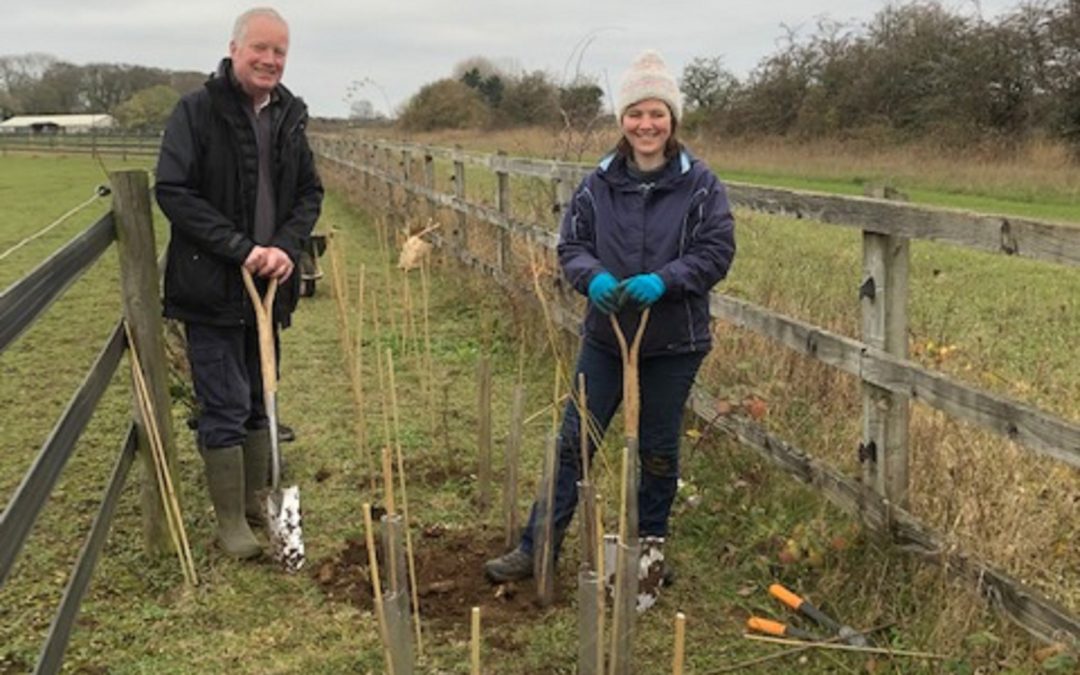
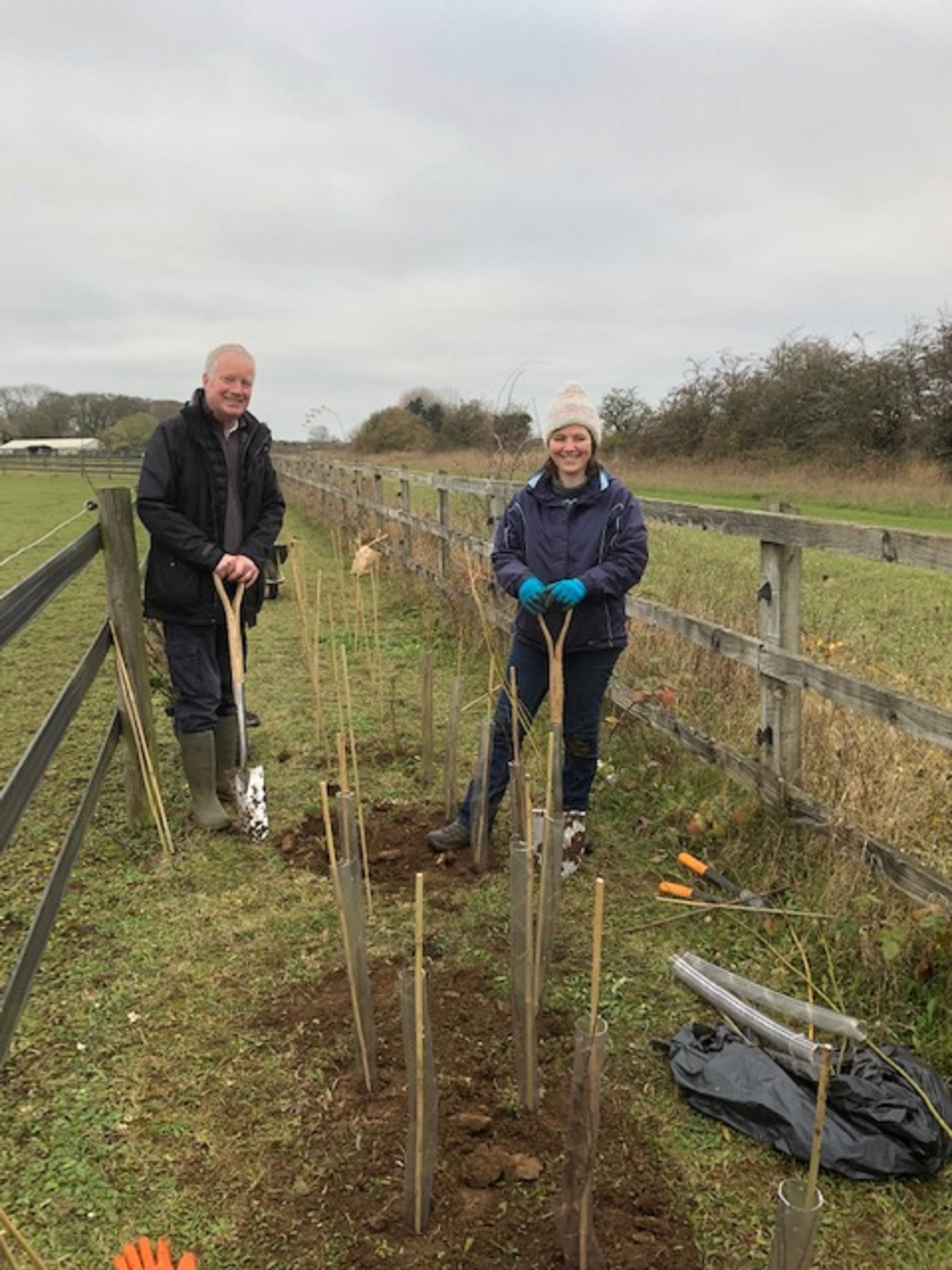
Volunteers Support Environment Project – Bob O’Hara and Lucy Staveley
Not only but also
As well as leading the Burford Tree Initiative, Lucy is also an Oxfordshire Tree Champion. Were that not enough she’s also a trustee with the Wychwood Forest Trust, belongs to Oxfordshire-based tree network ‘Trees collaborate’ and is a member of the Burford Environmental Action Group (BEagles). She also recently started a community interest company, ‘Nature and Nurture Activities’. It’s aim to fundraise and further the aims of community environmental projects in the Burford area.
Explaining why the initiative was supporting the Blue Cross charity, Lucy said: ‘The Blue Cross has a large number of paddocks and fields. They were seeking to increase tree cover for their horses and to connect up the landscape with hedgerows. It’s a lovely site with plenty of wildlife.’
Other support
The initiative has had a lot of support with committed volunteers from the local area and further afield. The support comes from such bodies as: 1. Burford Primary School 2.Burford Secondary School 3. Students from Hartpury University 4. A learning disability group … 5. … and local community group Green Fifield.
Another volunteer group helping with the environmental work were around a dozen Muslim women and their children from the Ahmadiyya Muslim Women’s Association. A spokesperson for the Association said: ‘Lajna Ima’illah, one of our auxiliary organisations, is celebrating 100 years since its establishment. So, to mark this special centenary and also to help conserve our beautiful planet, the women of Lajna UK have pledged to plant 100,000 trees. Our members have been taking part in tree planting projects across the UK and ladies from Oxfordshire, Reading and Swindon collaborated to plant trees in Burford.’
One of the volunteers, Ann O’Hara from Kempsford said: ‘I’ve known Lucy since she was living in Lechlade and our children went to school together. My husband Bob and I felt impressed that there was a local initiative actively led to make a real difference. It was our delight to be able to help in a small way.’
‘The experience of the volunteers has ranged from those with lots of tree planting experience to those with none at all,’ said Lucy. “But all have been enthusiastic and together make real progress. No experience necessary. Simply bring a spade – if you have one – and a healthy dose of enthusiasm.’
SAILING FOR THE DISABLED: SAILABILITY AT WHITEFRIARS By Rebecca Davies BSc (Hons)
Introduction to Cotswold Water Park and Whitefriars Sailing Club
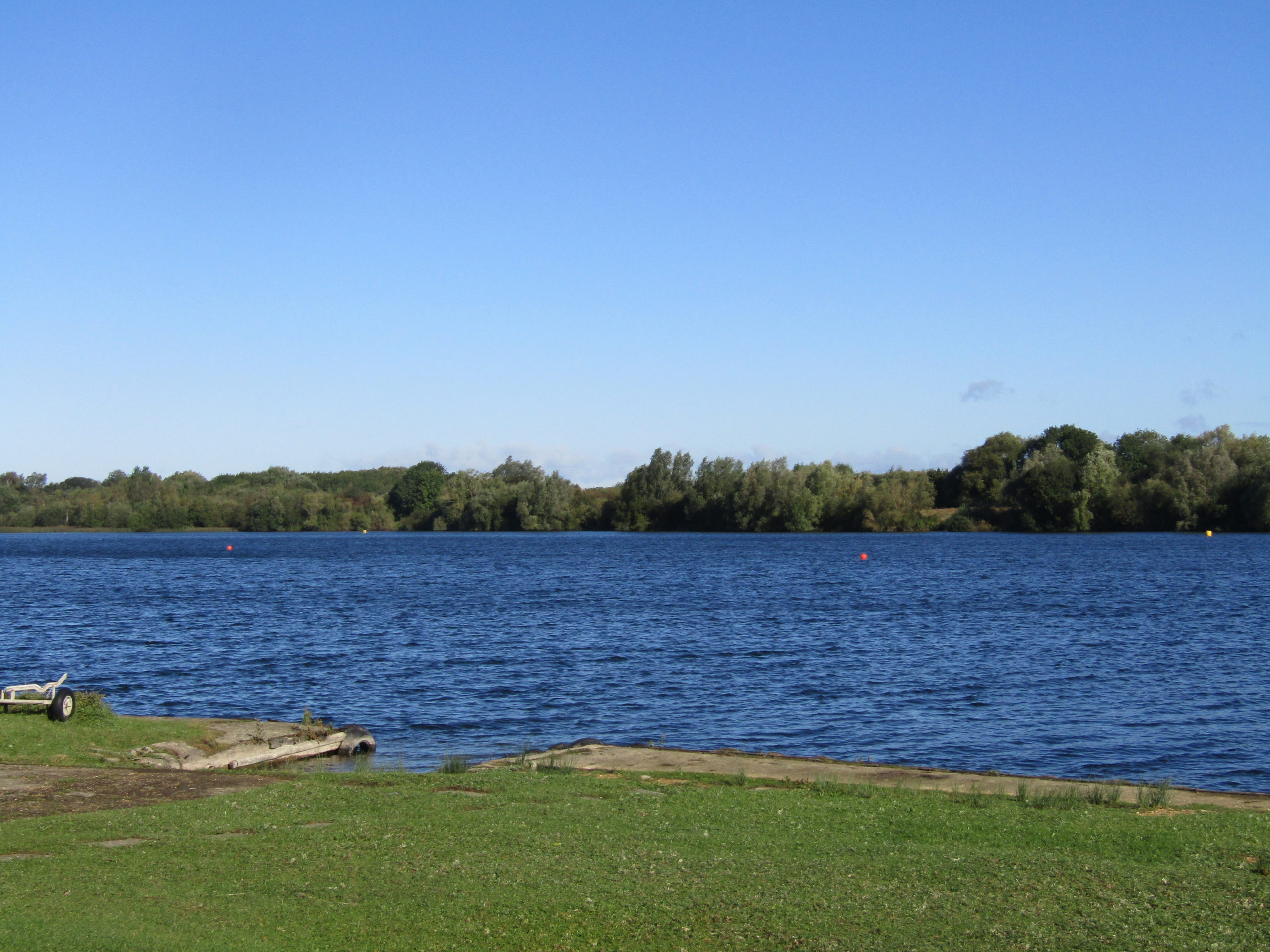
SAILABILITY AT WHITEFRIARS It’s arguable that the Cotswold Water Park ranks as Europe’s largest centre for water sports with its 150 lakes spread over forty-two square miles. It started out almost by accident, in the middle of the 20th century, as a result of much excavations for aggregates in the upper Thames region. As these diggings became exhausted natural flooding occurred, extending below the water table.
A lake – once nothing but a great hole
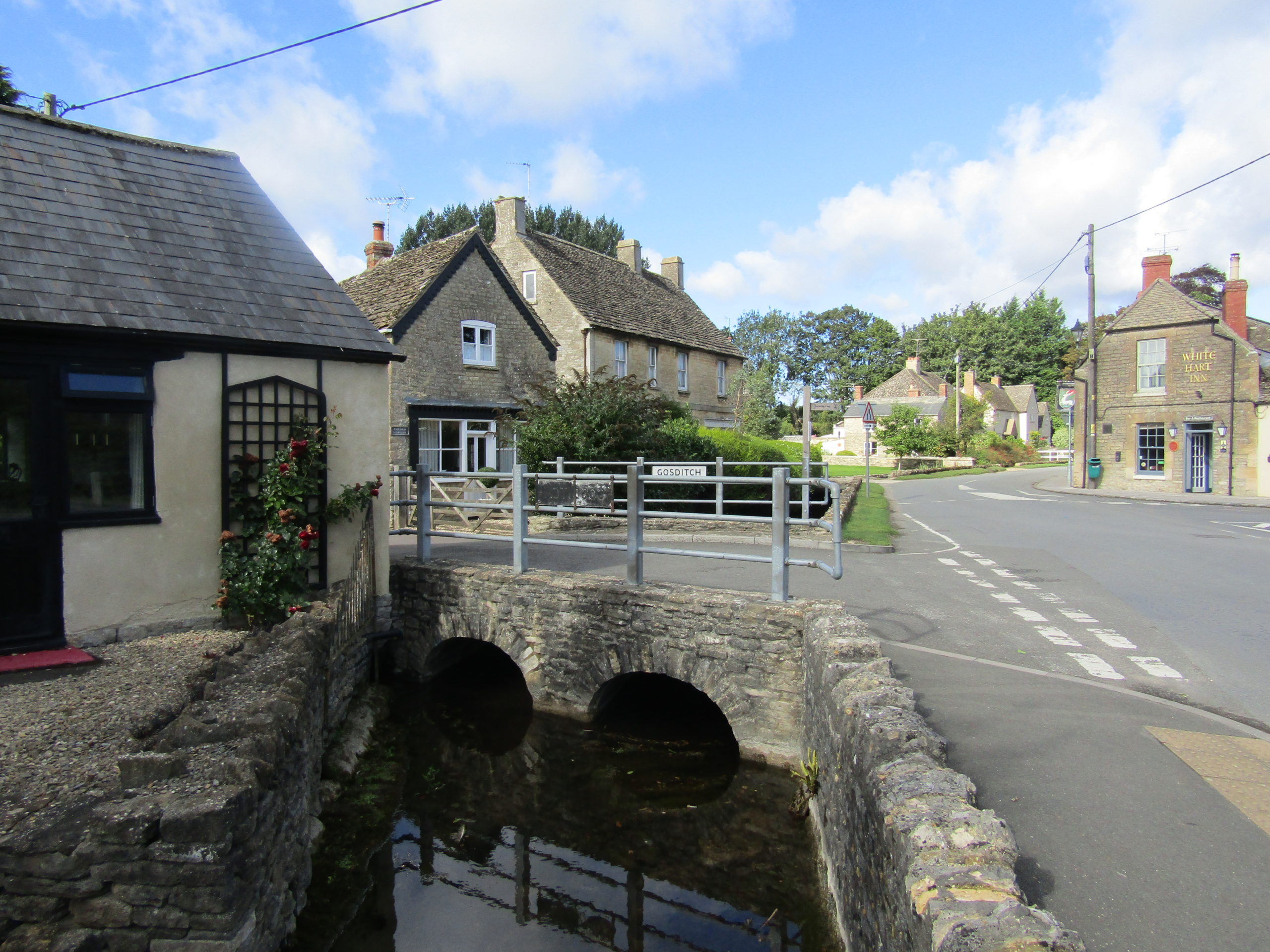
The river Thames at Ashton Keynes, a Wiltshire village now almost surrounded by water. In my article on the Kennet and Avon CanalI said that Wiltshire was a very dry county. Well, these days the people of Ashton Keynes would disagree with that.
Activities
The activities tend to hinge around wildlife watching and a wide range of water sports and fishing. But in fact there are many more things to do, ranging from golf to horse-riding and cycling.
There’s also a range of places to stay if you need accommodation. From holiday cottages or camping, restaurants and pubs and the Cotswold outdoors shop – there’s something for everyone. You could also use it as a base to explore such nearby places as Cirencester and Lechlade. The opportunities are endless.
Whitefriars sailing club
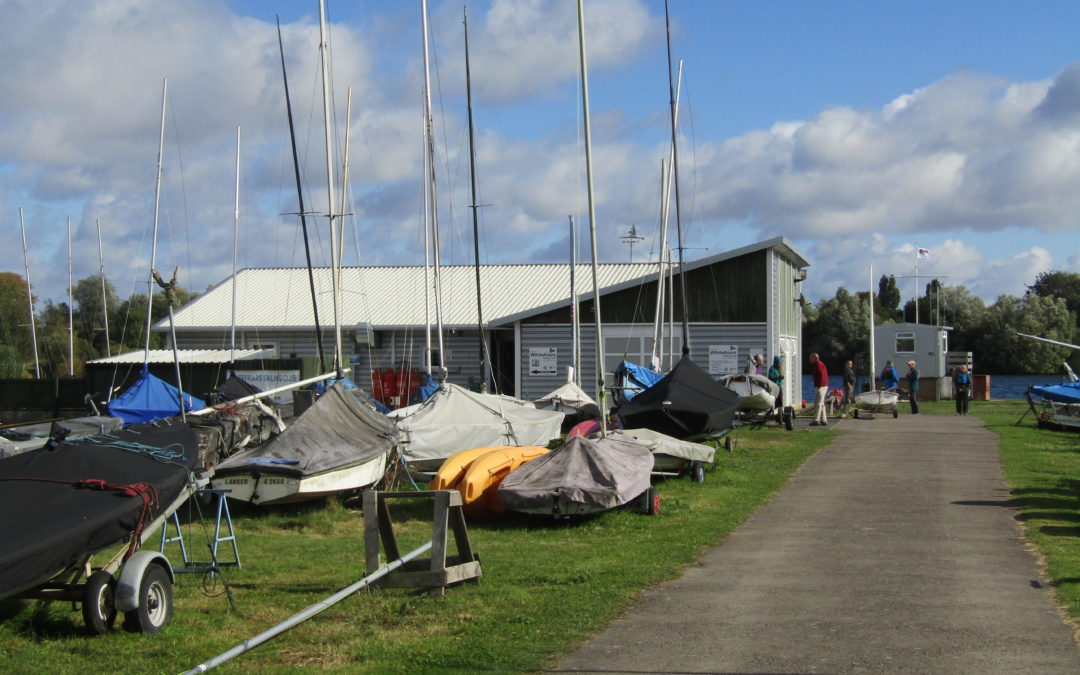
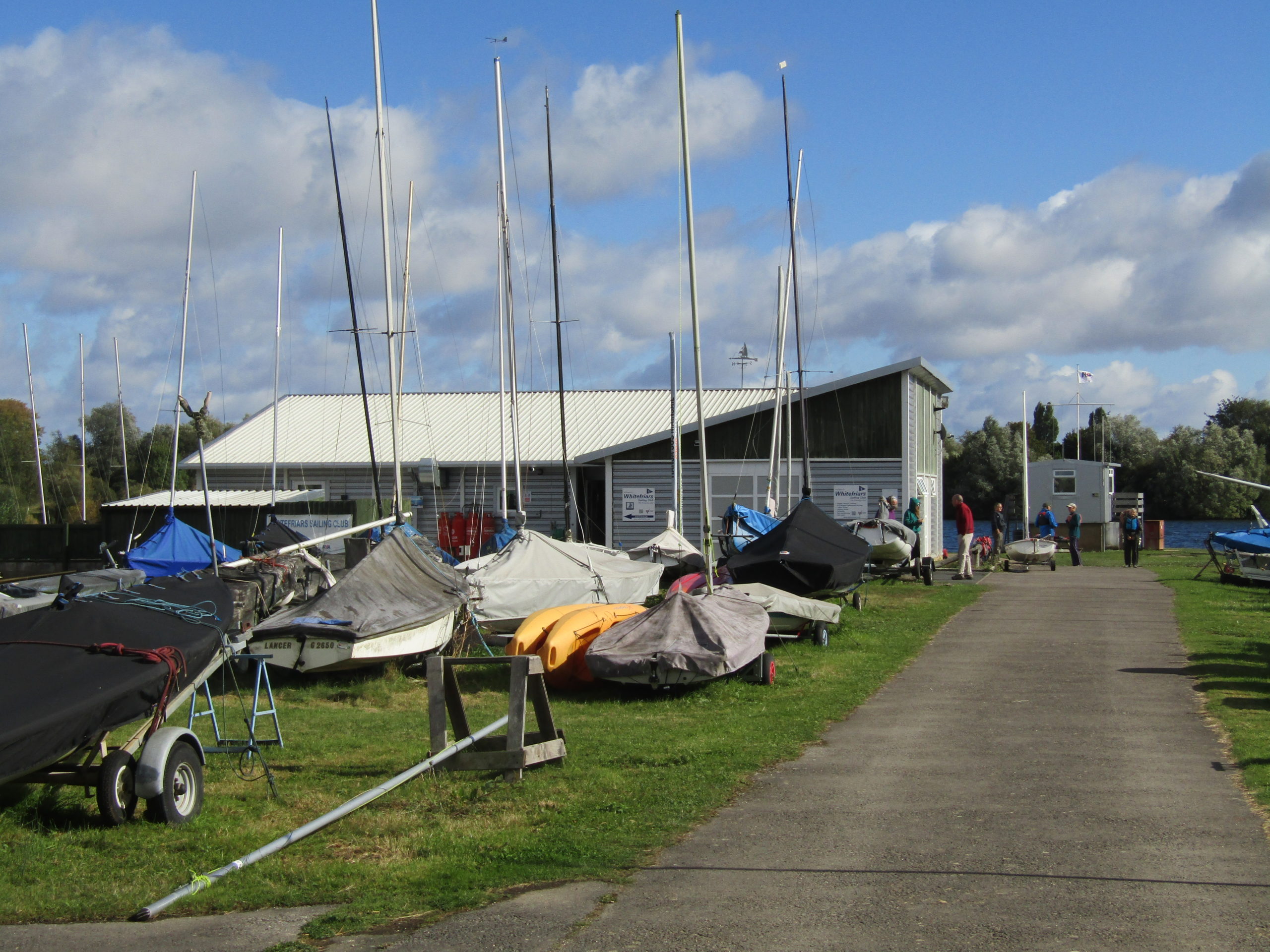
Whitefriars sailing club is one of the four (yes, four!) sailing clubs in the waterpark, a family club more concentrating on fun rather than racing. Thus you won’t feel menaced by an armada of predatory Optimist users. This club celebrated its first fifty years in 2019, so it has been going for a good few years. It lies this side of the Wiltshire/Gloucestershire border, north of Ashton Keynes.
Whitefriars clubhouse
They have groups for Racers, Ladies, Cruisers, children, SUP/Kayaks and even a radio control yacht section.
For the non-sailor in the family there is club social life, barbeques and camping, plus walks around the lake. Here there are lots of things to join in with.
Sailability
The Royal Yachting Association are quite committed to inclusivity and diversity including demographics. For instance, those very far from the sea, lacking money, and for all I know, prone to suffering mal-de-mer – all of which your scholar identifies as!
Sailability is the RYA scheme to enable the disabled to enjoy sailing. Not them alone though. But also parent’s partners and carers, and people who from age are not as able bodied as they used to be. Ergo, Sailability members are very different in abilities and experiences.
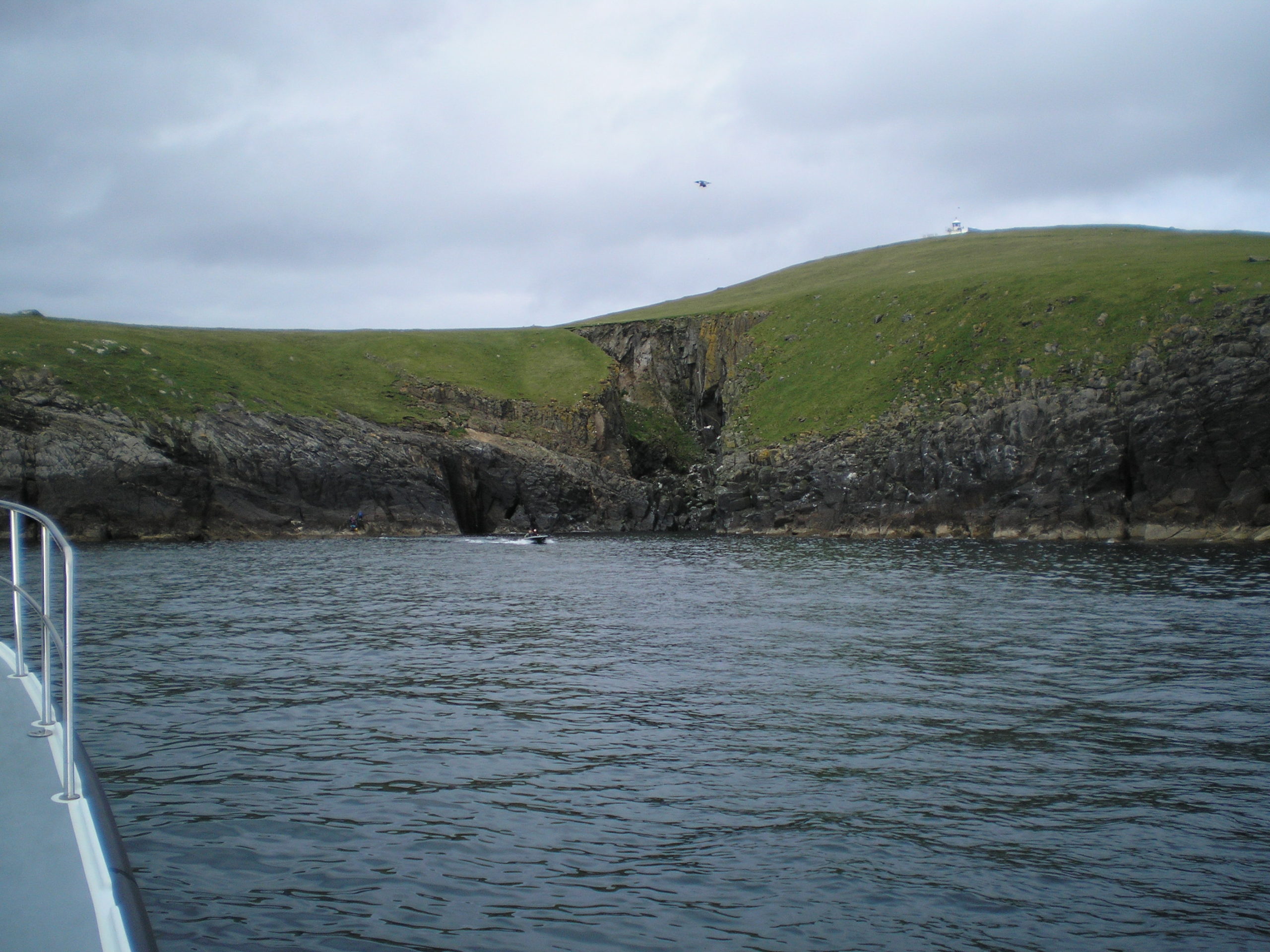
Now below is the proof that your lubberly scholar has indeed in her life been to sea, nay, experienced the real ocean; North Rona, which is further away than St Kilda. Our skipper is scouting out the landing. Never mind it looks like a cliff. (It is a cliff…) This is the landing. Oh what have I let myself in for?
North Rona
Certification
The scheme has its own certification that dovetails with the standard RYA qualifications. It runs from Entry to Platinum; Silver is the level equal to the RYAs Level 1. The last part is the Platinum, which has both a standard sailing and a racing section. Dinghy sailing is an area where the disabled can compete on equal terms with the able bodied. They also run a scheme called Powerability, for the power boat enthusiasts. Sadly though they don’t cover that side of seamanship at Whitefriars.
What we do
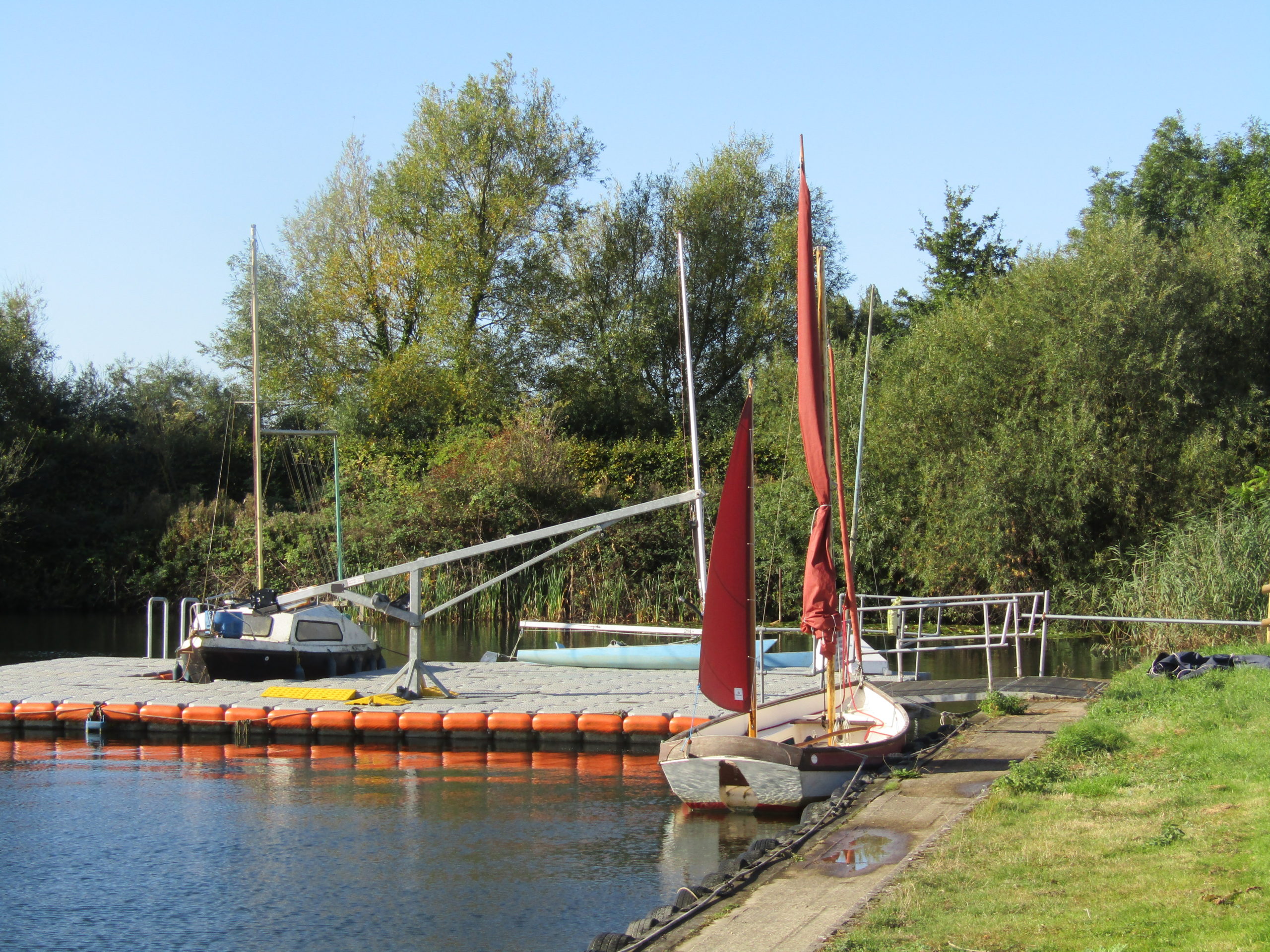
Our group has an extensive fleet, in the main comprised of Hansa 303s. But also a 203 and a couple of RS Ventures, two Wayfarers and a Drascombe Lugger.
The boats are of very different sizes and are suitable for people of different experiences, expectations and abilities.
They range from a Hansa 203 (7ft 6ins/2.3 metres) to a Drascombe Lugger. The largest vessel on the water (18ft/5.5 metres) it’s easily capable of taking a group of half a dozen schoolchildren.
Drascombe lugger
The Drascombe lugger, a famed traditional style modern class. Also can be fitted with an electric motor for pretending to sail on dead flat calm days. What these boats all have in common is they are very stable, indeed uncapsizable. Many such as the Ventures and the 303s are designed for use with little physical ability.
Volunteering is a vital part of the Sailability system, and the club are always looking for helpers in all capacities. Many learners go on to assist others.
The sailing season
The Sailability at Whitefriars season runs from April to October. So should you be disabled and interested in sailing, or want a fun and friendly place to volunteer, then why not get in contact with them now? You do not need to have had any experience in sailing craft. There will be a place suited to your commitments and experiences. I myself am going to use my extensive heritage experience to help pursue funding avenues.
My experience
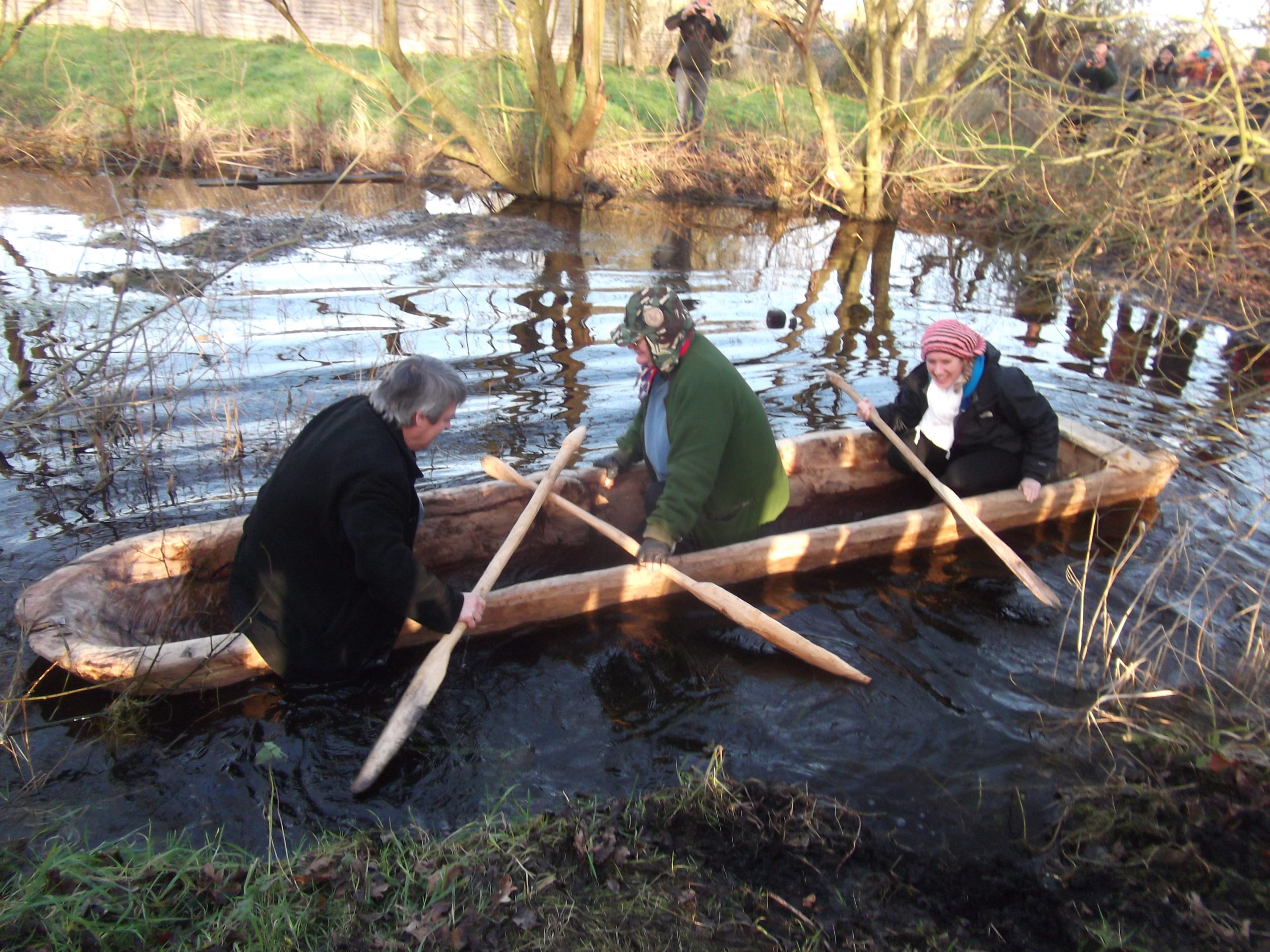
Previous to Sailability my boating experiences were a little more primitive. Here is me, (centre) my tutor and a fellow student at the then Avalon Wetlands Centre in Somerset.
I joined Whitefriars Sailability group in April of this year, having resolved to get out and do some activity after lockdown ended. (OK guys, did you do that? I do hope you did and followed it up).
I have always had an interest in boats and admired them when I lived in Cornwall – even having my very own sea view. Well if you stood on the drive and craned your neck a bit that is. But I never had the time, the money or the chance to join in. In Wiltshire I am so far away from the sea yet the Cotswold Water Parkis a mere ten minute’s drive away.
Now this was an opportunity to do things. Sailability membership is much cheaper than joining the club, something that can be very offputting.
So far I am doing very well. I attended most weeks and have worked my way through the levels, getting my Silver certificate (equivalent to the RYA Level 1).
The Gold level is mostly about putting what you learnt at Silver into practice. So currently I am working on getting to know different boats. I am struggling with the jib, but trust I will get used to it. That else get a dinghy with just one sail.
I am having great fun.
(All pictures by the author. Or, come to think of it, someone holding her camera).
‘Sailing is a fantastic activity for people with almost any disability, or if you’re not quite as mobile as you once were.
Sailability @ Whitefriars have the facilities, support, and boats that can enable people to not only sail leisurely, but to compete on level terms with everybody else if that’s what “floats your boat”. Families can get a lot from taking to the water and enjoying the experience and surroundings whilst learning a new skill together.
We depend on a team of well trained volunteers to provide a fun, safe environment. There are instructors and buddy sailors to help people to achieve their sailing goals, or simply to get the therapeutic benefits of taking to the water.
We need more volunteers!! – You don’t need to sail to help. Visit our volunteering page for more information.’