THE DUKE’S THEATRE COMPANY RETURN TO THE TOWN GARDENS THIS WEEKEND
Duke’s Theatre Company Return – theatre at town garden’s bowl
Duke’s Theatre Company Return to town gardens via South Swindon Parish Council. The Fairy Kingdom is at War. Oberon and Titania’s marital mayhem unleashes chaos on four young lovers with disastrous – and hilarious – consequences. In another part of the forest, a troupe of aspiring actors prepare for the most important night of their lives. It’s a command performance before the Duke and Duchess. As the King and Queen of the Fairy Kingdom become entwined with the human world, a night of madness, mayhem, magic, love, hilarity ensues. And don’t forget the donkey!
The course of true love never did run smooth
The Duke’s Theatre Company returns to the Town Gardens Bowl after their acclaimed, inaugural adaptation of Romeo and Juliet in 2021. This is a new and ambitious production for Summer 2022. It boasts live music, stunning design and theatrical magic. Further it promises to delight audiences with Shakespeare’s most comic and celebrated fairy tale.
Producer Bobby Delaney says: ‘This exciting UK tour visits some of our most beautiful and historic landmarks. It travel from Penzance to Pembrokeshire, stopping at Theatres, gardens, stately homes and castles. And in so doing, giving access to communities everywhere, including the Town Gardens Bowl in Swindon.
Building on the success of Romeo and Juliet in 2021, we’ve assembled an outstanding ensemble of creatives and actors to create a quality and original production.’
Get tickets now!
On Friday the 5th and Saturday the 6th of August. 7.30pm
According to British History online, he issued his paper, the Swindon Advertiser and Monthly Record, monthly – obvs. Following the 1855 repeal of stamp duty on newspapers, he published his paper weekly. By 1870 Morris had renamed the paper the Swindon Advertiser and Wiltshire, Berkshire and Gloucestershire Chronicle. Last issued as a weekly paper in December 1925, it thereafter became an evening paper, called the Evening Advertiser.
Following Morris’ death, his sons conducted the paper for some years. 1920 saw it acquired the Swindon Press Ltd. and in 1956 by Wiltshire Newspapers Ltd. The Swindon Press, however, remained the general printing company and both companies came under the ownership of the Westminster Press and Provincial Newspapers Ltd.
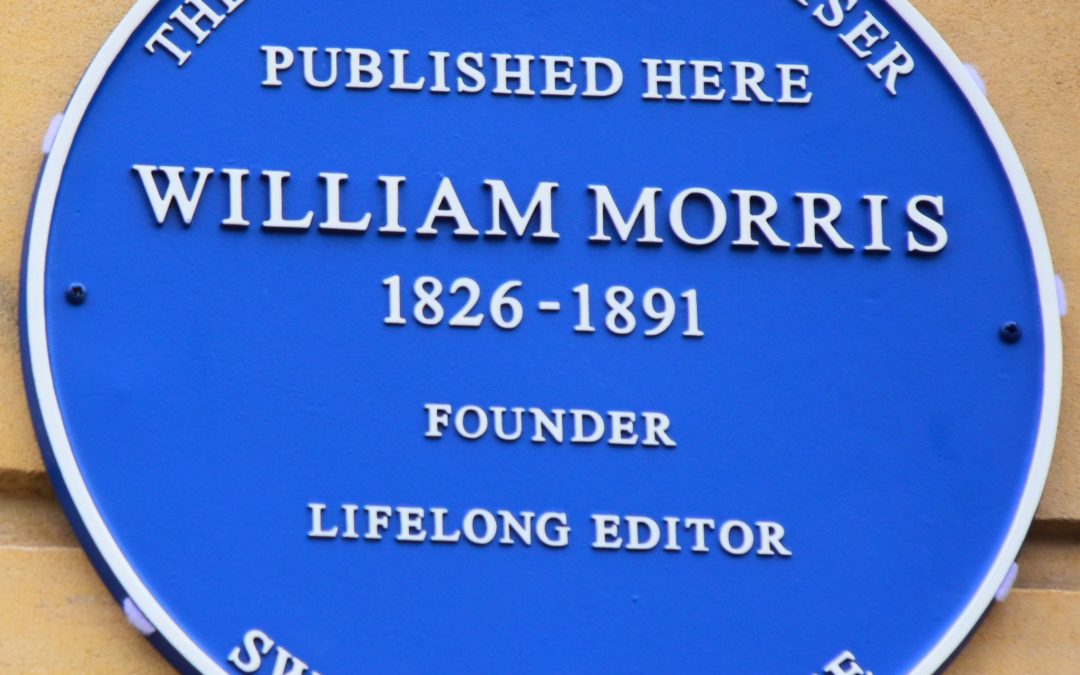
William Morris Blue Plaque on the Swindon Advertiser Building on Victoria Hill
Much belated recognition
This recognition for Morris has been a long-time coming. As Graham Carter said in his Adver column: ‘William Morris was the founder of the newspaper you are reading now, and an all-round great guy, but there has been nothing to commemorate him in the town, apart from the inscription on his grave at ChristChurch.’
*A new William Morris Way and a new William Morris primary school in Swindon are named for the Kelmscott William Morris.
Graham goes on to tell us that Morris authored Swindon 50 Years Ago, a still-must-read for anyone interested in the town’s past. But, as Graham also states, what makes him more memorable still, is his tireless championing of ordinary folk via is newspaper. He used it to spotlight anyone falling short of the high standards he felt should apply to people in authority, public office or privileged positions. For instance, the winter of 1861 saw him berating the local gentry for organising a BBQ on a frozen Coate Water using surplus meat as a football. This at a time when people were struggling to afford food.
One could argue that our national and local politicians could do worse than take a leaf out of his book. I’ll go for it – I’ll argue it. They could! Boris Johnson spending £500 a roll on wallpaper anyone???
So – as Graham said: ‘He is surely one of the greatest men to never have a road or a school named after him?’
Noel Beauchamp at the plaque unveiling
Desmond Morris
I can’t call this post complete without mentioning one of Swindon’s most famous sons, Desmond Morris. How so? Ad what’s the relevance? Well because Desmond Morris is the great, great grandson of our William Morris – the founder of the first penny newspaper.
NEW PERFORMERS TAKE A LEAP OF FAITH TO JOIN REVOLUTION PERFORMING ARTS
RPA Gets New Performers Swindon-based company Revolution Performing Arts welcomes new talent, Louise Montague and Charlotte Simonis to their leaders.
As the performing arts company enters a busy summer of classes, Louise and Charlotte bring their years of professional experience to RPA. They’ll support children with singing, dancing and acting in Swindon and the surrounding areas.
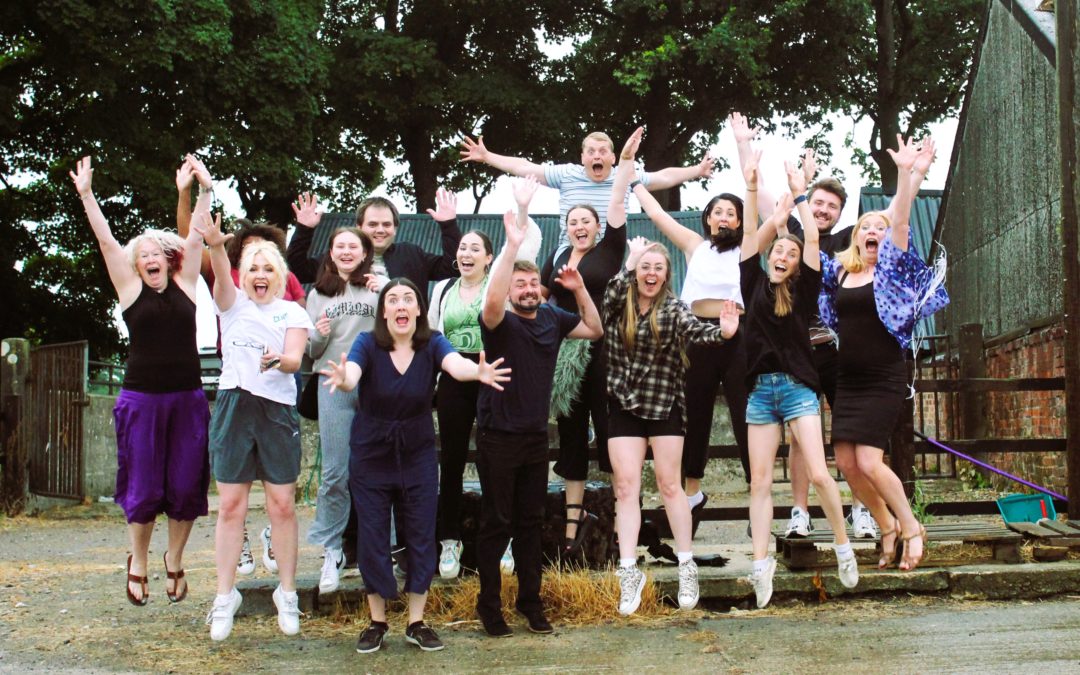
Revolution Performing Arts team including founder Fi Da Silva Adams (far left, purple skirt) and new leaders Louise Montague (second in from right in denim shorts) & Charlotte Simonis (camera right of Fi Da Silva Adams in white top, grey shorts, front row, big smile).
The new additions – RPA Gets New Performers
Louise, 36, is starting as a dance leader. She trained at the world-renowned Tring Park School for the Performing Arts and has worked as a cast member in Disneyland Paris.
She said: ‘I’m beyond excited to reignite the fire inside me for dance. I’ve danced my entire life. I started at Haven holiday park as a dance leader, and I’ve been fortunate to showcase my talent a lot since! I’ve got lots of experience as a dance teacher as well as being a dancer. Children are always excited when I mention I used to work at Disneyland Paris. I can honestly say I’m good friends with Minnie Mouse and Cinderella!’
Having two children herself and previously teaching baby ballet, Louise acknowledges the joys of working with young people and the positive effect you can have on their lives.
Charlotte, 29, is starting as a sing leader at RPA. She’s trained at London School of Musical Theatre and worked with many professionals including West End musical performer Kerry Winter.
‘I love leading the children in singing – it’s such a blessing to see their confidence grow. Nothing means more to me than seeing them go home with a smile because they had FUN!’ Charlotte said.
Charlotte also has a six-year-old daughter, so appreciates the dedication and optimism children bring to her lessons.
RPA
One of the South West’s leading performing arts companies for children and young people, Fiona Da Silva Adams founded RPA n 2007. The company specialises in empowering young people and now adults to celebrate their individuality through the power of performing arts.
All the teachers are DBS checked, trained in first aid and receive training in safeguarding protocols. For more information visit https://revolutionpa.co.uk
GIANT SEA PUPPET VISITING SWINDON TOWN CENTRE TO HIGHLIGHT CLIMATE CRISIS
A 4-metre-tall puppet tells a moving tale through dance, movement and masterful puppeteering
As part of Ocean’s Awareness Week and raising awareness of the climate crisis, on Sunday 31st July inSwindon BID Co. and the Wyvern Theatre will welcome ‘Out of the Deep Blue’ to the town centre. Out of the Deep Blue is a large-scale outdoor performance.
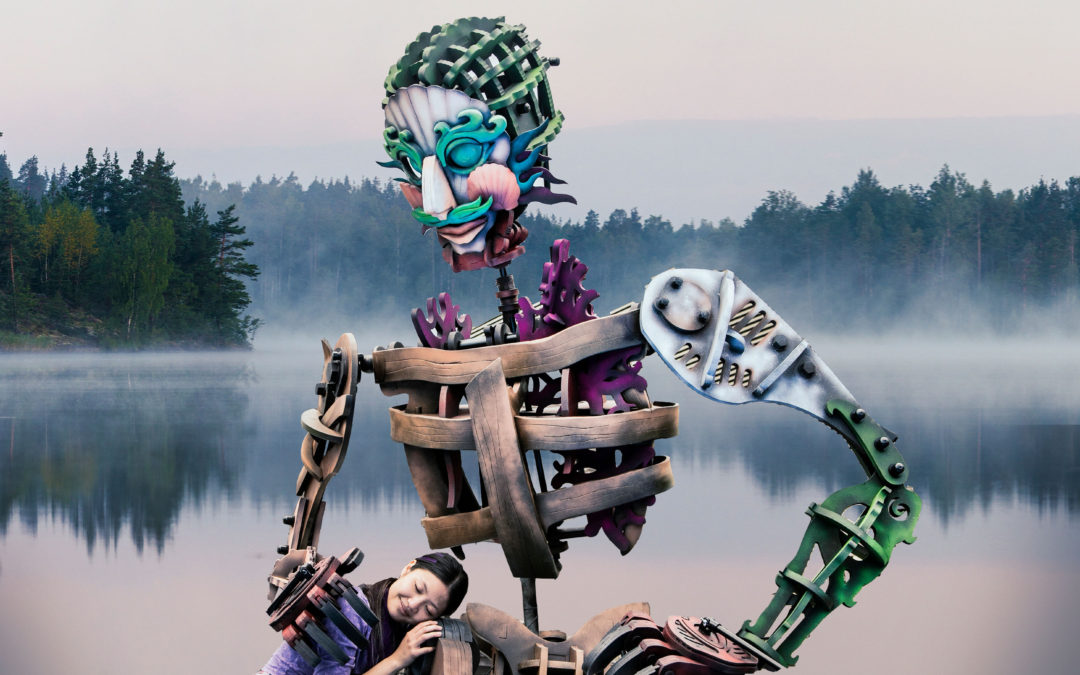
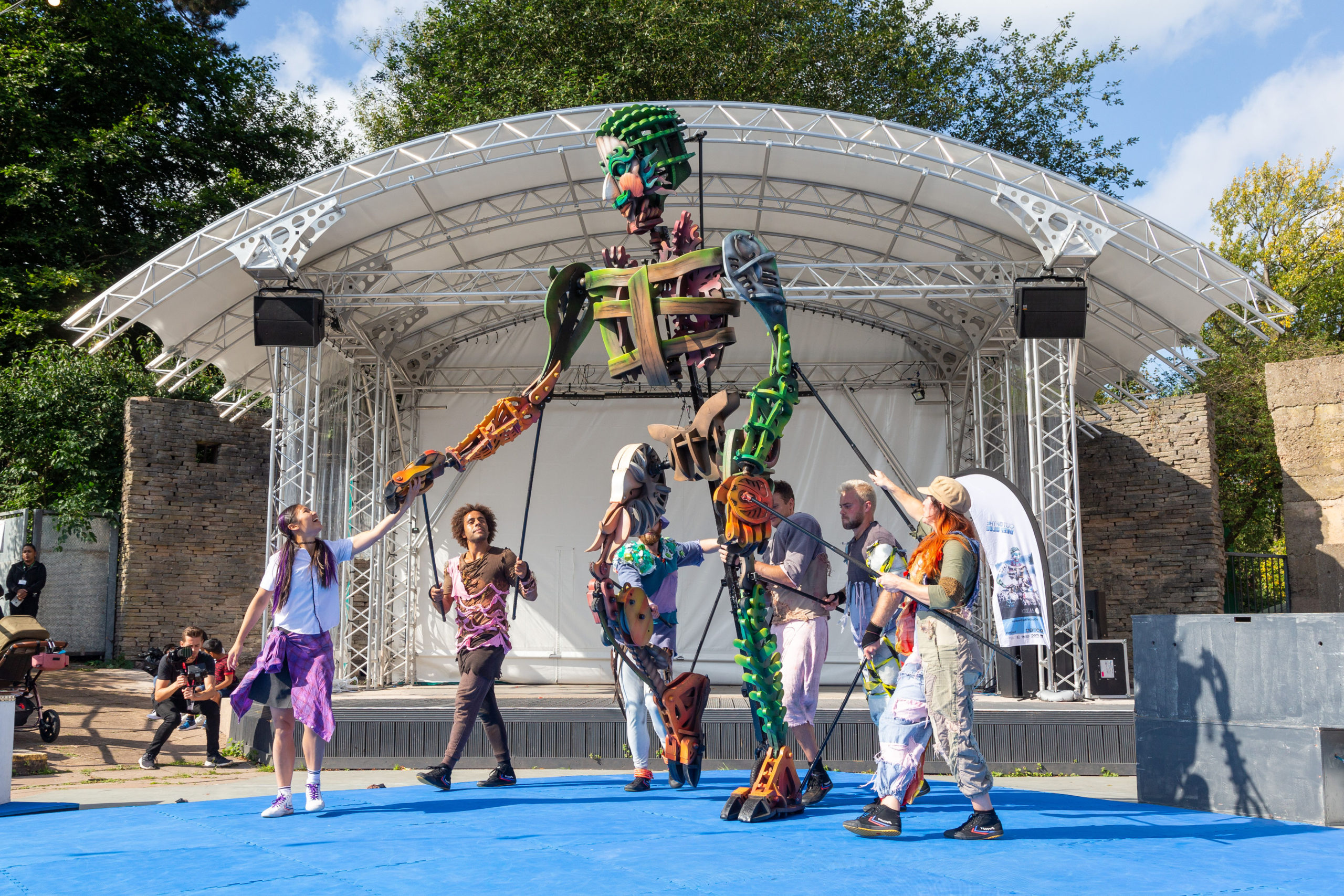
It features a 4-metre-tall sea giant puppet and a contemporary dancer. All inspired by the themes of the climate emergency and biodiversity crisis.
Created by Autin Dance Theatre, this physical theatre performance five world-class puppeteers operate the puppet. There’s also a contemporary dancer. The spectacle’s designed for family and festival audiences. It tells the magical story of Eko, a sea giant. Eko rises from the deep ocean and encounters, on the shore, a courageous little girl called Violet. It’s a story about the power of empathy and collaboration between these two beings – an ancient creature and a dispirited teen.
Out of the Deep Blue – giant puppet
Performance times for Out of the Deep Blue
Three performances will take place throughout the day.
Starting Times from Wyvern Theatre: 11.30, 14,00 & 16.00
‘Out of the Deep Blue’ exists as a two-part performance:
A promenade starting at Wyvern Theatre, Theatre Square, where Eko the Sea Giant will make his way along Regent Street and Canal Walk. As he goes he’ll interact with the environment and his audience as he heads to Wharf Green for his 25-minute dance theatre duet.
Laura James, Theatre Director for Wyvern Theatre, says, ‘We’re thrilled to be partnering with InSwindon BID on this project. We’re grateful for their support, allowing us to bring the fantastic Out Of The Deep Blue right to the heart of Swindon. This will be a completely unique spectacle. It’s something that families and individuals in our community can engage with and enjoy free of charge and without having to travel out of town. It’s a real opportunity to experience live theatre on your doorstep!’
Associated activities
Alongside the performances, there’ll be craft activities at the crossroads, by the fountain, provided by Prime Theatreand Artsite for all the family using recycled materials to make your own monster.
inSwindon BID Co. Director, Anita Bellinger says,‘It’s wonderful to work in partnership with our ever-inspiring Wyvern Theatre to bring accessible, live theatre to the heart of the Town Centre.
This will be a vibrant festival experience for the community to enjoy, free of charge. One that raises awareness of the very important issue of the climate crisis. It’s of particular local relevance now that the Council have passed the much-needed climate emergency motion.’
Created in 2021, ‘Out of the Deep Blue’ made extensive tours in summer/autumn 2021 across the UK.
There’s pre-recorded audio description available including audio notes before live performances and streamed AD in vernacular English.
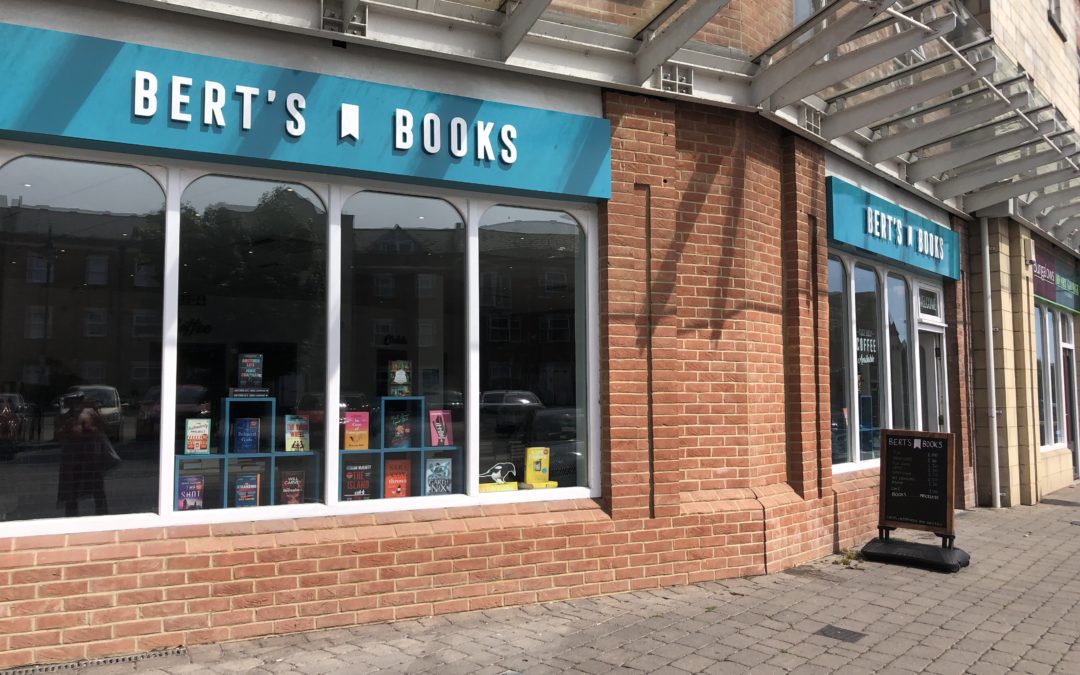
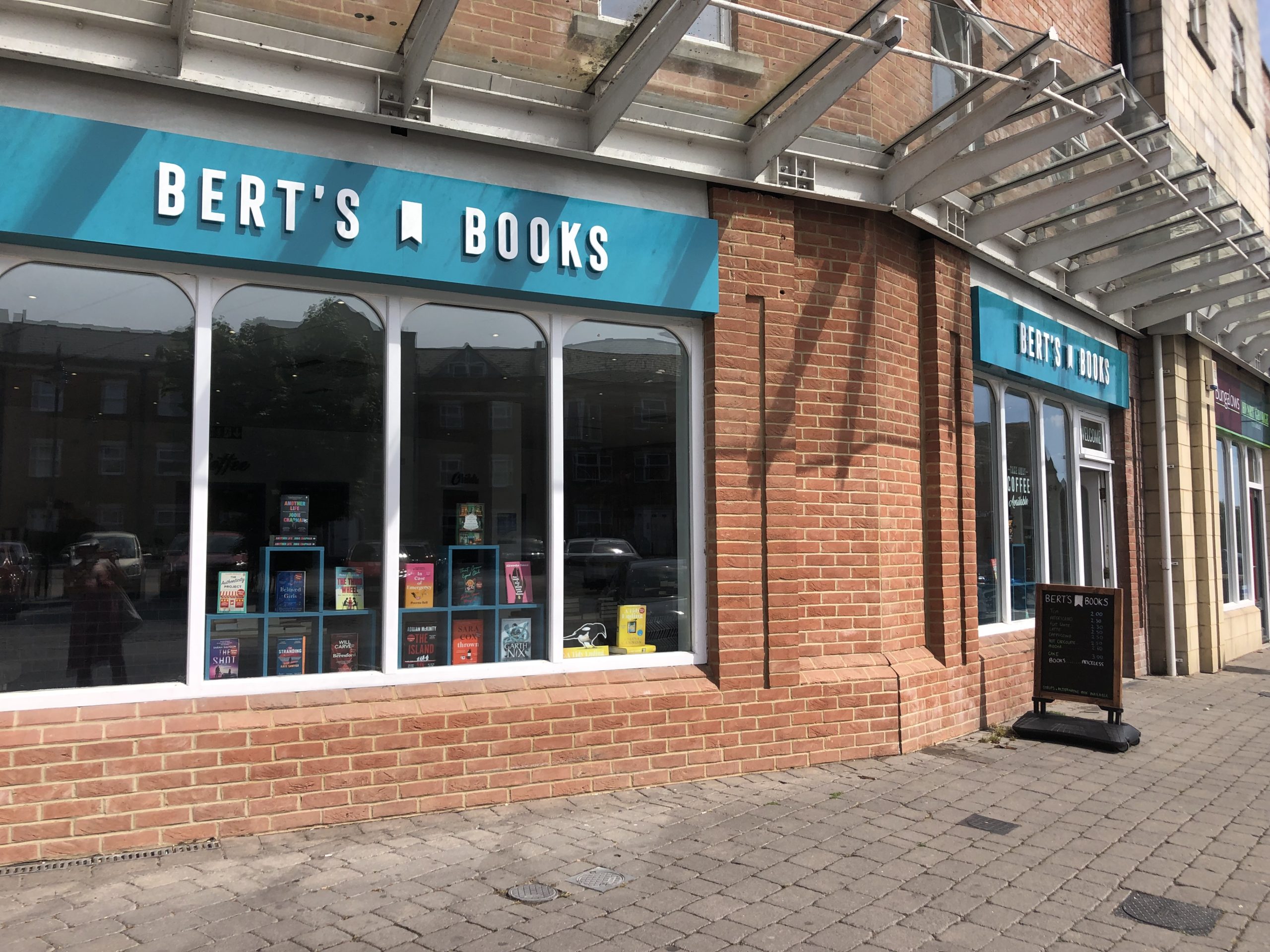
Bert’s Books Swindon. It’s taken me a while to get to this – I’ve a long list. But at last, here I am with a few lines about Bert’s books Swindon. Bert’s Books, has morphed from an online bookstore – and that still exists here – to a physical store in Swindon’s Old Town.
Bert’s Books Swindon
Where is it?
That’s kind of important eh? You’ll find Bert’s Books Swindon at:
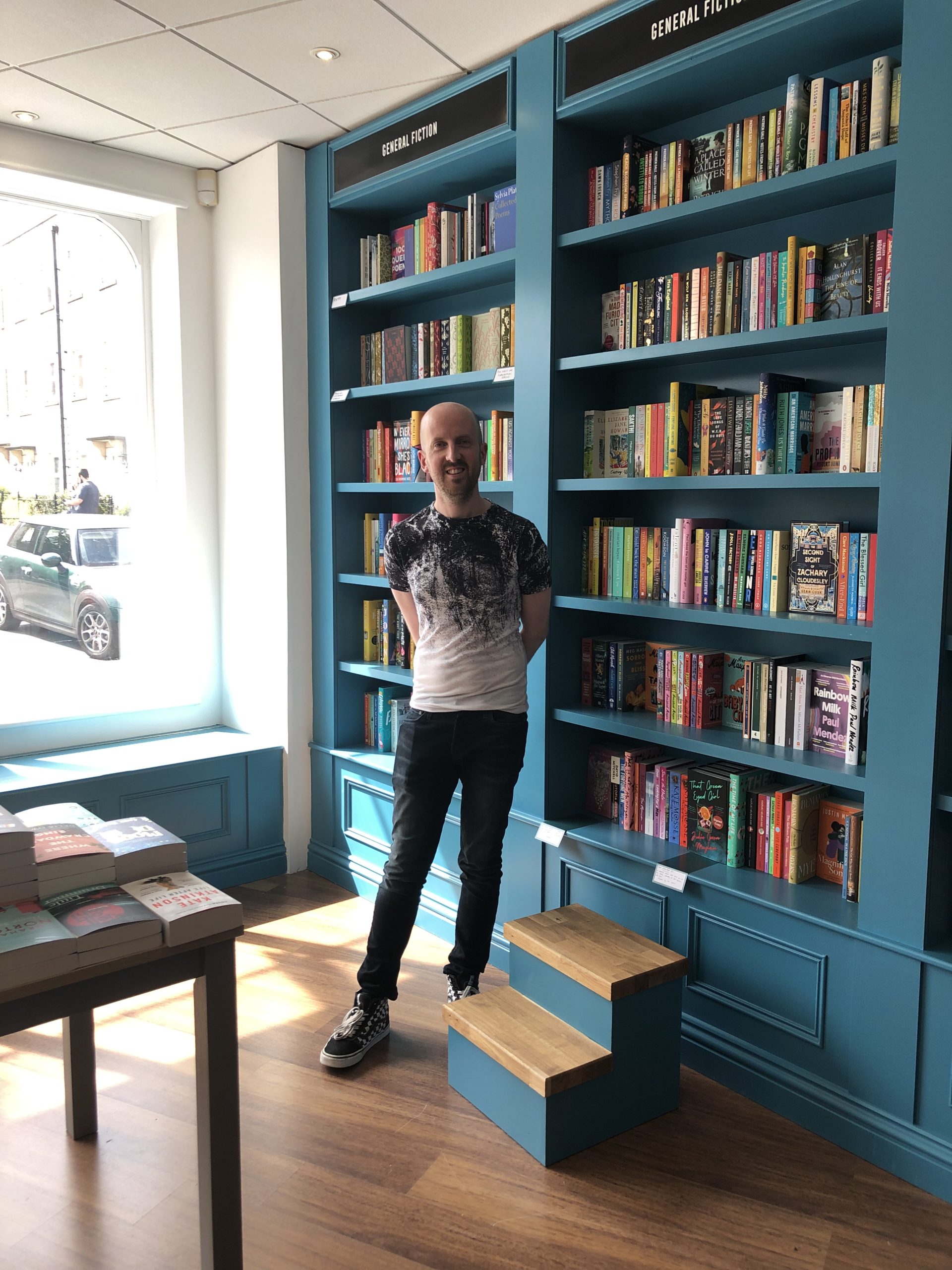
Bert, aka Alex Call, began his working life in the book world with WH Smith. Bert’s career there lasted for sixteen years. Three of them as a shop assistant in the Swindon branch, followed by thirteen years in head office as head of book marketing and promotion. Take a look at his Twitter feed and I think we can agree that experience stood him in good stead.
But then, in 2019 came redundancy. And that is when he set-up his Bert’s Books website – see the link above. His original plan with the website was to sell books he’d reviewed on his blog. He also set up a subscription service:
‘Subscribe to one of the monthly bundles or visit the shop and pick out some of the great books already selected. If you can’t find what you’re looking for then use the contact page to send your request.’ But then the pandemic happened and the subscription service took off.
Ambitions
So! The website was going well with the subscription service simply flying. But Bert’s ultimate ambition of opening his own book store remained unachieved – in no small measure thanks to the pandemic. Until earlier this year that is when the gorgeous shop you see above, opened its doors.
The focus of the shop reflects that of the website. There you’ll find a great mix of commercial books, non-fiction – and a lovely children’s section. Bert is also on a mission to uncover hidden gems from areas of the community that are less well-represented.
Plus ….. there’s good coffee to takeaway – and cake too. So, y’know, what’s not to love?
The personal touch
The Bert’s Books website declares: ‘Welcome to Bert’s Books, your online bookshop with the personal touch.’
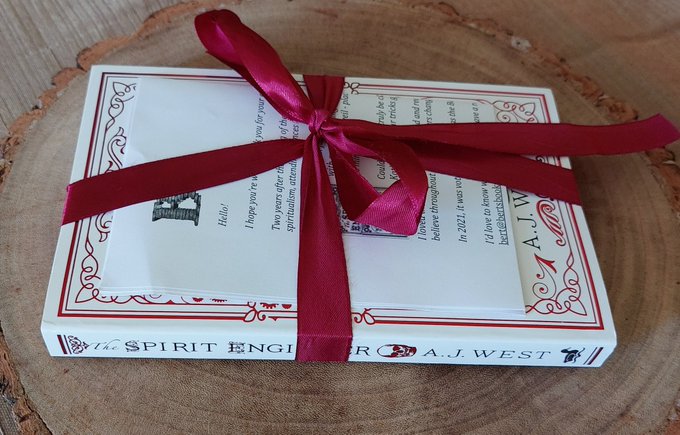
And it does have that for sure. Order a book from the website and it arrives with a ribbon wrapped around it. This is now a legendary touch amongst Bert’s followers.
Bert is also super responsive. See a book you want and you can’t get to the shop? No problem. Message Bert and he’ll get it onto the website quicker than you can blink. It doesn’t get much more personal touch than that!