Businesses Need an AI Policy warns HR experts, the HR Depart. With the AI genie firmly out of the bottle, HR experts are urging all employers to draw up an AI policy – and fast!
Peter Jones, Managing Director at Swindon-based HR Dept, said AI has the potential to be a fantastic tool for businesses. But, if used unchecked, it could spell disaster.
At HR Dept, we’re increasingly getting asked about AI. About its role in the workplace and whether businesses should adopt an AI policy, in the same way that they have policies on areas such as parental leave, flexible working, or health and safety,’ said Peter.
Businesses Need an AI Policy – Peter Jones of the HR Dept
It’s out of the box
‘AI isn’t going to go back in the box. So one way or another it will have a relevance. Our advice is to embrace this emerging technology and recognise that it can be a useful resource.’
But Peter warned use of AI was not without danger – hence the need for an AI policy.
‘It’s important to bear in mind that AI – without limits – presents several risks. Not least or which are data protection, accountability, transparency and ethical conduct. Drawing up an AI policy will help mitigate these risks.’
Peter said a policy should be bespoke to each business. But would include common elements, such as details of what training the business owner will offer on how to use AI tools in a responsible fashion. And the risks associated with misuse. It should also cover who within the business has permission to use AI and who doesn’t.
Peter added: ‘A policy should communicate what the expectations are within the business aprops the use of AI. That’s including what is acceptable use and what isn’t. For example, tasks which have a legal or financial consequence and tasks requiring the input of confidential information or personal data are likely to be ruled out.
‘It’s also important to give a clear outline of communication lines for queries with AI. And keeping management informed on what it’s intended use is – before using it! There is a need to maintain oversight.
‘We’re very happy to chat through AI policies with employers and advise on what areas they should cover.’
The HR Dept
The HR Dept Swindon, North Wiltshire and East Cotswolds are HR specialists supporting clients in a range of sectors. They include:
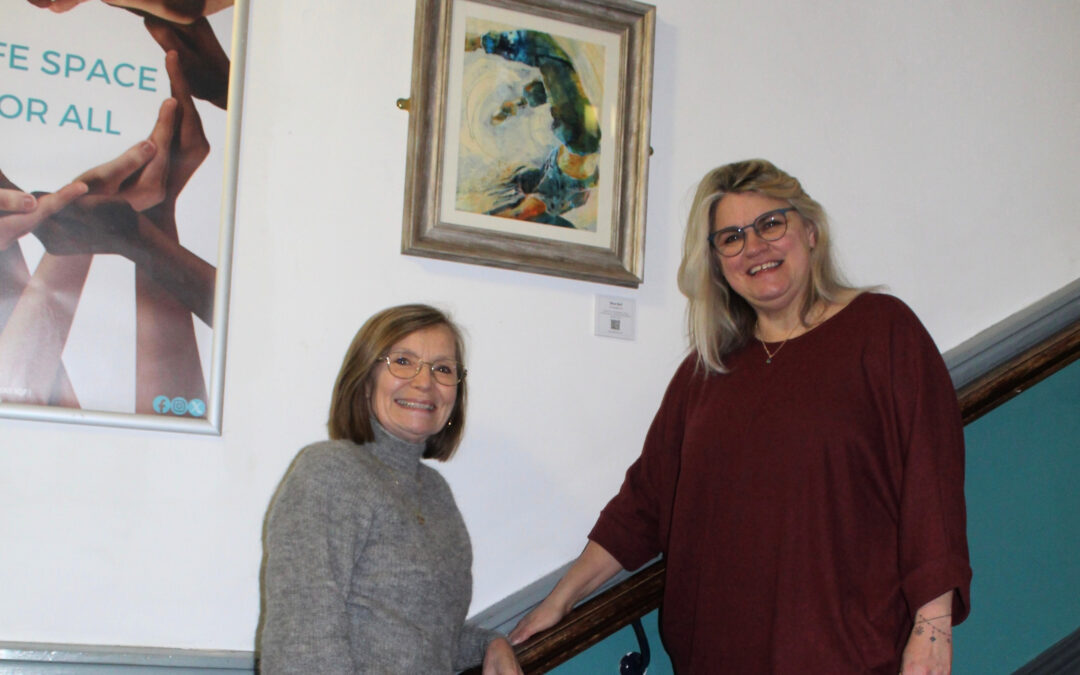
Swindon Dance hosts Art Exhibition. Swindon Town Hall, home to the nationally renowned Swindon Dance, is hosting an exhibition of original art by local artist Sheryll K Fox. You’ll find her artwork displayed through-out the Grade II listed building across the next few months. All culminating in a celebration evening in July.
Regular visitors to the Town Hall can enjoy a selection of Sheryll’s paintings that hung in the reception area at the start of the new term. Thus they provided a taste of what’s to come. While the building isn’t open to the general public, Swindon Dance is organizing a special event in July when visitors can view and appreciate all the artwork.
Swindon Dance hosts Art Exhibition – Swindon dance CEO, Viv Slayford and artist Sheryll Fox
Artist Sheryll said, ‘I love the challenge of capturing movement in my art. And so sketching at Swindon Dance has been an amazing and inspiring opportunity for my art practice. I’ve felt captivated by the exceptional teachers and the dedicated students that I have observed over the past year or so.’
The exhibition
The exhibition, titled ‘Moving Moments,’ in the historic Swindon building will feature an eclectic mix of expressive paintings. Many of them take their inspiration from dance and drama, as well as stunning landscape views of the Wiltshire countryside. Sheryll’s style combines a rich use of texture, layers and mark-making with strong observational techniques. She begins by sketching from life. And then she develops her ideas into paintings in her home studio in Wanborough, Swindon.
Viv Slayford, Director and CEO of Swindon Dance said ‘At Swindon Dance, we hold a fim belief in enriching lives through dance. That everyone regardless of age, creed, gender or background should have access to enjoy the richness of art and culture in their lives. In presenting Sheryll’s beautiful paintings in our beautiful Grade II listed building, we’ll be continuing to enrich the cultural experience for our local communities and everyone who uses our building.’
For further information about the celebration event or the artist contact Sheryll K Fox sheryll@skfoxart.com Or visit her website www.skfoxart.com
For inquiries about Swindon Dance events, activities, and classes, please visit www.swindondance.org.uk.
It is rather a pity that our town hall, as designed by Brightwen Binyon, isn’t open to the public. Because, assuming it’s still there, the large studio upstairs features a large mural by Swindon artist Carleton Attwood. Carlteton also created, amongst other things, a bust of Diana Dors, the golden lion in the town centre and The Watchers at Toothill village centre.
And then there’s this – Charlotte Corday the so-called Angel of Assassination – she who famously murdered Marat in his bath! You’ll find this statue of her in the foyer of Swindon town hall.
Festival of Tomorrow Booking Open at www.festivaloftomorrow.com – Prepare to explore Our Future Earth as the Festival of Tomorrow announces unmissable 2025 programme.
Get ready to experience the Earth from a new perspective! Swindon’s popular Festival of Tomorrow returns with more venues, events and activities than ever before from the 12 to 23 February.
The festival, which takes place each February, will bring together artists, performers, researchers, universities, charities and organisations from across the UK. Between them they’ll explore the theme Our Future Earth. And they’ll do it through a programme of spectacular performances, thought-provoking discussions, immersive art, hands-on workshops and FREE drop-in activities for all ages.
Festival of Tomorrow Booking Opens 10 Feb – Luke Jerram – Gaia
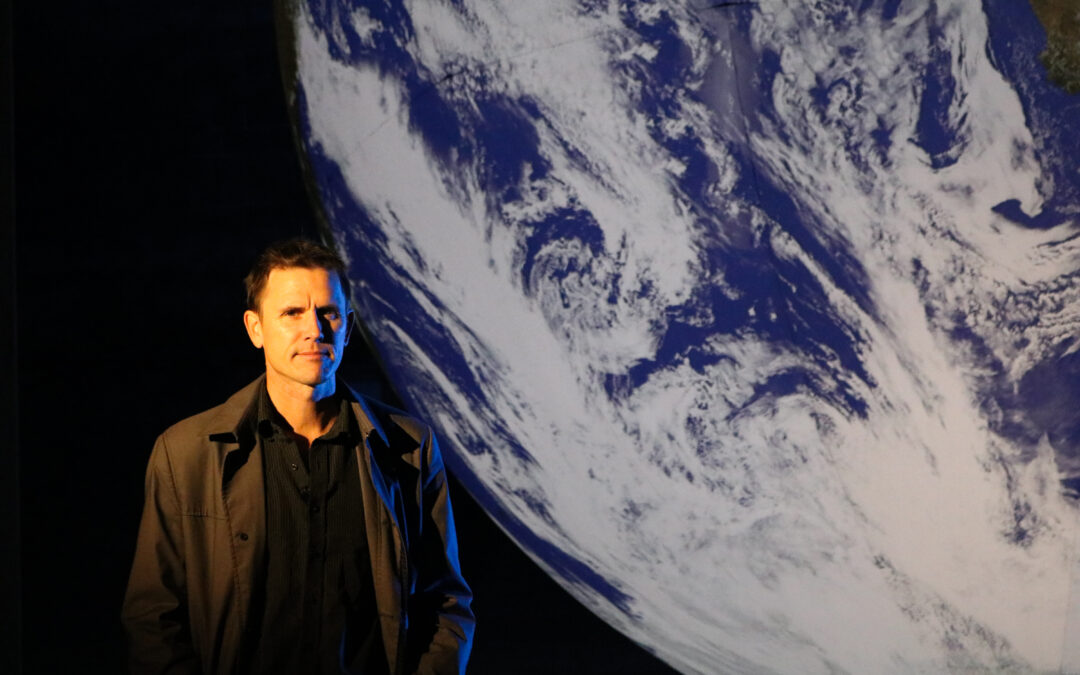
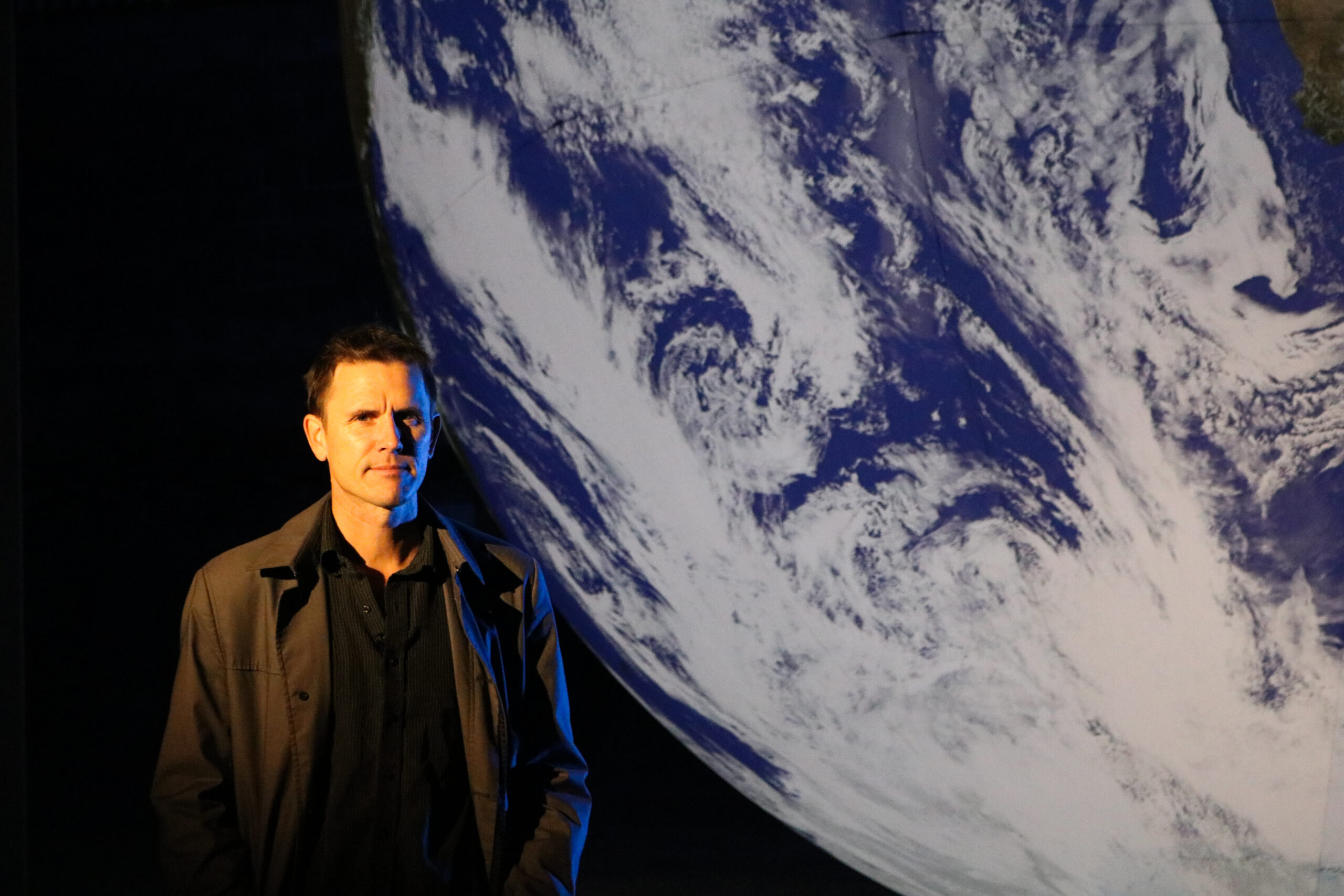
Luke Jerram and Gaia
Bristol-based artist’s Luke Jerram’s giant touring Earth artwork, Gaia, will be presented at Steam Museum during the half-term week. It’s at the heart of a curated programme of:
Events
FREE family activities
Workshops
Performances and exhibits inviting festivalgoers to re-imagine the Earth of the future
Measuring six metres in diameter, Gaia features 120dpi detailed NASA imagery of the Earth’s surface. The artwork provides a unique opportunity to see our planet on this scale, floating in three-dimensions.
Shoppers at the Designer Outlet will journey into the heart of our blue planet. They’ll do it with a fin-tastic sea creature superpowers family trail and immersive activities from Incredible Oceans. All including the opportunity to get up close and personal with fascinating items like an orca skull, shark jaws and dolphin leg bones.
Meanwhile, Swindon-based Neon Dance will present a fascinating sound installation activated by the moving body. That’s including wearable sound sculptures which bring together music, dance, art and technology. Plus look out for a team of young guerrilla street theatre scientists who will be enlisting your help in their experiments.
Festival favourites
Festival favourites Air Giants will return to Swindon with HotHouse. Look forward to an interactive garden of 2.5 metre tall other-worldly plant sculptures, brought to life with movement, light, air and Air Giant’s pioneering robotic technology. The installation will form the focal point of nature-inspired creative activities at the historic Carriageworks. Including the Festival of Tomorrow’s first ever Open Art Exhibition featuring submissions from talented local artists of all ages and experience. Visitors will also be able to register to take part in a series of free workshops with Artist-in-Residence, Jo Beal and other creatives.
The programme also includes evening entertainment for adults and teens. There’ll be a fun alternative to your standard Valentines’ date night in the form of FoxDog Studio’s RoboBingo. That’s an interactive, smartphone powered comedy act like no other. Storyteller Carl Gough blends myth, personal narrative and vivid true-life stories in his unique one-man storytelling show, Nexus – organised by local voluntary organisation, Forging Fantastical. Also featured will be a special Sofa Screening of the compelling documentary, Cyborg. It explores self-design and humanity’s technological future-to-be. All followed by Q&A and discussion with director Carey Born and a panel of expert speakers.
Discovery, innovation and creativity
The excitement culminates in two action-packed days of discovery, innovation and creativity for all ages at the festival finale. It’s hosted once again by the Deanery CE Academy on Friday 21st and Saturday 22nd February. Visitors can look forward to exploring four FREE interactive Discovery Zones packed with:
Amazing demos
Intriguing exhibits
Hands-on activities and …
… challenges and free workshops from organisations including:
The James Dyson Foundation
Catalent
The University of Bath
Swindon Paint Festival
The European Space Agency
Kings College London
the Woodland Trust and United Kingdom Research and Innovation (UKRI).
Festivalgoers of all ages will be able to journey to the stars with a free planetarium show. They can also:
Imagine the technologies of the future through a space-inspired art workshop
Delve into how the body works
Meet the organisations working to protect our planet
Or meet T-1-FNY. That’s the only domesticated battlefield robot, in a special display from Swindon-based creative manufacturing company Podpadstudios exploring how AI and machine learning are changing the world.
And if that’s not enough excitement, the line-up of inspiring talks and spectacular family shows are sure to get you fired up!
UK Research and Innovation (UKRI) Chief Executive, Professor Dame Ottoline Leyser, said: ‘The Festival of Tomorrow is an important part of Swindon’s cultural calendar. I have so enjoyed the festival over the last four years. There’s always a great range of exhibits and activities, taking a hands-on approach to telling the stories of research and innovation. I’m delighted that UKRI is supporting the festival. It brings together researchers and innovators and a wide range of people to learn from each other. Further it brings to life the programmes and projects that we fund across the UK.’
Book early! …
… the immortal words of Fred Pontin on his TV ad from a million years ago are worth heeding. Indeed organisers are urging festivalgoers to book early at www.festivaloftomorrow.com to secure their spots on ticketed events and workshops, after many shows soon booked up last year.
Tickets for under 18s are free for almost all events. An adult ticketholder must accompany under-16s.
Some of this year’s must-see highlights include:
Top ticket picks for families
Marine Monsters
An exciting show from marine biologist and presenter, Dr Elizabeth Mills. Learn how your favourite UK sea creatures move, feed and protect themselves. Then decide as an audience which of those are your favourite ways to create a Marine Monster to life at the end of the show. Expect props, costumes, fun facts, experiments, audience participation and lots of laughter!
Fuel the Future
Discover the science behind generating, transferring, and storing electricity. And the technology used to make society more sustainable through a medley of mind-blowing demonstrations from the Royal Institution.
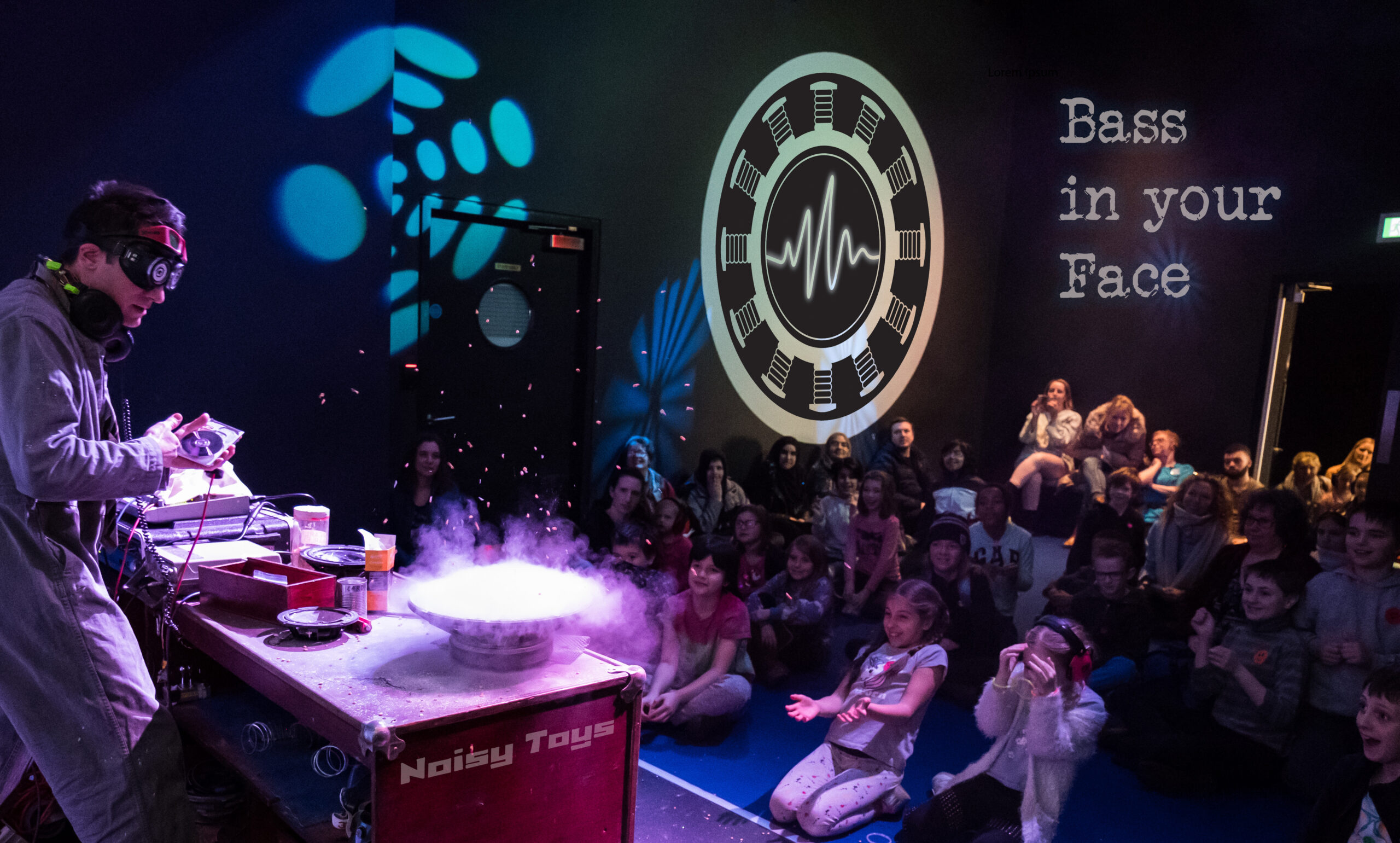
Bass in Your Face
Noisy Toys promise to:
Fill the theatre with with booming bass vibrations
Send lentils flying
Make crazy sounds from some unexpected objects
Expose some fake magic and wake up some dancing Oobleck monsters with their interactive show packed with demonstrations.
Bass in your face noisy toys show
Bakineering – The Voyage
Join aerospace engineer, creator and judge of Netflix’s Baking Impossible, Andrew Smyth, on an edible exploration of the engineering that helps us travel around the planet in safety. From the secrets of edible boats to a survivable crash test, expect to have your curiosity whisked up!
The Science of Jurassic World
Join author and science presenter, Jon Chase, for an entertaining exploration of the science behind the much-loved movie franchise that helped to change the way we see dinosaurs. Features roarsome raps and bundles of dinosaur facts; fun for all the family!
I’m a Scientist – Get Me Out of Here
Time for the audience to take charge. Five working scientists subject themselves to interrogation by the audience, with trials of Science Fact vs Fiction. Hosted by literal and professional nanochemist, Dr Suze Kundu, in this show the scientists will compete to get your votes by giving truthful answers to your questions and trash-talking the others. Suitable for ages 8 – 80.
No bugs get harmed in the production of this event.
For adults and teens
What if you could see music?
Award-winning composer, pianist, and a developer of the app Shazam, Charlie Hooper-Williams invites you to find out, in a unique performance experience where sound and visuals come together in real time. Playing alongside Otto—a custom-built live projections system he coded—his music takes on another dimension, with visuals that respond to every note and gesture. This is a performance that’s both stunning and human. It’s intricate, virtuosic piano playing paired with imagery that amplifies its emotional core.
Building a green future
Festival Director, Dr Roderick Hebden quizzes Prof Dame Ottoline Leyser, CEO of UK Research and Innovation on the UK’s plans to build a green future. That’s one of the key themes of UKRI Strategy 2022-2027. What does it mean in practice? How will we get there and what difference can the UK make to tackle such a huge global challenge?
Satellites and Climate Action: Monitoring Greenhouse Gases from Space
Join us for a panel discussion with leading climate scientists and satellite engineers to explore how state-of-the art sensors and space-based information is reshaping and accelerating the fight against climate change and the urgent shift towards a sustainable, low-carbon future.
Mysteries of the Antarctic seas
A live ship-to-shore conversation with researchers on the ice breaker Polarstern scouring the depths off Antarctica for amazing creatures. Thus giving the Festival of Tomorrow an exclusive live insight into science at the world’s most remote and vulnerable environment. Expect a guided tour of the ship, too!
Inside the Hawking Building: Behind-the-scenes with the Science Museum Group
Television presenter Dallas Campbell joins the festival via live link from behind the scenes in the brand-new Hawking Building at the Science Museum Group’s Science and Innovation Park in Swindon.
Home to over 300,000 items – from a towering tramcar to an x-ray telescope – the Hawking Building is transforming public access to our shared scientific heritage. Joining Dallas will be Jessica Bradford, the Science Museum’s Head of Collections and Principal Curator. She’ll take you on a tour through some of the most remarkable stories under this one gigantic roof.
The Science Museum’s Science director and author, Roger Highfield will be live in the room to introduce the session and answer questions.
Bristol-based artist’s Luke Jerram’s giant touring Earth artwork, Gaia, will be presented at Steam Museum during the half-term week. It’s at the heart of a curated programme of:
Ready to thrill you with fun and naughty moments, Richard O’Brien’s legendary rock ‘n’ roll musical, The RHS returns to Swindon soon. It comes as part of a new world tour, featuring Holby City star and Strictly Come Dancing winner Joe Mcfadden as the narrator.
The Rocky Horror Show| Wyvern Theatre| Mon 24 February 2025 – Sat 1 March 2025
Over 35 million theatregoers have seen the Rocky Horror Show – the tale of two squeaky clean college kids – Brad and his fiancée Janet.
When by a twist of fate, their car breaks down outside a creepy mansion whilst on their way to visit their former college professor, they meet the charismatic Dr Frank-n-Furter. Cue an adventure they’ll never forget, filled with fun, frolics, frocks and frivolity.
Directed by Christopher Luscombe, The Rocky Horror show is the biggest party. It features timeless classics, including Sweet Transvestite, Dammit Janet, and of course, the pelvic thrusting showstopping Time Warp.
Reviews
★★★★★ The Telegraph
‘FIERCE AND FABULOUS FUN!’ Daily Express
‘STILL THE SEXIEST & FUNNIEST SHOW IN TOWN’ Evening Standard
‘The Rocky Horror Show is a musical with music, lyrics and book by Richard O’Brien. A humorous tribute to various B movies associated with the science fiction and horror genres from the 1930s to the early 1960s, the musical tells the story of a newly engaged couple getting caught in a storm and coming to the home of a mad transvestite scientist, Dr Frank-N-Furter, unveiling his new creation, Rocky, a sort of Frankenstein-style monster in the form of an artificially made, fully grown, physically perfect muscle man complete “with blond hair and a tan”.
1000 downloads for podcast that tells the unvarnished truth about the world of social care. Hosted by Wiltshire social care specialist Janet Shreeve, the podcast explores the world of a system which is struggling to cope.
Janet’s podcast ‘You Care, I Care’ launched in late 2023. It features advice and tips to anyone working in the field of care. Further it explores all the varied individuals working in the sector as well as those in need of care. And what social care looks like today.
‘I’m thrilled so many people have engaged with the podcast at such an early stage. I’d like to thank all my guests who’ve taken part to date,’ Janet said.
‘During 2025, I’ll be sharing more stories for those trying to access care, for whatever reason, those who have received great care and those who have not. I’ll also be sharing the stories of many people within the social care sectors from business owners, through to specialists, staff and carers themselves.’
1000 Downloads for Podcast – Janet Shreeve
Podcasts to date
To date, Janet’s top podcasts are:
1. Carer David ‘Budge’ Price, from Swindon and his social care nightmare around caring for his wife Gina.
2. Yourwaybristol – with Josh Doherty. Josh shares his story of how he entered the world of social care and the organisation he now runs in Bristol.
3. Yusuf Abubaker sharing his inspiring tale of working within the care industry in the Gloucestershire, Bristol, Swindon and Bath area.
4. From the SAS of the NHS to CQC Compliance with Joey Williams-Pears. Joey shares her journey into social care and why she’s concerned and frustrated around red tape.
5. How divorce led to a different way to care with qualified divorce and relationship coach Vanessa White who lives in the Cotswolds.
2025 plans
You Care, I Care will continue into 2025 releasing two episodes a month. The interviews are, in the main, recorded at the studios of Swindon 105.5 in Liden, Swindon. Coming up in the early part of the year are:
Vicki Head talking about the challenges of securing care for a child – and then adult child – with needs.
· An update from Swindon carer Budge Price on his continued search for support for his wife Gina.
· Dan Burner from Dan Burner Coaching sharing his story about working in care.
I’ve got some amazing episodes to come as I talk to more interesting people about all aspects of care generally and social care in particular. I will also be updating some stories where progress has been made – or not. I have a strong belief that many people learn from the experiences of others so I’m planning to continue this podcast.
You can find ‘You Care, I Care’ on the usual podcast platforms. And also on the website of Shreeve Care Services here – https://shreevecareservices.co.uk/