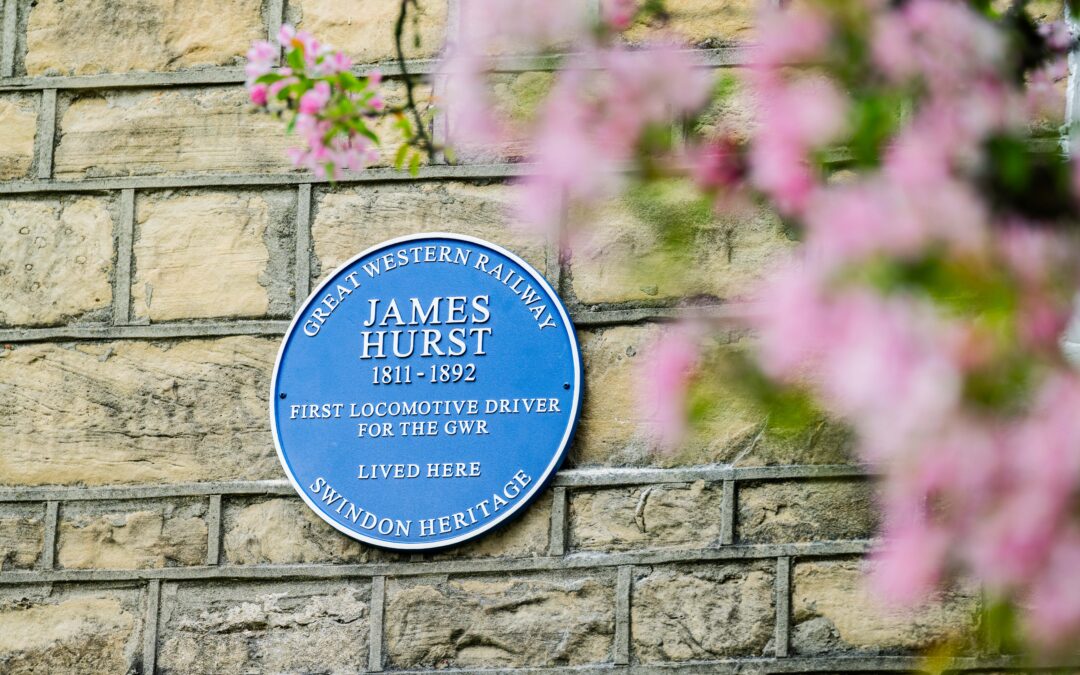
Jim Hurst Blue Plaque. Well this is fab – a blue plaque in our GWR Railway village, celebrating a son of Swindon, unveiled by our current transport minister, and South Swindon MP, Heidi Alexander.
The unveiling came as part of the 200th anniversary celebrations of the birth of the railway.
Jim Hurst Blue Plaque – Transport minister and South Swindon MP, Heidi Alexander. Photo from GWR.The blue plaque dedicated to Jim Hurst – photo from GWR
Who was Jim Hurst?
Well James (Jim) Hurst was a man who worked at close quarters with such railway pioneers as George Stephenson, our very own Sir Daniel Gooch and the legendary Isambard Kingdom Brunel. Hurst found himself appointed as the first locomotive shunter for the GWR, taking to the tracks on 28th December, 1837.
Now the commemorative inscription sits above the front door of the last dwelling that Jim called home. And that was Taunton Street in Swindon’s historic railway village.
Hurst’s backstory
Entering the world in Lancashire, in 1911, Hurst began his railway career aged 14, as assistant to George Stephenson, surveying the land that became the Liverpool & Manchester Railway. As a result of this work, 1832 saw Stephenson employ him at an engine house in Salford as a fireman. Two years later, Hurst achieved promotion to engine driver. Every school boy’s dream?
While driving locomotives to the Vulcan foundry of Charles Tayleur & Co. in Lancashire, that he met and befriended a young apprentice by the name of Daniel Gooch. He of course went on to the dizzy heights of first Locomotive Superintendent, appointed by the chief engineer of Great Western Railway, Isambard Kingdom Brunel. Jim Hurst joined his good friend soon afterwards, relocating to Paddington.
Another tale to tell
And of course, all the above is all well and good. But historian Frances Bevan, paints a different/alternative portrait of Jim on her Radnor Street cemetary blog. She tell us that, a personal friend of Gooch he may well have been. Yet there was escaping that Jim Hurst was a tricky character. It seems that GWR official reports tell a tale of arguments, rows, conflicts, accidents and even fights – all through the career of the company’s first driver.
It seems his first driving accident took place in 1856 while still in the employ of the Liverpool & Manchester Railway. Though sacked, Gooch, by now Locomotive Superintendent of the GWR, hired hm again almost at once. Though Frances tells us that, when recounting the story to the company magazine, many years later, he gave an entirely different explanation of the circumstances.
To finish
There’s much more to Jim’s story in Frances’ blog so do follow the link above to read the rest. I’ll finish though with this extract from it:
For the last 30 years of his life Jim was a Swindonian, living in the Railway Village and earning, through his pension, more than most of the general workers ‘inside.’
Jim’s time ran out in August of 1982 when he died in his 81st year. He lies with his wife in Radnor Street cemetery. It does seen odd that, given that he and his family had the means to afford a memorial, his grave is unmarked. The Swindon heritage team uncovered it in the summer of 2016.
Thus it’s kind nice, I suppose, that there’s now a blue plaque commemorating him.
Heidi Alexander, MP Swindon South and Jim Robbins, Leader of SBC.
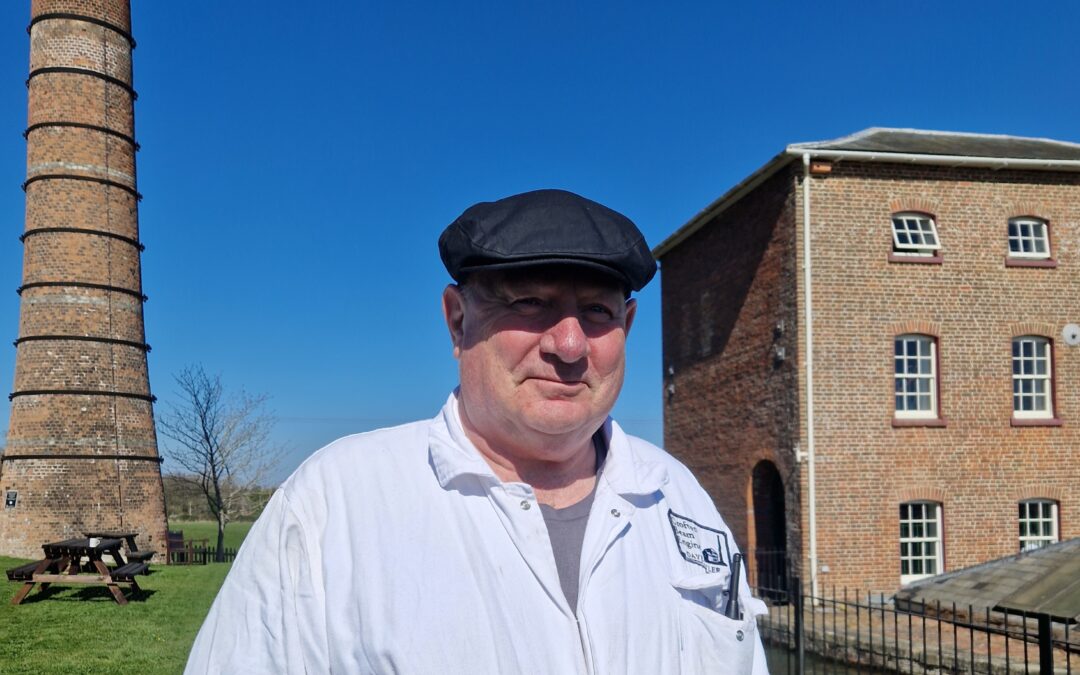
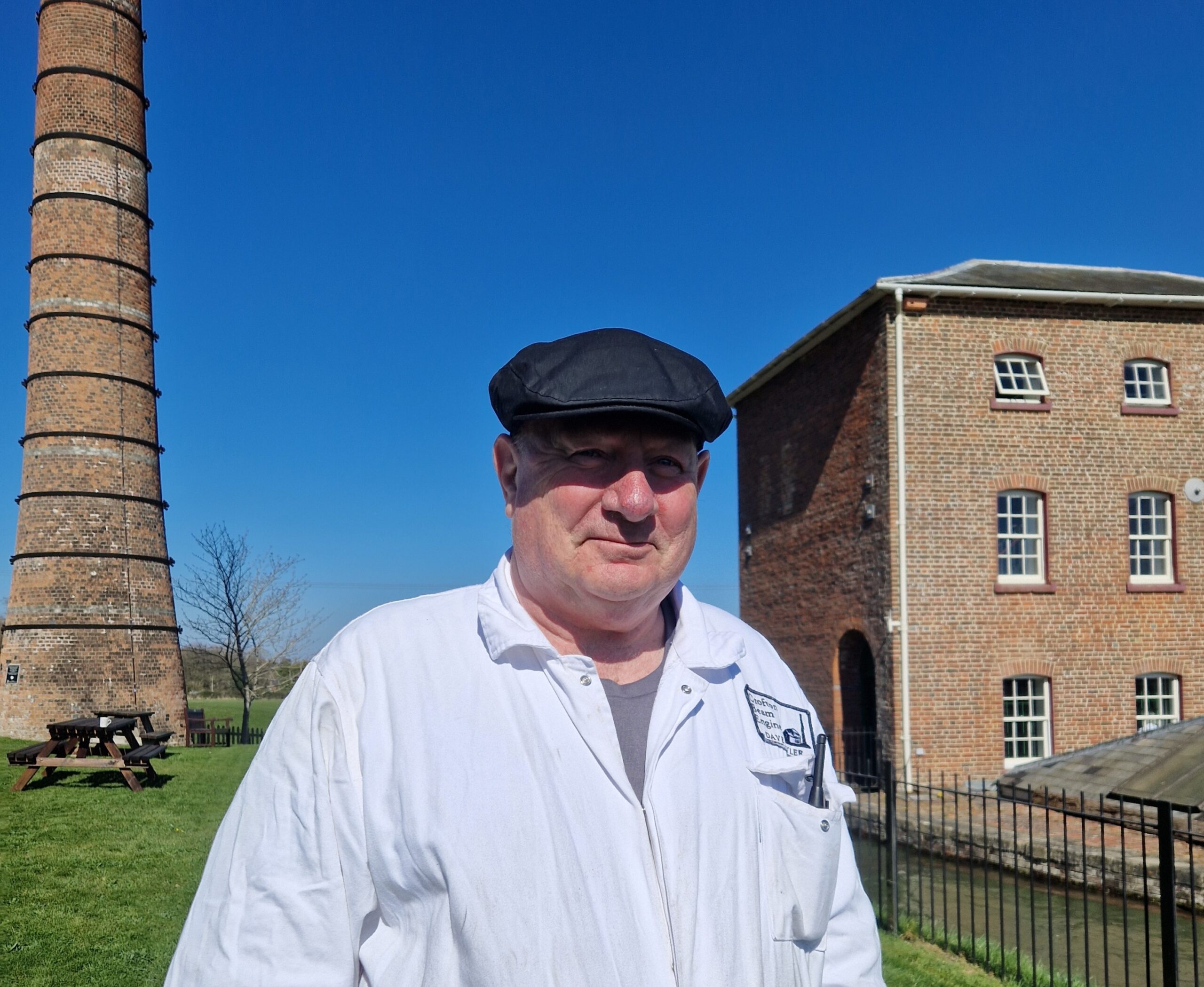
PPS Accountants Steam Ahead. Dave Tayler, a volunteer at Wiltshire-based Crofton Beam Engines, is set to be the special guest speaker at the PPS Chartered Accountants summer charity breakfast. It takes place on Thursday, June 19th.
This popular event run by the team at the Swindon-based accountancy firm offers a fantastic opportunity for local business professionals to:
Network
Enjoy a delicious breakfast …
… and engage in inspiring discussions, all while supporting a worthy cause.
Dave Tayler will share the fascinating history of the world’s oldest working beam engines. The engines remain housed in their original location on the Kennet and Avon Canal near Marlborough.
‘We’d like to introduce attendees to Crofton Beam Engines. It’s an incredible piece of our industrial heritage that still operates today,’ said Dave.
‘The engines, dating back to 1812, played a crucial role in transporting goods between London and Bristol. Today, volunteers maintain Crofton and keep this remarkable site running. We’re excited to share our story and inspire new generations to appreciate and support our heritage.’
PPS Accountants Steam Ahead – Dave Tayler of Crofton Beam Engines
We’re delighted to have Dave Tayler join us as our guest speaker for the June breakfast,’ said Sally Holland, Partner at PPS Chartered Accountants.
Attendees enjoyed talks from guest speaker Taylor Wheeler of Simple Day. That comprised an intriguing look at Artificial Intelligence. And Sarah Bear, shared the effective work of Wiltshire Treehouse.
Sally added, ‘We’re thrilled that, at our last event, we raised over £400 for Wiltshire Treehouse.This shows the generosity of our local business community. And we’re proud to support such an important cause. We’re looking forward to another successful breakfast in June. We’re sure it will be another great opportunity to network and give back to our community.’
RPA Lends a Helping Hand. Swindon-based Revolution Performing Arts (RPA), one of the South West’s leading performing arts companies for children and young people, is continuing its commitment to supporting local families this Easter. The company is offering a series of fun, free activities for children.
This year, Fi Da Silva-Adams, founder of RPA, has partnered with the National Literacy Trust to provide free books for families. All alongside an exciting line-up of Easter-themed sessions. The programme’s designed to engage children and families in activities that are both entertaining and educational. All while fostering a love of reading.
Fi explains, ‘I’ve seen first hand the positive effect creative activities can have on children. During challenging times in particular. The arts and literacy go hand in hand, helping children build confidence, creativity, and resilience.’
In addition to the activities, every child will receive a free book to encourage reading at home. Fi adds, ‘We’re thrilled to be able to offer these books. Reading is a vital skill. And we want to ensure every child has access to books that inspire them, regardless of their background.’
RPA Lends a Helping Hand – Fiona da Silva Adams founder of RPA
Literary Champions
Sonja Van Leewen, Project Officer for Literacy Champions at the National Literacy Trust, said ‘The National Literacy Trust in Swindon aims to grow a generation of readers. One where no child gets left behind. And working to boost literacy levels and equip children and young people in Swindon with the literacy skills they need to get the most out of life.
‘This is vital at a time when children and young people’s reading for enjoyment is at an all-time low. And 1 in 6 children in the South West aged 5–8 do not have a book of their own at home. By working together with our Literacy Champions at Revolution Performing Arts, we’re providing books for the children who attend their holiday activities & food programme. We want to ensure more children have the opportunity to discover the joy of reading.’
RPA’s qualified team will lead all the sessions. They hold enhanced DBS checks and are fully trained in safeguarding and first aid. The Easter programme is open to all families, with no special requirements for participation.
Founded in 2007 by Fi Da Silva-Adams, RPA dedicates itself to encouraging young people to embrace their individuality through the power of the performing arts. RPA provides a welcoming environment. One where every child, regardless of their background, can thrive and enjoy the arts without the need for auditions or exams.
Swindon Easter sessions
The Easter sessions in Swindon will run from 14-17 April 2025, from 9am to 1pm at The Croft Primary School. Families that receive benefits-related free school meals should apply via their HAF voucher. Paid-for private places are available for £20 per session.
While funded bookings for Wiltshire have now closed, the following venues are still accepting paid bookings at £20 per session:
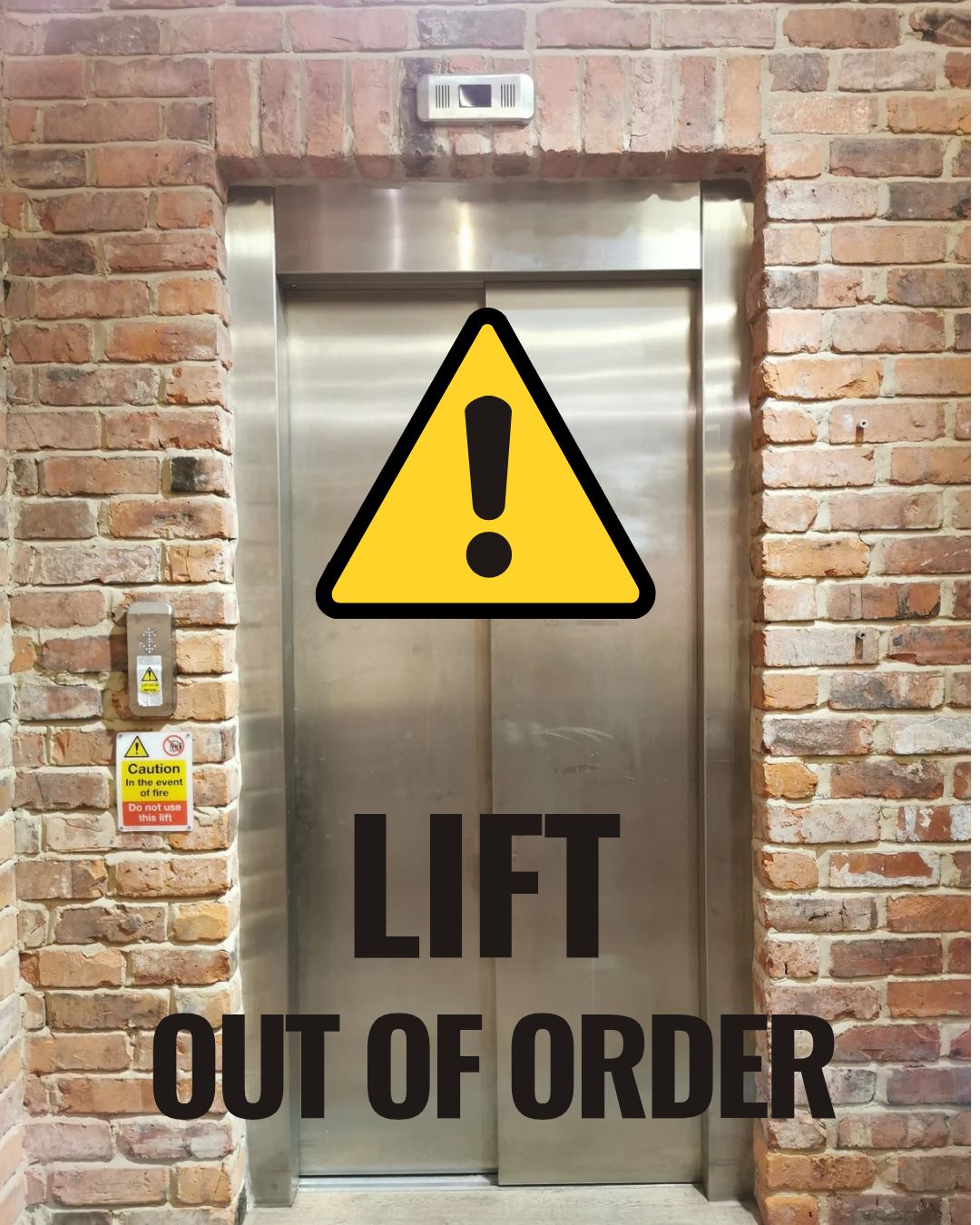
Swindon Hub Seeks Lift. Swindon’s town centre community hub has launched an appeal to raise funds for its lift. The Hub, a calm retreat and hive of activity and events for the whole community, has struggled to meet the rising costs of repairing the ageing lift.
Swindon Hub Seeks Lift
Having spent over £12k on repairs over the first three years of operation, the Hub trustees decided last year that they could no longer afford to keep it going.
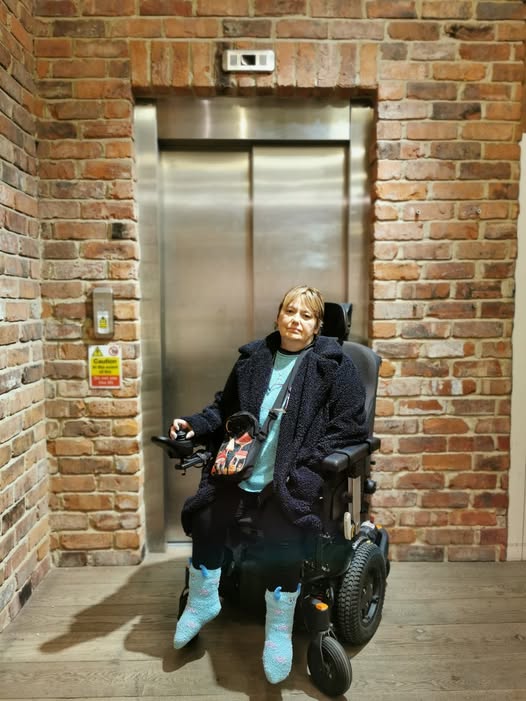
Whilst the cafe and many social activities take place on the Hub’s ground floor, bigger events, as well as quiet spaces, kitchen and toilets are all on the first floor. And that’s now inaccessible to many since the lift has been out of order.
‘The Hub for me is a place I come to meet people and connect” says Debbie, a regular Hub user. “The broken lift means I can’t join all the events here, which is so sad’.
Debbie – a user and supporter of the Hub
Since its opening in 2021, over 20,000 visitors and more than 50 community groups have used the space. Holding meetings and events, running workshops and training sessions, or popping in to relax, read and have a hot drink.
Bigger events like music jams and theatre performances. As well as group meetings that need a bit more quiet, have all taken place upstairs.
‘The Hub is a fine example of something by the community for the community ‘says Hub trustee Jol Rose. ‘We’re hoping the community will get behind our crowdfunder and help us raise the money to get the lift fixed and running again.’
The appeal
The crowdfunding appeal aims to raise £15k. That’s the estimated sum to fix the current problems. And have enough in reserve to keep the lift running for the next five years.
Swindon Hub is a welcoming safe space, and everyone is welcome to pop in, relax and join in – the Hub is at 36 The Parade. Anyone wanting more information can contact the Hub at info@swindonhub.org.uk
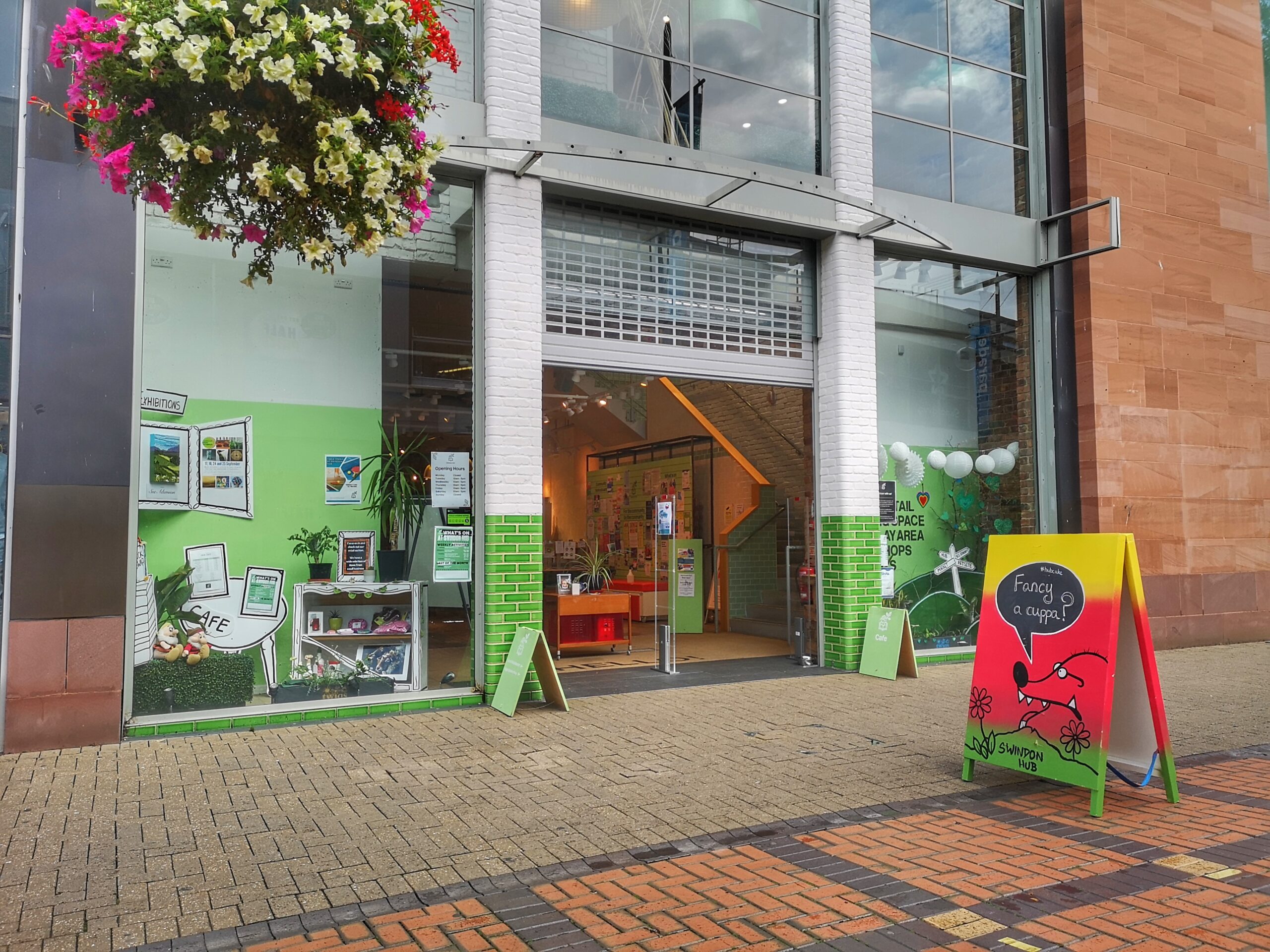
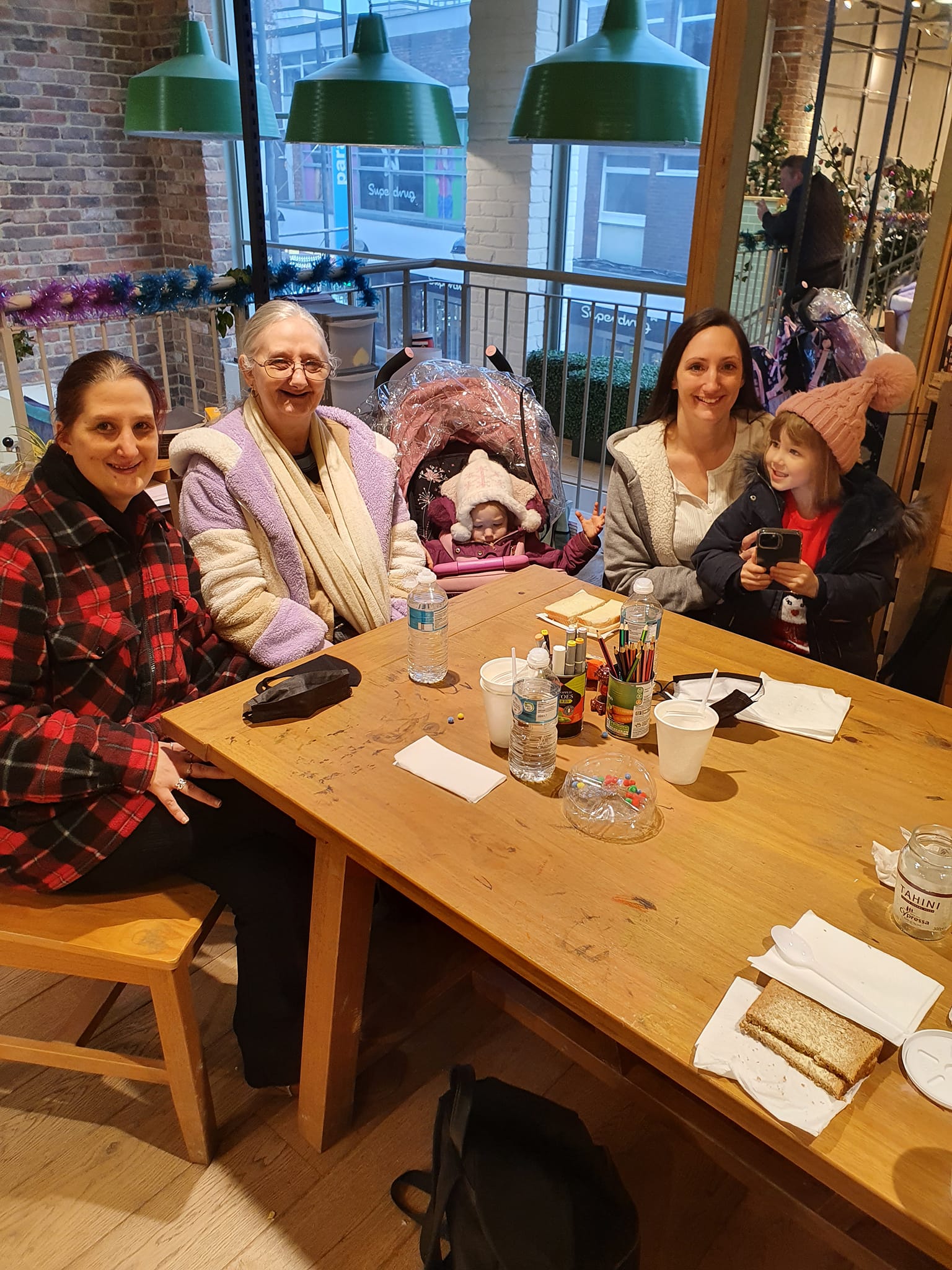
Swindon Hub exteriorMusic jam upstairs in the HubQuiet area upstairs in the Hub
ART HISTORIAN COMES TO WILTSHIRETO CHALLENGE THE ALLEGED RIVALRY BETWEEN TURNER & CONSTABLE.
Art historian, Nicola Moorby, will be a keynote speaker as part of the Athelstan Museum’s events in Malmesbury to mark 250 years since the birth of painter JMW Turner.
Nicola, curator of British Art 1790 to 1850 at the Tate, will host ‘Turner vs Constable: The Great British Paint Off’, at the Rausing Building in Malmesbury on Friday May 9 at 7:30pm. She’ll talk about the alleged rivalry and animosity between two of the most famous artists of the early 19th century.
‘I’m thrilled to be able to talk to anyone in Wiltshire and beyond interested in this period of art. In particular in a town that’s home to one of Turner’s works.
‘There’s long been talk of a rivalry between Turner and Constable. Two contemporary landscape specialists with very different personalities. But was it real? Turner was more famous in his lifetime than Constable. But was this fabled rivalry proven or even accurate?’
ART HISTORIAN COMES TO WILTSHIRE – Nicola Moorby
Nicola, who lives in London has recently published her first solo book. Called Turner and Constable: Art, Life, Landscape (Yale University Press, 2025), it explores this relationship. She’s also the curator of Turner’s Kingdom: Beauty, Birds & Beasts, an exhibition at Turner’s house in Twickenham.
She’s reluctant to declare a winner of the alleged contest between Turner & Constable. Yet she admits:
‘For me, Turner is the greatest water colour painter. Water colour paints shift and change when applied to paper. And nobody worked with them with the genius and facility of Turner.’
The Athelstan Museum
The Athelstan Museum is home to a watercolour of Malmesbury Abbey by Turner thought to have been painted in about 1827. The museum acquired it with funding from the National Lottery Heritage Fund, the Art Fund and some public donation. It went on public display a year later.
Carolyn Brothwood, who manages the museum’s events, said: ‘We’re so delighted that Nicola will talk to us about Turner and Constable. And will demonstrate her passion for this period of art. As one of the leading art historians on artists of the 18th and early 19th centuries, we know she’ll share her passion and knowledge with us.
Turner was born in London in April 1775 the son of a barber. He came from humble beginnings and went on to become the most famous artist of his era. In addition to becoming a Royal Academician at the youngest age ever, he was also well known as an illustrator of poetry books for famous names including Lord Byron, Sir Walter Scott and Samuel Rogers. He was one of the first artists to use water colour as a primary medium for his work and he later became known as ‘the painter of light.’
Nicola said: ‘If I were to meet Turner today, I probably wouldn’t ask him about particular works. I’d be more likely to ask about his life and what his experiences were. He was a very private man. We know so little about him compared to Constable who left so many letters and writings detailing his thoughts and feelings.’