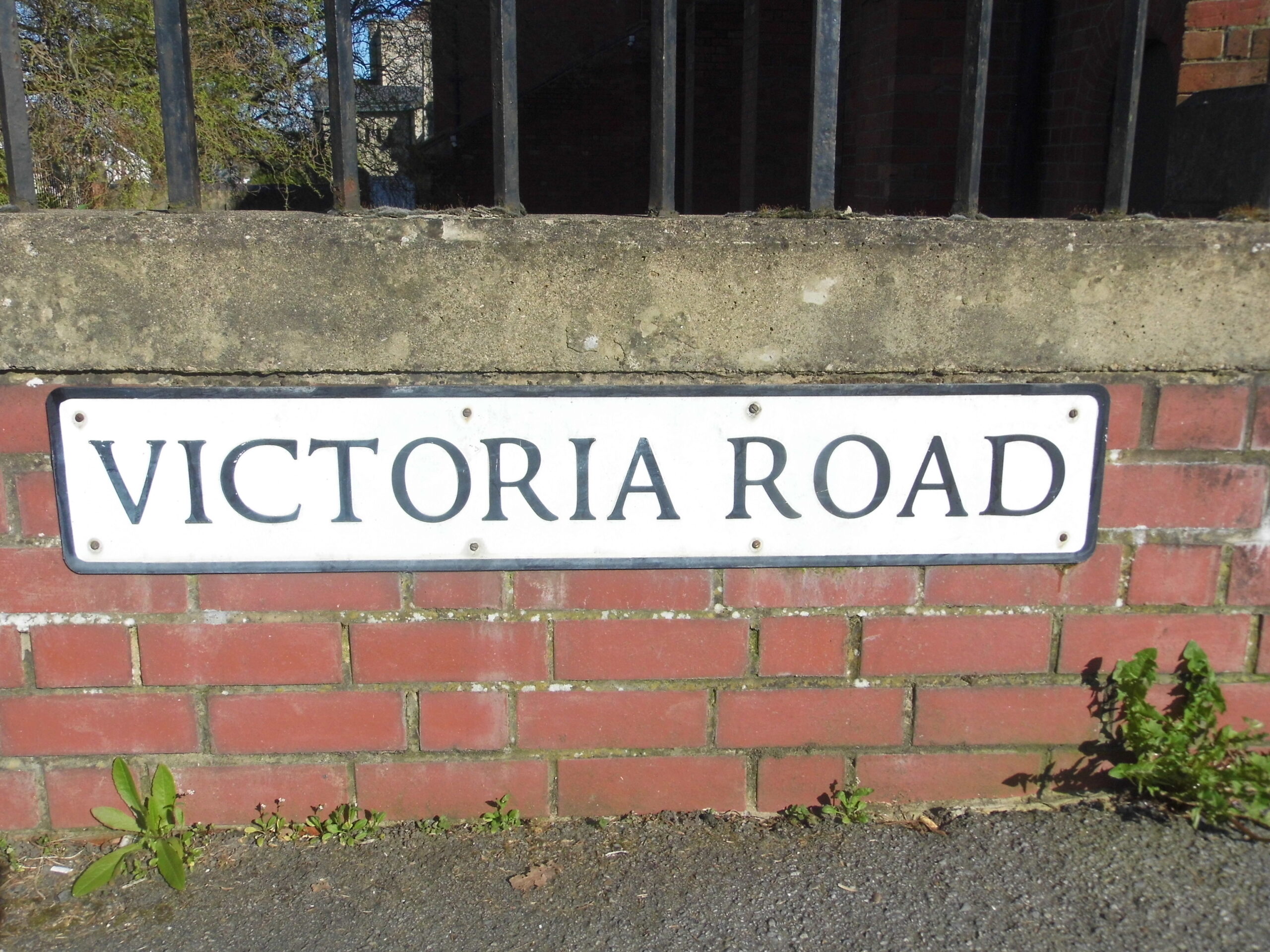
Victoria Road Swindon. As with so much else in the 19th century, this link between the old and new Swindons takes its name from HRH Queen Victoria.
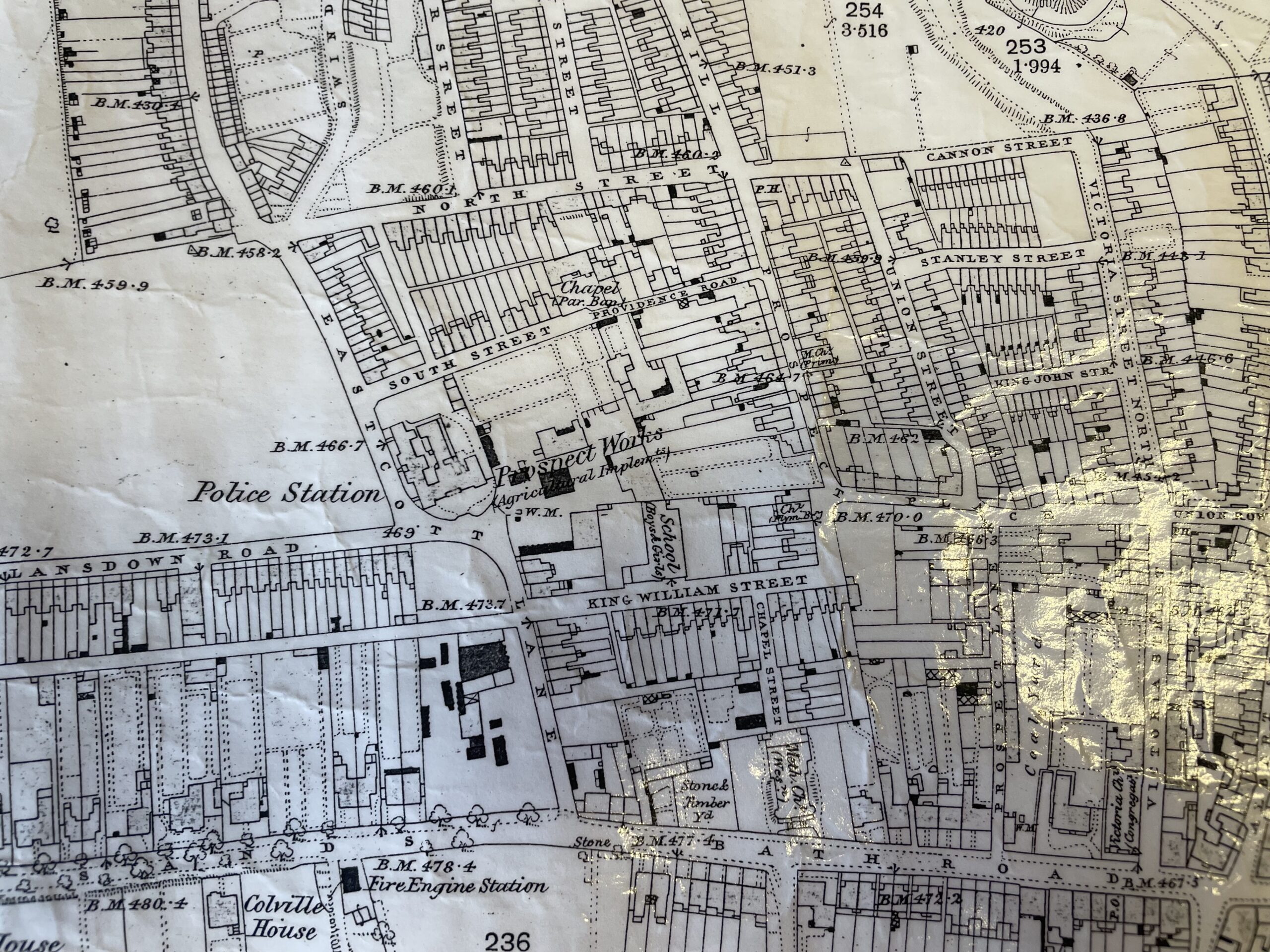
Mark Child, in his Swindon book, tell us: Before the 1840s a short street extended from The Sands (later to become Bath Road) to the junction with Prospect Place – a mere 100 yards away. Beyond that lay the hill sloping down towards the marshlands through which ran the Wilts & Berks canal – an area crossed by a single bridleway. On the lowlands below, New Swindon arose from the 1840s.*
In 1844 this short street still had no name – but by 1848 it appears on documents as Victoria Street. Mr Child goes on to posit that the name Victoria Street may well have been suggested by the neighbouring Albert Street in Little London. Built circa 1841, and named for the queen’s consort, it ran parallel to the newly-named Victoria Street.
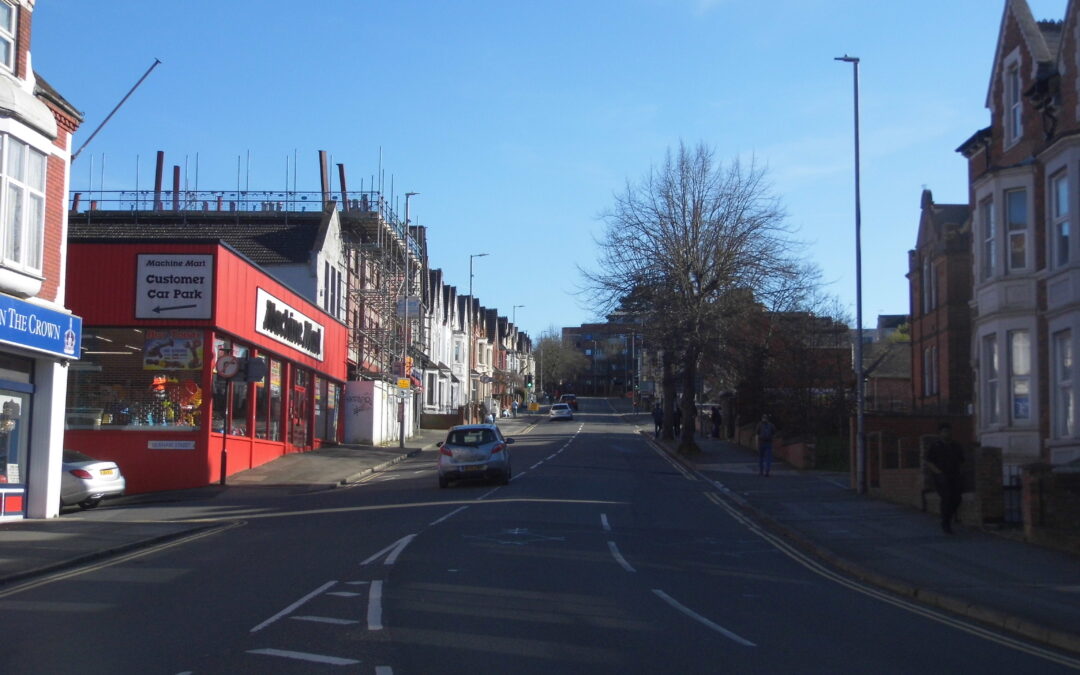
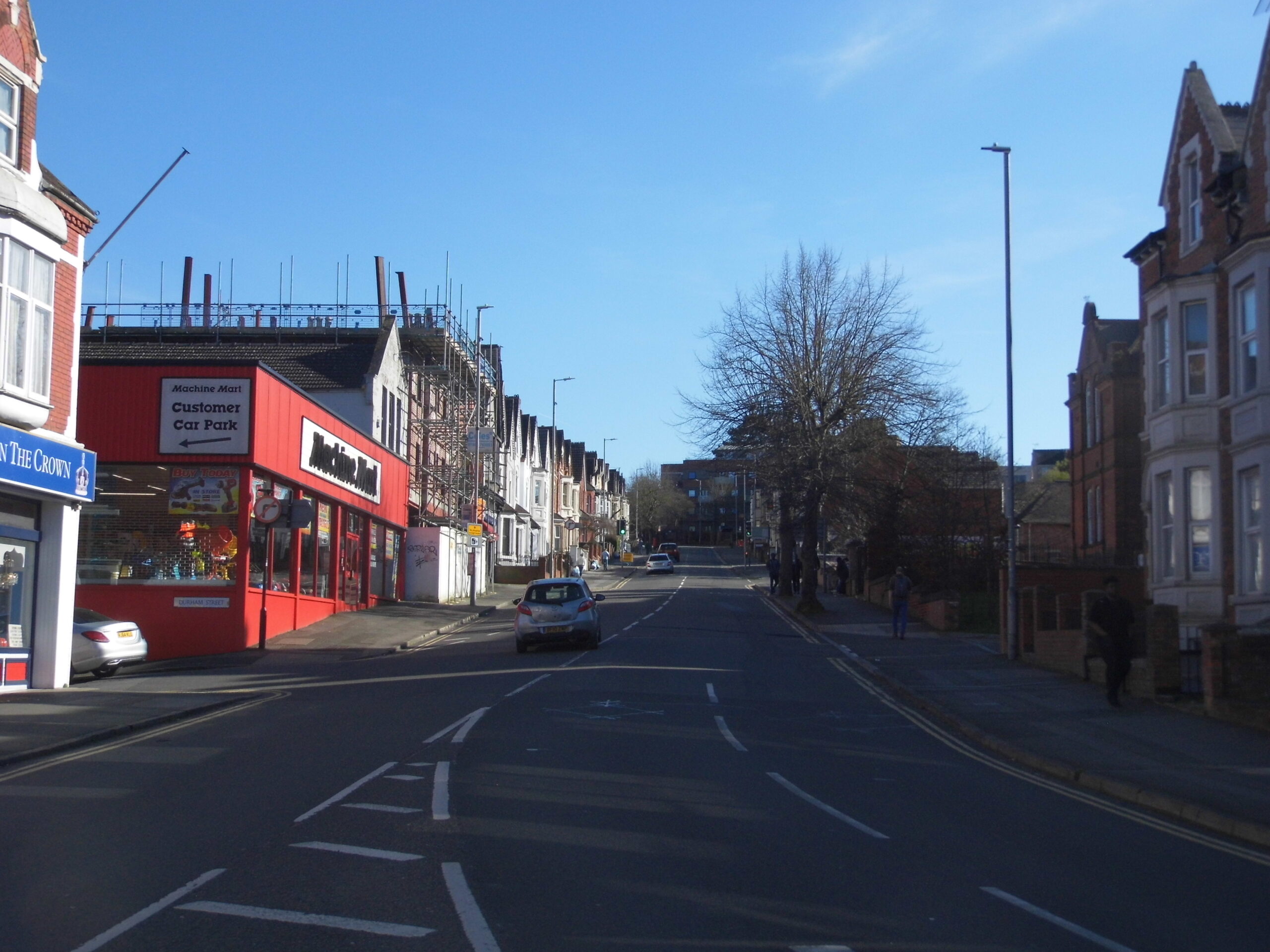
View uphill of Victoria Road from Regent Circus
Just beyond
Just beyond Victoria Street there lay allotments, gardens and orchards. This was all private land but the footfalls of folk trudging (so much trudging) between the old Swindon on the hill and the new Swindon emerging below, created a desire path. This trackway comprised an alternative to the earlier route from New Swindon forged across fields and at length emerging into Prospect Place.
It appears that, as early as the 1840s, the southern section of what became Victoria Street was, in essence, an extension of Wood Street. At least in terms of commerce and trade.
At that time there was a ladies’ finishing school, the residences of the high bailiff of the county court, the town’s main auctioneer and a couple of residents of independent means. The street was also home to tailors and drapers a carpenter and a tanner.
There was one common lodging house and one beer retailer – but all-in-all, early Victoria Street was respectable. It remained so until 1871 when the Old Swindon local board proposed extending it to link Old Town and New Swindon. This began in 1873. 1875 saw it largely laid down but not finished and called New Road. And thereafter came numerous complaints to the respective local boards about the state of this section of roadway – residents of both towns now considering the initial work a waste of money. Plus ça change one might say.
A Swindon notable or two
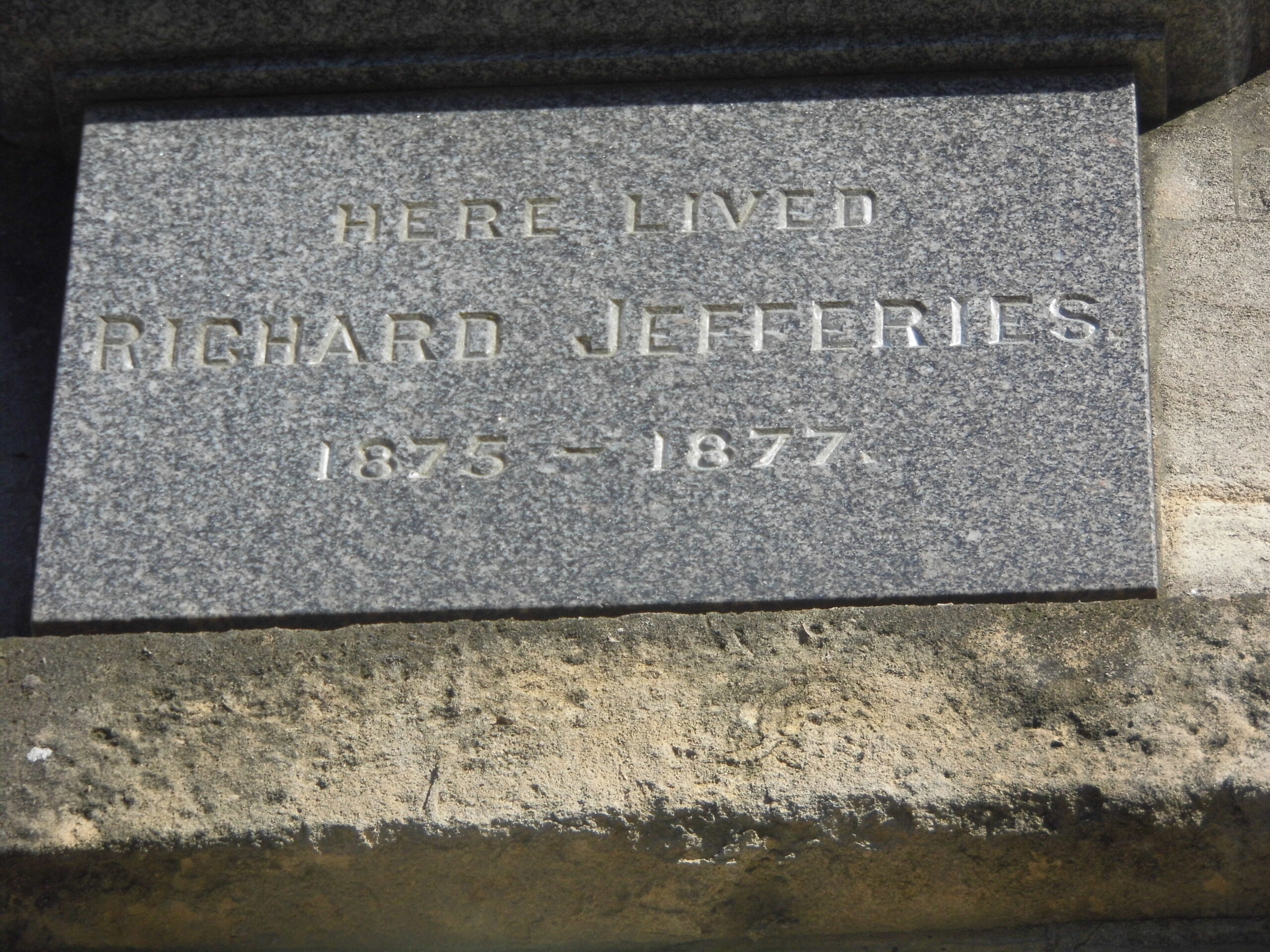
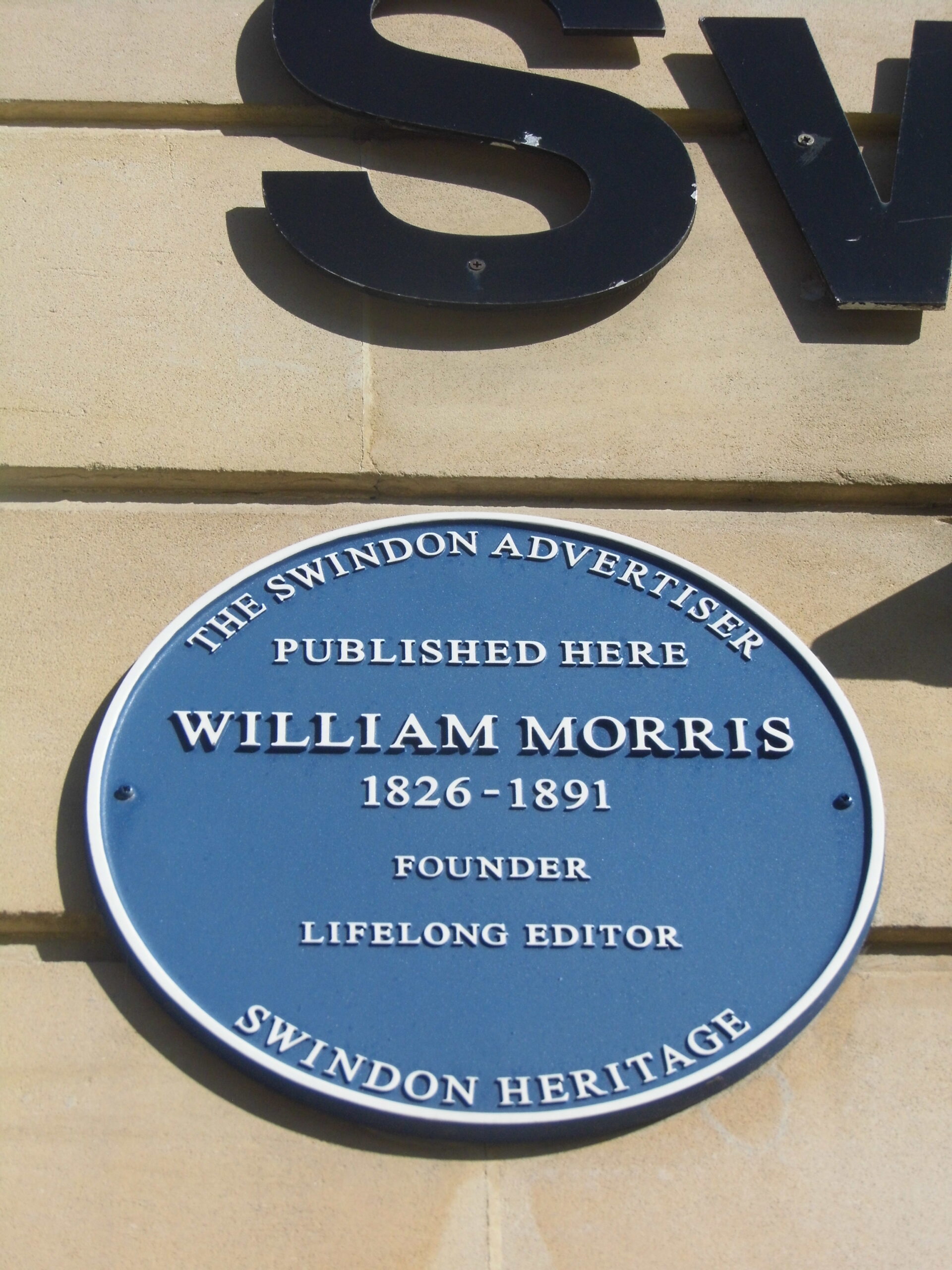
A Swindon notable, the writer Richard Jefferies spent a short sojurn at what is now No 93, but used to be No 22, from 1875 to 1877. Look up and you’ll see a Scotch grey, granite plaque marking the dwelling, installed, in 1902, to great fanfare by the North Wilts Field and Camera Club. But before Richard Jefferies and his wife lived there, William Morris, founder and editor of The Swindon Advertiser resided there – for quite some years. The same residence also served as home to a Mr John Hampden, by all accounts a notorious flat earther. It seems he was the subject of a celebrated law-suit when he failed to prove the flatness of the earth on the Bedford Canal.
The plaque on a dwelling place of Richard Jeffries on Victoria Road in Swindon
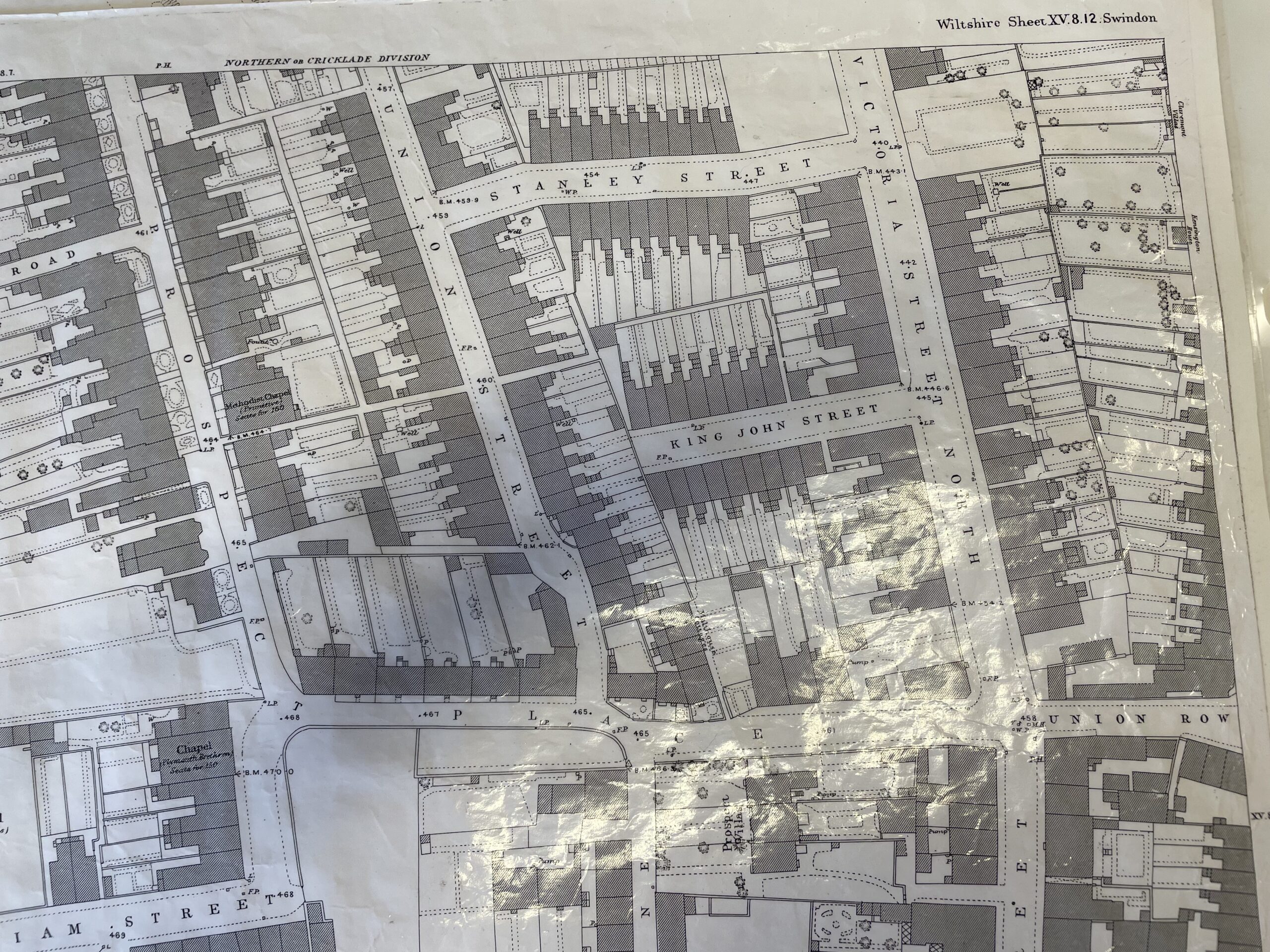
The 1880s saw this extended thoroughfare first designated as Jubilee Road and then Victoria Street North. It became the major road between the two towns by approx. 1888, becoming tree lined in 1889.
Section of 1886 map showing Victoria Street North and a few trees appearing.More detailed section of 1886 map showing Victoria Street North
Then came plans to link the square at York Place, later to become Regent Circus, With Faringdon Road. Thus, came the assumption that the whole of this street, begun in Old Town, would, on completion, take the name Victoria Road. But that wasn’t how it panned out. Instead the section between Regent Circus and Faringdon Road took the name Commercial Road. And its continuation across the canal became, in in 1895, Milton Road – home of the famous baths.
By 1899, the section of the thoroughfare running between Bath Road and Regent Circus was entirely built-up. It took the name Victoria Road in 1903.
Notable buildings
I’ve already mentioned No 93, about half-way up on the left as you walk up the hill, erstwhile home of Richard Jefferies.
Also of note, at the top of the hill, is the Grade II listed, ex Swindon Advertiser building. Once two separate buildings, 99 and 100 features a unified Bath stone façade with classical detailing. This building’s historic interest lies in it being the erstwhile premises of The Advertiser – the first penny paper in the country and Wiltshire’s first steam-powered newspaper.
Blue plaque William Morris on the Swindon Advertiser building on Victoria Road/Street
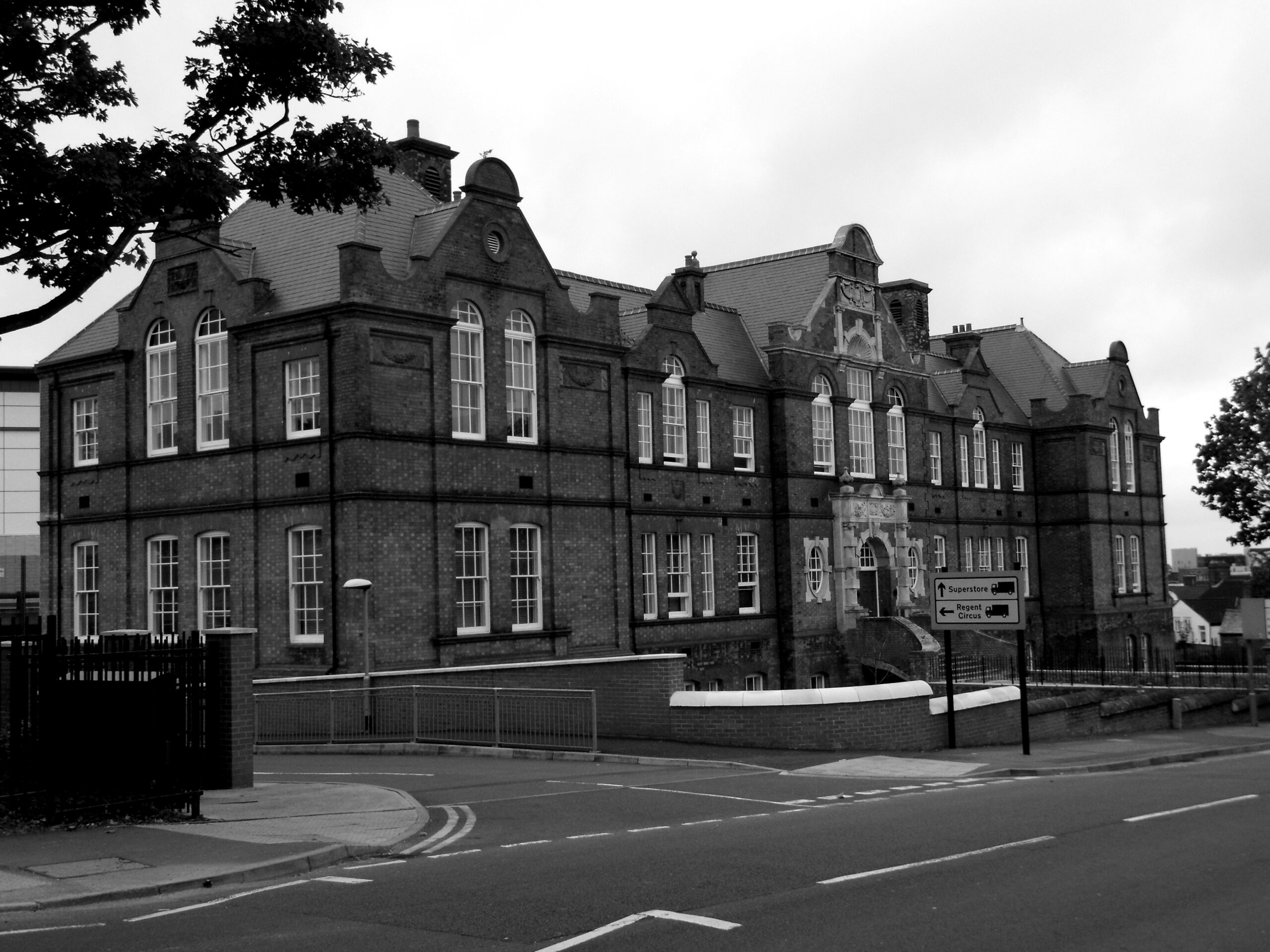
Going to the bottom of the hill we find the 1897 Burkhardt Hall. Now converted into flats, this Flemish-Baroque style building used to serve as Swindon’s technical college.
*Jason Spickett, owner of the Swindon from the Air, Facebook page, observes: ‘Sometimes, when flying my drone, I have to look at topography maps if I’m near to, or flying from, a hill. The roundabout at the top of Victoria Road is 145m above sea-level. And Canal Walk, in New Swindon, is 108m. That’s a difference of thirty-seven metres or 121 feet. So you’d have had quite the view from the top of that hill. Indeed, Prospect Place in Old Town is so named because of its literal prospect/view over the flatlands below.
As the tram proceeded down the hill its brakes failed, the driver lost control and it crashed at the bottom of the hill. Four people died and many more were injured, for the tram was packed with people returning from the Bath and West Southern Counties Show at Broome Manor Farm.
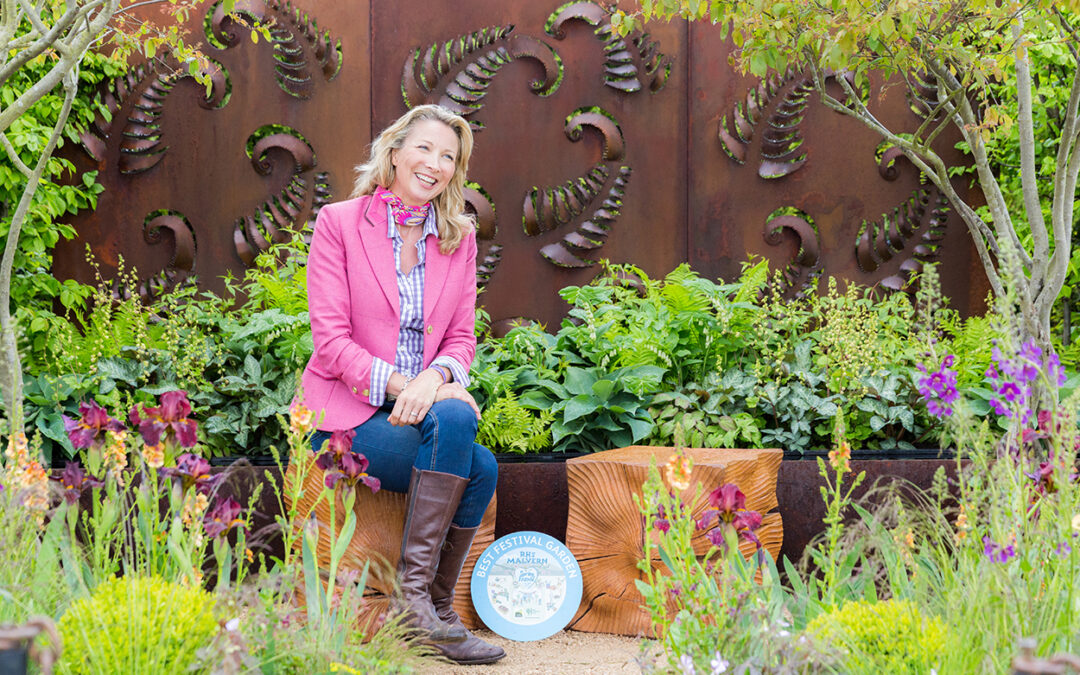
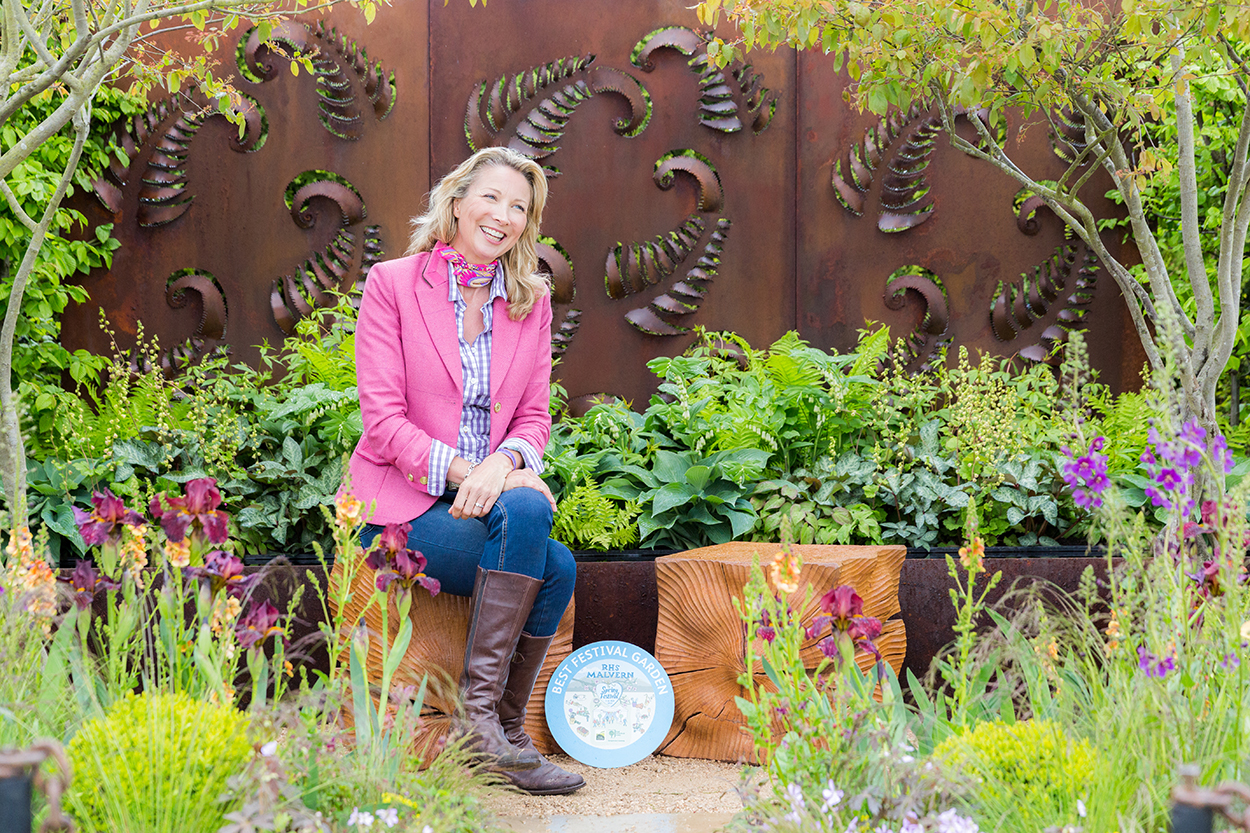
Garden designer sows seeds for blooming marvellous competition. TV presenter and award-winning garden designer, Kate Durr, is lending a hand to this year’s Malmesbury in Bloom competition.
Kate, former creative director of Highgrove’s popular ‘Talking Gardens’ festivals, will be on hand at the launch of the competition at Malmesbury’s Market Cross. It’ll take place on Saturday May 23, accompanied by the town crier and the mayor.
Garden designer sows seeds – TV Presenter Kate Durr
New this year
This year’s Malmesbury in Bloom includes, for the first time, a sunflower growing competition for youngsters. Kate will be handing out seeds from around 11am to 1pm on May 23. And also on June 6, again from around 11am to 1pm, alongside a Malmesbury Garden Club plant sale, which starts at 9am. You an also get seeds from the Tourist Information Centre from May 23 onwards.
As a passionate proponent of gardening for better physical, social and mental health, Malmesbury-born Kate expressed her delight at supporting Malmesbury In Bloom 2026. ‘Growing up in the town, it was always fabulous to see it bedecked with plants and flowers during past competitions. Malmesbury In Bloom is a wonderful event. And, by getting outside and immersing ourselves in nature to grow and tend plants, we can find happiness. Whether you’re an experienced grower or a green fingered novice, young or old, there’s a category for everyone. So join in the floriferous fun this summer.’
As well as the sunflower growing competition, Malmesbury in Bloom features a range of ‘best garden’ categories, for residents, retailers and businesses, based in Malmesbury or the surrounding villages. The closing date for all entries is July 1, with judging taking place during the week beginning July 20. The closing date for the sunflower growing competition is August 6.
Kate will be present at the awards evening on September 11, when all the winners are announced.
The Malmesbury in Bloom launch is one activity in a bumper weekend for the town. It celebrates the feast day of the town’s patron saint, St Aldhelm. There will be a flower display in St Aldhelm’s Church (May 23). And, once again, the EAT festival takes place on May 24. It brings together regional food producers, artisans and farmers.
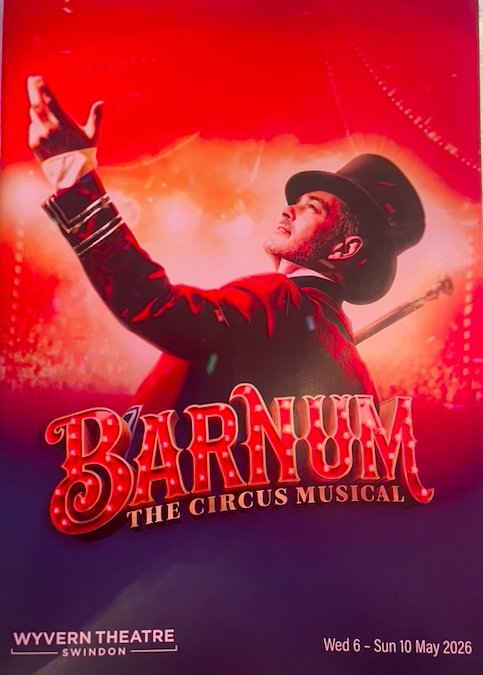
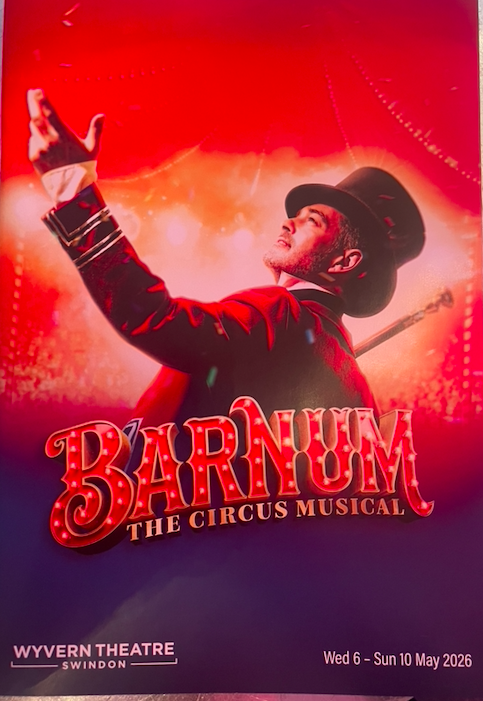
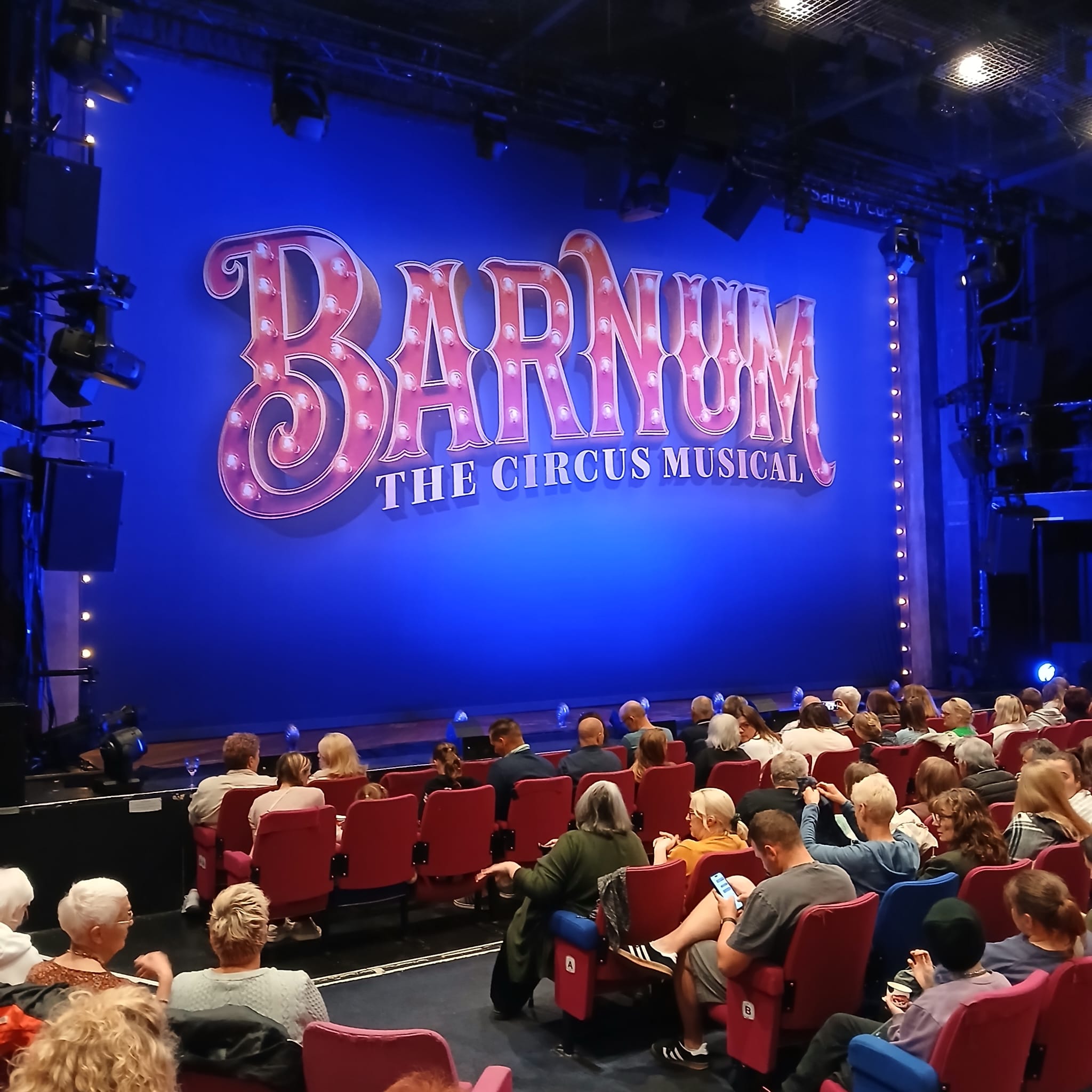
Barnum the Circus Musical Spectacular – front cover of programme
Well, I watched this show last night and I could sum it up in one word: Spectacular! But I’d best use a few more words to talk about it ….
Taking the lead role of PT Barnum is Lee Mead, who, apparently, shot to prominence in winning the BBC series, Any Dream Will Do, back in 2017. And he was tremendous. Well they all were TBF.
The set and the action do a clever job of evoking the excitement of being at the circus. I’m old enough to remember Billy Smart’s circus – (Billy Smart being Britain’s answer to Barnum) and this show took me back to my distant childhood. The vocalists, the acrobats, the high wire, the fire-eaters, the band and the Barnum drum – together they created an exciting circus extravaganza on the stage at the Wyvern theatre.
Oh – and the elephant! That was breath-taking! Because of course what circus could be without an elephant?!
My friend and I so loved this show and I urge you not miss it.
It’s a fast-moving, colourful, breath-taking spectacle from start to finish. As Barnum used to bill it: it’s the greatest show on earth.
A bit about Barnum the musical
This American musical, with lyrics by Michael Stewart and music by Cy Coleman, is based on the life of the famous showman, PT Barnum. It covers the period from 1835 to 1880. It’s set in American and major cities of the world where Barnum took his performing companies.
The characters include jugglers, trapeze artists and clowns. All along with such real-life personalities as Jenny Lind and General Tom Thumb.
The original Broadway production ran for 854 performances. A London production followed.
SWINDON HUB PARTNERS WITH PROSPECT HOSPICE TO SUPPORT LOCAL COMMUNITY. A Swindon community space has partnered with Prospect Hospice to provide fresh food for visitors. And, at the same time, supporting vital local care services.
Swindon Hub began working with Prospect Hospice after its previous supplier closed. That left trustees keen to find a new option that would continue to benefit the wider community. Finding a local organisation with shared values was a priority. One with a focus on making sure any partnership had a positive impact beyond the Hub itself.
The partnership sees Prospect Hospice supplying homemade sandwiches and cakes available to visitors throughout the week. The offering has fast become a popular addition at the Hub, with many items selling out on a regular basis.
As well as providing a simple, affordable option for those using the space, the initiative also helps generate income for both organisations, supporting their ongoing work in the local area.
Prospect Hospice Catering Manager Carl said the partnership had been a natural fit.
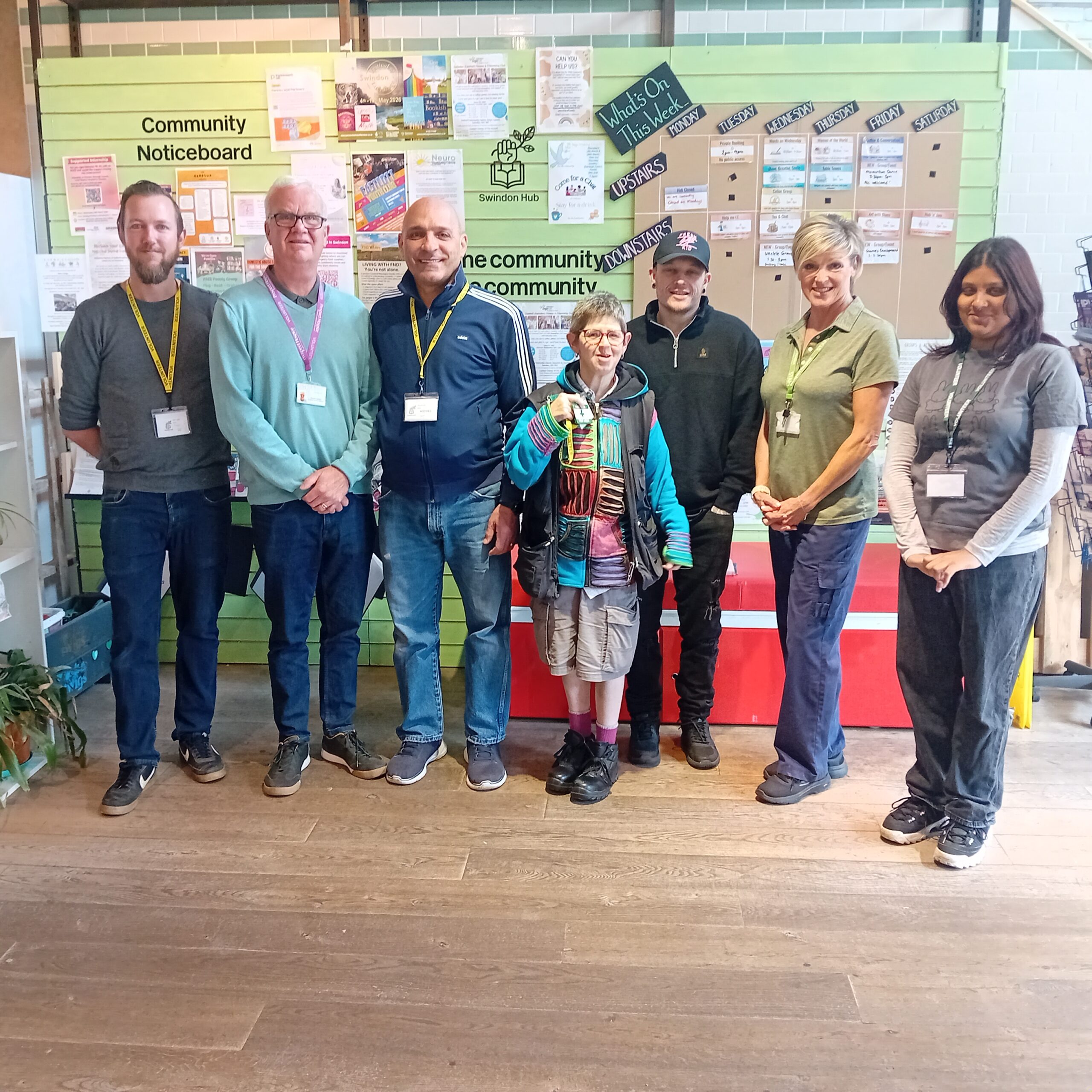
SWINDON HUB PARTNERS WITH PROSPECT Shift leads and volunteers from Swindon Hub alongside Prospect Hospice staff, including a Senior Chef, a member of the catering team and a volunteer delivery driver.
Proud of the arrangement
We’re so proud to be working with Swindon Hub. It’s great to see our cakes and sandwiches becoming part of a space that brings people together.
‘Every purchase helps raise vital funds so we can continue to support local people and their families when they need us most. Supporting organisations like the Hub is important to us. And we’re pleased to play a small part in what they do.’
A wide range of people, from across the local community, use Swindon Hub. They take part in activities or simply spend time in a welcoming environment.
The addition of fresh food has helped to enhance the experience for visitors. And also strengthened connections between local organisations.
The food has gone down well, and it’s lovely to be able to offer something that benefits more than the Hub alone. It’s about bringing people together and supporting other organisations at the same time.
‘The sandwiches have been such a hit we’re now planning with Prospect to provide NGCI sandwiches – with non-gluten containing ingredients at the Hub. These should be launching – or is that lunching? – very soon’
A partnership
The partnership demonstrates a shared commitment to supporting the Swindon community. With both organisations continuing to look at ways they can work together to make a difference in the local area.
Swindon Hub is a volunteer-run community venue offering café space, creative workshops and inclusive activities for all. For opening hours and more information, visit www.swindonhub.org
RPA Win Gold at SME Awards. Revolution Performing Arts, a Swindon-based performing arts company wins gold in the best family business category at the Best SME Awards 2026.
Founded in 2007 by Fi Da Silva-Adams, the business has grown into a well-established creative community. It offers performing arts classes, holiday clubs and performance opportunities for children and young people.
The award recognises Revolution Performing Arts’ family-led approach to business. And its commitment to supporting children and families through creativity, confidence building and community.
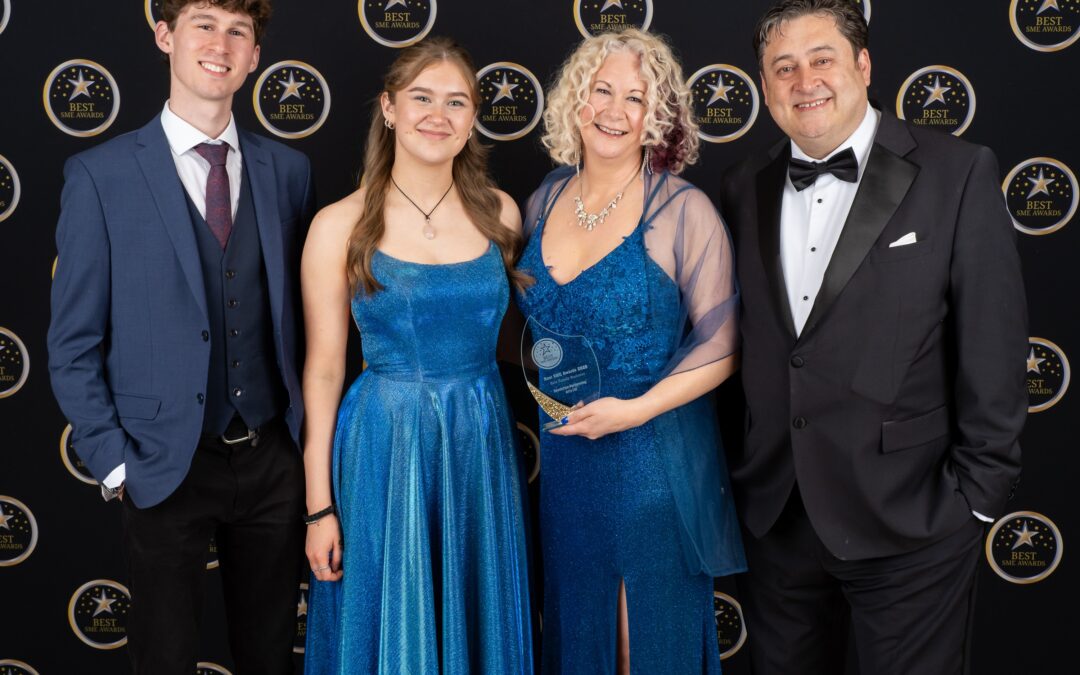
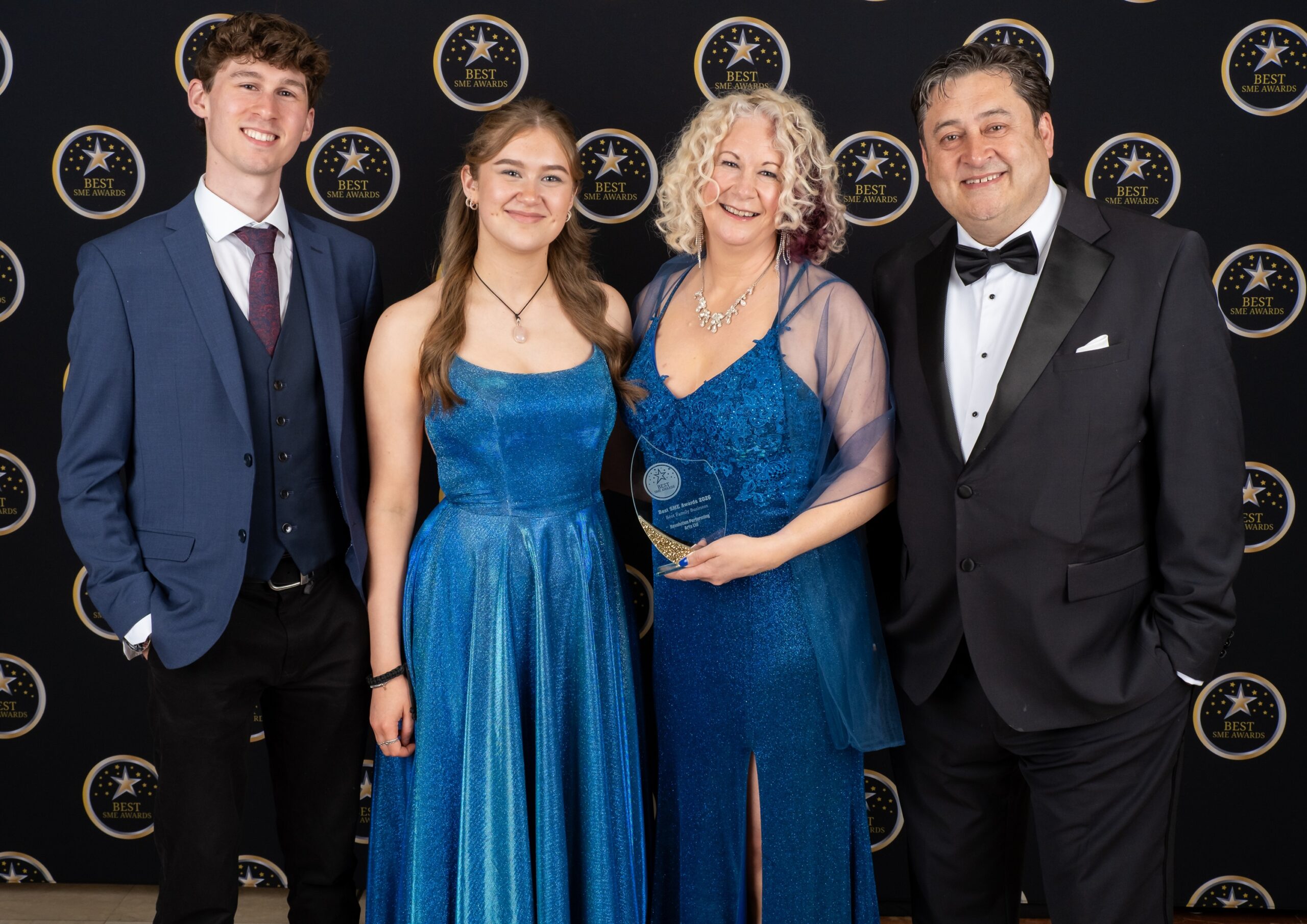
RPA Win Gold at SME Awards – The Da Silva family at the Best SME Awards 2026
A growing business – with business excellence
As the business grew, Fi’s husband Paul joined in 2012. He left his corporate career in IT to help grow the company, making it a family-run business.
build confidence
creativity and friendships
All while creating a welcoming environment for families across the local community.
Judges said: ‘Revolution Performing Arts Ltd is a truly outstanding family business. The company stood out across all criteria, with its journey, resilience and ability to overcome challenges. All demonstrated through strong evidence of impact and sustainability.
‘An excellent example of a well-run family business, each family member brings their own skills to the business. It’s built on strong family values, and they reflect that ethos in everything they do.’
For Fi, the award reflects the community that has grown around the business.
‘Winning Gold in the Best Family Business category means a huge amount to us,’ she said. ‘We build everything we do we build around supporting children and families, so to have that recognised at a national level is special.’
To receive this award as we approach 19 years in business feels so significant. We’ve grown alongside so many families over the years, and that’s something I’m incredibly proud of.’
About the Best SME Awards
The Best SME Awards launched to recognise small and medium-sized businesses across the UK. They celebrate enterprise, innovation and leadership across a wide range of sectors. The announcement of winners took place at a gala evening held at Daventry Court Hotel on 24 April 2026.
Revolution Performing Arts delivers more than 1,200 sessions every year across:
Swindon, North Wiltshire, Oxfordshire and Gloucestershire. The organisation also supports thousands of young people through its Holiday Activity and Food programme.