‘The Blog Frog has a simple mission. To provide insights on the best blogs across sixteen categories. We identify the top blogs so you get the best content.
We consider BlogFrog a next-generation influencer marketing platform. Because we know how important to find good quality content for your business can be, we network communities and websites together to create a larger interest-based social network.’
There’s an awful lot of coffee in Brazil … or Ethipioa
As the 2ndmost traded commodity in the world, coffee has a rich history. Thought to have originated in Ethiopia, this beverage was also used in the Middle East to aid concentration. Here are the most interesting facts about coffee:
It Forged a Revolution
So powerful is coffee, that it led to a social revolution. People used to drink it at home and in public coffee houses that sprung up in cities and towns across East Africa and the Middle East. Soon enough, these coffee houses were the go-to places for socializing – as the blog Coffee or Bust explains this.
Drinking of coffee was accompanied by different types of entertainment, including chess games, musical performances, gossip, and dancing. Coffee houses became the places where people went to know what was happening in the world. Therefore, you can say that coffee sparked a social revolution by bringing people together.
Goats Might Have Discovered It
According to legend, a goat herder in Ethiopia discovered the intoxicating effects of coffee after his goat got excited after eating the beans. The herder went to the local monastery and told the abbot, who decided to dry and boil the beans to make a beverage. The berries were thrown into a fire and the roasted ones taken from the embers to make coffee.
The monastery’s monks found that the drink gave them energy and kept them awake. As soon as word spread about this drink, people loved it.
A Yemenite is also said to have discovered coffee after seeing birds that ate the berries flying more energetically than usual. After tasting the berries, he also became more alert than usual.
It was Thought to Be Sinful
Like alcohol, this beverage also has a long prohibition history. Coffee has attracted religious disquiet from different corners. Had these fanatics gotten their way, coffee would be illegal today. In 1511, the beverage was banned by scholars and jurists who held a meeting in Mecca.
A Meccan governor led the opposition and was afraid that coffee would cause conflict because it would bring people together to discuss his shortcomings.
In 1524, the ban was overturned by a Turkish Sultan. This same Sultan ordered the execution of the Meccan governor and declared coffee sacred. A similar ban occurred in 1532 in Egypt and coffee houses were raided.
It was Called the ‘Devil’s Cup’
Countries in the Mediterranean also received coffee with some suspicion. Catholics called it the ‘bitter invention of the Devil’ and outlawed it. It caused such disquiet that the pope had to intervene by sampling the brew and declaring it to be a Muslim and Christian drink.
A Saint from Mocha Brewed It
Another story claims that the first person to discover coffee was a Sheikh known as Omar. While in exile, the man felt hungry and sampled the berries but found them to be bitter. He found that roasting them turned them hard and boiled them to get an aromatic beverage that gave him instant energy and kept him awake.
This miracle drink made it possible for him to return home and elevated him to sainthood. By the sixteenth century, coffee was a beloved drink in Turkey, Syria, and Egypt. Merchants from Yemen started taking the berries home and growing them.
Sufis prized the drink and used it as a spiritual intoxicant as well as to increase concentration. From the Middle East, this drink spread to Italy, Europe, and the Balkans.
I, like many other people I daresay, had formed the impression that the only piece of Ken’s Swindon work, still in existence, isthe Golden Lion mural.
So imagine my surprise when, just t’other day, a tweet appeared on my Twitterfeed from the friends of Lydiard Park with an image of a painting of Lydiard House, that Ken did in 2005. I rather get the impression it’s been in storage or something. Certainly, I’ve been in that house more than a few times and never seen it. Even now it’s leaning against the wall in a tucked away corner of the rooms that are open.
Ken created the triptych as a joint project between Ken and Intel. Some Intel staff did some of the painting. The idea of the artwork was, according to Ken, for children to find things in the painting around the house.
Indeed, hidden in the bottom right hand corner is the image of a very famous Swindon figure.
What else is there to see at Lydiard House?
Well. Quite rather a lot actually. The member of staff on duty, Adrian Smith, gave me a bit of a tour explaining some of the paintings etc. He’s really very knowledgeable – as you’d expect – and I must seek him out again and pay more attention. Why? Because, TBH, I was too stunned about the Ken White triptych to concentrate fully. That and thinking, as Adrian spoke, that small in number as the available rooms at Lydiard might be – there’s a heck of a lot of stuff that is simply not shouted about enough. WHY is Swindon so bad at this?
For example on this visit I noticed a couple of watercolours that I rather liked, created to accompany a 1951 newspaper article about the house written by none other than Aldous Huxley of Brave New World fame.
Now, more than once in recent weeks the topic of covering Swindon in 50 Drinks arose. It was somewhat tongue-in-cheek TBH. But then I got to thinking ‘Why not?’ Something a little different for this blog. I hasten to point out that this series of posts WILL feature non-alcoholic drinks too!
So these posts are not about drinks that are #madeinswindon – that would be beer and nothing else I imagine. Though no doubt someone can put me right on that. No, this series of posts are intended as a light-hearted journey around drinks once can enjoy in Swindon. I aim to namecheck 50 different establishments on this journey.
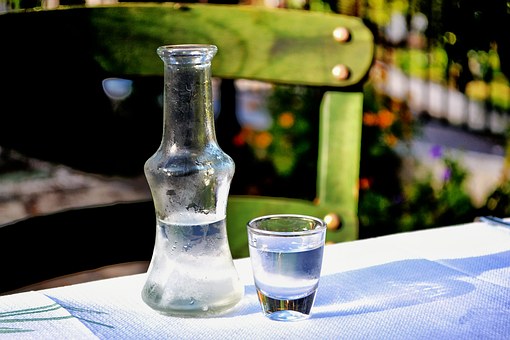
‘There is an old Greek saying that “ouzo makes the spirit” and this is especially true in Greece. The Greek spirit or kefi (KEH-fee) is found in hearty food, soulful music, and the love of lively conversation. A glass of chilled ouzo is the perfect companion to all of these things.
Most people would agree that ouzo is Greece’s most popular alcoholic drink. No other beverage is as uniquely Greek or as closely linked to a culture as ouzo is to Greece. In fact, in 2006, the Greek government won the exclusive rights to use the product name ouzo.’
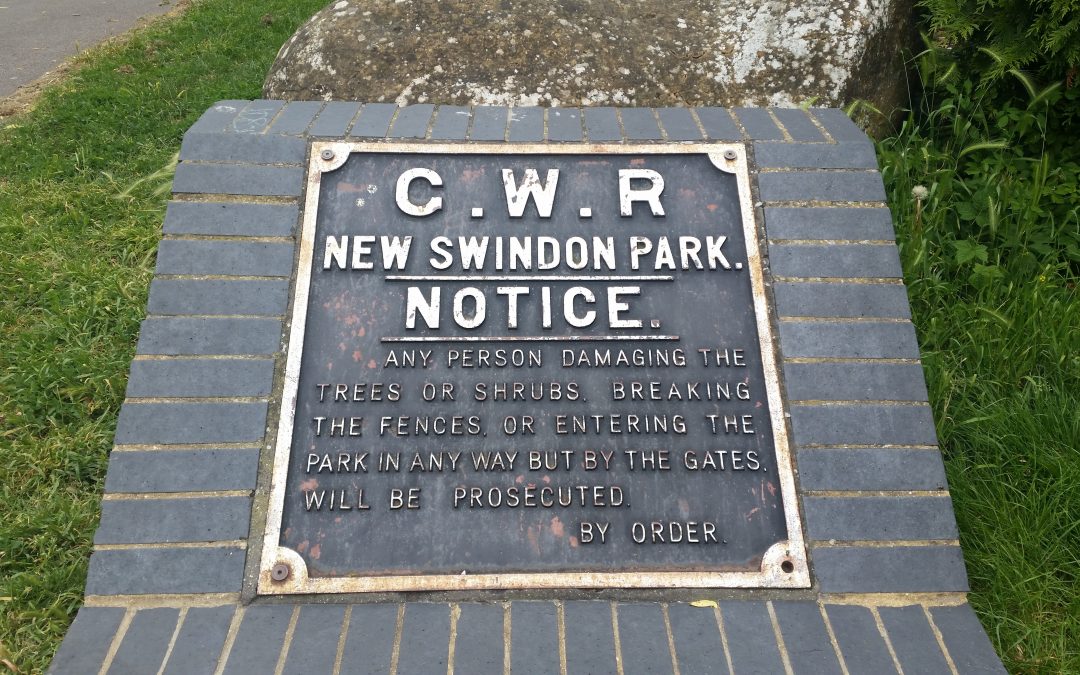
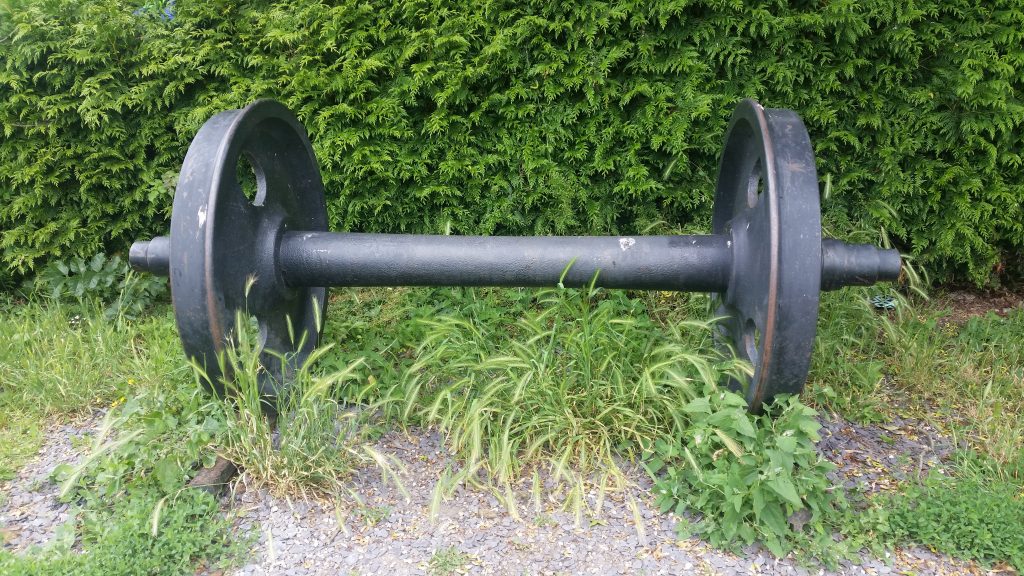
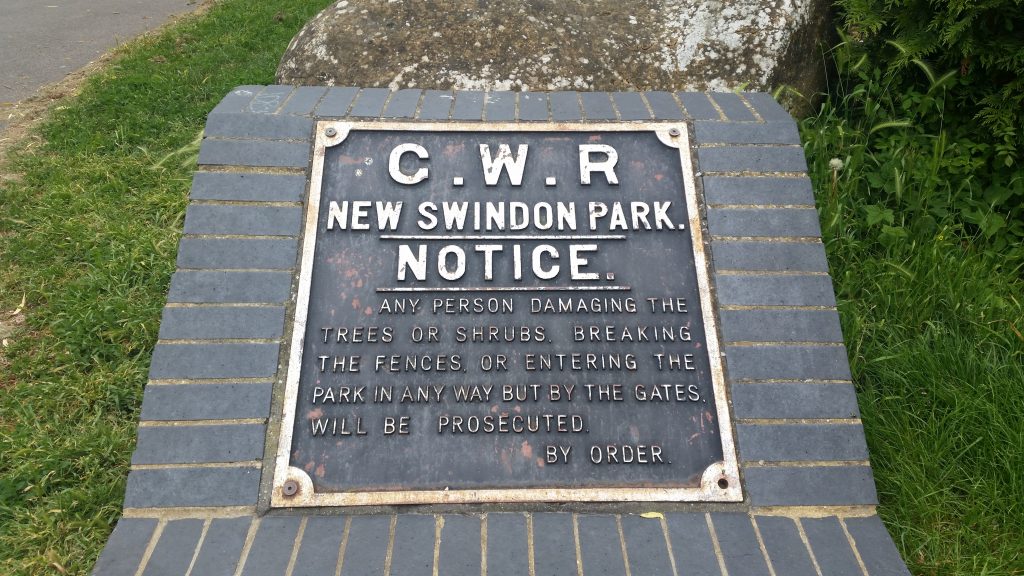
The GWR Park, Swindon’s oldest dedicated park, in the centre of Swindon’s award-winning GWR Railway Village conservation areabegan life in 1844 as a cricket ground. In that year, the GWR bought land from Lt.Col.Vilett, a local landowner. That land, to the west of the new Railway Village, between Faringdon Road and St Mark’s Church became first a cricket ground and later the GWR Park – known also to some as The Plantation or Victoria Park. Or Faringdon Road Park.
Aside from cricket, the park played – and still does play – a big role in the social life of the the railway village residents and wider Swindon. As such it occupies a special place in Swindon’s history.
Before 1841
Where the park and the GWR railway villagelie used to be open farmland. Colonel Villet, mentioned above, owned two pasture fields that provided the land for the park. They bore the names Rodbourne Lane Ground and Part of Great Ground.
1841 – 1870 – The Railway village and cricket field
1843 saw the GWR open a factory at Swindon for the building and maintenance of trains. At the same the first 300 cottages of the railway village appeared to accommodate the new workers. In 1844 the GWR bought a little over seven acres of further land to give space for or houses, a church, a vicarage, a church hall and a cricket ground.
The Children’s Fete is Swindon’s oldest summer event – dating back to 1866. Organised by the Mechanics’ Institution, it ran until 1939 – except during the Great War. And was only halted by the outbreak of WWII. In 2003, the Mechanics’ Institution Trustrevived the tradition and have run it most year’s since.
In 1903 the Children’s Fête was described as the ‘event of the year’. Around 30,000 took part and by 1907 40,000 people attended.
The Trust maintains the tradition of providing a free piece of cake to all the children attending. Thus, the event has once again become a popular and recognisable part of Swindon’s social calendar.
Sadly, the ornamental, formal gardens, along with the cricket pavilion, the bandstand and glasshouses are long gone. There’s a lovely archive photo of the park here on the Historic England website.
The park does though have a small play area for tiny tots. And, installed in November 2018, in the park’s northwest corner, a WWI memorial. It affords a peaceful spot for some quiet contemplation.
1871 – WWII – A designed park
During this period the open character of the cricket field morphed into a civic park – much like Town Gardens. There came a park keeper’s lodge, glasshouses, fountains and formal gardens.
Also around this time there appeared a drill hall in the parks’s north-west corner for the 190 men of the 11th (Wilts) New Swindon Rifle Corps.
Records show the park in frequent use for cricket, athletics, cycling and rugby. It was often a venue for the New Swindon and GWR Cricket teams. And also the New Swindon Wanderers rugby team.
During the Second World War the entire northern edge of the park was given over to trenches and/or shelters. The park had heavy use for drill practice and it’s said that fairground rides were put up in the park throughout the summer.
The park’s decline
Post war many of the park’s features were lost or removed – the bandstand and pavilion included – by 1956/57. The lodge and glass houses remained until much later though as you can see them on Ordnance Survey maps from 1067-71
A park with a view
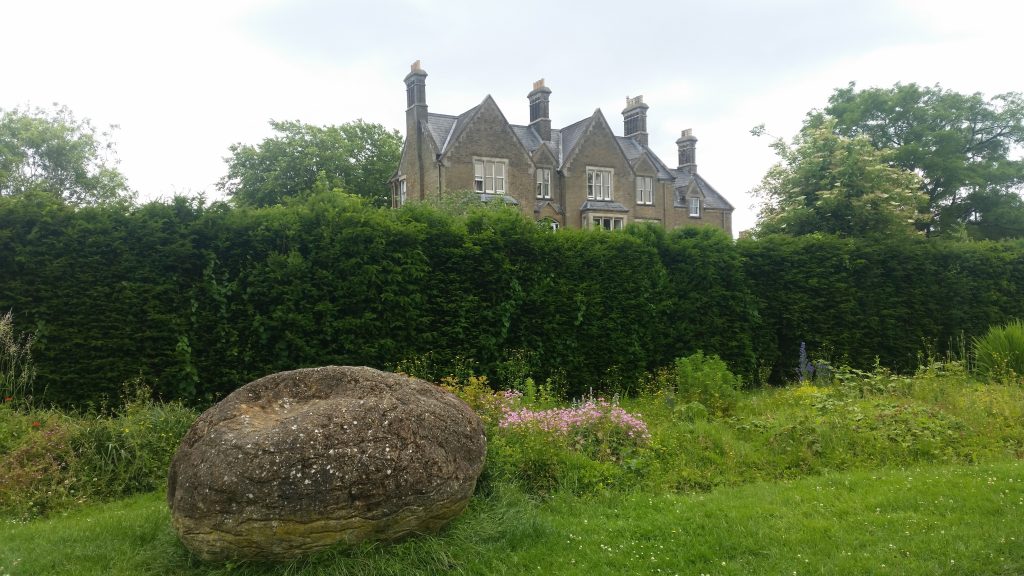
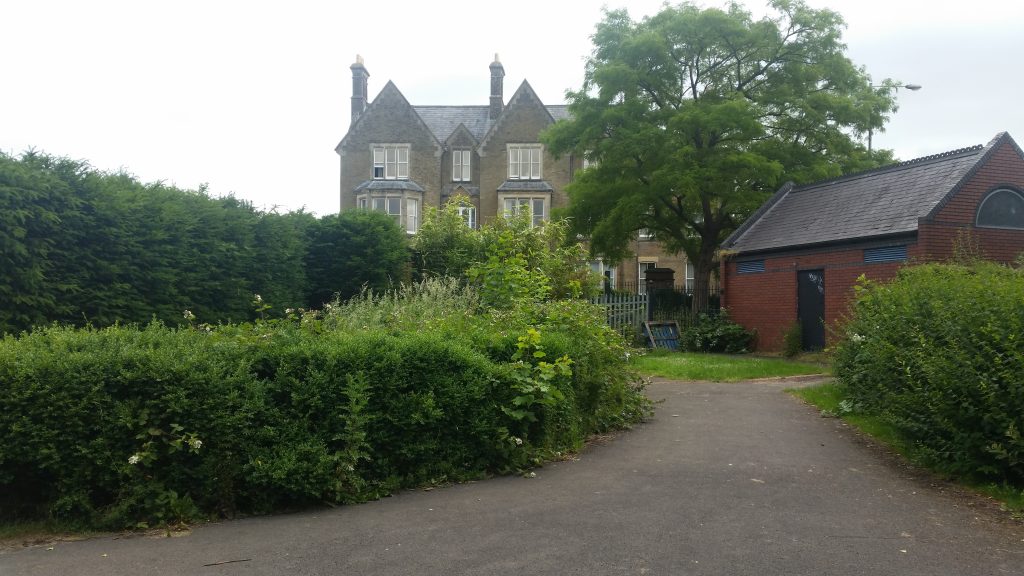
What makes this park stand out is what you can see from it. As you walk around the park you can see several of Swindon’s land marks. There’s the water tower and UTC, St Mark’s Church of course. Then there’s Park House and – towering over everything, the David Murray John Tower. Not forgetting the view up to Radnor Street cemetery.
And besides all that, and despite the fact that the glasshouses and ornamental gardens are long on, it’s a lovely park. As soon as you’re a few steps inside it the traffic noise of Faringdon Road recedes and it’s all tranquil greenery.
He’s Out!
This 2015 article from the Swindon Advertiser reports how the legend that was WG Grace played in Swindon several times – both at this park and at the county cricket ground next to the football stadium.
‘Turning out for Bedminster against Swindon at Greenway Bush Lane, Bristol on May 7, 1870 Grace was caught and bowled for a duck by 25 year-old GWR worker John Laverick.
Back to make amends in the second innings, the Grace’s scalp was again acquired for a big, fat, delicious nought, courtesy of a gleeful Laverick.
Despite Grace’s “non-contribution” Bedminster won by eight wickets.
For a man who batted almost 1,500 first class innings, WG was only clobbered with a double-duck on three occasions.
We don’t know whether Laverick was a fast bowler, a spinner, or whatever. We do, however, know that in a sporting sense the Swindon foundry worker singed a very famous beard.’
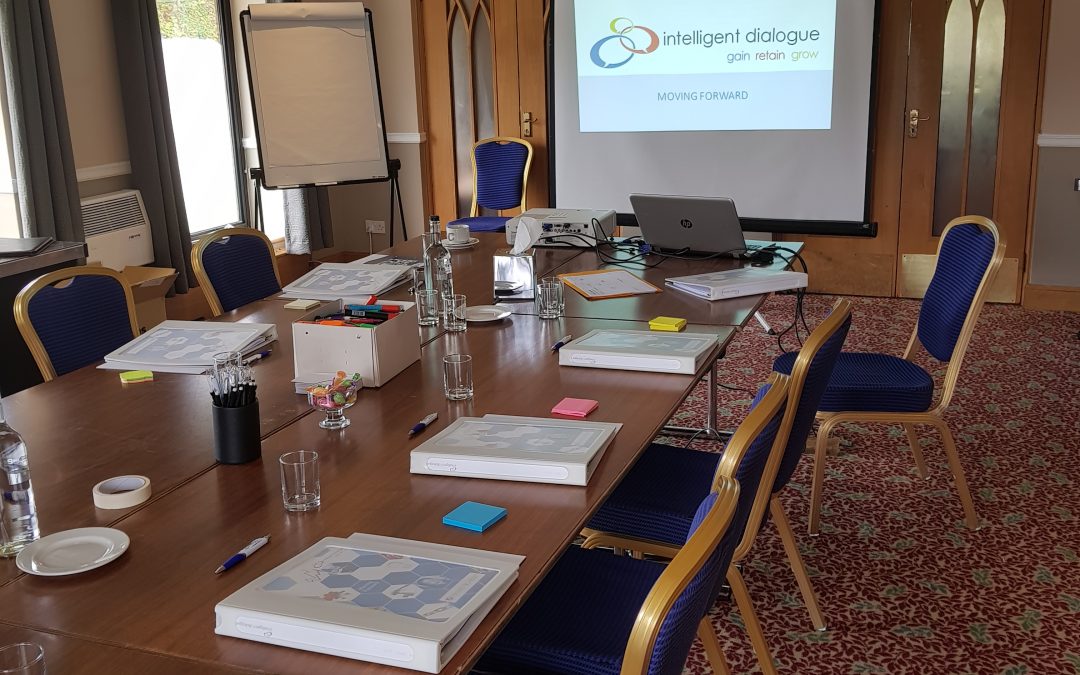
IMHO, Intelligent Dialogue is a rather good name for a business that does what this Wiltshire-based business does do: training and coaching. And more of that soon.
But first let’s have a little look at the words that comprise this business’ name. Humour me – I did an English degree not long back – so I rather like a word! And there is a point to it – as I’m sure you’re intelligent enough to see.
The mass noun, intelligence, is late Middle English, via Old French from the Latin Intelligentia. That in turn comes from intelligere – meaning understand. Intelligence then is an ability to get and put to good use, knowledge and skills. Besides that, as well as being something we have (or not), intelligence is something we get when we gather political or military information.
Moving on to dialogue– one definition/application of the word is that of a discussion between two or more people or groups. In particular where it involves exploring of a certain subject or problem resolution.
You see now why this is such a great name for a training deliverer? ‘Yes, I do. Tell me more about them!’ I hear you cry.
By which I mean new(ish) to the Swindon/Wiltshire area – (Royal Wootton Bassett to be precise) and not new to their field. Nothing could be further from the truth there.
Indeed, they have well over twenty-five years’ experience in helping their clients to achieve tangible results from the training they deliver.
If you’re in the business of wanting to grow your business and need help with the following then you’re reading the right blog post:
Developing your sales team
Improving the quality of the telephone conversations you have with your customers
Developing your customer experience
Helping your team leaders and managers to flourish
Developing your future managers and leaders
‘Okay, so they’re experienced and they’ve been doing it for a long time. Well so have plenty of other coaching deliverers. Why should I choose them over the Terrific Training Delivery Company that I’ve used before?’
That’s a good and fair question. One which I’ll try to answer.
Why choose Intelligent Dialogue training and coaching for your training needs?
Well there’s the years of practice they’ve had between them for a start. They’ve walked the walk and talked the talk. And I know that’s a cliché – but that’s because it’s true. That’s how clichés form.
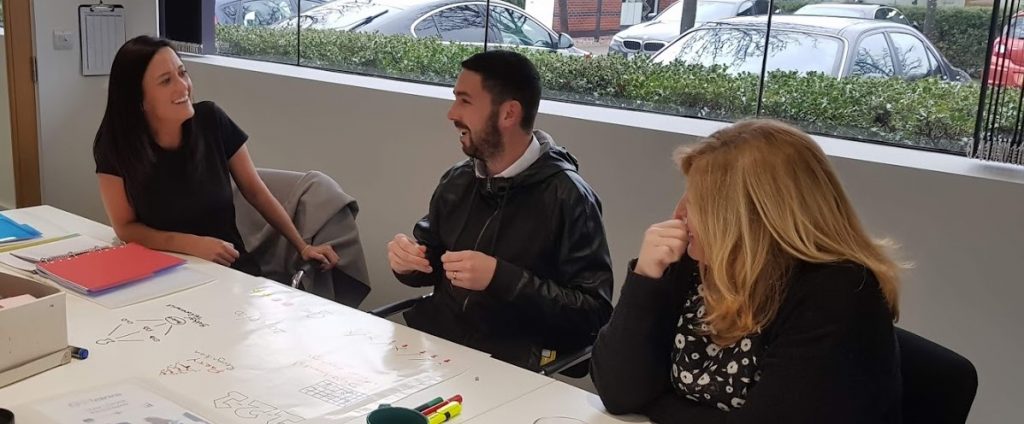
The people at Intelligent Dialogue have first-hand, hands-on experience of sales, of management, of call centres and of customer service. In short: they’re training you in what theyknow. That’s not always the case with trainers – there are some who work from a generic written training programme.
That expertise makes them credible. And with credibility comes faster participant buy-in. And buy-in brings faster results.
Tailored Training
What’s more, Intelligent Dialogue work with you and your specific outcomes in mind. What that means to you is this:
Intelligent Dialogue deliver a training course or a development programme that helps its participants build the skills and confidence they need to support your business. And that’s another thing that helps you achieve your ROI in the training.
Be In Tune with Intelligent Dialogue
Let’s assume now that you’ve seen enough to think ‘Yes! I’d love to use these people in my business. I’m sure they’d be great at meeting my customer service training needs but …’ The BUT being that you don’t have the budget. Well never fear, the Intelligent Dialogue, In Tune downloadable training materials are here.
Armed with these easy-to-use materials* you can run your own customer service training.
*Available in US English or British English packs.
You can download a free sample from the website before you commit yourself to buying. And there’s a whole range of materials to choose from. Buy them either as discrete units or as a complete In Tune training package. Either way you won’t hit a bum note.
Prices range from £150 + VAT for the In Tune with Extraordinary Service unit to £950 + VAT for the full package.
What do their clients say?
Another good and fair question. Why should you take my word for it?
Well, you don’t need to because there’s a whole heap of super testimonials here on their website. And a funky illustrated one plucked from their Twitter stream: