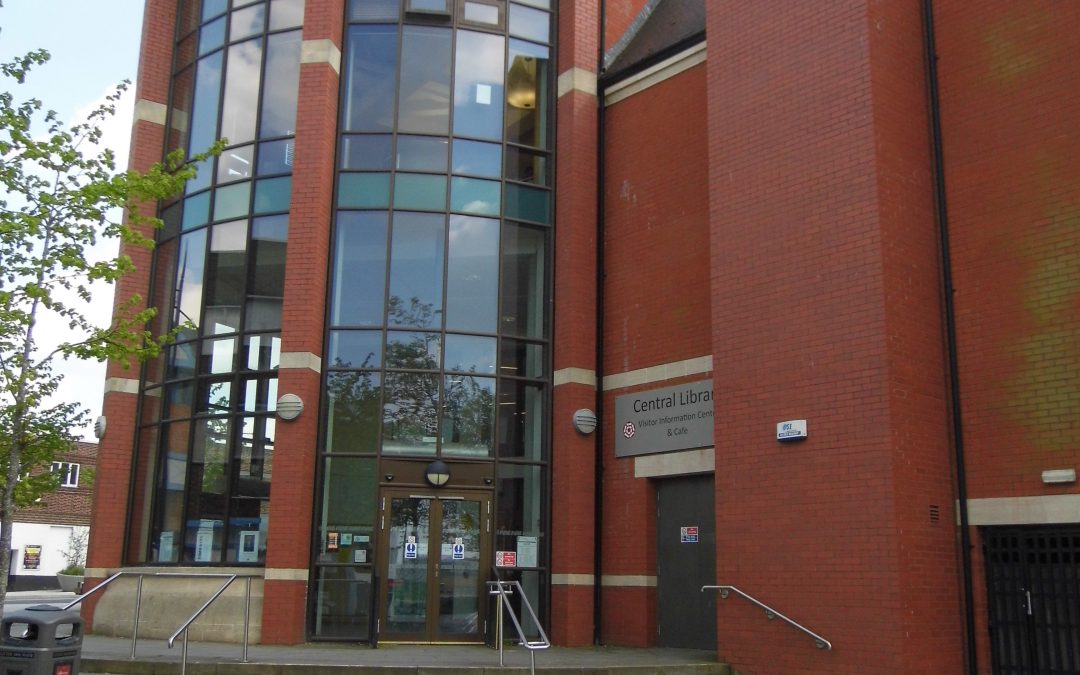
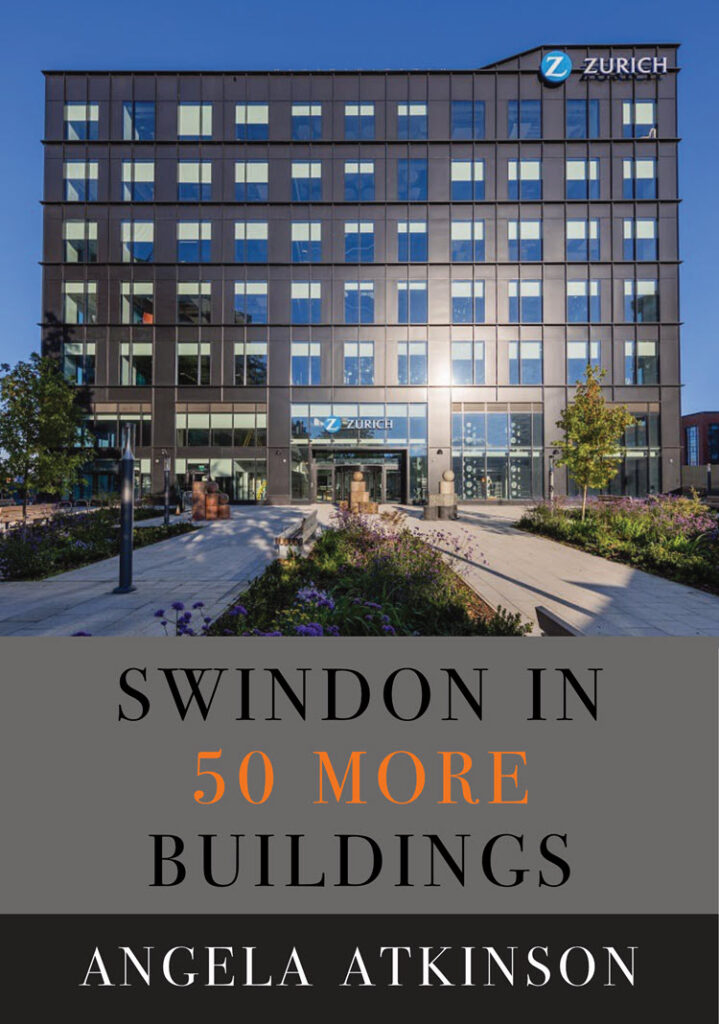
Well, it’s been a while since you’ve been able to access the shop and information desk in the central library on Regent Circus. That sad state of affairs is, of course, thanks to us being in the grip of a pandemic.
But lo! I bring you tidings of great joy. No – a son isn’t born unto us but we do now have a Covid compliant library shop.
You can then email askthelibrary@swindon.gov.uk with your telephone number and someone will call you back to take your order and payment. Then you can collect what you’ve bought from the library during their opening times.
Caveat Emptor: There’s no walk in access. You can collect your books/purchases from the foyer where staff will put them ready for you.
So it’s not ideal no. No one is pretending it is. But it’s something. And it does mean you now have the means to support the shop in buying gifts and books from them.
Dona Bradley and Simon Webb are among those with fabulous gift products on sale in the Covid-compliant library shop. Not to mention of course, dozens of fabulous books. Yes – those I’ve written. To pretend otherwise is daft. But lots more besides.
Early in lockdown I wrote a couple of posts highlighting a range of books to read over the summer. So here’s a recap of those:
When: Saturday 8th August Where: The Museum of Computing in Theatre Square Time: 12 midday to 2pm
NOTE: the Museum of Computing is closed to the public (due to Coronavirus restrictions) but I, Angela, will be there, with a live Zoom broadcast. And maybe a Facebook live.
The Zoom event will offer an opportunity for interviews and Q&As and will incorporate poetry, music and more.
NB: if you’re not on Facebook but would like to join the Zoom event, email me on: aaedits56@gmail.com so I can send you the link.
Swindon author publishes new guide to her adoptive town
A Swindon author who published her first book a mere two years ago, is launching a fourth – and it’s the one she’s always wanted to write.
Angela Atkinson, who pens the popular blog Born Again Swindonian, is passionate about the town. And her fourth book is a further tribute to her adoptive home. She’s holding an official launch on Saturday August 8, from the town’s Museum of Computing. The event is part online and part face-to-face, to allow for lockdown restrictions.
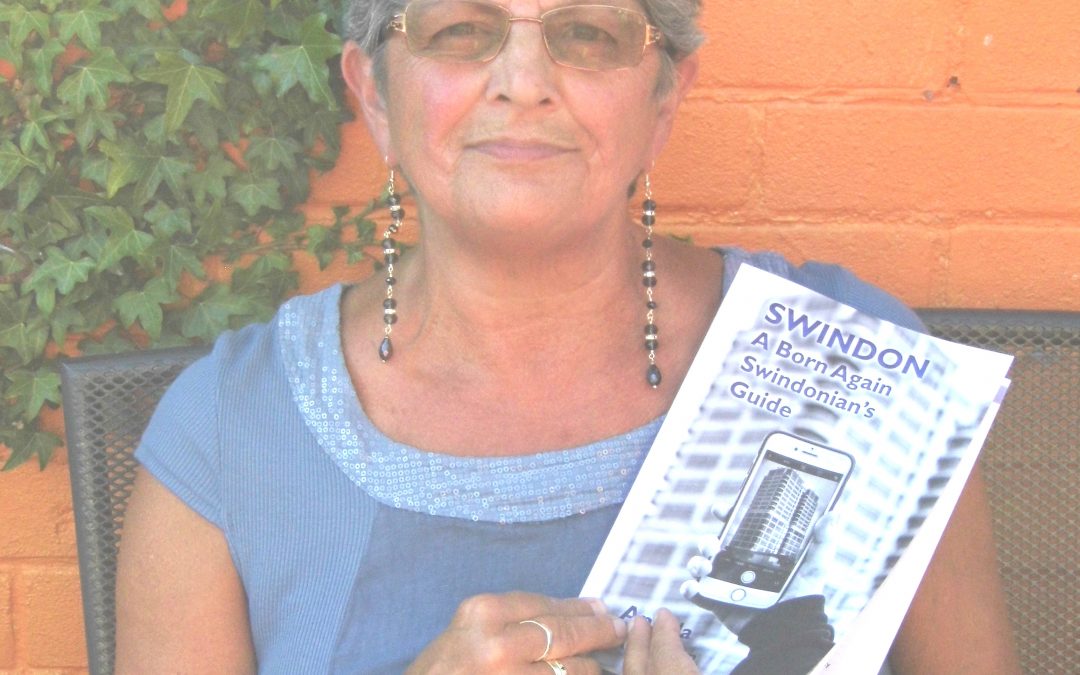
Swindon: A Born Again Swindonian’s Guide uses the tagline #LookdownLookaroundLookup
It acts as a guidebook, encouraging readers to get out and about to explore some of the town’s treasures.
To help them do that, Angela has filled the book with urban exploration trails. Some of them pre-existing and some that she’s created, including a couple of quiz trails for children to do with their parents. Though she hasn’t forgotten green spaces and nature reserves!
It features some Born Again Swindonian blogs, some new chapters, and even an imagined guide book entry Angela wrote about the Magic Roundabout while studying for her English degree.
Derbyshire-born Angela’s previous publications, best-sellers among Swindonians, are:
“The difference between this and the other Swindon books, is this one is for getting out and about with, while the others were to sit and read,” said Angela. “It’s the one I have always wanted to write, ever since I started the Born Again Swindonian blog. It’s curious, that something I conceived some years ago has now become very timely thanks to pandemic keeping people at home. Never was the word ‘Staycation’ on so many people’s lips.”
“So many people say Swindon is ugly, but that is a little word carrying so much meaning.
My friend and poet Carole Bent once wrote about the glitter in the concrete and the sparkle in the cement as a metaphor for life. Yet it is so true of Swindon. It’s got a rich history, and many wonderful buildings, walks, and works of art. And I’d love people to discover these.”
When not writing Born Again Swindonian and books, Angela runs a proofreading, copywriting and editing business, AA Editorial Services. Angela founded the business after graduating with a First in Joint English Hons from the University of the West of England. She also attained a First for the travel writing module which kickstarted her blog.
She said: “I told my tutor wanted to do the travel writing module but I didn’t travel anywhere – I don’t even drive. He said the last thing he wanted was another account of a gap year Thailand, and asked me to write about what I saw. So I did, hence the first blog on The Magic Roundabout.”
Free gifts!
Angela will signing copies and there’ll also be some exclusive giveaways, including Sinclair C5 3D printed keyrings and bookmarks. All on a first-come-first served basis.
The book costs £9.95, and the first 30 purchased on the launch day will contain a limited edition postcard by Swindon artist Dona Bradley. There’s a competition attached to this – details below.
Competition details for Book Launch Swindonian Guide Book
The above image is the underside of a postcard by Dona Bradley. The first 20 of the books to go out at the launch will have one inside. The front of the postcard shows 9 Swindon landmarks.
This is where you need to be quick on the draw with your camera.
The first ADULT and the first under-16 to send me photographs of ALL 9 landmarks depicted on the postcard, in one go, gets a prize!
I’m not judging photographic quality – it’s merely about being quick off the draw.
Below is the official press release about Graham Stobbs’ heroic kayak fundraising efforts. But first a little insight into the man himself – and what brought him to this point.
Graham is a Swindonian. One that, after a difficult childhood and a series of bad choices ran away from Swindon. In similar vein to the old story about running away to join the circus, Graham ran from his personal pain into the Army’s arms – the 3rd Battalion of the Royal Green Jackets to be precise. A circus of sorts one might say.
Within a mere 8 months, Graham found himself serving in South Armargh. A few troubled years in the army saw Graham medically discharged, back in civvy street and utterly at a loss.
A suicide attempt
Now followed years of being turned down by military charities. Graham says he felt alone, let-down and with nowhere to turn to, he made a suicide attempt.
Recovering from that, but still failing to get help from crisis teams and mental health organisations, Graham climbed Kilimanjaro (an awesome feat – I’ve got all on with the stairs) to raise the profile of PTSD and the plight of many veterans.
That was 2 years ago and, as Graham says: ‘still we are losing veterans to suicide. I decided I would challenge myself to do something I knew nothing about and ended up picking 222 miles in a kayak’.
‘The journey is a personal one but also a public fundraiser where I will talk openly about my struggles and encourage veterans to talk more and seek help.’
Preparing for the challenge
Said Graham, ‘preparing for this challenge has been a challenge in itself. I’m hounded The journey is a personal one bit also a public fundraiser where I will talk openly about my struggles and encourage veterans to talk more and seek help.
Only the last few weeks have been encouraging and positive and given me the lift I needed to complete it. I’ve learned different things – like self-rescue and Eskimo rolls to give me the tools to bring this challenge to successful completion.’
‘Above all’ says Graham, ‘the most important is to have belief in one’s own ability. We don’t how to do anything in the beginning. But yet, we humans take on challenges and we overcome adversity.’
This is quite the journey – in every sense. It’s a literal, physical journey – but also a personal and emotional one for Graham. Something of a catharsis. So do support him – and help him to support others.
Read the official press release below to find out where Graham’s kayak challenge starts and ends and the charities he’s supporting.
Veteran Graham Stobbs is embarking on an epic solo fundraising mission next month. Along for the journey will be veteran Cormac Doyle MBE from The Bridge Charity (supporting land vehicle).
The team are raising money for the Veteran’s Hub Swindon, Walking with the Wounded and The Veteran’s Hub Weymouth. These three charities dedicated themselves to supporting the continued wellbeing of veterans.
Graham will set off from Dungeness in Kent and sprint 29 miles across the Channel. He’ll then complete a further gruelling 10+ hours of kayaking a day as he follows the coast of France down to the Pegasus Bridge War Memorial. He’ll complete the challenge at Point Du Hoc.
Depending on the weather and sea conditions, Graham will start paddling between 12th – 14th August in an 18ft P&H Scorpio Sea Kayak. His aim is raising as much money as possible for the veterans’ causes that are close to his heart.
Passionate supporter of charities
Graham is a passionate supporter of these charities having suffered with his own mental health problems. He’s taking on this challenge to help break the stigma around mental health and encourage veterans to open up, talk and ask for help.
As part of his treatment Graham is undergoing intense EMDR therapy with Cormac Doyle MBE of The Bridge Charity. Cormac is supporting Graham throughout this challenge and his on-going treatment.
All funds raised will help veterans, with some of the money going to Graham’s own charity, The Veteran’s Hub Swindon.
The Veteran’s Hub wants to create a permanent centre, offering much needed mental health support, wellbeing advice and guidance for serving personnel, veterans and their families. It’s a big dream that the team are working hard to make a reality.
Graham will also donate funds to Walking with the Wounded and The Veteran’s Hub Weymouth. Both charities are well known for supporting the mental health of veterans across the UK.
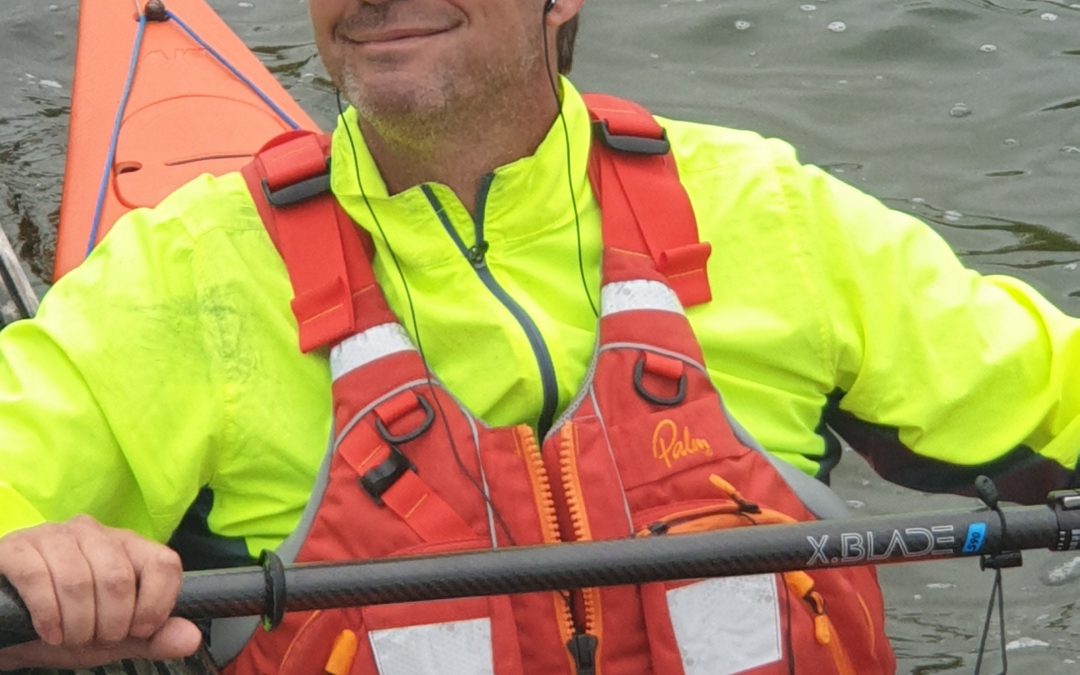
Graham, 48, who is currently training hard for the trip, commented: “I’m excited and nervous about the trip.
It’s a challenge and a healing process for the fundraising veteran paddles his own canoe
The challenge will push the boundaries of my mental wellbeing, endurance and physical capability. Mental health and PTSD is a real challenge for veterans that often goes unrecognised for many years after service. There’s a desperate need for funds so I’m determined to do my bit to help those who have given so much for their country.”
Graham added “This is also part of my own healing process. It’s my hope that I’ll encourage others to reach out about their own difficulties and seek help like I did. I want to show there is light at the end of the tunnel.”
This is not the only way Graham supports veterans causes.
He’s also founder of Swindon’s Mfor Festival. Mfor – where a family fun day meets music festival – supports veteran, military and mental health charities, including The Veteran’s Hub.
AUTISTIC TEENAGER GETS SHOUT OUT FROM TV PERSONALITY FOR COPING DURING LOCKDOWN
TV personality shout-out for autistic teenager.
Autistic teenager Leon Watts couldn’t have been more thrilled, when TV presenter Chris Tarrant gave him a mention. The nod came during a recent virtual charity quiz night.
Leon, who’s 16 and lives with his family in Oakhurst, Swindon, is autistic. He’s one of the young people who attend The Platform Project, a not-for-profit young development programme. The project supports young people interested in starting their own business. For some of those young people, mainstream education has not worked well for them – for a variety of reasons.
It was only in February that Leon started attending the Platform Project. He both fascinated and inspired his colleagues there with his determination to help others like him.
Leon had already established an online community under his own branding of ‘Autoism’. Mad about cars since he was three, Leon uses his love of all things on four wheels to raise awareness of autism. All with the aim of educating and inspiring others.
Leon Watts with Guy Berryman, who plays the acoustic guitar with Coldplay.
Automobile affection
“When I was three, I watched Top Gear. One time they did a piece on Britain’s Most Hated Car and it was the Austin Allegro which was jumping trucks. I loved it.
I’ve loved cars since then. I’m a member of Swindon Young Drivers and I’m already looking at my own car,” Leon said, with clear excitement about turning 17 in 2021.
Charity quiz night
Recently Leon and his mum Debbie, took part in a charity quiz night run by Cirencester-based wealth management company St Jame’s Place (SJP). Hosting the quiz was Chris Tarrant.
Debbie sent a message to the organisers to ask if Chris could mention Leon who, at that time, was struggling with lockdown.
Debbie said: “Leon has been strong during lockdown given that he’s not been able to see his friends. Nor has he been able to attend his usual ‘car’ events. His usual routine of life – like everyone’s – has suffered disruption. And for someone with autism that’s so difficult to cope with. He had one super one difficult week so I sent a message to Chris when we attended SJP’s charity quiz night. It was amazing that Chris responded to it.”
Leon’s love of cars means that he knows an amazing amount of detail about most super cars. This in-depth knowledge has made him very visible to many in the world of high-performance cars.
Coupled with his courage around sharing his journey with autism, he’s linked up with many well-known famous car lovers. They include Neil Clifford, CEO of Kurt Geiger, Paul Woodman & Tiff Needell from Lovecars. Also Guy Berryman from Coldplay – who’s also the creative director for The Road Rat magazine with editor Mikey Harvey. Then too the racing driver Marino Franchitti, and many more. Leon is now planning his next charity car event.
Sadie Sharp, founder of Swindon’s Platform Project said: “Leon is an inspiration to us all. We’re confident that he will have a career in that industry as his passion is so clear for all to see.
He, and many of the young people who come to us, often need a safe space to gain their confidence and access to opportunities which work for them. We are proud to have Leon as part of our ‘family’.”
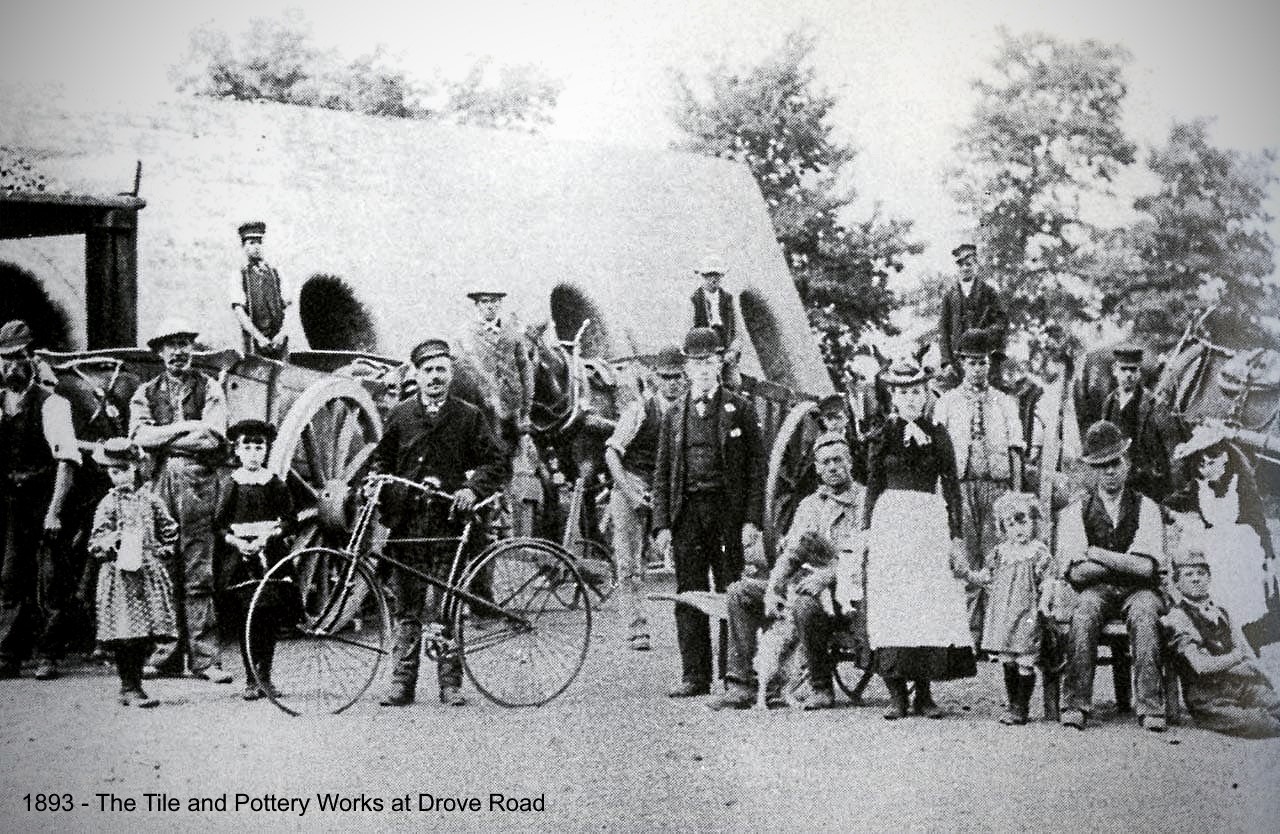
Last year, when writing Swindon in 50 Buildings, I knew I simply had to include Thomas Turner’s villas on Drove Road. Since the book’s publication, I’ve had a mind to write a bit more on here about Thomas Turner Swindon brick-maker and his brick-making enterprise. But I never quite got round to it. Then not long back I saw a super blog by Swindon historian Frances Bevan so figured – why reinvent the wheel? I may as well feature that with my own photographs. Well, I say mine, actually they’re Chris Eley’s, whom I despatch on photographic missions. I’m super grateful for that.
Thomas Turner and the Drove Road tile and potter works – Pic sent to me by a friend – probs originated in Local Studies …
The Catalogue Houses
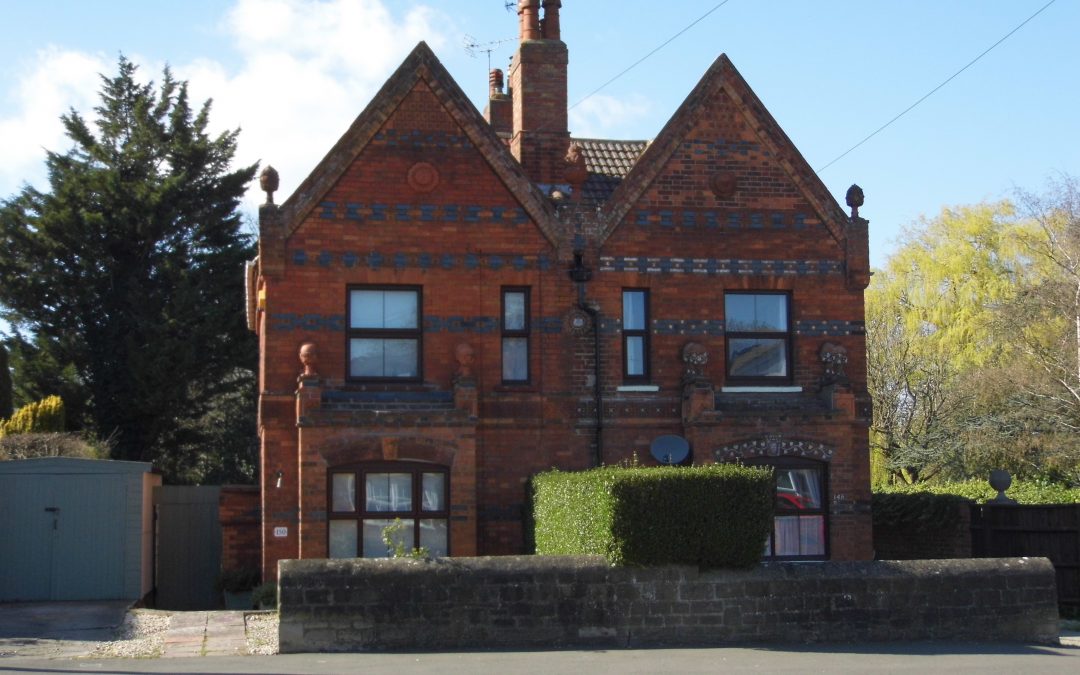
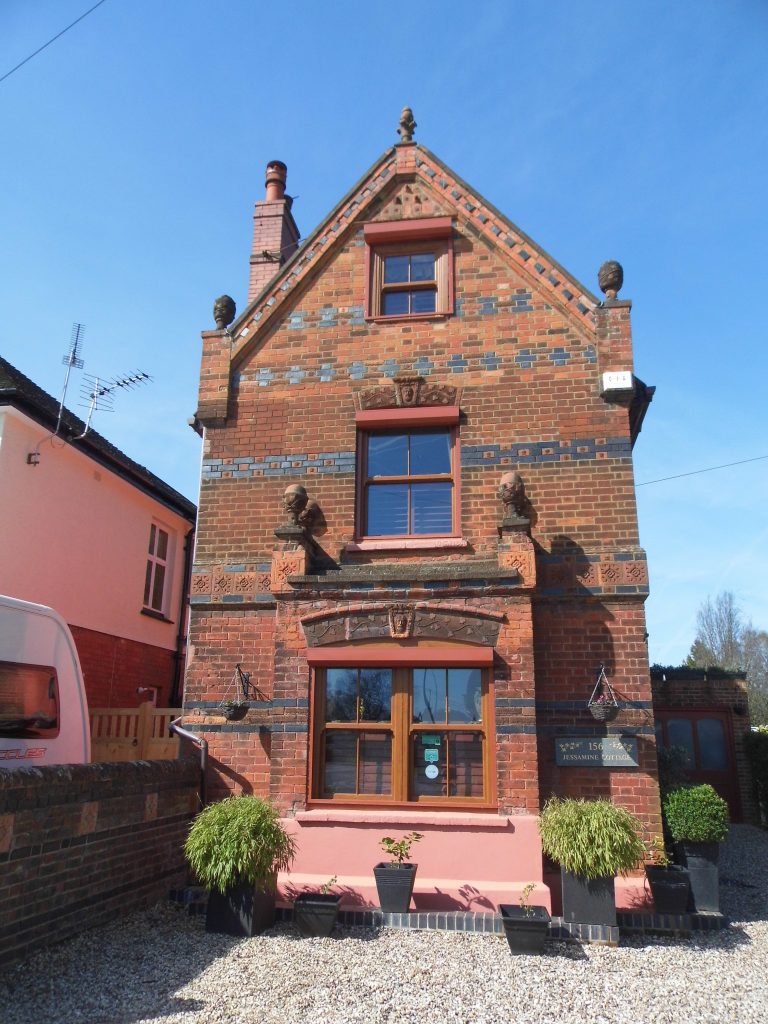
There’s several houses in Swindon that feature Mr Turner’s work. But it’s arguable that these two are the most notable. With the colloquial nickname ‘The Catalogue Houses’ – that’s exactly what these houses are. And there’s more than a touch of the whimsey about them.
Indeed, as Frances writes in her blog, Brickmaker Extraordinare, ‘When brick and tile manufacturer Thomas Turner wanted to advertise his wares he certainly thought of an eye-catching method. In 1889 he built two properties known as the ‘catalogue houses.’
The two cottages along with Jessamine Cottage, were 19th century show homes, built to display every brick and tile, every finial and moulding, made in Turner’s works.’
And do read the rest of Frances’ blog for more detail about Thomas Turner.She has some lovely detail in there about him. And there’s a picture too, of where he now lies in Christ Church in Old Town.
For the well-to-do
Imagine having the where-with-all back in the day to have your own home built? To rock up to Drove Road, look at these villas and pick out bricks and decorative elements for your own home? An early version of the Ikea catalogue – but for bricks instead of Besta storage units.
Thomas made the bricks on his manufacturing site on Drove Road – on what is now Queen’s Park. Wandering around that delightful oasis it’s hard to picture it as the clay pit, that once it was.
Turner’s family home, Grove House, sat a spit up the road from these villas and currently does duty as the Miller and Carter Steakhouse restaurant.
About Turner
According to Mark Child’s Swindon Book, Thomas Turner hailed from Cheltenham. Frances Bevan expands on that by explaining how, following his marriage to Mary Gosling, a farmer’s daughter from Coate, he came to live in Stratton St. Margaret. The newly-weds began their life together at the brick works at Cross Roads, Stratton St. Margaret. There they had their two children, Emma and William, baptised at the parish church. A second son, Jonathan, came along in 1875.
In the 1860s TT took over a small brickworks in the village and there set up a large tile and pottery works. In the 1870s he built up the aforementioned Drove Road works.
Frances further tells us that the Drove Road properties featured early in Turner’s output, being built for his workers in 1871. She further explains that records held at the Wiltshire and Swindon History/Heritage centre in Chippenham reveal a mere fraction of his work in Swindon during the 1880s and 1890s. His 3D catalogue included numerous houses and cottages built in Westcott Place, Drove Road and Belle Vue Road. And, in 1892, houses in the street that took his name.
The 1880s saw the family move into Grove House on Drove Road with their servant, Annie Lewis – also Cheltenham born.
Civic duty
In 1875, Turner comprised the solo Swindon representative on the nine-man board that took on the running of the Wilts & Berks canal when the original company sold out.
Come 1881, his bricks and pottery decoration were used to build and embellish St Paul’s church on Swindon’s Edgeware Road. Ditto the chancel added in 1883. Demolished in 1965, the church formed the building blocks of the 1884 Wilts & Dorset Bank on the corner of Wood Street and Cricklade Street. Some also were utilised in the extensions of the museum and chapel at Marlborough College.
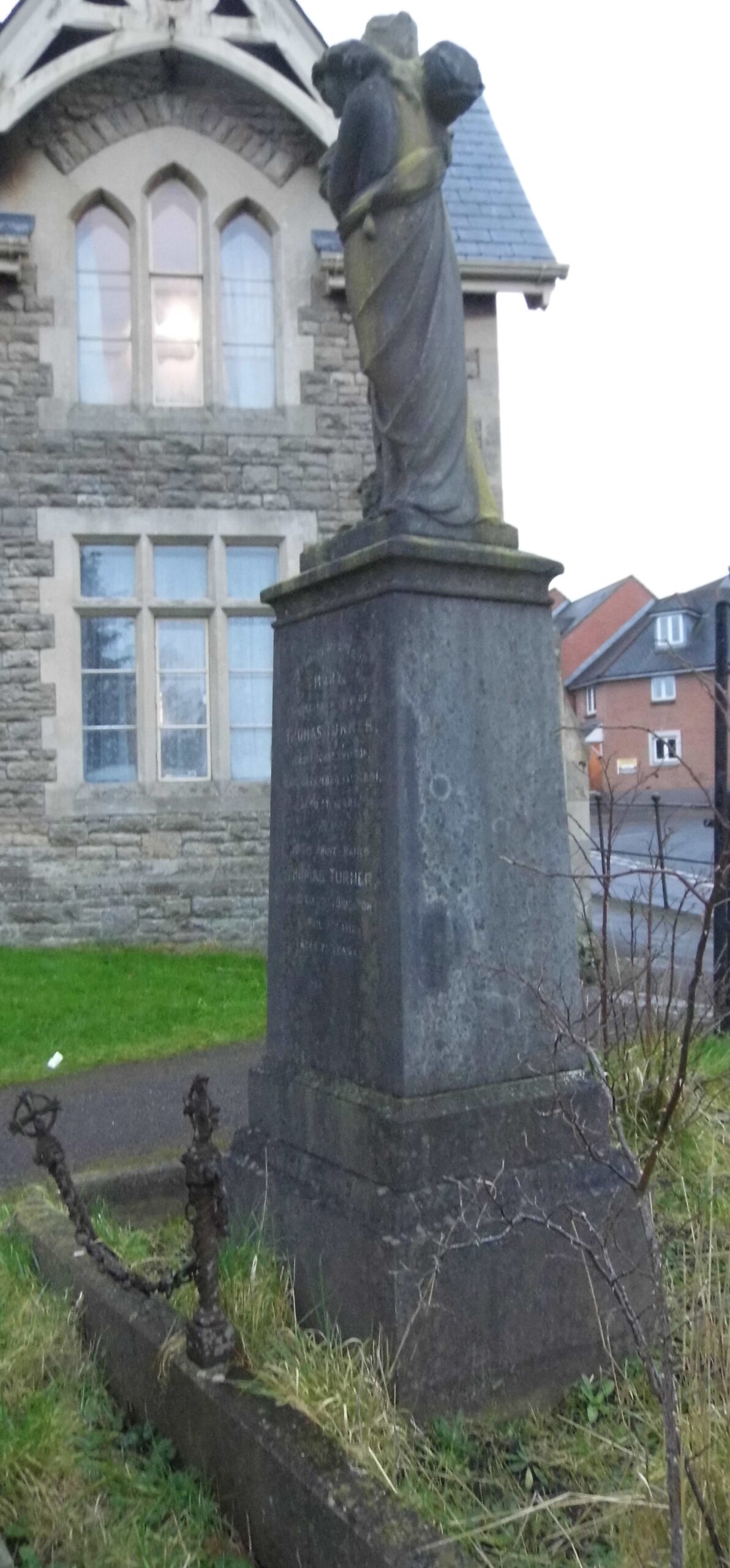
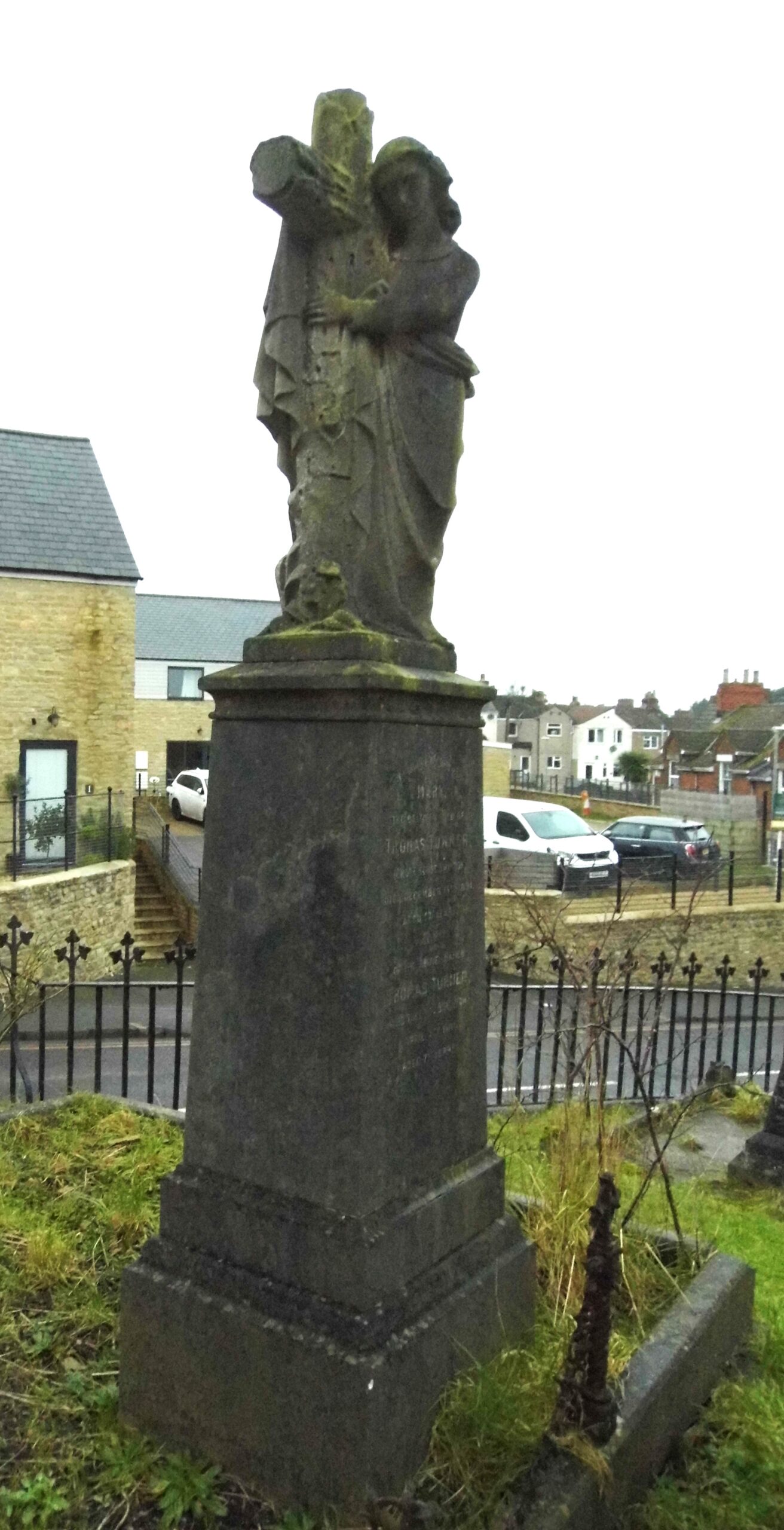
Turner died in Brighton but is buried in Swindon at Christ Church.
1896 saw one Thomas Bazzard take over the Swindon Tile and Pottery Works.
Thomas Turner’s resting place
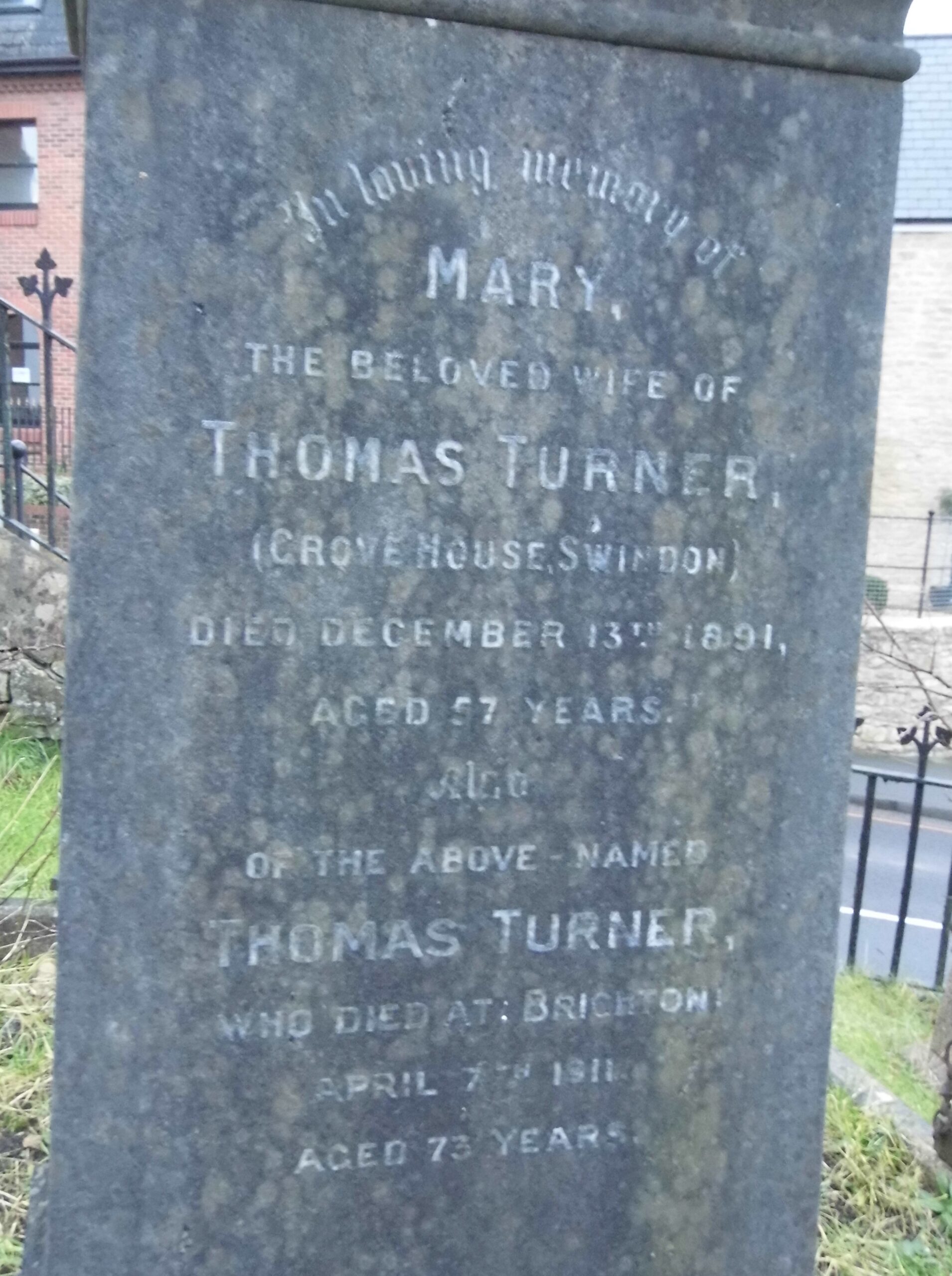
In the graveyard at Christ Church in Old Town, just inside the Cricklade Street gates, you’ll see this grave/memorial. Note though it states that Thomas Turner died in Brighton. Apparently on the 14th April 1911, an obituary appeared in the North Wilts Herald that said ‘the remains were laid to rest in the family vault in Swindon parish churchyard … the first part of the service was conducted the previous day at St Augustine’s Church, Brighton.
Speaking of the man’s grave …anecdotally from a friend … ‘Apparently a very bad employer, my friend’s Grandmother used to spit on his grave when they went to Church at Christchurch …’
Inscription on Turner grave at Christ Church
Now – get exploring! Whip your smart phone out and call up Google maps and go looking for other houses bearing Thomas Turner features.
You can find typical Turner decorative features in Belle Vue Terrace, Hunt Street and Turner Street (named after our man) off Westcott Place. These houses were built with his own bricks as were other streets linking New Swindon and Old Town.
On those houses, and on others he built in Lansdown Road, Kingshill and Westcott Place you’ll find a repeated pottery plaque or keystone in the form of a bearded man surrounded by shell motifs and running vines. It’s said that this face is the likeness of Daniel Lynch, a worker at Turner’s Stratton St Margaret brick, pottery and tile yard.
Jessamine CottageDetail Bellevue terraceFace above doorwayFace on Drove Rd villaTurner Street 1Turner Street 2