Ermin Street Swindon’s Roman Road.
It’s hard to imagine now, but the busy thoroughfare of Ermin Street, that runs through Stratton St Margaret, is a Roman Road. Ermin though is not Latin – it might be Saxon, it might not. Either way, it got the Ermin Street name long after the Roman’s sandal-clad feet had roamed elsewhere.
The full Ermin Street is somewhat extensive, running as it does all the way to the Fosse Way. Thus, I’m limiting my attention, for the most part, to the stretch that runs through the Stratton area of Swindon.
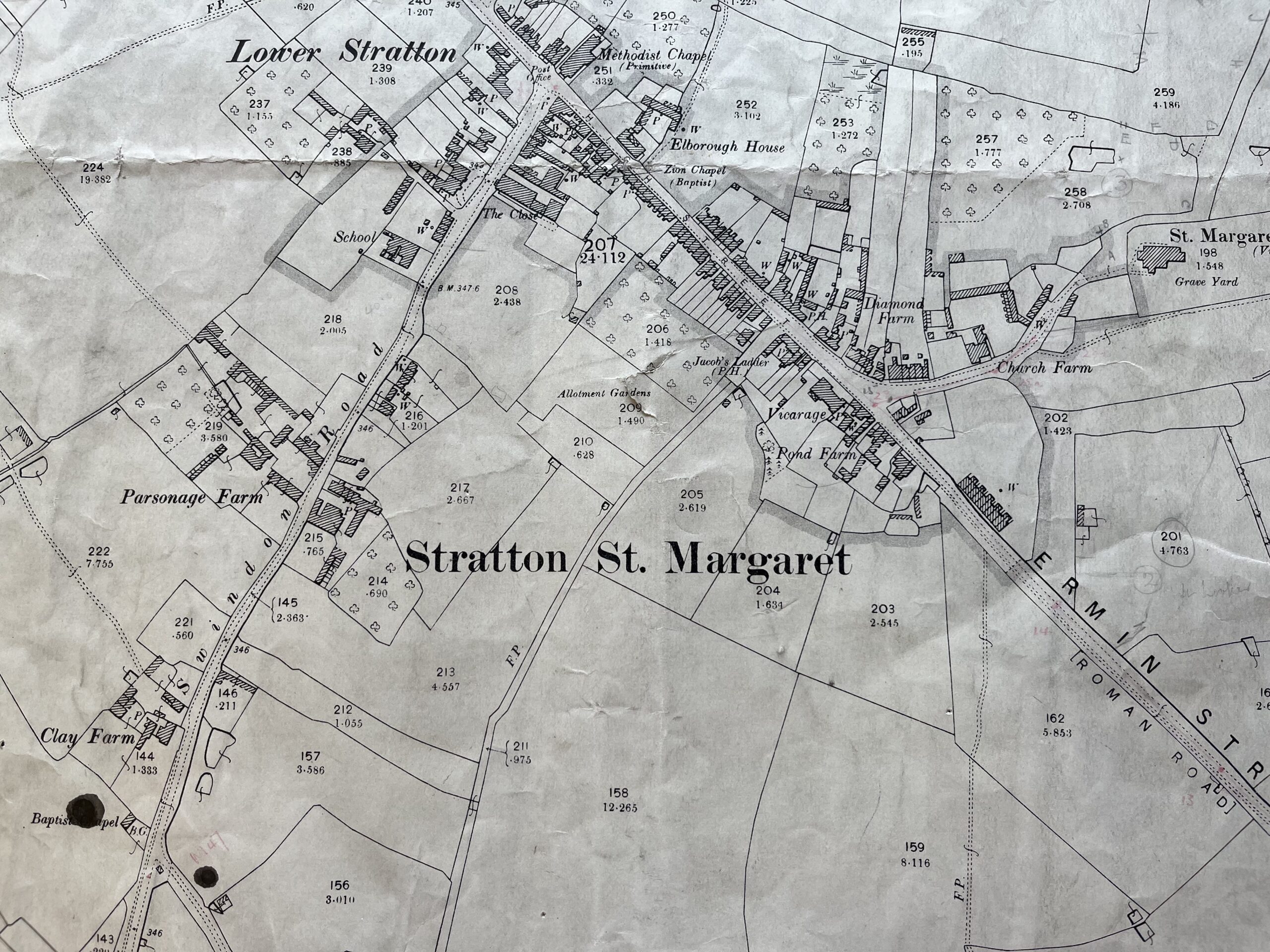
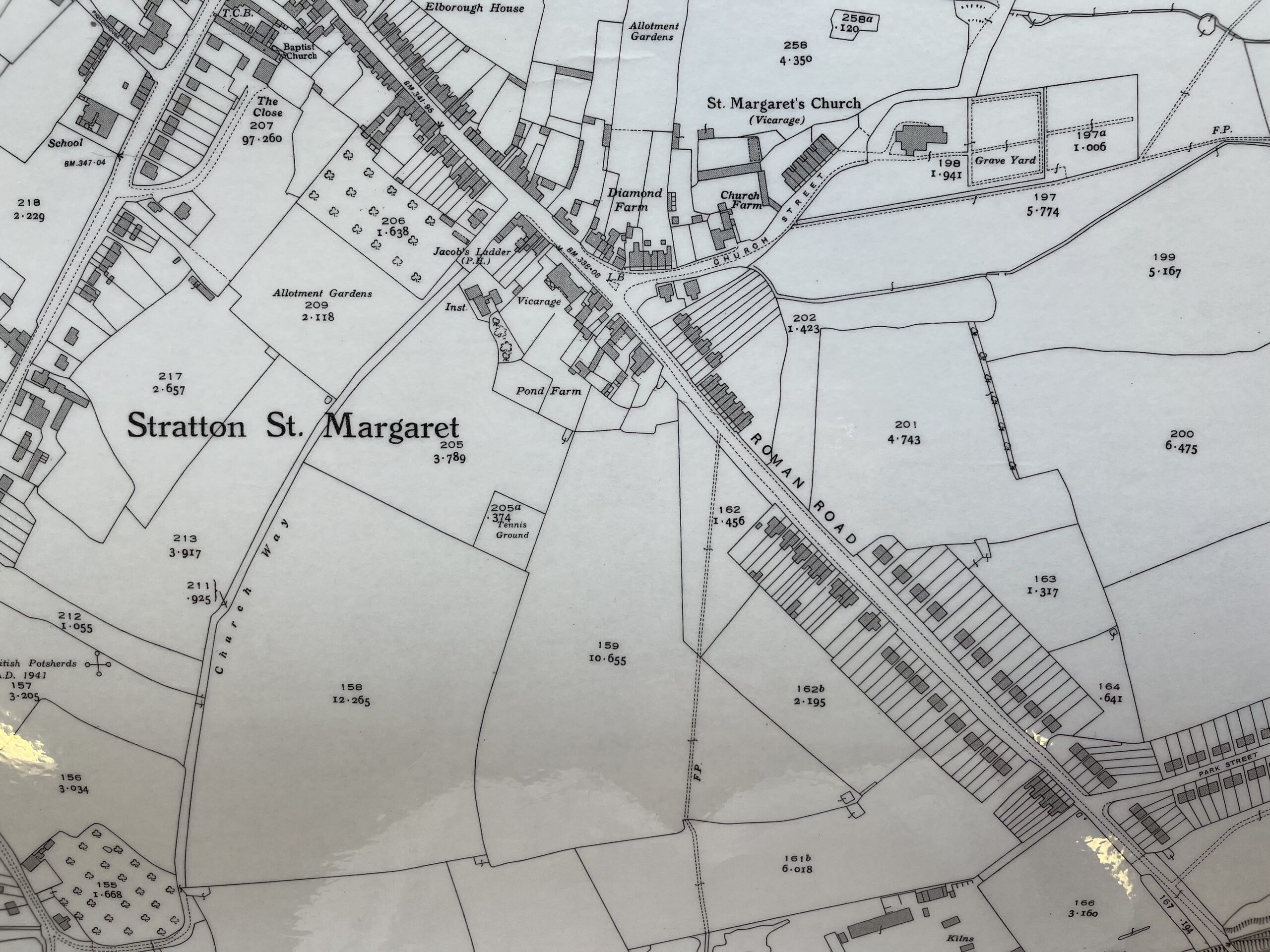
IMAGE OF STREET NEEDED
A Roman resting place
The public house, the *Cold Harbour Inn (many places with this name sit along ancient or Roman Roads) at the junction of Ermin Street and the turnpike on the edge of Blundson comprises the site of a Roman horse changing station.
It sits on the side of the Ermin Way, or what we know as Ermin Street. Once a major Roman trunk road, it linked the Roman town of Glevum and the Roman city of Corinium (modern day Gloucester & Cirencester) to the walled Roman town of Calleva Atrebatum – today known as Silchester.
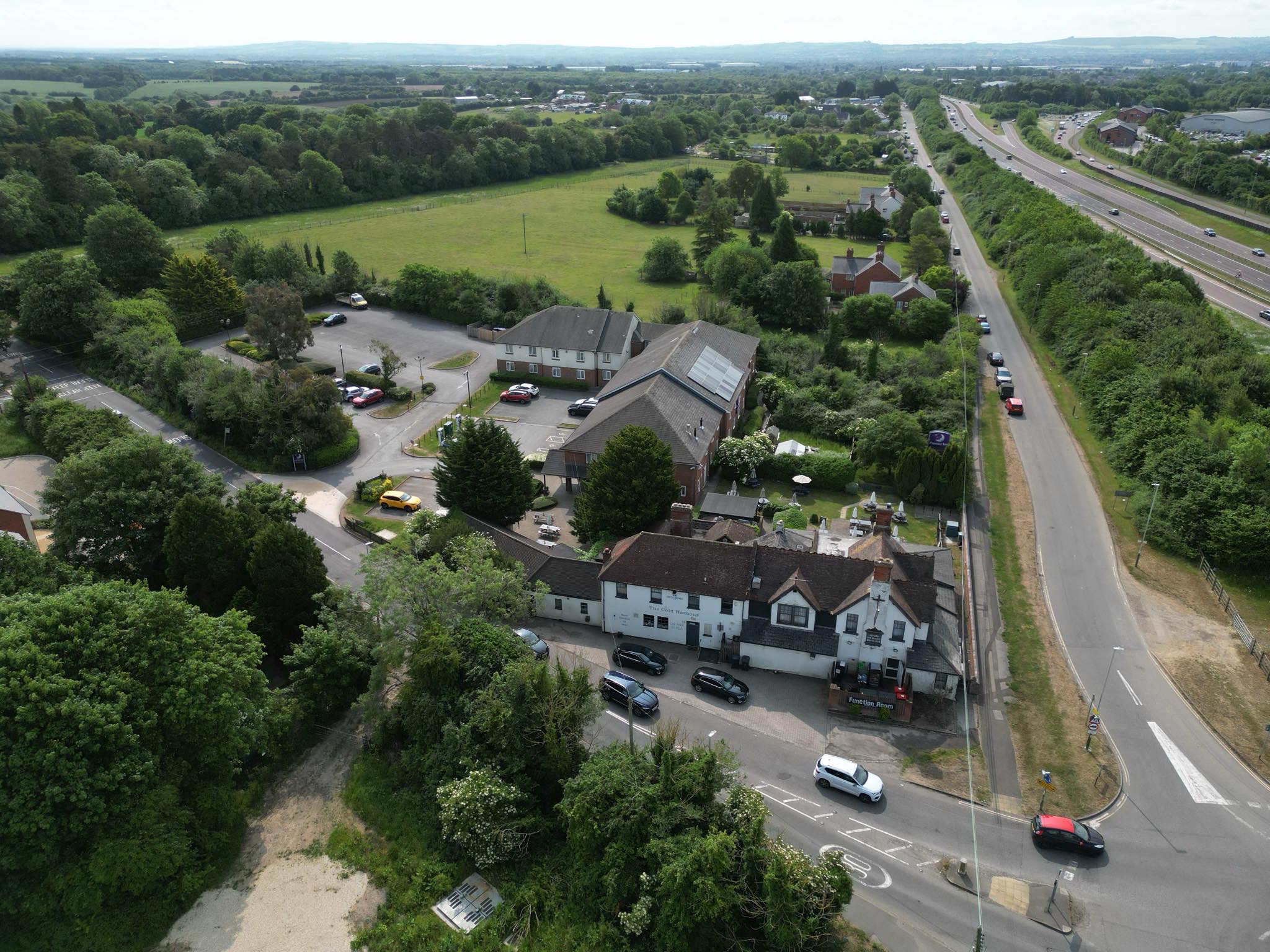
Photo courtesy of Swindon from the Air
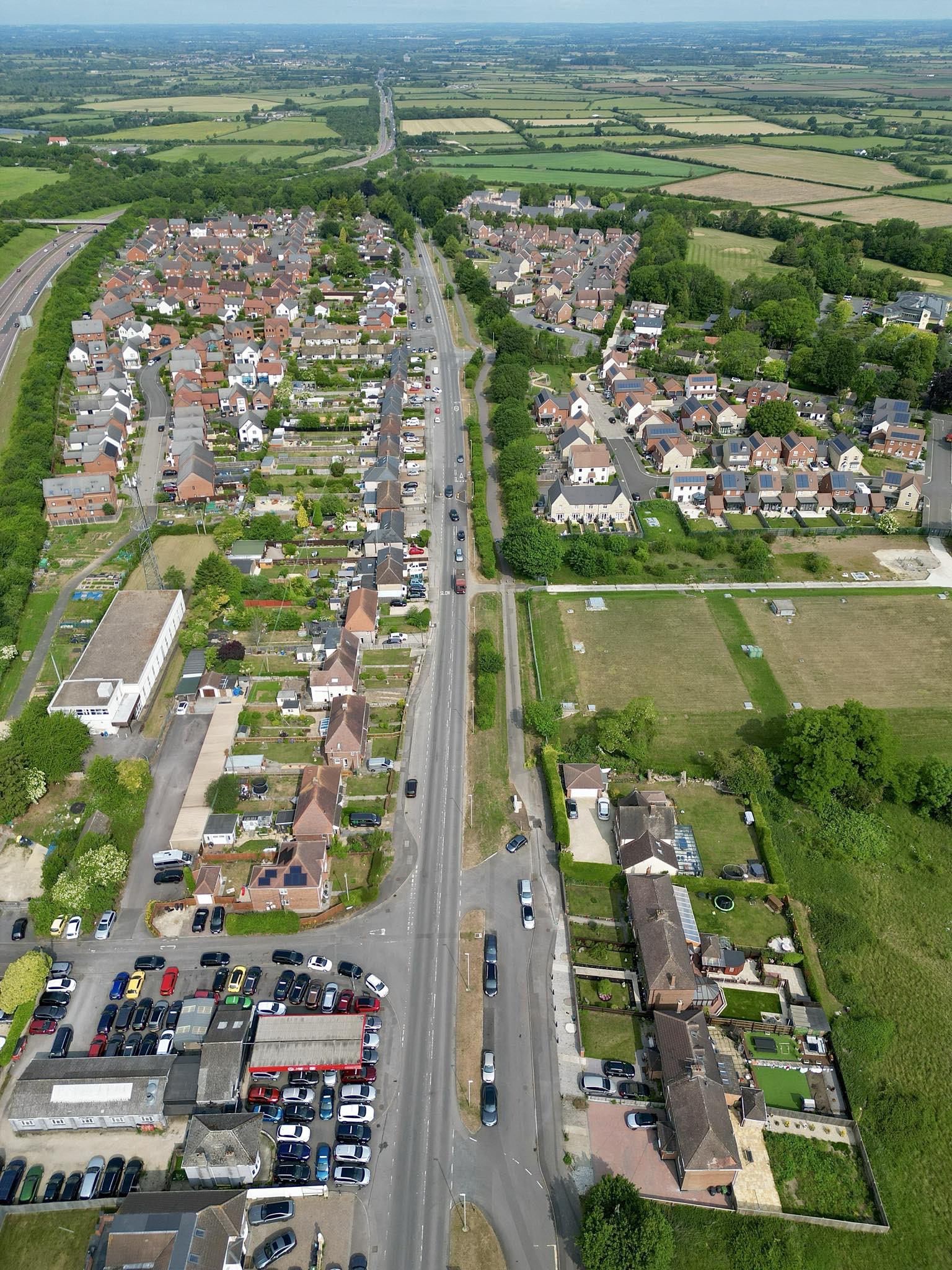
Photo courtesy of Swindon from the Air
From the Stratton St Margaret history website we learn that the road also went under the name The Street and that it ran from the White Hart to the Kingsdown Inn. A master of disguise, this roadway has, at various times, also gone under the names Hyde Road and Station Road.
The website goes on to say that, on the coming of the Swindon/Highworth line, the section between the Crown and the Halt (where the Co-op sits today) went by the name Station Road for about fifty years. It returned to the Ermin Street name in the 1950s.
Sections of Ermin Street closed in sections in 1903 to allow for the laying of piped water and sewage. It appears that the dynamite used in the task blew out every window from the Crown to the willow tree. Further, when a time came, in the 1930s, for Ermin Street to be rebuilt, the road builders found the well laid original foundations of the street some fourteen feet below ground level.
In the pre-railway days
Well before the railway came, Ermin Street served as part of the route used by drovers taking cattle, sheep and even geese, all on foot, from Wales and Gloucestershire to London’s Smithfield Market. The Ermin Street bridge over the River Cole at the Stratton-Wanborough border is shown on a Tudor map by John Speed, published about 1610. Ermin Street is also shown on the Andrews and Dury map of 1810 where it’s marked as ‘Roman Way to Winchester.’
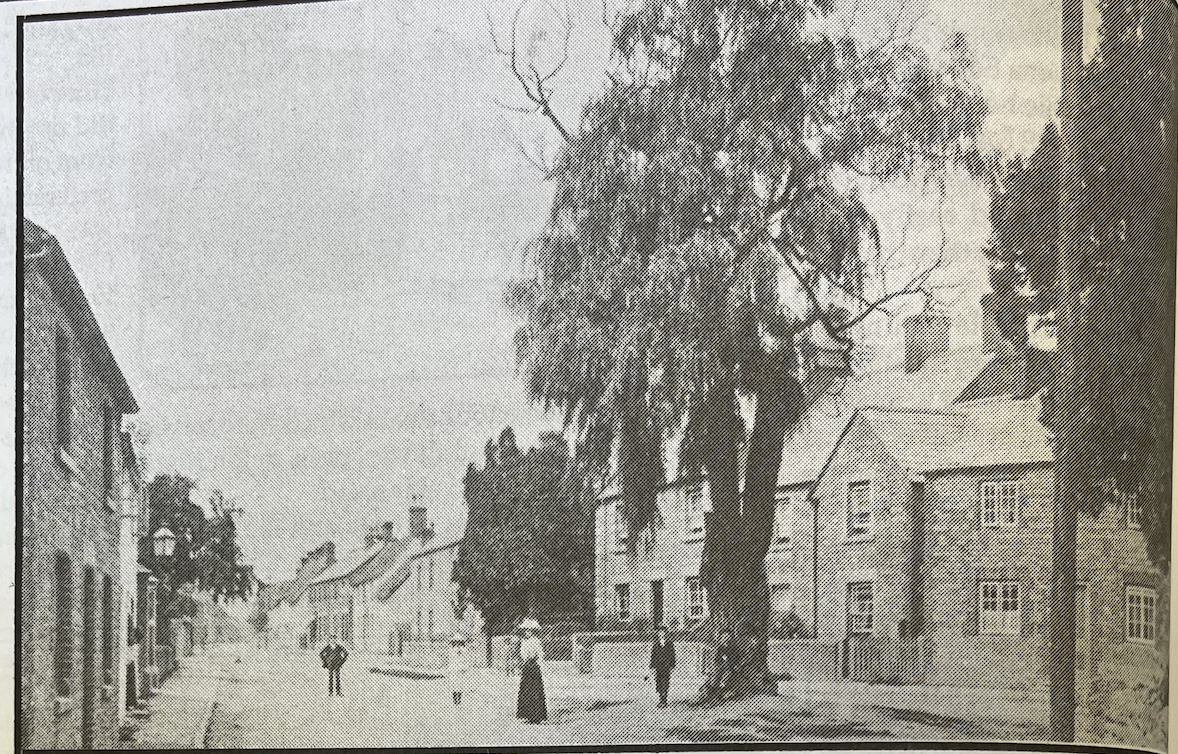
The old willow tree is shown in the middle.
The young lady is Mrs Whale (formerly Miss Pinnock). A note by Mrs Whale on the back of the photograph declares: I have an 18″ waist’.
IMAGE OF SAME VIEW NOW
Some Places of interest on Ermin Street
- While not an exciting building in and of itself, I’ll flag up 94 Ermin Street for its relationship with a doyenne of Swindon business and civic life, one Levi Lapper Morse – Swindon’s second ever mayor.
- On a corner of Ermin Street sits the Canadian Spitfire Pilot memorial bench.
- The Grade II listed Wheatsheaf pub at 167 Ermin Street.
*Cold Harbour – a Saxon place name, meaning what it says: a cold as distinct from an inhabited refuge. Cold Harbours are all close to either great Neolithic or Roman roads. They often began life as partially destroyed Roman or Romano-British dwellings/settlements. Travellers used them as they offered secure I(ish) places in which to spend a night when travelling.
As these places became known, traders gathered to carry out business and distribute goods. At length, these cold harbours became villages again but kept the old generic name.
Etymology and meaning
The name has its roots in the Old English/Anglo-Saxon words cald (cold or bare) and hereberga meaning shelter, lodging or military station.
Unlike a proper inn, a cold harbour offered a roof and protection from the elements but nothing else. The Premier Inn they were not. Hence no food, drinks, staff or Hypnos mattresses. Instead, travellers had to bring their own provisions and fuel.
With the passage of time, many locations and roadside taverns took on the name Cold Harbour Inn or simply Cold Harbour.