Broad Street and Manchester Road.
With the County Ground to our right we’re now turning left onto Broad Street and then to Manchester Road. See the circled area on the map below.
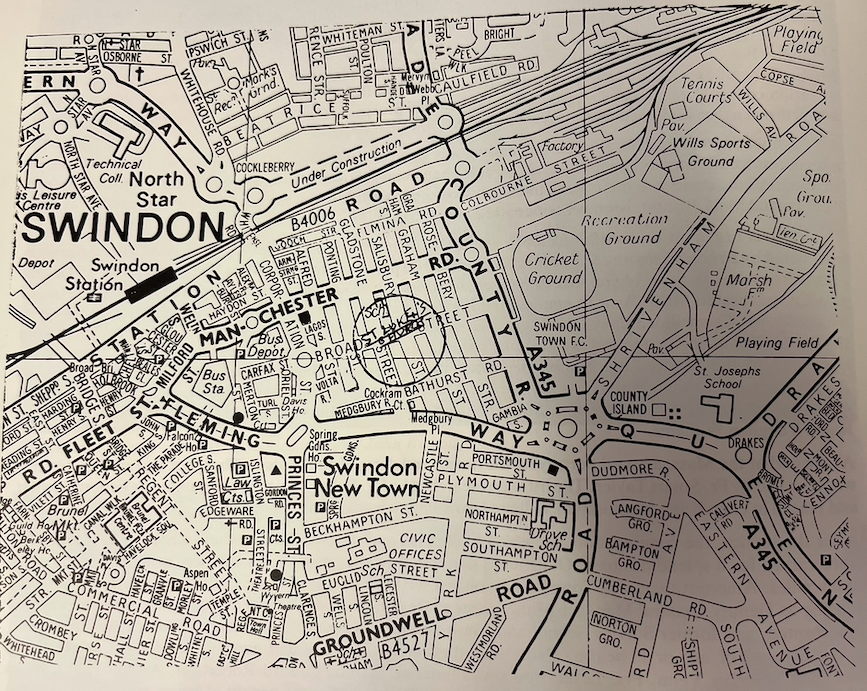
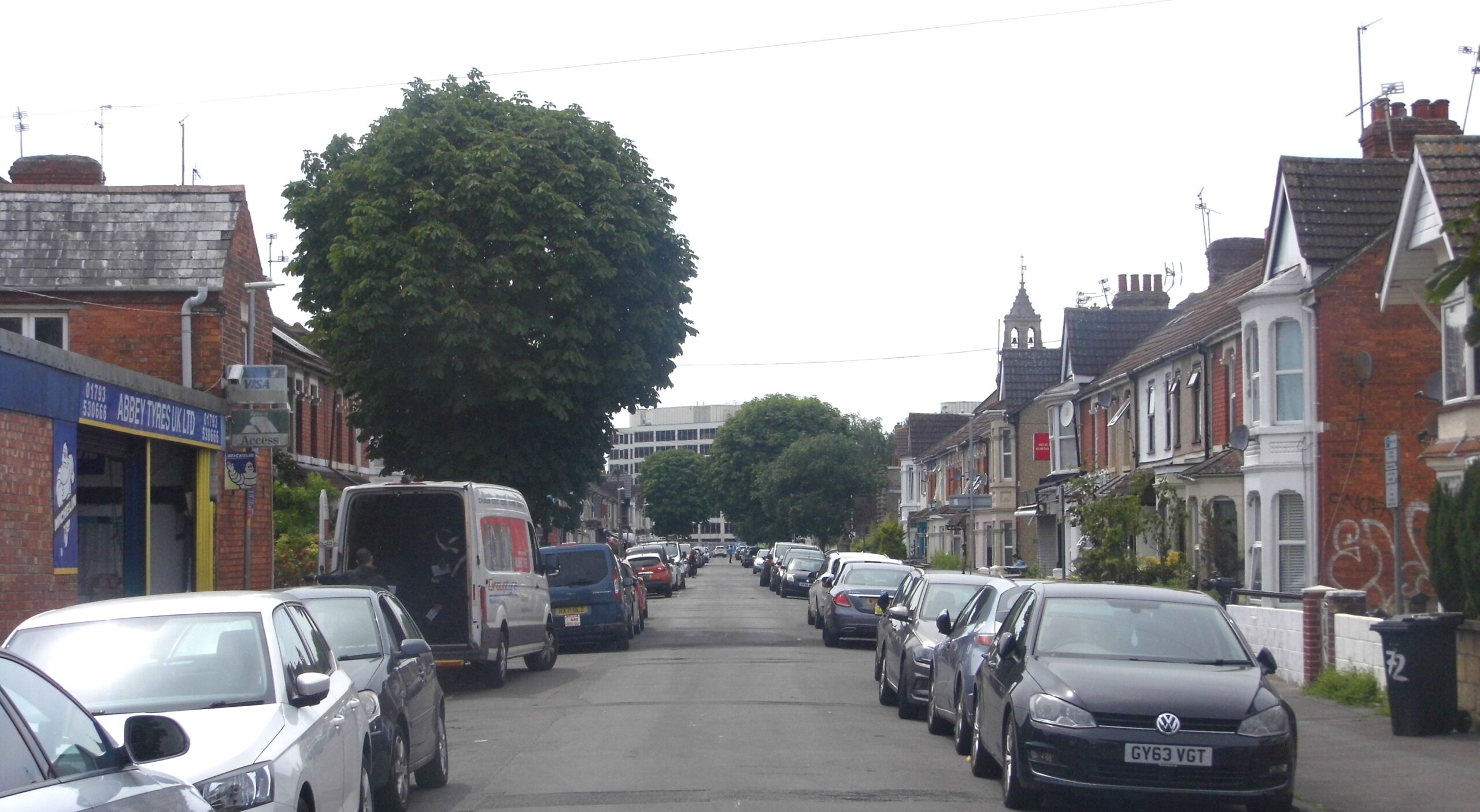
Sheldon and Tompkins date Broad Street as 1901. And suggest it’s so-called because it comprises the main street of the late Victorian development between County Road and Corporation Street. For Manchester Road they proffer 1897. And go on to tell us how the first houses were built here during the 1870s. At that time the street went under the name of Mill Street – most likely because a nearby mill connected it to Eastcott farm. In the first instance, a dead-end street west of Corporation Street, it got its new name when it linked up with Milford Street. The demolishment of part of the terrace to the east side of Wellington Street facilitated that. It appears that, the engineers responsible for this work, Maxwell and Tuke, had offices in Manchester. Join the dots.
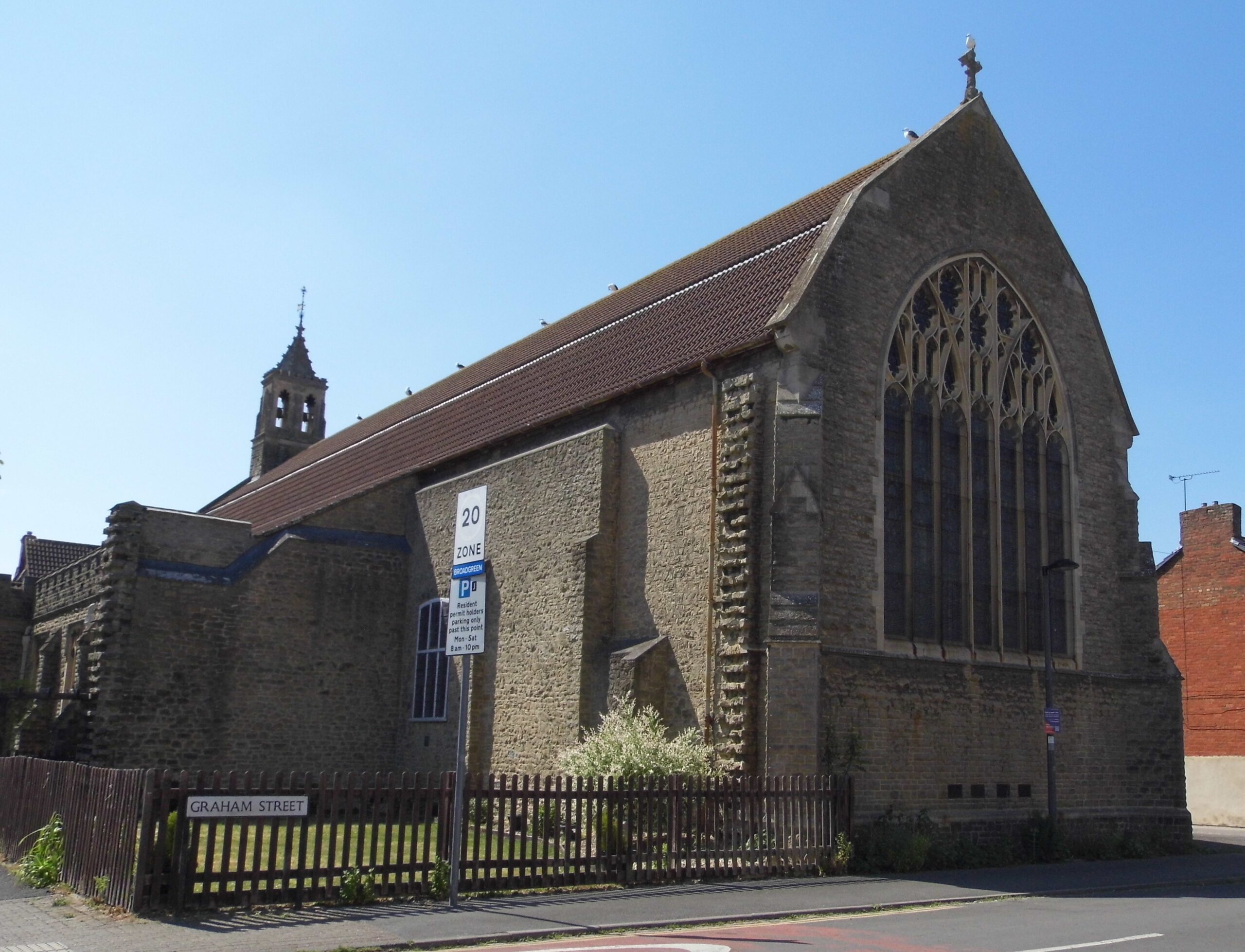
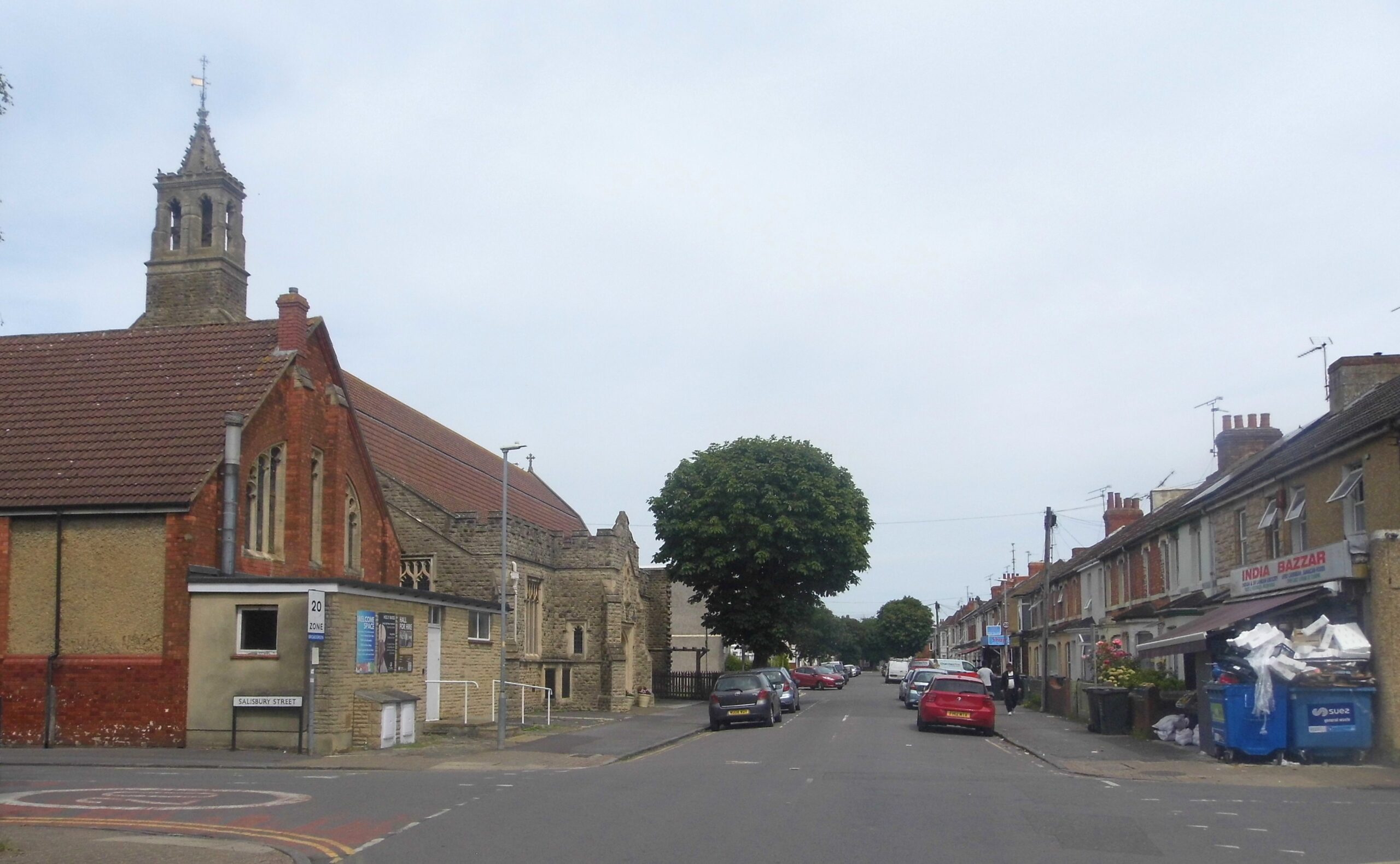
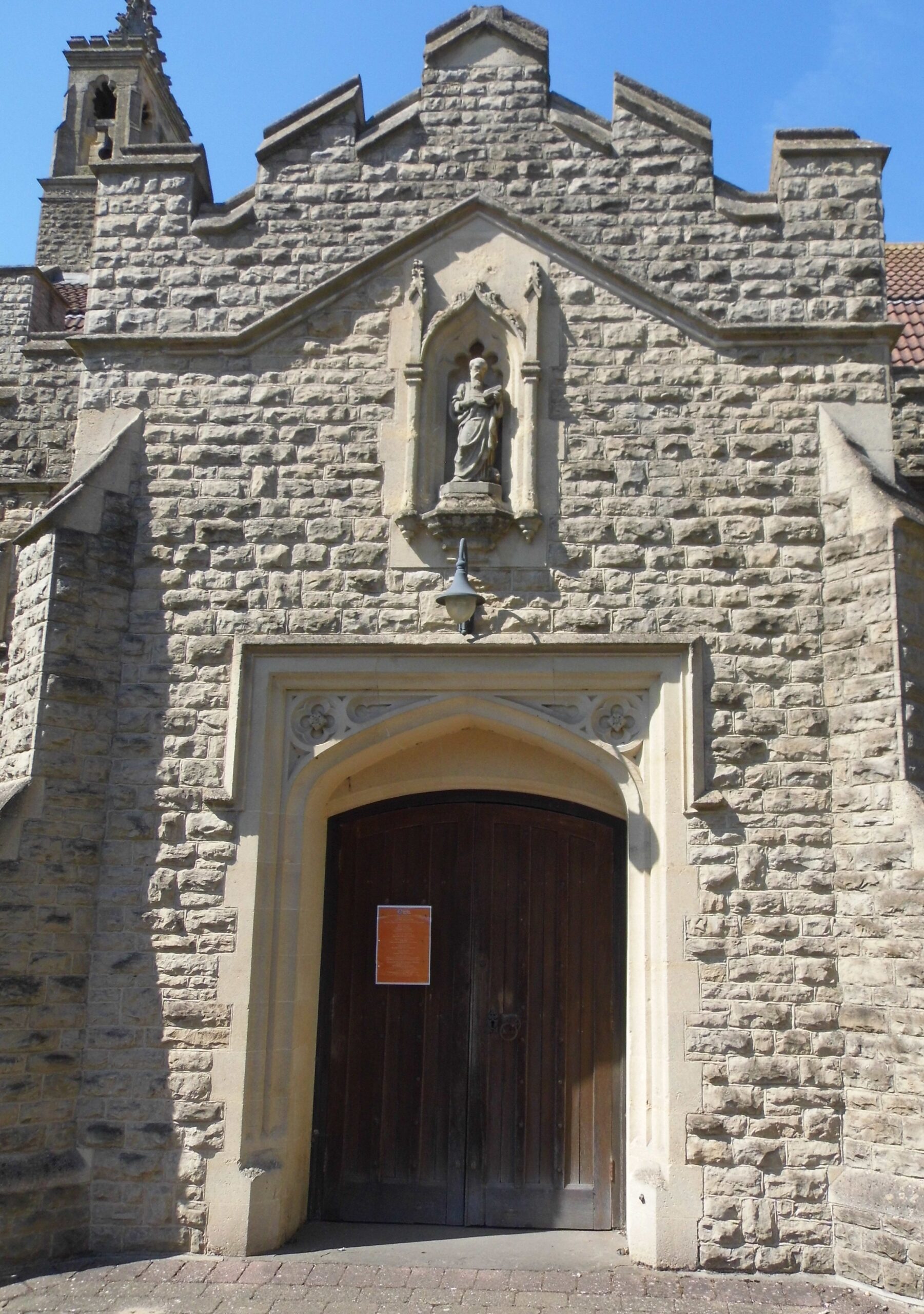
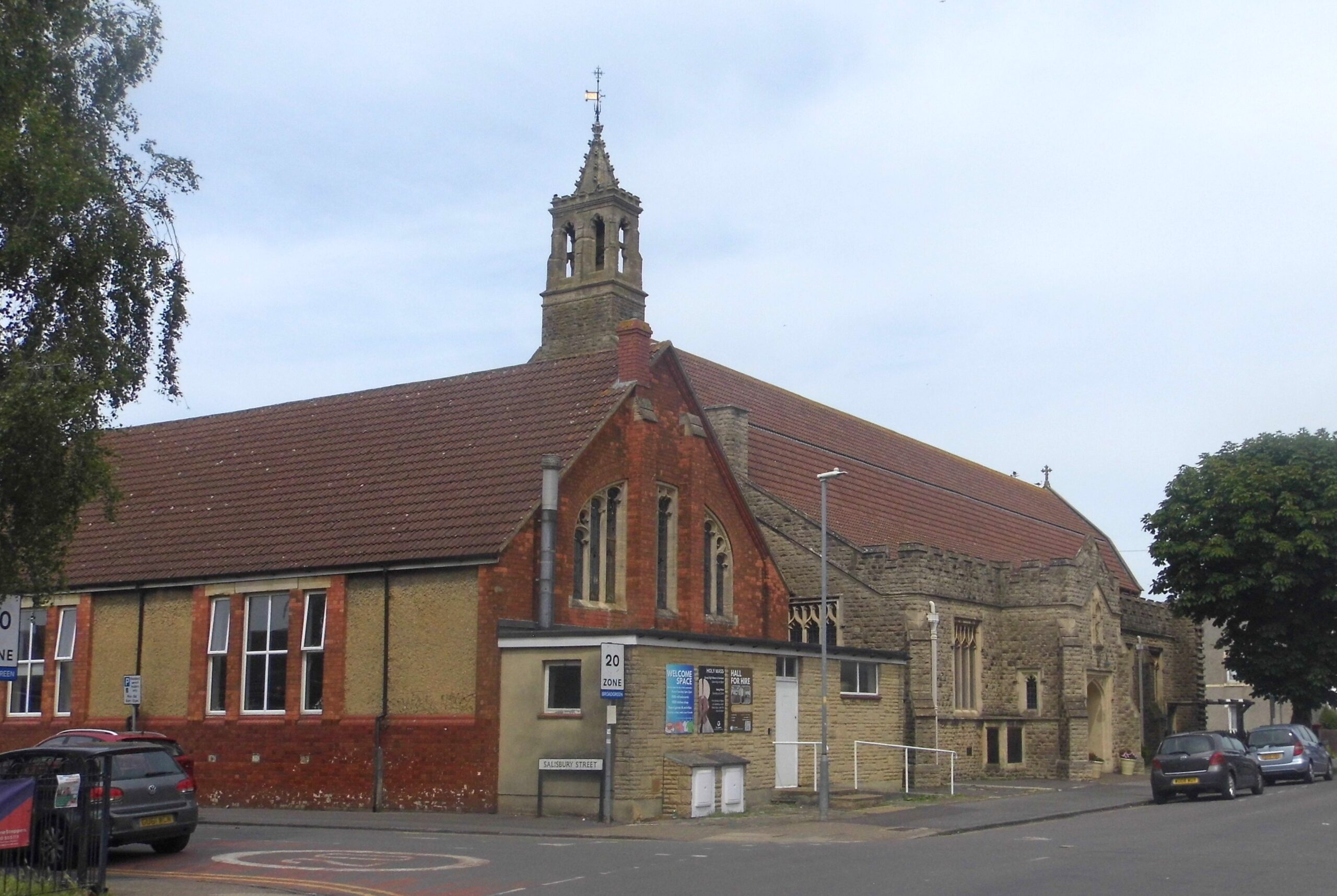
Visiting Broad Street gives me an excuse to mention St Luke’s church. This place of worship is one of the four so-called railway churches built to meet the spiritual needs of the burgeoning population of New Swindon. The other three, in no particular order, are: St Mark’s (by the railway village), St Augustine’s in Rodbourne and St Barnabas’ in Gorse Hill. Though we can also count St Saviours on Ashford Road as a railway church, built as it was by the men themselves.
St Luke’s church
Visiting Broad Street gives me an excuse to mention St Luke’s church. This place of worship is one of the four so-called railway churches. These churches were built to meet the spiritual needs of the burgeoning population of New Swindon. The other three, in no particular order, are:
- St Mark’s – by the railway village
- St Augustine’s in Rodbourne
- St Barnabas’ in Gorse Hill.
Though we can also count St Saviour’s on Ashford Road as a railway church, built, as it was, by the men themselves. That aside, the story of St Luke’s is the story of both the street on which it stands and the immediate vicinity.
If you’ve followed Swindon history you’ll be conversant with that fact that the GWR created the New Swindon community. The railway village and the aforementioned St Mark’s came first. Cutting short a long story, the turn of the 20th century saw almost all the green fields of St Mark’s parish colonised by rows of GWR workers’ houses.
The continued demand for housing proved an impetus to the Rolleston estate to make available for development some fifty-four acres. This land had a rough boundary formed by the GWR mainline to the north, the Wilts and Berks canal to the south and Drove Road to the east. At length this all became the main part of the St Luke’s district. Come 1911, the area was marked out in a grid-iron pattern based around two main streets: Broad Street and Manchester Road. The latter was by now already a narrow lane leading from New Swindon to Stratton St Margaret.
Social life in the St Luke’s area
The booklet by Fredrick Fuller, on the topic of St Luke’s, tells us that, at weekends, you’d find crowds tramping along Broad Street. They’d be en route for football or cricket fixtures at the County Ground. No doubt excited at the prospect of seeing such players as Harold Fleming. That’s he who gave his name to Fleming Way.
Frederick further points out that the St Luke’s area attracted people from around the country. Thus each street had tradesmen, clerks, engine-drivers, coach drivers etc. Manchester Road became the shopping centre for the area. These days it still is a pretty vibrant shopping area – albeit one of the multi-cultural variety. In a town with over 120 first languages this is not surprising. So, should you want quality spices and garlic bulbs the size of your fist and other culinary delights not offered by your nearest Tesco Express then Manchester Road is the place to head for. That said, Commercial Road is now giving it a run for its money in that respect.
As for St Luke’s, today the congregation reflects some of the area’s diversity. In recent years, the church began holding regular Mass, partly in Konkani, the official language of Goas for the benefit of the Goan community who live in the area.
Now, having explored the ecclesiastical and the epicurean offerings of the area, let’s give our regards to Broad Street and turn our feet to Fleet Street.