
Kent Road Old Town: 1890-1910
A street that served as the birthplace of that world-famous siren of stage and screen, Diana Dors, (aka Diana Fluck 1931-1984) comprised a ‘must include’ in the eventual Swindon in 25 Streets book for no other reason than that. I mean – Diana Dors – y’know? Swindon’s answer to Marilyn Monroe.
I grew up watching her on TV and in films. And I’m just a little star struck to now live in the town of her birth – so that on its own would have sufficed for me. But anyway! There is more.
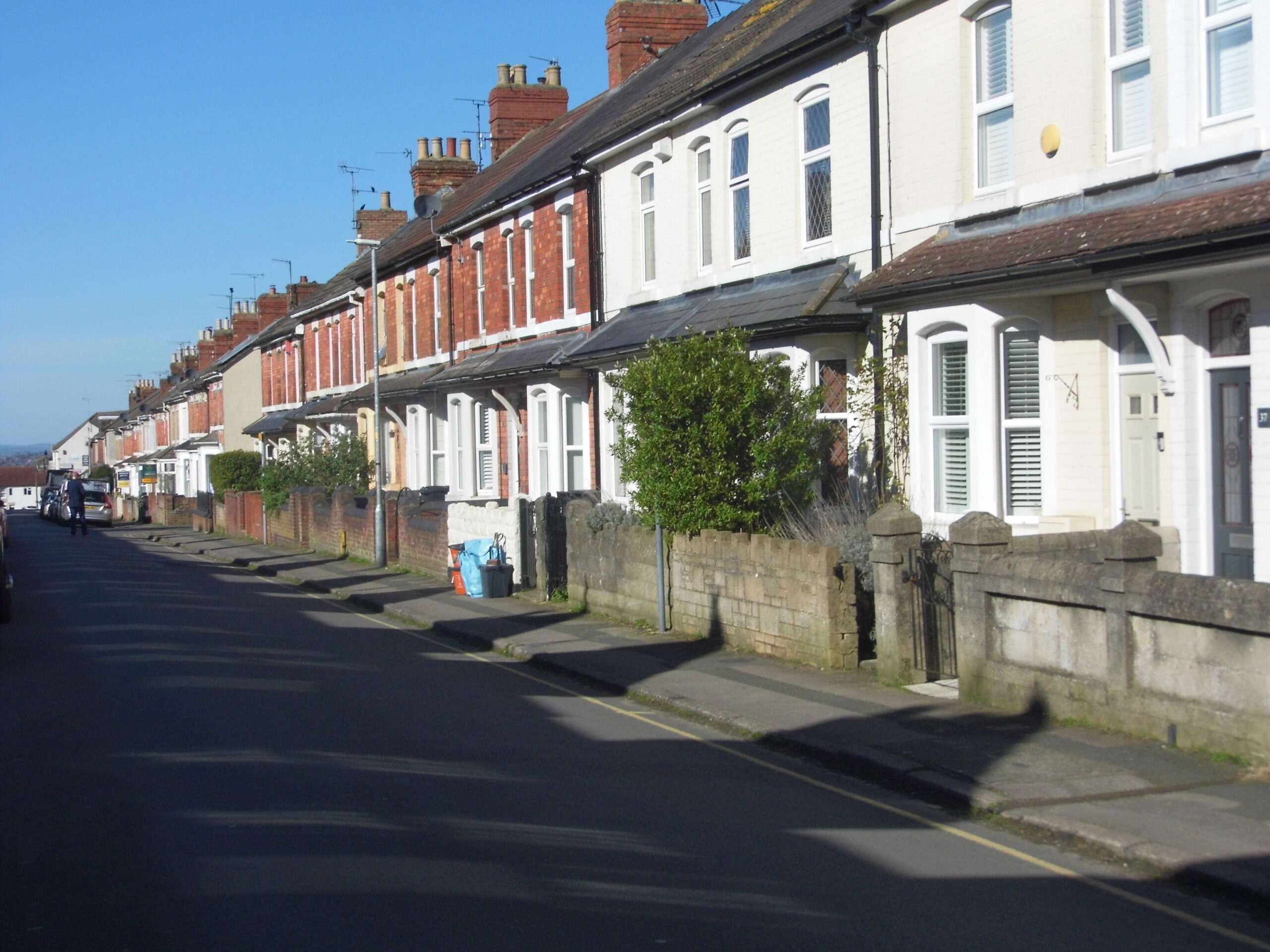
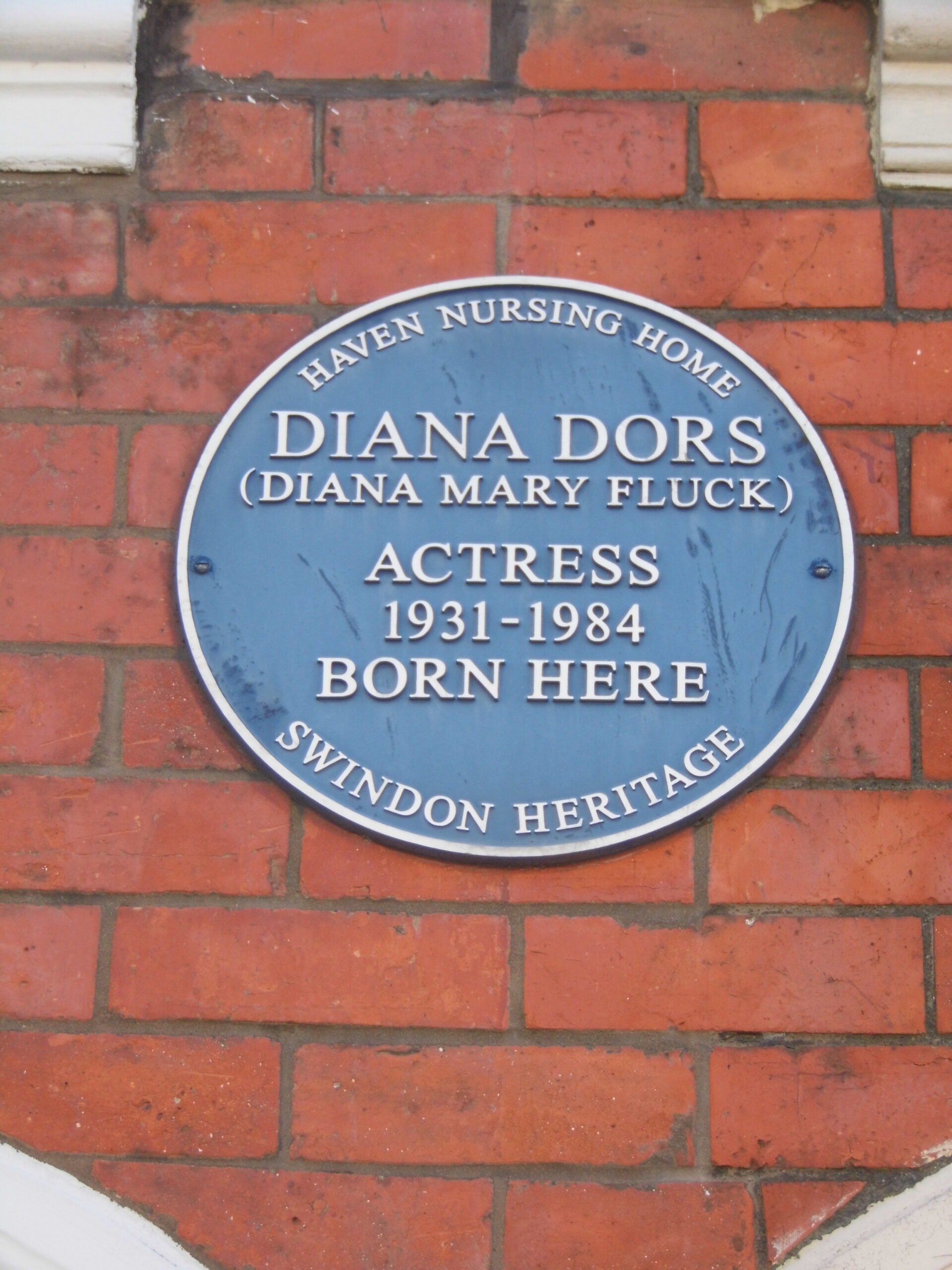
Although the street doesn’t have her name it does bear a blue plaque spanning numbers 61 and 62. Though now private residences, these two buildings were The Haven Nursing Home and a doctor’s surgery. The two properties had internal connecting doors allowing the doctor easy access to assist the midwives when necessary.
Not only but also
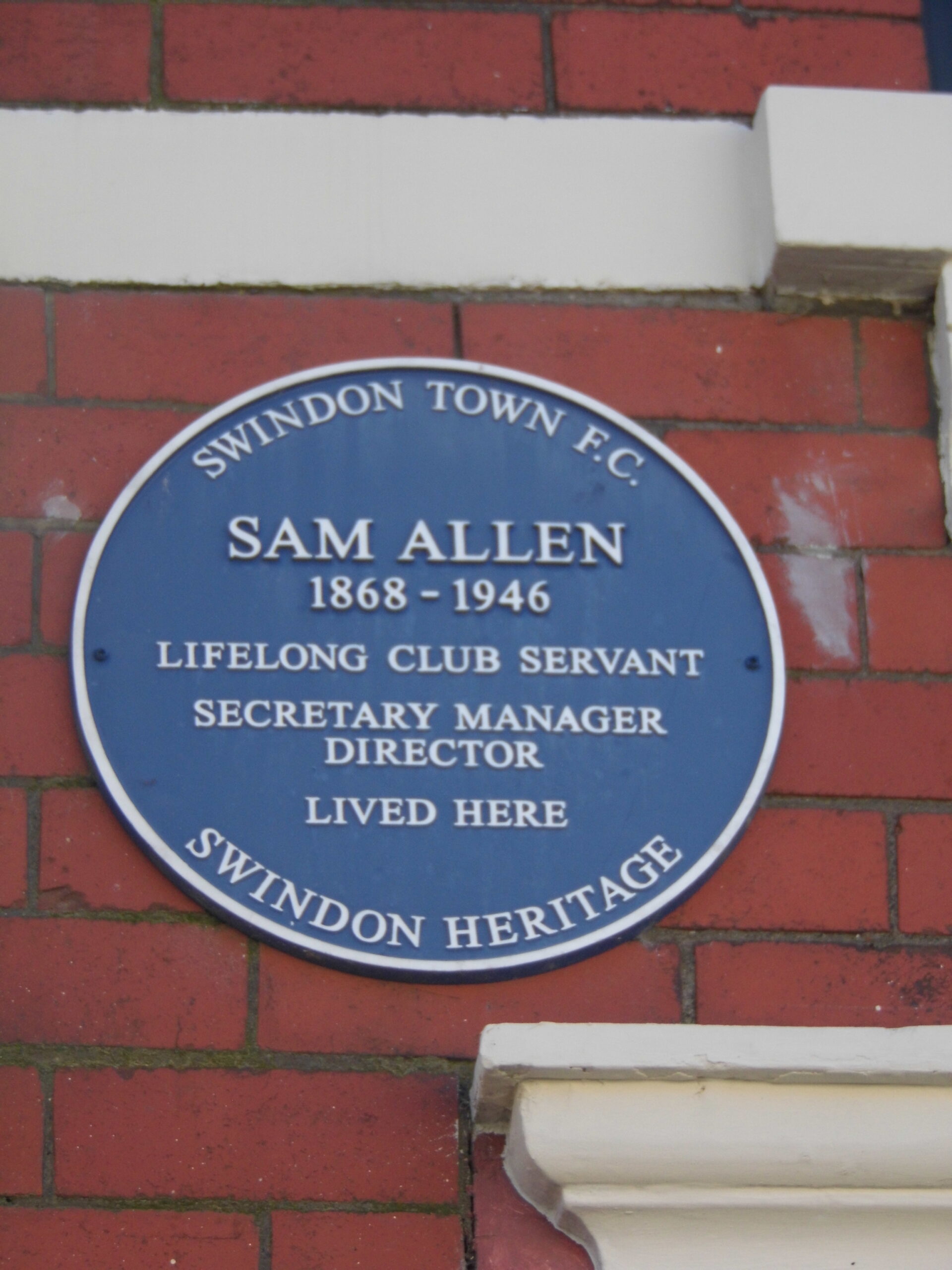
But that’s not the only blue plaque action that Kent Road boasts. On number 44, there sits a blue plaque commemorating Sam Allen (1868-1946) a lifelong servant of Swindon Town FC, whose residence number 44 was. Sam became the team’s first recognised manager in 1902, maintaining a secretarial position after standing down in 1933. He helped the team achieve success with his signing of such footballing greats as Jock Walker, Harold Fleming (see Fleming Way) and record goal scorer, Harry Morris.
The street
Developed circa 1819 to 1910, Kent Road was developed by John Henry Harding Sheppard who owned land near the railway station. It’s typified by red-brick terraced houses.
We’ve established that the street has some historic, national significance by virtue of it being the birthplace of Diana Dors and the residence of football manager Sam Allen. But it also carries local significance as the site of what once was Kingshill House. This Grade II listed villa, built early in the 19th century (circa 1840-60) became the maternity ward for the nearby Victoria Hospital and later the Seymour Clinic – a mental health facility.
The grounds of Kingshill House include the highest point of Swindon hill (Old Swindon). Well over 400 years ago there existed in the area a gallows ‘to which evil doers were sent in a very practical manner.’ In the late 1840s, Richard Brewin Bowley occupied the house. His father later owned the North Wilts Brewery, then in High Street. The house is now occupied by Hillier’s funeral services.
An interesting thing
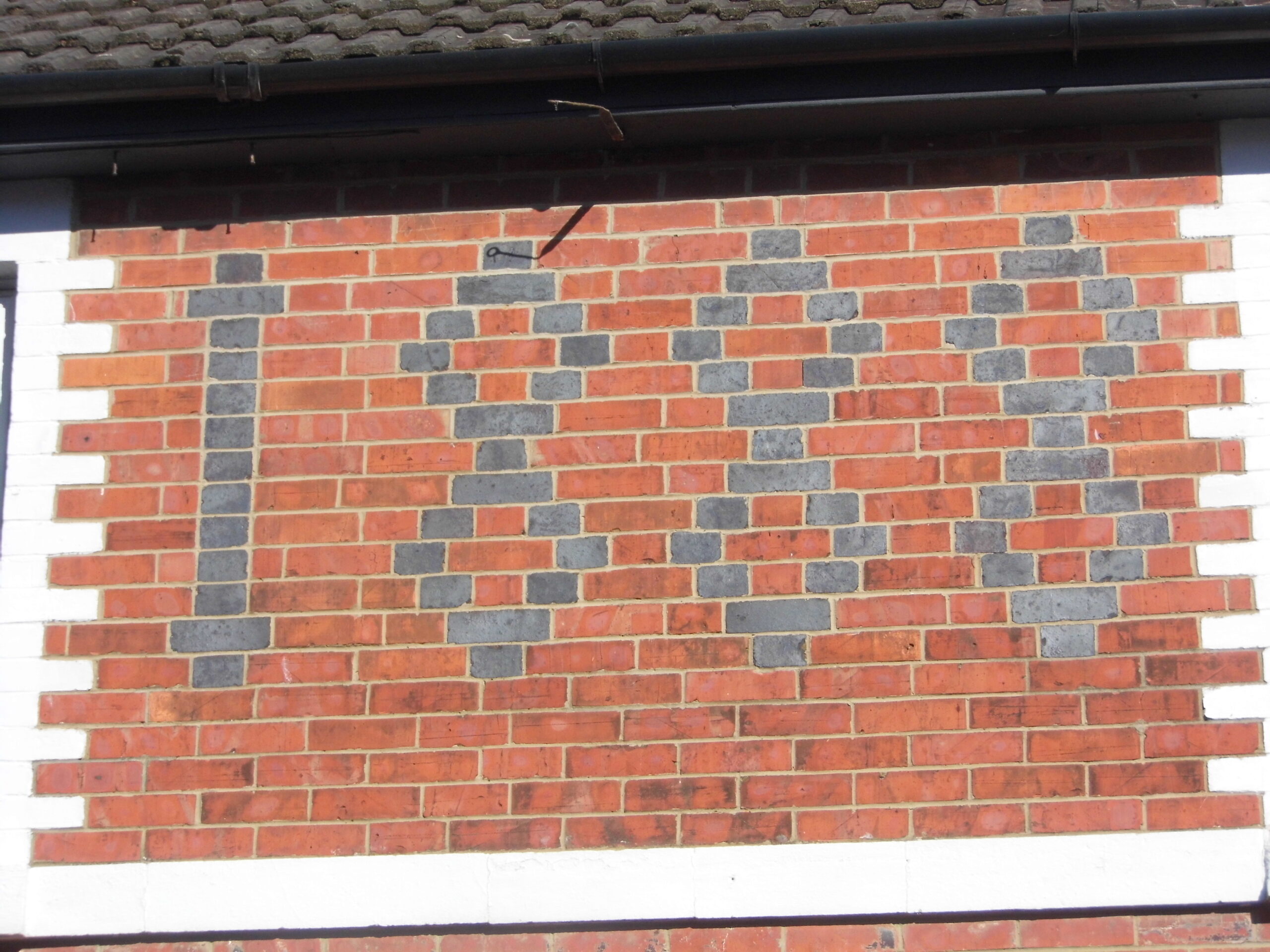
Bimbling along Kent Road getting photographs for this book I noticed a house with its side wall on Kent Road and its frontage on Ashford Road. On this side wall, picked out in contrasting bricks is the date, 1888, and a cross/crucifix. Interest piqued I contacted our local studies section of the central library. It transpires that 69 Ashford Road (sometimes called Ashford Terrace – street names and numbers were jolly wibbly wobbly for a long time) used to be No 1 Ashford Road before street renumbering in the 1900s. Resident there were William Chambers, a builder and contractor. Later his son, Samuel Chambers, lived there until 1907.
Further, I learned from fellow-Swindon writer, Frances Bevan, that, as well as being builders they were involved in the undertaking business. It seems this was a common side hustle with builders at this time. She explained how, if you step back and look at the building you can see it was once a shopfront. Apparently there’s a faint shadow where the advertising hoarding would have been.
So now I need to go and have another look.
William and his wife Sarah are buried in Radnor Street Cemetery and have a very fine headstone. Unfortunately, it gets overgrown by brambles and disappears.
A Swindon institution
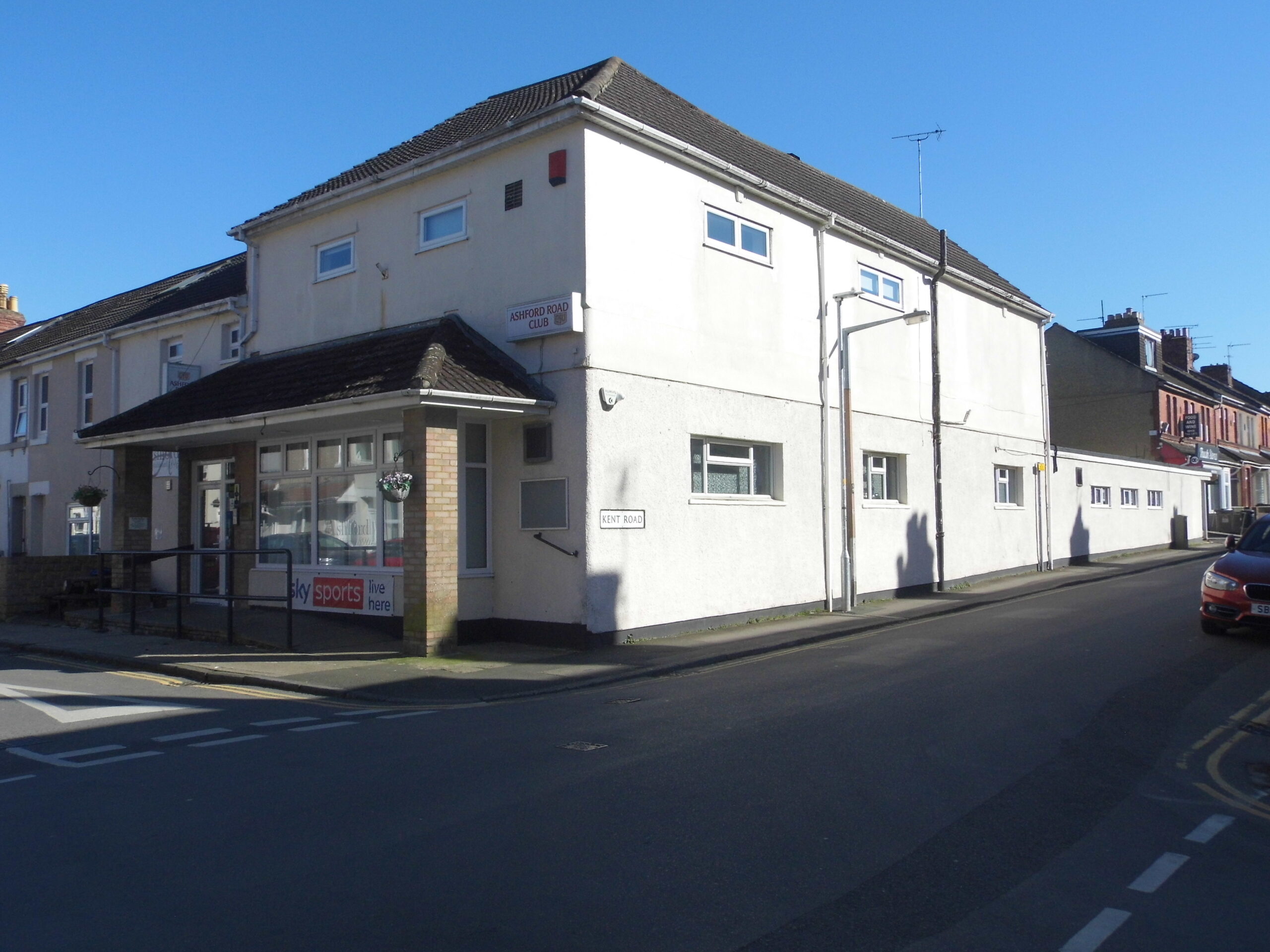
Cornering Kent Road and Ashford Road is something of a Swindon institution is the Ashford Road Working Men’s Club. Established in 1896 it’s the 493rd club to be registered.
Before 1899, the club inhabited a different building but that was lost to a conflagration. The club then moved into its current premises. They bought the land on which it stands back in 1899 for £600. Records show that the club once had its own Ashford Road Coin minted. There are also documents showing that the skittle alley at club dates back to 1896.





I have lived in Kent Road virtually all my life and I know that my mother knew Diana Dors as Diana Fluck I believe. I had no idea there was a nursing home/doctors surgery in Kent Road.
With reference to the “1888” sign on a building I think that I am right in saying that thebuilding was occupied by a Mrs Vokes who used to have a little shop there and used to sell silks and other things as well as sweets when I was a child if that is the same building. What an interesting post.
I live at number 8 Kent Road.
Hello Charles
So sorry – I’ve only just seen this. That’s interesting about the shop – it might well have been that when it was no longer an undertaker.
Thanks for engaging. Appreciate it.