RPA Illuminates Swindon Paintfest. Revolution Performing Arts (RPA), is proud to present Street Lights. This is an innovative and collaborative show celebrating the creative impact of street art on young people.
This unique event highlights the transformative power of public art and its influence on the local youth community.
RPA Illuminates Swindon Paintfestwith their performance Streetlights
Swindon Paintfest
Founded in 2022 and organised by Artsite, a group of creatives creaated Swindon Paint Fest to:
Develop murals and public art …
… and creative events as part of Swindon’s regeneration and enhancement.
The 2023 festival saw great success. It drew hundreds of attendees and earned international recognition. Over fifty talented artists participated. Some travelled from as far as the United States and Spain. The festival featured workshops, exhibitions, and live painting. And it transformed many areas of Swindon with stunning street murals. This year’s event will take place in late August.
The festival aims to inspire the community and provide a platform for artists to showcase their talents.
About Streetlights
Street Lights features over 200 talented young performers from Swindon, Gloucestershire, and Wiltshire. Each group has drawn inspiration from a specific piece of street art. The result is a diverse array of performances that include dance, theatre, and musical theatre. This creative process involved direct collaboration with the artists behind the murals. It further gave students a unique opportunity to delve deep into the world of street art.
To enhance the audience’s experience, the show will project each mural on stage before its corresponding performance. Thus providing context and highlighting the artistic inspiration behind the acts.
Level Up Theatre Company (RPA’s flagship drama collective) has crafted an overarching narrative to tie the performances together. There’ll be an original soundtrack punctuating the scenes. It’s composed by a group of RPA’s young people collaborating with an experienced music producer.
Laura Barnes, Artistic Director of RPA said Street Lights is an exciting event that brings together visual and performing arts. It further highlights the amazing creativity and talent of young people in our area.
Swindon’s vibrant street art is the inspiration for the entire performance. It’s been incredible to see how these artworks have sparked a new dimension of creativity. The story of the artists’ work continues through the performances of our young talent.’
The performance of Street Lights will take place at the Wyvern Theatre in Swindon on Saturday July 6th.
Based in Swindon, RPA has classes across the town. And also in Shrivenham, North Wiltshire, Oxon and Glocs.
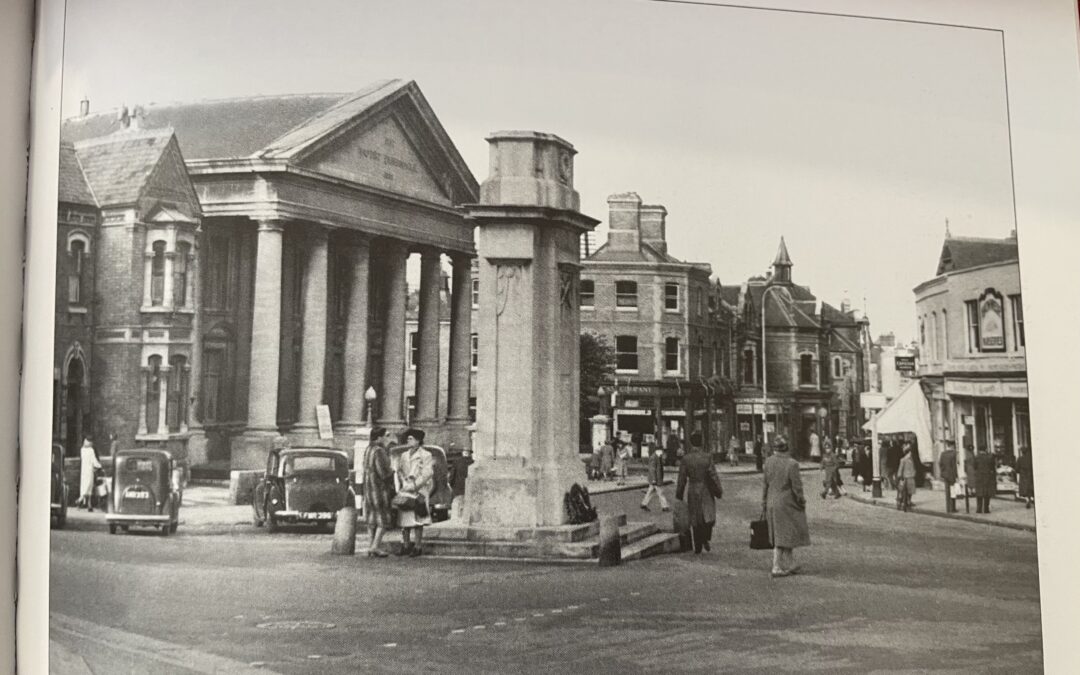
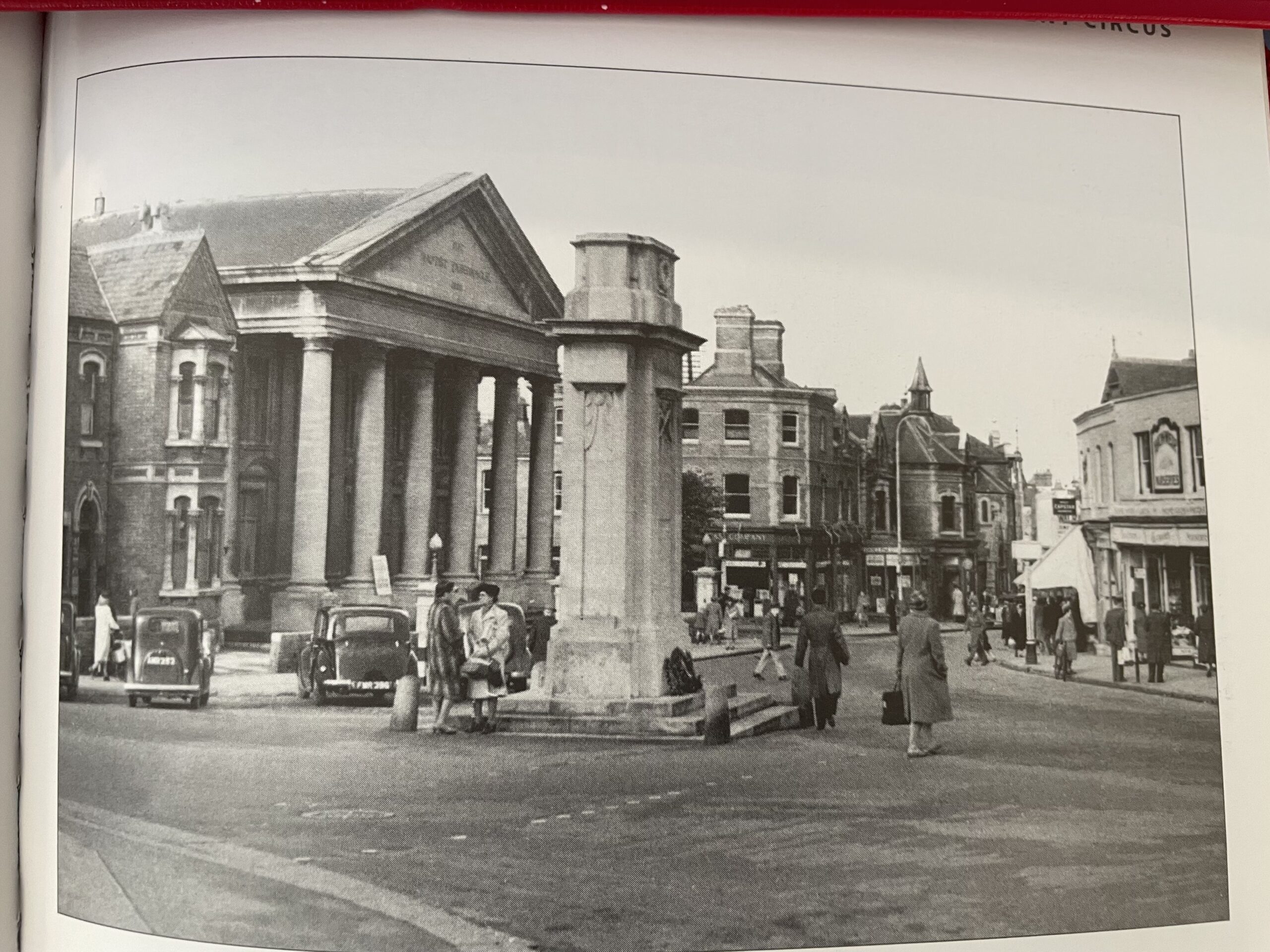
The Baptist Tabernacle. This building, unlike the Corn Exchange which is somewhat demolished by decline, is most definitely in the ‘demolished’ category. It having met its date with the wrecking ball back in 1978.
So, where to start with this one? Well, Mark Child’s Swindon Book states a number of things about this place of worship as was.
The Baptist Tabernacle 1886 at Regent Circus – thanks to Local Studies for the use of the image in this blog
Designed by WH Read, in ancient Roman style and built from Bath Stone, the church cost £6,000 to build. It had iron railings surrounding it – in front of the steps. And also high-panelled plinths carrying Grecian torch-style lamps.
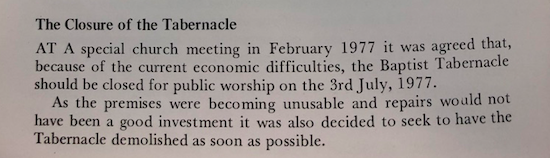
The Tabernacle stood adjacent to Regent Circus. And much furore erupted amongst the townspeople of Swindon back in 1978 when the bulldozers rolled in. According to Mr Child, they saw the action as symbolic of all that ailed the attitude of the town to conservation. And indeed, the passage of forty-odd years has done little to dampen the flames. As frequent outbursts on Facebook will testify. But note this extract from a history of the tabernacle produced by the Baptists themselves. It’s clear from this that it had to go. And it’s clear that diminishing congregations were, at least in part, to blame for the lack of money.
So the thought occurs does it not, that, had all the souls that have bemoaned the loss of this building, from that day to this, actually been in the congregation – it might have escaped demolition? At least at that time. ‘Cos the thing is this: we can’t keep buildings in aspic. They have to pay their way. And it’s evident that this one wasn’t.
Extract from a leaflet about the tabernacle written by the Baptists themselves, who owned the building, and seen at the Swindon and Wilts history centre in Chippenham.
Location, location, location
When the Baptists bought the site in 1885 it was something of an isolated spot. BUT Regent St was developing and the site more or less lay where the roadways between new and old Swindon met. So it offered potential. Behind it, to the south, lay only fields and allotments before the break in the landscape that was the Wilts and Berks canal.
The Tabernacle’s interior hall had a 1,000-soul capacity and it featured a gallery supported on iron columns with an ornamental front. Its entrance lay behind a colonnade* of six Tuscan columns beneath a large pediment. A flight of stone steps ran the entire width of the front.
*I have it on good authority, from a Swindonian that, that colonnade often stank of urine.
John Betjeman
Now we come to our friend, the poet, John Betjeman. As it happens Swindon has him to thank for the continued existence of the railway village. Yes indeed – David Murray John had a notion to raze the thing. But Betjeman campaigned for its saving. Thank goodness for that eh? He also, it seems, compared the architecture of the Tabernacle to that of London’s St Martin’s in the Fields. And I guess, as far as the front portico/colonnade goes I can see what he meant. But I do think we should note that the aforementioned church was built in 1726. So a good hundred years earlier. Ergo – might our church not be just a little out-of-date?
After the demolition squad
Following demolition, sections were, it seems, held for a time in the grounds of Abbey nursery at Malmesbury. At length, artist Stanley Frost bought the portico but failed to get planning permission (why didn’t he think of that first one wonders?) to set it up at Bell Farm in Brokenborough where he lived. So – in 2002 Frost sold it to business park owner Neil Taylor. He also failed in his plans to re-erect the columns, bases, façade wall, door frames and window surrounds into his new country home.
Then, in 2006,SBC entered negotiations to buy back the remains (why!?), with the prospect of rebuilding them into some future regeneration project in the town. At length they were brought back to the town in 2007 at a cost of £360,000. Of tax payer’s money one supposes.
Between those two points, in 2004, someone discovered 260 tons of Swindon’s ex-tabernacle stone on a wooden pallet in a field in Northamptonshire. The hows and whys of that I do not know.
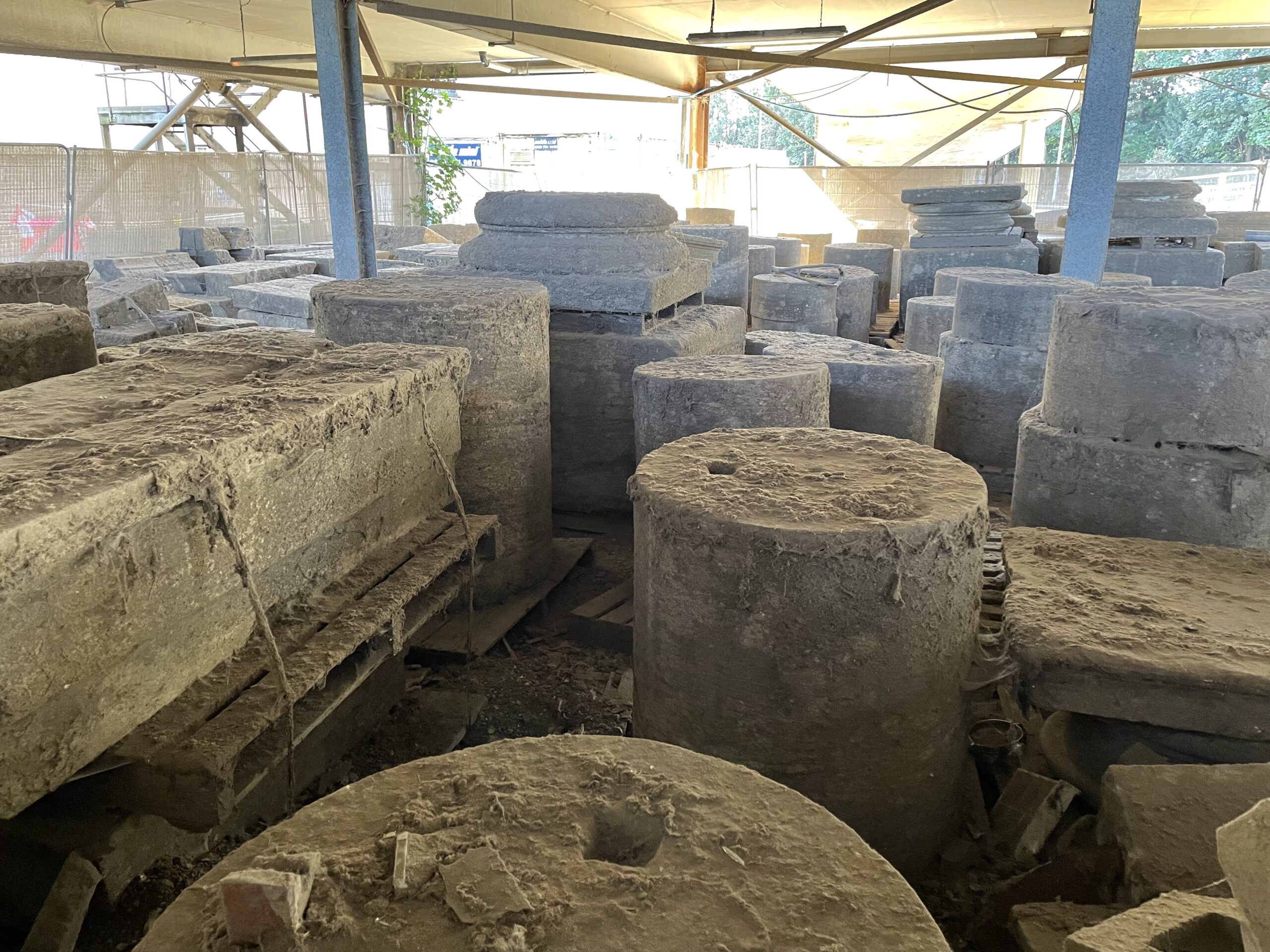
They were stored at the science museum in Wroughton for a time. But they now reside under the raised platform at the recycling centre – aka the tip.
The tabernacle stones at the recycling centre
A remote visit from a well-known evangelist
What do I mean by that? Well this article from the Swindon Advertiser reports that the famous American evangelist, Billy Graham, was visiting Manchester. ‘ … but Swindon people learned they would be able to hear him without travelling north. A live radio feed was to be relayed through to the Baptist Tabernacle in the town centre, with everybody welcome to come along and listen.’
Did that actually happen? I’m not sure. If I find out for certain I’ll update this post.
Returning to my question
At the beginning of this piece I asked the question ‘so where to start with this one?’ The reason? I have mixed feelings about the thing. I hear all the discourse about what a beautiful building it was and of course if people liked it then fair enough. Though of course I appreciate that Swindonians who remember it have a huge amount of affection for it. But … I personally don’t get it.
I’m not mad for symmetry and classical architecture for a start. Not even when it’s the real thing. And the Tabernacle wasn’t the real thing. It was Victorian pastiche of a Roman temple. And therein lies the rub for me – I dislike pastiche. Suburban houses with mock Tudorbethan beams on the outside – not for me. Modern houses dressed to look like country cottages – not keen on those either. You get the idea. But hey – each to their own eh? But I’d much rather well-designed, contemporary architecture … or at least a 1980s semi-detached that looks exactly that. Or some Victorian red-brick work like Milton Road baths or the old technical college.
When I think of buildings that Swindon has lost I feel sorrow about a few – the brick and glazed market hall being a good example. That was something authentic and, to the best of my knowledge, didn’t need to be demolished. How wonderful it would be to still have that.
And what the endless lamentation fails to consider is how much more the Pilgrim Centre, the Tabernacle’s replacement, offers to the community. No – it’s not as striking as was the Tabernacle. But the Pilgrim Centre is a well-built and attractive modern ecumenical building that serves the community in a way that the original building, magnificent as many see it as, could never have done. The members of Central Church, Swindon, are rightly proud of the centre with its Roundabout Coffee House, its befriending service for the homeless and its facilities for a wide range of meetings of social, charitable and secular bodies. Indeed, the Big Breakfast Plus Swindon operates from it seven days a week.
So the stones then
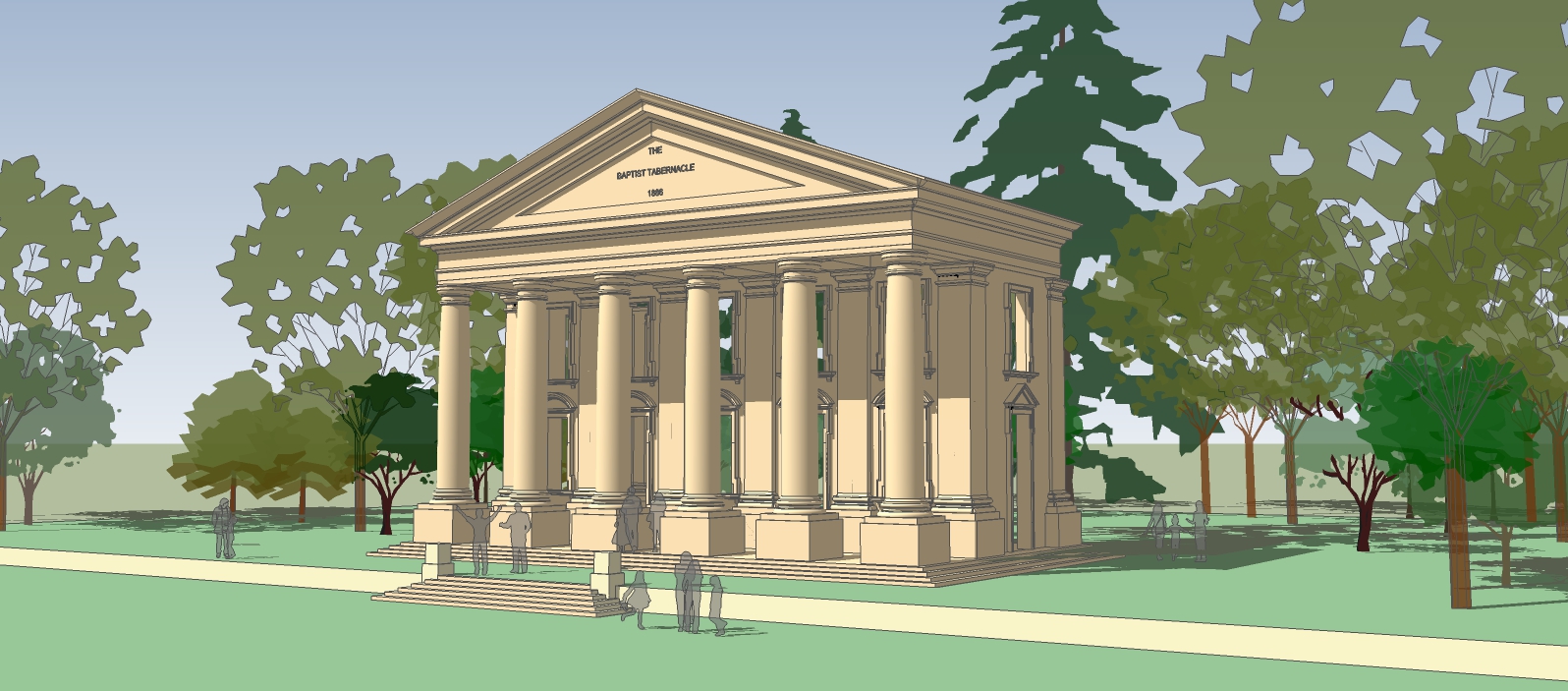
The CGI you see here is what fronted the tabernacle – which, the colonnade/portico aside, was nothing more than a brick rectangle.
CGI of Swindon Baptist Tabernacle frontage
Putting the stones somewhere is not as easy as one might think. One can’t, for instance, install them by the lake at Lydiard Park because that would destroy the integrity of that which makes Lydiard what it is. And that applies to most any location one might think of.
Then there’s ICOMOS – the international council of monuments and sites. As a source of guidance for the conservation of historic buildings their charters have only some relevance to the stones because the building is demolished already. And, in England there’s an emphasis against restoration. And, because reconstruction of the portico would count as a restoration, a primary principle of conservation is broken at the outset. Ergo, any reconstruction must be of an intact portico, unaltered or changed to suit present-day fashion so as to retain authenticity.
So … all-in-all I think what we’re left with is a white elephant? I fear that the best, indeed the only, thing that can be done with them, is to build a brick rectangle and stick them on the front ….
These included dismantling, replacing, and repairing some equipment. Then replacing missing cap covers on bolts, replacing worn links on swing chains and repairing surfacing.
As well as looking at the play equipment itself, RoSPA checked areas such as fencing, seating and signage on the five sites at:
Newnton Grove
St Aldhelm’s Mead
Reeds Farm
White Lion Park and Filands.
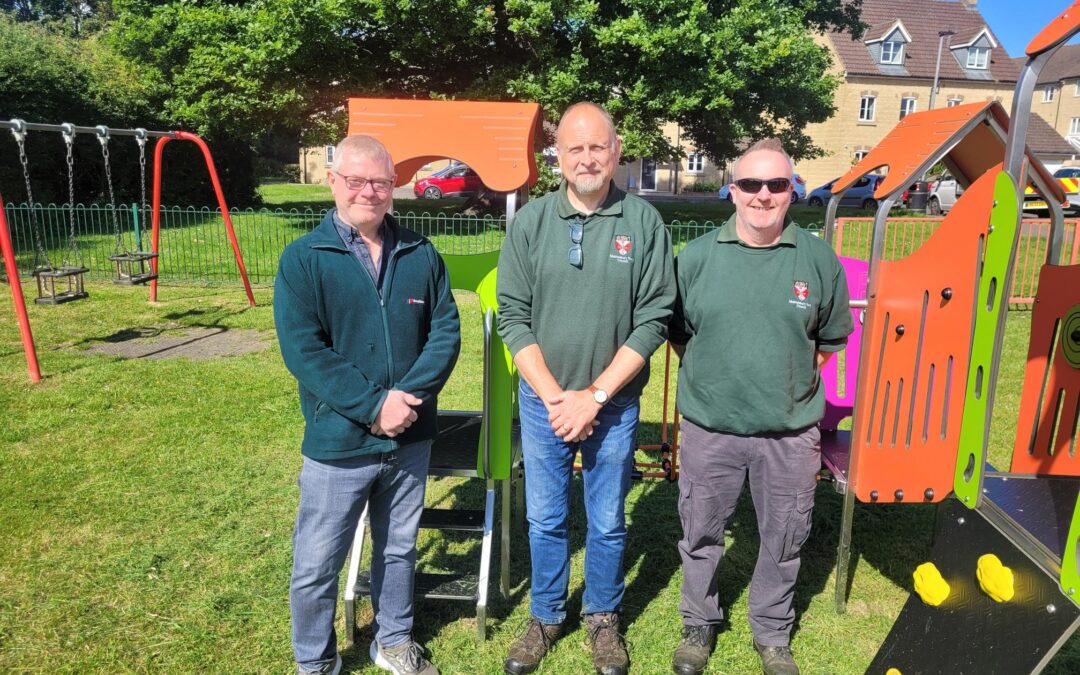
£42k for Malmesbury play areas – upgraded Malmesbury play area
‘The play areas in Malmesbury are so important for our local community. They provide safe, outdoor recreational spaces for children of all ages,’ said town councillor Steve D’Arcy.
Now, the council is also looking at making the play areas more inclusive, after an approach from Play inclusive Play Areas (PiPA). That’s a social enterprise that aims to help improve play facilities for children and families across the UK.
The council’s grounds staff used PiPA’s audit sheets for the five play areas to assess what changes they could make to increase inclusivity.
Cllr D’Arcy added: ‘It’s clear from the audit that there’s scope for improvement. For example changing some of the swings so they have seats and straps suitable for children with disabilities to use. We’ll be using the PiPA framework to inform future play area development and improvement.’
Athelstan Artefacts Exhibition. A UNIQUE exhibition of rare artefacts, that speak to the Anglo Saxon heritage of Malmesbury, prepares to open to the public. It’s all part of the Athelstan 1100 celebrations in the town (Tuesday July 2).
Volunteers from the Athelstan Museum have spent months arranging loans from prestigious organisations. The aim being to collate Athelstan artefacts that have never come together on display anywhere in the world.
It means this small Wiltshire museum, already home to an original Turner, is once again punching above its weight in celebrating local heritage of national importance.
Susan Mockler, vice chair of the museum management team, said: ‘We’d like to thank the generosity of:
the British Library
the Ashmolean Museum and
Victoria & Albert Museum …
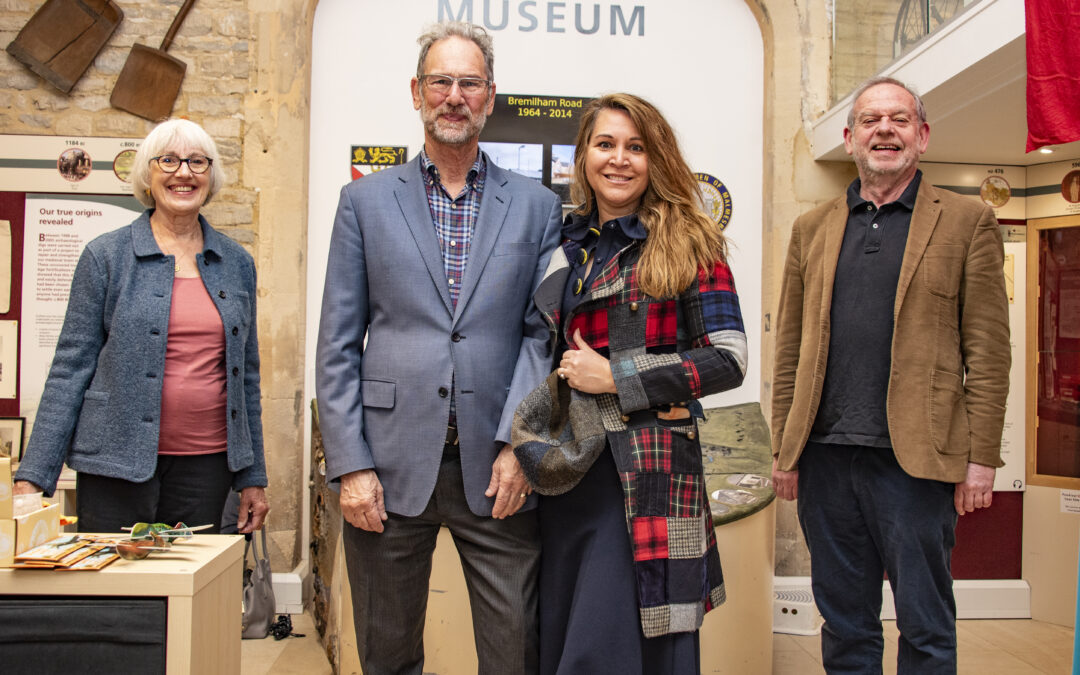
Sharon, Whit, Kim & Tony
What it all means
‘This has meant the Athelstan Museum, a volunteer-run organisation, is putting on a once in a lifetime exhibition to celebrate the 1100 anniversary of Athelstan becoming King. We’re delighted to have secured these prestigious loans. No-one has seen together in one venue ever before.’
The artefacts include:
An important collection of rare coins from the Anglo-Saxon period. The collection includes some from the time of Athelstan and his grandfather, Alfred the Great. Noonans, the famous antiquarian coin specialists have lent us several.
An authentic and precious charter signed by Athelstan himself. It dates to 939 AD -the year of his death – and loaned by the British Library. Many Anglo-Saxon charters only exist as later medieval copies. But this survives in the form of the original document produced over 1,000 years ago in the presence of Athelstan and approved by him. In this charter he describes himself as ‘king of the English and guardian of all Britain’.
The centrepiece of the exhibition is the so-called ‘Abingdon Sword’ loaned by the Ashmolean Museum. This rare and important iron sword hilt came to light near Abingdon in Oxfordshire in 1874. The decoration on the sword hilt indicates this was a high-status weapon dating from the time of Alfred the Great and Athelstan. The sword hilt is one of the most important examples of the late Anglo-Saxon silversmith’s art.
Also on display are replicas of some of the greatest works of manuscript art produced at this time and linked to Athelstan and Malmesbury. This includes a copy of the earliest surviving version of the charter of Athelstan. The charter granted privileges including the town Common to the Burgesses of Malmesbury.
Volunteer and historian Tony McAleavy said: ‘The exhibition will show that Malmesbury may be a charming market town today. But in the tenth century it was one of the most important places in England.’
Celebrations and events
There are a range of celebrations and events going on across the town including talks from some of the world’s leading Athelstan scholars.
A donation from entrepreneurs Whit and Kim Hanks who own the nearby Old Bell Hotel and Abbey House helped secure the artifacts – covering some of the costs of vital security and insurance. Further funds had to then be raised to meet the strict requirements around hosting the artefacts. These have come from the King Athelstan Memorial Fund and some private donors who are friends of the museum.
Volunteers will be giving extra time over the summer to keep the museum open to welcome an upswell of visitors expected to flock to Malmesbury over the coming months.
Chair of Trustees, Sharon Nolan: ‘We’d like to thank everyone who has made this exhibition possible either by a financial donation or volunteer hours. We’re thrilled to now announce this unique event and we hope many, many people will travel to see it.’
The exhibition opens to the public at 10am on Tuesday July 2 and runs until Sunday September 29th. For more information visit https://www.athelstanmuseum.org.uk/
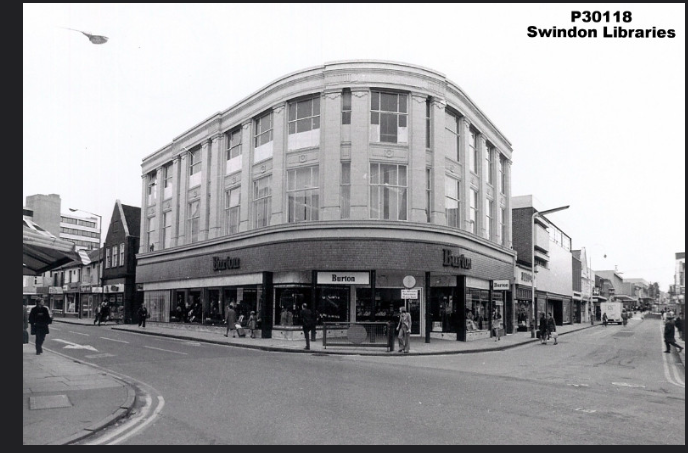
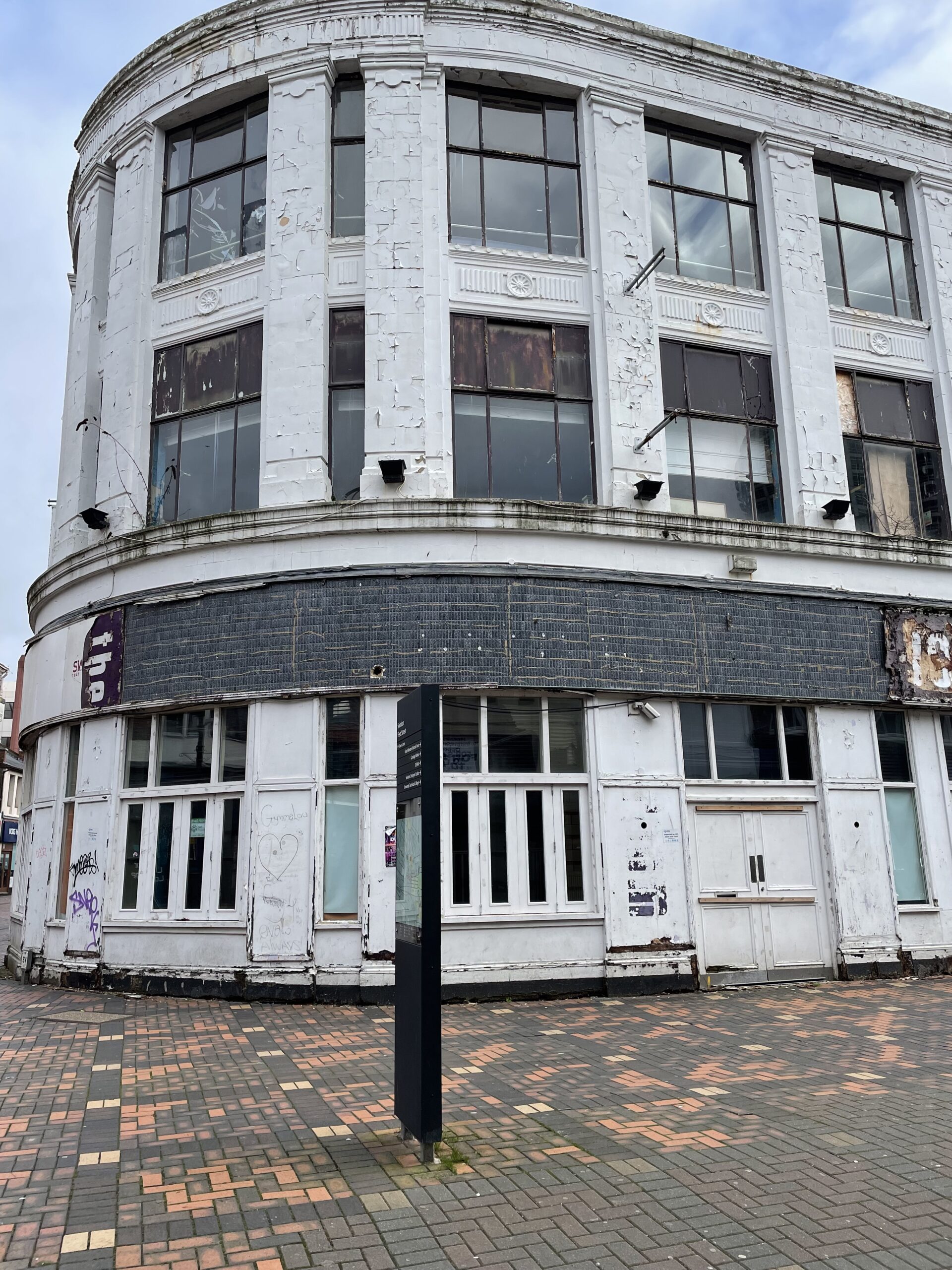
I’m including the Burton building Swindon in this series for the same reason as I’ve included 20 Fleet Street – the YMCA building. That reason being to record in Swindon in 50 More Buildings a fine building (another one) going to waste and dereliction. Both of these buildings are in peril now and that makes me sad.
Otherwise known as 24-25 Bridge Street, AJ Colborne built this lovely art deco store for Montague Burton Ltd and the Lucania Temperance billiard hall.* Begun in 1929, 1931 saw it completed.
Here it is in its Burton heyday – the image is from Local Studies:
The Burton Building Swindon 1931 – image from Local Studies
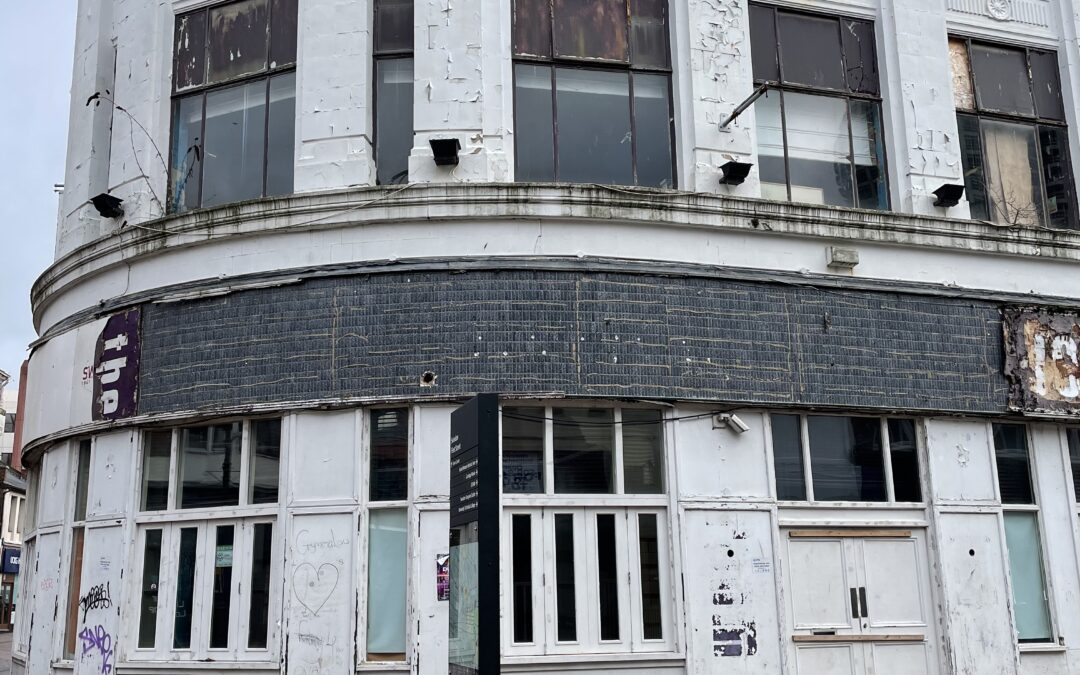
And here it is today having very much gone for a burton! It’s tragic!
The Burton Building Swindon 1931 – taken Feb 2024
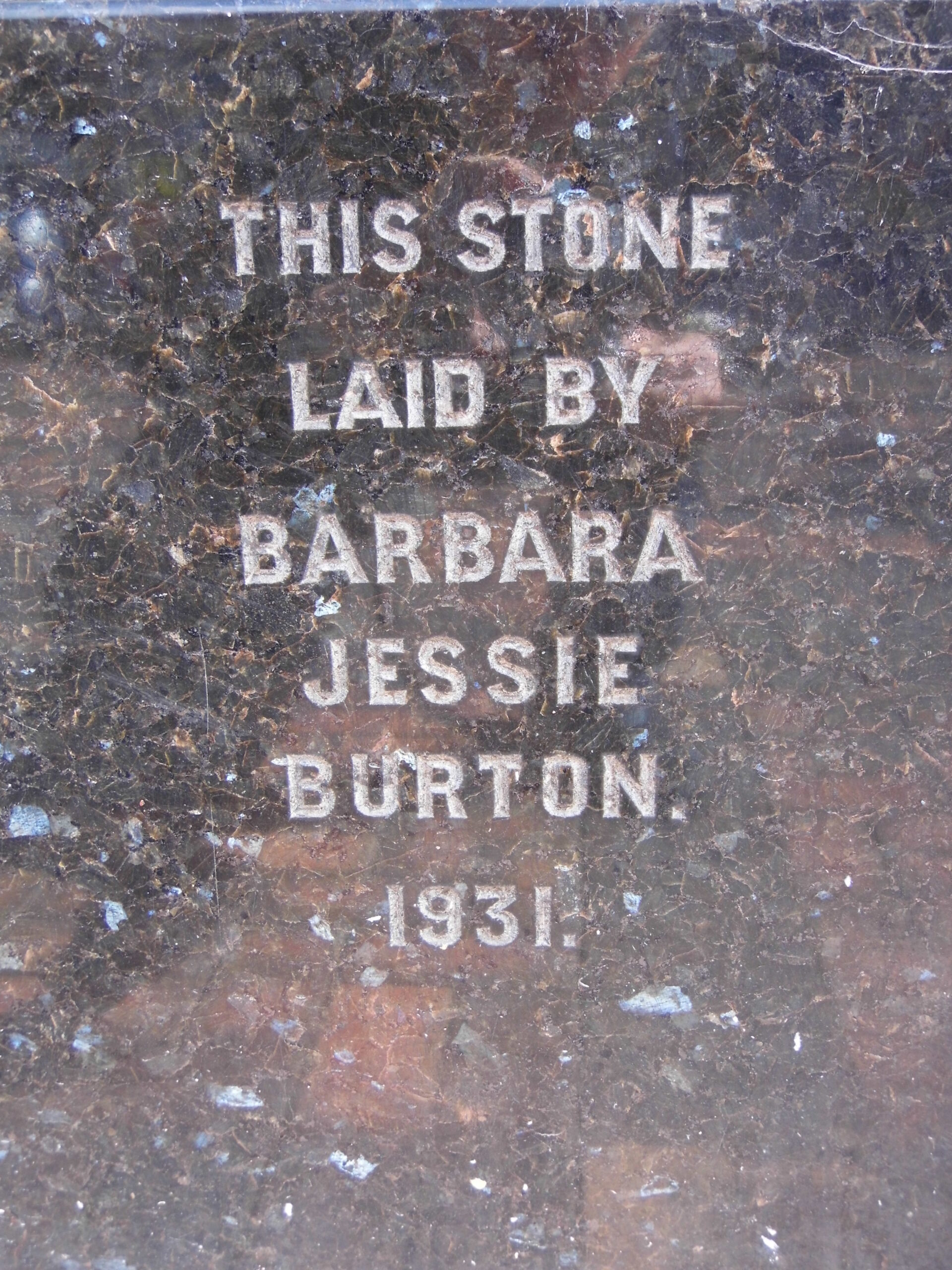
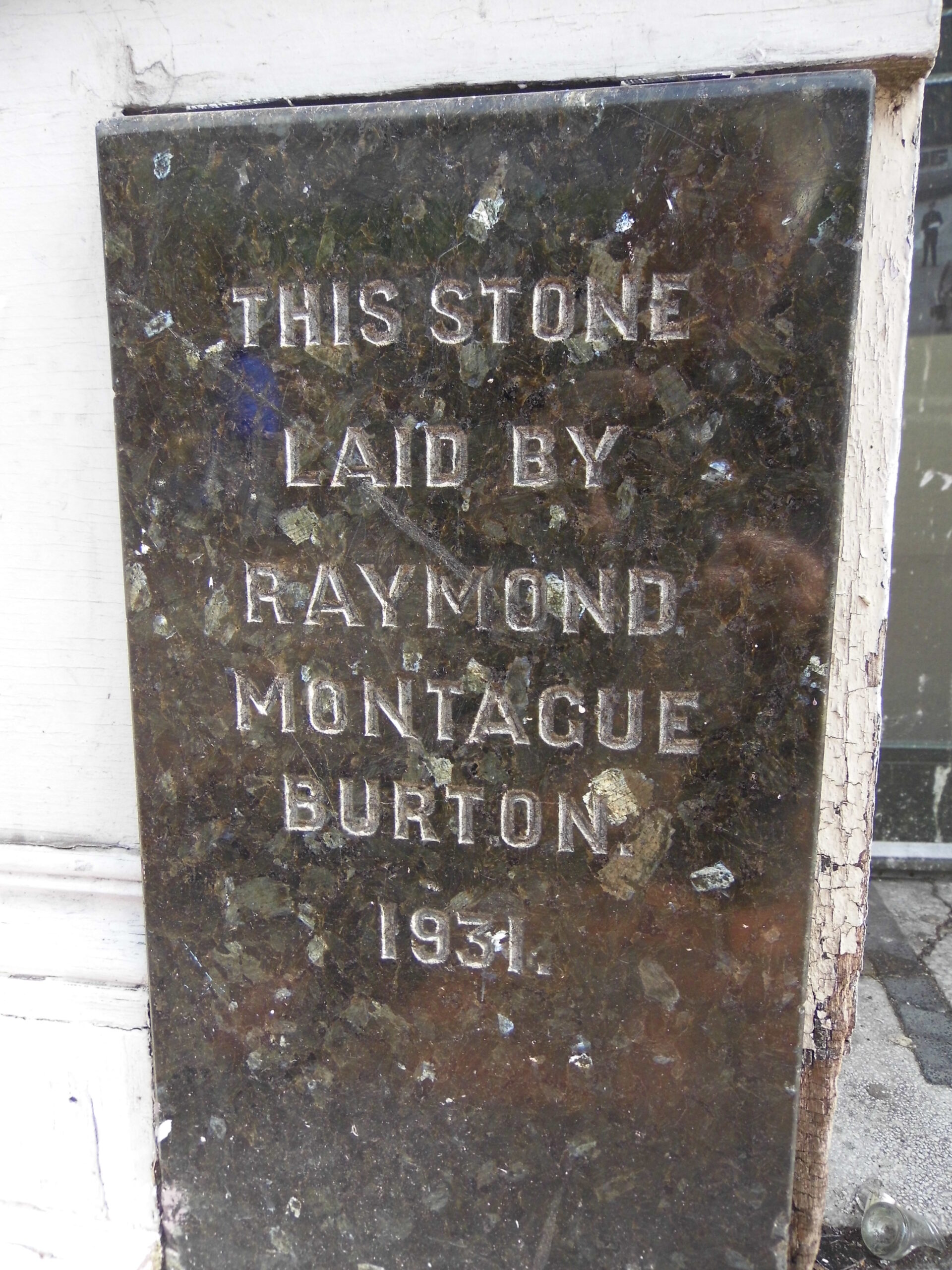
Still in situ either side of the doorway on Bridge Street – foundation stones laid by the children of Montague Burton when the shop opened.
In the years since it’s men’s-garment-glory-days the building has served variously as Beatties toy shop, the Footplate and Firkin, Elington’s and The Bedroom. But it does of course now stand empty.
The Bridge Street/Fleet Street area used to be Swindon’s tram centre and the corner site occupied by Burtons had once had the Oxford Hotel on it. But it was demolished thus making way for Burton’s.
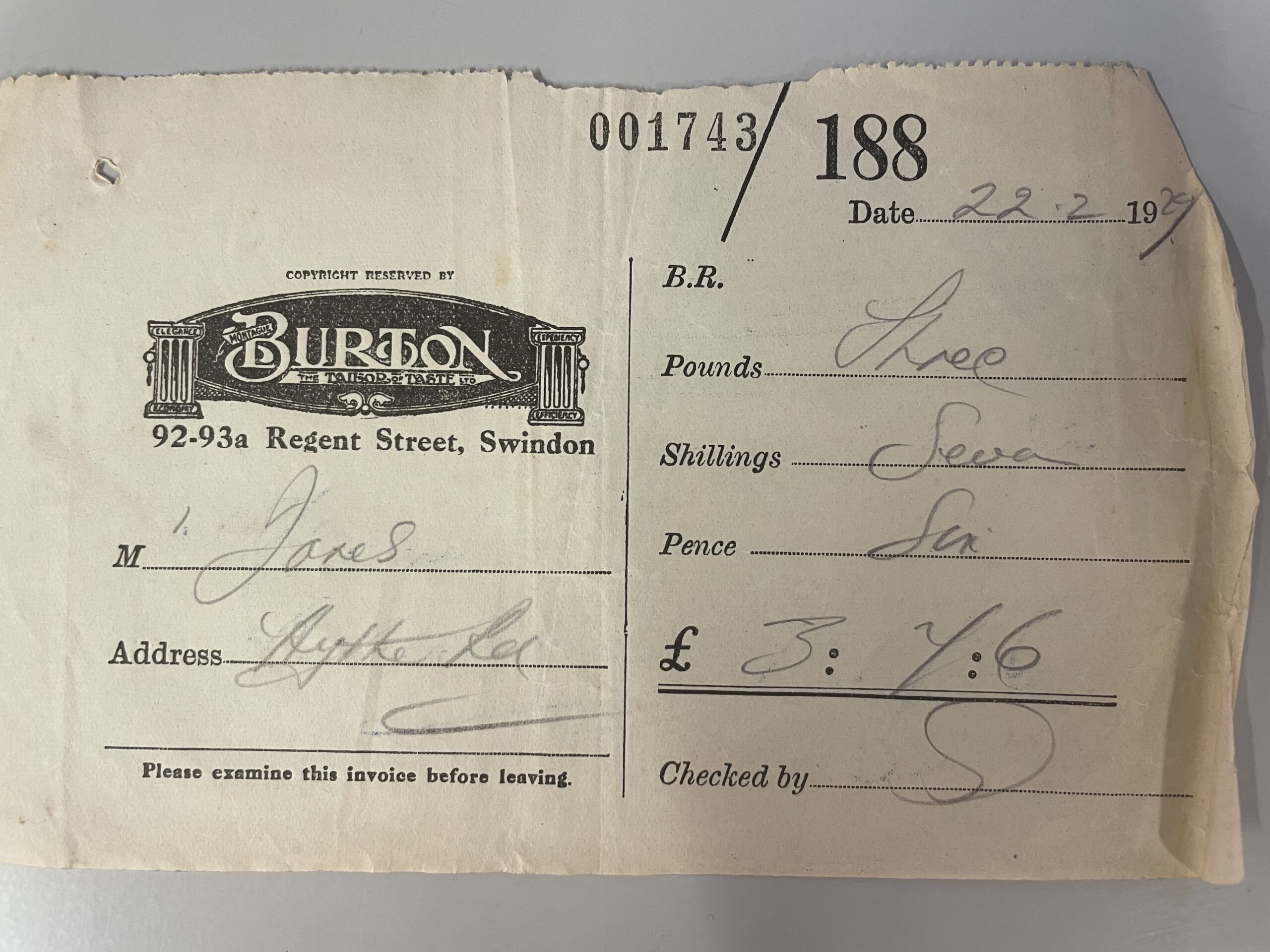
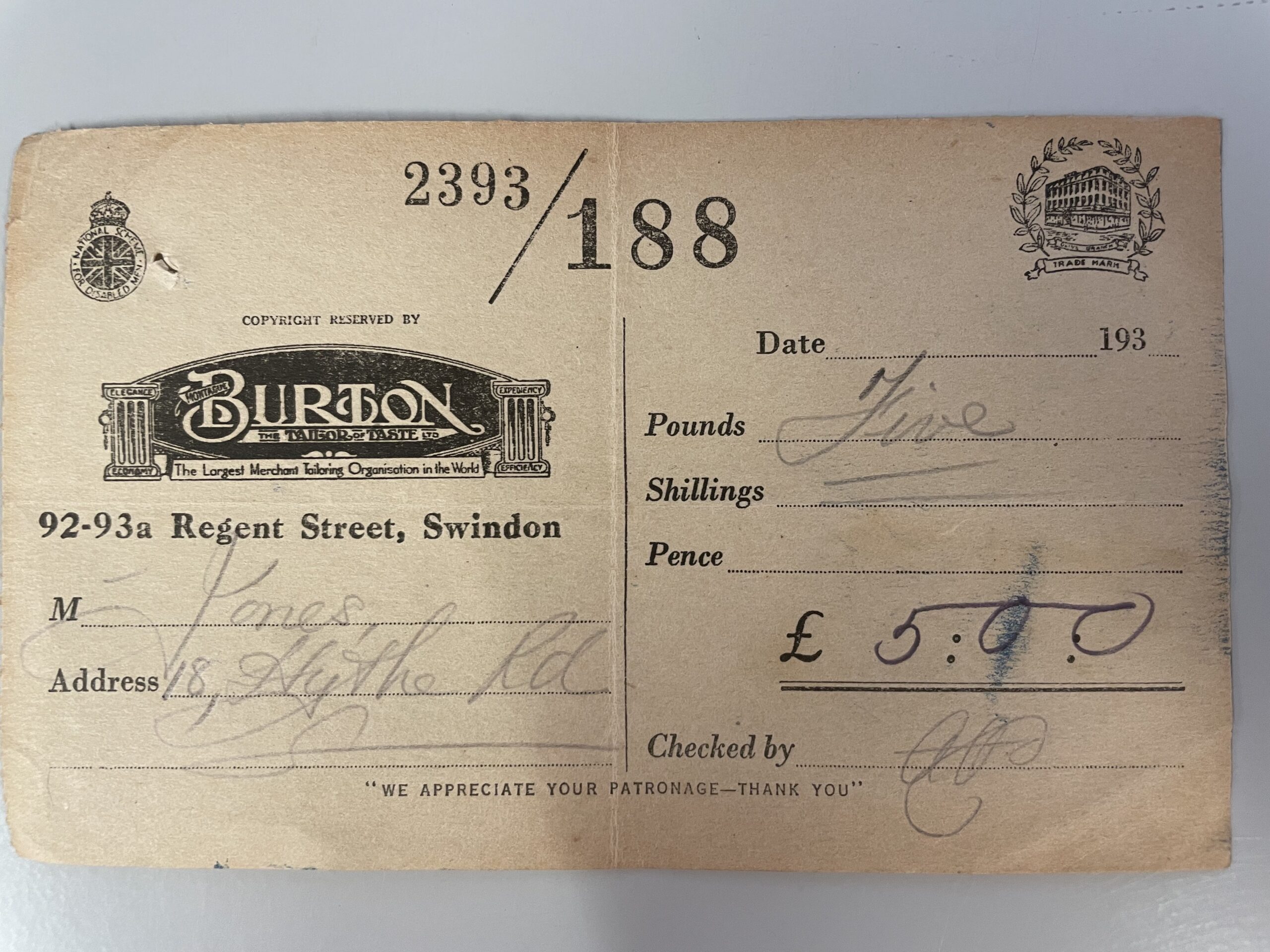
Burton’s in Swindon also had premises in Regent. And below, reminiscences of a long-gone age of hand-written receipts and the old L.S.D – pounds, shillings and pence.
A 1929 Burton’s receiptA Burton’s receipt from 1930 – I think
Sir Montagu Maurice Burton entered the world as Meshe David Osinsky in Lithuania in 1885. He travelled alone to England in 1900 to escape the Russian pogroms. Although a well educated young man, he arrived in the country unable to speak English. His transformation from that to heading a clothing empire is quite the tale.
And the British fashion and business press have well-documented the demise of the Burton group. The circumstances surrounding its death and the loss of so many jobs are a stark contrast to the way in which Sir Montague Burton, and his sons, brought the company to life and nurtured its growth.
Known for his concern for his workers’ welfare, Burton established a welfare office at the Leeds factory. He gave his workforce free meals and free eye and dental treatment. He received a knighthood in 1931 for for services to industrial relations. Raymond Burton acquired his father’s social conscience, as well as his business acumen. He received a CBE for services to charity in 1995.
*Lucania Temperance billiard halls
If you’ve ever watched any American gangster films you’ll be aware of the temperance movement – formed to combat alcoholism. As this article from the Victorian Web points out, one of steps they took was the building of ‘dry’ recreational halls and hotels. These establishments often rivalled the architecture of the opulent pubic houses of the late C19. The buildings often used the same decorative materials that pubs used. Such things as tiled facades and stained glass windows. All designed to emulate the congenial atmosphere of a pub but minus the pitfalls of available alcohol.
In the first instance, Temperance Billiard Halls Ltd targeted the suburbs of south London where many new pubs had been built in the late C19. And also in north-west England from where the firm originated. But, by the beginning of WWI, billiard halls had appeared across London. Built by both Temperance Billiard Halls Ltd and Lucania Temperance Billiard Halls Ltd. By 1939 there were over fifty temperance billiard halls in London.